YA
yuri antonacci
Department of Engineering, University of Palermo
Palermo, Italy
567
Total downloads
4,590
Total views and downloads
Submit your idea
Select the journal/section where you want your idea to be submitted:
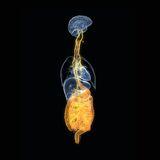
Network Physiology is an emergent field that bridges various disciplines to analyze how different physiological systems interact within a network context, vital for maintaining homeostasis and health. Such investigations are increasingly important in both foundational research and clinical settings, as disturbances in these network interactions can manifest as conditions linked to organ dysfunction. Technological advancements, particularly in wearable devices, have revolutionized the capacity to monitor these interactions non-invasively, capturing synchronous signals from multiple physiological systems and facilitating comprehensive studies.
This Research Topic aims to introduce innovative, data-driven methodologies and analytical tools to deeply probe and elucidate the internal dynamics of individual physiological systems such as the brain, heart, and muscles, as well as the interactions between the brain and other bodily systems. It seeks to delineate the coupling dynamics across the brain, cardiac, respiratory, and vascular systems, and to reveal the complex emergent behaviors resulting from higher-order interactions involving multiple systems.
To gather further insights into this evolving field, we welcome articles addressing, but not limited to, the following themes:
• Novel mathematical models and tools for studying physiological system dynamics
• Analysis of brain connectivity and its implications for cognitive, emotional, and motor functions
• Interactions between the brain and cardiovascular system and their role in health and disease
• The impact of physiological interactions under varied conditions like stress, sleep, or cognitive load
• Application of Network Physiology in developing brain-machine interfaces for rehabilitation
• Multiscale network modeling to explore interactions across different physiological states and conditions
This topic not only aligns with the current needs in understanding complex physiological interactions but also paves the way for new therapeutic and rehabilitation strategies leveraging these dynamic network insights.
This Research Topic accepts the following article types, unless otherwise specified in the Research Topic description:
Articles that are accepted for publication by our external editors following rigorous peer review incur a publishing fee charged to Authors, institutions, or funders.
Keywords: Network Physiology, Data-driven approaches, Brain connectivity, Brain-Heart interactions, Time series analysis, Higher-order interactions, Brain-Machine Interfaces
Important note: All contributions to this Research Topic must be within the scope of the section and journal to which they are submitted, as defined in their mission statements. Frontiers reserves the right to guide an out-of-scope manuscript to a more suitable section or journal at any stage of peer review.
Manuscripts can be submitted to this Research Topic via the main journal or any other participating journal.
Submit your idea
Select the journal/section where you want your idea to be submitted:
