ML
matteo lattuada
Technical University of Berlin
Berlin, Germany
246
Total views and downloads
Submit your idea
You will be redirected to our submission process.
Manuscript Summary Submission Deadline 17 April 2026 | Manuscript Submission Deadline 23 October 2026
This Research Topic is currently accepting articles.
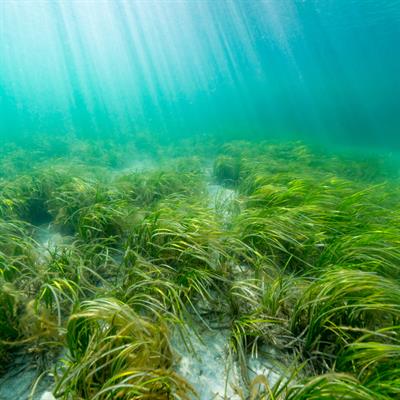
Seagrass meadows are among the most valuable yet threatened marine ecosystems, providing essential services such as carbon sequestration, habitat for marine biodiversity, shoreline stabilization, and water quality improvement. Restoration has become a critical strategy to counteract habitat loss, but despite growing efforts, challenges persist regarding seedling establishment, transplant survival, genetic diversity, and long-term success. This Research Topic aims to bring together studies on well-established restoration techniques, including seed-based methods, vegetative transplantation, and assisted natural regeneration, while also exploring the integration of new technologies in restoration planning, fieldwork, and monitoring. Advances such as geospatial modeling for site selection, automated or assisted seed dispersal techniques, and long-term monitoring using remote sensing, eDNA, and AI-driven habitat assessments offer new opportunities to improve efficiency, scalability, and adaptability in restoration projects. Additionally, the role of community engagement and socio-economic considerations, such as policy, in ensuring the sustainability of restoration efforts is highlighted. By gathering diverse research contributions, this Research Topic seeks to enhance seagrass restoration science and practice, promoting evidence-based strategies for the conservation of these critical marine ecosystems.
Seagrass restoration efforts have expanded significantly in recent decades, focusing on seed-based approaches, vegetative transplantation, and habitat modification to improve success. However, site-specific environmental conditions, ecological interactions, and anthropogenic pressures can greatly influence outcomes, highlighting the need for an integrated, adaptive, and data-driven approach. Recent technological advancements have enhanced restoration science, such as GIS-based predictive modeling to optimize site selection, unmanned underwater vehicles (UUVs) for transplanting, and remote sensing combined with eDNA analysis to improve long-term monitoring of seagrass and biodiversity recovery. Additionally, genetic diversity is critical for resilience, and community engagement fosters local stewardship and project sustainability. By integrating traditional ecological methods with cutting-edge technologies and socio-ecological considerations, restoration efforts can become more efficient, scalable, and resilient to climatic and environmental changes. This Research Topic aims to explore both practical restoration methods and emerging technological tools that can support successful seagrass recovery.
We welcome contributions that address various aspects of seagrass restoration, including:
• Restoration techniques and ecological processes:
o Seed-based restoration: seed collection, dispersal, and germination strategies.
o Transplantation methods: shoot-based approaches, sediment stabilization techniques.
o Enhancing natural regeneration: habitat modification, recruitment facilitation and genetic diversity considerations.
o Positive ecological interactions promoting seagrass restoration success (plant-bivalve interactions, complementary habitat restoration/seascape restoration)
o Negative results: environmental, ecological, and social insights into unsuccessful restoration attempts
• Planning and site selection for restoration success:
o GIS-based habitat suitability modeling.
o Biophysical and hydrodynamic factors influencing restoration outcomes.
o Decision-support tools for optimizing site selection and adaptive management frameworks.
o Incorporating future climate scenarios into site selection.
• Monitoring and assessing restoration success:
o Long-term ecological monitoring strategies.
o The role of eDNA, drone surveys, and satellite remote sensing and underwater photogrammetry.
o Acoustic monitoring and AI-driven analysis for automated data collection and habitat assessment.
• Interdisciplinary perspectives and policy frameworks:
o Socio-economic considerations in seagrass restoration.
o Stakeholder engagement and community-based restoration efforts.
o Policy recommendations for improving large-scale restoration programs.
This Research Topic accepts the following article types, unless otherwise specified in the Research Topic description:
Articles that are accepted for publication by our external editors following rigorous peer review incur a publishing fee charged to Authors, institutions, or funders.
Keywords: Seagrass restoration, marine ecoysytems, biodiversity, shoreline stabilization, ecological restoration, seed-based methods, vegetative transplantation
Important note: All contributions to this Research Topic must be within the scope of the section and journal to which they are submitted, as defined in their mission statements. Frontiers reserves the right to guide an out-of-scope manuscript to a more suitable section or journal at any stage of peer review.
Technical University of Berlin
Berlin, Germany
Swansea University
Swansea, United Kingdom
University of Plymouth
Plymouth, United Kingdom
The University of Hong Kong
Pokfulam, Hong Kong, SAR China
University of Southern Denmark
Odense, Denmark
University of Groningen
Groningen, Netherlands
Manuscripts can be submitted to this Research Topic via the main journal or any other participating journal.
Submit your idea
You will be redirected to our submission process.
