LM
luisa maria diele viegas
Federal University of Bahia (UFBA)
Salvador, Brazil
2,599
Total views and downloads
Submit your idea
Select the journal/section where you want your idea to be submitted:
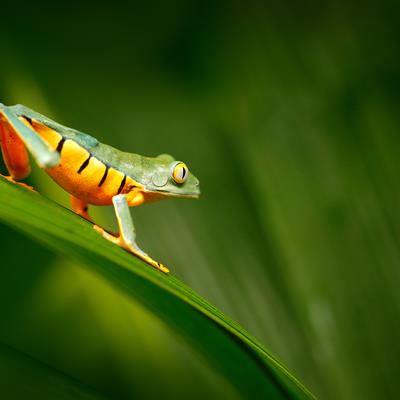
The Neotropical region harbors an extraordinary diversity of amphibians and reptiles, many of which are highly sensitive to environmental changes such as climate shifts, habitat degradation, and emerging diseases. Understanding traits like thermal tolerance, water balance, metabolic rates, and immune responses is crucial to predict species resilience or susceptibility in a rapidly changing world. Recent advances in ecophysiology and integrative modeling offer powerful tools to uncover hidden constraints and adaptive potential in Neotropical herpetofauna. This Research Topic aims to showcase cutting-edge studies that illuminate the physiological frontiers of amphibians and reptiles in the Neotropics, supporting evidence-based strategies for conservation and management.
Traditional ecological approaches often overlook the physiological constraints that shape species distributions, vulnerability, and adaptive potential. This Research Topic seeks to address this gap by highlighting studies that integrate physiological data—such as thermal performance, metabolic plasticity, hydration tolerance, and immune function—into broader ecological and conservation frameworks. We aim to bring together research that explores both mechanistic and empirical perspectives, including experimental, field-based, and modeling approaches. By unveiling the hidden physiological mechanisms underlying species’ responses to environmental challenges, this collection will inform more accurate predictions of ecological outcomes and support effective conservation planning. We especially encourage contributions from underrepresented regions and perspectives, fostering a diverse, transdisciplinary dialogue within the field of Neotropical herpetology.
This Research Topic welcomes contributions that explore the physiological responses of Neotropical amphibians and reptiles to environmental change, with an emphasis on integrative and innovative approaches. Themes may include, but are not limited to:
- thermal biology and tolerance limits
- hydration physiology
- metabolic responses to climate variability
- immune function under pathogen pressure (e.g., chytridiomycosis)
- eco-physiological modeling
- physiological plasticity in response to anthropogenic disturbances.
We encourage studies that bridge physiology with ecology, evolution, and conservation, as well as work incorporating traditional ecological knowledge and interdisciplinary methodologies. Contributions from early-career researchers and authors from underrepresented regions are especially encouraged. This collection aims to provide a platform for advancing our understanding of the physiological foundations of species persistence and vulnerability in rapidly changing Neotropical ecosystems.
This Research Topic accepts the following article types, unless otherwise specified in the Research Topic description:
Articles that are accepted for publication by our external editors following rigorous peer review incur a publishing fee charged to Authors, institutions, or funders.
Keywords: Neotropical, thermal biology, tolerance limits, physiology, climate, immune function, plasticity
Important note: All contributions to this Research Topic must be within the scope of the section and journal to which they are submitted, as defined in their mission statements. Frontiers reserves the right to guide an out-of-scope manuscript to a more suitable section or journal at any stage of peer review.
Federal University of Bahia (UFBA)
Salvador, Brazil
National Laboratory of Genomics for Biodiversity, Center for Research and Advanced Studies, National Polytechnic Institute of Mexico (CINVESTAV)
Irapuato, Mexico
Departamento de Ciências Biológicas, Universidade Estadual do Sudoeste da Bahia
Jequié, Brazil

Manuscripts can be submitted to this Research Topic via the main journal or any other participating journal.
Submit your idea
Select the journal/section where you want your idea to be submitted: