JF
javier fernández calleja
University of Oviedo
Oviedo, Spain
588
Total views and downloads
Submit your idea
You will be redirected to our submission process.
Manuscript Submission Deadline 17 February 2026
This Research Topic is currently accepting articles.
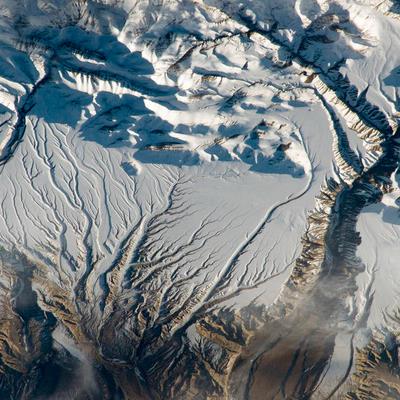
The snow and ice cover of the Earth is dynamic: a small part vanishes during summer, while the permanent part undergoes seasonal changes due to snow metamorphism, ice melting, sublimation, pollutant inclusion, snow algae, and wind. The amount of solar radiation reflected back to space from the cryosphere is highly sensitive to this dynamic behavior. Satellite observations and advanced climate models have demonstrated with certainty that the Earth has been out of energy balance at the top of the atmosphere (TOA) for at least two decades. However, the contribution of the cryosphere to that imbalance depends on both region and timeframe. The development and improvement of algorithms linking the physical and chemical properties of snow and ice to their reflectance is essential if we want to understand the cryosphere's role in the Earth’s energy balance.
This topic is aimed at researchers interested in optical remote sensing of the cryosphere. Here, optical remote sensing refers to the solar radiation reflected by the Earth’s surface (400–3000 nm). In this context, reflectance refers to any of the physical quantities encompassed under that term, including albedo. We need reliable algorithms linking reflectance to the physicochemical properties of the surface cover. We encourage the publication of papers emphasizing the use of multi- and hyperspectral data to estimate impurity content, grain size, and liquid water content, as well as to distinguish between ice types. In this respect, special attention should be paid to current and planned missions such as PRISMA, EnMAP, EMIT, CHIME, and SBG. We also welcome submissions on algorithms designed to improve the spatiotemporal coverage of data for the construction of long and reliable reflectance time series. In addition, we seek to contribute to the quantitative description of the cryosphere's role in the Earth’s energy balance: what percentage of the Earth’s energy imbalance and climate warming is due to the snow-albedo feedback, both on global and local scales. This Research Topic should be addressed by authors via study of the net radiative effect of snow cover: the actual change in the radiative energy budget due to snow albedo changes. Computations of the net radiative effect should be based on satellite data.
In particular, some topics to be covered may include:
o Physics-based reflectance retrieval algorithms
o Albedo and reflectance time series
o Gap filling of albedo and reflectance in time series and spatial data
o Snow aging and melting
o Spectral signatures of snow and ice
o Sea and land ice cover
o Glacier mass balance from optical remote sensing
o Contribution of the cryosphere to the Earth’s energy balance
o Use of hyperspectral remote sensing to estimate impurity content, snow grain size, and liquid water content, and classification techniques to distinguish between ice types, with special focus on current and planned missions such as PRISMA, EnMAP, EMIT, CHIME, and SBG.
o Studies featuring validation and benchmarking with in-situ data, machine learning, spectral unmixing techniques, and efforts to build long-term global reflectance datasets.
This Research Topic accepts the following article types, unless otherwise specified in the Research Topic description:
Articles that are accepted for publication by our external editors following rigorous peer review incur a publishing fee charged to Authors, institutions, or funders.
Keywords: reflectance, solar radiation, time series, snow and ice pollutants, snow ice reflectance algorithms, earth's energy balance, remote sensing, sea-level rise, water resources, water, hyperspectral, data fusion, uncertainty quantification, machine learning, radiative forcing
Important note: All contributions to this Research Topic must be within the scope of the section and journal to which they are submitted, as defined in their mission statements. Frontiers reserves the right to guide an out-of-scope manuscript to a more suitable section or journal at any stage of peer review.
Manuscripts can be submitted to this Research Topic via the main journal or any other participating journal.
Submit your idea
You will be redirected to our submission process.
