JC
julie c dunsmore
University of Houston
Houston, United States
2,000
Total views and downloads
Submit your idea
Select the journal/section where you want your idea to be submitted:
Manuscript Submission Deadline 5 April 2026
This Research Topic is currently accepting articles.
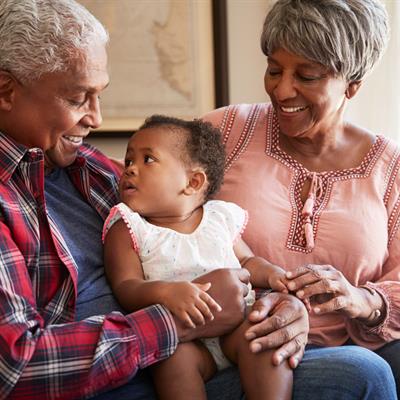
Individuals’ engagement in family narrative and discourse provides a venue for socialization processes that influence social development (i.e., transmission of cultural values, social skills, relationship closeness), emotional development (i.e., emotion understanding, perspective-taking, empathy, emotion regulation), cognitive development (i.e., autobiographical memory, cognitive complexity, executive functioning), and identity development (e.g. meaning-making, life story construction). Engagement with family narratives and discourse may unfold as individuals participate in family, intergenerational and couple conversations, as they personally remember narratives shared by family members, and as they reminiscence about family conversations. Family narratives and discourse can both measure and serve as an engine for social, emotional, cognitive and identity developmental processes. Current directions in developmental research examining family narratives and discourses have expanded consideration of how family storytelling is situated within social, historical, and cultural contexts and its role in socio-emotional, identity, and cognitive development as well as behavioral outcomes, mental health and well-being.
The goal of this Research Topic is to expand current understandings of developmental processes and outcomes related to family narratives and family discourse and to foster new directions in developmental methodologies and research topics incorporating family narratives and discourse. This Research Topic will welcome research addressing narratives about family life experiences and research addressing family discourse or family conversations. Narratives may include verbal or written open-ended responses to prompts eliciting participants’ perspectives on family life events and family members’ narratives (e.g. intergenerational narratives) as well as documents such as diaries or journals. Family discourse includes within-generation and intergenerational conversations (i.e., romantic partner conversations, sibling conversations, children’s conversations with parents or grandparents, adults’ conversations with elders). Families may include romantic partners, nuclear families, extended kin, fictive kin and found families. Qualitative, quantitative, and mixed-method approaches are all welcome. Both basic research and applied research on intervention or prevention programs that target family narratives and/or family discourse are welcome. We particularly invite research that addresses social, historical, and/or cultural contexts of family storytelling and research with populations representing the global majority.
Topics may include, but are not limited to, the following themes:
• Developmental trajectories of family storytelling
• Social, emotional, cognitive, relationship, adjustment, mental, and physical health outcomes related to family discourse or narratives
• Academic, ethnoracial, or narrative identity in relation to family storytelling
• Linguistic analysis of family discourse and narratives
• Characteristics of family caregiving narratives (i.e., parent-child or adult-child caregiving, partner caregiving, adults caregiving for elders)
• Similarities and differences in family storytelling across sociocultural contexts
• Risk and resilience processes that relate to family storytelling
• Innovations in methodologies that incorporate family storytelling
• Discourse and narratives across multiple family structures (e.g., complex stepfamilies, adoptive families) and involving multiple family roles (e.g., discourse between siblings, discourse with father figures)
• Family discourse and narratives in contexts of disability
Submissions can take the form of Original Research, Brief Research Reports, Clinical Trials, Methods, Policy and Practice Reviews, Systematic Reviews, Data Reports, and General Commentary.
This Research Topic accepts the following article types, unless otherwise specified in the Research Topic description:
Articles that are accepted for publication by our external editors following rigorous peer review incur a publishing fee charged to Authors, institutions, or funders.
Keywords: Narrative, discourse, conversation, family, applied cognition, socio-emotional development, identity development
Important note: All contributions to this Research Topic must be within the scope of the section and journal to which they are submitted, as defined in their mission statements. Frontiers reserves the right to guide an out-of-scope manuscript to a more suitable section or journal at any stage of peer review.
Manuscripts can be submitted to this Research Topic via the main journal or any other participating journal.
Submit your idea
Select the journal/section where you want your idea to be submitted:
