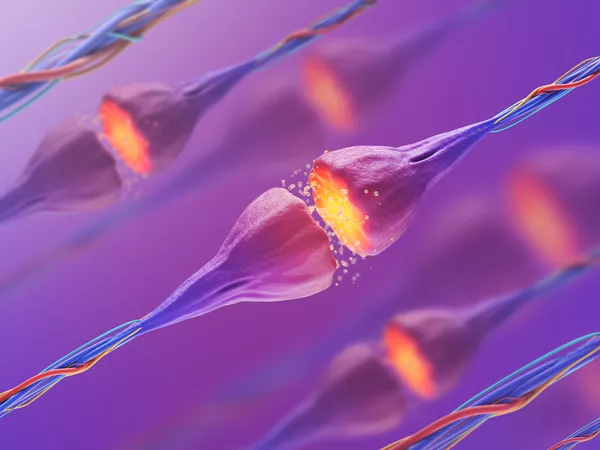
Synaptic scaffolding proteins are essential organisers of neuronal communication, linking neurotransmitter receptors to signalling complexes and cytoskeletal elements. Among them, gephyrin and PSD95 occupy central positions at inhibitory and excitatory synapses, respectively. Gephyrin anchors glycine and GABAA receptors, enabling inhibitory synapse formation and plasticity, while PSD95 orchestrates glutamatergic postsynaptic density organisation, receptor trafficking, and signalling pathways. Together, these scaffolding proteins define the balance between excitation and inhibition, a fundamental principle of brain function.
Recent studies have demonstrated that liquid-liquid phase separation represents a common concept underlying PSD-95 and gephyrin function at post-synaptic sites. Ligand binding, oligomerization and molecular dynamics of intrinsically unstructured peptide sequences are key determinant of condensate formation by both post-synaptic proteins. Together with recent structural advances on ligand-gates ion channels of both types, tetrameric glutamate and pentameric glycine and GABAA receptors our molecular understanding of the postsynaptic architecture has made significant progress.
Dysregulation of gephyrin- and PSD95-mediated signalling has been implicated in a wide spectrum of neurological and psychiatric disorders, including epilepsy, startle disease, chronic pain, autism spectrum disorder, schizophrenia, and neurodegenerative conditions. Advances in molecular, cellular, and structural biology, as well as high-resolution imaging and proteomics, have collectively uncovered new mechanisms of scaffold regulation - ranging from post-translational modifications and alternative splicing to dynamic assembly and disassembly in response to neuronal activity. We are also beginning to understand how these mechanisms are perturbed by genetic variation in disease states thus opening new opportunities to for targeted therapies.
In this special topic, we invite contributions that deepen our understanding of gephyrin and PSD95 as central regulators of synaptic organisation and function. We welcome original research articles, reviews, methods papers, perspectives, and commentaries covering, but not limited to:
• Structural, molecular, biochemical, or imaging studies of scaffold assembly and receptor clustering. • Functional analyses of gephyrin, PSD95 and other key or accessory proteins variants in health and neurological or psychiatric disease. • Computational and modelling approaches to synaptic organisation / plasticity and network-level effects of scaffold dysfunction. • Mechanistic insights into scaffold protein interactions, regulation by signalling pathways, or cross-talk between inhibitory and excitatory synapses. • Translational perspectives linking gephyrin or PSD95 biology to therapeutic strategies.
By bringing together diverse experimental and conceptual approaches, this special topic will highlight the central roles of gephyrin and PSD95 in shaping synaptic communication and how their dysfunction contributes to human disease.
Article types and fees
This Research Topic accepts the following article types, unless otherwise specified in the Research Topic description:
Brief Research Report
Data Report
Editorial
FAIR² Data
General Commentary
Hypothesis and Theory
Methods
Mini Review
Opinion
Articles that are accepted for publication by our external editors following rigorous peer review incur a publishing fee charged to Authors, institutions, or funders.
Article types
This Research Topic accepts the following article types, unless otherwise specified in the Research Topic description:
Important note: All contributions to this Research Topic must be within the scope of the section and journal to which they are submitted, as defined in their mission statements. Frontiers reserves the right to guide an out-of-scope manuscript to a more suitable section or journal at any stage of peer review.