BT
bhishma tyagi
National Institute of Technology Rourkela
Rourkela, India
157
Total views and downloads
Submit your idea
You will be redirected to our submission process.
Manuscript Summary Submission Deadline 29 January 2026 | Manuscript Submission Deadline 19 May 2026
This Research Topic is currently accepting articles.
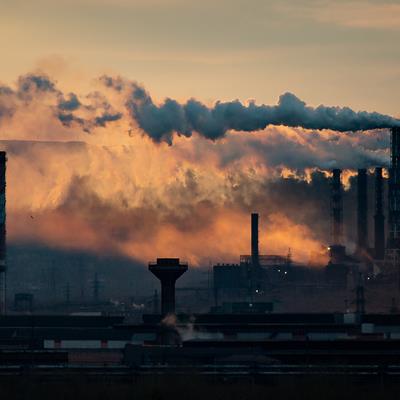
Urban environmental studies have increasingly highlighted the complexity of air pollution in cities, underscoring its deep roots and evolving nature. Cities worldwide have witnessed changes in air quality due to a variety of factors including industrialization, urban expansion, and shifting meteorological patterns. While extensive efforts have been made to monitor and control urban air pollution, significant questions remain about how long-term trends, weather types, and large-scale urban developments have interacted to shape present-day pollution landscapes. Current studies emphasize the emergence of urban pollution islands, influenced not only by emissions but also by weather conditions and urban morphology. Despite advancements in measurement and modeling, there remains a gap in our holistic understanding of how past policies and weather classification schemes have dictated the dispersion and concentration of pollutants like O3, NO2, PM2.5, and PM10. Addressing this gap is vital for comprehensively tracing the trajectory of urban air quality and informing future interventions.
This Research Topic aims to uncover and synthesize long-term patterns in urban air pollution with a focus on extended datasets. Central objectives include elucidating the impacts of urban expansion and climate variability on pollutant dynamics, investigating the interplay between weather types and pollution dispersion/chemistry over time, and analyzing the progression of air quality management strategies. By integrating data-driven analyses with a long-term perspective, the goal is to answer fundamental questions about the drivers and mitigators of urban air pollution, while evaluating the successes and limitations of past interventions.
Given its broad and cross-disciplinary scope, the research topic primarily centers on the analysis of urban air pollution trajectories, restricting itself to major cities with available long-term datasets. The investigation encourages submissions that leverage long-term records, weather classification systems, and critical reviews of management practices. To gather further insights in these areas, we welcome articles addressing, but not limited to, the following themes:
- Long-term trends in urban air pollutant concentrations (e.g., O3, NO2, PM2.5, PM10, etc.)
- Influence of weather types and classification systems on pollution patterns over time
- Development and evolution of urban pollution islands
- Impact of urban expansion and land use changes on air quality
- Comparative analyses of air pollution management strategies across different periods
- Interactions between climate variability and urban air quality
- Methodological advances in long-term data analysis for urban air pollution
This Research Topic accepts the following article types, unless otherwise specified in the Research Topic description:
Articles that are accepted for publication by our external editors following rigorous peer review incur a publishing fee charged to Authors, institutions, or funders.
Keywords: Urban Pollution, Air Quality, Weather Influence, Pollution Islands, Climate Impacts
Important note: All contributions to this Research Topic must be within the scope of the section and journal to which they are submitted, as defined in their mission statements. Frontiers reserves the right to guide an out-of-scope manuscript to a more suitable section or journal at any stage of peer review.
Manuscripts can be submitted to this Research Topic via the main journal or any other participating journal.
Submit your idea
You will be redirected to our submission process.
