AM
andreas martin seitz
Ulm University Medical Center
Ulm, Germany
300
Total views and downloads
Submit your idea
You will be redirected to our submission process.
Manuscript Summary Submission Deadline 30 April 2026 | Manuscript Submission Deadline 30 November 2026
This Research Topic is currently accepting articles.
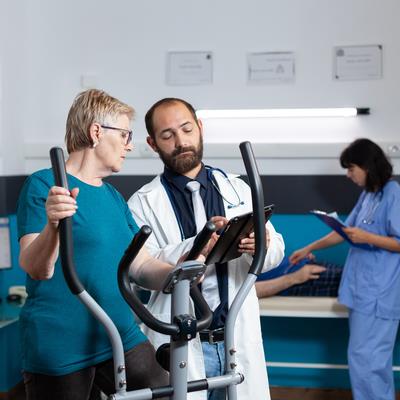
As populations age worldwide, the ability of older adults to move independently and safely has become a key determinant of healthy aging. Age-related losses in muscle strength and power, changes in tendon stiffness and elasticity, and alterations in neuromuscular control contribute to reduced mobility, increased fall risk, and higher rates of disability. These changes affect not only gait and balance, but also everyday tasks such as rising from a chair, climbing stairs, and walking at sufficient speed for community participation.
Biomechanics provides a powerful lens through which to understand how aging alters movement at multiple levels—from muscle and tendon properties to joint mechanics and whole-body coordination. At the same time, well-designed exercise interventions can counteract or even reverse many of these declines. Resistance, power, balance, and functional training approaches all show promise, yet the optimal modality, intensity, and task specificity remain active areas of investigation. There is a clear need to integrate biomechanical insights with exercise science to design targeted, feasible interventions for older adults with diverse functional capacities and comorbidities.
This Research Topic aims to bring together experimental, clinical, and translational work on the biomechanics of movement and exercise interventions that preserve or restore muscle and tendon function in older adults. We particularly welcome contributions that link mechanistic understanding with practical applications in clinical and real-world settings.
Submissions may address, but are not limited to:
Age-related changes in muscle architecture, force, power, and tendon mechanical properties, and their impact on movement performance.
Biomechanics of gait, balance, and functional tasks (e.g., stair climbing, sit-to-stand, load carrying) in community-dwelling and frail older adults.
Effects of resistance, power, plyometric, eccentric, or multimodal training on muscle–tendon function and movement biomechanics.
Mechanobiological and neuromuscular mechanisms underlying adaptation or maladaptation to mechanical loading in aging muscle and tendon.
Use of motion analysis, wearable sensors, and related technologies to assess movement quality and intervention effects in laboratory, clinical, or free-living contexts.
Biomechanically informed, individualized training strategies for different phenotypes (e.g., robust vs. frail, sex-specific differences, or those with osteoarthritis and other musculoskeletal conditions).
By integrating biomechanical analysis with targeted exercise approaches, this Research Topic seeks to advance strategies that preserve muscle and tendon function, reduce falls and disability, and support active, independent living in older adults.
This Research Topic accepts the following article types, unless otherwise specified in the Research Topic description:
Articles that are accepted for publication by our external editors following rigorous peer review incur a publishing fee charged to Authors, institutions, or funders.
Keywords: Musculoskeletal aging, Biomechanics, Muscle–tendon function, Exercise intervention, Older adults
Important note: All contributions to this Research Topic must be within the scope of the section and journal to which they are submitted, as defined in their mission statements. Frontiers reserves the right to guide an out-of-scope manuscript to a more suitable section or journal at any stage of peer review.
Manuscripts can be submitted to this Research Topic via the main journal or any other participating journal.
Submit your idea
You will be redirected to our submission process.
