LD
luchuan ding
University of Naples Federico II
Naples, Italy
263
Total views and downloads
Submit your idea
Select the journal/section where you want your idea to be submitted:
Manuscript Summary Submission Deadline 10 May 2026 | Manuscript Submission Deadline 31 August 2026
This Research Topic is currently accepting articles.
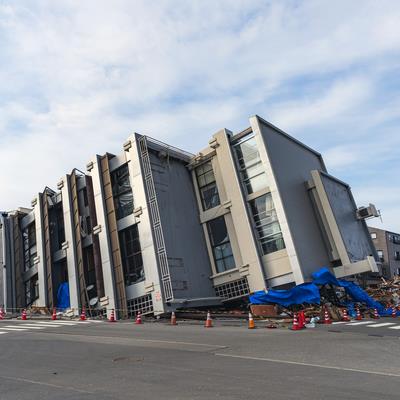
Structural robustness—the ability of a structure to withstand unforeseen or extreme events without suffering disproportionate collapse—remains a critical frontier in civil engineering and built environment resilience. In an era marked by increasing exposure to extreme events or accidental loads (e.g., explosions, fires, vehicle impacts), aging infrastructure, and climate-induced hazards, preventing progressive collapse demands integrated advances across experimental, numerical, analytical, and data-driven domains.
This Research Topic invites original contributions that advance the frontiers of knowledge in progressive collapse prevention, quantification of structural robustness, and structural optimization design for buildings. Interdisciplinary studies that integrate mechanics, materials science, probabilistic modeling, artificial intelligence, and performance-based engineering are especially encouraged.
Topics of interest include (but are not limited to):
• Experimental, numerical, and theoretical advances in structural progressive collapse analysis—including novel testing protocols, high-fidelity simulations, and analytical frameworks.
• Probabilistic hazard assessment of accidental and extreme loads (e.g., blast, fire, impact, seismic aftershocks) and their cascading effects on structural responses.
• Threat-independent or threat-dependent design strategies for mitigating progressive collapse under specific scenarios such as explosions, fires, or vehicular collisions.
• Data-driven approaches using machine learning (ML) and artificial intelligence (AI) for progressive collapse analyses.
• Effects of aging, deterioration, and long-term degradation on structural robustness and collapse resistance.
• Component- and system-level reliability analysis in terms of progressive collapse.
• Fragility, vulnerability, and risk assessment methodologies for buildings and infrastructure exposed to disproportionate collapse triggers.
• Quantification of structural robustness through performance indicators, metrics, and benchmarking frameworks.
• Reliability-, risk-, or resilience-based design optimization strategies that explicitly account for progressive collapse prevention in building structures.
We encourage submissions from researchers, practitioners, and policymakers working at the intersection of structural engineering, computational mechanics, and reliability engineering. Both full-length research articles and comprehensive reviews are welcome.
This Research Topic accepts the following article types, unless otherwise specified in the Research Topic description:
Articles that are accepted for publication by our external editors following rigorous peer review incur a publishing fee charged to Authors, institutions, or funders.
Keywords: Progressive collapse, structural robustness, disproportionate collapse, structural engineering, structural reliability, structural optimization
Important note: All contributions to this Research Topic must be within the scope of the section and journal to which they are submitted, as defined in their mission statements. Frontiers reserves the right to guide an out-of-scope manuscript to a more suitable section or journal at any stage of peer review.
Manuscripts can be submitted to this Research Topic via the main journal or any other participating journal.
Submit your idea
Select the journal/section where you want your idea to be submitted:
