 S. Kharb
- Department of Biochemistry, Pandit Bhagwat Dayal Sharma Postgraduate Institute of Medical Sciences, University of Health Sciences, Rohtak, Haryana, India
Next-generation non-invasive biochemical wearables hold promise in transforming healthcare by providing real-time, continuous monitoring of biochemical markers. Non-invasive methods include smart tattoos, microneedle patches, wearable biosensors, flexible bioelectronics, implantable sensors, smart textiles, and smart contact lenses. A comprehensive picture of an individual’s health can be detected via critical markers such as glucose, lactate, cortisol, and volatile organic compounds (VOCs) from sweat, saliva, tears, breath and interstitial fluid (ISF)-based, non-invasive and minimally invasive biosensors using these advanced technologies. Personalized insights for enhancing their functionality are possible by integrating them with AI and big data analytics for early disease detection and proactive health management. This study explores the potential of futuristic biochemical wearables, their current status, underlying technologies, potential associated applications and challenges, and their positioning as transformative solutions in personalized healthcare for redefining the future of healthcare monitoring.
Introduction
Wearable devices are composed of integrated analytical units that are equipped with sensitive physical, chemical, and biological sensors capable of the non-invasive and continuous monitoring of vital physiological parameters. Wearable technology has emerged as a transformative force in the healthcare landscape, reshaping how patient health is monitored and healthcare outcomes are enhanced.
The recent integration of electronics, computation, and material science has resulted in affordable and highly sensitive wearable devices which are routinely used for tracking and managing health and wellbeing, and these wearables are poised to transform the early detection, diagnosis, and treatment of patients (Babu et al., 2024; Sempionatto et al., 2022; Yang et al., 2019). Several studies are available on wearables. However, literature on the futuristic role of smart biosensors is scanty. This review provides an overview of the different types of biosensors being used or various biomedical applications in the future outlook of biosensor technology.
As wearable technology continues to evolve, striking a balance between innovation and responsible use would unlock its full potential for positively transforming healthcare.
Review
Current landscape of biochemical wearables
Existing biochemical wearables that have proven to be effective in certain applications; they primarily utilize rigid materials and complex electronic systems, which can be expensive and uncomfortable for users and have environmental concerns (Babu et al., 2024).
Smartwatches, being the most commonly used wearable devices, have valuable biomedical potential for detecting clinical conditions, and even smart cell phone apps are available, such as “Glucose Selfie.”
Need for innovative solutions
The realm of sophisticated biochemical wearables for the continuous, non-invasive monitoring of critical health metrics is evolving, and next-generation biochemical wearables are poised to revolutionize healthcare by providing real-time data on various biochemical markers through skin, sweat, saliva, tears, and even breath to delve into the metabolic, nutritional, and physiological states of the wearer.
There is a need to explore paper-based, printable, and biodegradable materials as a foundation for future biochemical wearables, which have the potential to revolutionize health monitoring with minimal ecological impact. Interstitial fluid (ISF) is an epidermally accessible biofluid with a composition similar to blood, and ISF sensors are emerging as a significant tool for non-invasive and minimally invasive disease diagnosis, personalized medicine, and point-of-care applications. (Table 1).

Table 1. Wearable available for biochemical monitoring.
This review explores the advances in biochemical wearables and their impact on transforming healthcare.
Wearable available for biochemical monitoring
Currently available smart biochemical wearables are described in Table 2.
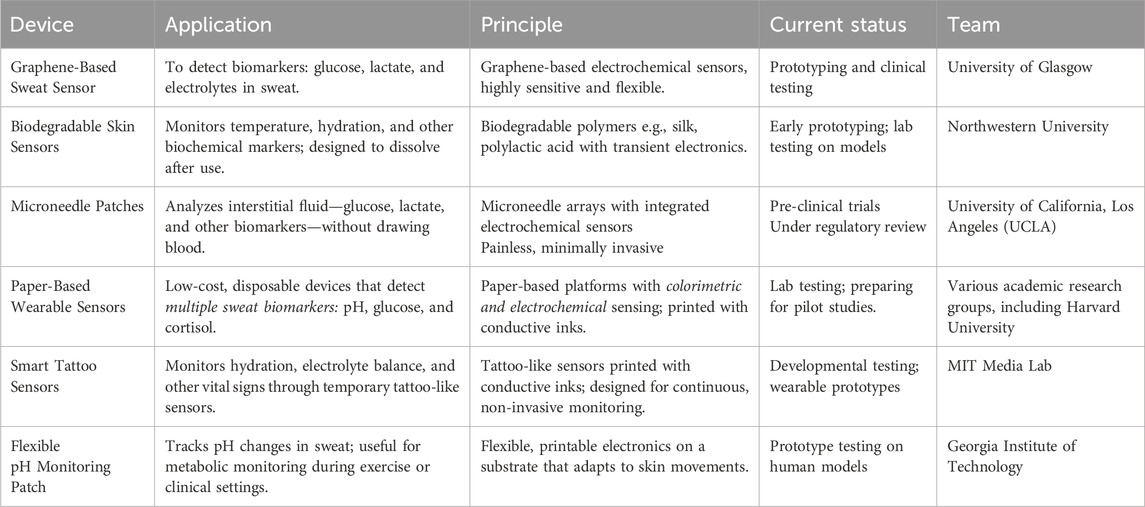
Table 2. Pipeline devices in smart biochemical wearables.
Wearable sensors take the form of wearables, textile-based, contact lenses, microfluidic patches, and pressure sensors, and are essential in assisting healthcare providers perform personalized monitoring of the user’s physiological and chemical parameters with high accuracy.
Smart biochemical wearables are available that are revolutionizing personalized health monitoring through the real-time, non-invasive sensing of various biomarkers. They include devices such as FreeStyle Libre, which offers continuous glucose monitoring (CGM) composed of electrochemical sensors embedded in adhesive patches for providing diabetics with non-invasive real-time data on glucose levels without any finger pricks.
ECHO Smart Patch (by Epicore Biosystems) measures pH, glucose, and lactate in sweat and uses flexible electrochemical sensors to provide insights into hydration and metabolic status, especially for athletes and patients for managing chronic conditions.
Gx Sweat Patch (by Gatorade) is used to track sweat rates and sodium loss during exercise, combining sweat-sensing strips with real-time data feedback via a mobile app, thus helping athletes optimize their hydration strategies and enhance performance. (Babu et al., 2024).
Other wearables available
Smart tattoos and skin patches
Smart tattoos and microneedle skin patches represent significant advances in biochemical wearable technology to continuously monitor biochemical parameters through skin contact.
Smart tattoos are temporary, flexible electronic tattoos embedded with sensors and microfluidics to detect biochemical markers such as glucose, lactate, or alcohol levels in sweat. They operate through electrochemical reactions and wirelessly transmit data to paired devices for continuous, non-invasive real-time monitoring (Sempionatto et al., 2022).
Microneedle skin patches
Microneedle skin patches involve tiny, painless needles that penetrate the outer skin layer to sample interstitial fluid and can measure glucose, electrolytes, and drug levels. They are minimally invasive, can offer continuous biochemical feedback, and are valuable for managing chronic conditions and personalized treatment (Yang et al., 2019).
Wearable biosensors
Wearable biosensors embedded in devices such as wristbands and armbands can detect a wide range of biochemical markers through electrochemical and optical biosensors which use electrochemical reactions or optical signals to measure analytes such as uric acid, cortisol, and markers of inflammation (Song et al., 2023).
Wearables for transdermal sensing or delivery in interstitial fluid
Wearable devices based on microneedle (MN) technology are emerging as tools for in situ transdermal sensing or delivery in interstitial fluid (ISF). They allow minimally invasive, continuous monitoring of analytes and drugs (in closed-loop systems) through ISF, aiding in the optimal management of personalized therapies. They are useful in disorders such as cancer, rheumatoid arthritis, or psoriasis (Parrilla et al., 2023).
Transdermal on-demand drug delivery wearables involve delivery systems based on an iontophoretic hollow microneedle array system (IHMAS). They have emerged as an alternative administration route for therapeutic drugs to overcome current issues in oral and parenteral administration. They provide a versatile wearable technology for transdermal on-demand drug delivery to improve the administration of personalized doses and potentially enhance precision medicine (Detamornrat et al., 2023).
Multiplexed sensors
Multiplexed sensors measure multiple biomarkers simultaneously in a single wearable device could track glucose, lactate, and hydration levels. They could be a game-changer in health monitoring (Parrilla et al., 2023).
Flexible bioelectronics
Flexible bioelectronics are user-friendly wearables are made from skin-like, stretchable materials that seamlessly conform to the body. They contain integrated circuits and sensors capable of detecting biochemical markers without restricting movement (Song et al., 2023; Nam et al., 2021).
Graphene-based sensors
Graphene-based sensors involve flexible bioelectronics based on the high conductivity and biocompatibility properties of graphene to detect minute changes in biochemical markers with remarkable accuracy, such as breath analysis or real-time hormone monitoring. They enable rapid and sensitive biochemical sensing directly from wearable devices (Singh et al., 2022).
Implantable biosensors
Implantable biosensors are employed for continuous, in-depth biochemical monitoring. They include subdermal implants with small sensors placed just under the skin to continuously measure key biochemical markers such as glucose or inflammatory cytokines and provide real-time data with high accuracy and consistency free (Gao et al., 2016).
Nanotechnology-enhanced implants
Nanotechnology-enhanced implants incorporate nanomaterials and have great sensitivity and specificity in detection. They provide precise, real-time feedback for complex biochemical parameters such as drug levels or early markers of chronic disease (Xu et al., 2024).
Smart contact lenses
Smart contact lenses are equipped with tiny sensors that measure glucose levels in tears, providing a non-invasive alternative to blood glucose testing for managing diabetes (Deng et al., 2023).
Next-generation smart lenses to measure additional biomarkers such as lactate or stress hormones are being developed to provide broader insights into metabolic health, making smart lenses a versatile tool in personalized medicine (Kazanskiy et al., 2023).
Wearable breath analyzers
Wearable breath analyzers perform non-invasive biochemical sensing through exhaled air to detect volatile organic compounds (VOCs) in exhaled breath and provide immediate insights into metabolic and respiratory health without the need for blood or tissue samples. They can continuously assess biochemical changes through breath analysis and can transform preventative healthcare and personalized treatment (Singh et al., 2022).
Smart clothing and textiles
Biochemical monitoring uses smart textiles as biochemical wearables by incorporating sensors within clothing fibers to detect sweat composition, skin temperature, and other physiological parameters. They provide continuous, real-time analysis of biochemical markers without requiring additional devices (Stoppa and Chiolerio, 2014).
Electrochemical biosensors
Biosensors have evolved from the classical electrochemical to the optical/visual, polymers, silica, glass, and nanomaterials and label-based biosensors (microbe- and bioluminescence-based labels) and label-free biosensors. These involve the use of transistor or capacitor-based devices and nanomaterials.
Wearable electrochemical sensors capable of non-invasively monitoring chemical markers represent a rapidly emerging digital health technology that can serve as powerful screening tools. Wearable electrochemical sensors have several advantages over other technologies for continuous monitoring in terms of non-invasiveness, low cost, better flexibility to conform to body curves and surfaces, more scope for miniaturization, greater portability, and higher sensitivity. They provide a good solution for real-time monitoring of human health, although they do have a short shelf-life and are sensitive to temperature fluctuations.
Electrochemical textile sensors
Electrochemical textile sensors are capable of detecting ions, pH levels, and other biochemical indicators from sweat. They can help monitor hydration, and electrolyte balance, and even detect infections, making them useful in both medical and athletic contexts (Akter et al., 2024).
Colorimetric biosensors
Colorimetric strategies include the application of indirect target-mediated aggregation, chromogenic substrate-mediated catalytic activity, point-of-care testing (POCT) devices, and machine-learning-assisted colorimetric sensor arrays. The various applications of colorimetric biosensors are in the detection of food toxins and microorganisms, sugar, alcohol, amino acids, acrylamide, benzene, nitrosamine, polycyclic aromatic hydrocarbon, hypoxanthine, inosine, and pesticides.
Colorimetric sensors may be fabricated by nanomaterial and chemo-responsive dye. Commonly utilized nanomaterials are gold nanoparticles, quantum dots, magnetic nanoparticles, and carbon nanoparticles. The latest innovations and trends in colorimetric biosensors are associated with lab-on-a-smartphone, smartphone-based fluorescence imaging, smartphone-based electro-analytical, smartphone spectroscopy, lab-on-chip, lab-on-paper, biomimetics, and artificial intelligence (Parrilla et al., 2024).
3D printing technologies for wearable biosensors
Wearable (bio-) sensors driven through emerging three-dimensional (3D) printing technologies are currently considered the next-generation tools for various healthcare applications due to their notable characteristics such as high stretchability, super flexibility, low cost, ultra-thinness, and lightweight.
Pipeline devices in smart biochemical wearables
Next-generation smart biochemical wearables in the pipeline, such as graphene-based sweat sensors, biodegradable skin sensors, and microneedle patches, represent significant advances in health monitoring (Table 3; Figure 1).
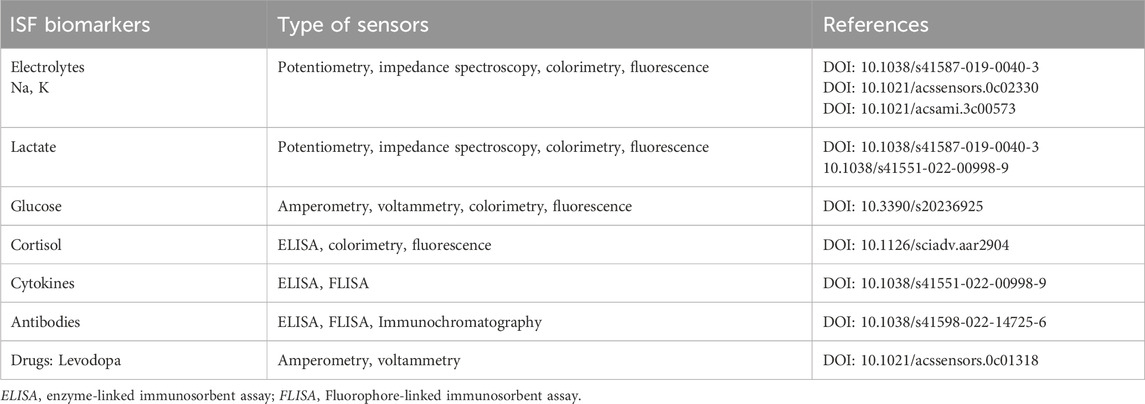
Table 3. ISF Biomarkers and sensing technology.
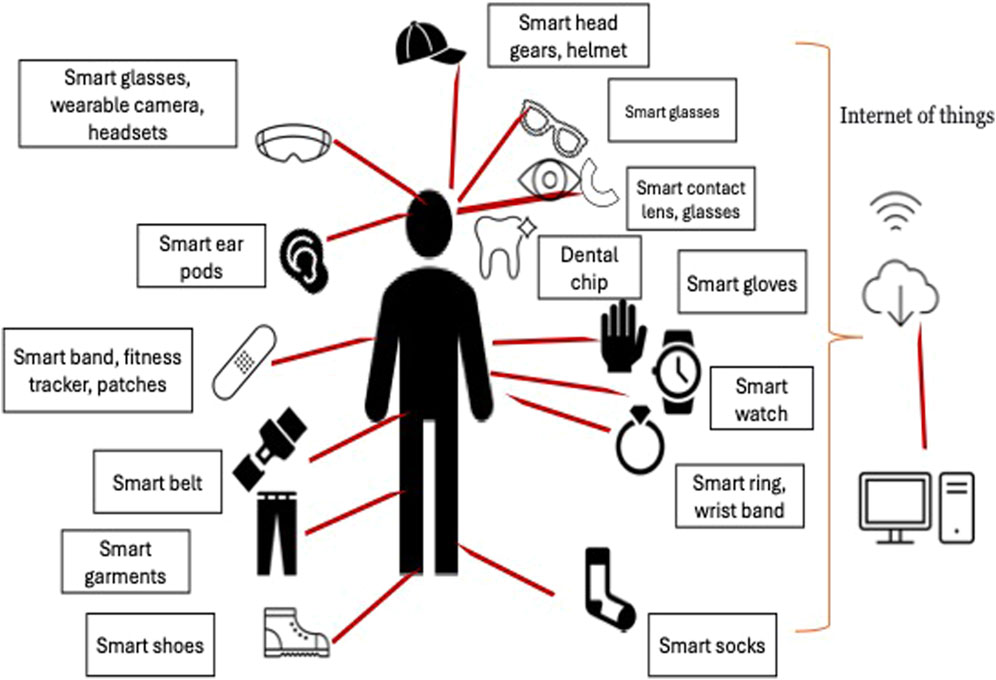
Figure 1. Wearable devices.
Paper-based wearable sensors and smart tattoo sensors
Low-cost, eco-friendly biochemical sensing wearable health technologies are a present necessity to minimize ecological impact and sustain the environment; paper-based and biodegradable materials are promising alternatives for this.
Paper-based devices can be a disposable alternative for personalized health tracking, using printed colorimetric and electrochemical sensors to detect multiple sweat biomarkers. Smart tattoo sensors printed with conductive inks have seamless integration with the skin and can continuously monitor hydration and electrolytes without discomfort. These non-invasive innovations do have challenges in terms of sensor stability, accuracy, and regulatory compliance, and further research is needed to bring these cutting-edge devices from the lab to everyday use in the near future.
Integration of wearables with AI and big data analytics: enhancing wearable functionality
Wearable sensors are opening a new area of personalized health monitoring by accurately measuring physical states and biochemical signals. There are still several limitations in terms of sensitivity, accuracy of collected data, precise disease diagnosis, and early treatment. With advances in applied materials and the structure of wearables, the integration of artificial intelligence (AI) and machine learning (ML) algorithms have unlocked a new era of possibilities, propelling these devices to the forefront of cutting-edge healthcare solutions.
AI algorithms process complex biochemical data generated by these devices, providing personalized insights, predictions, and health recommendations. The integration of artificial intelligence (AI) and big data analytics with biochemical wearables significantly enhances their utility. This integration helps to filter noise, identify meaningful patterns, and predict health events, thereby supporting proactive healthcare management (Esteva et al., 2019).
For analyzing the extensive data gathered by wearable devices, ML algorithms are valuable to empower healthcare providers to identify patterns, predict the outcomes, and thus make suitable decisions in patient care. There has been a surge in research and development in the field of application of ML algorithms to healthcare wearable technology in recent years; however, poor standardization in data collection and analysis is posing constraints (Yu et al., 2018; Bayoumy et al., 2021).
Applications for real-time and personalized health monitoring
For real-time monitoring capabilities and personalized health monitoring, I-based techniques seem to be promising. For AI training, ML can help in issues related to the big data resources from past datasets of millions of patients in terms of medical records, omics, medical imaging, and wearable diagnostics, to recognize the patterns of disease conditions and progression for making faster clinical decisions. Combining the internet of things (IoT) and AI has helped researchers in the diagnosis of diabetes and heart disease by employing wearable sensors (Haick and Tang, 2021; Mansour et al., 2021).
Using deep learning models such as recurrent (RNN) and convolutional (CNN) neural network algorithms, AI techniques can predict and diagnose viral infections such as coronavirus by using smart ring (Oura) rapidly within 24 h (Poongodi et al., 2023).
AI-based wearable devices can help the treating physicians with faster decision-making and effective treatment to manage diseases, and studies on the use of wearable microneedles for drug delivery to diabetic patients can be based on feedback provided by continuous and real-time monitoring of glucose levels in different biofluids (Poongodi et al., 2023). Predictive health models powered by AI can analyze the trends in biochemical data to detect early signs of diseases or metabolic imbalances to enable early interventions, tailored health recommendations, and better disease management, aligning with the goals of precision medicine (Poongodi et al., 2023; Topol, 2019). Wearable biosensors could determine the levels of nutrients, such as glucose, salts, and desirable nutrient and vitamin levels in the body by using advanced AI-powered data-fusion algorithms. Such smart wearables would revolutionize faster dietary decision-making processes for diabetes patients and following a healthier diet and lifestyle (Sempionatto et al., 2021).
Challenges and future directions
Despite their potential, next-generation biochemical wearables face challenges such as sensor calibration, data accuracy, and maintaining user compliance. The integration of biosensors in wearables goes beyond data collection and extends to intelligent analysis and actionable feedback. With cutting-edge AI and ML algorithms, wearable devices can provide users with personalized health recommendations, early detection of potential issues, and even life-saving interventions.
Current research focuses on using AI technology in biosensing sweat and blood biomarkers. Ensuring that biochemical sensors are reliable across diverse populations and environmental conditions remains crucial. Moreover, as these wearables generate sensitive health data, robust measures must be implemented to protect user privacy and security (Heikenfeld et al., 2018).
AI technology offers personalized and continuous monitoring and remote patient monitoring, allowing these devices to help individuals make proactive health choices, preventing potential health complications, and reducing the burden on healthcare systems. Despite all the progress made in wearable biosensors, still there are gaps in the literature regarding the relationship between biofluid signals and human health parameters.
The integration of biosensors into wearables goes beyond data collection, extending to intelligent analysis and actionable feedback. With cutting-edge AI and ML algorithms, these devices provide users with personalized health recommendations, early detection of potential issues, and even life-saving interventions.
Developers of smart wearable biosensors facing new opportunities and challenges, including use of AI technology in combination with wearable technology for big data processing, self-learning, power-efficiency, real-time data acquisition and processing, and personalized health for an intelligent sensing platform (Jin et al., 2020).
The use of AI technology with biosensors is still in its infancy, and issues of thinness, miniaturization, integration, and less power-hungry devices remain to be resolved. Electronic readers for wearable devices require long-lasting battery power to sustain continuous data reading and the persistent operation of AI algorithms for data processing. Green energy tracking and human kinetic energy harvesting could be of help. Thus, combining AI technologies with wearable health technologies would facilitate P4 medicine (predictive, preventative, personalized, participatory) and provide a newer platform for future medical diagnostics in nearly every aspect of healthcare (Yang et al., 2022; Junaid et al., 2022).
Looking forward, advances in materials science, sensor technology, and AI integration will continue to drive innovation in biochemical wearables (Abuwarda et al., 2022; Joel et al., 2018; Ometov et al., 2021). The future may see fully integrated health monitoring systems that seamlessly blend into daily life, offering unprecedented access to personalized health insights and revolutionizing how we manage our health using remote healthcare monitoring.
Conclusion
Next-generation biochemical wearables are reshaping the landscape of health monitoring by providing real-time, personalized insights into an individual’s biochemical state. From smart tattoos and microneedle patches to implantable sensors and smart clothing, these devices promise to enhance personalized medicine, improve chronic disease management, and empower individuals with deeper health insights. However, addressing challenges related to accuracy, user adoption, and data security will be essential to realizing their full potential and ensuring that these technologies advance medicine without overpromising their results.
Data availability statement
The original contributions presented in the study are included in the article/supplementary material; further inquiries can be directed to the corresponding author.
Author contributions
SK: Writing–original draft, Writing–review and editing.
Funding
The author declares that no financial support was received for the research, authorship, and/or publication of this article.
Conflict of interest
The author declares that the research was conducted in the absence of any commercial or financial relationships that could be construed as a potential conflict of interest.
Generative AI statement
The author declare that no generative AI was used in the creation of this manuscript.
Publisher’s note
All claims expressed in this article are solely those of the authors and do not necessarily represent those of their affiliated organizations, or those of the publisher, the editors and the reviewers. Any product that may be evaluated in this article, or claim that may be made by its manufacturer, is not guaranteed or endorsed by the publisher.
References
Abuwarda, Z., Mostafa, K., Oetomo, A., Hegazy, T., and Morita, P. (2022). Wearable devices: cross benefits from healthcare to construction. Automation Constr. 142, 104501. doi:10.1016/j.autcon.2022.104501
Akter, A., Apu, M. M. H., Veeranki, Y. R., Baroud, T. N., and Posada-Quintero, H. F. (2024). Recent studies on smart textile-based wearable sweat sensors for medical monitoring: a systematic review. J. Sens. Actuator Netw. 13 (4), 40. doi:10.3390/jsan13040040
Babu, M., Ziv Lautman, Z., Lin, X., Sobota, M. H. B., and Snyder, M. P. (2024). Wearable devices: implications for precision medicine and the future of health care. Annu. Rev. Med. 75, 401–415. doi:10.1146/annurev-med-052422-020437
Bayoumy, K., Gaber, M., Elshafeey, A., Mhaimeed, O., Dineen, E. H., Marvel, F. A., et al. (2021). Smart wearable devices in cardiovascular care: where we are and how to move forward. Nat. Rev. Cardiol. 18, 581–599. doi:10.1038/s41569-021-00522-7
Deng, Z., Guo, L., Chen, X., and Wu, W. (2023). Smart wearable systems for health monitoring. Sensors 23 (5), 2479. doi:10.3390/s23052479
Detamornrat, U., Parrilla, M., Domínguez-Robles, J., Anjani, Q. K., Larrañeta, E., De Wael, K., et al. (2023). Transdermal on-demand drug delivery based on an iontophoretic hollow microneedle array system. Lab. Chip 23 (9), 2304–2315. doi:10.1039/d3lc00160a
Esteva, A., Robicquet, A., Ramsundar, B., Kuleshov, V., DePristo, M., Chou, K., et al. (2019). A guide to deep learning in healthcare. Nat. Med. 25, 24–29. doi:10.1038/s41591-018-0316-z
Gao, W., Emaminejad, S., Nyein, H. Y. Y., Challa, S., Chen, K., Peck, A., et al. (2016). Fully integrated wearable sensor arrays for multiplexed in situ perspiration analysis. Nature 529 (7587), 509–514. doi:10.1038/nature16521
Haick, H., and Tang, N. (2021). Artificial intelligence in medical sensors for clinical decisions. ACS Nano 15, 3557–3567. doi:10.1021/acsnano.1c00085
Heikenfeld, J., Jajack, A., Rogers, J., Gutruf, P., Tian, L., Pan, T., et al. (2018). Wearable sensors: modalities, challenges, and prospects. Lab. Chip 18, 217–248. doi:10.1039/c7lc00914c
Jin, X., Liu, C., Xu, T., Su, L., and Zhang, X. (2020). Artificial intelligence biosensors: challenges and prospects. Biosens. Bioelectron. 165, 112412. doi:10.1016/j.bios.2020.112412
Joel, R., Segundo, D., Junqueira, H. A., Sabino, M. H., Rafael, P., Al-Muhtadi, J., et al. (2018). Enabling technologies for the internet of health things. IEEE Access 6, 13129–13141. doi:10.1109/ACCESS.2017.2789329
Junaid, S. B., Imam, A. A., Abdulkarim, M., Surakat, Y. A., Balogun, A. O., Kumar, G., et al. (2022). Recent advances in artificial intelligence and wearable sensors in healthcare delivery. Appl. Sci. 12, 10271. doi:10.3390/app122010271
Kazanskiy, N. L., Khonina, S. N., and Butt, M. A. (2023). Smart contact lenses- A step towards non-invasive continuous eye health monitoring. Biosens. (Basel). 13 (10), 933. doi:10.3390/bios13100933
Mansour, R. F., El Amraoui, A., Nouaouri, I., Diaz, V. G., Gupta, D., and Kumar, S. (2021). Artificial intelligence and internet of things enabled disease diagnosis model for smart healthcare systems. IEEE Access 9, 45137–45146. doi:10.1109/ACCESS.2021.3066365
Nam, D., Cha, J. M., and Park, K. (2021). Next-generation wearable biosensors developed with flexible bio-chips. Micromachines 12 (1), 64. doi:10.3390/mi12010064
Ometov, A., Shubina, V., Klus, V., Skibińska, J., Saafi, J., Pascacio, S., et al. (2021). A survey on wearable technology: history, state-of-the-art and current challenges. Comput. Netw. 193, 108074. doi:10.1016/j.comnet.2021.108074
Parrilla, M., Detamornrat, U., Domínguez-Robles, J., Tunca, S., Donnelly, R. F., and De Wael, K. (2023). Wearable microneedle-based array patches for continuous electrochemical monitoring and drug delivery: toward a closed-loop system for methotrexate treatment. ACS Sensors 8 (11), 4161–4170. doi:10.1021/acssensors.3c01381
Parrilla, M., Sena-Torralba, A., Steijlen, A., Morais, S., Maquieira, A., and De Wael, K. (2024). A 3D-printed hollow microneedle-based electrochemical sensing device for in situ plant health monitoring. Biosens. Bioelectron. 251 (204), 116131. doi:10.1016/j.bios.2024.116131
Poongodi, M., Hamdi, M., Malviya, M., Sharma, A., Dhiman, G., and Vimal, S. (2023). Diagnosis and combating COVID-19 using wearable Oura smart ring with deep learning methods. Pers. Ubiquitous Comput. 26, 25–35. doi:10.1007/s00779-021-01541-4
Sempionatto, J. R., Lasalde-Ramírez, J. A., Mahato, K., Wang, J., and Gao, W. (2022). Wearable chemical sensors for biomarker discovery in the omics era. Nat. Rev. Chem. 6, 899–915. doi:10.1038/s41570-022-00439-w
Sempionatto, J. R., Montiel, V. R., Vargas, E., Teymourian, H., and Wang, J. (2021). Wearable and mobile sensors for personalized nutrition. ACS Sens. 6, 1745–1760. doi:10.1021/acssensors.1c00553
Singh, S. U., Chatterjee, S., Lone, S. A., Ho, H. H., Kaswan, K., Peringeth, K., et al. (2022). Advanced wearable biosensors for the detection of body fluids and exhaled breath by graphene. Mikrochim. Acta 189 (6), 236. doi:10.1007/s00604-022-05317-2
Song, Z., Zhou, S., Qin, Y., Xia, X., Sun, Y., Han, G., et al. (2023). Flexible and wearable biosensors for monitoring health conditions. Biosens. (Basel). 13 (6), 630. doi:10.3390/bios13060630
Stoppa, M., and Chiolerio, A. (2014). Wearable electronics and smart textiles: a critical review. Sensors 14 (7), 11957–11992. doi:10.3390/s140711957
Topol, E. J. (2019). High-performance medicine: the convergence of human and artificial intelligence. Nat. Med. 25, 44–56. doi:10.1038/s41591-018-0300-7
Xu, Y., Zhang, J., Ray, W. Z., and MacEwan, M. R. (2024). Implantable and semi-implantable biosensors for minimally invasive disease diagnosis. Processes 12 (7), 1535. doi:10.3390/pr12071535
Yang, J., Liu, X., Fu, Y., and Song, Y. (2019). Recent advances of microneedles for biomedical applications: drug delivery and beyond. Acta Pharm. Sin. B 9, 469–483. doi:10.1016/j.apsb.2019.03.007
Yang, P., Wei, G., Liu, A., Huo, F., and Zhang, Z. (2022). A review of sampling, energy supply and intelligent monitoring for long-term sweat sensors. npj Flex. Electron 6, 33. doi:10.1038/s41528-022-00165-9
Keywords: non-invasive biochemical wearables, technologies, AI, ML, deep learning, personalized medicine, healthcare monitoring
Citation: Kharb S (2025) Future directions: what LIES ahead for smart biochemical wearables in health monitoring?. Front. Anal. Sci. 4:1509815. doi: 10.3389/frans.2024.1509815
Received: 11 October 2024; Accepted: 10 December 2024;
Published: 07 January 2025.
Edited by:
Zhanjun Yang, Yangzhou University, ChinaReviewed by:
Marc Parrilla, University of Antwerp, BelgiumCopyright © 2025 Kharb. This is an open-access article distributed under the terms of the Creative Commons Attribution License (CC BY). The use, distribution or reproduction in other forums is permitted, provided the original author(s) and the copyright owner(s) are credited and that the original publication in this journal is cited, in accordance with accepted academic practice. No use, distribution or reproduction is permitted which does not comply with these terms.
*Correspondence: S. Kharb, c2ltbWlraEBnbWFpbC5jb20=