 Somang Kim1,2†
 Jimmy B. Yuan1,2†
 Wendy S. Woods3Destry A. Newton1Pablo Perez-Pinera2,3,4,5,6
 Jun S. Song1,2,5,7,8*
- 1Department of Physics, University of Illinois at Urbana-Champaign, Urbana, IL, United States
- 2Carl R. Woese Institute for Genomic Biology, University of Illinois at Urbana-Champaign, Urbana, IL, United States
- 3Department of Bioengineering, University of Illinois at Urbana-Champaign, Urbana, IL, United States
- 4Department of Biomedical and Translational Sciences, Carle-Illinois College of Medicine, University of Illinois at Urbana-Champaign, Urbana, IL, United States
- 5Cancer Center at Illinois, University of Illinois at Urbana-Champaign, Urbana, IL, United States
- 6Department of Molecular and Integrative Physiology, University of Illinois at Urbana-Champaign, Urbana, IL, United States
- 7Center for Theoretical Physics, Department of Physics, Massachusetts Institute of Technology, Cambridge, MA, United States
- 8Department of Statistics, Harvard University, Cambridge, MA, United States
A Corrigendum on
Chromatin structure and context-dependent sequence features control prime editing efficiency
by Kim S, Yuan JB, Woods WS, Newton DA, Perez-Pinera P and Song JS (2023). Front. Genet. 14:1222112. doi: 10.3389/fgene.2023.1222112
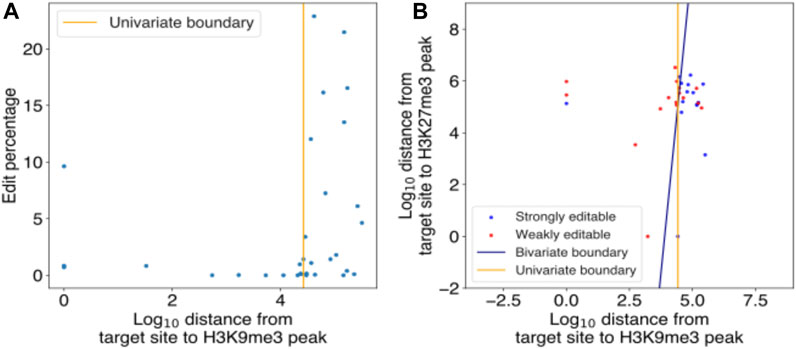
In the published article, there was an error in Supplementary Figure S3. Even though the figure caption for Supplementary Figure S3 was correct, Figure S3 was inadvertently duplicated from Figure S2 and appeared as:
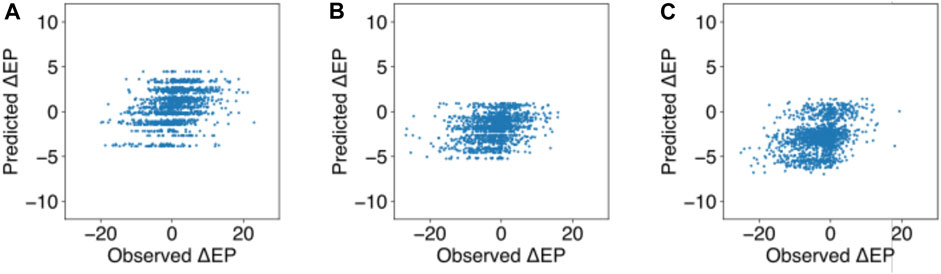
The correct figure appears below.
The authors apologize for this error and state that this does not change the scientific conclusions of the article in any way. The original article has been updated.
Publisher’s note
All claims expressed in this article are solely those of the authors and do not necessarily represent those of their affiliated organizations, or those of the publisher, the editors and the reviewers. Any product that may be evaluated in this article, or claim that may be made by its manufacturer, is not guaranteed or endorsed by the publisher.
Keywords: prime editing, CRISPR–Cas9, heterochromatin, nucleosome positioning, DNA-RNA hybridization, nucleotide preference, machine learning, neural network interpretation
Citation: Kim S, Yuan JB, Woods WS, Newton DA, Perez-Pinera P and Song JS (2024) Corrigendum: Chromatin structure and context-dependent sequence features control prime editing efficiency. Front. Genet. 15:1391923. doi: 10.3389/fgene.2024.1391923
Received: 26 February 2024; Accepted: 28 February 2024;
Published: 11 March 2024.
Edited and reviewed by:
Meizhu Bai, Yale University, United StatesCopyright © 2024 Kim, Yuan, Woods, Newton, Perez-Pinera and Song. This is an open-access article distributed under the terms of the Creative Commons Attribution License (CC BY). The use, distribution or reproduction in other forums is permitted, provided the original author(s) and the copyright owner(s) are credited and that the original publication in this journal is cited, in accordance with accepted academic practice. No use, distribution or reproduction is permitted which does not comply with these terms.
*Correspondence: Jun S. Song, c29uZ2pAaWxsaW5vaXMuZWR1
†These authors have contributed equally to this work