 Halvor Dannevig1*
 Janne E. Søreide2
 Anna G. Sveinsdóttir3Julia Olsen3,4Grete K. Hovelsrud3Tone Rusdal1Ragnhild F. Dale1
- 1Western Norway Research Institute, Sogndal, Norway
- 2Arctic Biology, University Centre in Svalbard (UNIS), Longyearbyen, Norway
- 3Nordland Research Institute, Bodø, Norway
- 4Faculty of Social Sciences, Nord University, Bodø, Norway
Tourism has been booming in Svalbard and has almost returned to pre-pandemic levels. At the same time, the island is a hotspot of rapid and cascading climate and environmental changes, which are already placing natural and social systems under stress. There is more precipitation, less sea ice, and glaciers are shrinking at an increasing rate. Presently, sweeping legislative changes are underway in Svalbard that hold the potential to change the scope and conditions of tourism in multiple ways. Drawing on a review of literature presenting recent projections for climate and environmental change and interviews with tourism actors (n=25), this article outlines how climate and environmental changes are currently impacting nature-based tourism actors in the archipelago and discusses opportunities and barriers for their adaptation to current and projected changes. We define impacts in three broad categories: increased vulnerability of ecosystems; climate risks to tourism; and climate change benefits to tourism. We find that tourism actors have a high adaptive capacity to said changes, taking advantage of increased access due to shrinking ice in the fjords and extending the summer season into the autumn months due to higher temperatures. Avalanches and other natural hazard risks are increasing, causing a higher frequency of disruptions to organized tours and excursions. This article contributes to ongoing discussions about how the tourism industry and residents will be impacted by the cascading and cumulative effects of climatic and environmental changes on Svalbard.
Introduction
Tourism continues to boom in Svalbard and has almost returned to pre-pandemic levels. Simultaneously, the archipelago is faced with rapid and cascading climate and environmental changes that are placing natural and social systems under stress. The tourism sector in Svalbard relies on a diverse set of contributions from these systems, such as sea ice, permafrost, flora, and fauna, as well as infrastructure, all of which are directly or indirectly affected by climate change (Hovelsrud et al., 2011; AMAP, 2017). The tourism industry plays a vital role in ensuring a viable and vibrant community on Svalbard and in Longyearbyen. On the one hand, the industry provides important income to the local community, contributing both to employment and community development (e.g., new restaurants, shops, and other meeting spaces). On the other hand, the impacts of climate change, for example, increased avalanches and other natural hazards, are disrupting organized tours and cause risk to infrastructure and the built environment (Meyer, 2022; Sokolickova et al., 2022). The rapidly increasing marine-based tourism (Port of Longyearbyen, 2018) creates a dilemma regarding how the tourism industry should balance the provision of services, such as boating and cruising, with protecting the archipelago (Olsen et al., 2020; Hovelsrud et al., 2021). Sweeping legislative changes that hold the potential to change the scope and conditions of tourism on Svalbard in multiple ways are also currently underway (Hovelsrud et al., 2023). The tourism industry in Svalbard is thus faced with walking a tightrope where it must cope with rapid and cascading climatic and environmental changes while balancing the competing demands of economic growth and environmental governance (Hovelsrud et al., 2021).
Spatial and temporal reduction in sea ice cover has expanded the navigation season and area of operation, which has enabled a demand-driven growth in cruise traffic (Stocker et al., 2020). The sea ice season in the Barents Sea–Svalbard region is getting shorter, and recent studies project that the Barents Sea will be totally ice free by the 2040s (Bennett et al., 2020). The changing climate is thus widely believed to enable continued expansion of Arctic marine-based tourism and to lead to opportunity-based adaptation to climate change (Dawson et al., 2016). A recent estimate on shipping development around Svalbard indicates that the level of activities will continue to increase toward 2040 (Olsen et al., 2020). In July 2022, a French cruise ship company reached 90 degrees north with tourists for the first time. Until then, only Russian icebreakers had brought tourists to the North Pole. Cruise ship tourism to the North Pole is thus already a reality (Humpert, 2022; Kubny, 2022). At the same time, climate change is causing what can best be described as an emergency response crisis in Longyearbyen (Hovelsrud et al., 2021). An avalanche destroyed 11 houses and killed two persons in 2015. Subsequent avalanche risk assessment led to the relocation of several residential buildings. Major investments have also been made in landslide protection and flood protection, as well as in reinforcing roads and buildings to withstand thawing permafrost (Meyer, 2022). There is also a concern that climate change is making ecosystems and wildlife more vulnerable to negative impacts from human activities (Hovelsrud et al., 2021; Norwegian Environment Agency, 2021). Increased human traffic in the far North may introduce new species and potentially harmful microorganisms to the ecosystem (e.g., through ballast water; Goldsmit et al., 2018). Further, the ongoing Atlantification of the marine ecosystem changes the trophic interactions, with increased predation pressure on many Arctic key species, such as polar cod and large-sized Arctic copepods (Misund et al., 2016).
Ongoing changes in Svalbard tourism create socio-economic opportunities for the tourism industry and tourism-related services and organizations, as well as for local communities (Olsen et al., 2022). These include a shift from seasonal to year-round tourism, new markets and tourism segments, a change from land-based toward marine-based tourism, and increasingly promoting Longyearbyen as a tourism destination and not only for transit (Olsen et al., 2022; Sokolickova et al., 2022). These opportunities are increasingly balanced against climate change impacts, sustainability requirements, governance, and regulations (Hovelsrud et al., 2023).
Tourism regulation on Svalbard addresses the protection of nature in the context of tourism growth (MoJPS, 2016) by limiting the area for access and passage, setting requirements for organized outdoor activities, and developing regulation instruments, such as environmental taxes (Hovelsrud et al., 2023). The Svalbard Environmental Protection Act (SEPA) stipulates that environmental concerns shall trump economic interests in case of conflict and that large areas will remain unchanged for the purposes of research and monitoring (MoJPS, 2016). Meanwhile, Svalbard's flora, fauna, and cultural remains shall be sustained without influence from human activities, preserving opportunities to experience nature undisturbed by motorized activities, even in the vicinity of settlements (MoJPS, 2016). In September 2021, the Norwegian government began a public consultation process1 on suggested amendments to the SEPA and associated regulations.2 The proposed changes signal increased state control (Sokolickova et al., 2022), and the process resulted in significant reactions from Longyearbyen business operators, the local population, and other actors (Haugli, 2022). In January 2023, the Norwegian Environment Agency published their suggested amendments, which maintained the major points in the hearing document, including suggestions to limit the number of passengers on tourism vessels ships to 200 and reduce the number of sites allowed for visitors. The decision by the Norwegian government is awaited with both eagerness and apprehension, depending on one's point of view.
Currently, there is limited knowledge about how the tourism industry in Svalbard is impacted by the cascading and cumulative effects of climatic and environmental changes. This article combines a literature review on the state of knowledge about such changes with interviews with tourism actors about their perceptions of changes in the climate and the environment, as well as their adaptations to such changes. It also discusses potential impacts of the projected changes in climate and ecosystems on the tourism industry.
Key concepts
Climate change impacts a tourism destination in multiple ways, and several frameworks have been developed to capture different aspects of this. The analytical framework of this article is based on a synthesis of the climate risk assessment framework for tourism, as outlined by Scott et al. (2012), and the concept of climate risks developed by the Intergovernmental Panel on Climate Change (IPCC, 2022). We thus define climate risk, in line with the IPCC (2022), as composed of the following elements: hazard, exposure, and vulnerability, where the latter is again a function of sensitivity and adaptive capacity. This study focuses on the hazard element within this framework and the sensitivity aspect of the vulnerability element (i.e., the extent to which the tourism actors are susceptible to harm from the impacts of climate change).
We will also discuss the adaptive actions and adaptive capacity of tourism actors in Svalbard. Adaptive capacity is the ability to cope with external stresses and shocks (Smit and Pilifosova, 2001). It is not directly observable, but it can be inferred through different determinants (e.g., Smit and Pilifosova, 2001) or proxies (e.g., Dannevig et al., 2020). These include human, social, and financial capital, infrastructure, and institutions (Dannevig et al., 2020). We recognize that tourist actors are part of a tourism system, which again are nested within the wider socio-environmental system (Scott et al., 2012; Becken, 2013) (see Figure 1), but we do not set out to deliver a system-wide assessment of climate risks. Instead, we focus on how changes in climate drive changes that impact the tourism system and produce (a) increased vulnerability of ecosystems, (b) climate risks to tourism, and (c) climate change benefits to tourism (see Figure 1). A nature-based tourism system, such as the one we find on Svalbard, is reliant on the natural environment and its weather, climate, and ecosystems. The Intergovernmental Science-Policy Platform on Biodiversity and Ecosystem Services (IPBES) has introduced the concept of “nature's contributions to people” (NCP) to address shortcomings with the concept of “ecosystem services” and to capture the various valuations of nature that exist in different cultures and for different purposes (Pascual et al., 2017). We paraphrase the IPBES and call the NCPs on which the Svalbard tourism system is dependent “nature's contributions to tourism” (NCT). These include landscape features, such as fjords, valleys, and mountains, as well as the sea ice, glaciers, snow, and wildlife that enrich the tourism experience. This article focuses on how the tourism system is impacted by climate change's effects on these NCTs.
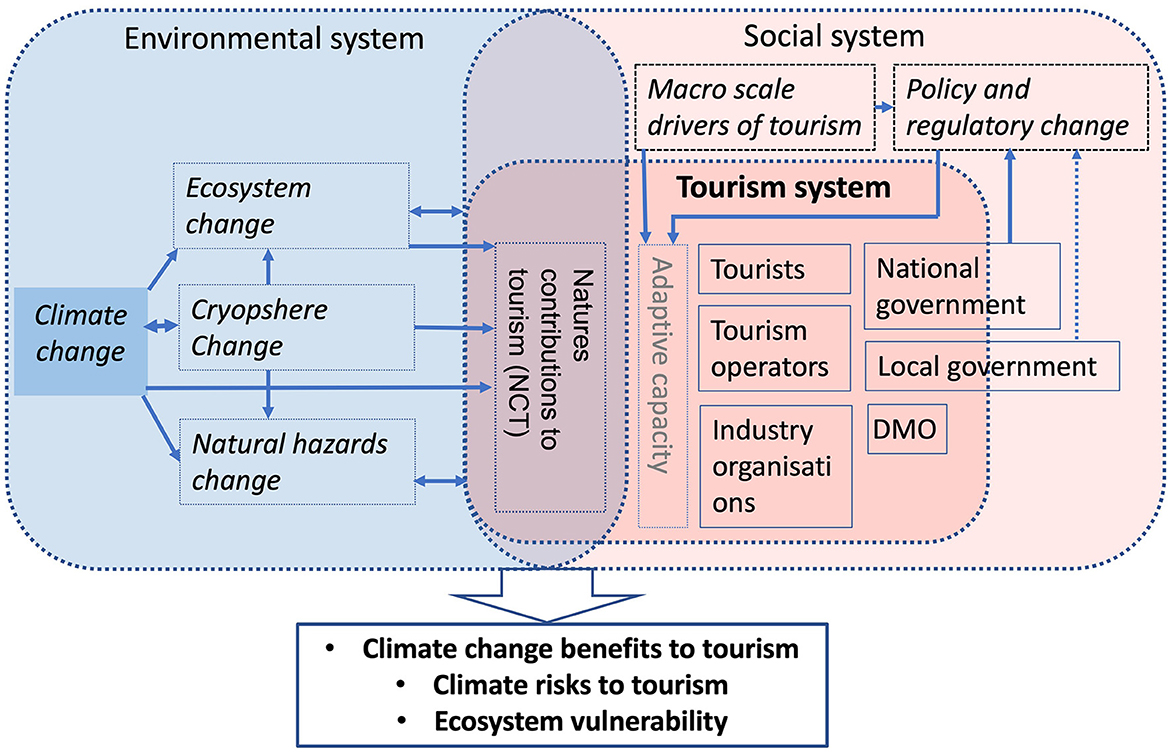
Figure 1. A model for assessing climate change impacts on Svalbard tourism, inspired by Scott et al. (2012) climate risk assessment framework for tourism. It shows the interactions between various drivers of change (in italics) in the nested socio-environmental systems that produces climate risks to tourism, climate change benefits to tourism and ecosystem vulnerabilities. Climate change is affecting the tourism system through the NCTs and through direct impacts on tourists operations. Adaptive capacity is affected by changes in policy and regulations. As the local council and the governor of Svalbard (national government) have roles in the management of tourism, we have included them as parts of the tourism system. DMO = Destination Marketing Organization.
Methods
This article reports on a project that aimed to deliver climate services to the tourism industry in Svalbard, employing a co-production approach that combined a top-down, expert review of projected changes in climate, cryosphere, and ecosystems with a bottom-up approach to perceived climate risks and adaptations. A co-production of knowledge approach means that users of knowledge are involved in the knowledge production process in order to ensure actionable results (e.g., Dilling and Lemos, 2011; Dannevig et al., 2022). We thus involved key actors as partners in the research process, which included shaping of research questions and interview guide, selection of informants and comments on early draft of this article manuscript. As there already exists a notable amount of research that includes projections for future climate change and biophysical impacts, the project aimed to assess and synthesize this existing knowledge and deliver it to the tourism industry. During an input meeting with key actors from the tourism industry [representatives from tourism industry organizations and the destination marketing organization (DMO)], salient categories of climate change and impacts were identified. This then informed the selection of literature for review. The study has not been framed as a climate risk assessment, as the word “risk” carries connotations and associations that might overshadow the diversity of impacts and adaptive responses found. Furthermore, some of the climate change impacts have undoubtedly been beneficial to the tourism industry, in particular the loss of fast fjord ice in Western Svalbard (e.g., Stocker et al., 2020). Additionally, an aspect of climate and ecosystem change is the notion that tourism activities need to be restricted in order to not contribute to additional stress for wildlife and ecosystems (i.e., Norwegian Environment Agency, 2021).
In the results section, we first present projected climate changes and their impacts on natural systems according to four impact categories outlined below, and we then present results from semi-structured interviews on observed changes, impacts, and adaptations. Finally, we discuss the adaptive actions and strategies and what these reveal about the adaptive capacity of the tourism system.
Approach to literature review
Based on the above-mentioned input meeting, the authors defined four categories of climate change impacts relevant for tourism and divided responsibility for literature review within these categories. The categories were: (1) temperature and precipitation change; (2) coastal and sea ice change; (3) natural hazards; and (4) glacier change. The point of departure for the review was existing climate change and climate change impact assessment reports, such as the “Climate in Svalbard 2100” report by the Norwegian Climate Service Center (Hanssen-Bauer et al., 2019), the “Snow, Water, Ice and Permafrost in the Arctic” report from the Arctic Monitoring and Assessment Programme (AMAP, 2017), and a report on local impacts of cruise tourism that also covered interplay between climate change and tourism (Øian and Kaltenborn, 2020). Except for this latter report, we found only one article explicitly analyzing the impacts of climate change on tourism in Svalbard: a study of the relationship between sea ice and ship traffic around the archipelago (Stocker et al., 2020). We reviewed both scientific reports and peer reviewed journal articles and book chapters. The review of climate change impacts with relevance for tourism included 31 journal articles and book chapters and 9 assessment reports and scientific reports. The literature was selected based on the authors' knowledge of the field and snowball sampling from already-reviewed literature.
Semi-structured interviews
Our analysis draws on qualitative field research carried out in Svalbard between 2021–2022, during which 25 semi-structured interviews were carried out with key actors from the tourism industry. Semi-structured interviews allowed for the flexibility to explore topics brought up by interviewees that might not have emerged in more formal settings (Maxwell, 2022). The interview guide, which used open-ended questions, covered: (1) tourism's relationship with the community in Longyearbyen, (2) observed changes to weather and seasonality, and (3) perspectives on the future of tourism in Svalbard regarding both climate change and changes to the regulatory framework. The interviews, lasting between 30 and 90 min, were audio recorded and transcribed before being coded into thematic areas for analysis, for which we used the NVivo software for qualitative data analysis (Bazeley and Jackson, 2013). The codes we employed were “observed changes in climate, weather, snow and ice, nature and wildlife with relevance for tourism”; “impacts and responses for tourism”; “ability and resources to cope with challenges and opportunities”.
Nature-based tourism in Svalbard
The Svalbard Treaty of 1920 grants Norway sovereignty on Svalbard, but citizens of the any of the 46 signatory countries can establish industries or live on Svalbard. The population in Svalbard therefore consist of multiple nationalities, settled in Svalbard's two main settlements: Longyerbyen with 2,500 inhabitants and the Russian settlement Barentsburg with 300 inhabitants. Svalbard's tourism development has been framed by the Norwegian Svalbard policy and the Treaty, which, among other objectives, aims to preserve nature while simultaneously maintaining Norwegian communities in the archipelago (Kaltenborn et al., 2020; Hovelsrud et al., 2021). The existing regulations not only protect 87% of Svalbard's territorial waters and 65% of its land area but also define a scope of tourism activities in the remaining areas (Figure 2). These regulations comprise a framework of rules for natural and environmental consideration, access to areas and passage, requirements for organized outdoor activities, and regulatory tools (Hovelsrud et al., 2023).
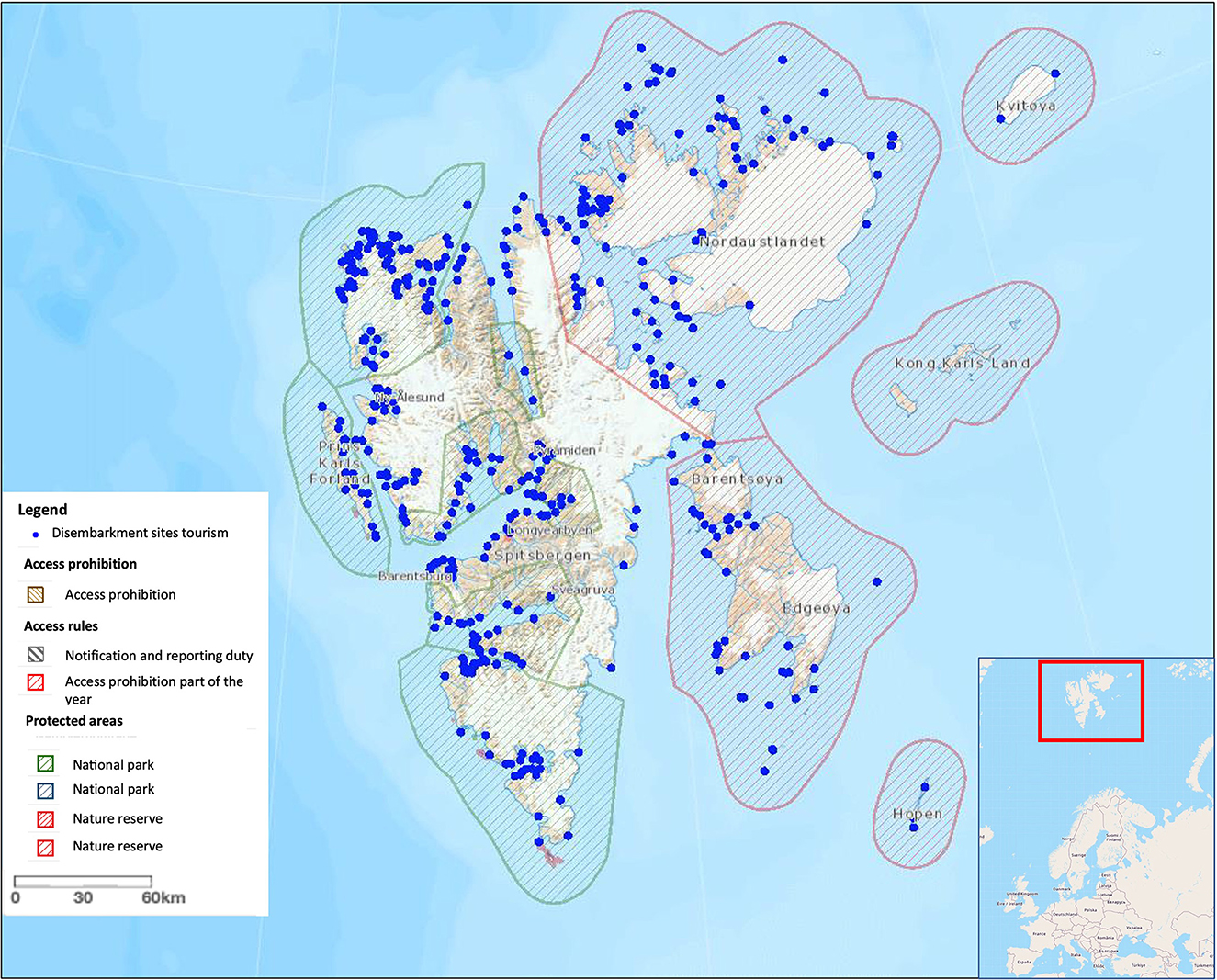
Figure 2. Areas with access restrictions on Svalbard. Map: Norwegian Polar Institute. Thematic data: Governor of Svalbard, Norwegian Environment Agency.
Since the restructuring of a state-owned coal company, Store Norske Spitsbergen Kulkompani, at the end of the 1980s and the collapse of the Soviet Union in 1991, tourism has been an important industry for Svalbard communities and their socio-economic development (Olsen et al., 2022). For the past 15 years, the importance of the tourism industry has been reflected in the growing number of guest nights (from 88,124 in 2007 to 147,834 in 2022) and expedition cruise passengers (from 2,824 in 2007 to 24,148 in 2022), as well as in infrastructure development (in the form of new hotels and restaurants and expansion of the harbor). The most attractive tourism activities for guests in Longyearbyen are local boat trips, dog sledding, snowmobile trips, hiking trips, sightseeing and lectures, food and drink experiences, mine visits, ice cave visits, ATV safaris, and northern lights adventures (Visit Svalbard, 2023) (Figure 8). The majority of tourists come from Norway and other European countries, such as Germany, Sweden, the UK, France, Italy, and Denmark, while the destination is also attractive to visitors from the USA and Asian countries (Visit Svalbard, 2017). Table 1 presents key tourism figures for the season of 2022.
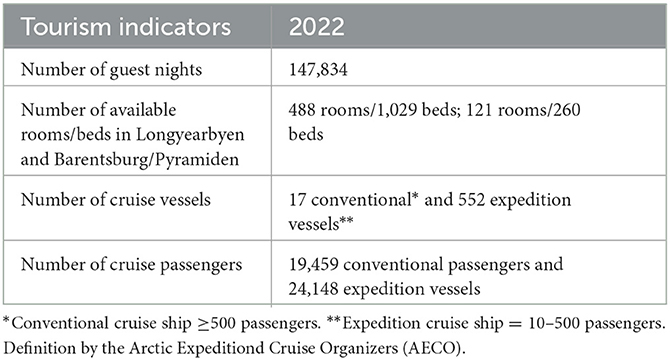
Table 1. Key tourism figures for 2022 (Governor of Svalbard, 2022).
Svalbard has been a cruise destination since the end of the 19th century, but the scope was historically limited. Nowadays, passenger vessels operating in Svalbard waters comprise overseas, expedition, and day cruise vessels, as well as pleasure crafts. The expedition vessels use Longyearbyen as a turning harbor, while remote Svalbard locations present the main attraction for the expedition cruise tourists. For the overseas cruise vessels, Svalbard (usually Longyearbyen) is one of many destinations along their itinerary; hence, they spend only a short period of time on Svalbard (usually a few hours, e.g., Olsen et al., 2020). The scope of cruise activities outside the settlements and Isfjorden area can be described by the number of visited places and the number of people going ashore. According to recent statistics, the number of places where people go ashore has increased from 138 in 2007 to 224 in 2019, while the number of people going to these places has increased from 62,433 in 2007 to 108,830 in 2019 (Mosj, 2022). Overseas vessel activity is predicted to reduce due to a recent ban of heavy fuel in Svalbard waters (Governor of Svalbard, 2022). Local value creation from cruise activities in 2019 was 110 million Norwegian kroners; the expedition vessels account for a larger share of this amount, since an average expedition cruise passenger spends five times more compared to an overseas passenger (Epinion, 2019).
Results
We have defined four categories of climate and ecosystem change with relevance for tourism, which are each treated in their own subsection. For each category, we first present a synopsis from the literature review of climate and ecosystem change projections, followed up by a subsection on observed impacts and adaptation based on interviews.
Changes in temperature and precipitation
Over the last 100 years, temperatures have increased by an average rate of 0.3 degrees Celsius per decade, with the largest increase observed in winter temperatures (Hanssen-Bauer et al., 2019). Downscaled climate models (CMIP 5) for the three Representative Concentration Pathways (RCPs) predict a mean temperature increase ranging from 3 degrees Celsius (RCP 2.6), to 6 degrees Celsius (RCP 4.5), and finally to over 10 degrees Celsius (RCP 8.5) by 2100. It is worth noting that even the middle scenario (RCP 4.5) has a “high” model projection increase in temperature of 12 degrees Celsius by the end of the century (compared to 1970) and a median temperature increase of 7 degrees Celsius by 2050 (Hanssen-Bauer et al., 2019) (see Figure 3). If the temperature continues to rise at its current rate of increase, in 100 years, the climate in Svalbard will be like the current climate in Denmark (Hanssen-Bauer et al., 2019).
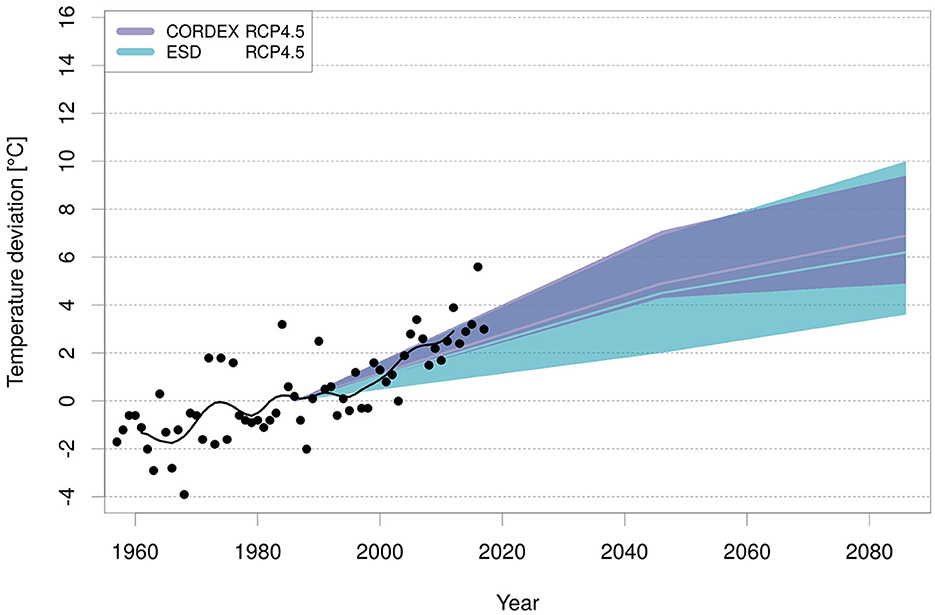
Figure 3. Annual mean temperature change for the Svalbard land area given as deviation from the reference period 1971–2000. The points and black curve show historical values. The blue and purple area show high and low model projections for RCP 4.5, and the colored lines represent the medians (figure from Hanssen-Bauer et al., 2019).
The projected temperature increase will have massive effects on ecosystems. The growing season (successive days per year with temperatures above 5 degrees Celsius) in the Isfjorden area is projected to increase from between 2 and 55 days to 128 days by 2100 (see Hanssen-Bauer et al., 2019). The non-glaciated part of Svalbard is projected to see an increase in growing season by three to four months—three to four times the reference period level (1970–2000).
Precipitation is also increasing, and in Longyearbyen, precipitation has increased by over 20% since 1971. By 2100, annual precipitation is projected to increase by ~40% (RCP 4.5) to ~60% (RCP 8.5) (model medians) compared to the 1971–2000 baseline (Figure 4). Projections show that episodes of rain during winter in the Longyearbyen area will triple (Norski klimaservicesenter, 2021). An increase of 35% in extreme precipitation events is also projected. These tend to happen in the autumn and winter months.
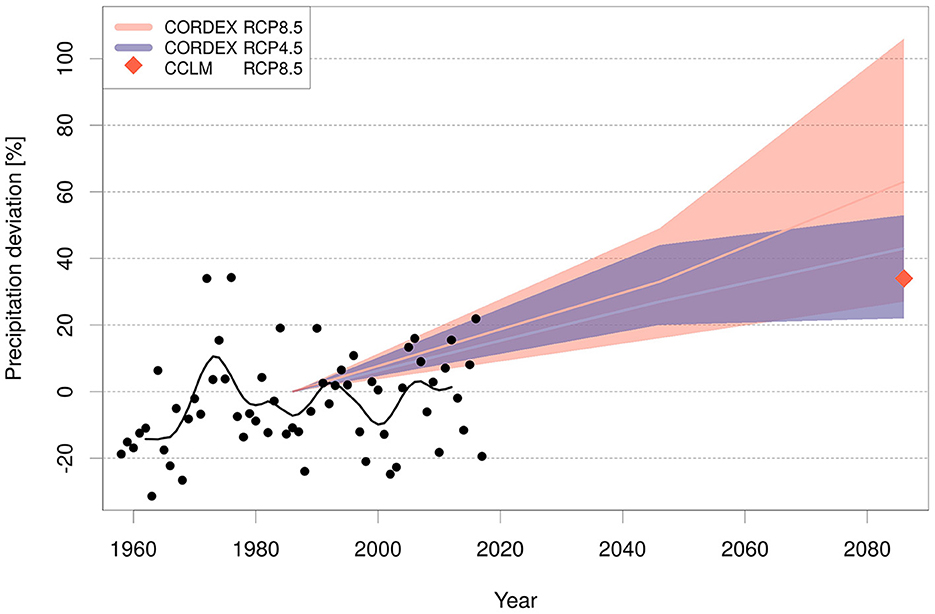
Figure 4. Annual mean precipitation changes for Svalbard land area as deviation from the reference period 1971–2000. The points and black curve show historical values. The purple and red area show model projections for RCPs 4.5 and 8.5, and the colored lines represent the medians (figure from Hanssen-Bauer et al., 2019).
The snow season has decreased by 20 days from 1958 to 2017, but the amount of snow that has fallen has increased in line with the increased precipitation. Climate projections estimate a further increase in snow, but a rapid shortening of the snow season (Norsk Klimaservicesenter 2021). Figure 5 shows a large difference between projections of snow days between the RCP 4.5 and RCP 8.5 scenarios for the period 2071–2100. With the RCP 8.5 scenario, there will be no snow during winter in the coastal areas around much of the islands.
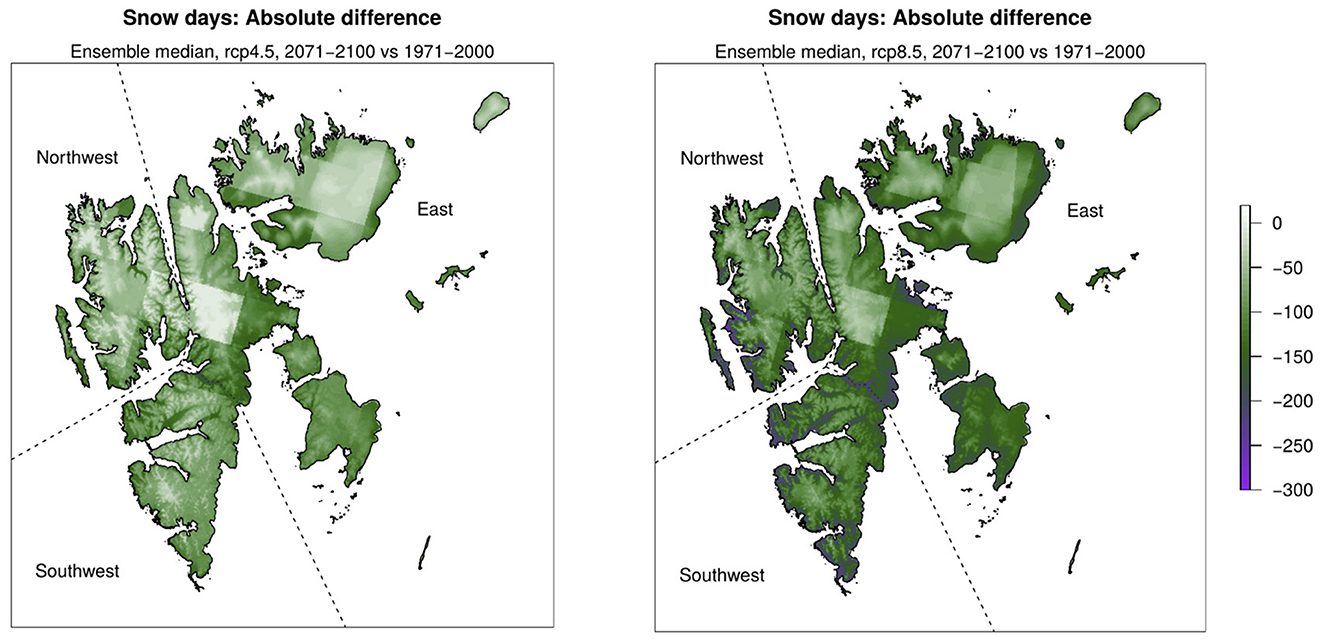
Figure 5. Changes in snow days in Svalbard from the period 1971–2000 vs, 2071–2100. The left figure shows projections based on RCP 4.5, while the right figure shows high-emission scenario RCP 8.5 (figure from Hanssen-Bauer et al., 2019, p. 98).
Impact and adaptation
The increased temperature is already noticeable in Svalbard, with consequences for tourism operators: the summer season offerings, particularly day trips with boats, are extending much longer into the autumn than even 10 years ago, according to a tour operator and guide who was interviewed: “I find it very nice that we can prolong the season in the autumn, (…) but not so happy about starting the boating season in March-April, because that will degrade our winter products” (Guide 14). While autumn on Svalbard used to be short, higher temperatures and less sea ice allows for boat trips and hiking trips during September. The reduced daylight is more of a limiting factor during the winter months. With the projected changes, it is likely that this development will continue if there is demand for these types of tourism products.
The average Svalbard guide does not stay for many years, so a given guide may not have experienced changes in weather and climate themselves. However, some of our informants had lived on Svalbard for more than 15 years, some even longer. They noted the increasing temperatures, particularly the increased frequency of warm weather spells in winter, something that “never” happened before. “I have seen huge changes (...) it is more precipitation, both snow and rain. It rarely rained before. And quite little snow; it is an Arctic desert here (...) Three years ago, we had rain in April, first in 40 years” (Guide 14).
Another reoccurring theme among the old-timers is the interannual variability in conditions: “What I really notice and pay attention to is how much the temperatures vary between years (...) the only things that's for sure is that the coming winter won't be like the previous one” (Guide 7). This guide also believed that Svalbard was headed for a colder climate after having experienced many years with steady temperature increases. Some also found that the weather was more unpredictable. Before, winter weather was more stable, but there are now more frequent episodes of wind and precipitation. As one guide noted, “I find it harder to plan trips now” (Guide 5). One of the dogsledders we interviewed stated that sufficient snow cover for dog sledding was tending to arrive later and later. “When we got started here, we had a dog sledding trip on November 1st. And now in recent years, at the worst, we haven't been out until after Christmas” (Guide 1). Guides and operators also recognized that they would be impacted by a shorter winter season for snowmobile trips. In general, the informants believed that a shorter winter season was something they would be able to adapt to.
Coastal and sea ice changes
Marine and coastal ecosystems
In the last two decades, boreal species have become more prominent in Svalbard waters, and this “Atlantification” of the Svalbard marine ecosystem is particularly prevalent along West Spitsbergen (e.g., Berge et al., 2015; Gluchowska et al., 2016; Vihtakari et al., 2018; Hop et al., 2019) due to regular intrusions of warm Atlantic water into the fjords there since 2005 (Muckenhuber et al., 2016; Cottier et al., 2019; Tverberg et al., 2019; Skogseth et al., 2020). In the Barents Sea, demersal fish species richness has doubled since 1994 (Gordó-Vilaseca et al., 2023). The large year classes of Atlantic cod (Gadus morhua) in 2011–2013 led to high numbers of Atlantic cod in the deeper, open fjords in Western Svalbard (Misund et al., 2016) and an increase in cod fishery and even some fishing tourism. This relatively new, major predator in the fjord system may have large top-down effects on polar cod (Boregadus saida), a key Arctic fish species, and shrimps. For the benthos, a similar “Atlantification” of the community composition has been observed, but in threshold fjords with glacial basins, the Arctic benthic communities have largely survived, demonstrating the importance of these cold, isolated refuges in the otherwise-warm Atlantic-influenced fjords for securing the overall biodiversity (Renaud et al., 2007; Drewnik et al., 2017).
These glacial fjord bays are also important habitats for sea ice-dependent seals, since calving glaciers produce ice bergs on which the seals can rest. These chunks of glacier ice accumulate drifting snow and make it possible for ringed seals to make protective snow caves for their pups (Lydersen et al., 2014). In eastern Svalbard, sea ice starts to form in autumn and snow piles up over the season, while late sea ice formation in Western Svalbard often results in very little snow on top of the sea ice. As such, ringed seals have very limited possibilities for hiding their pups from polar bears and other predators, such as glaucous gulls, and may also be more exposed to human disturbance. Polar bears have increased in numbers in West Spitzbergen after hunting was banned in 1973 (Prop et al., 2015). Here, they have adapted to changed hunting grounds. In summer, they predate heavily on bird colonies (Prop et al., 2015) and reindeer, which they can hunt year-round (Stempniewicz et al., 2021).
Sea ice
Prior to 2005, sea ice formed in many of the fjords in Western Spitsbergen, but after 2005, changes in weather patterns combined with slight changes in sea water densities have resulted in more frequent and larger intrusions of warm Atlantic or modified Atlantic water into the fjords (Nilsen et al., 2008; Skogseth et al., 2020). In the north-eastern parts of Svalbard, cold Arctic waters and seasonal sea ice still prevail despite the significant decrease in sea ice extent and duration (Urbański and Litwicka, 2022). Continuous sea temperature measurements from sea observatories (moorings) placed in Kongsfjorden (West Svalbard) and Rijpfjorden (North Svalbard) since 2001 and 2006, respectively, show that Kongsfjorden has become much warmer, while in Rijpfjorden, the temperatures are highly variable, with no significant increase in sea temperature in the last decade (Cottier et al., 2019). There has also been a steady decline in land-fast ice in the fjords of Svalbard, with a 50% reduction in the last 30 years (Søreide et al., 2021; see Figure 6). Recent studies project that most fjords in Svalbard will be without ice for most of the year by 2100 (Urbański and Litwicka, 2022).
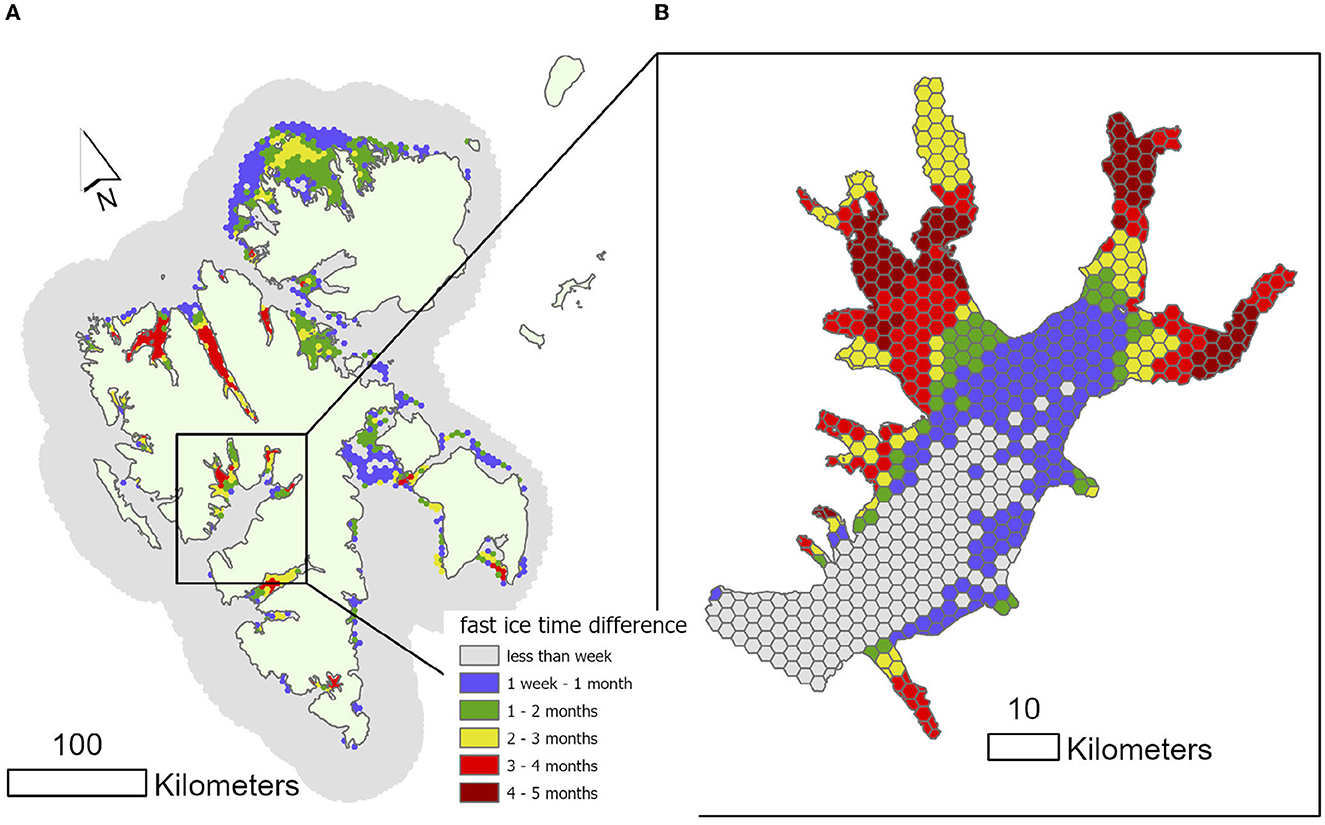
Figure 6. Reduction in land-fast sea ice for the period 1973–2000 compared to the period 2014–2018 in Svalbard (A) and specifically for Isfjorden (B) (from Søreide et al., 2021, p. 145).
Impact and adaptation
Interviews with tourism operators reveal a nuanced perspective on how climate change affects sea ice, nature, and wildlife. One interviewee observed less sea ice in the fjords as having negative consequences for biology and for travel and attributed this to increased temperatures (Guide 10). One of the experienced “Svalbardians” we interviewed noted the changes in sea ice between 1998 and 2021: “In the late 1990s and early 2000s, one could drive snowmobiles on solid ice across the Isfjorden, and all the way to Hornsund—the southernmost tip of Spitsbergen” (Guide 15). In other words, it was possible to travel on sea ice along the coast of the western part of Spitsbergen. “Now we have more ice on land than at sea” (Guide 15). The lack of sea ice in the fjords is a major cause for concern for the winter tourism operators in Longyearbyen. The ringed seal (Pusa hispida) depends on sea ice for breeding, molting, and resting. It builds snow lairs on the land-fast ice to give birth to pups, and with less sea ice and land-fast ice, the ringed seal's habitat is significantly reduced. Where there are ringed seals, we find polar bears, which attract tourists. But with reduced ice, to protect wildlife, it is prohibited to travel on the fjords with snowmobiles or break the ice with boats. These fjords used to be popular tourism destinations. The tourism operators are critical of the regulations that prohibit visits to these spectacular fjords.
For the summer tour operators, less sea ice makes it easier to operate in Svalbard. Although cruise vessels have been operating in Svalbard waters since the end of the 19th century (Viken et al., 2014), there has been significant growth in ship traffic since the 2000s. In addition, the season now starts much earlier and ends later than before. Less sea ice in Western Svalbard has turned the spring months into a significant tourism season for ship-based tourism, particularly for the expedition cruise segment. It is likely that a continued reduction in sea ice in the northern and eastern parts of the archipelago will allow the spring cruise tourism season to expand to these regions as well, barring any regulatory hindrances. “There will be more tourists in the summertime. In winter, snowmobiles are the only mobility option; not all age groups can travel on snowmobiles, and not everyone is ready to overcome the fear. There are more opportunities in summer, because there are ships, there are boats, open to all age categories, and weather conditions are better. The winter flow is more designed for snowmobile tours” (Guide 13). On the other hand, reduced fast ice in the western fjords stops snowmobile tourism traffic, particularly along the route between Longyearbyen and Pyramiden (see Figure 6). While the part of the fjord where the snowmobile route crosses used to have fast ice for 4–5 months, it now only has ice for 1–2 months. In a high-emission scenario future, there will be barely any fast ice in any of the fjords of Spitsbergen.
The increase in ship and boat traffic comes with water pollution, invasive species distribution, marine litter, and more underwater noise, which disturbs marine mammals and species (Olsen et al., 2019). Increased boat traffic, particularly regarding smaller, fast-going boats with outboard engines, also leads to an increased risk of harming seabirds and marine mammals.
Natural hazards
Climate change is increasing the risk of natural hazards on Svalbard. Specifically, climate change is projected to accelerate permafrost thaw in coastal and low-altitude areas, exacerbate the risk of avalanches and landslides, and increase precipitation, which will lead to increased flood risk (Hanssen-Bauer et al., 2019; Post et al., 2019; Koenigk et al., 2020). Combined, these changes will likely have significant consequences for human activity on Svalbard, including but not limited to implications for industrial activities and logistics in the Svalbard archipelago and the town of Longyearbyen, and will thus have significant consequences for tourism operations as well (Hovelsrud et al., 2020; Kaltenborn et al., 2020; Meyer, 2022).
Permafrost thaw
Svalbard faces significant changes related to permafrost thaw. Monitoring of permafrost thermal states provides clear evidence of warming permafrost in Svalbard, and near-surface permafrost in coastal and low altitude areas is projected to thaw before the end of the century (Hanssen-Bauer et al., 2019; Isaksen et al., 2022). A major consequence of warming and thawing permafrost in Svalbard is the increased risk of natural hazards. A thicker active permafrost layer in combination with increased precipitation will result in unstable slopes, increasing the risk for landslides and avalanches (Haeberli et al., 2010; Christiansen et al., 2019; Hanssen-Bauer et al., 2019; Meyer, 2022). Deteriorating permafrost conditions will also affect coastal erosion processes, especially where the coastline consists only of sediments (Hanssen-Bauer et al., 2019:11). Finally, permafrost degradation also poses an increased risk of infrastructure damage (Isaksen et al., 2022). For example, buildings and structures may deteriorate and deform and foundations may fail due to increases in permafrost temperature and degradation (Instanes, 2003).
Avalanches
Projected increases in temperature and precipitation (in the form of both snow and rain), coupled with accelerating permafrost thaw, will likely increase the frequency of all types of avalanches and landslides in Svalbard in the coming decades (Hanssen-Bauer et al., 2019). Toward the end of the century, gradually increasing temperatures may lead to a substantially shorter snow season and a reduction in the maximum annual snow amounts in coastal, low-altitude areas, and the snow line will gradually shift to higher altitudes. Over time, these factors are expected to reduce the probability of dry snow avalanches. However, wet snow avalanches and slush flows are projected to increase (like the wet snow avalanches and slush flows in 2012). While glide avalanches are not common in Svalbard in the present-day climate, they may become a problem at some locations in a future warmer and wetter climate (Hanssen-Bauer et al., 2019:124).
Increased human activity on Svalbard affects people's exposure to natural hazards, such as avalanches and floods. The population and tourism have grown considerably in recent years and, consequently, the number of people involved in backcountry activities has substantially increased. Human-triggered slab avalanches seem to cause the most fatalities among recreational backcountry skiers and snowmobilers, while naturally triggered avalanches are the main threat to infrastructure, transport routes, and residential areas (Hanssen-Bauer et al., 2019:122; Hestnes et al., 2016). Figure 7 shows popular snowmobile routes around Longyearbyen that intersect with known avalanche risk areas.
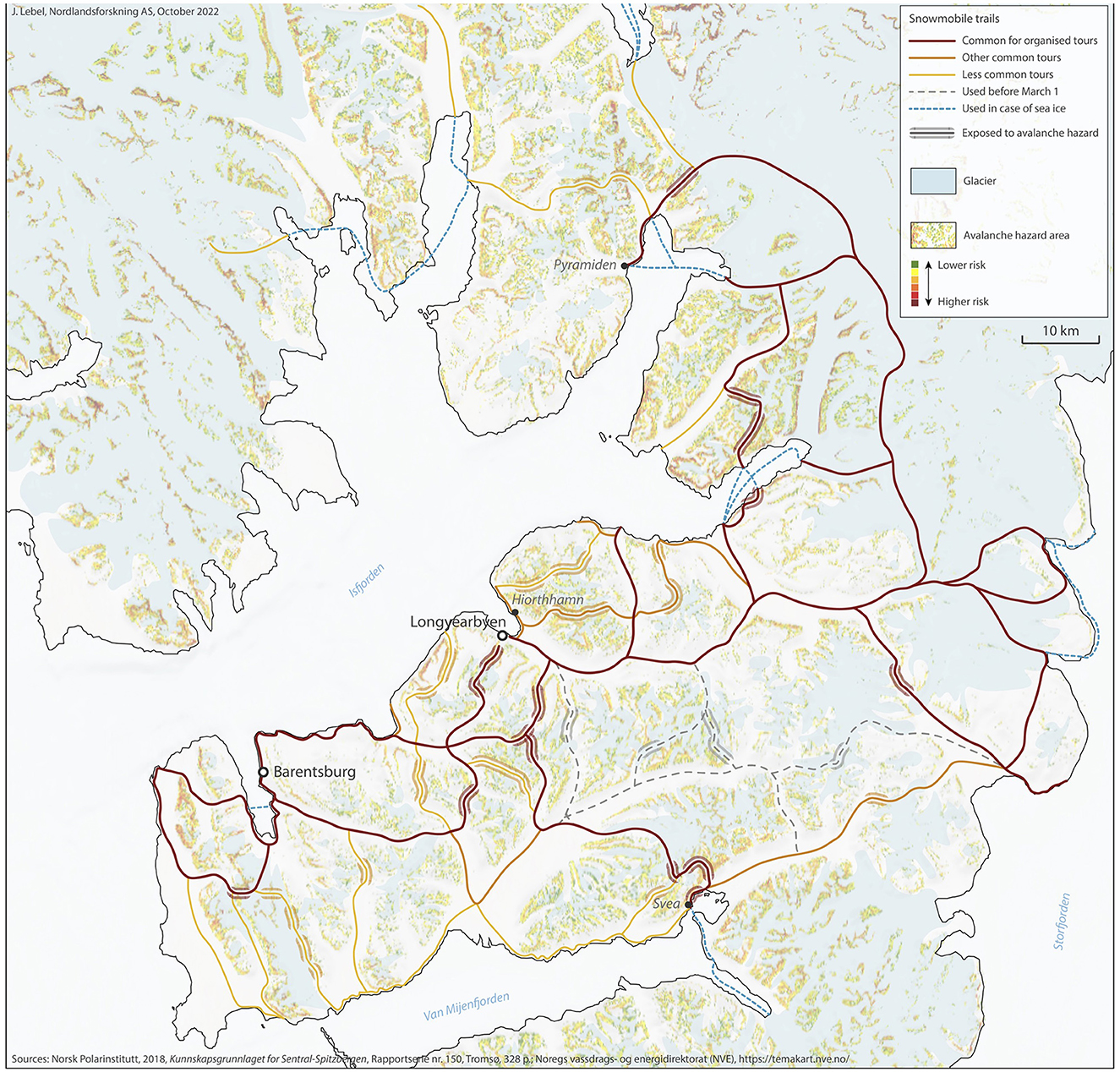
Figure 7. Map of snowmobile routes around Longyearbyen and avalanche risk areas. Sections of routes that cross avalanche risk zones are indicated by gray. Map produced by Julien Lebel, with map layers from Norwegian Polar Institute and NVE.
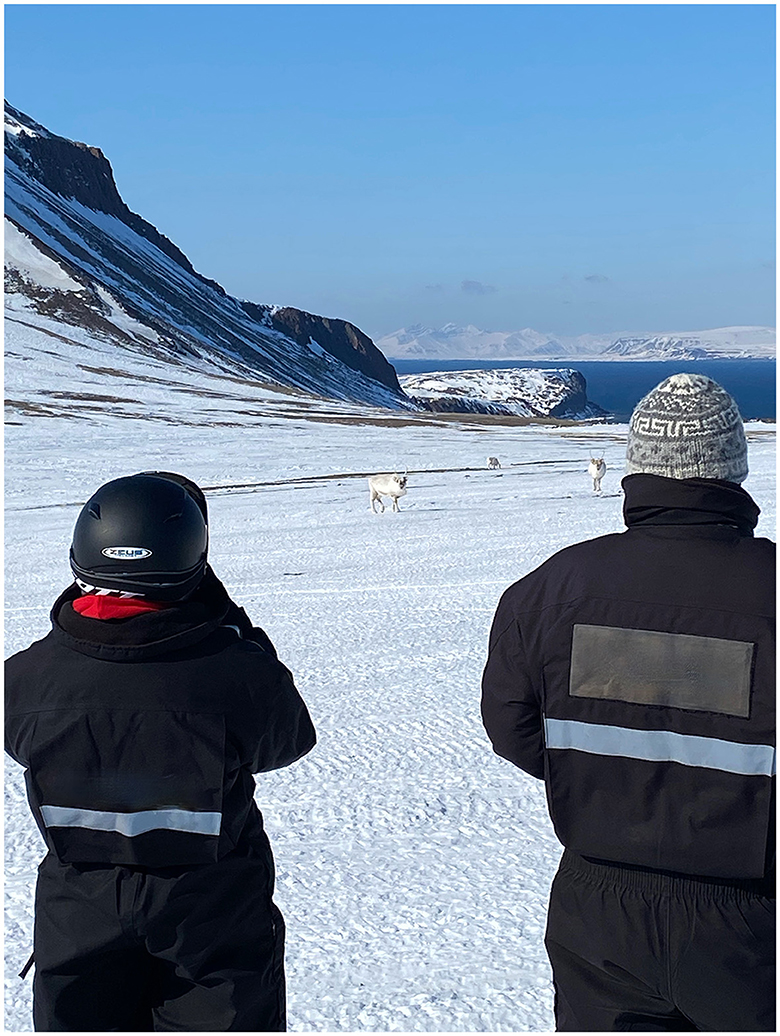
Figure 8. Tourists on a snow mobile trip watching the native Svalbard reindeers in May, 2022. Photo: Halvor Dannevig.
Floods
While flood estimates for Svalbard are highly uncertain, changes in the frequency and magnitude of floods are strongly linked to changes in precipitation, snow storage, and glacier regimes. On Svalbard, increased precipitation will likely lead to increased rain floods and increased combined snowmelt, glacier melt, and rain floods. In turn, increases in rain, glacier melt, and river flows will increase erosion and sediment transport (Hanssen-Bauer et al., 2019).
In regions where the annual maximum snow storage is expected to decrease, snowmelt floods will become smaller. For the high-emission scenario toward the end of the century, the glacier area and volume in several catchments will be reduced to the extent that the contribution from glacier meltwater to floods will be negligible (Hanssen-Bauer et al., 2019:10).
Landslides and rockfalls
Increased air temperature and permafrost thawing, combined with increasing frequency of extreme precipitation events, will lead to more active slope processes and significantly greater instability in mountain slopes, leading to an overall rise in landslide activity in Svalbard (Hanssen-Bauer et al., 2019:125). While there are currently no studies published on the effect of permafrost on rockslides in Svalbard itself, studies from Northern Norway show that increasing temperatures leading to degradation of permafrost may play an important role in the detachment of larger rockslides (Blikra et al., 2015; Frauenfelder et al., 2018; Hanssen-Bauer et al., 2019:124). Degradation of permafrost is thus likely to play an important role in the detachment of larger rockslides on Svalbard as well.
Impacts and adaptations
Svalbard is experiencing the impacts of climate change at a rate that far surpasses mainland Norway, and the concomitant risk of natural hazards will likely have significant consequences for human activity in the archipelago. While more research on the relevance of natural hazards and climate change for tourism is needed, several recent studies shed light on some of the societal impacts of climate change on Svalbard and in Longyearbyen (Tvinnereim et al., 2016; Jaskólski et al., 2018; Kaltenborn et al., 2020; see Hovelsrud et al., 2021; Meyer, 2022; Timlin et al., 2022). These studies find that environmental changes due to climate change will have implications for industrial activities, logistics in the greater Svalbard area, tourism operations, and the town of Longyearbyen.
Increased avalanche activity, for example, poses a growing risk to human life in Svalbard, both in the backcountry and in residential areas. Longyearbyen experienced two major avalanche events in December 2015 and February 2017. In 2015, two people lost their lives when a large slab avalanche from the ridge of Sukkertoppen destroyed ten houses in Longyearbyen. The 2017 avalanche damaged several buildings, but there were no fatalities (Hestnes et al., 2016; Hanssen-Bauer et al., 2019; Meyer, 2022). Parts of Longyearbyen now frequently experience evacuations due to avalanche threats, the most recent one taking place in February 2023 when the upper side of Nybyen was evacuated (Governor of Svalbard, 2023). An immediate concern on Svalbard thus relates to emergency preparedness in terms of human safety and adapting local infrastructure to rapid environmental change (Kaltenborn et al., 2020).
Tourism operators we interviewed mentioned the increased risk of natural hazards stemming from climate change as a growing concern. One respondent explained: “What we have worked on the most in relation to climate change here in the valley [Longyeardalen] are the natural hazards that are starting to emerge. We have areas around the valley that we won't be able to inhabit in the future. And that will also apply to hotels and rentals” (Guide 4). When asked whether increased avalanche risk impacted their operations, the respondent replied: “It significantly impacts our work. And we have noticed that closures due to avalanche danger are now much more frequent than when we started working here” (Guide 4). Another guide (Guide 8) explained that they had changed their tours to go to areas without much risk of avalanches.
Concerns regarding natural hazards are also reflected in the literature, which concludes that large parts of Longyearbyen will need to be either upgraded or relocated due to the increased risk of natural hazards, such as landslides and avalanches, thawing permafrost, and flooding (Hovelsrud et al., 2021; Meyer, 2022). Increased risk of flooding, avalanches, and landslides will also limit the area available for new construction and continued development on Svalbard. Additionally, erosion may put coastal cultural heritage at increased risk and may also expose old graves and burial sites (Hovelsrud et al., 2020; Nicu et al., 2021). All these can have further impacts on residents' lives as well as the tourism industry (Jaskólski et al., 2018; Hovelsrud et al., 2020; Timlin et al., 2022).
Glacial changes
The glaciers of Svalbard are rapidly losing mass, and a recent survey found a 1.5-meter decline of the Longyear glacier, measured during the summer of 2022 (Geyman et al., 2022). It is expected that the loss of mass balance will double by 2,100, which means that a large part of the glaciers will eventually disappear (Geyman et al., 2022). Where glaciers terminating in the fjords are receding, they are altering entire coastal ecosystems. Glacier fronts are hot spots for marine life, particularly for marine mammals and sea birds (Lydersen et al., 2014). Seals are attracted to floating pieces of glacier ice on which they can rest (Ravolainen et al., 2018).
Impacts and adaptation
The shrinking glaciers are one of the key indicators of climate change in Svalbard. Guides that have lived for some time in Longyearbyen note how much the Larsbreen glacier, which lies close to Longyearbyen, has shrunk (Guide 15). One consequence of the shortened snowmobile and ski season is that snowmobilers and skiers must traverse glaciers instead of traveling along the coast or in the valleys, where there is a lack of snow. This comes with its own set of risks, which we will outline below. Warmer winters also include more frequently occurring episodes of rainfall, which can cause rivers to open, blocking important transportation routes in the valleys.
According to guides, the retreat of glaciers damages and disrupts major tourism transportation routes in central Spitsbergen used for snowmobiles, skiers, dogsledders (mushers), and, to some extent, hikers (e.g., Figure 7). The shortening of the snow season and the loss of sea ice are forcing a relocation of snowmobile routes toward the inner parts of Spitsbergen, which includes long stretches of glacier and ice cap crossings and higher-altitude terrain. This exposes snowmobilers to crevasses and more challenging weather conditions.
Barriers and opportunities for adaptation and adaptive capacity
As its tourism industry continues to boom, Svalbard is faced with rapid and cascading climate and environmental changes that are placing natural and social systems under stress. There is more precipitation, less sea ice, and glaciers are retreating at an increasing rate (Hanssen-Bauer et al., 2019; Geyman et al., 2022; Urbański and Litwicka, 2022). One of the major impacts experienced to date is the disappearance of land-fast ice in the fjords of Western Svalbard in the late winter and spring months (Urbański and Litwicka, 2022). This has opened a new season for cruise and expedition cruise tourism in late winter and spring and has also extended the summer season, indicative of an adaptive and capable tourism sector utilizing a “climate change benefit to tourism”. However, the extended season and associated tourism activities have an impact on the environment. The risk of accidents increases as a result of, for example, ship damage due to sea ice collisions and stormy weather (and darkness) as winter approaches. The increased ship and boat traffic also increases the risk of hitting seabirds and marine mammals while driving (especially at speeds >25 knots). Underwater noise from ships and boat traffic might disturb marine wildlife. Increased risk of pollution from marine traffic, such as oil spills, is also a growing concern. The potential harm to ecosystems is one of the reasons the government has proposed a set of restrictive measures to limit further expansion of tourism activities (Norwegian Environment Agency, 2021). Thus, the scope for continued opportunistic adaptation and utilizations of “climate change benefits to tourism” resulting from the disappearing sea ice is limited.
Climate change is also heightening the risk of natural hazards, which will likely have significant consequences for all human activity on Svalbard. Climate change is projected to accelerate permafrost thaw, exacerbate the risk of avalanches and landslides, and increase precipitation, which will lead to increased flood risk. Increased avalanche risk, for example, is likely to cause more frequent closures of major inland snowmobile routes, such as the one between Barentsburg and Longyearbyen (see Figure 7). In addition to hampering snowmobile and ski tourism, heightened avalanche risk affects people's psychosocial health and quality of life (Hovelsrud et al., 2020). More frequent rain episodes in winter also pose a challenge for land-based tourism activities (e.g., ski tours, dog sledding, snowmobiles), for example, by causing flooding of transportation routes in valleys. The season for guided snowmobile trips has already been cut short due to the shorter snow season and loss of sea ice. As a result, tour groups more frequently travel into higher altitudes and onto glaciers, which involves increased safety risks due to longer travel routes, crevasse danger, and more challenging weather conditions (“whiteouts” etc.).
Coping with risk that occurs during nature-based tourism activities requires skills and knowledge from the guides and well-established safety procedures from the tour operator. All tourist operators that were interviewed pride themselves in employing highly qualified guides, and all guides that were interviewed had completed relevant formal guide-qualification schemes. The tour operators also have internal health and safety procedures that they claim to follow rigorously. The guides' competence and the operator's safety procedures constitute human and institutional capital that all contribute to adaptive capacity in the tourism system (e.g., Dannevig et al., 2020).
While the authors initially believed that the ultimate test of adaptive capacity would be the COVID-19 pandemic, the situation turned out to be more complex. Tour operators and guides that were Norwegian or from the European Economic Area (EEA) treaty countries (EU + Norway, Iceland, and Liechtenstein) enjoyed rather generous support measures that allowed them to endure the pandemic.3 Non-EEA guides and operators, on the other hand, of whom there were many before the pandemic, were forced to leave Svalbard when their income disappeared. The economic support provided to the Norwegian and EEA guides and operators meant that they were not forced to adapt to endure and survive the pandemic. One of the operators did however concede that he was “poor at writing applications for support” (Guide 1) and had had to change his business model, taking more assignments from the local high school instead of doing trips with tourists. Overall, the majority of our informants report that they have not made major long-term changes to their operations and products as a response to the pandemic, though some have used it to adjust products or develop new ones.
Conclusion
In this article, we have examined opportunities and challenges that are emerging for the tourism industry on Svalbard in the context of climate change. Drawing on a literature review of recent projections for climate and environmental change, as well as interviews with tourism actors, we found that while tourism actors have strong adaptive capacity, they are increasingly constrained by higher risk of natural hazards and potentially new regulations aimed at curbing tourism growth (Hovelsrud et al., 2023). Economic opportunities for the tourism industry are also constrained by the need to take into account climate change impacts on ecosystems. Moreover, NTCs, such as sea ice, permafrost, flora, and fauna, are directly and indirectly affected by climate change, thus affecting the infrastructure and products at the heart of Svalbard tourism.
Until now, the impacts of climate change have been of greater benefit than hindrance to tourism in Svalbard, in that they have allowed for a new tourism season with ship and boat traffic in the spring. However, the rapid and cascading changes projected in the coming decades are likely to be disruptive, particularly in terms of increased risk of natural hazards. There is therefore an urgent need to continue to study how the tourism industry in Svalbard is impacted by the cascading and cumulative effects of climatic and environmental changes.
Data availability statement
The raw data supporting the conclusions of this article will be made available by the authors, without undue reservation.
Ethics statement
The studies involving human participants were reviewed and approved by SIKT–Norwegian Agency for Shared Services in Education and Research. The patients/participants provided their written informed consent to participate in this study.
Author contributions
HD, JS, and AS conducted the initial literature review and wrote its synopsis. HD led the conceptualization, methodology, investigation, formal analysis, and writing of the original draft (preparation, review, and editing). JS and AS contributed to conceptualization and writing the original draft (preparation, review, and editing). JO, GH, TR, and RD contributed to conceptualization, investigation, and writing through review and editing. All authors except JS were involved in the original investigation, conduction of the interviews, data curation, and formal analysis. All authors contributed to the article and approved the submitted version.
Funding
The article was funded by two research projects, which both involve all authors. The project Sustainable Tourism in Svalbard: A Balancing Act has received funding from the Research Council of Norway, grant number: 302914. FACE-IT has received funding from the European Union's Horizon 2020 research and innovation program under grant agreement number 869154 (www.face-it-project.eu).
Acknowledgments
We would like to thank Trine Krystad from Visit Svalbard and Frigg Jørgensen from Association of Arctic Expedition Cruise Operators (AECO) for providing feedback on an early draft of this manuscript and help with recruiting participants to our research projects.
Conflict of interest
The authors declare that the research was conducted in the absence of any commercial or financial relationships that could be construed as a potential conflict of interest.
Publisher's note
All claims expressed in this article are solely those of the authors and do not necessarily represent those of their affiliated organizations, or those of the publisher, the editors and the reviewers. Any product that may be evaluated in this article, or claim that may be made by its manufacturer, is not guaranteed or endorsed by the publisher.
Footnotes
1. ^In Norwegian public administration, a consultation process (høringsprosess) is used by a ministry to consult affected parties on suggested laws and regulations, suggested changes in public administration, jurisdiction changes, etc.
2. ^Norwegian Environment Agency. Amendments to the Svalbard Environmental Protection Act and Associated Regulations on Nature Conservation Areas, Motor Traffic, Camping Activities and Area Protection and Access to Virgohamna, 2021.
3. ^Letter to Longyarbyen Local Council from the Norwegian Ministry of Industries and Fisheries, 14.12.2020: https://www.regjeringen.no/globalassets/departementene/nfd/dokumenter/vedlegg/midlertidig-tilskuddsordning-for-gjennoppbygging-omstill3404051.pdf.
References
AMAP (2017). Snow, water, ice and permafrost in the Arctic (SWIPA) 2017. Oslo, Norway: Arctic Monitoring and Assessment Programme (AMAP).
Bazeley, P., and Jackson, K. (2013). Qualitative Data Analysis with Nvivo (Seaman, J., Ed. Second Ed.). London: SAGE Publications.
Becken, S. (2013). Developing a framework for assessing resilience of tourism sub-systems to climatic factors. Ann. Tour. Res. 43, 506–528. doi: 10.1016/j.annals.2013.06.002
Bennett, M. M., Stephenson, S. R., Yang, K., Bravo, M. T., and De Jonghe, B. (2020). The opening of the Transpolar Sea Route: logistical, geopolitical, environmental, and socioeconomic impacts. Marine Policy. 121, 104178. doi: 10.1016/j.marpol.2020.104178
Berge, J., Heggland, K., Lønne, O. J., Cottier, F., Hop, H., Gabrielsen, G. W., et al. (2015). First records of Atlantic mackerel (Scomber scombrus) from the Svalbard Archipelago, Norway, with possible explanations for the extension of its distribution. Arctic. 68, 54–61. doi: 10.14430/arctic4455
Blikra, L. H., Christiansen, H. H., Kristensen, L., and Lovisolo, M. (2015). “Characterization, geometry, temporal evolution and controlling mechanisms of the Jettan Rock-Slide, Northern Norway,” in Engineering Geology for Society and Territory, Volume 2 (Cham: Springer) p. 273–278. doi: 10.1007/978-3-319-09057-3_40
Christiansen, H. H., Gilbert, G. L., Demidov, N., Guglielmin, M., Isaksen, K., Osuch, M., et al. (2019). “Permafrost thermal snapshot and active-layer thickness in Svalbard 2016–2017,” in The State of Environmental Science in Svalbard - An Annual Report (Longyearbyen: Svalbard Integrated Arctic Earth Observing System), 26–47
Cottier, C., Skogseth, R., David, D., and Berge, J. (2019). “Temperature time-series in Svalbard fjords: A contribution from the integrated marine observatory partnership (iMOP),” in SESS Report 2018, Orr, et al. (eds). (Longyearbyen: Svalbard Integrated Arctic Earth Observing System) p. 108–118.
Dannevig, H., Gildestad, I. M., Steiger, R., and Scott, D. (2020). Adaptive capacity of ski resorts in Western Norway to projected changes in snow conditions. Curr. Issues Tour. 0, 1–16. doi: 10.1080/13683500.2020.1865286
Dannevig, H., Hanssen Korsbrekke, M., and Hovelsrud, G. K. (2022). Advancements of sustainable development goals in co-production for climate change adaptation research. Clim. Risk Man. 36, 100438. doi: 10.1016/j.crm.2022.100438
Dawson, J., Stewart, E. J., Johnston, M. E., and Lemieux, C. J. (2016). Identifying and evaluating adaptation strategies for cruise tourism in Arctic Canada. J. Sustain. Tour. 24, 1425-1441. doi: 10.1080/09669582.2015.1125358
Dilling, L., and Lemos, M. C. (2011). Creating usable science: Opportunities and constraints for climate knowledge use and their implications for science policy. Glob. Environ. Chang. 21, 680–689. doi: 10.1016/j.gloenvcha.2010.11.006
Drewnik, A., Wesławski, J. M., and Włodarska-Kowalczuk, M. (2017). Benthic crustacea and mollusca distribution in arctic fjord: case study of patterns in Hornsund, Svalbard. Oceanologia. 59, 565–575. doi: 10.1016/j.oceano.2017.01.005
Epinion (2019). Cruise study Svalbard: An examination of the economical impact of cruise tourism (expedition and conventional cruise) in Svalbard. PowerPoint Presentation. Available online at: visitsvalbard.com (accessed February 23, 2023).
Frauenfelder, R., Isaksen, K., Nötzli, J., and Lato, M. J. (2018). Ground thermal and geomechanical conditions in a permafrost-affected high-latitude rockslide site (Polvartinden, Northern Norway). The Cryosphere. 12, 1531–1550. doi: 10.5194/tc-12-1531-2018
Geyman, E. C. J. J., van Pelt, W., Maloof, A. C., Aas, H. F., and Kohler, J. (2022). Historical glacier change on Svalbard predicts doubling of mass loss by 2100. Nature. 601, 374–379. doi: 10.1038/s41586-021-04314-4
Gluchowska, M., Kwasniewski, S., Prominska, A., Olszewska, A., Goszczko, I., Falk-Petersen, S., et al. (2016). Zooplankton in Svalbard fjords on the Atlantic–Arctic boundary. Polar Biol. 39, 1785–1802. doi: 10.1007/s00300-016-1991-1
Goldsmit, J., Archambault, P., Chust, G., Villarino, E., Liu, G., Lukovich, J. V., et al. (2018). Projecting present and future habitat suitability of ship-mediated aquatic invasive species in the Canadian Arctic. Biol. Invas. 20, 501–517. doi: 10.1007/s10530-017-1553-7
Gordó-Vilaseca, C., Stephenson, F., Coll, M., Lavin, C., and Costello, M. J. (2023). Three decades of increasing fish biodiversity across the northeast Atlantic and the Arctic Ocean. Proc. Natl. Acad. Sci. U.S.A. 120, e2120869120. doi: 10.1073/pnas.2120869120
Governor of Svalbard (2022). Tungoljeforbud på Svalbard. Available online at: https://lovdata.no/dokument/SF/forskrift/2014-04-04-377 (accessed 10 March, 2023).
Governor of Svalbard (2023). Evacuates parts of Nybyen. Available online at: https://www.sysselmesteren.no/en/news/2023/02/evacuates-parts-of-nybyen/ (accessed 10 March, 2023).
Haeberli, W., Noetzli, J., Arenson, L., Delaloye, R., Gärtner-Roer, I., Gruber, S., et al. (2010). Mountain permafrost: Development and challenges of a young research field. J. Glaciol. 56, 1043–1058. doi: 10.3189/002214311796406121
Hanssen-Bauer, I., Førland, E.J., Hisdal, H., Mayer, S., Sandø, A.B., and Sorteberg, A. (2019). “Climate in Svalbard 2100: A knowledge base for climate adaptation,” in Norwegian Climate Service Center Report 1/2019. Oslo: Norsk Klimaservicesenter.
Hestnes, E., Bakkehøi, S., and Jaedicke, C. (2016). “Longyearbyen, Svalbard: Vulnerability and risk management of an arctic settlement under changing climate: A challenge to authorities and experts,” in International Snow Science Workshop 2016 (Breckenridge, CO), 363–370.
Hop, H., Wold, A., Vihtakari, M., Daase, M., Kwasniewski, S., Gluchowska, M., et al. (2019). “Zooplankton in Kongsfjorden (1996–2016) in relation to climate change,” in The Ecosystem of Kongsfjorden, Svalbard, Hop, H., and Wiencke, C. (Cambridge: Springer) p. 229–302. doi: 10.1007/978-3-319-46425-1_7
Hovelsrud, G. K., Kaltenborn, B. P., and Olsen, J. (2020). Svalbard in transition: adaptation to cross-scale changes in Longyearbyen. Polar J. 10, 420–442. doi: 10.1080/2154896X.2020.1819016
Hovelsrud, G. K., Olsen, J., Nilsson, A. E., Kaltenborn, B., and Lebel, J. (2023). Managing Svalbard tourism: Inconsistencies and conflicts of interest. Arct. Rev. Law Polit. 14, 86–106. doi: 10.23865/arctic.v14.5113
Hovelsrud, G. K., Poppel, B., Van Oort, B., and Reist, J. D. (2011). Arctic societies, cultures, and peoples in a changing cryosphere. Ambio. 40, 100–110. doi: 10.1007/s13280-011-0219-4
Hovelsrud, G. K., Veland, S., Kaltenborn, B., Olsen, J., and Dannevig, H. (2021). Sustainable tourism in Svalbard: balancing economic growth, sustainability, and environmental governance. Polar Record. 57. doi: 10.1017/S0032247421000668
Humpert, M. (2022). Research Vessel Kronprins Haakon and Cruise Ship Le Commandant Charcot Team Up at North Pole. High North News. Available online at: highnorthnews.com
Instanes, A. (2003). “Climate change and possible impact on Arctic infrastructure,” in Proceedings 8th International Permafrost Conference, Zürich, Switzerland. Vol. 1, Phillips, M., et al. (eds). (Lisse, The Netherlands: Balkema Publishers) p. 461–466.
IPCC (2022). “Climate change 2022: Impacts, adaptation and vulnerability,” in Contribution of Working Group II to the Sixth Assessment Report of the Intergovernmental Panel on Climate Change, Pörtner, H. O., Roberts, D. C., Tignor, M., Poloczanska, E. S., Mintenbeck, E., Alegría, A., eds. (Cambridge, UK and New York, NY, USA: Cambridge University Press) p. 3056.
Isaksen, K., Lutz, J., Sørensen, A. M., Godøy, Ø., Ferrighi, L., Eastwood, S., et al. (2022). Advances in operational permafrost monitoring on Svalbard and in Norway. Environm. Research Letters. 17, 095012. doi: 10.1088/1748-9326/ac8e1c
Jaskólski, M. W., Pawłowski, Ł., and Strzelecki, M. C. (2018). High Arctic coasts at risk: The case study of coastal zone development and degradation associated with climate changes and multidirectional human impacts in Longyearbyen (Adventfjorden, Svalbard). Land Degradation & Dev. 29, 2514–2524. doi: 10.1002/ldr.2974
Kaltenborn, B. P., Østreng, W., and Hovelsrud, G.K. (2020). Change will be the constant: Future environmental policy and governance challenges in Svalbard. Polar Geography. 43, 25–45. doi: 10.1080/1088937X.2019.1679269
Koenigk, T., Key, J., and Vihma, T. (2020). “Climate change in the Arctic,” in Physics and Chemistry of the Arctic Atmosphere, Kokhanovsky, I. A., and Tomasi, C. (eds). (New York City: Springer International Publishing), 673-705. doi: 10.1007/978-3-030-33566-3_11
Kubny, H. (2022). Ponant reaches the North Pole. Polar Journal. Available online at: https://polarjournal.ch/en/2022/07/21/ponant-reaches-the-north-pole/
Lydersen, C., Assmy, P., Falk-Petersen, S., Kohler, J., Kovacs, K. M., Reigstad, M., et al. (2014). The importance of tidewater glaciers for marine mammals and seabirds in Svalbard, Norway. J. Marine Syst. 129, 452–471. doi: 10.1016/j.jmarsys.2013.09.006
Maxwell, J. A. (2022). “Interactive Approaches to Qualitative Research Design,” in The Sage Handbook of Qualitative Research Design, ed U. Flick (New York, NY: SAGE Publications LTD), 41–54. doi: 10.4135/9781529770278.n4
Meyer, A. (2022). Physical and feasible: Climate change adaptation in Longyearbyen, Svalbard. Polar Record. 58, E29. doi: 10.1017/S0032247422000079
Misund, O. A., Heggland, K., Skogseth, R., Falck, E., Gjøsæter, H., et al. (2016). Norwegian fisheries in the Svalbard zone since 1980: regulations, profitability and warming waters affect landings. Polar Sci. 10, 312–322. doi: 10.1016/j.polar.2016.02.001
MoJPS (2016). White Paper 32 (2015–2016). Svalbard. Oslo: Norwegian Ministry of Justice and Public Security.
Mosj (2022). Cruise tourism. Environmental Monitoring of Svalbard and Jan Mayen. Available online at: https://mosj.no/en/indikator/influence/traffic/cruise-tourism/ (accessed 20 March, 2023).
Muckenhuber, S., Nilsen, F., Korosov, A., and Sandven, S. (2016). Sea ice cover in Isfjorden and Hornsund, Svalbard (2000–2014) from remote sensing data. Cryosphere. 10, 149–158. doi: 10.5194/tc-10-149-2016
Nicu, I. C., Rubensdotter, L., Stalsberg, K., and Nau, E. (2021). Coastal erosion of arctic cultural heritage in danger: a case study from Svalbard, Norway. Water. 13, 784. doi: 10.3390/w13060784
Nilsen, F., Cottier, F., Skogseth, R., and Mattsson, S. (2008). Fjord-shelf exchanges controlled by ice and brine production: the interannual variation of Atlantic Water in Isfjorden, Svalbard. Continental Shelf Res. 28, 1838–1853. doi: 10.1016/j.csr.2008.04.015
Norski klimaservicesenter (2021). Klimaprofil for Longyearbyen. Available online at: https://klimaservicesenter.no/kss/klimaprofiler/longyearbyen (accessed 11 November, 2022).
Norwegian Environment Agency (2021). Amendments to the Svalbard Environmental Protection Act and Associated Regulations on Nature Conservation Areas, Motor Traffic, Camping Activities and Area Protection and Access to Virgohamna. Norwegian Environment Agency, Oslo, Norway.
Øian, H., and Kaltenborn, B.P. (2020). Turisme på Svalbard og i Arktis Effekter på naturmiljø, kulturminner og samfunn med hovedvekt på cruiseturisme. Lillehammer: Norwegian Institute for Nature Research.
Olsen, J., Carter, N. A., and Dawson, J. (2019). Community perspectives on the environmental impacts of Arctic shipping: Case studies from Russia, Norway and Canada. Cogent Social Sci. 5, 1609189. doi: 10.1080/23311886.2019.1609189
Olsen, J., Hovelsrud, G. K., and Kaltenborn, B. P. (2020). “Increasing shipping in the arctic and local communities' engagement: A case from Longyearbyen on Svalbard,” in Arctic marine sustainability: Arctic maritime businesses and the resilience of the marine environment, Pongrácz, E., Pavlov, V., and Hänninen, N. (eds). (Cham: Springer International Publishing) p. 305–331. doi: 10.1007/978-3-030-28404-6_14
Olsen, J., Vlakhov, A., and Wigger, K. A. (2022). Barentsburg and Longyearbyen in times of socioeconomic transition: Residents' perceptions of community viability. Polar Record. 58, e7, doi: 10.1017/S0032247422000043
Pascual, U., Balvanera, P., Díaz, S., Pataki, G., Roth, E., Stenseke, et al. (2017). Valuing nature's contributions to people: the IPBES approach. Cur. Op.Env. Sust. 26−27, 7–16. doi: 10.1016/j.cosust.2016.12.006
Post, E., Alley, R. B., Christensen, T. R., Macias-Fauria, M., Forbes, B. C., Gooseff, M. N., et al. (2019). The polar regions in a 2°C warmer world. Sci. Adv. 5, eaaw9883. doi: 10.1126/sciadv.aaw9883
Prop, J., Aars, J., Bårdsen, B. J., Hanssen, S. A., Bech, C., Bourgeon, S., et al. (2015). Climate change and the increasing impact of polar bears on bird populations. Front. Ecol. Evol. 3, 33. doi: 10.3389/fevo.2015.00033
Ravolainen, V., Strøm, H., Elvevold, S., Fuglei, E., Ønvik, Å., Pedersen, C., et al. (2018). Kunnskapsgrunnlaget for Sentral-Spitsbergen. Norway: Norwegian Polar Institute, Troms.
Renaud, P. E., Wlodarska-Kowalczuk, M., Trannum, H., Holte, B., Weslawski, J. M., et al. (2007). Multidecadal stability of benthic community structure in a high-Arctic glacial fjord (van Mijenfjord, Spitsbergen). Polar Biol. 30, 295–305. doi: 10.1007/s00300-006-0183-9
Scott, D., Hall, C. M., and Gössling, S. (2012). Tourism and Climate Change: Impacts, Adaptation and Mitigation. Oxfordshire, England, UK: Routledge.
Skogseth, R., Olivier, L. L. A., Nilsen, F., Falck, E., Fraser, N., et al. (2020). Variability and decadal trends in the Isfjorden (Svalbard) ocean climate and circulation: an indicator for climate change in the European Arctic. Prog Oceanogr. 187, 102394. doi: 10.1016/j.pocean.2020.102394
Smit, B., and Pilifosova, O. (2001). “Adaptation to climate change in the context of sustainable development and equity,” in Climate change 2001: Impacts, adaptation and vulnerability. Contribution of Working Group II to the Third Assessment Report of the Intergovernmental Panel on Climate Change, McCarthy, J., Canziani, N., Leary, A., Dokken, D., and White, K. (eds.). Cambridge: Cambridge University Press.
Sokolickova, Z., Meyer, A., and Vlakhov, A. (2022). Changing Svalbard: tracing interrelated socio-economic and environmental change in remote Arctic settlements. Polar Rec. 58. doi: 10.1017/S0032247422000213
Søreide, J. E., Pitusi, V., Vader, A., Damsgård, B., Nilsen, F., Skogseth, R., et al. (2021). “Environmental status of Svalbard coastal waters: coastscapes and focal ecosystem components (SvalCoast),” in State of Environmental Science in Svalbard (SESS) Report 2020 (Longyearbyen: Svalbard Integrated Arctic Earth Observing System), 142–175.
Stempniewicz, L., Kulaszewicz, I., and Aars, J. (2021). Yes, they can: Polar bears Ursus maritimus successfully hunt Svalbard reindeer Rangifer tarandus platyrhynchus. Polar Biol. 44, 2199–2206. doi: 10.1007/s00300-021-02954-w
Stocker, A. N., Renner, A. H. H., and Knol-Kauffman, M. (2020). Sea ice variability and maritime activity around Svalbard in the period 2012–2019. Sci. Rep. 10, 1–12. doi: 10.1038/s41598-020-74064-2
Timlin, U., Meyer, A., Nordström, T., and Rautio, A. (2022). Permafrost thaw challenges and life in Svalbard. Curr. Opin. Environ Sustain. 4, 100122. doi: 10.1016/j.crsust.2021.100122
Tverberg, V., Skogseth, R., Cottier, F., Sundfjord, A., Walczowski, W., et al. (2019). “The Kongsfjorden Transect: Seasonal and inter-annual variability in hydrography,” in The Ecosystem of Kongsfjorden, Svalbard: Advances in Polar Ecology, Vol. 2, Hop, H., and Wiencke, C. (eds) (Cham: Springer). doi: 10.1007/978-3-319-46425-1_3
Tvinnereim, E., Angell, E., Kolstad, E. W., Brekke, O. A., and Mortensen, S. (2016). Klimaendringer på Svalbard: Effekter på naturmangfold og konsekvenser for den fremtidige naturforvaltningen. Delprosjekt: De samfunnsmessige aspektene av klimaendringer på Svalbard.
Urbański, J. A., and Litwicka, D. (2022). The decline of Svalbard land-fast sea ice extent as a result of climate change. Oceanologia. 64, 535–545. doi: 10.1016/j.oceano.2022.03.008
Vihtakari, M., Welcker, J., Moe, B., Chastel, O., Tartu, S., Hop, H., et al. (2018). Black-legged kittiwakes as messengers of Atlantification in the Arctic. Sci. Rep. 8, 1178. doi: 10.1038/s41598-017-19118-8
Viken, A., Johnston, M. E., Nyseth, T. J., and Dawson (2014). “Responsible Arctic tourism: myth or reality? A case study of Svalbard and Nunavut,” in Destination Development in Tourism: Turns and Tactics, eds A. Viken and B. Granås (Farnham: Ashgate), 245–261.
Visit Svalbard (2017). Statistikk fra Visit Svalbard AS. Statistikk gjester Svalbard 2007-2017.pdf. Available online at: https://visitsvalbard.com
Visit Svalbard (2023). Svalbard- statistikken 2022. Markeds- og gjestestatistikk. Årsstatistikk2022.pdf (https://visitsvalbard.com)
Keywords: Arctic tourism, nature based tourism, adaptation, Svalbard, climate change
Citation: Dannevig H, Søreide JE, Sveinsdóttir AG, Olsen J, Hovelsrud GK, Rusdal T and Dale RF (2023) Coping with rapid and cascading changes in Svalbard: the case of nature-based tourism in Svalbard. Front. Hum. Dyn. 5:1178264. doi: 10.3389/fhumd.2023.1178264
Received: 02 March 2023; Accepted: 28 April 2023;
Published: 18 May 2023.
Edited by:
Harry W. Fischer, Swedish University of Agricultural Sciences, SwedenReviewed by:
Emma J. Stewart, Lincoln University, New ZealandSumana Datta, Ambedkar University Delhi, India
Copyright © 2023 Dannevig, Søreide, Sveinsdóttir, Olsen, Hovelsrud, Rusdal and Dale. This is an open-access article distributed under the terms of the Creative Commons Attribution License (CC BY). The use, distribution or reproduction in other forums is permitted, provided the original author(s) and the copyright owner(s) are credited and that the original publication in this journal is cited, in accordance with accepted academic practice. No use, distribution or reproduction is permitted which does not comply with these terms.
*Correspondence: Halvor Dannevig, aGRhQHZlc3Rmb3Jzay5ubw==