 Zahidah Afrin Nisa1,2,3*
- 1World Maritime University (WMU) - Sasakawa Global Ocean Institute, Malmö, Sweden
- 2United Nations Nippon Foundation Fellow - Government of Grenada- SIDS Pioneering Blue Economy Initiatives, St. George's, Grenada
- 3Diving Professional with Specialisation in Dive Safety And Emergency Management, SIDS Pioneering Dive Industry Innovation Initiative, Suva, Fiji
Island governments have made decent work and social protection their highest policy priority, aiming to link them to the so-called blue economy sectors such as fisheries. The development of small-scale commercial fishing is primarily driven by transnational fisheries trade and depends on dive fisher labour force facing issues with deficits in decent work, health and safety, and safety at sea provisions. Given the macro-policy priorities for decent work in the transition of small island developing states (SIDS) to blue economy, this paper examines the development interventions in small-scale commercial fisheries trade that have exacerbated unsafe marine working conditions of dive fishers. Despite significant investments in developing commercial fisheries trade, the mismatch between macro-level decisions and micro-level labour needs has hardly been explored via the blue economy and sustainable development goal interlinkages. This study used a qualitative research approach to examine the unsafe working conditions of dive fishers and examined why dive-related accidents and fatalities occur in commercial fisheries in the first place. A systematic approach in the analysis of diving accidents helps the study to, firstly, highlight the gaps between macro policy and practice at the national and global levels. Secondly, the approach helps explore the need for a coherent approach to policy integration that bridges the gap between the macro and operational levels of small-scale fisheries labour force. The study analyses the International Labour Organization’s decent work instruments with SIDS sustainable development priorities for fisheries workforce and points out that governments must be responsible at the macro level for managing accidents at sea and building a safe diving workforce through competent marine and diving authorities.
Introduction
The commercial small-scale fisheries trade has become a central part of blue economic development plans of small island developing states (UNOC, 2017). Development in the small-scale fisheries sector is interdependent on the underwater workforce—for example, dive fishers whose diving-specific occupational needs are often hidden or under-regarded (Nisa et al., 2022). For years, tropical island nations have taken note of the significant economic contribution of diving fishers to national development in the context of trade in wildlife fishery products, much of which is transnational. Bolatagici (2016) highlighted this in the case of Fiji’s small-scale fisheries sector, which since 2000 has built up a pearl export industry worth about US$13 million per year that is dependent on the dive fisher labour force. Barclay et al. (2019) added that the dive fishers’ contribution to the beche-de-mer trade from the Pacific Islands to Asian seafood markets was US$25.5 million in 2016. Island fisheries trade, such as the export of live fish and corals from Pacific Island states and aquaculture production for the aquarium industry, is worth US$200 million per year and is dependent on the diving labour force (Gillett et al., 2020). The development of the lobster fisheries trade in the Bahamas relies on the dive fisher labour force accounting for an economic contribution of US$75–90 million, which accounts for 40% of the islands’ total exports and 60% of total fisheries landings, as highlighted by the World Wild Life (WWF, 2018).
Despite their economic contribution, the development approaches of small-scale commercial fisheries have many shortcomings in integrating decent work policy guidance, as outlined in the 2015 Voluntary Guidelines for Securing Sustainable Small-scale Fisheries. Policy failures undermining diver-specific labour needs are leading to an increase in fatal and non-fatal dive accidents, placing an overall burden on the health sector (Bassett, 2019; Marschke et al., 2020; FAO, 2022). The lack of integration of the International Labour Organization (ILO) decent work and social protection policy framework at the bottom of the fisheries product supply chain concerning the dive fisher labour force has arguably led to hundreds of diver occupational accidents. Luthfi and Isdianto (2019); Marschke et al. (2020) and Bassett (2019) have extensively discussed dive fish occupational accidents, such as decompression accidents leading to total paralysis, permanent neurological disabilities, and fatalities. In their legal study, Sloan and Tuivanualevu (2017) unveiled indigenous dive fish worker fatalities in the case of Fiji’s beche-de-mer trade which lacks labour protection, exacerbating the burden on the health sector and coastal communities. A recent intergovernmental study by the FAO (2022) has also demonstrated policy-level gaps and current challenges in tackling unacceptable form of work of dive fisher labour force in nine countries in the wider Caribbean region.
The economic importance of the islands’ coastal commercial fisheries trade in national development, which is highly dependent on the underwater workforce, justifies an urgent need for a policy framework based on ILO decent work. Since 2000, the ILO occupational profile for dive fishers has detailed the risks to divers in their work environment and outlined preventive measures and core labour standards where workers aim to produce goods for the market (ILO, 2000). However, the development of the fisheries trade in small island developing states (SIDS), which itself is dependent on the dive fisher labour force, has failed to interlink and cooperate with labour institutions as the islands transition from locally managed fisheries to developing their small-scale fisheries trade products. An example is the Marine Stewardship Certification (MSC) applied to the Bahamian lobster fisheries trade. This certification development process, in partnership with the government, lacks investments in labour force development and occupational health and safety where the WWF (2018) reported that approximately 9,000 dive fishers are involved in fisheries operations. With such demand-led development, island policymakers continue to face the dilemma of international development portfolios that focus only on economic outcomes while ignoring interlinked or cross-sectoral policy objectives such as workforce, safety at sea, and technological development [see islands’ decent work policy challenges discussed at intergovernmental levels in ILO (2014a) and Le Manach et al. (2020)].
Given island governments’ policy-level labour concerns relating to dive fishers’ occupational fatalities in the commercial fisheries trade, how can SIDS governments prepare labour and social protection policies for dive fishers when they persistently face difficulty in accessing diver training needs, such as underwater technology, engineering, and maritime safety-support? In a recent publication, Nisa et al. (2022) discussed the challenges SIDS government policymakers face in getting access to dive industry-specific skills and training strategies and cooperating development partners. Based on the interlinked problems mentioned above, this paper identifies policy gaps that hinder labour and social protection and skills building for dive fishers in Fiji Islands beche-de-mer and the Bahamas lobster fishery development projects. This study adopts the concept of decent work for the fisheries sector as discussed by Garcia Lozano et al. (2022), which considers a wide range of labour concerns in fisheries from income and working hours to social security, occupational health and safety, and collective bargaining.
Building on this definition, this study aligns the concept with the range of labour concerns of dive fishers with the ILO’s SDG decent work targets adopted by governments, which are discussed in more detail in Section 2.2. The study uses a methodological approach tailored to the diving industry’s safe working environment to bridge human and organisational factors in understanding why unsafe working events and failures keep happening and where the gaps are between practices within fisheries operations and national trade policy. The findings of this study provide a policy framework based on the ILO decent work programme as the main driver for change for governments to improve the working conditions of small-scale fishers through the SDG 8 targets interlinked with 14.b—explicitly negotiated for small-scale fishers. In doing so, it identifies a strategic pathway and practical macro-policy response for SIDS in creating decent work in the case of dive fishers by outlining the interactions between SDG 14.7 and SDG 14.b at all levels of development cooperation. This study aims at decision-makers and development partners to stimulate further discussions between island governments and ILO decent work programmes on eliminating unacceptable forms of work in diving.
Theoretical framework and methods
This section outlines the theoretical framework, material, and methods that link the main phases of the study: the working practices of dive fishers and the policy directions for integrating dive fisher labour and safety into the blue economy and SDGs.
Theoretical framework
In order to understand how to eliminate unsafe working conditions (sustainable development goal, SDG 8.7), the human and technical factors involved in maritime accidents must be viewed through the lens of the risk management and safety framework established by the competent authorities (ILO, 2019a). Leveson (2011) detailed how to engineer a safer world in industries using system approaches. This study adopts the need for integrating human, technical, and safe engineering factors in fishing operations and occupations to link macro-level decision-making frameworks to reduce the unacceptably high number of injuries and fatalities in commercial fishing (Chen et al., 2013; Holliday and Anrooy, 2021). In the case of diving operations, its safety domains reside in the high-risk maritime, navy, and aviation disciplines, where safety and risk management are studied and advanced to the workforce’s needs (Smart, 2017a; Shreeves et al., 2018; Lock, 2019). Given the risks involved in marine and fishing jobs as well as the need for competent authorities in accident analysis in high-risk working conditions, the labour needs of occupational divers must be studied from the domain of the diving and scuba industry safety and risk management (Jeff, 1993; Wilks, 2015; Burman et al., 2019; Lock, 2019).
Diving for work occurs in a complex socio-technical compressed air system (Lock, 2011; Wilks, 2015; Smart, 2017; Lock, 2019), which has been incorporated into the occupational needs of ILO dive fishers (ILO, 2000). Lock (2019) introduced a system-based causality model to study why diving accidents happen in the first place, and this is a recent methodological advancement on the accident causation framework in the field of dive safety and risk management. This study used the systemic accident causation analysis framework outlined by Lock (2019) to the selected case of unsafe working conditions of island divers: linking diver skill and knowledge application with technical and safe scuba engineering factors with health and safety at sea and underwater operations. Emphasis is placed on the interactions between the main system components and the technical, human, organizational, and management factors that need to be considered at the policy level.
Materials and methods
The study adopts the definition of fishery development projects from Basurto et al. (2017: 34-37) and Hamilton et al. (2021: 6), where aid development is interlinked with economic production and trade agreements undertaken by governments. A qualitative case study research design, guided by Yin (2018), is used to understand the inadequacies and gaps between policy and practice in the case of unsafe working conditions of the dive fisher labour force under government-approved commercial fishery trade projects. Garcia Lozano et al. (2022) suggested the need for qualitative case study approaches to examine unsafe working conditions and fatal and non-fatal accidents in developing countries.
Step 1 of this study investigated the reported unsafe working conditions and fatal and non-fatal accidents of the dive fisher labour force in two small-scale commercial fisheries for trade development projects in islands. The development projects are as follows:
1. the beche-de-mer trade of the Fijian government: Project development endorsed under the The Fijian Government (2015), Ministry of Industry, Trade and Tourism and
2. the lobster trade of the Bahamas government: Project development endorsed under the Ministry of Fisheries [see the Affirmation Given to Management of Bahamian Spiny Lobster Fishery in The Government of The Bahamas (2018) and the lobster fisheries improvement project document (MRAG, 2015)].
The fishery development projects as case studies 1 and 2 are purposely selected to understand technical, human, organizational, and management factors underpinning labour force working conditions and policy-level gaps. The study of fatal and non-fatal accidents in these cases adopted Leveson (2011) and Lock (2019) approach that recognises the attributes of human factors in diving and a systemic analysis combining the diagnosis of multi-layered causes of accidents, such as organisational influences, unsafe supervision, and the preconditions for unsafe factors in the constantly reported accidents among divers. Data coding followed the thematic qualitative analysis process used in similar risk and safety management studies in marine operations (Chen et al., 2013).
ILO dive fisher occupational profile content analysis was applied alongside the SDG 8 targets as shown in Box 1. The ILO decent work and the SDG 8 targets (8.7, 8.8, 8.5, 8.3, 8.2, and 8.a), as shown in Box 1, were grouped based on their policy level impact on the dive fisher labour force.
Box 1. Classification of SDG 8 targets adopted from the International Labour Organization decent work program and grouped for the dive fisher labour force.
● SDG 8.7 urges the government to take immediate and effective means to abolish, control, and limit unsafe working conditions, such as in fishing sectors.
● SDG 8.8 urges decision-makers to protect labour rights and promote safe and secure working environments for all workers, including those in precarious employment.
● Indicator 8.8.1: monitors workplace safety that measures the frequency rates of fatal and non-fatal occupational injuries.
● SDG 8.5 is a target for governments to achieve productive employment and decent work for all by 2030.
● Indicator 8.5.1: focusing on themes concerning the future of work and earnings by occupation.
● SDG 8.3 urges decision-makers to promote development-oriented policies that support decent work creation and growth of micro-, small-, and medium-sized enterprises, including access to financial services.
● SDG 8.2 urges decision-makers to achieve higher productivity through diversification, technological upgrading, and innovation, focusing on high-value-added and labour-intensive sectors.
● SDG 8. a: It urges wealthier nations to increase aid for trade-related technical assistance for a just transition for developing countries which can be considered a way to address economic means of implementation and systemic means.
Step 2 involved linking step 1 data (obtained through thematic qualitative analysis) with the factors at the macro-policy level (the targets of SDG 8 in Box 1), guided by a similar study conducted by Zhang et al. (2016), interlinking technological, policy, and managerial development interventions. Integrative content analysis was applied to connect the textual coding and findings from the cases studied with the ILO SDG 8 policy instruments. The analysis of policy instrument documents via content analysis was guided by the methodology adopted by Neuendorf (2017) to gain qualitative data sets to link with the SDG 8 targets. Within the policy domain, this study searched ILO resolutions and recommendations on decent work from the last 12 years (2003–2015) for the terms “inshore fishing”, “divers”, “occupational classification”, “divers’ safety and health”, “dive fisher”, “labour standards”, “islands”, “fishing occupation”, “decent work”, and “fisheries workers”. From this search, this study narrowed the search to examine five ILO policy instruments as listed in Table 1. The contextual-level policy framing of this study was guided via SDG interlinkage analysis as applied by Weitz et al. (2015) and integrated policy-making from a similar work of Elder et al. (2016: 12-16) and Tosun et al. (2019), linking SDGs across sectors by Stafford-Smith et al. (2017). The study adopts the definition of SDG interlinkages as follows: actions taken to achieve progress on one goal may reinforce each other or potentially hinder the achievement of other goals; hence, any time progress on one goal or target leads to positive or negative externalities on another. The relationship between them is called an interlinkage (IAEG-SDGs, 2019).

Table 1 List of policy-level instruments and thematic data set studied.
Results
Fishery development—Fiji
Barclay et al. (2019) pointed out that trade in beche-de-mer (BDM) from the Pacific Islands was worth US$25.5 million in 2016. The question, however, is whether this income contributes positively to the government’s ability to build up a labour force or whether this trade exploits labour. The dive fishers labour force is at the bottom of the supply chain for BDM trade and has existed for over a century, along with other high-value coral reef-linked trades (Teh et al., 2009). As on land, the customary reef fishing areas in the Fiji Islands context are managed and owned by indigenous Fijians in their respective traditional fishing areas (qoliqoli) and leadership groupings (yavusa and vanua) (Veitayaki, 1998). Under these governance and social leadership systems (qoliqoli ownership), indigenous dive fishers have customary fishing rights and have critical powers in the commercial use of local marine resources (Veitayaki, 1998; Kitolelei and Sato, 2016; Rohe et al., 2017). Dive fishers are still customary rights holders and have unique and exclusive access rights to their traditional fishing grounds (Rohe et al., 2017; Ferguson et al., 2022). They are also recognised in national and regional coastal fishery policy (Gourlie et al., 2018). Fijian BDM development for the local market and international trade is a commercial activity whereby indigenous divers play a national economic role; therefore, their workforce should not be classed as subsistence diving activity (Pakoa et al., 2013). Purcell et al. (2017) and Barclay et al. (2019) outlined the BDM value chain organisation structure in which the safety at sea and social protection schemes of diving and boating operations of the labour force remain under-discussed, keeping the workforce development costs hidden.
Economic feasibility studies on the prospectus of global commercial trade demand for coral reef-linked trade products, including BDM (Lal, 2004; Lal and Cerelala, 2005), have highlighted where the product will be harvested via divers who face social–technological challenges. During the preliminary period of the trade, shifts from freediving to compressed air diving without training impacted the labour force and contributed to diving-related disability accidents and fatalities of Fijian dive fishers (Lal, 2004; Lal and Cerelala, 2005). National-level decision-makers within trade agreements initially assumed that dive fishers working on BDM harvests would need less technical support with large, open marine work areas of the reef flat (Lal, 2004). However, since Fiji became a hotspot for BDM exports, with stocks declining in other parts of Southeast Asia (Teh et al., 2009), the diving workload has increased. O’Regan (2015) outlined the divers’ working hours and workload underwater and highlighted misassumptions at management and policy levels on sea cucumber harvest concerning the underwater workforce.
In 2013, 108 life-threatening diving accidents were reported concerning the dive fisher labour force, while the number of fatalities that later occurred from the accidents remain unrecorded and under-discussed (Pakoa et al., 2013). At the same time, workloads increased as dive fishers in geographically remote areas looked to cover quota-based trade systems through cash payments, leading to competition. The market prices for BDM across species (averaging US$15–385 kg) appear to have primarily increased six- to 12-fold over the past decade (Purcell, 2014) for average export prices of large-sized BDM from Fiji. As export quotas increased, the recruitment of unskilled divers to work in the reef-linked fishery trade increased, and equipping of the labour force with diving gears and scuba operations got transferred to third parties, mainly Asian export companies (Pakoa et al., 2013). In 2015, the direct costs of diving accidents and fatalities in the case of the indigenous Fijian dive fishers labour force for BDM trade were quantified alongside the economic returns from BDM [see Purcell et al. (2017)] and other reef-linked fisheries such as Fijian grouper fish harvested by dive fishers (Sadovy de Mitcheson et al., 2018).
Mangubhai et al. (2017) used cost–benefit analysis in the case of dive fishers’ compressed air-related accidents alongside the supply chain of BDM, as outlined by Purcell et al. (2017), to inform policy-level decision-makers on the diver accident management cost. The annual cost of treating the decompression accidents of 50 divers averaged to about FJ$515,000 per year, whereas the cost to the Fijian village was estimated to be much higher at FJ$5.8 million for the same period (Mangubhai et al., 2017). Sloan and Tuivanualevu (2017) outlined the legal challenges of the dive fishers’ labour force involving the fatalities of 12 dive fishers within a year in Fiji who were working to meet the increased sea cucumber harvest demands. This legal analysis unveiled preconditions for unsafe policy decisions, such as the lack of investments in safety at sea boating and diving technology capabilities that underpin the diver workforce’s health and safety. The preconditions include the diver labour force renting diving equipment from third-party suppliers who often do not meet safety accreditation in overall diving operation systems (Sloan and Tuivanualevu, 2017).
Based on the proliferation in value chain studies and economic projections of BDM [see the work of Purcell (2014) and Purcell et al. (2017)], BDM exporters now face competition requiring a highly skilled commercial diver labour force. However, government foundation and functional safety at sea provisions continue to lack operational ability in many islands’ government development plans. The government of Fiji highlighted in the 2018 FAO Global Review of Safety at Sea (Remolà and Gudmundsson, 2018) that 95% of marine casualties involve the small-scale commercial fisher labour force. Fiji’s fisheries sector lack adequate investments in safety at sea capabilities within fisheries and marine environmental sustainability projects (Remolà and Gudmundsson, 2018). The lack of basic safety at sea capabilities at the government level highlights how, for dive fishers, the core systems to support human safety at sea are missing or under-regarded in development cooperation (Sloan and Tuivanualevu, 2017; Remolà and Gudmundsson, 2018).
Fishery development—Bahamas
Bahamas is the largest producer and exporter of lobster among Caribbean SIDS (FAO, 2017). In the Bahamas, diver-harvested lobster is worth US$75–90 million and accounts for 40% of the islands’ total exports and 60% of total fishery landings (WWF, 2018; Thomas Travaille et al., 2019). The Bahamian lobster trade is governed under the regional cooperation mechanism, namely: (1) Regulation for the Regional Management of the Caribbean Lobster Fishery and (2) St. George’s Declaration, adopted by fishery ministers in 2015 under the Caribbean Regional Fisheries Mechanism (St. George’s Declaration, 2015; WECAFC, 2018). As a regional policy instrument, under the 2015 St. George’s Declaration, island leaders called for the correct procedural use of scuba diving and compressed air systems for lobster harvest alongside the preamble supporting the well-being of the fishers employed or involved. While island governments established a mechanism to address dive fishers’ labour dimensions concerning compressed air systems, has this need been adequately supported for improvement at the macro-policy level with their trading and supply chain partners?
On the back of the regional fisheries governance in 2019, the Bahamas government became the first island country within the SIDS grouping to be certified by the Marine Stewardship Council (MSC) for lobster trade. The certification status and timelines of the Bahamian lobster fishery and the country profile are available on the MSC website (see https://fisheries.msc.org/en/fisheries/the-bahamas-spiny-lobster-fishery/). The 10-year assessment process leading to the MSC certification is discussed by Thomas Travaille et al. (2019), with a focus on the environmental sustainability of the lobster. With the certification, the exported Bahamian lobster are now eligible to carry the MSC blue fish label, giving product promotion by being sourced through higher environmental standards (WWF, 2018). Le Manach et al. (2020) outlined how policymakers increasingly recognise MSC without fully understanding its weaknesses. From the perspective of the safety of the ILO workforce, both the government and the MSC partners opted for divers, relying on diving with scuba and other pressurised air systems and disregarding the cross-sectoral policy objectives for workforce development, safety at sea, and during diving operations [see the government report on the lobster fishery improvement project MRAG (2015) and the report of MSC (Gascoigne et al., 2018) on the unit of certification, where the dive fisher labour force and use of compressed air diving for fisheries trade and products is registered].
The Bahamas diver-operated lobster fishery employs some 9,000 divers (WWF, 2018), where the divers’ labour dimension and technical elements are primarily disregarded for upgrading and investments. Dive fishers’ health and safety-related studies have been conducted in the region, particularly concerning the dive fisher labour force who are at risk under compressed air diving associated with the lobster trade, parallel to Bahamas MSC development-driven fisheries—for example, fatal diving accidents in lobster fisheries, as reviewed by González (2018) and Orr and Douglas (2007) at the Divers Alert Network (DAN), highlighted the urgent need for dive professionals to unpack dive safety surveillance in maritime and public policy [see the diver alert network on harvesting divers at risk along the expanded global supply chains and fishery products that exacerbate diving accidents (https://dan.org/alert-diver/article/harvesting-divers-at-risk/)].
The Bahamian dive fisher labour force also faces added tasks during lobster harvest in combating venom lionfish, an invasive species placing an ecological and economic threat to the region (Green et al., 2012; Marschke et al., 2020). More than 1,000 kg of lionfish are caught as bycatch in the lobster harvest each year, and fishers must handle them carefully to avoid any disability accidents (Harris et al., 2020). Dive fishers primarily remove invasive lionfish via scuba and compressed air systems (Pitt and Trott, 2015; Harris et al., 2020). Diving for lobster for trade and, at the same time, tackling lionfish show how species-by-species development-driven fisheries weaken the overall holistic view of the workforce’s health and safety needs. The technical diving work needed by Bahamian fishers (lobster and lionfish hunting) places high demands on a diver—in this case, dive fishers’ occupational needs and technical knowledge base as listed in ILO (2000), which is undermined by private investments.
The Bahamas has been out of the World Trade Organization (Knowles et al., 2019). The government’s MSC certification of the Bahamian lobster trade is a pathway to facilitate access to foreign markets, which is hindered by border tariffs to the United States and the European Union (Government of the Bahamas, 2018). In the months since the Bahamas government announced its market access advancements in lobster trade development, diving for lobster has intensified. It is important to note that the lobster trade has been described as a red–gold rush in the region since 2012 (Monnereau, 2012; Kaplan-Hallam et al., 2017). In the case of a lack of scuba diving operational investment, small-scale dive fishers working under informal labour conditions to meet the lobster trade are placed in working conditions with multiple safety at sea deficiencies. The Royal Bahamas Defence force has drawn policy attention to the fact that the small fishing vessels on which divers work are not designed or engineered for safe diving operations, making divers vulnerable to dive accidents like gas poisoning (Tribune, 2021). The Bahamian media and public have expressed concerns about fatal and non-fatal diving accidents in the lobster trade (Divernet, 2021; Tribune, 2021). The Bahamian government partnership with MSC lacks evidence in investments that help governments prioritise ILO diver occupational, scuba diving engineering, and fishers occupational health and safety needs. Such organisational influences disregard the allocation and building of islands nations’ fisher labour force equipment and facilities. For policy-level intervention, McConney et al. (2017) extensively discussed co-management and fishery trade challenges compounded by an inadequate enabling environment for island countries. A recent study by the FAO (2022) outlined unresolved macro-policy gaps on dive fishers’ health and safety in the wider Caribbean involving the ILO, regional fishery bodies, and member states.
Call for competent marine and diving industry authorities and professionals
Smith and Basurto (2019) highlighted how value chain studies can become misleading representations for policymakers in developing states as opposed to the fully capitalist industrial fisheries in developed nations. Decker Sparks et al., (2022) outlined evidence of how voluntary and non-governmental organisations that had promised to improve ILO decent working conditions largely failed by widening the inequality gap between the producing and buying county. Only quantifying the monetary values of island diver-harvested fishery products, such as studies by Purcell et al. (2017) on BDM and Spalding et al. (2017) on reef-linked fisheries, has presented island government investors in the fisheries sector with reasons to over-prioritise single economic outcomes. Under fishery trade and product-driven demand projects, such as World Bank projects concerning Fish to 2020 as discussed by Delgado et al. (2003) and Fish to 2030 initiatives (World Bank, 2013), fishery trade deals lack evidence under island development cooperation intersectoral partnerships with competent marine and diving authorities. The analysis of dive fisher labour force practices in Sections 3.1 and 3.2 demonstrates the demand for a competent dive accident causation methodological framework and the need for authorities to guide the labour force needs at policy level, as argued by Lock (2019). Holliday and Anrooy (2021) extended the need for competent authorities within the UN systems to guide macro-policy-level needs in managing fishery accidents.
Bavinck et al. (2012) and Monnereau (2012) discussed job satisfaction, physical safety, and mental pressure on divers. Bavinck et al. (2012); Huchim-lara et al. (2015), and Monnereau (2012) have long highlighted marginalisation. In the case of the Jamaican dive fisher labour force, inequalities and worse forms of labour conditions have been discussed by Marschke et al. (2020), and governance and management have been discussed by Finkbeiner et al. (2017). While academic research has discussed the ILO occupational guidelines for divers in the fishery sector, discussions on the relevant authorities, such as the Navy and Coast Guard, and diving industry professionals for hyperbaric medicine and diving safety officers are missing. Decker Sparks et al. (2022) further unveiled how development inventions keep fishing labour as a job within the informal category, where labour violations in the seafood business remain an under-discussed policy subject. Barclay et al. (2019) and Marschke and Vandergeest (2016) highlighted how development in fishery projects aimed to meet globalised trade has failed to address the inequalities in technology access and infrastructure. Mohammed et al. (2018) and Natuva (2021) argued that a lack of intersectoral cooperation has meant that, to date, marine strategy and communication and technological advancement have undermined the primary layer of health and safety as well as social protection and marine accident prevention. In the marine accident case highlighted in Section 3, it is evident that island governments’ single economic bottom-line-focused decisions in the fishery sector continue to disregard intersectoral cooperation with competent marine authorities to protect the marine and diving workforce.
Such policy-level decision-making trends in islands highlight the unsafe working conditions of dive fishers set by the flawed governance systems and organisational influences. Barclay et al. (2019) unveiled concerns of the BDM supply chain in low-income contexts, raising multiple concerns of the overall governing systems, a problem requiring the application of integrated solutions. Both development cases show that island governments’ new tasks at the macro-policy level require positioning the SDGs for commercial small-scale fishery development. One is to align the SDG 8.7 target that calls for competent authorities to take immediate and effective means to abolish, control, and limit unsafe working conditions unpinning any kind of labour force (IAEG-SDGs, 2019) across the value chain.
This study also notes several violations of dive safety standards highlighted by competent diving authorities occurring in the profitable seafood supply chain, placing a heavy burden on dive medical, health, and social sector professionals. Studies of accidents and fatalities by Shreeves et al. (2018) and Buzzacott et al. (2017) reported dive safety violations by other industries and sectors, where the chain of poor decisions of one sector negatively affects other sectors and industries. Orr and Douglas (2007) examined diver labour standards, certifications, accident reporting on fatalities, and violations of safe diving. Organisational decisions on single economic bottom-line development trigger unsafe acts and conditions that are precursors to the dive accidents and incidents studied in Sections 3.1 and 3.2. A just diving safety culture and the application of human and organisational factors to diving fatalities and accidents is a high priority for the diving community at all levels, involving various organisational and industrial development levels (Lock, 2011; Lock, 2019). Morgera and Nakamura (2021) shed light on the fishers’ undermining of social justice and human rights within the UN Declaration on the Rights of Peasants and other people working in rural areas. The development projects analysed in Section 3 highlight the need for policymakers to urgently create an enabling environment that is inclusive of competent marine, labour, and diving safety and security authorities at the macro level in preparing their dive fisher labour force within the blue economy.
Discussion: Understanding the policy systems: Macro-level policy barriers to SIDS development
Tackling inequalities of the ocean workforce has moved to the forefront of global policy debates. Consensus has been reached between developed and developing states that everyone should have equal access to opportunities and no one should be left behind (Chasek et al., 2016), which is a fundamental guiding principle of the 2030 Agenda for Sustainable Development (UN, 2015). ILO (2014a) and ILO (2014b) consultations with island governments discussed policy responses for decent work and social justice in Pacific and Caribbean SIDS (see consultations reports ILO, 2014a and ILO, 2014b). Island governments and ILO intergovernmental processes built the momentum for island nations to establish sustainable, inclusive, and equitable economic development with decent work as their highest policy priority in the SIDS Accelerated Modalities for Action, referred to as the SAMOA pathway (UNGA, 2014). Through the SAMOA pathway, SIDS has brought an integrated approach to policy-making to the forefront of policy debates in the UN, where they remain a case for sustainable development (see https://sustainabledevelopment.un.org/sids/samoareview).
However, at the macro-policy level, SIDS continue to face multiple political barriers within the global ocean governance regimes where politics direct decisions on the global fisheries trade as discussed by Avelino et al. (2016), Patterson et al. (2017), and Blythe et al. (2021). Nisa et al. (2022) discussed this in the case of SIDS leadership at the 2017 Oceans Conference, which advocated for SDG 8 and SDG 14 interlinkages within the blue economy. However, ILO decent work governance remains isolated from many decisions within the UN ocean governance structures and institutions (Rudolph et al., 2020). Political discussions have failed to bridge the divide for the integration of ILO decent work with the targets of SDG 8 within blue economic investments and SDG 14 (UNDESA, 2017). The international ocean governance regime across the UN’s plethora of organisations is challenged by too little consensus and cooperation between international agreements (Heinrich Böll Foundation Schleswig-Holstein et al., 2017). Hence, the road maps through which ministers of labour, maritime safety security, and fisheries will bridge the decent work agenda under their blue economy remain politically under-discussed and invested in UNDESA (2017). Moreover, a severe institutional structural problem at the macro-policy level hinders SIDS in meeting their first policy priority—decent work creation and socially inclusive blue economy development (Caribbean Development Development, 2018).
SIDS policy priorities via blue economy and SDGs
SIDS have endorsed the ILO’s decent work goals (SDG 8) as the highest policy priority in the SAMOA pathway at the macro level, and, in practice, the implementation of SDG 8 targets (8.7, 8.8, 8.5, 8.3, and 8.2) has to be a shared goal between island governments and their development partners (ILO, 2019b). Against this backdrop, the first necessary step is to establish a policy framework that positions the SDGs that address the needs of SIDS’ underwater workforce development in preparation for their blue economy. The original concept of the blue economy came from the United Nations Conference on Sustainable Development in Rio de Janeiro in 2012. UNCTAD (2014) extended this discussion in relation to a multilateral fishery policy for SIDS. The relationship between the SIDS’ blue economy and the SDGs is further discussed by Nisa et al. (2022) and Natuva (2021) concerning maritime security and marine safety at sea.
As part of SDG 14, target 14.7 is a political agreement that calls on the intergovernmental process to increase pathways in the sustainable use of marine resources to obtain increased economic benefits in the case of the SIDS (United Nations, 2015). While Le Blanc (2015) provided a political mapping of SDG 14.7 linked with SDG 8, a conceptual policy framework at the macro level has been lacking in the SDG framework for integrated policy-making in the case of islands’ small-scale fisheries labour force. Nisa et al. (2022) made timely contributions via a macro-level policy framework based on the ILO decent work domain (SDG 8) as the primary driver of islands to bring practical changes to their underwater workforce for SDG 14, including for dive fishers. In Figure 1, the arrows show the relationships, i.e., the interlinkages and interdependencies, where actions to achieve one SDG target is interdependent on another and, if not linked, can hinder the achievement of the other targets and the overall goal. If the high-level SDGs for SIDS are to be successful, more attention needs to be paid to linking SDG 8 targets with SDG 14.7 and SDG 14.b in the case of small-scale commercial dive fishers—for example, the targets of SDG 8, such as 8.8, urges island decision-makers to promote safe and secure working environments, including those in precarious employment, by placing reporting requirements for occupational fatal and non-fatal accidents (indicator 8.8.1). SDG 8.5 is a target for governments to achieve productive employment and decent work for all by 2030. Figure 1 provides a starting point for macro-level policy discussion where island governments have the most influence and opportunity to shape an integrated plan for the sustainable development of their underwater workforce and promote policy coherence through investment in the blue economy.
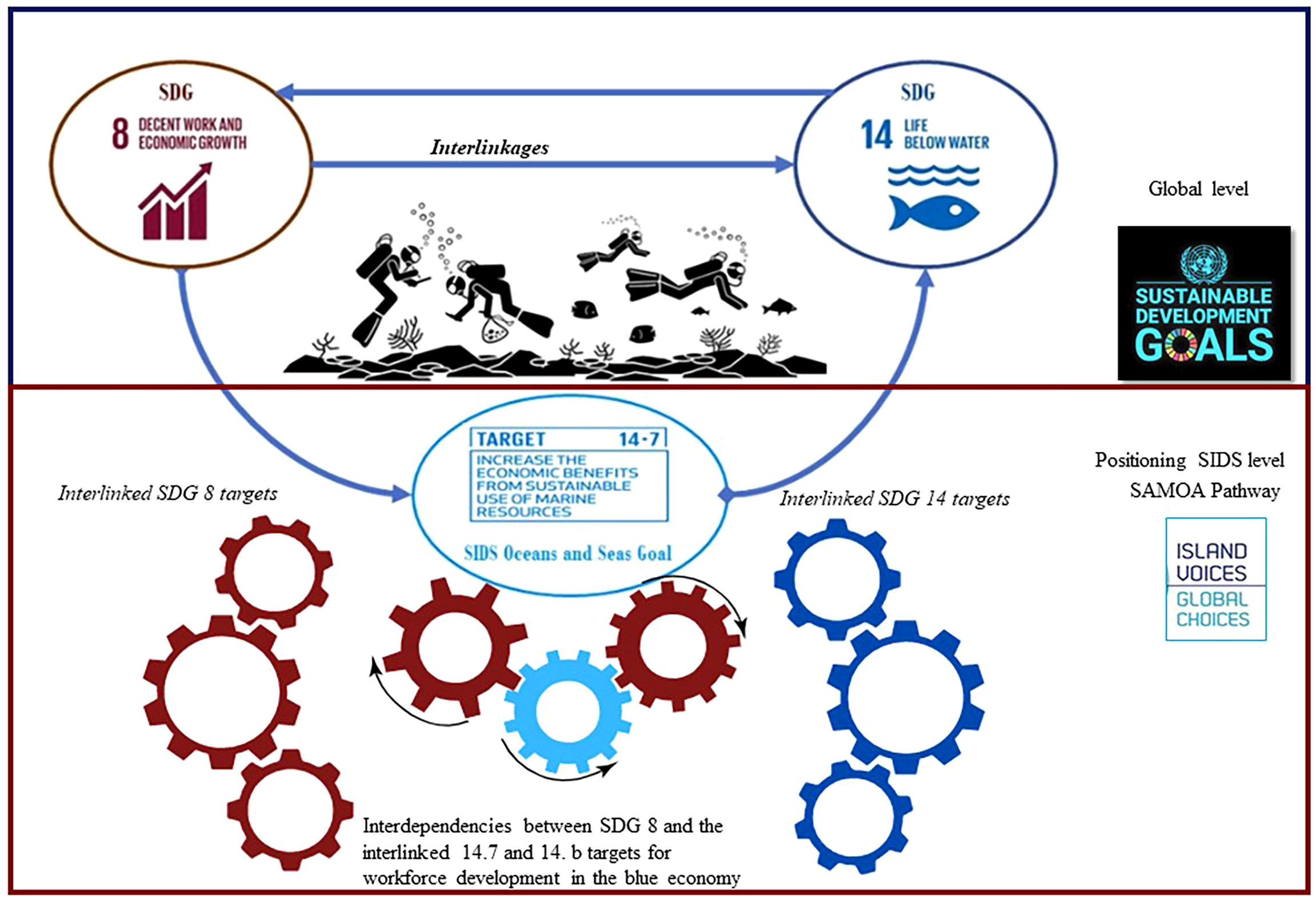
Figure 1 Three-tier level sustainable development goal interlinkages for decision-makers at the global, small island developing states (SIDS), and island government levels for dive fisher workforce development in the blue economy. The SIDS level via the SIDS Accelerated Modalities of Action pathway demonstrates their policy priority and interdependencies between ILO SDG 8 targets, 14.7 and 14.b. Expanded from Nisa et al. (2022) via systems thinking and systems integration advocated by Liu et al. (2015).
In Figure 1, SIDS macro positions are derived from a content analysis of the SIDS Accelerated Modalities of Action (SAMOA) Pathway, Resolution Adopted by the General Assembly on/14 November 2014 (A/RES/69/15, 2014), in correlation with SDG 14 targets, as outlined in Table 2.
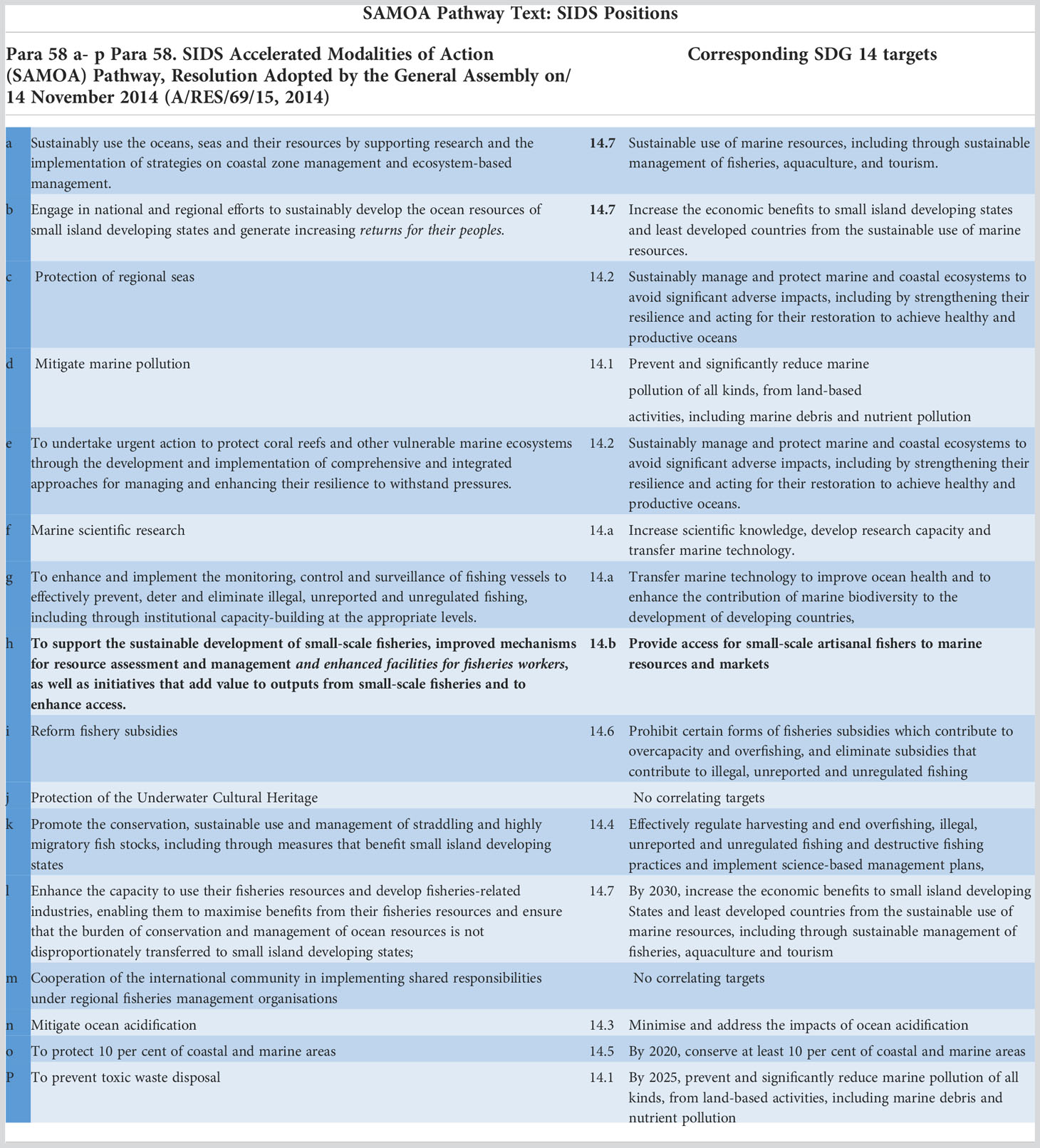
Table 2 Macro-level policy analysis of SIDS oceans and seas goal and correlating SDG 14 negotiate text highlighting SDG 14.7 and 14.b policy positionality holistically across island governmental tasks.
Positioning ILO policy instruments with blue economy and SDG interlinkages
With increasing human rights violations, as well as safety standards and labour exploitation at all levels, island policymakers need to prioritise SDG targets for small-scale commercial fishers that allow governments to minimise such negative impacts. In a recent study, Sparks et al. (2022) offered an in-depth analysis of ILO labour standards, market-based certifications, and relevant instruments for a labour-oriented human rights strategy for fishery supply chains. As dive fishers are workers under development in fisheries for trade, their workforce development needs and labour provisions across the value chain need to be mapped under SDGs. The state is responsible for executing such principal standards to ensure fishers’ rights as per the law are not clouded (Syed et al., 2021). This section discusses the new labour guidelines for fishing: ILO Work in Fishing Convention (number C188) integrated with ILO diver occupational profile. To ensure that the landmark convention (C188) is positioned as a helpful policy guiding tool to a wide range of decision-makers across the fishery trade value chain, this study creates awareness of C188 by holistically examining a range of policy tools and instruments, as listed in Table 1, over the timeline of the initiation of different tools. Nisa et al. (2022) and Natuva (2021) argued that the island-led blue economy and interlinked SDG targets should be explored holistically for new policy purposes—for example, SDG 8.5 is a target for governments to achieve productive employment and decent work for all by 2030, and Natuva (2021) extended this discussion with public sector reforms.
It is critical to note that, after years of complex negotiations and multiple pushbacks and disagreements within global labour and ocean governance networks (ILO, 2004; Mathew, 2010), the new labour instrument C188 was agreed upon by member states in June 2007. In 2017, the new labour standard for fishing progressively entered into force after its 10th ratification1 (ILO, 2016). Sparks et al. (2022) and Lozano et al. (2022b) provided substantive elements and indicators of decent work (SDG 8) developed by the ILO under C188.
C188 presents an agreement for the first time that includes all commercial fishing operations and their access to principal labour standards and decent working conditions in the globalised economy (Mathew, 2010; ILO, 2017). Additionally C188 puts forth labour dimensions, such as occupational health and safety, accident prevention, and social protection, within the scope of all commercial fishing operations (Fadzil, 2013). ILO country profiles on occupational health and safety provide the policy foundation for ILO divers’ and indigenous fishers’ occupational needs within the economic role of the divers (ILO, 2000). An earlier work of Dunford et al. (2002) and Gold et al. (2000) on diving-specific labour dimensions and the social protection of divers of Thailand and Australia served as the basis for the ILO Committee’s decisions on the primary occupation standards for dive fishers. Nisa et al. (2022) positioned health and safety for diving occupations within SDGs at the global level, and this study extends ILO labour instruments that position dive fishers’ occupations in national development. In Figure 1, the ILO diver occupation profile is extended to the policy level to advance the SDG impacts and, in Table 3, articles 31–33 of C-188, sets the drivers and policy levers for a series of labour provisions and actions in the context of island fishery development projects, interdependent on the dive fishers’ labour force.
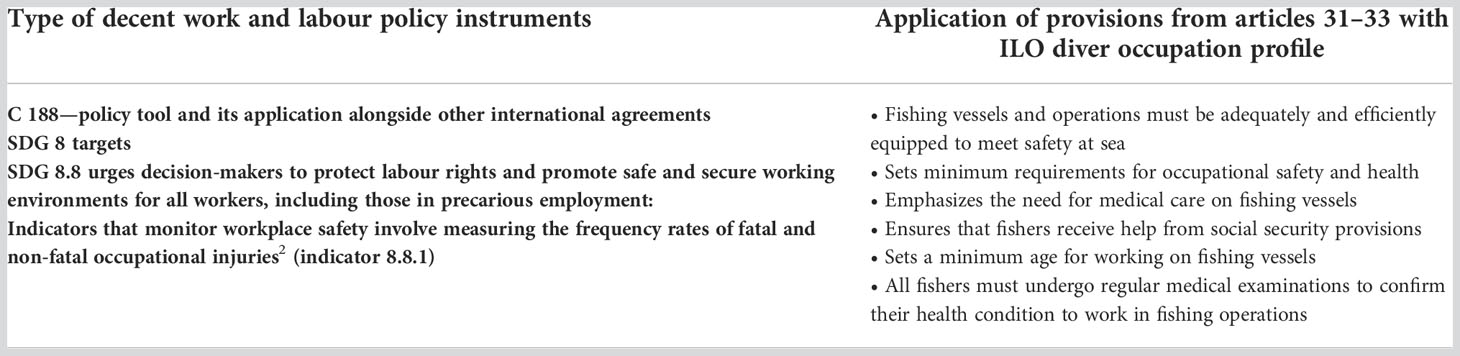
Table 3 International Labour Organization policy instruments in the case of small-scale dive fisher labour, occupational health and safety, and social protection.
C188, alongside Figure 1, also allows policy dialogues to discuss the bottlenecks and chart steps to eliminate, control, and eradicate worse forms of labour and unsafe working conditions (SDG 8.7) in the case of island divers. Cases that are reporting systemic occurrences of occupational fatalities and disability accidents of dive fishers due to the weakening of ILO labour dimensions and macro-level policy failure need urgent policy innovation at all levels (Marschke and Vandergeest, 2016; Nisa et al., 2022).
Macro policy safeguards for dive fishers in the global supply chain via SDG interlinkages and applications
Sparks et al. (2022) outlined the relevant ILO policy tools targeted at seafood supply chain actors to take responsibility for implementing principles of C188, mapping SDG impacts across the supply chain and geographies as essential. This study takes the principal provisions of the convention (C188) and links it with the ILO resolution concerning decent work (SDG 8) in the global supply chain (ILO, 2016), which includes the fish trade. Unless policymakers specifically address the inequalities that have deepened in island dive fishery development, there is a real danger that the piecework approach to diver health and safety will not end the worst forms of labour (SDG 8.7). Nisa et al. (2022) argued that opportunities in realising the interdependencies between SDGs, as in Figure 1, require relevant labour and trade partners and institutions to agree on abolishing unsafe and non-decent work impacting SDG 14. Therefore, island governments must ensure that their trading and industry partners at all levels are mandated to control and eradicate the worst forms of labour and unsafe working conditions (SDG 8.7). The principal provisions of the convention (C188) are likely to have a more significant impact on SIDS fishers when viewed comprehensively with the blue economy and SDG interlinkages that connect safeguards in the supply chain. Cammarano et al. (2022) and Montiel et al. (2021) contextualised the SDGs in supply chains and transnational trade. A policy framework based on decent work must be the main driver for the global supply chain (ILO, 2016), and Figure 1 provides a starting point for decision-makers in the case of island dive fisher labour force building under the blue economy. Via Figure 1, SDG 8.8 provides provisions for governments to seek investments in promoting a safe and secure working environment interlinked with small-scale fishery development, global supply chains, and economic productivity (SDG 14. b).
SIDS SDG positions in decent work creation for island dive fishers
UN top-down approaches make policy shifts difficult for SIDS-limited institutional capacity (Zitoun et al., 2020). Due to the continued lack of cooperation and consensus on many international agreements, the sector silo situation continues between fisheries and labour (Morrison et al., 2020; Gibbs et al., 2021). Moreover, this is apparent in the FAO setting SDG indicators for target SDG 14.7 in measuring its success. Indicator 14.7.1 is set around three inputs: GDP, value added in fisheries, and the biological sustainability of fish stocks (FAO, 2020). Additionally, under the business-as-usual approach to the implementation of SDG target 14.b, promoted under the guidance of Pacific island countries by the FAO (FAO, 2021), there is a disregard for the call for SDG integration, such as SDG 8 on labour and social protection for small-scale fishers. The FAO positions in addressing SDG 14.7 and 14.b are described as what Elder and Olsen (2019) and Fukuda-Parr and McNeill (2019) outlined as the politics in setting and measuring SDGs and being the custodian agency for SDG 14.7.
Behind this politics, island policymakers must be mindful of the role of the SAMOA pathway in bringing the need of policy integration to the forefront (UNDESA, 2019) and in localising the SDGs as per national needs, as shown in this paper in Section 4.1. The SAMOA pathway calls for an integrated approach in strengthening the fisher labour force to go hand in hand with a policy priority of an inclusive, fair, and more comprehensive economic need with decent work for all (UN-DESA, 2018; Zitoun et al., 2020). SDG 14.7, pointed out by Blanc et al. (2017), is a new politically negotiated text for SIDS in Agenda 2030. Therefore, the SIDS’s political positionality in their fishery sector reforms will be critical to ensuring that the UN agencies adhere to the integrated nature of the SDGs in the islands’ blue economy policy designs. Figure 1 provides that prompt position between global and SIDS levels and priority SDGs in the case of dive fishers in order for island policymakers to start preparing their future blue economy development-oriented policies driven by decent jobs and safety at sea (SDG 8.3).
Conclusion
Fishery development case studies illustrate that decades after the development of ILO occupation of dive fishers’ guidance for policy purposes, the basic decent work provisions for building the workforce have continued to be weakened at the macro policy level. Tackling unacceptable forms of work in fisheries including indigenous labour force is urgent for island governments in fisheries trade. There is a need to raise the ILO’s occupational profile for divers ILO (2000) and inter agency cooperation with competent marine authorities for dive accident prevention and in tackling unacceptable forms of work. SIDS, or large ocean states as the pioneering blue economy nations prefer to call them Hawke (2017), are at a critical juncture for an institutional framework that breaks policy silos in the fisheries sector (Caribbean Development Development, 2018). Figure 1 shows the pathways for island policymakers to overcome the policy fragmentation caused by a lack of consensus at the global and regional levels for small-scale fishery workforce development in transnational fisheries product supply. Whole-of-government approaches are needed to get the ILO decent work programme adopted as a driver for sustainable development and blue economy (UNDESA, 2017; UNOC, 2017). By linking the blue economy and SDGs, policymakers can develop more coherence between ministries of labour, fisheries, maritime security, and other relevant marine agencies of their blue economy, as Nisa et al. (2022) argued. Lee et al. (2020) have outlined other SDG linkages with the blue economy.
Under the 2030 Agenda, the ILO also has mandated enforcement and competent authorities to urgently eliminate, monitor, and eradicate poorer forms of work and unsafe working conditions (SDG 8.7). This study creates awareness on the workforce labour instrument—the Work in Fishing Convention, 2007 (no. 188)—that needs to be promoted at the island government level to protect workers from non-decent work. The findings of this study demonstrate possible synergies via ILO standards for dive fisher occupations and the convention (C188) in significantly improving policy preparation between the targets of SDG 8 and SDG 14.b. Figure 1 firstly bridges the gap and secondly capitalises on the synergies between the ILO, C188, and the decent work targets of SDG 8, 14.7, and 14.b to safeguard and build a workforce that is fit for the purpose of addressing their needs for the blue economy. Only through such interlinked policy cooperation and coordination can the blue economy concept that focuses on decent job creation, social inclusion, innovation, and the promotion of small actors and businesses, as envisaged in SDG 8.3, be operationalised. The blue economy and SDGs open this policy-level dialogue for a new coordination mechanism amongst policymakers and competent marine organisation, labour force institutions, industries, and maritime security as highlighted by Natuva (2021) and Voyer et al. (2018). Furthermore the blue economy business model aims to break the old business patterns and transform island economies into more competitive players in global markets (Saavedra and Alleng, 2020). The blue economy is in line with Elkington’s (1998) “triple bottom line” business concept of sustainability, which aims to achieve environmental sustainability, change old economic patterns, and improve social justice and the lives of island communities. While SIDS continue to lead the way in promoting the blue economy, SIDS-led industry and interdisciplinary research on supply chains and transnational trade, as well as public sector reforms, are limited. This study contributes to SIDS’ evidence-based policy research and advances these limitations for island governments pioneering the blue economy and needing island-led marine strategies.
Author contributions
The Author contributed to the conceptualization, research, writing of the original draft, visualization, and analysis and interpretation of the data for this paper. The author confirms being the sole contributor of this work and has approved it for publication.
Acknowledgments
The author would like to express her sincere gratitude to Dr Keith C. Mitchell, Advisor on Blue Economy Reforms of Small Island Developing States, Sainivalati. S . Navoti, Chief of SIDS unit, UNDESA, Vittoria Gemelli, Joint SDG fund, UN Development coordination office for their valuable discussions in linking the SDGs to achieve policy integration and coherence on critical issues of SIDS. The completion of Diving Accident Assessment with new protocols would not have been possible without the support and guidance from advisor Gareth Lock, founder of The Human Diver and author of Under Pressure: Diving Deeper with Human Factors. The author is highly grateful for the contribution of this new knowledge, which can help promote the needs of island divers. This article is part of the author's PhD research at the World Maritime University (WMU)-Sasakawa Global Ocean Institute, under the Land-to-Ocean Leadership Programme, generously funded by the Swedish Maritime and Aquatic Agency (SwAM), the German Federal Ministry for Digital and Transport and The Nippon Foundation. Special thanks to Malmo-based diving professionals and colleagues for in-depth discussions on dive safety and training standards, as well as workforce development. The author thanks the Editor-in-Chief and reviewers for their valuable comments in the preparation of this article.
Conflict of interest
The author declares that the research was conducted in the absence of any commercial or financial relationships that could be construed as a potential conflict of interest.
Publisher’s note
All claims expressed in this article are solely those of the authors and do not necessarily represent those of their affiliated organizations, or those of the publisher, the editors and the reviewers. Any product that may be evaluated in this article, or claim that may be made by its manufacturer, is not guaranteed or endorsed by the publisher.
Footnotes
- ^ https://www.ilo.org/global/about-the-ilo/newsroom/news/WCMS_535063/lang--en/index.htm
- ^ https://sdg.tracking-progress.org/indicator/8-8-1-fatal-occupational-injuries/
References
Avelino F., Grin J., Pel B., Jhagroe S.. (2016). The politics of sustainability transitions. J. Environ. Policy Plann. 18 (5), 557–567. doi: 10.1080/1523908X.2016.1216782
Barclay K., Fabinyi M., Kinch J., Foale S. (2019). Governability of high-value fisheries in low-income contexts: a case study of the Sea cucumber fishery in Papua new Guinea. Hum. Ecol. 47 (3), 381–396. doi: 10.1007/s10745-019-00078-8
Bassett H. R. (2019). Great risk, great Reward: The global extent and nature of compressed-air dive fisheries (Seattle, WA: University of Washington) [masters thesis]. Available at: https://digital.lib.washington.edu/researchworks/handle/1773/45220.
Basurto X., Virdin J., Smith H., Juskus R. (2017). Strengthening governance of small-scale fisheries: an initial assessment of theory and practice. Oak Foundation 123.
Bavinck M., Pollnac R., Monnereau I., Failler P. (2012). Introduction to the special issue on job satisfaction in fisheries in the global south. Soc. Indic. Res. 109 (1), 1–10. doi: 10.1007/s11205-012-0051-7
Blanc D., Le, Freire C., Vierros M. (2017). Mapping the linkages between oceans and other sustainable development Goals: A preliminary exploration (DESA working paper No.149; ST/ESA/2017/DWP/149, Vol. Issue 149.
Blythe J. L., Armitage D., Bennett N. J., Silver J. J., Song A. M. (2021). The politics of ocean governance transformations. Front. Mar. Sci. 8. doi: 10.3389/fmars.2021.634718
Bolatagici L. (2016). $240k for pearl industry. The Fiji times. Available at: https://www.fijitimes.com..
Burman F., Bennett C., Buzzacott P., Caruso J. L., Chimiak J. M., Denoble P. J., et al. (2019). “Annual diving report,” in Divers Alert Network Annual Diving Report 2019 Edition - A report on 2017 diving fatalities, injuries and incidents. Durham, NC.
Buzzacott P., Bennett C. M., Caruso J. L., Chimiak J. M., Clark N. W., Demetrescu I., et al, et al. (2017). Annual Diving Report, Buzzacott P (editor).DAN Annual Diving 661 Report: A report on 2015 diving fatalities, injuries, and incidents. (Durham, NC: Divers Alert 662 Network), 2017; pp. 134
Cammarano A., Perano M., Michelino F., Del Regno C., Caputo M. (2022). SDG-oriented supply chains: Business practices for procurement and distribution. Sustainability (Switzerland) 14 (3). doi: 10.3390/su14031325
Caribbean Development Development (2018). “Financing the blue economy,” in Caribbean Development bank (St. Michael, Barbados: Caribbean Development Bank). Available at: https://www.caribank.org/publications-and-resources/resource-library/thematic-papers/financing-blue-economy-caribbean-development-opportunity.
Caribbean Region Fisheries Minister (CRFM) member states (2015) St. george’s declaration. Available at: http://www.crfm.int/index.php?option=com_k2&view=item&id=441:st-george-s-declaration-on-conservation-management-and-sustainable-use-of-the-caribbean-spiny-lobster-panulirus-argus&Itemid=455.
Chasek P. S., Wagner L. M., Leone F., Lebada A. M., Risse N. (2016). Getting to 2030: Negotiating the post-2015 sustainable development agenda. Rev. European Comp. Int. Environ. Law 25 (1), 5–14. doi: 10.1111/reel.12149
Chen S. T., Wall A., Davies P., Yang Z., Wang J., Chou Y. H. (2013). A human and organisational factors (HOFs) analysis method for marine casualties using HFACS-maritime accidents (HFACS-MA). Saf. Sci. 60, 105–114. doi: 10.1016/j.ssci.2013.06.009
Cialoni D., Pieri M., Balestra C., Marroni A. (2017). Dive Risk Factors, Gas Bubble Formation, and Decompression Illness in Recreational SCUBA Diving: Analysis of DAN Europe DSL Data Base. Frontiers in Psychology 8, 1587. doi: 10.3389/fpsyg.2017.01587
Decker Sparks J. L., Matthews L., Cárdenas D., Williams C. (2022). Worker-less social responsibility: How the proliferation of voluntary labour governance tools in seafood marginalise the workers they claim to protect. Mar. Policy 139, 105044. doi: 10.1016/j.marpol.2022.105044
Delgado C. L., Wada N., Rosegrant M. W., Meijer S., Ahmed M. (2003). Fish to 2020 Supply and Demand in Changing Global Markets. International Food Policy Research Institute (IFPRI) and WorldFish Center. Washington: Penang.
Divernet (2021). Bahamas Deaths blamed on DCI (Divernet). Available at: https://divernet.com/scuba-diving/diving-instructor-cleared-in-safety-stop-death-case/.
Dunford R. G., Mejia E. B., Salbador G. W., Gerth W. A., Hampson N. B. (2002). Diving methods and decompression sickness incidence of miskito Indian underwater harvesters. Undersea Hyperbaric Med. 29 (2), 74–85.
Elder M., Bengtsson M., Akenji L. (2016). An optimistic analysis of the means of implementation for sustainable development Goals: Thinking about goals as means. doi: 10.3390/su8090962
Elder M., Olsen S. H. (2019). The design of environmental priorities in the SDGs. Global Policy 10, 70–82. doi: 10.1111/1758-5899.12596
Elkington J. (1998). “Environmental quality management,” in The triple bottom line of 21 st century business cannibals with forks. doi: 10.1002/tqem.3310080106
Fadzil M. (2013). The ILO work in fishing convention: Gap analysis, and the wellbeing of Malaysian fishers. IOSR J. Of Humanities And Soc. Sci. 16 (3), 93–99. doi: 10.9790/0837-1639399
FAO (2015). Voluntary Guidelines for Securing Sustainable Small-Scale Fisheries in the Context of Food Security and Poverty Eradication. Rome. Available at: http://www.fao.org/docrep/field/003/ab825f/AB825F00.htm#TOC
FAO (2017). The world lobster market. Graciela Pereira and Helga Josupeit, FAO consultants. 706 Globefish Research Programme Volume 123. Rome, Italy.
FAO (2020). “The state of world fisheries and aquaculture 2020,” in Sustainability in action (Rome: Fao). doi: 10.4060/ca9229en
FAO (2021). “Reporting on sustainable development goal target 14.b and its indicator 14.b.1,” in Guidance for pacific island countries (Apia: FAO).
FAO (2022). Health and safety in the dive fisheries of key species in the WECAFC region (Rome: FAO). Available at: https://eur-lex.europa.eu/legal-content/PT/TXT/PDF/?uri=CELEX:32016R0679&from=PT%0Ahttp://eur-lex.europa.eu/LexUriServ/LexUriServ.do?uri=CELEX:52012PC0011:pt:NOT.
Ferguson C. E., Bennett N. J., Kostka W., Richmond R. H., Singeo A. (2022). The tragedy of the commodity is not inevitable: Indigenous resistance prevents high-value fisheries collapse in the pacific islands. Global Environ. Change 73, 102477. doi: 10.1016/j.gloenvcha.2022.102477
Finkbeiner E. M., Bennett N. J., Frawley T. H., Mason J. G., Briscoe D. K., Brooks C. M., et al. (2017). Reconstructing overfishing: Moving beyond malthus for effective and equitable solutions. Fish Fisheries 18 (6), 1180–1191. doi: 10.1111/faf.12245
Fukuda-Parr S., McNeill D. (2019). Knowledge and politics in setting and measuring the SDGs: Introduction to special issue. Global Policy 10, 5–15. doi: 10.1111/1758-5899.12604
Garcia Lozano A. J., Decker Sparks J. L., Durgana D. P., Farthing C. M., Fitzpatrick J., Krough-Poulsen B., et al. (2022). Decent work in fisheries: Current trends and key considerations for future research and policy. Mar. Policy 136, 104922. doi: 10.1016/j.marpol.2021.104922
Gascoigne J., Matthews T., Groeneveld J. (2018). Marine stewardship council (MSC) public certification report the Bahamas spiny lobster fishery (Hampshire: Bahamas Marine Exporters Association Prepared by Control Union Pesca Ltd). Available at: www.cupesca.com.
Gibbs M. T., Gibbs B. L., Newlands M., Ivey J. (2021). Scaling up the global reef restoration activity: Avoiding ecological imperialism and ongoing colonialism. PloS One 16, 1–15. doi: 10.1371/journal.pone.0250870
Gillett R., McCoy M. A., Bertram I., Kinch J., Desurmont A., Halford A. (2020). Aquarium products in the pacific islands: A review of the fisheries, management and trade (Noumea: SPC).
Gold D., Geater A., Aiyarak S., Wongcharoenyong S., Juengprasert W., Johnson M., et al. (2000). The indigenous fisherman divers of thailand: Diving-related mortality and morbidity. Int. J. Occup. Saf. Ergonomics 6 (2), 147–167. doi: 10.1080/10803548.2000.11076449
González M. (2018). Governance and governability: indigenous small-scale fisheries and autonomy in coastal Nicaragua. Maritime Stud. 17 (3), 263–273. doi: 10.1007/s40152-018-0115-7
Gourlie D., Davis R., Govan H., Marshman J., Hanich Q. (2018). Performing “A new song”: Suggested considerations for drafting effective coastal fisheries legislation under climate change. Mar. Policy 88, 342–349. doi: 10.1016/j.marpol.2017.06.012
Green S. J., Akins J. L., Maljković A., Côté I. M. (2012). Invasive lionfish drive Atlantic coral reef fish declines. PloS One 7 (3), e32596. doi: 10.1371/journal.pone.0032596
Hamilton J., Basurto X., Smith H., Virdin J. (2021). How does the world bank shape global environmental governance agendas for coasts? 50 years of small-scale fisheries aid reveals paradigm shifts over time. Global Environ. Change 68, 102246. doi: 10.1016/j.gloenvcha.2021.102246
Harris H. E., et al. (2020). ‘Testing the efficacy of lionfish traps in the northern gulf of mexico’. PloS One 15pp, 1–20. doi: 10.1371/journal.pone.0230985
Hawke C. (2017). “Oceans and small island states: First think opportunity, then think blue,” in UNDP: Our perspectives New York: UN. Available at: https://www.undp.org/content/undp/en/home/blog/2017/2/22/Oceans-and-small-island-states-First-think-opportunity-then-think-blue.html.
Heinrich Böll Foundation Schleswig-Holstein, Heinrich Böll Foundation, University of Kiel’s Future Ocean Cluster of Excellence (2017). “Ocean atlas,” in Ocean atlas - facts and figures on the threats to our marine ecosystems (The Heinrich Böll Foundation Berlin: Heinrich Böll Foundation Schleswig-Holstein). Available at: www.meeresatlas.org.
Holliday E., Anrooy R. (2021). The fisheries accident management process: Guidelines for competent authorities Rome: FAO, Vol. 1226.
Huchim-lara O., Salas S., Chin W., Montero J., Fraga J. (2015). Diving behavior and fishing performance: The case of lobster artisanal fishermen of the Yucatan coast, Mexico Undersea & hyperbaric medicine. 42, p. Available at: https://www.researchgate.net/publication/282680039%0ADiving
IAEG-SDGs (2019). “Tier classification for global SDG indicators,” UN: New York. doi: 10.1080/10717540500313661
ILO (2000) International hazard datasheets on occupation - indigenous fisherman diver. Available at: http://www.ilo.org/wcmsp5/groups/public/—ed_protect/—protrav/—safework/documents/publication/wcms_186122.pdf.
ILO (2004). Conditions of work in the fishing sector: A comprehensive standard (a Convention supplemented by a Recommendation ) on work in the fishing sector. ILO: Geneva
ILO (2007). C188- Work in Fishing Convention (No. 188), (ILO). Available at: https://www.ilo.org/dyn/normlex/en/f?p=NORMLEXPUB:12100:0::NO::P12100_ILO_CODE:C188.
ILO (2014b). “Decent work in Caribbean small island developing states,” in UN Conference on small island and developing states.
ILO (2019a). “Safety and health at the heart of the future of work,” in Building on 100 years of experience.
ILO (2019b). Time to act for SDG 8: Intergrating decent work, sustained growth and environmental integrity.
Kaplan-Hallam M., Bennett N. J., Satterfield T. (2017). Catching sea cucumber fever in coastal communities: Conceptualizing the impacts of shocks versus trends on social-ecological systems. Global Environ. Change 45, 89–98. doi: 10.1016/j.gloenvcha.2017.05.003
Kitolelei J. V., Sato T. (2016). Analysis of perceptions and knowledge in managing coastal resources: A case study in Fiji. Front. Mar. Sci. 3. doi: 10.3389/fmars.2016.00189
Knowles A., Mathias T., Chen B., Knowles A., Mathias T., Chen B. (2019). The Bahamas ‘ bid for WTO membership. the last remaining non-WTO member in the Western hemisphere. Int. J. Foreign Trade Int. Business 1, 9–14.
Lal P. (2004). Coral reef use and management–the need, role, and prospects of economic valuation in the pacific. Economic Valuation Policy Priorities Sustain. Manage. Coral Reefs, 59–78.
Lal Pa, Cerelala A. (2005). “Financial and economic analysis of wild harvest and cultured live coral and live rock in Fiji,” in Peoples of the south pacific international, south (Suva: The Peoples of the South Pacific International). Available at: https://www.researchgate.net/publication/228687180_Financial_and_economic_analysis_of_wild_harvest_and_cultured_live_coral_and_live_rock_in_Fiji%5Cnhttp://www.sprep.org/att/IRC/eCOPIES/Countries/Fiji/53.pdf.
Le Blanc D. (2015). Towards integration at last? the sustainable development goals as a network of targets. Sustain. Dev. 23 (3), 176–187. doi: 10.1002/sd.1582
Lee K. H., Noh J., Khim J. S. (2020). The blue economy and the united nations’ sustainable development goals: Challenges and opportunities. Environ. Int. 137, 105528. doi: 10.1016/j.envint.2020.105528
Le Manach F., Jacquet J. L., Bailey M., Jouanneau C., Nouvian C. (2020). Small is beautiful, but large is certified: A comparison between fisheries the marine stewardship council (MSC) features in its promotional materials and MSC-certified fisheries. PloS One 15 (5). doi: 10.1371/journal.pone.0231073
Leveson N. (2011). Engineering a safer world : systems thinking applied to safety. Eds. Moses Joel W. R., de Neufville R., Heitor M., Morgan G., Pat é -Cornell E..
Liu J., Mooney H., Hull V., Davis S. J., Gaskell J., Hertel T., et al. (2015). Systems integration for global sustainability. Science 347 (6225). doi: 10.1126/science.1258832
Lock G. R. (2011). Human factors within sports diving incidents and accidents - an application of the human factors analysis and classification system (HFACS) Cognitas Incident Management Limited. Available at: https://cognitasresearch.files.wordpress.com/2012/08/human-factors-in-sport-diving-incidents.pdf
Lock G. (2019). Under Pressure : Diving Deeper with Human Factors. Warrington, United Kingdom: Vision Maker Press.
Luthfi O. M., Isdianto A. (2019). Introducing scuba diving for fishermen of pantai kondang merak, malang. E-Dimas: Jurnal Pengabdian Kepada Masyarakat 10 (1), 34. doi: 10.26877/e-dimas.v10i1.2153
Mangubhai S., Lalavanua W., Purcell S. (2017). “Fiji sea Cucumber Fishery: advances in science for improved management,” in Wildlife conservation society Suva: Wildlife Conservation Society.
Marschke M., Campbell D., Armitage D. (2020). Precarious livelihoods: Examining the intersection of fish work and ecological change in coastal Jamaica. People Nat. 2 (1), 152–162. doi: 10.1002/pan3.10061
Marschke M., Vandergeest P. (2016). Slavery scandals: Unpacking labour challenges and policy responses within the off-shore fisheries sector. Mar. Policy 68, 39–46. doi: 10.1016/j.marpol.2016.02.009
Mathew S. (2010). From informal “co-adventurers” to formal workers? ILO’s work in fishing conventio. Economic Political Weekly 45 (5), 49–55.
McConney P., Phillips T., Nembhard N., Lay M. (2017). “Caribbean Fisherfolk engage the small-scale fisheries guidelines,” in In the small-scale fisheries guidelines, global implementation (Cham: Springer), 451–472. doi: 10.1007/978-3-319-55074-9_21
Mohammed E. Y., Steinbach D., Steele P. (2018). Fiscal reforms for sustainable marine fisheries governance: Delivering the SDGs and ensuring no one is left behind. Mar. Policy 93, 262–270. doi: 10.1016/j.marpol.2017.05.017
Monnereau I. (2012) The red gold rush: the impact of governance styles on value chains and the well-being of lobster fishers in the wider Caribbean. Available at: https://pure.uva.nl/ws/files/2595920/170001_Alle_kanalen_staan_open_2010.pdf%0Ahttps://pure.uva.nl/ws/files/1378199/115843_Programmeringsstudie_Taal.pdf.
Montiel I., Cuervo-Cazurra A., Park J., Antolín-López R., Husted B. W. (2021). Implementing the united nations’ sustainable development goals in international business. J. Int. Business Stud. 52 (5), 999–1030. doi: 10.1057/s41267-021-00445-y
Morgera E., Nakamura J. (2021). Shedding a light on the human rights of small-scale fisherfolk: Complementarities and contrasts between the UN declaration on peasants’ rights and the small-scale fisheries guidelines. SSRN Electronic J. doi: 10.2139/ssrn.3850133
Morrison T. H., Adger N., Barnett J., Brown K., Possingham H., Hughes T. (2020). Advancing coral reef governance into the anthropocene. One Earth 2 (1), 64–74. doi: 10.1016/j.oneear.2019.12.014
Natuva T. (2021). Fiji‘s blue economy and the importance of maritime security. R. Aust. Navy Sea Power Soundings Second. London: SAGE Publications, Inc. 23.
Nisa Z. A., Schofield C., Neat F. C. (2022). Work below water: The role of scuba industry in realising sustainable development goals in small island developing states. Mar. Policy 136, 104918. doi: 10.1016/j.marpol.2021.104918
O’Regan S. (2015). Harvesters’ perspectives on the management of British columbia’s giant red sea cucumber fishery. Mar. Policy 51, 103–110. doi: 10.1016/j.marpol.2014.07.025
Orr D., Douglas E. (2007). Scuba diving safety. Eds. Hunter J., Healy H., Koritz L., Zych C Human Kinetics: Illinois. Available at: https://www.HumanKinetics.com.
Pakoa K., Saladrau W., Lalavanua W., Valotu D., Tuinasavusavu I., Sharp M., et al. (2013). The status of sea cucumber resources (Issue June).
Patterson J., et al. (2017). Exploring the governance and politics of transformations towards sustainability. Environ. Innovation Societal Transitions 24, 1–16. doi: 10.1016/j.eist.2016.09.001
Pitt J. M., Trott T. M. (2015). ‘A lionfish trap for use in Bermuda, with potential applications elsewhere ’. Proc. 68th Gulf Caribbean Fisheries Institute (Panama City), 2–3.
Purcell S. W. (2014). Value, market preferences and trade of beche-De-Mer from pacific island Sea cucumbers. PloS One 9 (4), e95075. doi: 10.1371/journal.pone.0095075
Purcell S. W., Crona B. I., Lalavanua W., Eriksson H. (2017). Distribution of economic returns in small-scale fisheries for international markets: A value-chain analysis. Mar. Policy 86, 9–16. doi: 10.1016/j.marpol.2017.09.001
Remolà A. O., Gudmundsson A. (2018). “FAO fisheries and aquaculture circular no. 1153,” in Global review of safety at sea in the fisheries sector (Rome, Italy).
Rohe J. R., Aswani S., Schlüter A., Ferse S. C. A. (2017). Multiple drivers of local (non-) compliance in community-based marine resource management: Case studies from the south pacific. Front. Mar. Sci. 4. doi: 10.3389/fmars.2017.00172
Rudolph T. B., Ruckelshaus M., Swilling M., Allison E. H., Österblom H., Gelcich S., et al. (2020). A transition to sustainable ocean governance. Nat. Commun. 11 (1), 1–14. doi: 10.1038/s41467-020-17410-2
Saavedra J. J., Alleng G. P. (2020). “Sustainable islands: Defining a sustainable development framework tailored to the needs of islands,” in Technical note.
Sadovy de Mitcheson Y., Mangubhai S., Witter A., Kuridrani N., Batibasaga A., Waqainabete P., et al. (2018) Value chain analysis of the Fiji grouper fishery. Available at: www.SCRFA.org.
Shreeves K., Buzzacott P., Hornsby A., Caney M. (2018). Violations of safe diving practices among 122 diver fatalities. Int. Maritime Health 69 (2), 94–98. doi: 10.5603/IMH.2018.0014
Sloan J., Tuivanualevu F. (2017). “The law on the use of underwater breathing apparatus (UBA) in fiji’s inshore fishing industry,” in Law bulletin. Available at: http://www.sas.com.fj/ocean-law-bulletins/the-law-on-the-use-of-underwater-breathin-apparatus-uba-in-fijis-inshore-fishing-industry.
Smart D. (2017). Back to the future: occupational diver training in Australia 47, 4, 214–215. doi: 10.28920/dhm47.4.214-215
Smith H., Basurto X. (2019). Defining small-scale fisheries and examining the role of science in shaping perceptions of who and what counts: A systematic review. Front. Mar. Sci. 6. doi: 10.3389/fmars.2019.00236
Spalding M., Burke L., Wood S. A., Ashpole J., Hutchison J., zu Ermgassen P. (2017). Mapping the global value and distribution of coral reef tourism. Mar. Policy 82, 104–113. doi: 10.1016/j.marpol.2017.05.014
Stafford-Smith M., Griggs D., Gaffney O., Ullah F., Reyers B., Kanie N., et al. (2017). Integration: the key to implementing the sustainable development goals. Sustainability Sci. 12 (6), 911–919. doi: 10.1007/s11625-016-0383-3
St. George’s Declaration (2015). Available at: http://www.crfm.int/index.php?option=com_k2&view=item&id=441:st-george-s-declaration-on-conservation-management-and-sustainable-use-of-the-caribbean-spiny-lobster-panulirus-argus&Itemid=455.
Syed R., Bhattacharjee N., Khan R. (2021). Influential factors under labor law adhere to ILO: An analysis in the fish farming industry of Bangladesh. SAGE Open 11 (4), 215824402110606. doi: 10.1177/21582440211060667
Teh L. C. L., Teh L. S. L., Starkhouse B., Rashid Sumaila U. (2009). An overview of socio-economic and ecological perspectives of fiji’s inshore reef fisheries. Mar. Policy 33 (5), 807–817. doi: 10.1016/j.marpol.2009.03.001
The Fijian Government (2015). Ministry of Industry, Trade and Tourism. Fijian Trade Policy Framework (2015–2025). Suva, Fiji.
The Government of The Bahamas (2018). Affirmation Given to Management of Bahamian Spiny Lobster Fishery. Bahamas Information Services. doi: 10.1097/00008506-200407000-00020
Thomas Travaille K. L., Lindley J., Kendrick G. A., Crowder L. B., Clifton J. (2019). The market for sustainable seafood drives transformative change in fishery social-ecological systems. Global Environ. Change 57, 101919. doi: 10.1016/j.gloenvcha.2019.05.003
Tosun J., De Francesco F., Peters B. G. (2019). From environmental policy concepts to practicable tools: Knowledge creation and delegation in multilevel systems. Public Administration 97 (2), 399–412. doi: 10.1111/padm.12544
Tribune (2021) Two divers die ‘from bends. Available at: http://www.tribune242.com/news/2021/aug/30/two-men-die-fishing-trip/?news.
UN (2015) Global sustainable development report. Available at: https://www.un.org/en/development/desa/publications/global-sustainable-development-report-2015-edition.html.
UNCTAD (2014). The oceans economy: Opportunities and challenges for small island developing states UNCTAD, Geneva.
UNDESA (2017) Implementing the 2030 sustainable development agenda in small island developing states (SIDS): Equipping public institutions and mobilizing partnerships. doi: 10.15724/jslhd.2017.26.2.001
UNGA (2014) SIDS Accelerated modalities of action (SAMOA) Pathway,Resolution adopted by the general assesmbly on/14 November 2014. A/RES/69/15. in UN: Vol. A/RES/&)/1. Available at: https://unctad.org/system/files/official-document/ares69d15_en.pdf.
United Nations (2015) United nations sustainable development summit 2015, united nations sustainable development summit 2015. Available at: https://sustainabledevelopment.un.org/post2015/summit.
UNOC (2017). “Concept paper partnership dialogue 5: Increasing economic benefits to small island developing states and least developed countries and providing access for small-scale artisanal fishers to marine resources and markets,” in The Ocean Conference, United Nation, New York, 5-9 June 2017. 1–12.
Veitayaki J. (1998). Traditional and community-based marine resources management system in fiji: An evolving integrated process. Coast. Manage. 26 (1), 47–60. doi: 10.1080/08920759809362342
Voyer M., Schofield C., Azmi K., Warner R., McIlgorm A., Quirk G. (2018). Maritime security and the blue economy: intersections and interdependencies in the Indian ocean. J. Indian Ocean Region 14 (1), 28–48. doi: 10.1080/19480881.2018.1418155
Weitz N., Persson Å., Nilsson M., Tenggren S. (2015). “Sustainable development goals for Sweden: Insights on setting a national agenda,” in Stockholm Environment institute, 1–57. Available at: https://www.sei-international.org/mediamanager/documents/Publications/SEI-WP-2015-10-SDG-Sweden.pdf.
Western Central Atlantic Fishery Commission (WECAFC) (2018) The regional Caribbean spiny lobster (Panulirus argus) fishery management plan (Issue November). Available at: https://clmeplus.org/app/uploads/2020/05/2018-FAO-MARPLESCA-Regional-Caribbean-Spiny-Lobster-Fishery-Management-Plan.pdf.
World Bank (2013). FISH TO 2030 prospects for fisheries and aquaculture FISH TO 2030 prospects for fisheries and aquaculture.
World Wild Life (WWF) (2018) World wild Life: A first for Caribbean fisheries: Bahamas spiny lobster earns MSC certification. Available at: https://seafoodsustainability.org/a-first-for-caribbean-fisheries-bahamas-spiny-lobster-earns-msc-certification-2/.
Zhang Q., Prouty C., Zimmerman J. B., Mihelcic J. R. (2016). More than target 6.3: A systems approach to rethinking sustainable development goals in a resource-scarce world. Engineering 2 (4), 481–489. doi: 10.1016/J.ENG.2016.04.010
Yin R. K. (2018). Case study research and applications: Design and methods. 6th (SAGE Open). doi: 10.1177/109634809702100108
Keywords: SIDS, dive fishers, dive accidents, SAMOA pathway, competent marine authorities, safety at sea, blue economy, SDGS
Citation: Nisa ZA (2022) The role of marine and diving authorities in workforce development in the blue economy. Front. Mar. Sci. 9:1014645. doi: 10.3389/fmars.2022.1014645
Received: 08 August 2022; Accepted: 09 November 2022;
Published: 20 December 2022.
Edited by:
Maree E. Fudge, University of Tasmania, AustraliaReviewed by:
Stuart James Kininmonth, The University of Queensland, AustraliaBianca Haas, University of Wollongong, Australia
Copyright © 2022 Nisa. This is an open-access article distributed under the terms of the Creative Commons Attribution License (CC BY). The use, distribution or reproduction in other forums is permitted, provided the original author(s) and the copyright owner(s) are credited and that the original publication in this journal is cited, in accordance with accepted academic practice. No use, distribution or reproduction is permitted which does not comply with these terms.
*Correspondence: Zahidah Afrin Nisa, dzE5MDM1NDdAd211LnNl; emFpZHkub2NlYW5zQGdtYWlsLmNvbQ==