 Ana Rodriguez-Perez1†
 Athanassios C. Tsikliras2†
 Gideon Gal3†
 Jeroen Steenbeek4†
 Jannike Falk-Andersson5†
 Johanna J. Heymans1*†
- 1European Marine Board, Oostende, Belgium
- 2Laboratory of Ichthyology, School of Biology, Aristotle University of Thessaloniki, Thessaloniki, Greece
- 3Kinneret Limnological Laboratory, Israel Oceanographic and Limnological Research, Migdal, Israel
- 4Ecopath International Initiative, Barcelona, Spain
- 5Norwegian Institute for Water Research, Oslo, Norway
The need to implement an ecosystem-based fisheries management (EBFM) is enshrined in numerous regulations and strategies, at both global and European level. In practice, it is challenging to implement EBFM because it requires a complex evaluation of interlinked management effects and environmental and climate forcing on multi-species interactions, habitat status and human activities. Ecosystem models are one of the most critical research tools to inform EBFM, because they can integrate a wide variety of data, examine multiple and complex ecosystem interactions, and can make forecasts based on specific management scenarios. However, despite clear progress in marine ecosystem modelling, many models do not address policy goals and targets, which hinders uptake in policy. In this paper, we review the global and European policies and implementing bodies which directly or indirectly have a repercussion on the implementation of EBFM. Moreover, we highlight specific stakeholder needs related to the implementation of EBFM in European waters, which ecosystem models could help address. We review the policy commitments that drive these needs and the concerns raised by stakeholders during a survey and dedicated workshop. Key topics of concern were effects of climate change; bycatch; protected areas/fisheries restricted areas; and reducing the impacts of trawling. Stakeholders also provided specific questions related to these topics which ecosystem models could help address. Scenario and data results visualizations, as well as specific barriers in using the results of ecosystem models for decision-making are also discussed. A close involvement of stakeholders in scenario development and in designing graphical outputs is important, and can help overcome some of the main barriers that can hinder uptake of models and scenarios, including a lack of understanding of the benefits and limits of ecosystem models; insufficient involvement and interaction with stakeholders; and inadequate characterization of uncertainties.
1 Introduction
Fishing impacts marine organisms and ecosystems directly and indirectly (Jennings and Kaiser, 1998), affecting biodiversity, habitats and food web structure and functions, from local populations and communities to entire ecosystems (Jackson et al., 2001). Unsustainable fishing, which has been documented to occur globally (Pauly et al., 1998; Myers and Worm, 2003), results in declining catches and exploitation beyond safe biological limits (Christensen et al., 2003; Froese et al., 2018), and has altered ecosystem structure and function (Moullec et al., 2023). The traditional single species fisheries management and single stock advice neglects explicit multispecies interactions (Vinther et al., 2004), lacks environmental/climatic forcing and does not implicitly assess the socioeconomic impact of fishing (Dolan et al., 2016). Thus, a pressing need for managing fisheries in the context of an ecosystem (an ecosystem-based fisheries management, EBFM) emerged with a more systemic and multi-sector perspective. Applying EBFM requires moving from traditional single-species management to a more complex approach, which includes evaluating the interlinked effects of management and environmental forcing on multi-species interactions, habitat status and human activities (Garcia, 2003). EBFM has to acknowledge the effects of fishing on the whole ecosystem, including the human socio-ecologic system, and it should also help maintain resilient and sustain ecosystem services in the face of changing climate (Fu et al., 2013).
Numerous European and global policies require the implementation of EBFM. For instance, in the EU, the Common Fisheries Policy (CFP) explicitly states that an “ecosystem-based approach to fisheries management needs to be implemented” and both the Marine Strategy Framework Directive (MSFD) and the Marine Spatial Planning Directive (MSPD) endorse an ecosystem-based approach to management. Internationally, the UN Food and Agriculture Organisation (FAO) strongly promotes an ecosystem approach to fisheries and has produced numerous publications as guidelines (e.g. Garcia et al., 2003; FAO, 2005; FAO, 2008; Carocci et al., 2009; Staples and Funge-Smith, 2009). However, in practice implementation of EBFM requires interdisciplinarity, including applied science, modelling, and analysis of diverse streams of information, making it difficult to implement (Townsend et al., 2019).
Ecosystem models are a way of representing whole ecological systems, and are also able to integrate economic and social data (Heymans et al., 2018; Steenbeek et al., 2021a). They integrate a wide stream of information that can be used for testing the ecological, economic and social consequences of implementing specific management scenarios. These management simulations can be both retrospective (i.e. hindcasts) or for future scenarios. Ecosystem models have therefore been highlighted as one of the most critical research tools to inform EBFM (Townsend et al., 2019). However, despite clear capability and progress in marine ecosystem modelling, many models are designed to answer scientific, not policy questions, which hinders uptake in policy (Heymans et al., 2018). Ecosystem models that are designed to address policy questions need to be linked to policy goals and targets (e.g. Ofir et al., 2022). In order to inform EBFM, it is therefore important to understand the relevant policy landscape and the needs of related stakeholders.
One of the principal aims of the EcoScope project (EcoScope, 2021) is to use ecosystem modelling as a tool to assist in the implementation of EBFM and, within the ecosystem modelling framework and in parallel with research questions, to co-design the modelling scenarios with the relevant stakeholders in order to address policy questions. Ecosystem models will be available through an interactive platform, allowing users to run modelling scenarios and obtain easy to understand results. In the frame of the project, a survey and a foresight workshop were conducted with the involvement of key stakeholders to understand the main needs, challenges and barriers in implementing EBFM through the help of ecosystem modelling.
The aim of this paper is to distil critical policy-related needs relevant to EBFM, that can be addressed using ecosystem modelling. To this end, the paper has three main sections: (1) a review of the global and European policy landscape (including policies and implementing bodies) which directly or indirectly have a repercussion on the implementation of EBFM; (2) a review of stakeholder needs for implementing EBFM with the help of ecosystem modelling, including a review of the policy commitments that drive these needs and the concerns raised by stakeholders during a survey and dedicated workshop; and (3) a discussion on the main barriers and enablers that hinder or support the uptake of ecosystem model results in decision making.
2 EBFM policy landscape
2.1 International policy landscape
Internationally, the United Nation Convention on the Law of the Sea (UNCLOS) (UN General Assembly, 1982) is the framework under which all activities in the ocean must be carried out, including the conservation and sustainable use of marine resources. It sets limits to various maritime zones (i.e. territorial waters, Exclusive Economic Zone, continental shelf and high seas) and recognises the rights of coastal states to control fish harvests in adjacent waters. EU fishing activities take place under the framework of UNCLOS and the rights and duties of states with respect to the use of ocean space and resources are defined therein.
In 1995, UNCLOS was supplemented by the UN Fish Stocks Agreement (UNFSA) (UN General Assembly, 1995) on highly migratory and straddling fish stocks. UNFSA establishes a set of rights and obligations for States to conserve and manage fish stocks and associated species, as well as to protect biodiversity in the marine environment. Regional Fisheries Management Organisations (RFMOs) are the mechanism through which States should cooperate internationally to fulfil their obligation to manage and conserve fish stocks in the high seas. RFMOs are made up of countries that share a practical and/or financial interest in managing and conserving fish stocks in a particular region. While some RFMOs have a purely advisory role, most set catch and fishing effort limits, technical measures and control regulations. Examples of RFMOs that set fishing regulations are the General Fisheries Commission for the Mediterranean (GFCM) and the International Commission for the Conservation of Atlantic Tunas (ICCAT) (see section 2.2.2 for more details). RFMO member countries must adopt management measures implemented by RFMOs and must transpose these measures into law (if not already covered), applicable to all vessels using their countries flag (Popescu, 2019).
The main UN body relevant for EBFM is the Food and Agriculture Organisation (FAO), which leads international efforts to defeat hunger and aims to make fisheries more productive and sustainable. FAO plays a leading role in international fisheries policy, including through the Committee of Fisheries (COFI), which review and address issues and challenges related to fisheries. COFI has fostered the development and adoption of several binding- and non-binding agreements, such as the International Plans of Action (IPOA). These action plans are implemented in close collaboration with intergovernmental organisations (e.g. CITES, CMS, IUCN and other NGOs) and include: Reducing Incidental Catch of Seabirds in Longline Fisheries; Conservation and Management of Sharks; Management of Fishing Capacity; and Prevent, Deter, and Eliminate Illegal, Unreported and Unregulated Fishing (IUU) (FAO, 1999; FAO, 2001). FAO strongly promotes the ecosystem approach to fisheries, including the application of modelling tools, and has produced a number of publications on the topic (Garcia et al., 2003; FAO, 2005; Plagányi, 2007; FAO, 2008; Carocci et al., 2009; Staples and Funge-Smith, 2009).
The Convention on Biological Diversity (CBD, 1992) is an international treaty for the conservation and sustainable use of biological diversity, and for fair and equitable sharing of the benefits arising from utilising genetic resources. Member countries implement CBD objectives through National Biodiversity Strategies and Action Plans (NBSAPs). The ecosystem approach, adopted as the primary framework for action since 1995, is a central principle in the implementation of the CBD. In 2022, the Kunming-Montreal Global Biodiversity Framework (CBD, 2022) replaced the Aichi Biodiversity Targets for 2011-2020. This new Global Biodiversity Framework includes four goals and 23 targets for 2030. The most relevant targets for EBFM are: having restoration completed or underway on at least 30% of degraded marine and coastal ecosystems (target 2), protecting at least 30% of coastal areas and the ocean (target 3), and ensuring that the harvest of wild species is done using an ecosystem-approach, preventing overexploitation and minimizing impacts on non-target species and ecosystems (target 5). In March 2023, the UN High Seas Treaty to protect the ocean in areas beyond national jurisdiction (also known as the Biodiversity Beyond National Jurisdiction – BBNJ - agreement) was finalised. This treaty provides the legal framework to establish large-scale marine protected areas (MPAs) on the high seas, which will be necessary to meet the global commitment of the Kunming-Montreal Global Biodiversity Agreement.
The Bonn Convention on Migratory Species (CMS, 1979) is a UN treaty for the conservation and sustainable use of migratory animals and their habitats. CMS brings together the countries through which migratory species pass and lays the foundation for internationally coordinated conservation measures. The arrangements under CMS range from legally binding Agreements to less-formal instruments, such as Memoranda of Understanding (MoU). To date, 19 international MoUs and 7 Agreements have been signed under CMS, of which the following three are particularly relevant for EBFM: Memorandum of Understanding on the Conservation of Migratory Sharks (MoU Sharks), Agreement on the Conservation of Small Cetaceans of the Baltic, North East Atlantic, Irish and North Seas (ASCOBANS) and Agreement on the Conservation of Cetaceans of the Black Sea, Mediterranean Sea and Contiguous Atlantic Area (ACCOBAMS).
The Convention on International Trade in Endangered Species of Wild Fauna and Flora (CITES, 1973) aims to ensure that international trade of wild animals and plants does not threaten the survival of these species in the wild. Although CITES was signed in 1973, marine species have only recently been included in CITES Appendices, including several shark and sea cucumber species. CITES has been criticised for insufficiently regulating marine fish species, yet it could be a relevant and appropriate instrument for promoting sound marine fisheries management (Vincent et al., 2014). To support the implementation of CITES in the fisheries context, FAO published a handbook in 2020 on implementing CITES through national fisheries legal framework (Nakamura and Kuemlangan, 2020) in collaboration with the CITES Secretariat.
2.2 European policy landscape
The European Union (EU) is advancing towards the goal of managing fisheries under an ecosystem approach (Ramirez-Monsalve et al., 2021). But similar to the international policy landscape, there is separation between environmental and fisheries regulations and advisory bodies. This dichotomous policy landscape has been criticised as an impediment in implementing EBFM (Ramirez-Monsalve et al., 2021). The following section provides an overview of this divided EU policy landscape.
2.2.1 Fisheries regulations and advisory bodies
The European Commission (EC), founded in 1958 as the executive branch of the European Union (EU), promotes the general interest of the EU by proposing and enforcing legislation as well as by implementing policies and the EU budget. The EC is divided into departments (Directorates-General, DGs) that handle a set of specific responsibilities. The most relevant DGs for EBFM implementation are the Directorate-General for Maritime Affairs and Fisheries (DG MARE), the Directorate-General for Environment (DG ENV), and the Directorate-General for Research and Innovation (DG RTD). The responsibilities of DG MARE include to: (i) ensure that the ocean resources are used sustainably and that coastal communities and the fishing sector have a prosperous future; (ii) promote maritime policies and stimulate a sustainable blue economy; and (iii) promote ocean governance at an international level. DG ENV has the mandate to protect, preserve and improve Europe’s environment for present and future generations. It develops and carries out the Commission’s policies on the environment, including on the marine environment. DG RTD is responsible for EU policy on research, science, and innovation, and funds science and research, including on EBFM, under the EU framework programmes for research and innovation, of which the most recent is called Horizon Europe.
The Common Fisheries Policy (CFP) of the EU lays out the rules for sustainably managing European fishing fleets and conserving fish stocks. Under the CFP, all European fishing fleets have equal access to EU waters and fishing grounds, and the EU has “exclusive competence” for the conservation of marine biological resources. This means that only the EU is able to legislate and adopt binding regulations concerning the common fisheries resources. Member States cannot self-legislate on these matters and the legislation and regulations implemented by the EU through the CFP are directly applicable in Member States. The CFP applies to management of fisheries in EU waters and to international EU fisheries relations and bilateral fisheries agreements signed with third party countries (Popescu, 2019). Since its introduction in 1970, the CFP has since been reformed several times. The 1983 reform introduced the “quota” system of catch limits shared among Member States (i.e., Total Allowable Catches). The 1992 reform endeavoured to remedy the serious imbalance between fleet capacity and catch potential, but the measures did not halt overfishing (Breuer, 2022). The latest 2013 reform (Regulation EU 1380/2013, 2013) introduced the target to achieve exploitation of all stocks at Maximum Sustainable Yield (MSY) by 2020, and to implement an ecosystem-based approach to fisheries management (Regulation EU 1380/2013, article 2). EBFM is defined in this regulation as: “an integrated approach to managing fisheries within ecologically meaningful boundaries which seeks to manage the use of natural resources, taking account of fishing and other human activities, while preserving both the biological wealth and the biological processes necessary to safeguard the composition, structure and functioning of the habitats of the ecosystem affected, by taking into account the knowledge and uncertainties regarding biotic, abiotic and human components of ecosystems” (Regulation EU 1380/2013, article 4). The 2013 reform made the adoption of Multiannual Management Plans (MAPs)1 a priority and these plans stress the need to implement EBFM. This reform also introduced landing obligations, fleet capacity ceilings and the regionalisation of decision-making. The landing obligation, phased in by 2019, aims to end the practice of discarding fish back into the sea, and the fleet capacity ceilings aim to ensure a balance between fishing capacity and fishing opportunities over time. The regionalisation of decision-making enables Member States to adopt conservation measures based on joint recommendations to the EC. Joint recommendations have to be submitted by all Member States with a management interest in the area (Reg.1380/2013, article 11) through so-called Member State Regional Groups (see below for more details). Although the 2013 reform has improved the status of some stocks, it has failed to meet the goal of ending overfishing by 2020 (Froese et al., 2021).
The latest CFP reform also brought an overhaul of the technical measures, which had accumulated over time to form a complicated regulatory structure. The new Technical Measures Regulation (Regulation EU 2019/1241, 2019) are a set of rules stipulating how, where and when fishers may fish. These can differ from one basin to another, in accordance with regional conditions. The measures include regulations on minimum landing sizes, minimum mesh sizes, specifications for design and use of gears, and closed areas and seasons. The technical measures regulation aims to de-centralise the management of technical features to the region.
Catch quotas are the main mechanism used to regulate fisheries in the North East Atlantic. In contrast, the main strategy in the Mediterranean is the control of fishing effort and setting specific technical measures (e.g. gear regulation, establishment of a minimum conservation reference size, and selective closure of areas and seasons) (Cardinale et al., 2017). In this context, the Mediterranean Regulation (EC Council Regulation 1967/2006, 2006) provides a set of additional technical measures for the Mediterranean, including provisions on fisheries restriction in protected habitats (e.g. prohibition to fish above seagrass beds with gears that can damage the beds), establishing protected areas, restricting certain fishing activities (such as explosives and toxic substances), and establishing minimum mesh sizes and minimum conservation sizes of marine organisms.
Several actors relevant for EBFM are expected to provide advice in the EU to ensure that fisheries management measures are founded on scientific advice (Figure 1). The Scientific, Technical and Economic Committee for Fisheries (STECF) is a group of fisheries experts appointed by DG MARE for three years, who provide advice to the EC on fisheries management. The EC is the only body which can request advice from STECF and STECF also provides the EC opinions on its own initiative. The EC can consult STECF on any matter relating to marine and fisheries biology, fishing gear technology, fisheries economics, fisheries governance, ecosystem effects of fisheries, or similar topics. In many cases STECF will convene an expert working group to carry out technical analysis and compile an evidence report from which the STECF plenary can draw its advice. Where necessary, STECF also consults and collaborates with other bodies (Montana et al., 2020; Ramirez-Monsalve et al., 2021).
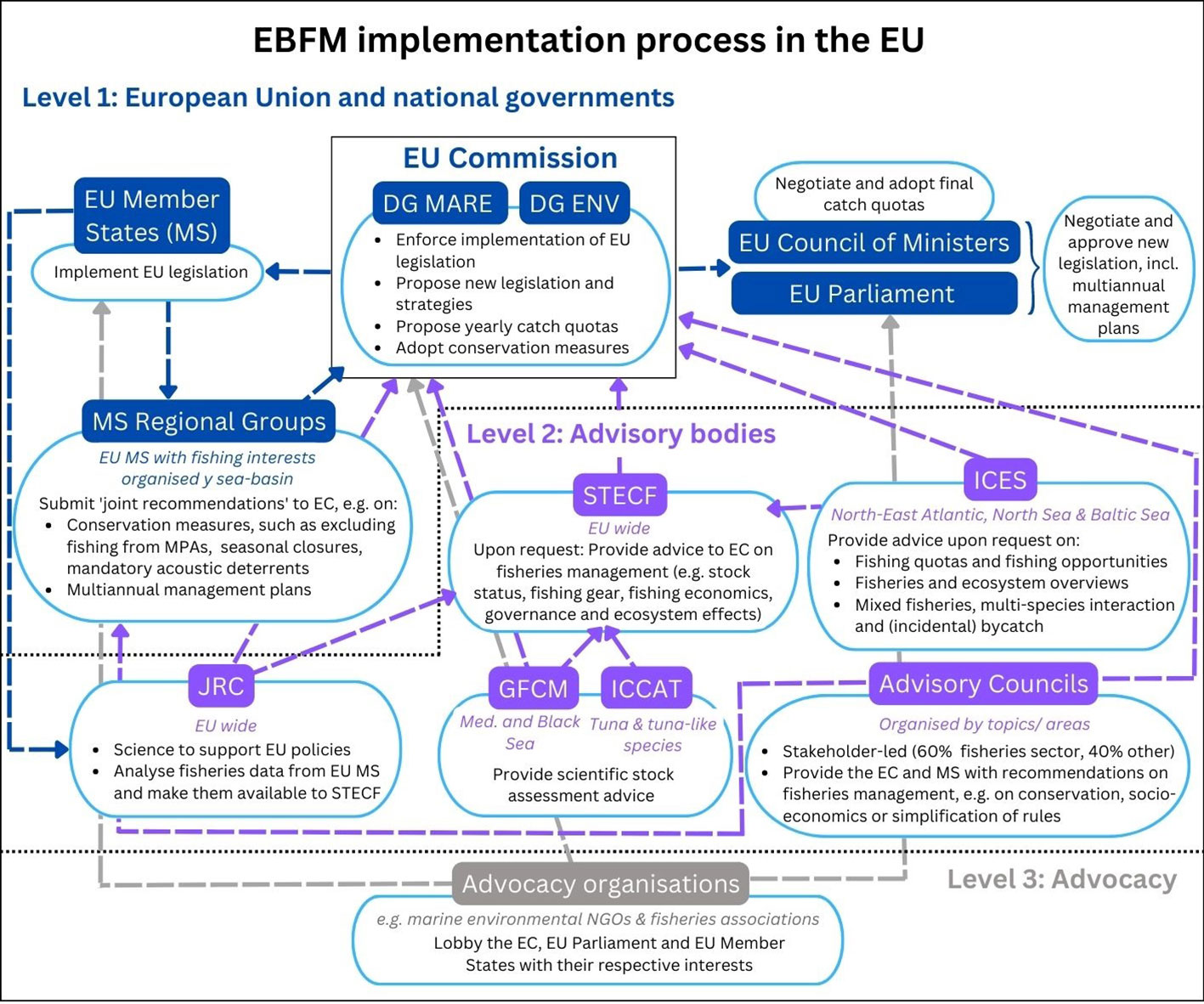
Figure 1 EBFM implementation process in the EU, including the decision-making process and the influencing power of the different bodies.
The Joint Research Centre (JRC) is the EC’s science and knowledge service, which employs scientists to carry out research to provide independent scientific advice and to support implementation of EU policy, such as the CFP. The JRC acts as the secretariat of STECF and coordinates its scientific advice process by collecting, quality-checking, and analysing the fisheries data from EU Member States and making them available to STECF.
The International Council for the Exploration of the Sea (ICES) is a key EC scientific advisory body, which supports the implementation of the CFP in the North-East Atlantic, North Sea and Baltic Sea. ICES provides scientific assessments and advice upon request to the EC and public authorities, including national governments and Regional Sea Conventions (see section 2.2.2) for the stocks of the North-East Atlantic and the Baltic Sea on: (i) fishing quotas or fishing opportunities; (ii) fisheries overviews and advice on mixed fisheries, multi-species interactions, and by-catch issues; and (iii) ecosystem overviews, where primary pressures from anthropogenic activities are identified and assessed for each of the ICES ecoregions. The last two components represent the scientific basis for ecosystem-based decisions in ICES. ICES advice is produced through a four-stage framework, of request formulation, knowledge synthesis, peer review, and advice production (see ICES, 2020b for more details). The advice is provided on a client-contractor basis, where the client pays for the service (Montana et al., 2020; Ramirez-Monsalve et al., 2021).
In the Mediterranean and the Black Sea, scientific stock assessments and advice are provided by two Regional Fisheries Management Organisations (RFMOs): The General Fisheries Commission for the Mediterranean (GFCM), established under FAO, and the International Commission for the Conservation of Atlantic Tunas (ICCAT). GCFM’s main objective is to ensure the conservation and sustainable use of living marine resources in the Mediterranean and in the Black Sea. GFCM’s Scientific Advisory Committee of Fisheries (SAC) is responsible for assessing all commercial species (except for tuna or tuna-like species) in the Mediterranean and the Black Sea, and providing scientific stock assessment advice to STECF. Efforts to include EBFM aspects within the scientific advice provided by SAC are reflected in its SAC Subcommittee on Marine Environment and Ecosystem (SCMEE) (e.g. see SCMEE, 2005) to implement EBFM within the GFCM geographical area. GFCM has also created a series of working groups to address environmental aspects associated with fishing, including: impacts on elasmobranch, monk seal, red coral and sea turtles; minimising impacts of longline fishing on seabirds; and implementation of Marine Strategy Framework Directive (MSFD) indicators, MPAs, and vulnerable marine ecosystems (Ramirez-Monsalve et al., 2021).
The International Commission for the Conservation of Atlantic Tunas (ICCAT) compiles fisheries statistics from its members and other entities, coordinates research, including stock assessments and develops scientific-based management advice. Scientific assessments of all tuna or tuna-like species in EU waters is provided to STECF by the Standing Committee on Research and Statistics (SCRS) of ICCAT. ICCAT has been developing the scientific foundations for EBFM since 2005, with a focus on developing an EBFM understanding and EBFM tools (Ramirez-Monsalve et al., 2021). ICCAT has also described the status and trends of selected ecosystem indicators, and has reviewed five tuna RFMOs in terms of their application of EBFM. However, the application of the EBFM is still “patchy” in ICCAT, with challenges relating to the understanding of the EBFM concept and the requirements for its implementation (Ramirez-Monsalve et al., 2021).
The two final players in the CFP advisory landscape are Member States Regional Groups and Advisory Councils, which since the 2013 CFP reform have been given greater control to influence fisheries management. Member States Regional Groups (MSRGs) are EU Member States that are organised by sea basin to cooperate and submit joint recommendations (e.g., for conservation measures or multiannual management plans). The joint recommendation procedure enables Member States with fishing interests in an area to collaborate for proposing management measures, such as excluding fishing from an MPA or implementing seasonal closures. Joint recommendations have to be accompanied by relevant information, including the rationale of measures, scientific evidence in support and details on practical implementation and enforcement. While the EC has the final decision-making power on whether to adopt the proposed measures, submitting a joint recommendation is a pre-requisite for adopting any conservation measures. In practice, this means that to implement any conservation measure, all Member States that fish in that area must agree on management measures, which can take many years and therefore frequently hinders implementation of effective management measures. Since MSRGs operate at the scale of regional marine ecosystems and they are the ones submitting joint recommendations, they are very relevant for implementing EBFM. However, they have no legal requirements for transparency and stakeholder involvement, and some MSRGs have been criticised for not sufficiently integrating the advice provided by the Advisory Councils (Ramirez-Monsalve et al., 2021).
Advisory Councils (ACs) are stakeholder-led organisations that provide the EC with recommendations on fisheries management matters related to the CFP. Each AC has a special focus, for instance regional seas ACs (e.g. the Mediterranean AC MEDAC, the Baltic Sea AC BSAC, the Black Sea AC BLSAC, and the North Sea AC NSAC) and topic-related AC (e.g. Pelagic stocks AC). Recommendations of ACs include advice on conservation and socio-economic aspects of management, as well as advice on simplification of rules. ACs are composed of 60% of fisheries sector representatives and 40% of other interested groups, such as environmental organisations and consumer groups. They are considered an important mechanism for the implementation of EBFM in Europe, because they provide experienced-based information and a platform to discuss social, economic and ecological outcomes for fisheries (Ramirez-Monsalve et al., 2016). Before 2013, ACs provided their advice directly to the EC, but since the 2013 CFP reform ACs provide their advice mainly to the MSRGs (Ramirez-Monsalve et al., 2021).
2.2.2 Environmental and maritime legislation and bodies
Other than the CFP the marine environmental legislation of the EU is composed mainly of directives, which are not automatically applicable to the Member States, but require transposition into national law. These directives must become law in the Member States by a certain, specified deadline. Therefore, for each of the directives mentioned below, equivalent national level legislation exists in the EU Member States.
The Marine Strategy Framework Directive (MSFD) (Directive 2008/56/EC, 2008) is Europe’s most holistic directive on protecting the marine environment. After the CFP, it is also the second most important European Directive in the context of EBFM. The MSFD was established in 2008 and has the goal of achieving good environmental status (GES) in European Waters, with an original deadline of 2020. The MSFD stipulates that GES is to be achieved through an ecosystem approach to the management of human activities (article 3). The directive sets out 11 descriptors (Figure 2), which describe what the environment will look like when GES has been achieved. Four of these descriptors (D) are directly associated with EBFM, namely: D1 - biodiversity is maintained; D3 - the population of commercial fish species is healthy; D4 - elements of food webs ensure long-term abundance and reproduction; and D6 - the seafloor integrity ensures functioning of the ecosystem. The Directive also stipulates that a coherent and representative network of protected areas must be created. In order to achieve GES, each Member State is required to develop a national Marine Strategy, i.e., a strategy for its marine waters. These Marine Strategies must be kept up to date and reviewed every six years.
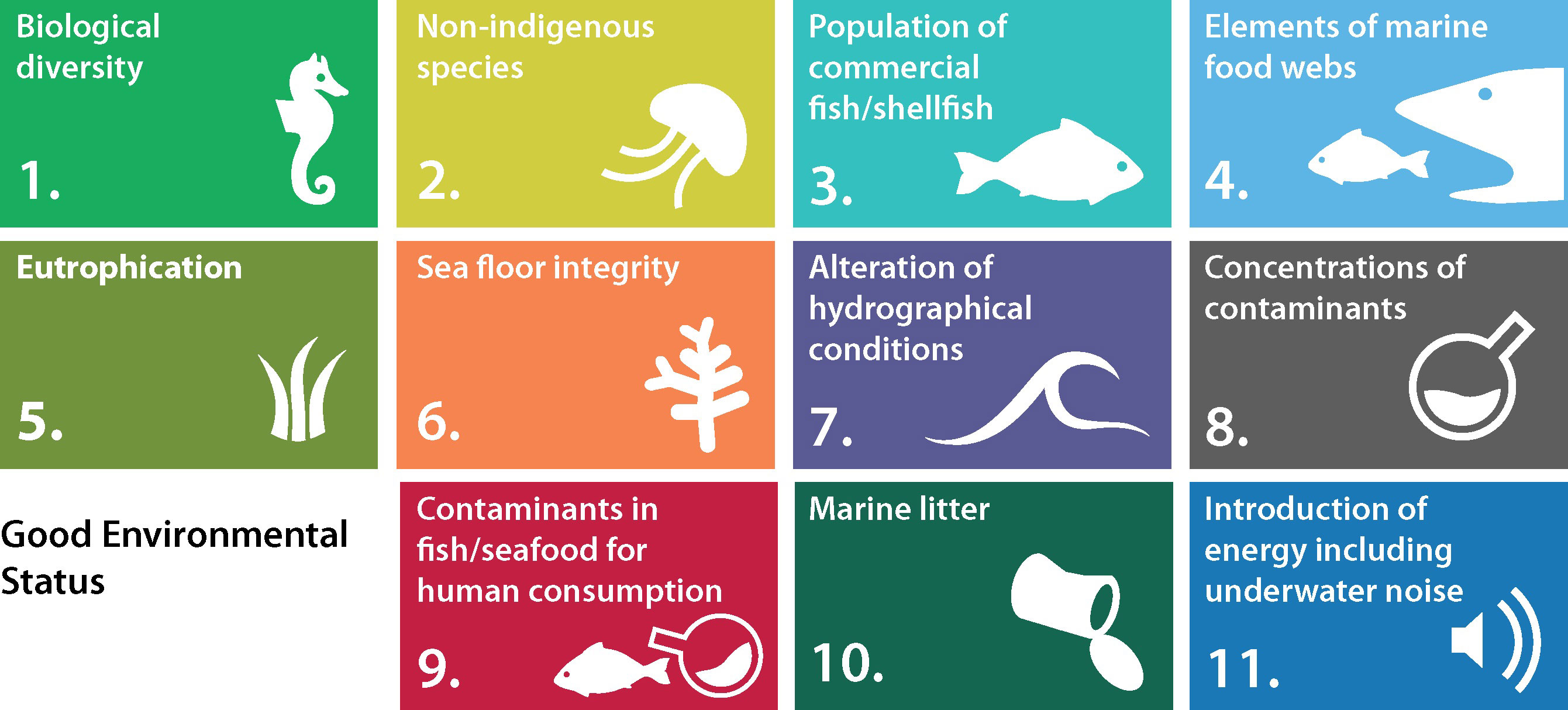
Figure 2 The 11 qualitative descriptors for determining good environmental status as presented in the MSFD (Directive 2008/56/EC). Credit: OSPAR Commission (2017).
The Water Framework Directive (WFD) (Directive 2000/60/EC, 2000) is closely linked to the MSFD. It sets the goal of achieving Good Ecological Status (GecS, Figure 3) and Good Chemical Status, for all EU surface and groundwaters. The WFD applies to rivers, lakes, estuaries, groundwater, and coastal marine waters. For the marine environment, the WFD specifically covers marine territorial waters (12 nautical miles) for aspects of chemical quality, and marine coastal waters (up to 1 nautical mile) for aspects of ecological quality. Similar to the MSFD, Member states prepare River Basin Management Plans that require the implementation of measures to contribute to the achievement of Good Ecological Status and Good Chemical Status of water bodies by 2027. These plans are implemented and reviewed on a six-year cycle. The actions taken in these plans aim to reduce marine pollution from land-based sources and to protect ecosystems in coastal and estuarine waters, which are vital habitats for many marine species.
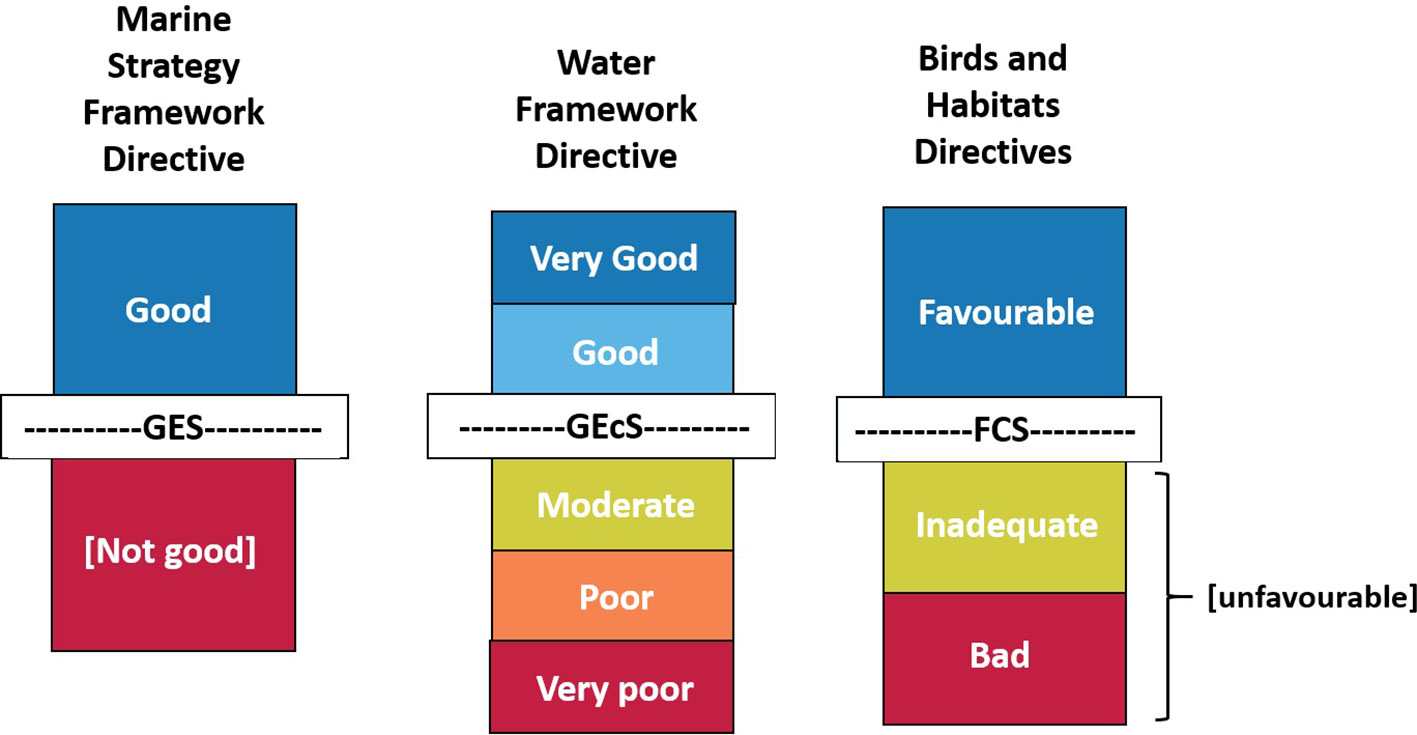
Figure 3 Ecosystem status classification according to the Marine Strategy Framework Directive (MSFD), the Water Framework Directive (WFD), and the Birds and Habitats Directives. GES, Good Environmental Status; GEcS, Good Ecological Status; FCS, Favourable Conservation Status. Image redrawn after European Commission (2022).
The Birds Directive and Habitats Directive aim to achieve Favourable Conservation Status (Figure 3) of habitats and species listed in the directives. This includes all seabird species that occur in the EU (under the Birds Directive, Directive 2009/147/EC, 2009) and the habitats and species listed in the Habitats Directives (Council Directive 92/43/EEC, 1992), including nine broad marine habitats, all cetaceans and several marine turtle species. To protect these species and habitats Member States must designates Special Protection Areas (SPAs) (for birds) and Sites of Community Importance (SCIs)/Special Areas of Conservation (SACs) (for species and habitats listed in the Habitats Directive). The SPAs designated under the Birds Directive and the SCIs and SACs designated under the Habitats Directive together make up the Natura 2000 network. The Natura 2000 network includes more than 3,000 marine Natura 2000 sites, which cover almost 10% of the EU marine area (European Commission, 2018). Reporting under the Habitats and Birds Directives requires Member States to monitor the habitats and species listed in the Annexes and send reports to the Commission every six years.
ASCOBANS and ACCOBAMS are agreements under the Convention on Migratory Species (CMS, see section 2.1), for the protection of small cetaceans, such as dolphins and porpoises. ASCOBANS promotes cooperation between countries to achieve a favourable conservation status of small cetaceans in the Baltic, North-East Atlantic, Irish and North Seas, while ACCOBAMS does the same in the Black Sea, Mediterranean Sea, and contiguous Atlantic area. These agreements link to the need of strictly protecting cetaceans in the EU to achieve and maintain a “favourable conservation status” as prescribed in the Habitats Directive.
The Marine Spatial Planning Directive (MSPD) (Directive 2014/89/EU, 2014) was adopted as part of the Integrated Maritime Policy (IMP) and establishes a common framework for maritime spatial planning in the EU. The directive places the legal requirement for all EU Member States with coastal seas to develop and implement Marine Spatial Plans by 2021. The MSPD aims to promote the sustainable development and co-existence of maritime activities and to balance this development with the need to protect the marine environment. The MSPD requires that an ecosystem-based approach is implemented, and that the collective pressure of all activities must be kept within levels compatible with achieving Good Environmental Status (Dir. 2014/89/EU, preamble). Moreover, Member States shall consider economic, social, and environmental aspects when developing their Marine Spatial Plans (Dir. 2014/89/EU, article 5). To promote the ecosystem-based approach to marine spatial planning, the EC has prepared a guidance for its implementation (Ruskule et al., 2021).
The final players in the European marine environmental landscape are the Regional Sea Conventions (RSCs). RSCs are intergovernmental organisations that aim to protect the marine environment and bring together Member States and neighbouring countries that share marine waters to coordinate the implementation of legal requirements of EU marine environmental policies (particularly the MSFD). The RSCs provide a platform to improve regional and cross-regional coherence of national implementation and use the ecosystem approach as a guiding principle. RSCs are relevant for EBFM because they oversee environmental action in regional marine ecosystems. However, their mandate does not include fisheries, and thus their advice is not fully integrated in the EU EBFM advice landscape and mostly arrives through different channels (Ramirez-Monsalve et al., 2021). In Europe, the four RSCs are: the Oslo-Paris Convention for the Protection of the Marine Environment in the North-East Atlantic (OSPAR Convention) implemented by the OSPAR Commission (OSPAR, 1992), the Convention for the Protection of the Marine Environment in the Baltic Sea Area (Helsinki Convention) implemented by the Baltic Marine Environment Protection Commission or HELCOM (HELCOM, 1992), the Barcelona Convention for the Mediterranean Sea, implemented by the United Nations Environmental Program Mediterranean Action Plan (UNEP-MAP, 1995), and the Bucharest Convention for the Black Sea, implemented by the Black Sea Commission (Black Sea Commission, 1992). The main objective of these RSCs is to preserve the marine environment by, for instance, tackling biodiversity loss, reducing pollution and setting up networks of MPAs. Their actions has resulted in a number of improvements in the regional seas (e.g. HELCOM, 2021).
2.2.3 Overarching recent EU strategies
The European Green Deal (COM/2019/6 final, 2019) aims to reach zero net emissions of greenhouse gases in the EU by 2050 and to protect, conserve, and enhance EU’s environment, among others. To reach climate neutrality by 2050, the EC adopted a new European Climate Law (Regulation EU 2021/1119, 2021) in 2021, which sets the target of reducing net greenhouse gas emissions by at least 55% by 2030 compared to 1990 levels and achieving climate neutrality (i.e. net-zero greenhouse gas emissions) by 2050. The EU’s blue economy is fundamental to meeting the objectives of the EU Green Deal. To fully embed the blue economy into the Green Deal, the Commission adopted in 2021 a new approach for a Sustainable Blue Economy, the Sustainable Blue Economy Strategy (European Commission, 2021). This agenda aims to put sustainability at the forefront (i.e. transition from “Blue Growth” to “Sustainable Blue Economy”) and stresses the importance of applying an ecosystem-based management approach to human activities (including fisheries, renewable energy and marine spatial planning).
The EU Biodiversity Strategy 2030 (COM/2020/380 final, 2020) is a core part of the European Green Deal. The strategy is a holistic and long-term plan to protect nature and reverse the degradation of ecosystems, and was a precursor to several of the commitments made under the 2022 Kunming-Montreal CBD Global Biodiversity Framework (see section 2.1). A core commitment under the Biodiversity Strategy is the expansion of protected areas to cover 30% of land and 30% of the sea. Moreover, one third of these protected areas, i.e., 10% on land and 10% at sea, must be strictly protected. Strict protection is defined as leaving natural processes essentially undisturbed to respect the areas’ ecological requirements. The Biodiversity Strategy also sets ambitious restoration targets, including the development of a new Nature Restoration Law (COM(2022) 304 final, 2022), which, if approved, will require Member States to cover at least 20% of the EU’s land and sea areas with nature restoration measures by 2030, and eventually extend these to all ecosystems in need of restoration by 2050. The measures adopted under the Biodiversity Strategy and the Nature Restoration Law aim to strengthen the protection of the marine ecosystems and to restore them to achieve GES. The Biodiversity Strategy also stresses the need for an ecosystem-based approach to the management of human activities at sea. For fisheries, it sets the targets to maintain or reduce fishing mortality to or under MSY levels; eliminate or reduce bycatch, particularly for sea mammals, turtles and birds that are threatened with extinction or in bad status; and to tackle practices that damage the seabed. In line with these commitments and as part of the Biodiversity Strategy, the EC recently published a new Action Plan to protect and restore marine ecosystems for sustainable and resilient fisheries (Action Plan for fisheries) (European Commission, 2023). The plan sets out concrete measures that Member States have to implement to achieve the objectives of (i) keeping fish stocks at sustainable levels; (ii) reducing the impact of fishing on the seabed; and (iii) minimising fisheries impacts on sensitive species. The measures include to gradually phase out mobile fishing in protected areas by 2030; adopt national measures or submit joint recommendations to minimise by-catch on selected species (including harbour porpoise, common dolphin, and several shark and ray species); and develop threshold for maximum allowable mortality rate for species that are at risk of incidental by-catch in the corresponding regions (including species of birds, mammals, reptiles and non-commercially-exploited species of fish and cephalopods) and adopting management measures to implement these thresholds. By 2024, the Commission will review the progress in implementing the Biodiversity Strategy and the Action Plan and will evaluate whether further actions, such as legislative proposals, are needed.
The main EBFM-relevant international and European policies and bodies presented in this review are pictured in Figures 4, 5. Figure 4 shows their foundation or implementation year and Figure 5 provides a summary of the landscape showing interlinkages, main objectives and relevance of the different legislations, strategies and conventions to EBFM in Europe.
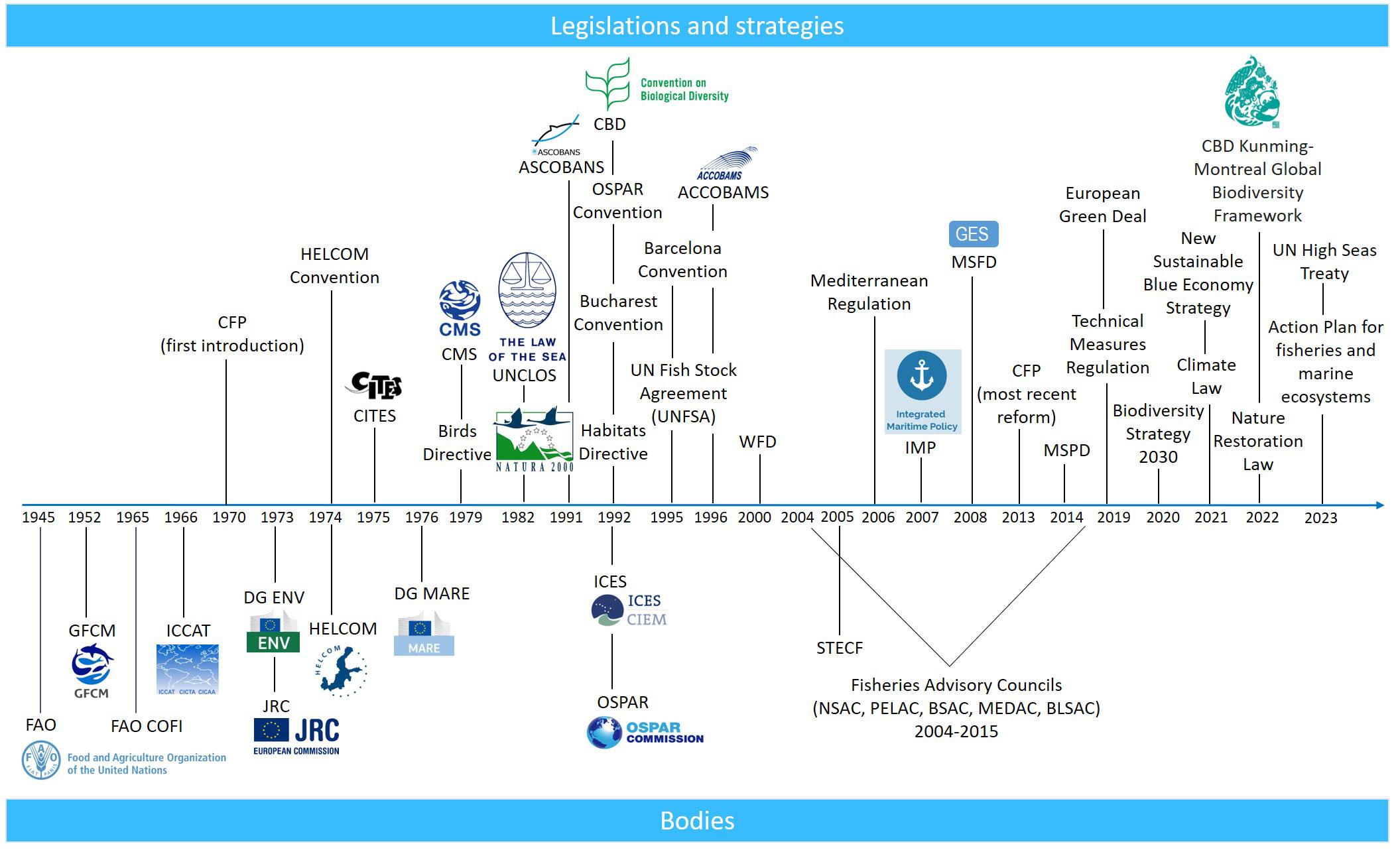
Figure 4 A timeline of the main legislations and bodies that directly or indirectly have a repercussion on implementing EBFM in European seas.
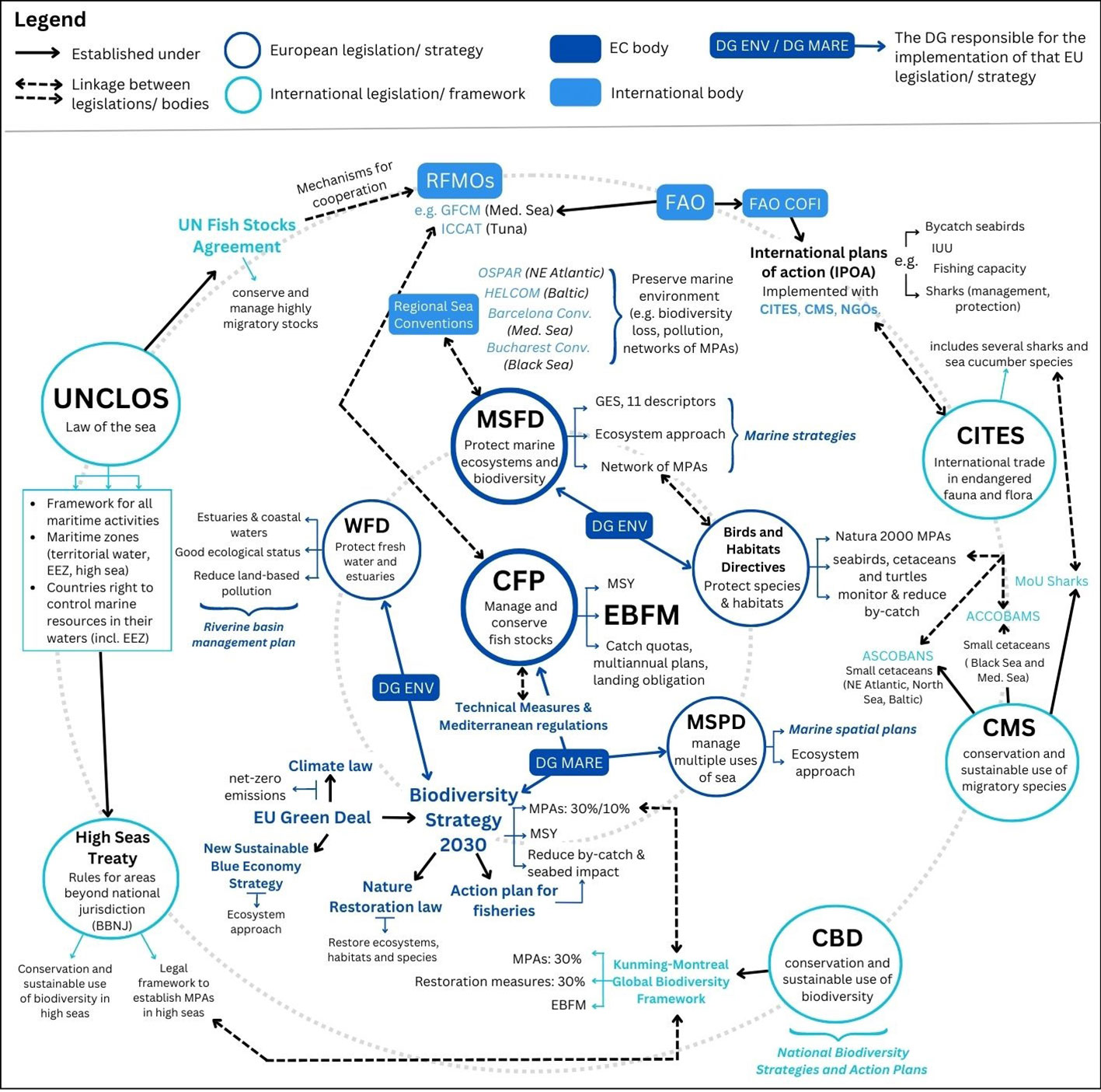
Figure 5 EBFM policy landscape, including interlinkages and main objectives of legislations, conventions and strategies relevant to EBFM in the EU. The CFP is depicted in the middle as the most relevant European legislation, surrounded by other European environmental directives and strategies (with the MSFD highlighted in bold because it is the second most relevant legislation for implementing EBFM in the EU). The outer circle represents international conventions and bodies, which are directly or indirectly linked to the implementation of EBFM in Europe.
3 Stakeholder needs to implement EBFM
3.1 Policy needs that can be addressed with ecosystem models
As seen in the review, the need to implement an ecosystem-based approach is enshrined in numerous policies and strategies, and various directives, strategies and bodies contribute to its implementation. The following sections will discuss specific EBFM needs that arise from some of the directives described above, which ecosystem modelling can help address (see Table 1 for a summary). While “ecosystem model” is a broad term, in this document the use of ecosystem model refers to temporally and/or spatially dynamic models that simulate the marine food-web or the entire ecosystem by incorporating physical, chemical and biological (i.e. food web) processes under influence of natural and anthropogenic stressors (Figure 6). Because models can differ in their structures and functioning, not all ecosystem models can address all EBFM policy needs equally. For example, not all ecosystem models can address spatial issues, such as MPAs, and species interactions in the models can be based on functional groups, trophic levels or size classes, making MSY hard to address. For a comprehensive overview and assessment of what different ecosystem models can be used for see Chust et al. (2022) and Craig and Link (2023).
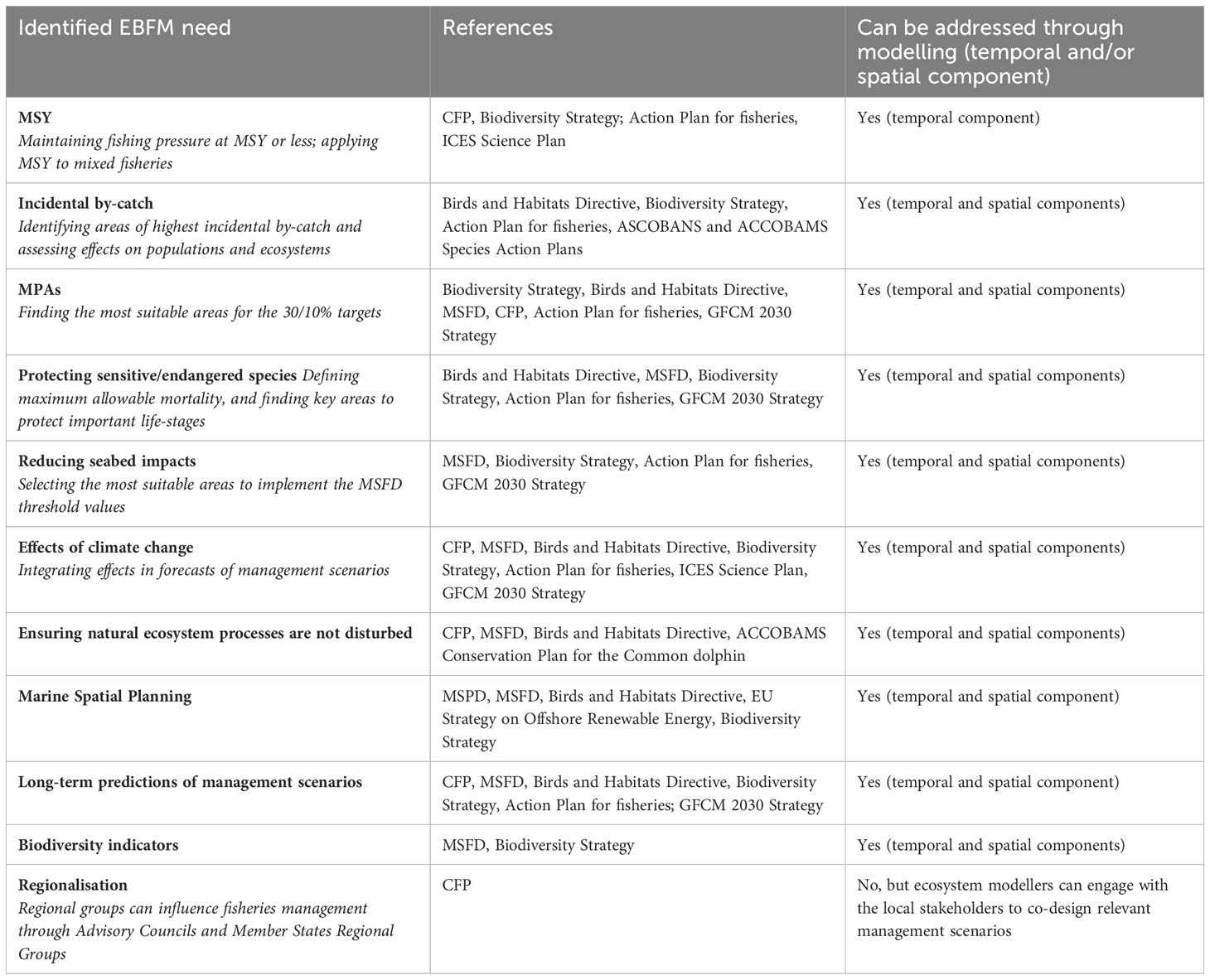
Table 1 Summary of identified EBFM needs that can be addressed through ecosystem modelling, specifically with Ecopath with Ecosim (EwE) and its spatial component, Ecospace (where relevant).
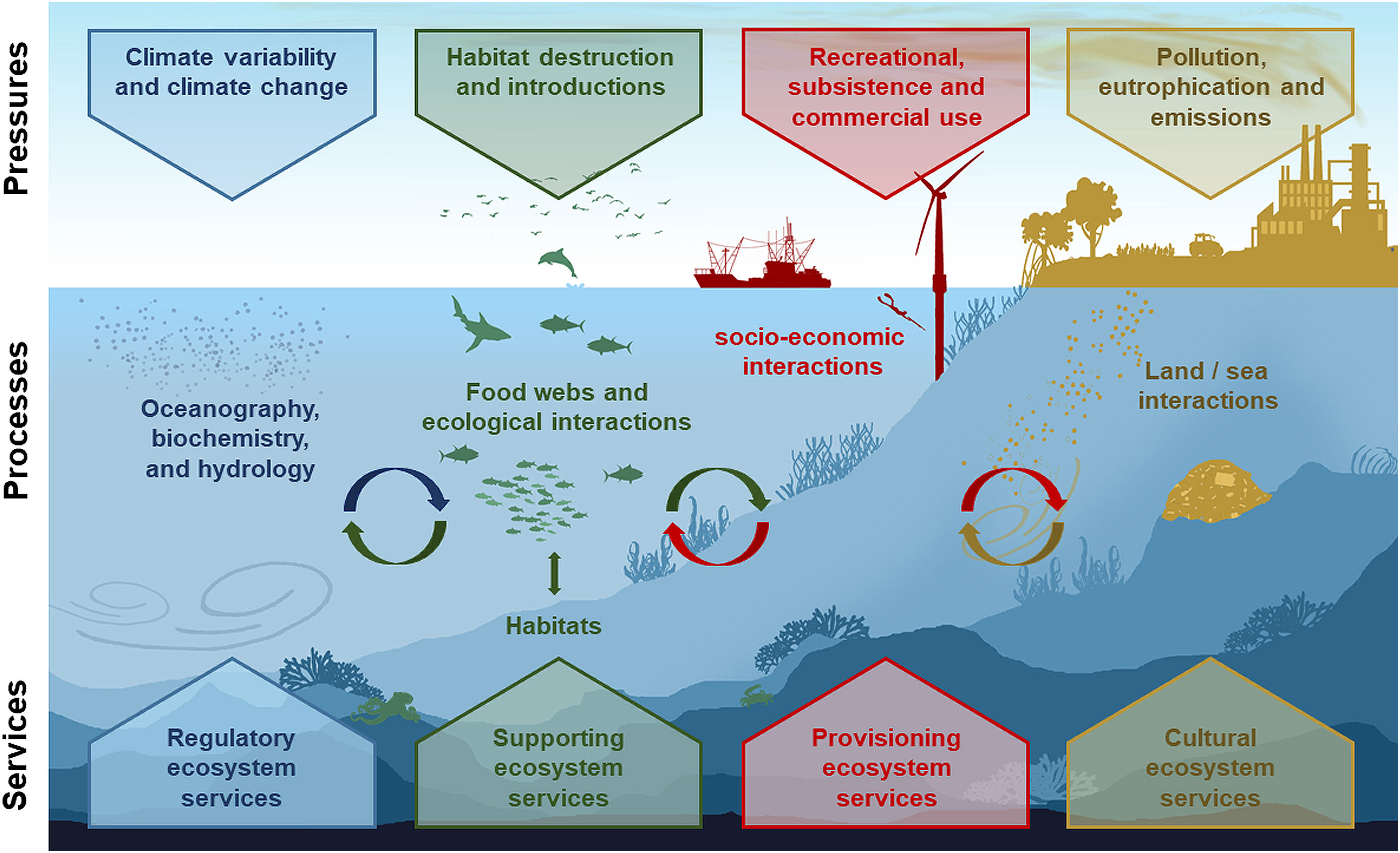
Figure 6 The range of interconnected pressures, processes and ecosystem services that complex spatial-temporal marine ecosystem models may consider. Image from Steenbeek et al., 2021a (CC BY-NC-ND 4.0).
The current CFP regulation observes that an EBFM needs to be implemented, and this requires advice on biotic, abiotic, social and economic components (Ramirez-Monsalve et al., 2021). In order to be able to provide sound advice and implement an EBFM, the following needs have been identified by the EC (European Commission, 2008). First, there is a need for long-term predictions. This is because multiple and often conflicting interests need to be reconciled in the process. While there may be short-term contradictions between social and ecological objectives, such contradictions largely disappear in the long-term, making long-term predictions essential. Second, there is a need to include the effects of climate change in the predictions because it is essential that fisheries should be conducted in a way which is robust to environmental change. Exploitation of fish stocks should therefore always allow for resilience to climate change. Third, there is a need to base management on the predictions of the diverse ecosystem effects of fisheries and of management measures, i.e., a need for predicting the consequences of diverse scenarios. This includes the description of ecosystems and their structure, processes and functions using all available knowledge.
The EC’s advice (European Commission, 2008) also elaborates on several issues that need to be addressed to ensure an EBFM. These include reducing fishing pressure to MSY; protecting sensitive species and sensitive habitats; and taking measures to prevent distortions in the food web and ensure that natural ecosystem processes are not disrupted [e.g., dependence of seabird colonies on sand eels for breeding success or the importance of herring for other predators (Furness, 2002; Read and Brownstein, 2003)]. Finally, the document highlights the importance of expanding the current assessment of the status and trends of fish stocks to include the impact of fishing on ecosystems.
The 11 descriptors of the MSFD (Figure 2) represent environmental targets that Member States have to achieve to attain “Good Environmental Status” or GES. One approach for testing scenarios that will allow meeting GES is through the application of ecosystem models. Ecosystem models can be used to explore the short- and long-term effectiveness of scenarios for meeting the descriptors relevant to EBFM by: (1) using biodiversity indices outputs to assess biological diversity; (2) using traditional fisheries management indices to assess the health of commercial fish stock populations; (3) assessing the integrity of food webs; and (4) assessing which areas would be most suited to implement the upcoming threshold values of maximum allowable extent of seabed disturbance. The MSFD report on the first implementation cycle (2012-2017) (COM/2020/259 final) also points to specific issues that need to be improved. For instance, the report highlights that EU’s marine waters are still facing overfishing and unsustainable fishing practices, that there has been a steep reduction of elasmobranchs (40% decline) in the Mediterranean Sea, and that a high proportion of Europe’s seabed (79% of the coastal seabed and 43% of the shelf/slope) is physically disturbed, mainly due to bottom trawling.
The Birds Directive and Habitats Directive require the strict protection of all species listed in Annex I of the Birds Directive and Annex IV of the Habitats Directives. This includes numerous seabirds, all cetaceans, as well as five marine turtle species2. However, several of these strictly protected species are susceptible to incidental catch. At least 29 seabird species listed in Annex I of the Birds Directives were found to be susceptible to bycatch (STECF, 2020), and incidental catch is a high concern for the strictly protected Harbour porpoise (Phocoena phocoena) in the Baltic Sea and the Common dolphin (Delphinus delphis) in the Bay of Biscay. This has led environmental NGOs to request action3, and the Commission has started Infringement procedures (European Commission, 2020b), urging the implicated countries to reduce bycatch. Finding solutions to significantly reduce incidental catch of strictly protected species is thus a significant need of the Commission, which has also asked advice from ICES on this matter (ICES, 2020a). Reporting under the Habitats and Birds Directives also showed that the conservation status for most marine habitats and species is either bad or poor (i.e., unfavourable-bad or unfavourable-inadequate in the nomenclature of the Directives; see Figure 3) (European Environmental Agency, 2020), indicating a need for more efficient conservation measures.
The Biodiversity Strategy 2030 and the EU Action Plan for fisheries contain specific actions and commitments, which ecosystem modelling could help inform. For instance, the spatial component of ecosystem models could help to find the most suitable areas to designate the 30% protection and 10% strict protection, which is a need of Member States and the Commission. Similarly, ecosystem modelling can help inform the Action Plan objectives of developing thresholds for maximum allowable mortality rate for the species/species groups listed in the Action Plan and can help to evaluate the effectiveness of new measures that could be applied to help reduce their incidental by-catch to a level that allows species recovery and conservation. Substantially reducing the negative impacts on the seabed, particularly from bottom-contacting gears is another important commitment, and ecosystem modelling can provide advice on which areas would benefit most from a reduction of seabed impacts, as well as in finding the best trade-offs between improving seabed integrity versus minimising the resulting economic impacts on fisheries. Ecosystem models are also well placed to help meet the Biodiversity Strategy 2030 targets of maintaining or reducing fishing mortality to or under MSY levels by helping to inform on the species interactions and trophic cascading effects of these single species measures on other species in the ecosystem. Furthermore, the use of ecosystem models allows testing the likely impact of management measures on fishing mortality, under environmental variability and change, as has been shown by the work undertaken by Bentley et al. (2021) on refining fisheries advice with stock-specific ecosystem information. The Biodiversity Strategy 2030 commitments and targets are key guiding principles for the EU policy landscape for the next 10 years, and the temporal and spatial components of ecosystem modelling, while incorporating ongoing environmental and anthropogenic changes, could make a significant contribution to help implementing these goals.
The legally-binding restoration targets for marine ecosystem in the Nature Restoration Law are another key commitment, which Member States will have to implement (once the law is approved). Under this law, Member States will have to put restoration measures on at least 30% of the area of each habitat type that is not in good condition by 2030, on at least 60% by 2040, and on at least 90% by 2050. Since the targets also include passive restoration (i.e., removing pressures), ecosystem models can inform how best to meet these targets and the likely timeline for habitat and species improvement. For the marine environment, restoration measures have to be put in place in the following habitats: seagrass beds, macroalgal forests, shellfish beds, maerl beds, sponge, coral and coralligenous beds, vents and seeps, and soft sediments above 1000 meters of depth (Annex II of the draft regulation), as well as for the species listed in Annex III of the draft regulation, including many shark and ray species.
To reach the European Climate Law targets of reducing net greenhouse gas emissions by at least 55% by 2030 and achieving climate neutrality by 2050, the EU Strategy on Offshore Renewable Energy (European Commission, 2020a) sets the targets of increasing Europe’s offshore wind capacity five-fold by 2030 and 25-fold by 2050. Achieving these targets will require a significant expansion of Marine Renewable Energy. The spatial component of ecosystem models used in combination with marine spatial planning tools will be crucial to help evaluate where best to place offshore Marine Renewable Energy devices, and to predict the immediate and longer-term impacts that the placement of these areas will have on ecosystems and other uses of the ocean.
Finally, strategic research agendas, strategic plans and species action plans reflect key needs of organisations and partnerships that are relevant for policy and which ecosystem modelling can help address. For instance, the ICES Science Plan “Marine ecosystem and sustainability science for the 2020s and beyond” (ICES, 2019) presents seven interrelated scientific priorities for ICES, and identifies the need of “further understanding and operationalising the EBFM and MSY concept, including their application in mixed, multispecies and mesopelagic fisheries” and “improving ICES’ capacity to provide ecosystem-based advice”. The GFCM 2030 Strategy (FAO, 2021), provides the most up to date goals and objectives of GFCM and includes the targets to: (i) provide advice on alternative management options for key fisheries; (ii) establish effective area-based measures to reduce impacts on vulnerable species, sensitive habitats and essential fish habitats and meet international spatial conservation targets; (iii) determine the fishing footprint of bottom contact fisheries and their potential interactions with essential and vulnerable habitats; and (iv) implement an adaptation strategy to address the potential effects of climate change and non-indigenous species on fisheries and the marine environment. The species action plans of ASCOBANS4 and ACCOBAMS5 include management actions to improve the conservation status of small cetacean populations and identify incidental catch as an essential priority for the Harbour porpoise in the North Sea and the Baltic Sea (ASCOBANS, 2009) and for the Common dolphin in the North-East Atlantic (ASCOBANS, 2019). The species action plans include the following targets: identify the highest-risk fisheries in terms of activities and spatial extent, include Harbour porpoise and Common dolphin in ecosystem models (covering temporal and spatial components), and manage fishing of small epipelagic fish stocks in a way that the energetic needs of Common dolphin are accounted for (ACCOBAMS, 2004).
3.2 Stakeholder needs related to ecosystem modelling reported during a dedicated survey and workshop
The needs of stakeholders in relation to using ecosystem model results to inform the implementation of EBFM were further gauged through a stakeholder survey and a foresight workshop performed as part of the EcoScope project6. Stakeholders were selected to represent the main organisations relevant for implementing and advising on EBFM policies in Europe (see EBFM policy landscape section), as well as other important European organisations with interest in EBFM and ecosystem modelling, such as NGOs, fisheries scientific associations and ocean data aggregators. Representatives from the following organisations were invited to participate in the survey and workshop: DG MARE, DG ENV, DG RTD, JRC, GFCM, STECF, ICES, FAO, the Mediterranean Advisory Council (MEDAC), the Baltic Sea Advisory Council (BSAC), the North Sea Advisory Council (NSAC), the European Fisheries and Aquaculture Research Organizations (EFARO), the Fisheries and Aquaculture strategic group of DG RTD (SCAR-FISH), the NGOs World Wide Fund for Nature (WWF), OCEANA and Birdlife, the European Global Ocean Observing System (EuroGOOS), the European Marine Observation and Data Network (EMODnet), and the fisheries organisations Europeche and Low impact fishers of Europe. All organisations were represented at the workshop, except for FAO, WWF, EMODnet and the two fisheries organisations, which were not able to attend. In total, 24 stakeholders participated in the workshop and 18 individuals responded to the survey. The request to fill in the survey was sent together with the workshop invitations to all invited stakeholders. Since the survey was anonymous it was not possible to identify which organisations participated in the survey, although at least one individual that was not able to attend the workshop answered the survey (as indicated by email). It is likely that most of the individuals attending the workshop also answered the survey and thus the 18 survey respondents were probably mostly a subset of the workshop participants.
The aim of the survey was to obtain feedback on (i) the main EBFM policy commitments, general topics and specific questions for which stakeholders thought that ecosystem modelling can help provide answers, (ii) the preferred output format of the ecosystem model results, and (iii) specific limitations or barriers in using the results of ecosystem models to advice on or implement EBFM (see all survey questions in Annex I and a detailed report of the answers in the EcoScope deliverable D.8.1: Report of stakeholder survey, footnote 6). The workshop also gauged the ecosystem modelling needs of these stakeholders, but had a wider and more targeted focus on informing and discussing the development of the EcoScope tools directly with the relevant EcoScope consortium members. The EcoScope tools include EwE ecosystem models for eight European case study areas, but have also other components, such as an interactive platform to visualise relevant data and the results of ecosystem models7 and a scoring system to evaluate the implications of the different management scenarios8. During the workshop, the foreseen EcoScope tools were presented in detail and this was followed by (1) breakout sessions, in which hypothetical scenarios were used as a starting point to obtain targeted feedback on the tools, (2) plenary sessions, in which a rapporteur from each of the breakout rooms reported back on the key messages emerging from each scenario for the design and outputs of the EcoScope tool, (3) plenary discussions and (4) ‘deep-dive sessions’, in which topics that emerged during the workshop meriting more attention were discussed in more detail in breakout rooms (detailed information on the methods used during the workshop and the feedback obtained is provided in the EcoScope deliverable D.8.3: Report on First Foresight Workshop, footnote 6).
This section will provide a summary of stakeholder needs reported during the survey and workshop in relation to using ecosystem models to inform EBFM in Europe. Most of the relevant feedback was obtained during the survey, because it had a strong focus on the needs and barriers for using ecosystem models to inform EBFM implementation, but the workshop also provided relevant insights, which are included in the summary.
3.2.1 Relevant policy commitments
The key policy commitments, for which stakeholders indicated that ecosystem modelling can help provide answers (survey questions 12 and 13, Annex I) were the MSFD, the CFP and the Biodiversity Strategy 2030. For the MSFD, achieving Good Environmental Status and descriptors D1 (biodiversity is maintained), D3 (the population of commercial fish species is healthy), D4 (elements of food webs ensure long-term abundance and reproduction) and D6 (the sea floor integrity ensures functioning of the ecosystem) were highlighted as priorities. For the CFP, implementing an EBFM, exploiting all stocks at or below MSY, and establishing fish stock recovery areas were the highest priorities. For the Biodiversity Strategy 2030, implementing the protected areas target of 30% protection and 10% strict protection were seen as highly relevant, as well as the commitments under the Nature Restoration Law and the (at the moment of the survey) upcoming Action Plan for Fisheries and the Marine Environment.
3.2.2 Overarching topics of concern and specific questions
To identify key topics and questions, which ecosystem modelling could help address, participants were asked to select the five most relevant overarching topics out of 14 pre-selected ones (survey question 13, Annex I). These topics mainly focused on ecological aspects, except for one topic related to area use, and one on the profitability of the fisheries (Figure 7). In addition, the survey respondents were asked to provide specific questions related to those topics for which they need answers (see question 14 in Annex I and Table 2 for a summary of the answers).
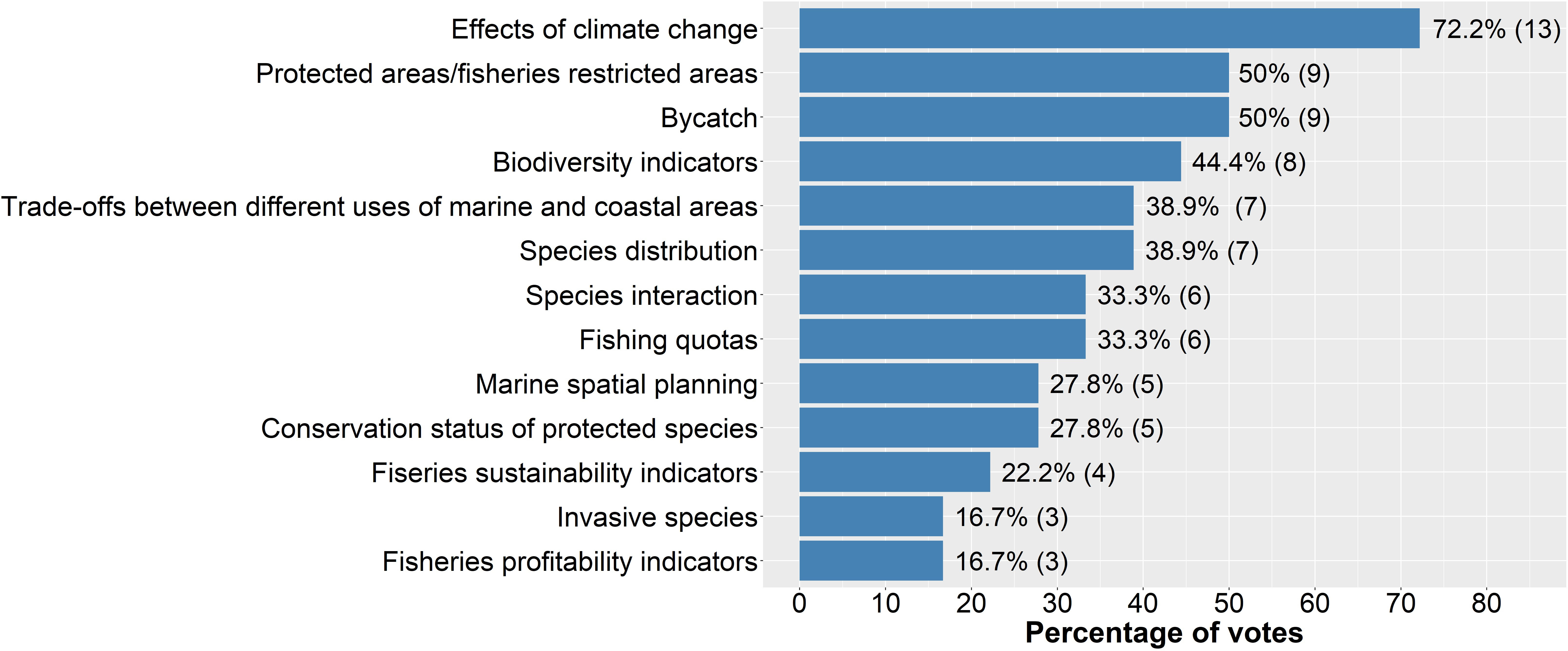
Figure 7 EBFM topics ordered by relevance as voted in a stakeholder survey by 18 respondents, each selecting the 5 most relevant topics. Percent values represent the percentage of responders voting for a topic with the number of voters given in brackets.
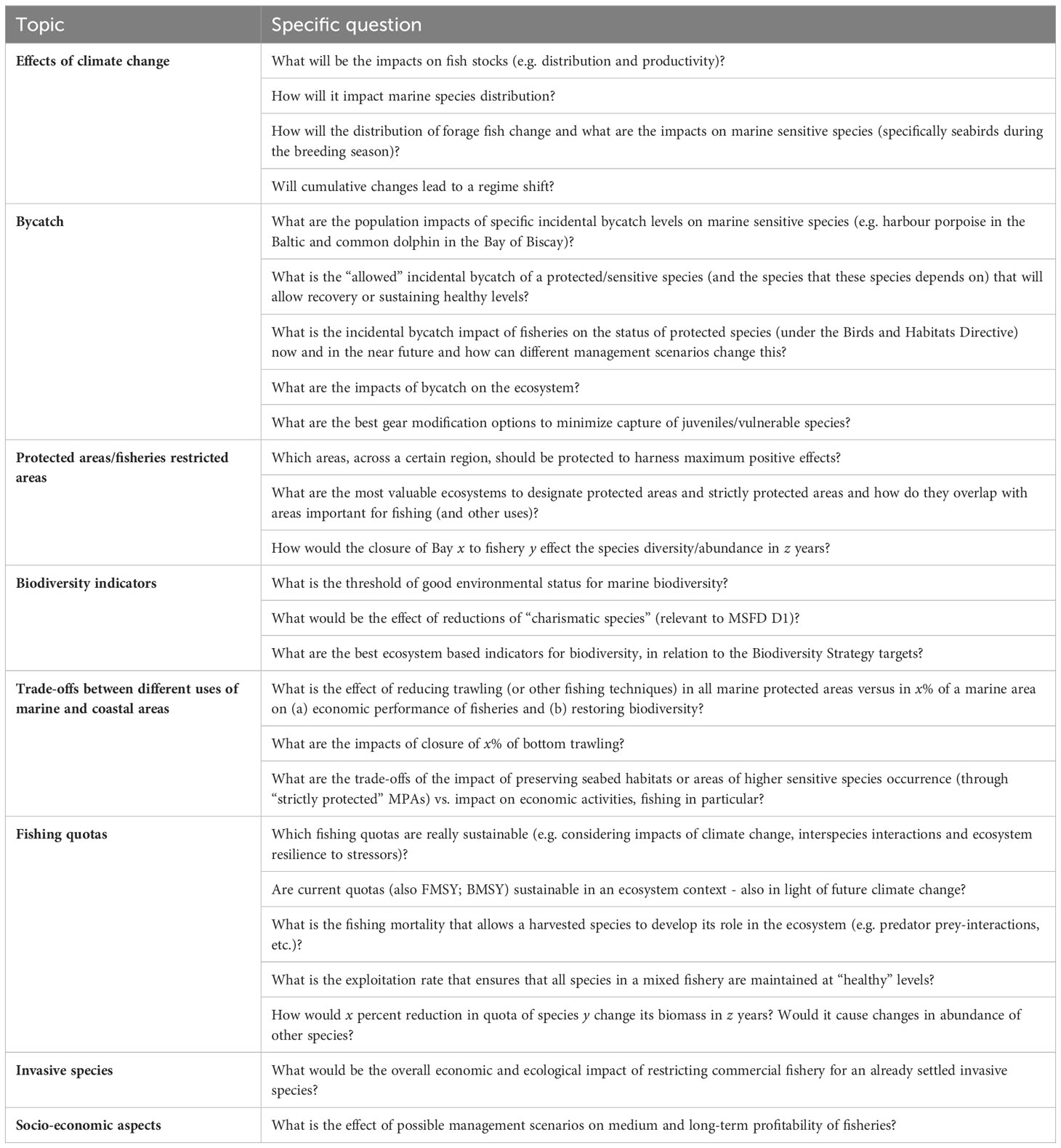
Table 2 EBFM related questions listed by stakeholders during the survey, which ecosystem modelling could help address.
The most relevant EBFM topics highlighted by the stakeholders were effects of climate change, bycatch, protected areas/fisheries restricted areas, and biodiversity indicators. Area use and species distribution were also ranked quite highly, while few respondents weighted fisheries profitability, invasive species and fisheries sustainability indicators strongly (Figure 7). The most highly ranked topics, as well as the specific questions related to those topics, for which the respondents indicated that they would like ecosystem models to help provide answers (Table 2), reflect needs regarding the implementation of key policy commitments (see Table 1). Issues related to fishing quotas and protected areas were related to biological sustainability issues, not socio-economic aspects. Economic concerns were raised with respect to trade-offs in area use, and under the topic of “socio-economic aspects”, while social concerns (such as human well-being and equity) were not specifically mentioned. The latter might be because there are no legal requirements in these policies to implement social aspects, and social aspects generally fall under “socio-economics”, which tends to focus on economic implications as a proxy for well-being.
The stakeholders stressed, both during the survey and workshop, that models need to be tailored to specific issues and cannot be generic if they are to inform policy implementation. There was a strong support of having bespoke scenarios run by experts, which meet the specific needs of stakeholders, and being involved in the scenario development of ecosystem models was a key request of the stakeholders.
3.2.3 Scenario and data results visualisation
The preferred output formats of ecosystem modelling results were simple plots and summaries, visual spatial graphs and infographics (as noted both during the survey and workshop). In addition, workshop participants observed that short-term versus long-term effects (including seasonal variations), socio-economic effects, (cumulative) ecological impacts, indirect impacts and historical values are important information for them. The workshop participants further indicated that it would be useful to have indicators on biomass and catches of the target species and other relevant species, biodiversity indicators, economic indicators for fishers (e.g. profit) and MSFD-related indicators on e.g. biodiversity, food webs and sea bottom impact to inform EBFM implementation.
Overall, two main target audiences were identified by the workshop participants: (1) stakeholders that want summary results with simple plots and numbers that are very clear and easy to understand (e.g. politicians, fishers, etc.), and (2) stakeholders that need more details and the possibility to dig further and understand the background (e.g. advisory bodies, advocacy groups, etc.). Therefore, the participants suggested to combine simple outputs with the possibility to see more details and understand how those results came to be.
3.2.4 Limitations or barriers in using the results of ecosystem models
Although stakeholders were positive about the use of ecosystem models as a tool for managers in meeting EU policy requirements, some concerns emerged. The three main barriers identified during the survey were: reliability of the model’s results, insufficient data and having enough trust in the model outputs. There was a general concern about the reliability and realism of the model and their forecasts, including the accuracy of the models due to limited understanding of some ecological processes and data scarcity. Insufficient data and the quality of input data were key concerns. A lack of data was also seen as one of the main impediments in implementing an EBFM. Many stakeholders voiced concerns about model limitations, given the complexity of ecological systems and questioned if these systems can be adequately described by models. The respondents also questioned whether models can properly quantify uncertainty in a whole ecosystem scenario. Uncertainty, credibility, and assumptions made were also key concerns expressed in the workshop. Thus, trust in the models was seen as a key barrier and, both in the survey and workshop, it was suggested to better understand and communicate the limitations and uncertainties of the models to increase trust in them.
4 Discussion
Using ecosystem models in support of EBFM requires an understanding of which policy processes and stakeholder needs could be addressed through ecosystem models (Townsend et al., 2019). This paper provided a detailed overview of the relevant policies, related policy commitments and specific questions, which ecosystem modelling could help address. The stakeholder feedback reflected the needs identified in the document’s policy analysis. Effective application and uptake of scenarios and models in policy and decision-making not only requires understanding the main topics and questions of interest, but also a close involvement of policy makers, practitioners and other relevant stakeholders throughout the entire process of model and scenario development (IPBES, 2016; Heymans et al., 2018). To this end, the paper also summarised the main European and international bodies that influence the implementation of EBFM. This is important knowledge to identify the relevant stakeholders to co-design the models and scenarios. A close involvement of relevant stakeholders throughout the entire process of model and scenario development was also a specific request of stakeholders participating in the workshop, and it has been highlighted as one of the most important recommendations for the update of multispecies models in fisheries management in a recent paper (Karp et al., 2023).
A good example of stakeholder involvement is the regional implementation plan developed for the Balearic Islands in the framework of the EU Myfish project (Myfish, 2012). This study was a first step toward the application of an EBFM in the Balearic Islands by developing a harvest strategy with defined objectives, targets, limits, and clear management control rules aimed at optimizing socioeconomic and ecological objectives in the framework of the CFP. Different management scenarios designed to achieve that goal were modelled for the main demersal commercial fisheries from the study area, the bottom trawl and small-scale fisheries. Throughout the process there was strong involvement of relevant stakeholders through meetings and constant feedback. The management scenarios were agreed with stakeholders, and local stakeholders were involved in how to best present the model results from the selected management scenarios (Quetglas et al., 2017). Another example of good, early and often stakeholder engagement is the WKIRISH work undertaken through ICES, where the stakeholders requested the use of ecosystem models, and then were engaged in the construction and valuation of these models throughout the 3-year process (Bentley et al., 2019a; Bentley et al., 2019b; Bentley et al., 2021).
Simple plots and summary infographics, which were one of the preferred outputs of the stakeholders in this study, will be important for the uptake of complex modelling results by a non-specialist audience. Data visualisation is a powerful method for improving communication of complex scientific outputs and well-designed data visualisations are particularly useful with certain audiences (Bannister et al., 2021). However, presenting the effects and trade-offs of different modelled management scenarios in a simple and understandable way is challenging especially when uncertainty is included, as is highlighted by Bannister et al. (2021). One way of improving data visualisation is by using decision support tables (Levontin et al., 2017; Figure 8). These graphical tables are designed to convey the outcomes of implementing different modelled management scenarios in a simple way (Quetglas et al., 2017). In order to inform policy implementation and management, it is important to design a priori the decision support tables with a strong involvement of the targeted stakeholders. This will ensure that the main output variables needed for their decision-making process are reflected. Moreover, it is also important to remember that EBFM stakeholders are not one homogenic group, and as a result the information they require and might want to explore varies greatly - as was also highlighted by the workshop participants. For instance, some stakeholders may want to see the direct output from the model including quantification of errors and uncertainty (e.g. scientific advisory bodies), while another stakeholder might only want to see an infographic or an index value demonstrating, for example, the percent change in catch or state of the ecosystem under a certain management scenario (e.g. decision makers). Therefore, ecosystem model results might need to be provided at a number of levels, and the involvement of the relevant stakeholders is key.
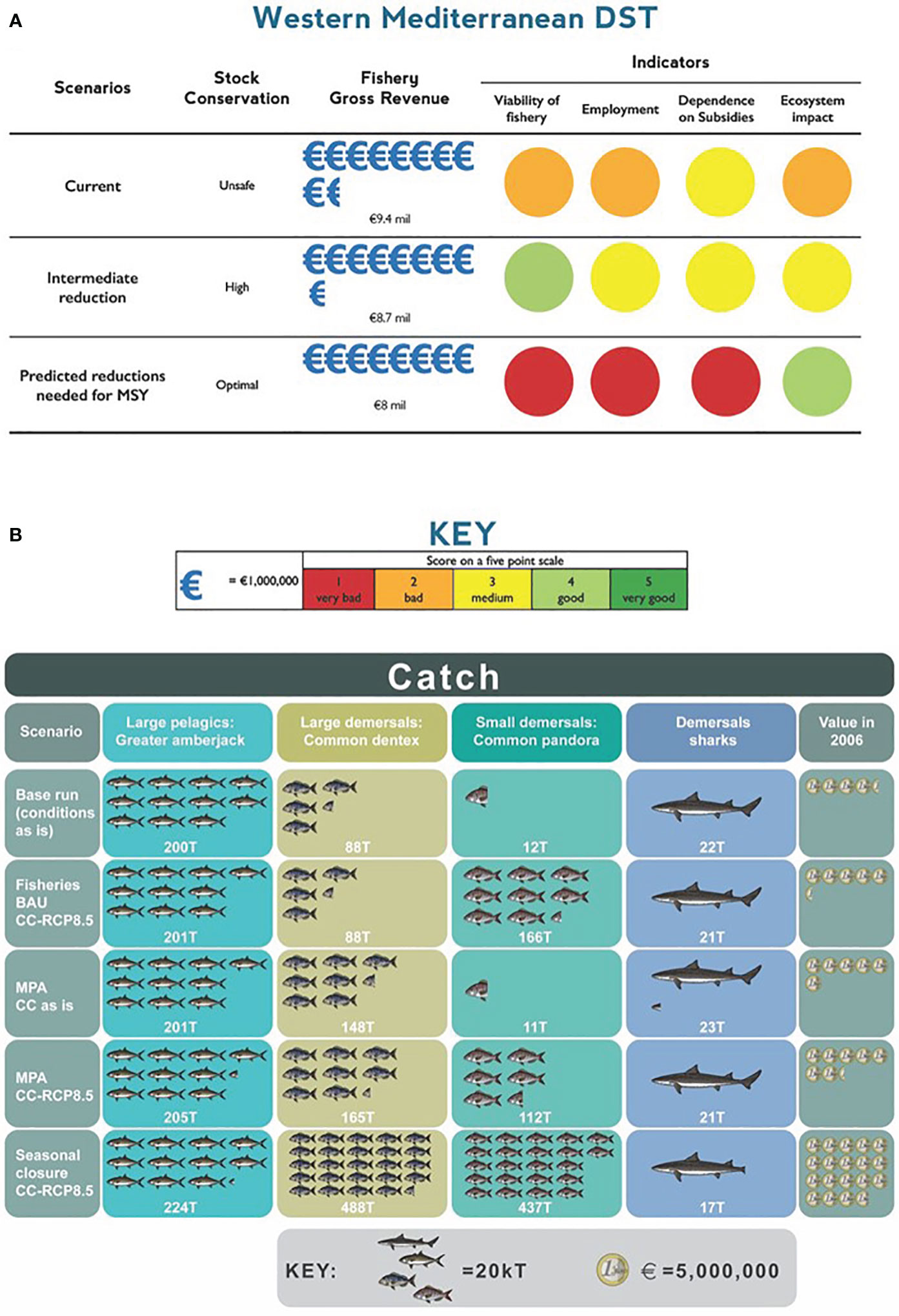
Figure 8 Examples of visual decision support tables that can be used to communicate ecosystem modelling scenario results in a simple manner. (A) Decision support table reflecting the model results of different management scenarios for the main commercial bottom trawl fisheries of the Balearic Sea (Myfish, 2012). (B) Decision support table presented as part of the EcoScope workshop, inspired by the graphics produced by Quetglas et al., 2017 (image credit: Gideon Gal).
An emergent path of research focuses on enabling the operation of ecosystem models by users that are not ecological experts, but who require ecological insights in decision making and planning processes. This can be done explicitly by including indicator dashboards in ecosystem modelling software (e.g., Coll and Steenbeek, 2017), or implicitly through integrating ecosystem models into planning and decision support software tools (e.g. Santos et al., 2020; Steenbeek et al., 2021b). In this latter pathway, the integrated ecosystem model responds to planning and decision-making explorations by providing meaningful data, graphs, maps and virtual 3D environments related to ecological concerns - without requiring explicit understanding of the ecosystem modelling approach used (Steenbeek et al., 2020). This emergent path of research coincides with unprecedented scientific developments (Stock et al., 2023) and associated technical challenges (Steenbeek et al., 2021a).
One of the main barriers in the uptake of ecosystem modelling results is trust in the models. During the EcoScope survey and workshop, reliability of model forecasts, insufficient data, model limitations and uncertainty were the main concerns of stakeholders. These concerns closely align with insights from previous studies, which found that communicating model limitations and uncertainty is vital if the models are to be used in decision-making. Large gaps of appropriate data was also found to be a significant barrier, because this will often reduce the statistical power of models and limit their ability to predict (IPBES, 2016; Heymans et al., 2018; Heymans et al., 2020). However, when data are lacking or are fragmented ecosystem models may be the best approach to overcome missing data (Regev et al., 2023). One way to address this problem might be the inclusion of stakeholders’ knowledge into the models, as was undertaken in the WKIRISH project. However, this is a lengthy and ongoing process that cannot be undertaken in a short period of time. Stakeholder trust is something that can only be built through long term engagement and mutual respect (Bentley et al., 2019b).
Uncertainty associated with model outcome is related to a number of factors ranging from poor model calibration/validation data and input data, to a lack of information on critical model parameters, through to unknown futures (Beck, 1987; Gal et al., 2014). These sources of uncertainty and their impact on decision making have led to new approaches such as robust decision making under deep uncertainty (Lempert, 2003). To further increase challenges, model uncertainty is often poorly evaluated and reported (Steenbeek et al., 2021a), and this can lead to serious misconceptions regarding the confidence level with which results can be used in decision-making (IPBES, 2016). Reporting uncertainty increases the confidence to use model outputs for decision-making as well as the credibility of models (Heymans et al., 2018). Recommendations from the stakeholders participating in the workshop on how to address and communicate uncertainty were: (i) using a range of possible values, instead of final numbers; (ii) focusing on trends, rather than a specific value, as these are easier to communicate and have less uncertainty; and (iii) labelling the certainty of the results, rather than the uncertainty. A good example for the latter is the IPCC calibrated language, where results are labelled with “very high confidence “, “high confidence”, “medium confidence”, “low confidence” and “very low confidence” (IPCC, 2018). In addition, it was suggested to clearly convey by whom/how the models had been validated to increase trust in their outputs.
Overall, the main barriers impeding the widespread use of ecosystem models and scenario testing in decision-making are: (i) a lack of understanding of the benefits and limits of these tools for assessment and decision support among decision-makers; (ii) insufficient involvement of, and interactions between, scientists, stakeholders and policymakers in developing scenarios and models to assist policy design and implementation; and (iii) inadequate characterization of uncertainties derived from data constraints, problems in system understanding and representation or low system predictability (IPBES, 2016).
5 Conclusion
In conclusion, implementing EBFM is complex due to the many aspects that have to be considered, such as multi-species interactions, environmental/climate forcing, habitat status, human activities and stakeholder acceptance. Ecosystem models are able to predict the effects of management decisions on some of these interrelated variables and can therefore make an important contribution to an effective implementation of EBFM. This paper provided an overview of the global and European policy commitments that are driving the implementation of EBFM in Europe, and associated stakeholder needs relevant to ecosystem modelling. The most relevant topics were effects of climate change, bycatch, protected areas/fisheries restricted areas, and reducing the impacts of trawling. These topics reflect main European policy commitments, such as the MSFD, the CFP and the Biodiversity Strategy 2030, with its associated Nature Restoration Law and Action Plan for Fisheries and the Marine Environment. Uptake of ecosystem models in policy requires that models address specific policy needs, such as the ones presented in this paper, and deliver outputs that are easily interpreted by policy makers and can be adjusted to the management capabilities and legislation while communicating the degree of certainty (or uncertainty) in the model projections. Moreover barriers, such as insufficient trust in the models, have to be overcome. To ensure the relevance of model results to policy implementation, it is important that stakeholders are involved throughout the process of scenario development, and that the results of the models are presented – in consultation with the relevant stakeholders – in a way that is understandable to them, and which allows them to comprehend the limitations of the results. Specific recommendations on how to increase confidence in using model outputs for decision-making were to present a range of values instead of final numbers, focus on trends rather than specific values, and to label the certainty (e.g. medium confidence) instead of the uncertainty of the results.
Author contributions
SH, ARP and AT conceived the original idea. ARP, SH, GG, JS, JFA and AT organised and performed the stakeholder engagement events. ARP wrote the initial manuscript. All authors contributed to the article and approved the submitted version.
Funding
This article was written as part of the Ecocentric management for sustainable fisheries and healthy marine ecosystems project, called EcoScope. EcoScope received funding from the EU’s research and innovation funding programme Horizon 2020 under Grant agreement no. 101000302.
Acknowledgments
We would like to thank all persons who participated in the workshop and survey for their time, active participation and invaluable input, which we have summarized in this paper. We would also like to thank all EcoScope consortium members, who provided input for the policy review.
Conflict of interest
The authors declare that the research was conducted in the absence of any commercial or financial relationships that could be construed as a potential conflict of interest.
The reviewer YJS declared a past co-authorship with the author JS to the handling editor.
Publisher’s note
All claims expressed in this article are solely those of the authors and do not necessarily represent those of their affiliated organizations, or those of the publisher, the editors and the reviewers. Any product that may be evaluated in this article, or claim that may be made by its manufacturer, is not guaranteed or endorsed by the publisher.
Footnotes
- ^ To date, four multiannual management plans have been adopted on: (i) stocks of cod, herring and sprat in the Baltic Sea (Regulation EU 2016/1139, 2016); (ii) demersal stocks in the North Sea (Regulation EU 2018/973, 2018), (iii) stocks in Western Waters (Regulation EU 2019/472, 2019), and (iv) stocks in the western Mediterranean Sea (Regulation EU 2019/1022, 2019).
- ^ Marine turtles requiring strict protection under the Habitats Directive: Caretta caretta, Chelonia mydas, Lepidochelys kempii, Eretmochelys imbricate, Dermochelys coriacea
- ^ NGOs call on the EC to take action over huge amounts of cetacean deaths: https://seas-at-risk.org/press-releases/groups-call-on-the-european-commission-to-take-action-over-huge-number-of-cetacean-deaths/
- ^ https://www.ascobans.org/en/documents/action-plans
- ^ https://accobams.org/species_/conservation-plans/
- ^ For more information see EcoScope deliverables D.8.1: Report of stakeholder survey and D.8.3: Report on First Foresight Workshop: https://ecoscopium.eu/deliverables
- ^ https://ecoscopium.eu/ecoscope-platform
- ^ https://ecoscopium.eu/ecoscope-toolbox
References
ACCOBAMS (2004) Conservation Plan for short-beaked common dolphins in the Mediterranean Sea. Available at: https://accobams.org/species_/conservation-plans/.
ASCOBANS (2009) ASCOBANS Conservation Plan for Harbour Porpoises (Phocoena phocoena L.) in the North Sea. Available at: https://www.ascobans.org/en/documents/actionplans/North-Sea-Conservation-Plan.
ASCOBANS (2019) ASCOBANS Species Action Plan for North-East Atlantic Common Dolphin. Available at: https://www.ascobans.org/en/document/ascobans-species-action-plan-north-east-atlantic-common-dolphin.
Bannister H. J., Blackwell P. G., Hyder K., Webb T. J. (2021). Improving the visual communication of environmental model projections. Sci. Rep. 11, 19157. doi: 10.1038/s41598-021-98290-4
Beck M. B. (1987). Water quality modeling: a review of the analysis of uncertainty. Water Resour. Res. 23, 1393–1442. doi: 10.1029/WR023i008p01393
Bentley J. W., Hines D. E., Borrett S. R., Serpetti N., Hernandez-Milian G., Fox C., et al. (2019a). Combining scientific and fishers’ knowledge to co-create indicators of food web structure and function. ICES J. Mar. Sci. 76, 2218–2234. doi: 10.1093/icesjms/fsz121
Bentley J. W., Lundy M. G., Howell D., Beggs S. E., Bundy A., De Castro F., et al. (2021). Refining fisheries advice with stock-specific ecosystem information. Front. Mar. Sci. 8. doi: 10.3389/fmars.2021.602072
Bentley J. W., Serpetti N., Fox C., Heymans J. J., Reid D. G. (2019b). Fishers’ knowledge improves the accuracy of food web model predictions. ICES J. Mar. Sci. 76, 897–912. doi: 10.1093/icesjms/fsz003
Black Sea Commission (1992) The Convention on the Protection of the Black Sea Against Pollution (Bucharest Convention). Available at: http://www.blacksea-commission.org/_convention.asp.
Breuer M. E. G. (2022) The Common Fisheries Policy: Origins and Development. Available at: https://www.europarl.europa.eu/ftu/pdf/en/FTU_3.3.1.pdf.
Cardinale M., Osio G. C., Scarcella G. (2017). Mediterranean Sea: a failure of the European fisheries management system. Front. Mar. Sci. 4, 72. doi: 10.3389/fmars.2017.00072
Carocci F., Bianchi G., Eastwood P., Meaden G. (2009). Geographic Information Systems to support the ecosystem approach to fisheries. FAO Fish. Aquac. Pap. 532, 120. Available at: http://www.fao.org/docrep/012/i1213e/i1213e.pdf
CBD (1992) Convention on Biological Diversity. Available at: https://www.cbd.int/convention/text/.
CBD (2022) Kunming-Montreal Global Biodiversity Framework Press Release. Available at: https://prod.drupal.www.infra.cbd.int/sites/default/files/2022-12/221219-CBD-PressRelease-COP15-Final.pdf.
Christensen V., Guenette S., Heymans J. J., Walters C. J., Watson R., Zeller D., et al. (2003). Hundred-year decline of North Atlantic predatory fishes. Fish Fish. 4, 1–24. doi: 10.1046/j.1467-2979.2003.00103.x
Chust G., Corrales X., Gonzáles F., Villarino E., Chifflet M., Fernandes J. A., et al. (2022). Marine biodiversity modelling study. Open Access. (Luxemburg: Publications Office of the European Union) 141 pp. doi: 10.2777/213731
CITES (1973) Convention on International Trade in Endangered Species of Wild Fauna and Flora. Available at: https://cites.org/eng/disc/text.php.
CMS (1979) Convention on the Conservation of Migratory Species of Wild Animals. Available at: https://www.cms.int/en/convention-text.
Coll M., Steenbeek J. (2017). Standardized ecological indicators to assess aquatic food webs: The ECOIND software plug-in for Ecopath with Ecosim models. Environ. Model. Software 89, 120–130. doi: 10.1016/j.envsoft.2016.12.004
COM/2019/6 final (2019) Communication from the Commission to the European Parliament, the European Council, the Council, the European Economic and Social Committee and the Commitee of the Regions: The European Green Deal. Available at: https://eur-lex.europa.eu/legal-content/EN/TXT/?uri=COM%3A2019%3A640%3AFIN.
COM/2020/380 final (2020) Communication from the Commission to the European Parliament, the Council, the European Economic and Social Committee and the Committee of the Regions: EU Biodiversity Strategy for 2030 Bringing nature back into our lives. COM/2020/380 Final. Available at: https://eur-lex.europa.eu/legal-content/EN/TXT/?uri=celex%3A52020DC0380.
COM(2022) 304 final (2022) Proposal for a Regulation of the European Parliament and of the Council on nature restoration. COM(2022) 304 Final. Available at: https://environment.ec.europa.eu/publications/nature-restoration-law_en.
Council Directive 92/43/EEC (1992). Council Directive 92/43/EEC of 21 May 1992 on the conservation of natural habitats and of wild fauna and flora. Off. J. Eur. Union 11, 0114. Available at: https://eur-lex.europa.eu/legal-content/EN/TXT/?uri=celex%3A31992L0043
Craig J. K., Link J. S. (2023). It is past time to use ecosystem models tactically to support ecosystem-based fisheries management: Case studies using Ecopath with Ecosim in an operational management context. Fish Fish. 24, 381–406. doi: 10.1111/faf.12733
Directive 2000/60/EC (2000). Directive 2000/60/EC of the European Parliament and of the Council of 23 October 2000 establishing a framework for Community action in the field of water policy. Off. J. Eur. Union 327, 0001–0037. Available at: https://eur-lex.europa.eu/eli/dir/2000/60/oj
Directive 2008/56/EC (2008). Directive 2008/56/EC of the European Parliament and of the Council of 17 June 2008 establishing a framework for community action in the field of marine environmental policy (Marine Strategy Framework Directive). Off. J. Eur. Union 164, 19. Available at: https://eur-lex.europa.eu/legal-content/EN/TXT/?uri=celex%3A32008L0056
Directive 2009/147/EC (2009). Directive 2009/147/EC of the European Parliament and of the Council of 30 November 2009 on the conservation of wild birds (Codified version). Off. J. Eur. Union 20, 7. Available at: https://eur-lex.europa.eu/legal-content/EN/TXT/?uri=CELEX%3A32009L0147
Directive 2014/89/EU (2014). Directive 2014/89/EU of the European Parliament and of the Council of 23 July 2014 establishing a framework for maritime spatial planning. Off. J. Eur. Union 257, 135. Available at: https://eur-lex.europa.eu/legal-content/EN/TXT/?uri=celex%3A32014L0089
Dolan T. E., Patrick W. S., Link J. S. (2016). Delineating the continuum of marine ecosystem-based management: a US fisheries reference point perspective. ICES J. Mar. Sci. 73, 1042–1050. doi: 10.1093/icesjms/fsv242
EC Council Regulation 1967/2006 (2006). Council Regulation (EC) No 1967/2006 of 21 December 2006 concerning management measures for the sustainable exploitation of fishery resources in the Mediterranean Sea. Off. J. Eur. Union 409, 11. Available at: https://eur-lex.europa.eu/legal-content/en/ALL/?uri=CELEX%3A32006R1967
EcoScope (2021). Ecocentric management for sustainable fisheries and healthy marine ecosystems. (European Commission’s Horizon 2020 Research and Innovation programme). Available at: https://ecoscopium.eu/.
European Commission (2008) Communication from the Commission to the Council and the European Parliament: The role of the CFP in implementing an ecosystem approach to marine management. COM(2008) 187 Final. Available at: https://eur-lex.europa.eu/LexUriServ/LexUriServ.do?uri=COM:2008:0187:FIN:EN:PDF.
European Commission (2018) Natura 2000 in the Marine Environment. Available at: https://ec.europa.eu/environment/nature/natura2000/marine/index_en.htm#:~:text.
European Commission (2020a) Communication from the Commission to the European Parliament, the council, the European Economic and Social Committee and the Committee for the Regions: An EU Strategy to harness the potential of offshore renewable energy for a climate neutral future. COM/2020/741 Final. Available at: https://eur-lex.europa.eu/legal-content/EN/TXT/?uri=COM%3A2020%3A741%3AFIN.
European Commission (2020b) July infringement package: key decisions. Available at: https://ec.europa.eu/commission/presscorner/detail/en/INF_20_1212.
European Commission (2021) Communication from the Commission to the European Parliament, the Council, the European Economic and Social Committee and the Committee of the Regions on a new approach for a sustainable blue economy in the EU Transforming the EU’s Blue Economy for a Sust. COM/2021/240 Final. Available at: https://eur-lex.europa.eu/legal-content/EN/TXT/?uri=COM:2021:240:FIN.
European Commission (2022) GES under MSFD and WFD: similarities and differences. Available at: https://slideplayer.com/slide/16562551/.
European Commission (2023) Communication from the Commission to the European Parliament, the Council, the European Economic and Social Committee and the Committe of the Regions. EU Action Plan: Protecting and restoring marine ecosystems for sustainable and resilient fisheries. COM/2023/102 Final. Available at: https://eur-lex.europa.eu/legal-content/EN/TXT/?uri=CELEX:52023DC0102.
European Environmental Agency (2020) State of nature in the EU. Results from reporting under the nature directives 2013-2018. Available at: https://www.eea.europa.eu/publications/state-of-nature-in-the-eu-2020.
FAO (1999). IPOA - International Plan of Action for reducing incidental catch of seabirds in longline fisheries. International Plan of Action for the conservation and management of sharks. International Plan of Action for the management of fishing capacity (Rome: FAO). Available at: https://www.fao.org/publications/card/en/c/26edca5c-aadf-5ace-979e-56482168ad1c/.
FAO (2001). International Plan of Action to Prevent, Deter and Eliminate Illegal, Unreported and Unregulated Fishing (Rome: FAO). Available at: https://www.fao.org/documents/card/en/c/71be21c9-8406-5f66-ac68-1e74604464e7.
FAO (2005). Putting into practice the ecosystem approach to fisheries (Rome: FAO). Available at: https://www.fao.org/publications/card/en/c/80f97581-8f96-5313-9db7-1792e912730e.
FAO (2008). Fisheries management. 2. The ecosystem approach to fisheries. 2.1 Best practices in ecosystem modelling for informing an ecosystem approach to fisheries. FAO Fisheries Technical Guidelines for Responsible Fisheries. (Rome: FAO) 4 (Suppl 2), 78.
FAO (2021). GFCM 2030 Strategy for sustainable fisheries and aquaculture in the Mediterranean and the Black Sea (Rome).doi: 10.4060/cb7562en.
Froese R., Winker H., Coro G., Demirel N., Tsikliras A. C., Dimarchopoulou D., et al. (2018). Status and rebuilding of European fisheries. Mar. Policy 93, 159–170. doi: 10.1016/j.marpol.2018.04.018
Froese R., Tsikliras A. C., Scarcella G., Gascuel D. (2021). Progress towards ending overfishing in the Northeast Atlantic. Mar. Policy 125, 104282. doi: 10.1016/j.marpol.2020.104282
Fu C., Perry R. I., Shin Y.-J., Schweigert J., Liu H. (2013). An ecosystem modelling framework for incorporating climate regime shifts into fisheries management. Prog. Oceanogr. 115, 53–64. doi: 10.1016/j.pocean.2013.03.003
Furness R. W. (2002). Management implications of interactions between fisheries and sandeel-dependent seabirds and seals in the North Sea. ICES J. Mar. Sci. 59, 261–269. doi: 10.1006/jmsc.2001.1155
Gal G., Makler-Pick V., Shachar N. (2014). Dealing with uncertainty in ecosystem model scenarios: application of the single-model ensemble approach. Environ. Model. Software 61, 360–370. doi: 10.1016/j.envsoft.2014.05.015
Garcia S. M. (2003). The ecosystem approach to fisheries: issues, terminology, principles, institutional foundations, implementation and outlook (Food & Agriculture Org). Available at: https://www.fao.org/documents/card/en?details=701c6108-e79d-57bb-87d8-eeb85effb2cd/
Garcia S. M., Zerbi A., Aliaume C., Do Chi T., Lasserre G. (2003). Ecosystem approach to fisheries: issue, terminology, principles, institutional foundations, implementation and outlook. FAO Fish. Tech. Pap. 443, 71.
HELCOM (2021) Baltic Sea Action Plan 2021 update. Available at: https://helcom.fi/baltic-sea-action-plan/#:~:text=TheBalticSeaActionPlan,Seainahealthystate.
HELCOM. (1992). Convention on the protection of the marine environment of the Baltic sea area, 1992 (Helsinki Convention). Available at: https://helcom.fi/about-us/convention/
Heymans J. J., Bundy A., Christensen V., Coll M., de Mutsert K., Fulton E. A., et al. (2020). The ocean decade: a true ecosystem modeling challenge. Front. Mar. Sci. 766. doi: 10.3389/fmars.2020.554573
Heymans S. J. J., Skogen M. D., Schrum C., Solidoro C. (2018). Enhancing Europe’s Capability in Marine Ecosystem Modelling for Societal Benefit. Larkin K. E., Coopman J., Muñiz Piniella A., Kellett P., Simon C., Rundt C., et al [Eds.] (Ostend, Belgium: Future Science Brief 4 of the European Marine Board), 32 pp.
ICES (2020a). EU request on emergency measures to prevent bycatch of common dolphin (Delphinus delphis) and Baltic Proper harbour porpoise (Phocoena phocoena) in the Northeast Atlantic (ICES Spec. Req. Advice). Available at: https://ices-library.figshare.com/articles/report/EU_request_on_emergency_measures_to_prevent_bycatch_of_common_dolphin_Delphinus_delphis_and_Baltic_Proper_harbour_porpoise_Phocoena_phocoena_in_the_Northeast_Atlantic/18636260.
ICES (2020b) Guide to ICES advisory framework and principles. In Report of the ICES Advisory Committee 2020. ICES Advice 2020, section 1.1. doi: 10.17895/ices.advice.7648.
ICES. (2019). Science plan of the International Council for the Exploration of the Sea. doi: 10.17895/ices.pub.5469
IPBES (2017). The methodological assessment report on scenarios and models of biodiversity and ecosystem services. Ferrier S., Ninan K. N., Leadley P., Alkemade R., Acosta L. A., Akcakaya H. R., et al (eds.). (Bonn, Germany: Secretariat of the Intergovernmental Science-Policy Platform on Biodiversity and Ecosystem Services), 348 pages. doi: 10.5281/zenodo.3235428
IPCC (2018). Summary for Policymakers. In: Global Warming of 1.5°C. An IPCC Special Report on the impacts of global warming of 1.5°C above pre-industrial levels and related global greenhouse gas emission pathways, in the context of strengthening the global response. Eds. Masson-Delmotte V., Zhai P., Pörtner H.-O., Roberts D., Skea J., Shukla P. R., et al (Cambridge, UK and New York, NY, USA: Cambridge University Press), 3–24. doi: 10.1017/9781009157940.001.
Jackson J. B. C., Kirby M. X., Berger W. H., Bjorndal K. A., Botsford L. W., Bourque B. J., et al. (2001). Historical overfishing and the recent collapse of coastal ecosystems. Science 293, 629–637. doi: 10.1126/science.1059199
Jennings S., Kaiser M. J. (1998). “The effects of fishing on marine ecosystems,” in Advances in marine biology (Elsevier) 34, 201–352. Available at: https://www.sciencedirect.com/science/article/abs/pii/S0065288108602126
Karp M. A., Link J. S., Grezlik M., Cadrin S., Fay G., Lynch P., et al. (2023). Increasing the uptake of multispecies models in fisheries management. ICES J. Mar. Sci. 80(2), 243–257. doi: 10.1093/icesjms/fsad001
Lempert R. J. (2003). Shaping the next one hundred years: new methods for quantitative, long-term policy analysis. (RAND Corporation)
Levontin P., Baranowski P., Leach A. W., Bailey A., Mumford J. D., Quetglas A., et al. (2017). On the role of visualisation in fisheries management. Mar. Policy 78, 114–121. doi: 10.1016/j.marpol.2017.01.018
Montana J. (2020). Scientific advice for fisheries management in the European Union: transnational science diplomacy in practice. In: Young M., Flink T., Dall E. (eds.) Science Diplomacy in the Making: Case-based insights from the S4D4C project.
Moullec F., Barrier N., Guilhaumon F., Peck M. A., Ulses C., Shin Y.-J. (2023). Rebuilding Mediterranean marine resources under climate change. Mar. Ecol. Prog. Ser. 708, 1–20. doi: 10.3354/meps14269
Myers R. A., Worm B. (2003). Rapid worldwide depletion of predatory fish communities. Nature 423, 280–283. doi: 10.1038/nature01610
Myfish (2012). Maximising yield of fisheries while balancing ecosystem, economic and social concerns (European Union’s Seventh Framework Programme). Available at: https://www.myfishproject.eu/.
Nakamura J. N., Kuemlangan B. (2020). Implementing the Convention on International Trade in Endangered Species of Wild Fauna and Flora (CITES) through national fisheries legal frameworks: a study and a guide. Legal Guide No. 4 (Rome: FAO). Available at: https://www.fao.org/documents/card/fr/c/cb1906en/.
Ofir E., Silver T., Steenbeek J. G., Shachar N., Gal G. (2022). Applying the Safe Operating Space (SOS) approach to sustainable commercial fishing under varying lake levels and littoral zone conditions. Fisheries. 48 (3), 107–120. doi: 10.1002/fsh.10869
OSPAR (1992) Convention for the protection of the marine environment of the North-East Atlantic (OSPAR Convention). Available at: https://www.ospar.org/convention/text.
OSPAR Commission (2017) The 11 qualitative descriptors for determining good environmental status as presented in the Marine Strategy Framework Directive (MSFD). Available at: https://oap.ospar.org/en/ospar-assessments/intermediate-assessment-2017/introduction/policy-context/.
Pauly D., Christensen V., Dalsgaard J., Froese R., Torres F. Jr (1998). Fishing down marine food webs. Science 279, 860–863. doi: 10.1126/science.279.5352.860
Plagányi É.E. (2007). Models for an ecosystem approach to fisheries. (Rome, Italy: Food and Agricultural Organization), 108pp. (FAO Fisheries Technical Paper. No. 477). doi: 10.25607/OBP-392
Popescu I. (2019) Fisheries. Briefing: EU policies – Delivering for citizens. Available at: https://www.europarl.europa.eu/RegData/etudes/BRIE/2019/633150/EPRS_BRI(2019)633150_EN.pdf.
Quetglas A., Merino G., González J., Ordines F., Garau A., Grau A. M., et al. (2017). Harvest strategies for an ecosystem approach to fisheries management in western Mediterranean demersal fisheries. Front. Mar. Sci. 4, 106. doi: 10.3389/fmars.2017.00106
Ramirez-Monsalve P., Nielsen K. N., Ballesteros M., Kirkfeldt T. S., Dickey-Collas M., Delaney A., et al. (2021). Pulling mechanisms and pushing strategies: how to improve Ecosystem Approach Fisheries Management advice within the European Union’s Common Fisheries Policy. Fish. Res. 233, 105751. doi: 10.1016/j.fishres.2020.105751
Ramirez-Monsalve P., Raakjær J., Nielsen K. N., Santiago J. L., Ballesteros M., Laksá U., et al. (2016). Ecosystem Approach to Fisheries Management (EAFM) in the EU–Current science–policy–society interfaces and emerging requirements. Mar. Policy 66, 83–92. doi: 10.1016/j.marpol.2015.12.030
Read A. J., Brownstein C. R. (2003). Considering other consumers: fisheries, predators, and Atlantic herring in the Gulf of Maine. Conserv. Ecol. 7 (1). https://www.jstor.org/stable/26271914.
Regev S., Carmel Y., Gal G. (2023). Using high level validation to increase lake ecosystem model reliability. Environ. Model. Software 162, 105637. doi: 10.1016/j.envsoft.2023.105637
Regulation EU 1380/2013 (2013). Regulation (EU) No 1380/2013 of the European parliament and of the council of 11 December 2013 on the common fisheries policy, (2013). Off. J. Eur. Union 354, 22. Available at: https://eur-lex.europa.eu/legal-content/EN/TXT/?uri=celex%3A32013R1380
Regulation EU 2016/1139 (2016). Regulation (EU) 2016/1139 of the European Parliament and of the Council of 6 July 2016 establishing a multiannual plan for the stocks of cod, herring and sprat in the Baltic Sea and the fisheries exploiting those stocks. Off. J. Eur. Union 191, 1. Available at: https://eur-lex.europa.eu/legal-content/EN/TXT/?uri=uriserv:OJ.L_.2016.191.01.0001.01.ENG&toc=OJ:L:2016:191:TOC
Regulation EU 2018/973 (2018). Regulation (EU) 2018/973 of the European Parliament and of the Council of 4 July 2018 establishing a multiannual plan for demersal stocks in the North Sea and the fisheries exploiting those stocks, specifying details of the implementation of the landing o. Off. J. Eur. Union 179, 1. Available at: https://eur-lex.europa.eu/legal-content/en/ALL/?uri=CELEX:32018R0973
Regulation EU 2019/1022 (2019). Regulation (EU) 2019/1022 of the European Parliament and of the Council of 20 June 2019 establishing a multiannual plan for the fisheries exploiting demersal stocks in the western Mediterranean Sea. Off. J. Eur. Union 172, 1. Available at: https://eur-lex.europa.eu/eli/reg/2019/1022/oj
Regulation EU 2019/1241 (2019). Regulation (EU) 2019/1241 of the European Parliament and of the Council of 20 June 2019 on the conservation of fisheries resources and the protection of marine ecosystems through technical measures. Off. J. Eur. Union 198, 105. Available at: https://eur-lex.europa.eu/legal-content/EN/TXT/?uri=CELEX%3A32019R1241
Regulation EU 2019/472 (2019). Regulation (EU) 2019/472 of the European Parliament and of the Council of 19 March 2019 establishing a multiannual plan for stocks fished in the Western Waters and adjacent waters, and for fisheries exploiting those stocks. Off. J. Eur. Union 83, 1. Available at: https://eur-lex.europa.eu/eli/reg/2019/472/oj
Regulation EU 2021/1119 (2021). Regulation (EU) 2021/1119 of the European Parliament and of the Council of 30 June 2021 establishing the framework for achieving climate neutrality and amending Regulations (EC) No 401/2009 and (EU) 2018/1999 (‘European Climate Law’). Off. J. Eur. Union 243, 1. Available at: https://eur-lex.europa.eu/legal-content/EN/TXT/?uri=CELEX%3A32021R1119
European Commission, European Climate, Infrastructure and Environment Executive Agency, Ruskule A., Oulès L., Zamparutti T., et al (2021). Guidelines for implementing an ecosystem-based approach in maritime spatial planning: including a method for the evaluation, monitoring and review of EBA in MSP (Publications Office). doi: 10.2926/84261
Santos C. P., Warmelink H., Boode W., de Groot P., Hutchinson K., Gancalves M., et al. (2020). A digital game-based simulation platform for integrated maritime spatial planning: design challenges and technical innovations. J. Ocean Technol. 15, 78–100.
SCMEE (2005) SCMEE Transversal Workshop on Ecosystem Approach to Fisheries. Available at: https://gfcmsitestorage.blob.core.windows.net/documents/web/ftp/fi/document/gfcm/sac8/dma6e.pdf.
Staples D., Funge-Smith S. (2009). Ecosystem approach to fisheries and aquaculture: implementing the FAO code of conduct for responsible fisheries (Bangkok, Thailand: FAO Regional Office for Asia and the Pacific). Available at: https://www.fao.org/3/i0964e/i0964e00.pdf.
STECF (2020). Scientific, Technical and Economic Committee for Fisheries (STECF) – Review of technical measures (part 1) (STECF-20-02). Polet H., Rindorf A., Konrad C., Vasilakopoulos P. editor(s), (Luxembourg: EUR 28359 EN, Publications Office of the European Union). doi: 10.2760/734593,JRC123092
Steenbeek J., Buszowski J., Chagaris D., Christensen V., Coll M., Fulton E. A., et al. (2021a). Making spatial-temporal marine ecosystem modelling better–a perspective. Environ. Model. Software 145, 105209. doi: 10.1016/j.envsoft.2021.105209
Steenbeek J., Felinto D., Pan M., Buszowski J., Christensen V. (2021b). Using gaming technology to explore and visualize management impacts on marine ecosystems. Front. Mar. Sci. 8, 619541. doi: 10.3389/fmars.2021.619541
Steenbeek J., Romagnoni G., Bentley J., Heymans J. J., Serpetti N., Gonçalves M., et al. (2020). Combining ecosystem modeling with serious gaming in support of transboundary maritime spatial planning. Ecol. Soc 25. doi: 10.5751/ES-11580-250221
Stock A., Murray C. C., Gregr E., Steenbeek J., Woodburn E., Micheli F., et al. (2023). Exploring multiple stressor effects with Ecopath, Ecosim, and Ecospace: Research designs, modeling techniques, and future directions. Sci. Total Environ. 869, 161719. doi: 10.1016/j.scitotenv.2023.161719
Townsend H., Harvey C. J., DeReynier Y., Davis D., Zador S. G., Gaichas S., et al. (2019). Progress on implementing ecosystem-based fisheries management in the United States through the use of ecosystem models and analysis. Front. Mar. Sci. 6, 641. doi: 10.3389/fmars.2019.00641
UNEP-MAP. (1995). Convention for the Protection of the Marine Environment and the Coastal Region of the Mediterranean (Barcelona Convention). Available at: https://www.unep.org/unepmap/who-we-are/barcelona-convention-and-protocols.
UN General Assembly (1982) United Nations Convention on the Law of the Sea of 10 December 1982. Available at: https://www.un.org/depts/los/convention_agreements/convention_overview_convention.htm (Accessed December 20, 2022).
UN General Assembly (1995) The United Nations Agreement for the Implementation of the Provisions of the United Nations Convention on the Law of the Sea of 10 December 1982 relating to the Conservation and Management of Straddling Fish Stocks and Highly Migratory Fish Stocks. Available at: https://www.un.org/depts/los/convention_agreements/convention_overview_fish_stocks.htm (Accessed December 20, 2022).
Vincent A. C. J., Sadovy de Mitcheson Y. J., Fowler S. L., Lieberman S. (2014). The role of CITES in the conservation of marine fishes subject to international trade. Fish Fish. 15, 563–592. doi: 10.1111/faf.12035
Vinther M., Reeves S. A., Patterson K. R. (2004). From single-species advice to mixed-species management: taking the next step. ICES J. Mar. Sci. 61, 1398–1409. doi: 10.1016/j.icesjms.2004.08.018
Annex I – stakeholder survey.
Section 1: Context
1. Which category does the organisation you work for belong to? 1= Policy/Regulatory; 2= Advisory/Scientific; 3= Other
2. Which of the following (if any) inform your work? Please check only the most relevant (up to 5) 1 = Common Fisheries Policy; 2 = Marine Strategy Framework Directive; 3 = Habitats and Birds Directive; 4 = Marine Spatial Planning Directive; 5 = EU Biodiversity Strategy 2030; 6 = EU Green Deal; 7 = Water Framework Directive; 8 = Invasive Alien Species Regulation; 9 = Blue Economy Strategy; 10 = Other
2b. If 10, Please specify __________
3. To what extent do you implement/regulate/advise on ecosystem-based fisheries management? (Scale: Never/Almost never, Occasionally, Regularly/Very often)
4. How would you rate your capacity/expertise to implement/regulate/advise on ecosystem-based fisheries management? (Scale: Low, Medium, High)
Section 2: Ecosystem-based fisheries management needs
5. What are the main challenges/barriers you face when implementing/regulating/advising on ecosystem-based fisheries management? Please list the three most significant challenges/barriers.
a. _________
b. _________
c. _________
6. What do you foresee will be the main future challenges when implementing/regulating/advising on ecosystem-based fisheries management? Please list the three most significant potential future challenges or risks.
a. _________
b. _________
c. _________
7. In order to better implement/regulate/advise on ecosystem-based fisheries management, what are the main questions you need answers to? Please list the three most significant questions.
a. _________
b. _________
c. _________
Section 3: Ecosystem Modelling
Ecosystem models can be used to test a wide range of management scenarios over time and space, and observe the influence of these decisions on the ecosystem and the Blue Economy. For instance, one could use the models to address questions such as:
- What would be the impact of a new Fisheries Restricted Area on the fisher’s catch and the marine ecosystem over the next 5 years?
- How do different Total Allowable Catches influence the targeted stock population, the wider marine ecosystem and the fisher’s profitability?
- Which of four potential marine areas would benefit most from strict protection, and what would be the long-term impact on the marine ecosystem and the fisher’s catch?
- What would be the influence of invasive species on the marine ecosystem, the influence of aquaculture and different placing of cages, etc.?
This 5 min video illustrates how ecosystem models can be used as a decision support system in the Israeli Mediterranean.
8. To what extent do you think robust ecosystem modelling could help to address the most significant questions you identified in the previous question (Q7)? (Scale: Not at all, a little, significantly)
9. Do you foresee any specific limitations or barriers in using the results of ecosystem models to advise/implement on ecosystem-based fisheries management? Please specify _________
10. In which specific situations would you use the results generated by ecosystem modelling in the context of ecosystem-based fisheries management? Please provide examples _________
11. In what form would the model results be most useful to you and why? _________
Section 4: Ecosystem modelling and EU policy
12. Do you think ecosystems modelling can help meet existing EU policy requirements? Please mention specific directives and requirements within the directives _________
13. Do you think ecosystems modelling can help meet planned policy requirements (e.g. upcoming action plans, new directives, etc.)? Please specify _________
Ecosystem modelling needs
14. Which of the following topics are most relevant for you? Please check the top 5
1 = fishing quotas; 2 = protected areas/fisheries restricted areas; 3 = bycatch; 4 = invasive species; 5 = marine spatial planning; 6 = effects of climate change; 7 = species distribution; 8 = conservation status of protected species; 9 = fisheries sustainability indicators; 10 = biodiversity indicators; 11 = fisheries’ profitability indicators; 12 = species interaction; 13 = trade-offs between different uses of marine and coastal areas; 14 = others
14b. If 14, Please specify _________
15. From the topics you selected as most relevant for you (Q14), what specific questions and issues (scenarios) would you like ecosystem models to help you with? For instance: if bycatch is a main topic of interest, a specific question could be: what is the effect of x level of bycatch on a protected species and the wider ecosystem over the next 5 years. Or if fishing quota is a main topic of interest, a specific question could be: given projected climate change will current quotas allow sustaining commercial fish populations in the future? Please list up to 5 questions you would most like ecosystem models to address.
a. _________
b. _________
c. _________
d. _________
e. _________
Section 5: Other comments
16. Please provide any other comments you may have related to ecosystem-based fisheries management needs that could be met with additional data or models. _________
17. Is there anything else you would like to mention? _________
Keywords: ecosystem models, ecosystem-based fisheries management, policy, implementation, stakeholder needs
Citation: Rodriguez-Perez A, Tsikliras AC, Gal G, Steenbeek J, Falk-Andersson J and Heymans JJ (2023) Using ecosystem models to inform ecosystem-based fisheries management in Europe: a review of the policy landscape and related stakeholder needs. Front. Mar. Sci. 10:1196329. doi: 10.3389/fmars.2023.1196329
Received: 29 March 2023; Accepted: 04 September 2023;
Published: 03 October 2023.
Edited by:
Marco Scotti, National Research Council (CNR), ItalyReviewed by:
Yunne-Jai Shin, Institut de Recherche pour le Développement (IRD), FranceHoward Townsend, National Marine Fisheries Service (NOAA), United States
Copyright © 2023 Rodriguez-Perez, Tsikliras, Gal, Steenbeek, Falk-Andersson and Heymans. This is an open-access article distributed under the terms of the Creative Commons Attribution License (CC BY). The use, distribution or reproduction in other forums is permitted, provided the original author(s) and the copyright owner(s) are credited and that the original publication in this journal is cited, in accordance with accepted academic practice. No use, distribution or reproduction is permitted which does not comply with these terms.
*Correspondence: Johanna J. Heymans, c2hlaWxhaGV5bWFuc0B5YWhvby5jb20=
†ORCID: Ana Rodriguez-Perez, orcid.org/0000-0001-6900-4171
Athanassios C. Tsikliras, orcid.org/0000-0002-9074-3259
Gideon Gal, orcid.org/0000-0002-6962-4001
Jeroen Steenbeek, orcid.org/0000-0002-7878-8075
Jannike Falk-Andersson, orcid.org/0000-0002-5495-1309
Johanna J. Heymans, orcid.org/0000-0002-7290-8988