 Thadickal V. Joydas1
 Seerangan Manokaran1*
 Jayanath Gopi1*
 Jayachandran P. Rajakumar1
 Lin Yu-Jia1
 Moritz Heinle1
 Mazen K. Nazal1
 Karuppasamy P. Manikandan1Maryam Qashqari2
 Sowmya P. Mohandas3Syed A. Hussain1
 Rommel H. Maneja1Ali M. Qasem2Diego Lozano-Cortés2Nabil S. Abuzaid1
- 1Applied Research Center for Environment and Marine Studies, Research and Innovation, King Fahd University of Petroleum and Minerals, Dhahran, Saudi Arabia
- 2Environmental Protection Department, Saudi Aramco, Dhahran, Saudi Arabia
- 3National Centre for Aquatic Animal Health, Cochin University of Science and Technology, Kerala, India
The Arabian Gulf (hereafter ‘the Gulf’) is renowned for its unique ecological characteristics and distinct marine life. It offers a diverse range of ecosystems that have adapted to the impacts posed by natural stress and human activities. Regular biomonitoring and diversity assessments are necessary to document the health of the Gulf ecosystem and to implement appropriate measures for effective conservation and management. Recently, environmental DNA (eDNA), a total pool of DNA isolated from environmental samples, has emerged as a highly effective tool for ecological studies. This review explores the opportunities, prospects, and challenges associated with employing eDNA metabarcoding in the ecological assessment and biomonitoring of the Gulf. It provides an overview of the status of the Gulf ecosystem and discusses the potential applications of eDNA metabarcoding in assessing biodiversity, monitoring invasive species, and evaluating ecosystem health. Additionally, the investigation addresses the challenges inherent in implementing this technique, considering environmental complexities, methodological intricacies, and data interpretation. Overall, this review emphasizes the immense potential of eDNA metabarcoding in advancing ecological assessment in the Gulf and calls for further research and collaboration to harness its benefits in this unique marine ecosystem.
1 Introduction
The Arabian Gulf (hereafter ‘the Gulf’) is a shallow sedimentary basin located between 24° and 30° N in latitude and 48° and 57° E in longitude and is bordered by eight rapidly developing nations. The Gulf constitutes a part of the Arabian Sea ecoregion and represents a realm of the tropical Indo-Pacific Ocean (Spalding et al., 2007). The Gulf spans a length of 1000 km and varies in width from 200 to 300 km with a total area of approximately 240,000 km2. It reaches a maximum depth of 100 m at the Strait of Hormuz, with an average depth of 35 m (Taher et al., 2012). Owing to extreme environmental conditions, the Gulf hosts a unique ecosystem characterized by mangroves, coral reefs, seagrass, and algal beds with low species biodiversity (Naser, 2014; Samimi-Namin and Hoeksema, 2023). The Gulf ecosystem is under pressure from both anthropogenic and natural disturbances that disrupt normal functioning, underscoring the importance of marine researchers to quantify and monitor the biodiversity trends to ensure the health of this ecosystem (Sharifinia et al., 2019; Lin et al., 2021a). Traditionally, marine biodiversity has been monitored by various methods, including observation-based data collection, capturing marine organisms via nets, hooks, and traps, sediment collection using grab samplers, and the analysis of acoustic, chemical, and electrical properties using diverse instruments (Costello et al., 2017). Nonetheless, these methods have limitations, including invasiveness, destructiveness, time consumption, labor intensiveness, and dependence on a dwindling number of taxonomic experts to identify specimens (Thomsen and Willerslev, 2015). These constraints emphasize the importance of developing novel techniques for effectively monitoring global biodiversity.
In recent years, the use of environmental DNA for biodiversity assessment has become increasingly popular. Environmental DNA or eDNA refers to the DNA from skin, hair, urine, feces, gametes, mucus, or carcasses of organisms that are released to the environment, such as water or sediment (Taberlet et al., 2012; Thomsen and Willerslev, 2015). The use of eDNA can potentially revolutionize the field of conservation science and practices. It has been proven to be an efficient approach for assessing the biodiversity of marine ecosystems on vast temporal and spatial scales (Beng and Corlett, 2020). The advantages of eDNA include its sensitivity, non-invasiveness, capability to monitor rare or elusive species, and early detection of invasive species (Smart et al., 2015; Gargan et al., 2017; Davison et al., 2019). The advent of high-throughput sequencing has opened new opportunities for employing the eDNA approach to study species communities. In this context, eDNA metabarcoding has gained prominence, allowing the identification of multiple taxa using DNA extracted from environmental samples through amplicon sequencing (Pawlowski et al., 2022). The eDNA metabarcoding enables the simultaneous detection of micro/macro-organisms, ranging from small metazoans to large vertebrates employing multiple markers for monitoring marine biodiversity (Cordier et al., 2019; Topstad et al., 2021). Therefore, this technique surmounts the obstacles of conventional, labor-intensive methods and offers the prospect of characterizing the Gulf biodiversity effectively in terms of time and space. The eDNA metabarcoding projects are being carried out across the globe to assess marine biodiversity (Djurhuus et al., 2020), analyze anthropogenic impacts (DiBattista et al., 2020), and monitor marine protected areas (Gold et al., 2021). Figure 1 illustrates the worldwide distribution of eDNA studies conducted in marine environments and published between 2015 and 2023, sourced from the Scopus database. Based on the literature review, it was observed that the focus of eDNA studies was predominantly on the North Atlantic Ocean and the western Pacific Ocean, with less representation in the Indian, South Pacific, and South Atlantic Ocean regions. The meta-data available from these investigations could be recovered and reused for systematic comparison with traditional biomonitoring methods and statistical analyses to address new questions or identify an overall trend regarding biodiversity and conservation of marine ecosystems (Shea et al., 2023).
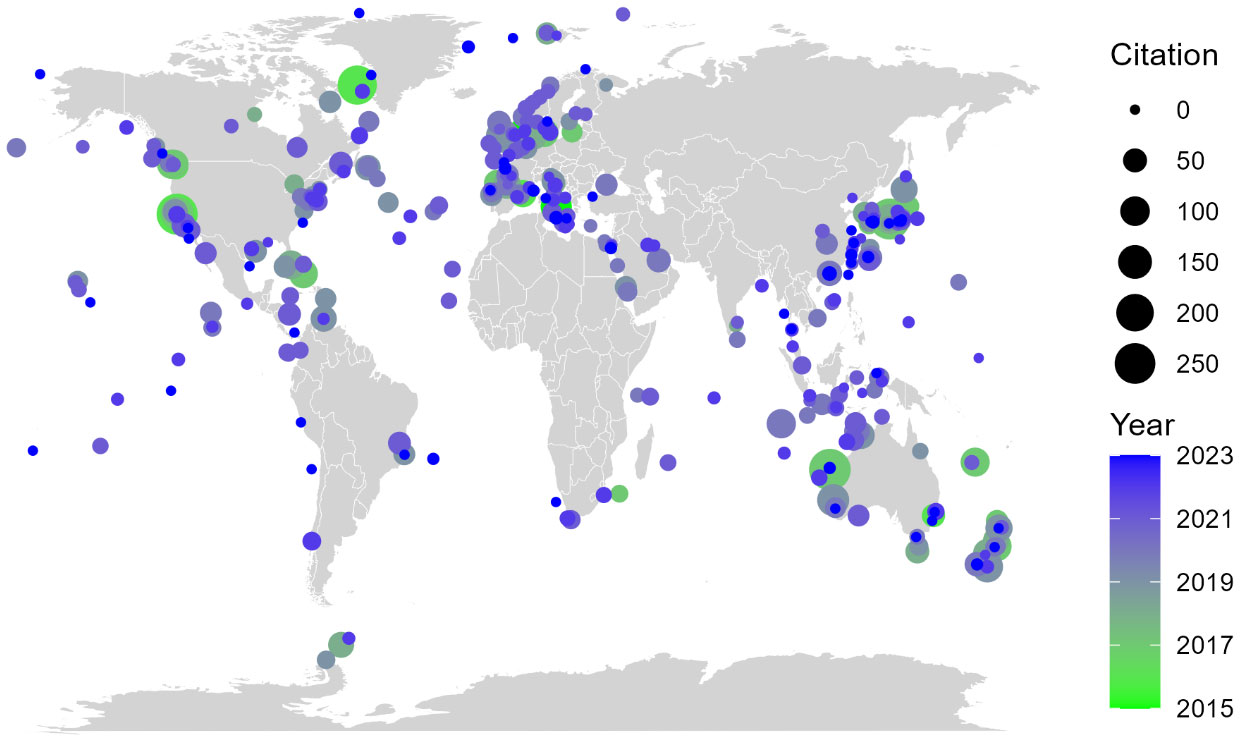
Figure 1 Map showing the global distribution of eDNA studies in marine environments retrieved from the Scopus database (355 research articles taken from the database). The size of the circle indicates the citation received, and the color denotes the year of study.
The methodology for eDNA metabarcoding should be customized according to the specific goals of the investigation and the unique characteristics of the samples being studied. Numerous review articles have been published that delve into the various steps in eDNA metabarcoding, covering aspects such as sampling, DNA extraction, primer selection, sequencing platforms, and bioinformatics analysis (Aylagas et al., 2016b; van der Loos and Nijland, 2021; Pawlowski et al., 2022; Takahashi et al., 2023; Zhang et al., 2023). Moreover, the methods and pipelines for bioinformatics analysis are constantly being refined and updated to enhance biodiversity assessments. Developing various metabarcoding data analysis pipelines underscore the requirement for user-friendly software and customized workflows tailored for specific sequencing datasets (Hakimzadeh et al., 2023). While the growing use of eDNA metabarcoding facilitates cross-study comparisons, it is crucial to ensure consistency and uniformity in the methods employed to establish it as a standard for monitoring biodiversity (van der Loos and Nijland, 2021).
2 Status of the Arabian Gulf ecosystem and the need for biomonitoring
The Gulf ecosystem can be categorized into coastal and subtidal ecosystems (Al-Abdulkader et al., 2019). Coastal ecosystems comprise diverse habitats such as wetlands, sandy beaches, and rocky shores. Wetlands consist of salt flats, salt marshes, and mangroves. Salt flats, also known as sabkhas in Arabic (area of low-lying salty ground), have extensive microbial mats, making them an ecologically important and productive habitat in the Gulf (Burt, 2014). Mangroves in the Gulf are dominated by a single species of Avicennia marina adapted to highly variable seasonal temperature and salt concentrations. These ecosystems play a crucial ecological role by providing food and shelter to diverse terrestrial and marine organisms. Dunes with halophyte vegetation characterize sandy beaches. Subtidal ecosystems comprise seagrass and coral reef habitats. Seagrass beds (containing species Halodule uninervis, Halophila stipulacea and H. ovalis) are distributed along most of the coastlines, serving as food sources and habitats for turtles, dugongs, pearl oysters, and shrimps in the Gulf. Coral reefs serve as reservoirs of biodiversity in the Gulf, and approximately 40 species of hard corals and 31 species of soft corals have been identified. Coral growth is best observed on offshore shoals, and fringing reefs are present along the mainland shoreline (Naser, 2014). These are extensively studied for thermal adaptations due to their tolerance to harsh environmental conditions (Riegl et al., 2011; Bejarano et al., 2022). The Gulf (Figure 2) represents a highly vulnerable ecosystem challenged by a myriad of local and global factors that threaten to destroy biodiversity, potentially leading to ecological destruction. Due to the severity and complexity of these challenges, the Gulf has attracted considerable attention from marine researchers and ecologists worldwide. It has become a “hotspot” for research, indicating that scientists from various parts of the world are actively studying the Gulf to understand its threats, develop strategies for biomonitoring and conservation, and contribute to global knowledge about preserving marine biodiversity. The focus on the Gulf reflects its importance in understanding and addressing broader issues related to marine conservation and the impact of environmental changes on ecosystems.
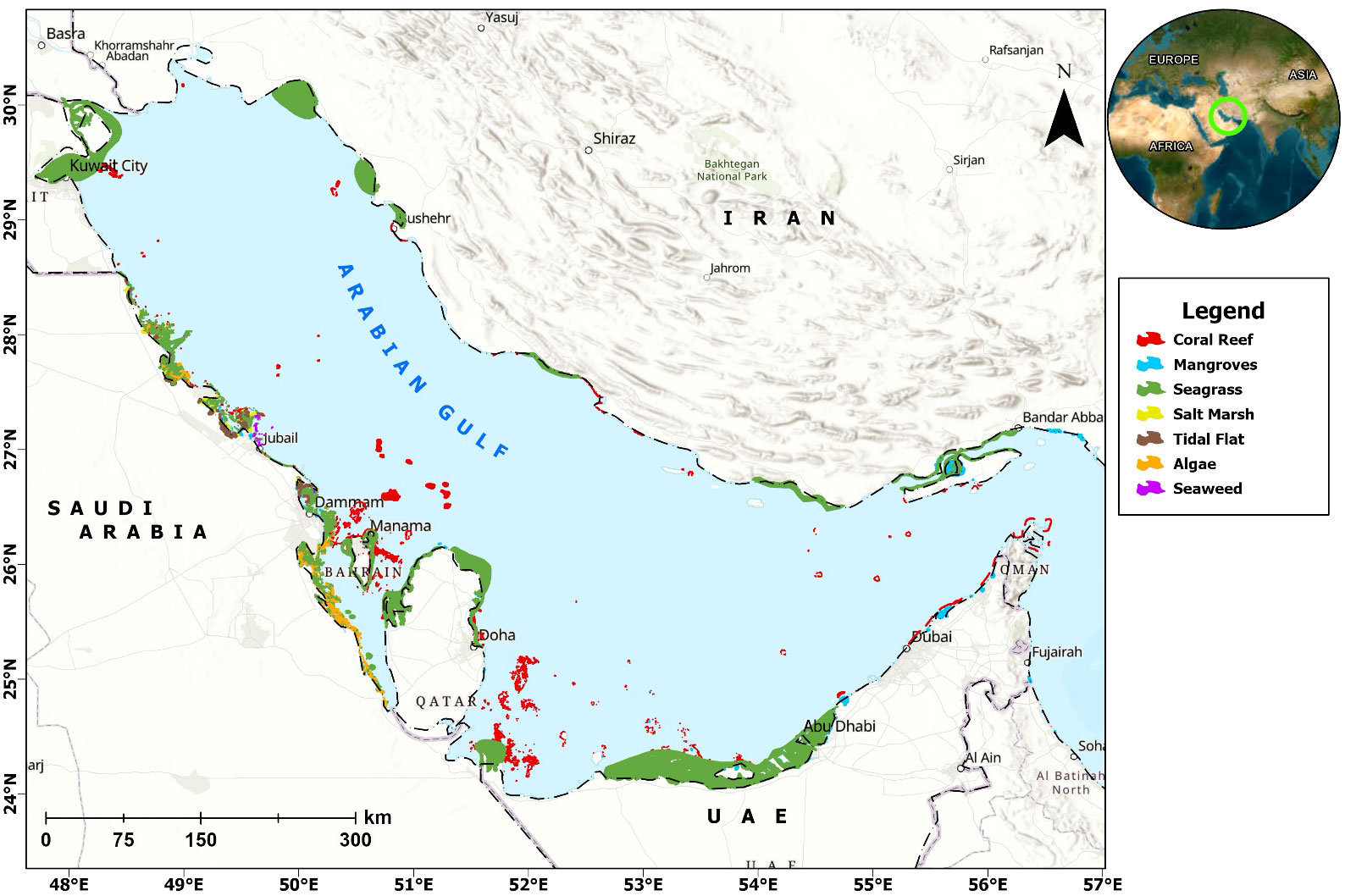
Figure 2 Map of the Arabian Gulf showing the distribution of sensitive habitats with special reference to the Saudi waters of the Arabian Gulf. The data utilized in this map was sourced from Global Mangrove Watch (Bunting et al., 2018); Global distribution of coral reefs, compiled from multiple sources including the Millennium Coral Reef Mapping Project. version 4.1, updated by UNEP-WCMC (2021); Global distribution of seagrasses, version 7.1 (2021); Data collection of specific habitats in Saudi Arabia from ARCEMS, KFUPM.
2.1 Natural environmental variables and seasonality
The Gulf receives water from the Indian Ocean through the Strait of Hormuz, which then flows northwest along the Iranian coast to Kuwait and further south along the coast of Saudi Arabia (Vaughan et al., 2019). As the water circulates anticlockwise around the Gulf, it experiences increased salinity due to evaporation. The Gulf is characterized by extreme environmental conditions, including high salinity, extreme temperature, limited water exchange, and high evaporation rates (Sheppard et al., 2010; Manokaran et al., 2021). The climate in the Gulf region is characterized as transitional between tropical and subtropical. Despite being geographically located in the subtropics, the arid surroundings contribute to a tropical climate during the summer. Winter spans from December to March, while summer extends from June to September, with two transitional periods in between (Al Senafi and Anis, 2015). As a result, the atmospheric temperature fluctuates significantly throughout the seasons. The climate is characterized by low precipitation, high summer temperatures, and rapid evaporation rates reaching 1-2 m per year, which contributes to elevated average salinity of 39 practical salinity units (psu) across the Gulf. In certain prominent coastal indentations, such as the Gulf of Salwah and the southern region of Bahrain, salinities exceed 60 psu (Sheppard et al., 2010; Joydas et al., 2015). Additionally, sea surface temperature in the Gulf exhibits significant variations between the seasons, ranging from 15 to 36°C, with seasonal fluctuations as large as 20°C (Al-Abdulkader et al., 2019; Ben-Hasan and Christensen, 2019). Consequently, the harsh climate of the region substantially impacts marine communities, putting them at a heightened risk of surpassing their environmental tolerance limits and facing adverse consequences (Price, 1993). Analysis of pH levels in the surface waters of the Gulf between 2007 and 2010 demonstrated a progressive increase in acidity over time (Uddin et al., 2012). Hence, the rise in acidity and sea surface temperature related to climate change is crucial for many organisms, such as corals, mollusks, and calcareous phytoplankton in the Gulf (Naser, 2014; Paparella et al., 2019). It is important to highlight that the Red Sea, a biodiversity hotspot geographically close to the Gulf experiences extreme environmental conditions of high temperature and salinity as well as global warming and ocean acidification. These affect the diversity of several indigenous species inhabiting the Red Sea (Sonnewald and El-Sherbiny, 2017; Kleinhaus et al., 2020). Similarly, studies conducted in the Mediterranean Sea showed a consistent warming trend in daily sea surface temperature data series from 1982–2016 satellite data (Pastor et al., 2018). The temperature variations in seawater during summer and winter seasons have an impact on the growth, survival, fertility, migration, and phenology in several communities, such as plankton, vegetation, invertebrates, and vertebrates from pelagic to benthic regions (Marbà et al., 2015). The recent warming acceleration is also pronounced in the Mediterranean Basin, attributing to the combined effect of declining aerosols and a negative trend in near-surface soil moisture (Urdiales-Flores et al., 2023).
2.2 Anthropogenic stressors in the Gulf
Rapid industrialization in the Gulf has introduced numerous anthropogenic stressors significantly impacting the natural environment (Figure 3). A massive boom in coastal development has led to the exploitation of shallow marine intertidal habitats (Burt, 2014). Approximately 40% of the Gulf’s coastline is estimated to have undergone development, illustrating the extensive changes caused by human activities (Hamza and Munawar, 2009). The Gulf ecosystem is a source of income for millions of people through fisheries and aquaculture, tourism, and industrial activities. However, these activities also pose potential risks to marine populations, resulting in biodiversity loss. The deposition of dredged material during the reclamation also depletes dissolved oxygen levels, leading to deoxygenation of underlying sediments (Naser, 2014). Moreover, reclaimed land obstructs water circulation, reducing flushing rates and altering salinity (Al-Jamali et al., 2005).
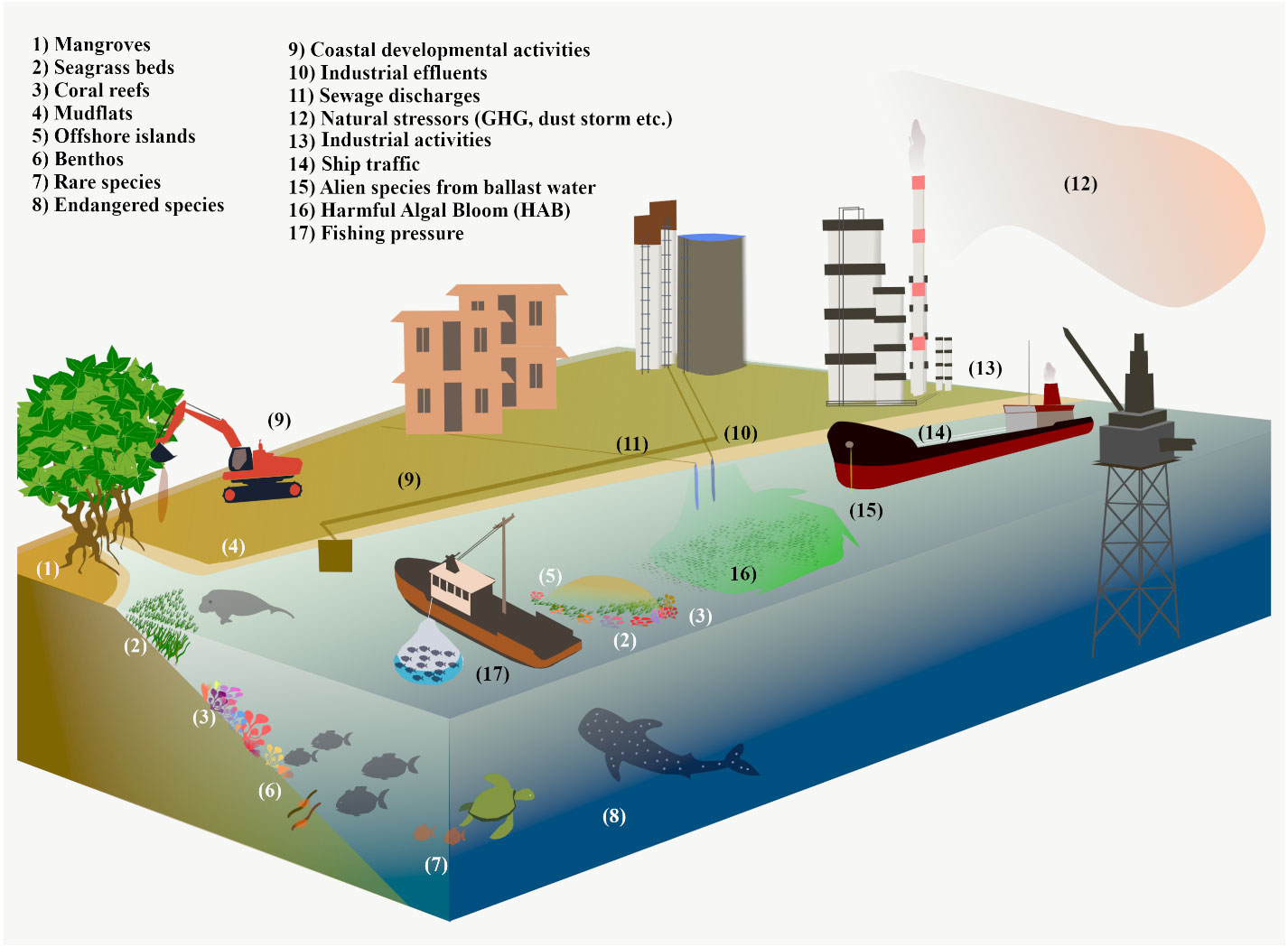
Figure 3 A conceptual diagram illustrating the cross-section of the Arabian Gulf’s ecosystems and its human pressures showcasing the importance of eDNA-based biodiversity assessments.
The desalination industry has become an increasingly alarming issue in the Gulf. As stated by Ibrahim and Eltahir (2019), countries in the region, such as Saudi Arabia, the Emirates, Kuwait, Qatar, and Bahrain, are responsible for processing approximately half of the world’s desalinated seawater. Consequently, the discharge of effluents from seawater desalination into the coastal and subtidal areas of the Gulf poses a significant menace to marine habitats (Areiqat and Mohamed, 2005). Desalination effluents often contain hazardous chemicals, such as heavy metals and anti-scaling, anti-fouling, anti-foaming, and anti-corrosion additives (Lattemann and Höpner, 2008). These effluents also contain high concentrations of suspended solids and nutrients, such as ammonia, nitrates, and phosphates (Naser, 2011). The coastal environments receiving these effluents undergo chemical and physical transformations which harm various marine organisms and assemblages. Another important focus is on the largest oil spill in the history of the Gulf, known as the 1991 Oil Spill, which originated from the Gulf conflict. The repercussions of the oil spill extended over a vast area, covering more than 770 km of shoreline between Ras-Al-Khafji in the north and Abu Ali in the south on the Saudi Arabian coast. This catastrophic event resulted in the devastation of local flora and fauna in the affected regions and caused irreversible damage in critical habitats in specific regions of the Saudi Arabian coast. Additionally, the presence of pollutants such as petroleum hydrocarbons (PHs), polycyclic aromatic hydrocarbons (PAHs), and organochlorinated contaminants in the sediments of oil-polluted areas have modified the marine community structure within the Gulf countries (Hassanshahian et al., 2020; Khatir et al., 2020). Numerous studies have been conducted to assess the ecological recovery of the spill affected coastal environments (Price, 1998; Joydas et al., 2017). Hence, these physical and chemical changes have negatively impacted the biodiversity, richness, abundance, and biomass of marine organisms residing in the Gulf.
3 Application and prospects of eDNA metabarcoding in the Arabian Gulf
The Gulf, characterized by its unique biodiversity, is a subject of significant scientific interest, primarily due to its potential vulnerability to natural and anthropogenic stressors in the future (Riegl and Purkis, 2012; Burt et al., 2020; Lin et al., 2021a). With a keen awareness of this distinctive circumstance, researchers across the Gulf countries actively conduct regular and frequent ecological surveys on diverse marine habitats and targeted taxa (Riegl and Purkis, 2012; Burt, 2014; Joydas et al., 2017; Hosseini et al., 2021; Torquato et al., 2021; Lin et al., 2021a, Lin et al., 2021b). However, these surveys primarily rely on conventional sampling techniques, such as visual census by SCUBA divers (Riegl and Purkis, 2012; Lin et al., 2021a), bottom trawl surveys (Lin et al., 2021b), remotely operated vehicles (ROV) (Torquato et al., 2021), and grab-samplers (Joydas et al., 2015). In the present scenario, eDNA metabarcoding stands out as a promising tool with the potential to monitor the biodiversity in the Gulf, offering valuable support for the development of conservation and management measures. Only a limited number of eDNA metabarcoding studies have been conducted in the Gulf, focusing on specific groups of organisms (Table 1). In a comparative study assessing the effectiveness of eDNA metabarcoding and classical bottom trawling in detecting similar spatial patterns of taxonomic, functional, and phylogenetic diversity among marine fish communities in the Bay of Biscay, eDNA demonstrated a superior ability to detect higher levels of taxonomic and phylogenetic diversity compared to trawling with a less sampling effort (Veron et al., 2023).

Table 1 eDNA metabarcoding studies reported from the Arabian Gulf.
3.1 Application in ecology
The Gulf provides a distinct habitat for various organisms adapted to extreme environmental conditions. Each habitat supports unique assemblages of organisms, from benthic organisms in intertidal sediments and mangrove ecosystems to phyto- and zooplankton in the pelagic region (Qurban et al., 2012; Naser, 2014; O’Donnell et al., 2017). DiBattista et al. (2017), employed eDNA analysis using fish-specific 16S rRNA mitochondrial DNA primers to document the diversity of coral reef fishes in the central Red Sea. The study successfully identified a diversity of conspicuous, cryptobenthic, and commercially relevant reef fish genera. Nevertheless, certain significant species known to inhabit the Red Sea could not be detected due to limitations in spatial sampling, amplification stochasticity, and sequencing depth. In another study, the diversity of the marine vertebrates of the Gulf at a regional scale was studied through eDNA metabarcoding targeting the mitochondrial 12S rRNA gene (Sigsgaard et al., 2020). The findings of this study demonstrated that marine vertebrate communities inhabiting various habitat types, such as seagrass beds, coral reefs, mangroves, inshore and offshore sand bottoms, could be differentiated and effectively characterized over a large spatial scale using eDNA from seawater samples. The identified taxa comprised both commonly found species and some rarely documented in the Gulf. The presence of ray-finned and cartilaginous fish, turtles, cetaceans, birds and low-density organisms such as dugongs and sea snakes were reported. In a related study to investigate the temporal changes in the metazoan communities inhabiting native and exotic seagrass meadows in the eastern Mediterranean Sea by targeting mitochondrial cytochrome c oxidase subunit I (COI) gene demonstrated a decrease in the diversity of bony fishes and soft corals with an increase in richness of sponges and copepods. The results also revealed a turnover of taxa, wherein species lost due to human-induced pressures were compensated by introducing exotic taxa into the community (Wesselmann et al., 2022). DiBattista et al. (2022) employed eDNA to assess biogeographic patterns across multiple taxonomic groups, targeting 18S rRNA for eukaryotes, 16S rRNA for bony fishes, and ITS region for corals and sponges along the Omani coast. The authors observed a known biogeographic break in fish communities between the north and the south of Oman. Moreover, they found correlations between community shifts, local environmental factors, and anthropogenic impacts along the coastline. This study provided compelling evidence that eDNA metabarcoding is a powerful tool for identifying biogeographic boundaries associated with oceanographic conditions or human activities. Furthermore, eDNA metabarcoding has been demonstrated to be an effective assessment tool for restoration efforts. Levy et al. (2023) showcased the significance of eDNA metabarcoding as a crucial tool for assessing biodiversity linked to artificial reefs. This study demonstrated the effectiveness of eDNA metabarcoding in assessing the metazoan diversity associated with artificial reefs in the Gulf of Eilat/Aqaba located in the Red Sea by targeting the COI gene. The findings emphasized the importance of adopting this method in future studies on reef reformation and monitoring using artificial marine structures. An investigation for diet studies using eDNA metabarcoding was conducted to evaluate the diet diversity of herbivorous reef fishes to scrutinize the sustainability of coral reef assemblage (Nalley et al., 2022). This assessment specifically focused on targeting algal lineages using a 23S rRNA universal plastid amplicon (UPA) marker. By utilizing metabarcoding techniques and compiling existing data, the study generated a dataset revealing variability in diet specialization even within taxonomic families. In addition, an open-access database for herbivores commonly observed in the western central Pacific was established, which could form a vital resource for developing species-specific and resilience-based management measures. These examples highlight the potential ecological applications of eDNA in diversity assessment, restoration, and diet studies. Similar eDNA-based investigations can be initiated in the Saudi waters of the Gulf, especially in the coral islands of Karan and Jana, which host high biodiversity, and provide valuable information on shifts in reef assemblages and their associated fauna, leading to informed management actions to protect these delicate reef ecosystems.
3.2 Application in biomonitoring and industry
Monitoring marine life relies on time-consuming traditional surveys that pose significant risks to marine organisms (Wheeler et al., 2004). The challenges were further intensified by restrictions on bottom trawling in specific countries, such as Qatar, and numerous marine protected areas in the Gulf. The eDNA metabarcoding offers a feasible alternative for biomonitoring in the Gulf, especially in marine protected areas where routine biodiversity monitoring and assessment of species and habitats is a critical factor. Also, the eDNA approach can be effectively employed in monitoring certain marine species, especially those that are difficult to track due to their small size or residents in deep-sea habitats (Stefanni et al., 2022). The data collected through monitoring activities employing eDNA can play a crucial role in guiding management practices aimed at preserving the Gulf ecosystems. This approach ensures the maintenance of healthy ecosystems, along with their associated functions and services. However, challenges such as a lack of standardized methodology, incomplete reference databases, and the lack of appropriate contamination controls or sensitivity measures may pose obstacles to interpreting eDNA results within environmental impact assessments (Hinz et al., 2022). In recent times, there has been growing validation of the effectiveness of eDNA for biomonitoring and evaluating the response of biotic communities to environmental stress associated with anthropogenic activities. Previous studies in the Gulf have employed the eDNA approach to evaluate the environmental impacts of industrial activities on benthic communities (Lee et al., 2019; Al-Enezi et al., 2022; Al-Salameen et al., 2023). Studies from offshore oil and gas drilling and production platforms in New Zealand have demonstrated the potential of eDNA metabarcoding for monitoring the local biodiversity (Laroche et al., 2016, Laroche et al., 2018). These studies evaluated changes in the composition of benthic bacterial, eukaryotic and foraminiferal communities targeting 16S and 18S rRNA genes and detected the presence of hydrocarbon-degrading bacterial taxa at petroleum-impacted stations. This groundbreaking study identified key bio-indicator foraminiferal taxa that could be used for future monitoring of oil and gas-related activities. In a similar investigation to study the diversity of benthic bacterial and eukaryotic communities in the Gulf coral reefs exposed to varying levels of PAH pollution revealed remarkable shifts in the communities in response to crude oil pollution compared to control sites. There was a differential response of entire benthic communities to different degrees of hydrocarbon pollution, with eukaryotic communities displaying a greater susceptibility to the impact (Oladi et al., 2022). Cordier et al. (2019) assessed the impact of offshore gas platforms in the North Adriatic Sea on the diversity of benthic and planktonic eukaryotes by analyzing water and sediment samples using multiple markers such as 16S rRNA, 18S rRNA, and CO1 genes. The study indicated changes in benthic foraminifera and pelagic communities in areas closer to the platforms (>50 m), highlighting the potential of eDNA for assessing the impacts of offshore production activities, thereby contributing to global compliance efforts and fostering biodiversity stewardship. Comprehensive studies to identify potential bioindicators crucial for assessing the health of marine ecosystems in the Gulf region can be carried out employing eDNA metabarcoding. Focused research on zooplanktons, macro/meio/microbenthic communities is crucial to determine their appropriateness as bioindicators within the Gulf’s unique environmental conditions. Hence, eDNA metabarcoding could be used to monitor the health status of marine ecosystems by specifically focusing on shifts in the community structure.
The Gulf is home to critically endangered groups such as dugongs, sea turtles, and several endangered fishes (Abdulqader and Miller, 2012; Preen et al., 2012). Hence, regular monitoring and documentation of the threatened taxa inhabiting the Gulf are essential for implementing conservation measures. In addition, biomonitoring of marine mammals such as dolphins, dugongs, and whales is critical for ecological balance, conservation efforts, sustainable resource management, and evaluating the implications of anthropogenic operations in the Gulf (Rabaoui et al., 2021). There is a notable scarcity of comprehensive data regarding the diversity, distribution, and abundance of marine mammals in the Gulf. Biomonitoring through advanced techniques like eDNA metabarcoding can fill this knowledge gap and provide a more accurate and efficient assessment of marine mammals without direct physical interaction, providing valuable data for conservation strategies. Past reports of fisheries landing by (Al-Husaini et al., 2015) indicated a significant reduction in the abundance of commercial fish and shellfish species in the northwestern Gulf due to overfishing. Hence, there is a critical demand for a rigorous and robust monitoring system for fisheries conservation and management. Utilizing eDNA metabarcoding allows gathering species-specific knowledge of fish, enabling the assessment of current species richness patterns in the Gulf. Furthermore, eDNA analysis has been proven successful in detecting fish species that are rarely recorded by conventional monitoring methods (Foote et al., 2012; Thomsen et al., 2012; Kelly et al., 2014). Saenz-Agudelo et al. (2022) proved the effectiveness of eDNA metabarcoding for biomonitoring by detecting vertebrate communities in a protected coastal environment with complex hydrodynamics in Southern Chile. In this study, the taxonomic results were compared with historical records acquired through conventional methods, confirming that the distribution of eDNA aligns with the distribution of identified taxa. In addition, several cryptic and exotic species that are national conservation targets could be identified.
Researchers have been using the ecological index, AZTI’s Marine Biotic Index (AMBI), for assessing the ecological status of macrobenthic communities in the Gulf (Shokat et al., 2010; Joydas et al., 2017, Joydas et al., 2023). The genetic versions of this index, genomic AMBI (gAMBI) and presence/absence genomic AMBI ((pa)gAMBI) are calculated using metabarcoding-derived read counts and presence/absence, respectively, for each identified taxon in eDNA metabarcoding investigations. Kappa analysis was used to evaluate the correlation between the different indices, indicating the validity of eDNA metabarcoding for assessing marine benthic ecosystems (Aylagas et al., 2014; Aylagas et al., 2016a, Aylagas et al., 2018). Similarly, by using ecological quality status (EcoQS) approach, the level of stress on benthic foraminifera was studied in Kuwait Bay. The diversity-based indices, such as expected H’bc (exp (H’bc)) and genetic H’bc (g-exp(H’bc) were calculated for the morphological and metabarcoding dataset, respectively. This was the first attempt to apply the foraminiferal metabarcoding to evaluate the EcoQS within the Gulf (Bouchet et al., 2012; Cavaliere et al., 2021; Al-Enezi et al., 2022). These studies, employing biotic indices, indicated that the eDNA metabarcoding provides a robust approach for evaluating and monitoring marine ecosystems, enabling the application of established ecological indices and metrics to derive valuable insights into the health and diversity of various taxa in these environments.
3.3 Application in invasion biology
For centuries, anthropogenic activities have been responsible for introducing non-native species into new ecosystems, posing significant threats such as disruptions to ecosystems, loss of biodiversity, and considerable ecological and economic impacts. The introduction of non-native organisms to a new marine ecosystem, commonly referred to as marine bio-invasion, can occur through a variety of means, including maritime shipping, trade of live organisms for aquaculture, fisheries, stock enhancement, ornamental markets, and maritime canals (Ojaveer et al., 2018). Marine bio-invasions have been identified as a serious threat to biodiversity and the regular functioning of marine ecosystems (Lubchenco, 1991; Clarke et al., 2020). “Biosecurity” in marine environments refers to measures taken to prevent the introduction and spread of undesired invasive and non-native species (INNS, Biosecurity Strategy) (Callaghan, 2003). The Gulf is a bustling shipping route for oil transportation. Around 53,000 vessels enter the Gulf yearly, and approximately 40% of global oil transportation passes through the Gulf (Al-Yamani et al., 2015). Ballast water and vessel hull fouling potentially contributed to introducing new marine species in the Gulf (Hallegraeff, 2015; Ojaveer et al., 2018; Clarke et al., 2020). Ballast water from ships in the Gulf region used to be a potential source of Harmful Algal Blooms (HABs), posing a risk to global marine biodiversity because of resilient microalgal species. Hence, it is advisable to undertake a comprehensive biological survey of the Gulf to distinguish between indigenous, cryptogenic, and potentially invasive species (Hallegraeff, 2015). The use of qPCR for species detection relies on the critical step of developing species-specific primers that amplify the DNA of the target species from the eDNA, avoiding false-positive results caused by cross-amplification (Kim et al., 2018; Guan et al., 2019). Furthermore, droplet digital PCR (ddPCR) methods are utilized for the detection or quantification of target invasive species due to their heightened sensitivity, even in the presence of minimal amounts of eDNA (Doi et al., 2015a; Wood et al., 2019). Nevertheless, it is worth noting that the costs associated with ddPCR tests are generally higher compared to qPCR assays (Doi et al., 2015b).
Previous investigation using taxonomic data has identified 14 suspected alien species, ranging from microalgae to fish in the Gulf (Al-Yamani et al., 2015). Comtet et al. (2015) conducted a study exploring the application of eDNA metabarcoding to identify non-native species covering various taxa and ecosystems. The authors highlighted the benefits of eDNA analysis in the early detection of non-native species in the environment. Clarke et al. (2020) have identified a list of marine and brackish invasive non-native taxa, including fish, tunicates, invertebrates, marine plants, and protists from the Gulf and Sea of Oman that could negatively affect biodiversity in the future. However, no reports of non-native species identification via eDNA metabarcoding in the Gulf have been reported. Considering the significant volume of maritime traffic in the Gulf and its unique marine ecosystem, eDNA techniques should be a promising tool for monitoring biosecurity in the Gulf. To conclude, eDNA metabarcoding can offer a comprehensive evaluation of the marine ecosystem and present a snapshot of the current state of the Gulf’s marine biodiversity.
4 Challenges
The process of eDNA metabarcoding presents numerous technical hurdles that need to be addressed in the Gulf, spanning from sample collection to eDNA extraction, primer selection, and subsequent bioinformatics analysis.
4.1 Challenges in the field
The shallow nature of coastal waters and inner bays in the Gulf demands the use of small boats for sampling. Consequently, smaller boats make sampling dependent on favorable weather conditions, leading to variability in schedules and possible delays. This situation can result in extended storage periods for eDNA samples. Filtration of seawater samples on smaller boats presents significant challenges, particularly amid adverse weather conditions in the Gulf. Furthermore, it is crucial to note that various physicochemical, biological, and ecological factors influence the release, retention, transportation, and degradation of eDNA. In the context of the Gulf, a comprehensive awareness of the interplay of these factors becomes imperative for identifying potential influences on eDNA dynamics. However, the existing literature suggests that elevated water temperature is likely to have a negative impact on the persistence of eDNA (Sigsgaard et al., 2020). The variability of eDNA in the Gulf at both spatial and temporal dimensions highlights the importance of a meticulous approach when designing a sampling plan. Hence, pilot studies are highly recommended.
4.2 Challenges in laboratory analysis
The establishment of standardized procedures for sample collection and laboratory analysis is a fundamental step toward ensuring the reliability and reproducibility of eDNA analysis in the Gulf. Obtaining high-quality DNA with a good yield is crucial to ensure the maximum representation of the biotic community in environmental samples. Elevated levels of PCR inhibitors such as humic acid and tannic acid in sediment samples collected from wetlands, coral reefs, and fish landing sites in the Gulf can affect PCR analyses. Therefore, it is necessary to either dilute the eDNA or implement additional purification steps to eliminate these inhibitors (Patin and Goodwin, 2023). As eDNA samples are highly heterogeneous, it is challenging to achieve a complete primer-target match during amplification, which could lead to biased PCR results (Stadhouders et al., 2010). Moreover, the risk of false positives and negatives in eDNA analysis exists due to potential field or laboratory contaminations, which can result in the misinterpretation of data (Coble et al., 2019). To enhance the overall inclusion of specific taxa of interest in the Gulf, it is advisable to employ multiple molecular markers in a single study. This strategy will improve the sensitivity, specificity, and reliability of eDNA analyses. An additional critical concern is the inadequacy of Molecular Biology laboratory facilities dedicated to eDNA studies in the region which acts as a barrier for researchers and scientists seeking to conduct thorough DNA barcoding studies, thereby restricting their ability to delve into and comprehend the diverse ecosystems of the region. Addressing this shortfall is imperative to facilitate scientific endeavors and fortify the foundation for a more thorough understanding of the Gulf’s unique biodiversity.
4.3 Challenges in data analysis
The accuracy of taxonomic identification in eDNA analysis is significantly dependent on the quality of the reference database utilized. A key challenge in this procedure involves assigning gene sequences to particular taxa, a task typically accomplished through comparisons with established databases such as GenBank or Barcode of Life Data System (BOLD). Past studies have emphasized that gaps in reference databases significantly impede the taxonomic assignment of recovered sequences (Wangensteen et al., 2018; Ruppert et al., 2019; Weigand et al., 2019; Hestetun et al., 2020). Despite the existing DNA barcoding efforts for various fish species in the Gulf region (Asgharian et al., 2011; Rabaoui et al., 2019; Afrand et al., 2020; Ludt et al., 2020; Afrand et al., 2023), a comprehensive understanding of biodiversity in the Gulf remains inadequate. There is a notable absence of barcodes for individual species and molecular references in barcode libraries, which is crucial for refining the taxonomic assignment of metabarcoding data. Addressing this gap necessitates a comprehensive initiative in the Gulf aimed at generating DNA barcodes for all plants, animals, and microbial species within the region. This initiative, by constructing and exchanging a robust database, will significantly enhance our capacity to interpret metabarcoding data, thereby contributing to a more profound understanding of biodiversity in the Gulf.
5 Conclusion and future directions
The remarkable progress in DNA sequencing technologies has significantly broadened the range of applications for eDNA in ecological monitoring, impact assessment, and global mitigation measures. The eDNA metabarcoding, a versatile and powerful tool, offers extensive applicability for addressing fundamental biological inquiries related to species diversity, distribution, and ecology. It enables the simultaneous detection of multiple taxonomic groups across large geographical scales, especially in regions undergoing significant habitat changes, environmental variations, or human-induced pressures. The Gulf, characterized by its extreme environment and substantial anthropogenic activities, faces challenges of marine pollution that impact its biodiversity. The eDNA metabarcoding can potentially revolutionize biodiversity assessment, biomonitoring, and environmental impact studies in the Gulf, offering a more comprehensive and efficient approach to understanding and conserving this extreme environment. As the Gulf region undergoes rapid economic development, having baseline data on biodiversity and ecological health is crucial. The present requirement entails establishing collaborative platforms and initiating foundational studies utilizing eDNA metabarcoding to generate essential baseline data on marine biodiversity in the Gulf. This data will serve as a guiding framework for future regional biomonitoring initiatives. Integrating eDNA metabarcoding into regular monitoring programs and environmental management practices is essential for the sustained health and conservation of the Gulf. Though eDNA metabarcoding offers numerous advantages, it also presents certain challenges that necessitate careful consideration and resolution. These encompass the requirement for standardized protocols, quality control measures, advancements in bioinformatics for accurate data analysis and interpretation and a lack of comprehensive reference databases. The key requirement in eDNA research in the Gulf is establishing a regional reference database for accurately identifying the species which help researchers differentiate between native and invasive species, assess biodiversity, and monitor ecosystem health. However, the lack of well-equipped laboratories specializing in Molecular Biology in the Gulf region severely restricts the capacity to conduct efficient and comprehensive barcoding studies. This deficiency hinders scientists and researchers from exploring and cataloging the rich biological diversity within the Gulf, limiting their ability to identify and characterize various species accurately. The establishment of modern Molecular Biology facilities tailored for DNA barcoding research is essential to overcome this challenge. Additionally, there is a knowledge gap regarding the impact of environmental conditions and oceanographic patterns on eDNA degradation and transport rates in the Gulf. Advancing knowledge in these areas is crucial for accurately interpreting eDNA data and optimizing its effectiveness in monitoring initiatives. Overall, the progress achieved in eDNA research presents significant opportunities but necessitates ongoing efforts to address challenges, expand reference databases, improve understanding of environmental influences, and foster the integration of eDNA with traditional monitoring approaches.
Author contributions
TJ: Conceptualization, Writing – original draft, Writing – review & editing. SM: Conceptualization, Writing – original draft. JG: Conceptualization, Investigation, Writing – original draft, Writing – review & editing. JR: Investigation, Writing – review & editing. LY-J: Conceptualization, Writing – original draft, Writing – review & editing. MH: Writing – review & editing. MN: Writing – review & editing. KM: Writing – review & editing. MQ: Writing – original draft. SM: Formal Analysis, Writing – review & editing. SH: Visualization, Writing – review & editing. RM: Writing – review & editing, Project administration, Supervision. AQ: Writing – original draft. DL-C: Writing – review & editing. NA: Project administration, Supervision, Writing – review & editing.
Funding
The author(s) declare that no financial support was received for the research, authorship, and/or publication of this article.
Acknowledgments
The authors would like to thank the Applied Research Center for Environment and Marine Studies, KFUPM, Saudi Arabia and Environmental Protection Department, Saudi Aramco, Saudi Arabia, for providing all the necessary support to prepare this manuscript. Authors are grateful to the two anonymous reviewers for their detailed and constructive comments to improve the quality of the paper. This review was conducted as part of the project entitled, ‘Saudi Aramco / KFUPM-RI Sustaining Research Project Marine Environmental Studies – Phase VII’ (KFUPM Project No. CEM2700) funded by Saudi Aramco.
Conflict of interest
Authors MQ, AQ and DL-C are employees at Saudi Aramco.
The remaining authors declare that the research was conducted in the absence of any commercial or financial relationships that could be construed as a potential conflict of interest.
Publisher’s note
All claims expressed in this article are solely those of the authors and do not necessarily represent those of their affiliated organizations, or those of the publisher, the editors and the reviewers. Any product that may be evaluated in this article, or claim that may be made by its manufacturer, is not guaranteed or endorsed by the publisher.
References
Abdulqader E. A. A., Miller J. (2012). Marine turtle mortalities in Bahrain territorial waters. Chelonian Conserv. Biol. 11, 133–138. doi: 10.2744/CCB-0826.1
Afrand M., Sourinejad I., Fazeli S. A. S., Akbarzadeh A., Yeganeh L. P., Sadeghi M., et al. (2020). Morphological identification and molecular validation of anchovies (Engraulidae) in the Persian Gulf and Oman Sea. Zootaxa 4742 375–391. doi: 10.11646/zootaxa.4742.2.10
Afrand M., Sourinejad I., Shahdadi A., Vera M. (2023). DNA barcoding for identification and discovery of fish species in the protected mangroves of Hormozgan, Iran. Estuaries Coasts. doi: 10.1007/s12237-023-01306-7
Al-Abdulkader K. A., Loughland R. A., Qurban M. A. (2019). ECOSYSTEMS AND BIODIVERSITY OF THE ARABIAN GULF (Dhahran, Saudi Arabia: Saudi Aramco & King Fahd University of Petroleum & Minerals).
Al-Enezi E., Francescangeli F., Balassi E., Borderie S., Al-Hazeem S., Al-Salameen F., et al. (2022). Benthic foraminifera as proxies for the environmental quality assessment of the Kuwait Bay (Kuwait, Arabian Gulf): Morphological and metabarcoding approaches. Sci. Total Environ. 833, 155093. doi: 10.1016/j.scitotenv.2022.155093
Al-Husaini M., Bishop J. M., Al-Foudari H. M., Al-Baz A. F. (2015). A review of the status and development of Kuwait’s fisheries. Mar. pollut. Bull. 100, 597–606. doi: 10.1016/j.marpolbul.2015.07.053
Al-Jamali F., Bishop J. M., Osment J., Jones D. A., LeVay L. (2005). A review of the impacts of aquaculture and artificial waterways upon coastal ecosystems in the Gulf (Arabian/Persian) including a case study demonstrating how future management may resolve these impacts. Aquat Ecosyst. Health Manag 8, 81–94. doi: 10.1080/14634980590914953
Al-Salameen M. A., Abdullah M. T., Morsy A. M., Aryan F. A., Almousa M. A. (2023). A preliminary investigation to explore the diversity of recent benthic foraminifera using taxonomical and molecular approach: A case study from northwestern part of the Arabian Gulf, Kuwait. Life Sci. J. 20, 1–11. doi: 10.7537/marslsj200823.01
Al Senafi F., Anis A. (2015). Shamals and climate variability in the Northern Arabian/Persian Gulf from 1973 to 2012. Int. J. Climatology 35, 4509–4528. doi: 10.1002/joc.4302
Al-Yamani F. Y., Skryabin V., Durvasula S. R. V. (2015). Suspected ballast water introductions in the Arabian Gulf. Aquat Ecosyst. Health Manag 18, 282–289. doi: 10.1080/14634988.2015.1027135
Areiqat A., Mohamed K. A. (2005). Optimization of the negative impact of power and desalination plants on the ecosystem. Desalination 185, 95–103. doi: 10.1016/j.desal.2005.04.038
Asgharian H., Sahafi H. H., Ardalan A. A., Shekarriz S., And Elahi E. (2011). Cytochrome c oxidase subunit 1 barcode data of fish of the Nayband National Park in the Persian Gulf and analysis using meta-data flag several cryptic species. Mol. Ecol. Resour 11, 461–472. doi: 10.1111/j.1755-0998.2011.02989.x
Aylagas E., Borja Á., Irigoien X., Rodríguez-Ezpeleta N. (2016a). Benchmarking DNA metabarcoding for biodiversity-based monitoring and assessment. Front. Mar. Sci. 3. doi: 10.3389/fmars.2016.00096
Aylagas E., Borja Á., Muxika I., Rodríguez-Ezpeleta N. (2018). Adapting metabarcoding-based benthic biomonitoring into routine marine ecological status assessment networks. Ecol. Indic 95, 194–202. doi: 10.1016/j.ecolind.2018.07.044
Aylagas E., Borja Á., Rodríguez-Ezpeleta N. (2014). Environmental status assessment using DNA metabarcoding: towards a genetics based marine biotic index (gAMBI). PloS One 9, e90529. doi: 10.1371/journal.pone.0090529
Aylagas E., Mendibil I., Borja Á., Rodríguez-Ezpeleta N. (2016b). Marine sediment sample pre-processing for macroinvertebrates metabarcoding: mechanical enrichment and homogenization. Front. Mar. Sci. 3. doi: 10.3389/fmars.2016.00203
Bejarano I., Orenes-Salazar V., Bento R., García-Charton J. A., Mateos-Molina D. (2022). Coral reefs at Sir Bu Nair Island: An offshore refuge of Acropora in the southern Arabian Gulf. Mar. pollut. Bull. 178, 113570. doi: 10.1016/j.marpolbul.2022.113570
Beng K. C., Corlett R. T. (2020). Applications of environmental DNA (eDNA) in ecology and conservation: opportunities, challenges and prospects. Biodivers Conserv. 29, 2089–2121. doi: 10.1007/s10531-020-01980-0
Ben-Hasan A., Christensen V. (2019). Vulnerability of the marine ecosystem to climate change impacts in the Arabian Gulf—an urgent need for more research. Glob Ecol. Conserv. 17, e00556. doi: 10.1016/j.gecco.2019.e00556
Bouchet V. M. P., Alve E., Rygg B., Telford R. J. (2012). Benthic foraminifera provide a promising tool for ecological quality assessment of marine waters. Ecol. Indic 23, 66–75. doi: 10.1016/j.ecolind.2012.03.011
Bunting P., Rosenqvist A., Lucas R., Rebelo L.-M., Hilarides L., Thomas N., et al. (2018). The global mangrove watch—A new 2010 global baseline of mangrove extent. Remote Sens (Basel) 10, 1669. doi: 10.3390/rs10101669
Burt J. A. (2014). The environmental costs of coastal urbanization in the Arabian Gulf. City 18, 760–770. doi: 10.1080/13604813.2014.962889
Burt J. A., Camp E. F., Enochs I. C., Johansen J. L., Morgan K. M., Riegl B., et al. (2020). Insights from extreme coral reefs in a changing world. Coral Reefs 39, 495–507. doi: 10.1007/s00338-020-01966-y
Callaghan D. (2003). Non-native species research requirements for delivery of the UK Biodiversity Action Plan. The Old Wheelwrights, Ham, Berkeley, Gloucestershire, UK. URL: https://www.nonnativespecies.org/assets/Documentrepository/BRAG_report.pdf.
Cavaliere M., Barrenechea Angeles I., Montresor M., Bucci C., Brocani L., Balassi E., et al. (2021). Assessing the ecological quality status of the highly polluted Bagnoli area (Tyrrhenian Sea, Italy) using foraminiferal eDNA metabarcoding. Sci. Total Environ. 790, 147871. doi: 10.1016/j.scitotenv.2021.147871
Clarke S. A., Vilizzi L., Lee L., Wood L. E., Cowie W. J., Burt J. A., et al. (2020). Identifying potentially invasive non-native marine and brackish water species for the Arabian Gulf and Sea of Oman. Glob Chang Biol. 26, 2081–2092. doi: 10.1111/gcb.14964
Coble A. A., Flinders C. A., Homyack J. A., Penaluna B. E., Cronn R. C., Weitemier K. (2019). eDNA as a tool for identifying freshwater species in sustainable forestry: A critical review and potential future applications. Sci. Total Environ. 649, 1157–1170. doi: 10.1016/j.scitotenv.2018.08.370
Comtet T., Sandionigi A., Viard F., Casiraghi M. (2015). DNA (meta)barcoding of biological invasions: a powerful tool to elucidate invasion processes and help managing aliens. Biol. Invasions 17, 905–922. doi: 10.1007/s10530-015-0854-y
Cordier T., Frontalini F., Cermakova K., Apothéloz-Perret-Gentil L., Treglia M., Scantamburlo E., et al. (2019). Multi-marker eDNA metabarcoding survey to assess the environmental impact of three offshore gas platforms in the North Adriatic Sea (Italy). Mar. Environ. Res. 146, 24–34. doi: 10.1016/j.marenvres.2018.12.009
Costello M. J., Basher Z., McLeod L., Asaad I., Claus S., Vandepitte L., et al. (2017). “Methods for the study of marine biodiversity,” in The GEO Handbook on Biodiversity Observation Networks. (Berlin, Germany: Springer Nature). doi: 10.1007/978-3-319-27288-7_6
Davison P. I., Falcou-Préfol M., Copp G. H., Davies G. D., Vilizzi L., Créach V. (2019). Is it absent or is it present? Detection of a non-native fish to inform management decisions using a new highly-sensitive eDNA protocol. Biol. Invasions 21, 2549–2560. doi: 10.1007/s10530-019-01993-z
DiBattista J. D., Berumen M. L., Priest M. A., De Brauwer M., Coker D. J., Sinclair-Taylor T. H., et al. (2022). Environmental DNA reveals a multi-taxa biogeographic break across the Arabian Sea and Sea of Oman. Environ. DNA 4, 206–221. doi: 10.1002/edn3.252
DiBattista J. D., Coker D. J., Sinclair-Taylor T. H., Stat M., Berumen M. L., Bunce M. (2017). Assessing the utility of eDNA as a tool to survey reef-fish communities in the Red Sea. Coral Reefs 36, 245–1252. doi: 10.1007/s00338-017-1618-1
DiBattista J. D., Reimer J. D., Stat M., Masucci G. D., Biondi P., De Brauwer M., et al. (2020). Environmental DNA can act as a biodiversity barometer of anthropogenic pressures in coastal ecosystems. Sci. Rep. 10, 8365. doi: 10.1038/s41598-020-64858-9
Djurhuus A., Closek C. J., Kelly R. P., Pitz K. J., Michisaki R. P., Starks H. A., et al. (2020). Environmental DNA reveals seasonal shifts and potential interactions in a marine community. Nat. Commun. 11, 254. doi: 10.1038/s41467-019-14105-1
Doi H., Takahara T., Minamoto T., Matsuhashi S., Uchii K., Yamanaka H. (2015a). Droplet digital polymerase chain reaction (PCR) outperforms real-time PCR in the detection of environmental DNA from an invasive fish species. Environ. Sci. Technol. 49, 5601–5608. doi: 10.1021/acs.est.5b00253
Doi H., Uchii K., Takahara T., Matsuhashi S., Yamanaka H., Minamoto T. (2015b). Use of droplet digital PCR for estimation of fish abundance and biomass in environmental DNA surveys. PloS One 10, e0122763. doi: 10.1371/journal.pone.0122763
Foote A. D., Thomsen P. F., Sveegaard S., Wahlberg M., Kielgast J., Kyhn L. A., et al. (2012). Investigating the potential use of environmental DNA (eDNA) for genetic monitoring of marine mammals. PloS One 7, e41781. doi: 10.1371/journal.pone.0041781
Gargan L. M., Morato T., Pham C. K., Finarelli J. A., Carlsson J. E. L., Carlsson J. (2017). Development of a sensitive detection method to survey pelagic biodiversity using eDNA and quantitative PCR: a case study of devil ray at seamounts. Mar. Biol. 164, 112. doi: 10.1007/s00227-017-3141-x
Gold Z., Sprague J., Kushner D. J., Zerecero Marin E., Barber P. H. (2021). eDNA metabarcoding as a biomonitoring tool for marine protected areas. PloS One 16, e0238557. doi: 10.1371/journal.pone.0238557
Guan X., Monroe E. M., Bockrath K. D., Mize E. L., Rees C. B., Lindsay D. L., et al. (2019). Environmental DNA (eDNA) assays for invasive populations of black carp in North America. Trans. Am. Fish Soc. 148, 1043–1055. doi: 10.1002/tafs.10195
Hakimzadeh A., Abdala Asbun A., Albanese D., Bernard M., Buchner D., Callahan B., et al. (2023). A pile of pipelines: An overview of the bioinformatics software for metabarcoding data analyses. Mol. Ecol. Resour. 1–17. doi: 10.1111/1755-0998.13847
Hallegraeff G. M. (2015). Transport of harmful marine microalgae via ship’s ballast water: Management and mitigation with special reference to the Arabian Gulf region. Aquat Ecosyst. Health Manag 18, 290–298. doi: 10.1080/14634988.2015.1027138
Hamza W., Munawar M. (2009). Protecting and managing the Arabian Gulf: Past, present and future. Aquat Ecosyst. Health Manag 12, 429–439. doi: 10.1080/14634980903361580
Hassanshahian M., Amirinejad N., Askarinejad Behzadi M. (2020). Crude oil pollution and biodegradation at the Persian Gulf: A comprehensive and review study. J. Environ. Health Sci. Eng. 18, 1415–1435. doi: 10.1007/s40201-020-00557-x
Hestetun J. T., Bye-Ingebrigtsen E., Nilsson R. H., Glover A. G., Johansen P.-O., Dahlgren T. G. (2020). Significant tax on sampling gaps in DNA databases limit the operational use of marine macrofauna metabarcoding. Mar. Biodiversity 50, 70. doi: 10.1007/s12526-020-01093-5
Hinz S., Coston-Guarini J., Marnane M., Guarini J.-M. (2022). Evaluating eDNA for Use within Marine Environmental Impact Assessments. J. Mar. Sci. Eng. 10, 375. doi: 10.3390/jmse10030375
Hosseini H., Saadaoui I., Moheimani N., Al Saidi M., Al Jamali F., Al Jabri H., et al. (2021). Marine health of the Arabian Gulf: Drivers of pollution and assessment approaches focusing on desalination activities. Mar. pollut. Bull. 164, 112085. doi: 10.1016/j.marpolbul.2021.112085
Ibrahim H. D., Eltahir E. A. B. (2019). Impact of brine discharge from seawater desalination plants on Persian/Arabian gulf salinity. J. Environ. Eng. 145, 04019084. doi: 10.1061/(ASCE)EE.1943-7870.0001604
Joydas T. V., Qurban M. A., Borja A., Krishnakumar P. K., Al-Suwailem A. (2017). Macrobenthic community structure in the northwestern Arabian Gulf, twelve years after the 1991 oil spill. Front. Mar. Sci. 4. doi: 10.3389/fmars.2017.00248
Joydas T. V., Qurban M. A., Borja A., Manokaran S., Manikandan K. P., Rabaoui L. J., et al. (2023). Ecological status of macrobenthic communities in the Saudi waters of the western Arabian Gulf. Reg. Stud. Mar. Sci. 57, 102751. doi: 10.1016/j.rsma.2022.102751
Joydas T. V., Qurban M. A., Manikandan K. P., Ashraf T. T. M., Ali S. M., Al-Abdulkader K., et al. (2015). Status of macrobenthic communities in the hypersaline waters of the Gulf of Salwa, Arabian Gulf. J. Sea Res. 99, 34–46. doi: 10.1016/j.seares.2015.01.006
Kelly R. P., Port J. A., Yamahara K. M., Crowder L. B. (2014). Using environmental DNA to census marine fishes in a large mesocosm. PloS One 9, e86175. doi: 10.1371/journal.pone.0086175
Khatir Z., Leitão A., Lyons B. P. (2020). The biological effects of chemical contaminants in the Arabian/Persian Gulf: A review. Reg. Stud. Mar. Sci. 33, 100930. doi: 10.1016/j.rsma.2019.100930
Kim P., Kim D., Yoon T. J., Shin S. (2018). Early detection of marine invasive species, Bugula neritina (Bryozoa: Cheilostomatida), using species-specific primers and environmental DNA analysis in Korea. Mar. Environ. Res. 139, 1–10. doi: 10.1016/j.marenvres.2018.04.015
Kleinhaus K., Al-Sawalmih A., Barshis D. J., Genin A., Grace L. N., Hoegh-Guldberg O., et al. (2020). Science, diplomacy, and the red sea’s unique coral reef: it’s time for action. Front. Mar. Sci. 7. doi: 10.3389/fmars.2020.00090
Laroche O., Wood S. A., Tremblay L. A., Ellis J. I., Lear G., Pochon X. (2018). A cross-taxa study using environmental DNA/RNA metabarcoding to measure biological impacts of offshore oil and gas drilling and production operations. Mar. pollut. Bull. 127, 97–107. doi: 10.1016/j.marpolbul.2017.11.042
Laroche O., Wood S. A., Tremblay L. A., Ellis J. I., Lejzerowicz F., Pawlowski J., et al. (2016). First evaluation of foraminiferal metabarcoding for monitoring environmental impact from an offshore oil drilling site. Mar. Environ. Res. 120, 225–235. doi: 10.1016/j.marenvres.2016.08.009
Lattemann S., Höpner T. (2008). Environmental impact and impact assessment of seawater desalination. Desalination 220, 1–15. doi: 10.1016/j.desal.2007.03.009
Lee J., Kim T., Yoon S. J., Kim S., Lee A. H., Kwon B. O., et al. (2019). Multiple evaluation of the potential toxic effects of sediments and biota collected from an oil-polluted area around Abu Ali Island, Saudi Arabia, Arabian Gulf. Ecotoxicol Environ. Saf. 183, 109547. doi: 10.1016/j.ecoenv.2019.109547
Levy N., Simon-Blecher N., Ben-Ezra S., Yuval M., Doniger T., Leray M., et al. (2023). Evaluating biodiversity for coral reef reformation and monitoring on complex 3D structures using environmental DNA (eDNA) metabarcoding. Sci. Total Environ. 856, 159051. doi: 10.1016/j.scitotenv.2022.159051
Lin Y. J., Rabaoui L., Basali A. U., Lopez M., Lindo R., Krishnakumar P. K., et al. (2021a). Long-term ecological changes in fishes and macro-invertebrates in the world’s warmest coral reefs. Sci. Total Environ. 750, 142254. doi: 10.1016/j.scitotenv.2020.142254
Lin Y. J., Roa-Ureta R. H., Pulikkoden A. R. K., Premlal P., Nazeer Z., Qurban M. A., et al. (2021b). Essential fish habitats of demersal fish in the western Arabian Gulf. Mar. pollut. Bull. 173, 113013. doi: 10.1016/j.marpolbul.2021.113013
Lubchenco J. (1991). The Sustainable Biosphere Initiative: an ecological research agenda. A report from the Ecological Society of America. Ecology 72, 371–412. doi: 10.2307/2937183
Ludt W. B., Jabado R. W., Hameli A. M., Freeman S. M., Teruyama L., Chakrabarty G., et al. (2020). Establishing a reference collection and DNA barcoding the coastal fishes of the United Arab Emirates. J. Ocean Sci. Found 35, 54–64. doi: 10.5281/zenodo.3934741
Manokaran S., Joydas T. V., Qurban M. A., Cheruvathur L. L., Kariyathil T. J., Basali A. U., et al. (2021). Baseline patterns of structural and functional diversity of benthic amphipods in the western Arabian Gulf. Mar. pollut. Bull. 164, 112054. doi: 10.1016/j.marpolbul.2021.112054
Marbà N., Jordà G., Agustí S., Girard C., Duarte C. M. (2015). Footprints of climate change on Mediterranean Sea biota. Front. Mar. Sci. 2. doi: 10.3389/fmars.2015.00056
Nalley E. M., Donahue M. J., Heenan A., Toonen R. J. (2022). Quantifying the diet diversity of herbivorous coral reef fishes using systematic review and DNA metabarcoding. Environ. DNA 4, 191–205. doi: 10.1002/edn3.247
Naser H. (2011). “Human impacts on marine biodiversity: macrobenthos in Bahrain, Arabian gulf,” in The Importance of Biological Interactions in the Study of Biodiversity. (Princes Gate Court, London, SW7 2QJ, UK: IntechOpen Limited). doi: 10.5772/23046
Naser H. A. (2014). “Marine ecosystem diversity in the arabian gulf: threats and conservation,” in Biodiversity - The Dynamic Balance of the Planet (5 Princes Gate Court, London, SW7 2QJ, UK: InTech). doi: 10.5772/57425
O’Donnell J. L., Kelly R. P., Shelton A. O., Samhouri J. F., Lowell N. C., Williams G. D. (2017). Spatial distribution of environmental DNA in a nearshore marine habitat. PeerJ 5, e3044. doi: 10.7717/peerj.3044
Ojaveer H., Galil B. S., Carlton J. T., Alleway H., Goulletquer P., Lehtiniemi M., et al. (2018). Historical baselines in marine bioinvasions: Implications for policy and management. PloS One 13, e0202383. doi: 10.1371/journal.pone.0202383
Oladi M., Leontidou K., Stoeck T., Shokri M. R. (2022). Environmental DNA-based profiling of benthic bacterial and eukaryote communities along a crude oil spill gradient in a coral reef in the Persian Gulf. Mar. Pollut. Bull. 184, 114143. doi: 10.1016/j.marpolbul.2022.114143
Paparella F., Xu C., Vaughan G. O., Burt J. A. (2019). Coral bleaching in the Persian/Arabian gulf is modulated by summer winds. Front. Mar. Sci. 6. doi: 10.3389/fmars.2019.00205
Pastor F., Valiente J. A., Palau J. L. (2018). Sea surface temperature in the mediterranean: trends and spatial patterns, (1982–2016). Pure Appl. Geophys 175, 4017–4029. doi: 10.1007/s00024-017-1739-z
Patin N. V., Goodwin K. D. (2023). Capturing marine microbiomes and environmental DNA: A field sampling guide. Front. Microbiol. 13. doi: 10.3389/fmicb.2022.1026596
Pawlowski J., Bruce K., Panksep K., Aguirre F. I., Amalfitano S., Apothéloz-Perret-Gentil L., et al. (2022). Environmental DNA metabarcoding for benthic monitoring: A review of sediment sampling and DNA extraction methods. Sci. Total Environ. 818, 151783. doi: 10.1016/j.scitotenv.2021.151783
Preen A., Das H., Al-Rumaidh M., And Hodgson A. (2012). “Dugongs in Arabia,” in Sirenian Conservation (2046 NE Waldo Road, Suite 2100, Gainesville, FL 32609: University Press of Florida), 91–98. doi: 10.2307/j.ctvx079z0.16
Price A. R. G. (1993). The Gulf: Human impacts and management initiatives. Mar. pollut. Bull. 27, 17–27. doi: 10.1016/0025-326X(93)90005-5
Price A. R. G. (1998). Impact of the 1991 Gulf War on the coastal environment and ecosystems: Current status and future prospects. Environ. Int. 24, 91–96. doi: 10.1016/S0160-4120(97)00124-4
Qurban M. A., Krishnakumar P. K., Joydas T. V., Mohamed Ashraf T. T., Manikandan K. P., Khaled A.-A., et al. (2012). “Over view of the gulf marine ecosystem. Chapter 2,” in Marine Atlas of the Western Arabian Gulf (Dhahran, Saudi Arabia: Saudi Aramco).
Rabaoui L., Roa-Ureta R. H., Yacoubi L., Lin Y.-J., Maneja R., Joydas T. V., et al. (2021). Diversity, distribution, and density of marine mammals along the Saudi waters of the Arabian gulf: update from a multi-method approach. Front. Mar. Sci. 8. doi: 10.3389/fmars.2021.687445
Rabaoui L., Yacoubi L., Sanna D., Casu M., Scarpa F., Lin Y., et al. (2019). DNA barcoding of marine fishes from Saudi Arabian waters of the Gulf. J. Fish Biol. 95, 1286–1297. doi: 10.1111/jfb.14130
Riegl B. M., Purkis S. J., Al-Cibahy A. S., Abdel-Moati M. A., Hoegh-Guldberg O. (2011). Present limits to heat-adaptability in corals and population-level responses to climate extremes. PloS One 6, e24802. doi: 10.1371/journal.pone.0024802
Ruppert K. M., Kline R. J., Rahman M. S. (2019). Past, present, and future perspectives of environmental DNA (eDNA) metabarcoding: A systematic review in methods, monitoring, and applications of global eDNA. Glob Ecol. Conserv. 17, e00547. doi: 10.1016/j.gecco.2019.e00547
Saenz-Agudelo P., Delrieu-Trottin E., DiBattista J. D., Martínez-Rincon D., Morales-González S., Pontigo F., et al. (2022). Monitoring vertebrate biodiversity of a protected coastal wetland using eDNA metabarcoding. Environ. DNA 4, 77–92. doi: 10.1002/edn3.200
Samimi-Namin K., Hoeksema B. W. (2023). Hidden depths: A unique biodiversity oasis in the persian gulf in need of further exploration and conservation. Diversity (Basel) 15, 779. doi: 10.3390/d15060779
Sharifinia M., Afshari Bahmanbeigloo Z., Smith W. O., Yap C. K., Keshavarzifard M. (2019). Prevention is better than cure: Persian Gulf biodiversity vulnerability to the impacts of desalination plants. Glob Chang Biol. 25, 4022–4033. doi: 10.1111/gcb.14808
Shea M. M., Kuppermann J., Rogers M. P., Smith D. S., Edwards P., Boehm A. B. (2023). Systematic review of marine environmental DNA metabarcoding studies: toward best practices for data usability and accessibility. PeerJ 11, e14993. doi: 10.7717/peerj.14993
Sheppard C., Al-Husiani M., Al-Jamali F., Al-Yamani F., Baldwin R., Bishop J., et al. (2010). The Gulf: A young sea in decline. Mar. pollut. Bull. 60, 13–38. doi: 10.1016/j.marpolbul.2009.10.017
Shokat P., Nabavi S. M. B., Savari A., Kochanian P. (2010). Application of biotic indices in assessing the ecological quality status of bahrekan estuary (Persian gulf). Pakistan J. Biol. Sci. 13, 1085–1091. doi: 10.3923/pjbs.2010.1085.1091
Sigsgaard E. E., Torquato F., Frøslev T. G., Moore A. B. M., Sørensen J. M., Range P., et al. (2020). Using vertebrate environmental DNA from seawater in biomonitoring of marine habitats. Conserv. Biol. 34, 697–710. doi: 10.1111/cobi.13437
Smart A. S., Tingley R., Weeks A. R., Van Rooyen A. R., McCarthy M. A. (2015). Environmental DNA sampling is more sensitive than a traditional survey technique for detecting an aquatic invader. Ecol. Appl. 25, 1944–1952. doi: 10.1890/14-1751.1
Sonnewald M., El-Sherbiny M. M. (2017). Editorial: red sea biodiversity. Mar. Biodiversity 47, 991–993. doi: 10.1007/s12526-017-0648-9
Spalding M. D., Fox H. E., Allen G. R., Davidson N., Ferdaña Z. A., Finlayson M., et al. (2007). Marine ecoregions of the world: A bioregionalization of coastal and shelf areas. Bioscience 57, 573–583. doi: 10.1641/B570707
Stadhouders R., Pas S. D., Anber J., Voermans J., Mes T. H. M., Schutten M. (2010). The effect of primer-template mismatches on the detection and quantification of nucleic acids using the 5′ Nuclease assay. J. Mol. Diagnostics 12, 109–117. doi: 10.2353/jmoldx.2010.090035
Stefanni S., Mirimin L., Stanković D., Chatzievangelou D., Bongiorni L., Marini S., et al. (2022). Framing cutting-edge integrative deep-sea biodiversity monitoring via environmental DNA and optoacoustic augmented infrastructures. Front. Mar. Sci. 8. doi: 10.3389/fmars.2021.797140
Taberlet P., Coissac E., Hajibabaei M., And Rieseberg L. H. (2012). Environmental DNA. Mol. Ecol. 21, 1789–1793. doi: 10.1111/j.1365-294X.2012.05542.x
Taher M. M., Mohamed A. R. M., Al-Ali A. K. H. (2012). Some ecological characteristics and ichthyofauna of surrounding Sammaliah Island, Abu Dhabi, UAE. Basrah J. Sci. 30, 31–49.
Takahashi M., Saccò M., Kestel J. H., Nester G., Campbell M. A., van der Heyde M., et al. (2023). Aquatic environmental DNA: A review of the macro-organismal biomonitoring revolution. Sci. Total Environ. 873, 162322. doi: 10.1016/j.scitotenv.2023.162322
Thomsen P. F., Kielgast J., Iversen L. L., Møller P. R., Rasmussen M., Willerslev E. (2012). Detection of a diverse marine fish fauna using environmental DNA from seawater samples. PloS One 7, 2565–2573. doi: 10.1371/journal.pone.0041732
Thomsen P. F., Willerslev E. (2015). Environmental DNA – An emerging tool in conservation for monitoring past and present biodiversity. Biol. Conserv. 183, 4–18. doi: 10.1016/j.biocon.2014.11.019
Topstad L., Guidetti R., Majaneva M., Ekrem T. (2021). Multi-marker dna metabarcoding reflects tardigrade diversity in different habitats. Genome 64, 217–231. doi: 10.1139/gen-2019-0218
Torquato F., Omerspahic M. H., Range P., Bach S. S., Riera R., Ben-Hamadou R. (2021). Epibenthic communities from offshore platforms in the Arabian Gulf are structured by platform age and depth. Mar. pollut. Bull. 173, 112935. doi: 10.1016/j.marpolbul.2021.112935
Uddin S., Gevao B., Al-Ghadban A. N., Nithyanandan M., Al-Shamroukh D. (2012). Acidification in Arabian Gulf - Insights from pH and temperature measurements. J. Environ. Monit. 14, 1479–1482. doi: 10.1039/c2em10867d
Urdiales-Flores D., Zittis G., Hadjinicolaou P., Osipov S., Klingmüller K., Mihalopoulos N., et al. (2023). Drivers of accelerated warming in Mediterranean climate-type regions. NPJ Clim Atmos Sci. 6, 97. doi: 10.1038/s41612-023-00423-1
van der Loos L. M., Nijland R. (2021). Biases in bulk: DNA metabarcoding of marine communities and the methodology involved. Mol. Ecol. 30, 3270–3288. doi: 10.1111/mec.15592
Vaughan G. O., Al-Mansoori N., Burt J. A. (2019). “The arabian gulf,” in World seas: an environmental evaluation (Amsterdam, Netherlands: Elsevier), 1–23. doi: 10.1016/B978-0-08-100853-9.00001-4
Veron P., Rozanski R., Marques V., Joost S., Deschez M. E., Trenkel V. M., et al. (2023). Environmental DNA complements scientific trawling in surveys of marine fish biodiversity. ICES J. Mar. Sci. 80, 2150–2165. doi: 10.1093/icesjms/fsad139
Wangensteen O. S., Palacín C., Guardiola M., Turon X. (2018). DNA metabarcoding of littoral hard-bottom communities: high diversity and database gaps revealed by two molecular markers. PeerJ 6, e4705. doi: 10.7717/peerj.4705
Weigand H., Beermann A. J., Čiampor F., Costa F. O., Csabai Z., Duarte S., et al. (2019). DNA barcode reference libraries for the monitoring of aquatic biota in Europe: Gap-analysis and recommendations for future work. Sci. Total Environ. 678, 499–524. doi: 10.1016/j.scitotenv.2019.04.247
Wesselmann M., Geraldi N. R., Marbà N., Hendriks I. E., Díaz-Rúa R., Duarte C. M. (2022). eDNA reveals the associated metazoan diversity of mediterranean seagrass sediments. Diversity (Basel) 14, 549. doi: 10.3390/d14070549
Wheeler Q. D., Raven P. H., Wilson E. O. (2004). Taxonomy: impediment or expedient? Sci. (1979) 303, 285. doi: 10.1126/science.303.5656.285
Wood S. A., Pochon X., Laroche O., von Ammon U., Adamson J., Zaiko A. (2019). A comparison of droplet digital polymerase chain reaction (PCR), quantitative PCR and metabarcoding for species-specific detection in environmental DNA. Mol. Ecol. Resour 19, 1407–1419. doi: 10.1111/1755-0998.13055
Keywords: environmental DNA, high-throughput sequencing, biomonitoring, anthropogenic activities, marine ecosystem
Citation: Joydas TV, Manokaran S, Gopi J, Rajakumar JP, Yu-Jia L, Heinle M, Nazal MK, Manikandan KP, Qashqari M, Mohandas SP, Hussain SA, Maneja RH, Qasem AM, Lozano-Cortés D and Abuzaid NS (2024) Advancing ecological assessment of the Arabian Gulf through eDNA metabarcoding: opportunities, prospects, and challenges. Front. Mar. Sci. 11:1276956. doi: 10.3389/fmars.2024.1276956
Received: 13 August 2023; Accepted: 23 February 2024;
Published: 18 March 2024.
Edited by:
Stelios Katsanevakis, University of the Aegean, GreeceReviewed by:
Cory Douglas Bishop, St. Francis Xavier University, CanadaCharlotte Havermans, Alfred Wegener Institute Helmholtz Centre for Polar and Marine Research (AWI), Germany
Copyright © 2024 Joydas, Manokaran, Gopi, Rajakumar, Yu-Jia, Heinle, Nazal, Manikandan, Qashqari, Mohandas, Hussain, Maneja, Qasem, Lozano-Cortés and Abuzaid. This is an open-access article distributed under the terms of the Creative Commons Attribution License (CC BY). The use, distribution or reproduction in other forums is permitted, provided the original author(s) and the copyright owner(s) are credited and that the original publication in this journal is cited, in accordance with accepted academic practice. No use, distribution or reproduction is permitted which does not comply with these terms.
*Correspondence: Seerangan Manokaran, bWFub2thcmFuLnBhcHBhdGh5QGtmdXBtLmVkdS5zYQ==; Jayanath Gopi, amF5YW5hdGguZ29waUBrZnVwbS5lZHUuc2E=