Abstract
Zebrafish (Danio rerio) have become a popular model organism in biomedical research due to their genetic similarity to humans (approximately 70%) and rapid embryonic development. They have proven instrumental in advancing our understanding of various human diseases, including cancer, neurodegenerative disorders, cardiovascular diseases, and developmental abnormalities. Their incorporation in research facilitated advancements in understanding disease processes, screening potential drugs of synthetic or natural origin, and developing therapeutic interventions. This comprehensive review evaluates the efficacy of zebrafish models in advancing our understanding of human neurological and neurodegenerative disorders, particularly in Alzheimer’s disease. We discuss the strengths and limitations of zebrafish models, highlighting their contributions to disease-focused research and significant insights derived from these models. Specifically, we explore their role as a natural products screening platform and focus on understanding neuronal development and associated disorders. This review aims to provide a balanced assessment of the benefits and limitations of zebrafish models, highlighting their potential to advance our understanding of neurological diseases.
Graphical Abstract
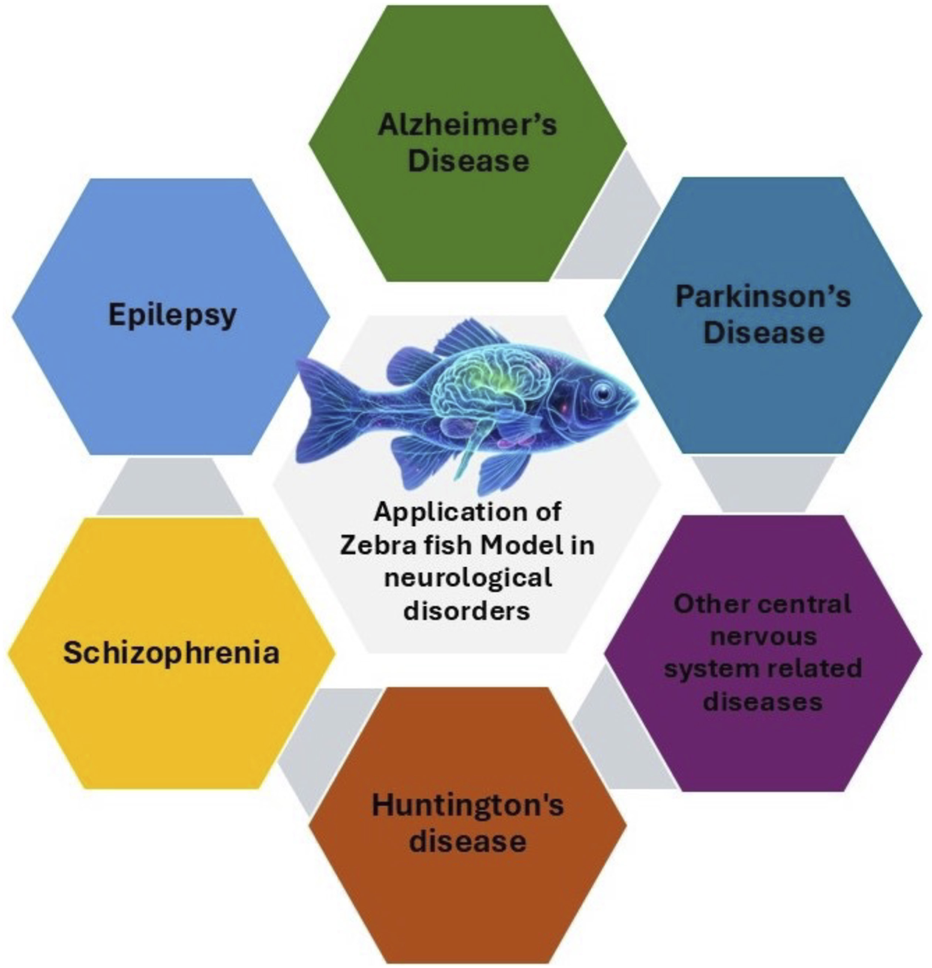
Introduction
The effects of neurodegenerative diseases are difficult to treat, and by advancements in the sciences, the models and uses of alternative therapeutic agents are revolutionizing the research field and central nervous system (CNS) related disorders, such as Alzheimer’s disease (AD), schizophrenia (SCZ), Huntington’s disease (HD), and Parkinson’s disease (PD), represent a significant global burden on society, affecting both the population and economy. CNS disorders are complex diseases with unclear causes, and only a few drugs are clinically effective (Pitchai et al., 2019). Natural products (NPs) are small molecules made from living things like plants, bacteria, and fungi. They are similar to secondary metabolites. Natural products (NPs) are the most promising source for drug discovery against single targets of new lead compounds, but they are not used enough. Crude extracts from NPs are a complicated mix of mostly unknown compounds, some of which could have harmful effects. About 30% of the best-selling drugs around the world are NPs or drugs that come from NPs. NPs are a great way to find new drug-like compounds, and their wide range of chemicals has helped scientists make drugs for a lot of different neurodegenerative diseases (Pitchai et al., 2019).
Model organisms, such as zebrafish, are non-human species utilised in laboratories to explore and comprehend biological phenomena due to their ease of maintenance, rapid reproduction, and amenability to large-scale breeding, facilitating the study of multiple generations concurrently (Leonelli and Ankeny, 2012). Zebrafish possess unique attributes, including their swift developmental pace, transparent embryos enabling easy observation, genetic similarity to humans, amenability to genetic manipulation, regenerative capabilities, and suitability for high-throughput screening. All of these contribute to their prominence in disease research and drug discovery (Dash and Patnaik, 2023). Their transparent embryos allow real-time visualization of cellular and molecular processes, facilitating the study of disease progression and aiding in the development of therapeutic interventions (Saleem and Kannan, 2018; Steenbergen et al., 2011; Little et al., 2021; Mukherjee et al., 2020). This review provides an in-depth analysis of the evolution of zebrafish models in exploring integration of zebrafish models with the discovery of natural products against the neurological disorders, with an emphasis on neurological disease applications and cutting-edge approaches (White et al., 2008). It also explores notable historical contributions, recent advancements, and exciting potential for elucidating neurodevelopmental mechanisms and untangling intricate neurological conditions.
Advantages of zebrafish models
Zebrafish models offer a multitude of advantages that have propelled their prominence in biomedical research (Steenbergen et al., 2011; Little et al., 2021; Mukherjee et al., 2020; White et al., 2008). Firstly, they provide an efficient platform for high-throughput drug screening, accelerating drug discovery and development. Their transparency during embryonic development allows for detailed observation of developmental processes and the impact of genetic mutations or environmental factors on disease onset (Postlethwait et al., 1998). Additionally, zebrafish possess remarkable regenerative capabilities, offering insights into tissue repair mechanisms that could inform regenerative medicine approaches. Their genetic similarity to humans enables the study of conserved molecular pathways and disease-related mechanisms (Woods et al., 2000; Howe et al., 2013; Norton and Bally-Cuif, 2010). Moreover, the rapid embryonic development of zebrafish allows for real-time visualization and manipulation of developmental processes, aiding in understanding congenital disabilities and organ formation. Their transparent embryos facilitate non-invasive observation of internal structures and cellular interactions, while advances in genetic manipulation techniques enable precise genome editing. Zebrafish behaviour can be quantified and studied, providing insights into neurological disorders, addiction, and stress responses (Lieschke and Currie, 2007). Furthermore, their optical clarity allows for visualization of fluorescently labelled cells and structures, aiding in the study of cell migration and differentiation. Finally, zebrafish are relatively cost-effective to maintain in the laboratory compared to other model organisms, making them an attractive choice for research endeavours (Giong et al., 2021) (Figure 1).
FIGURE 1
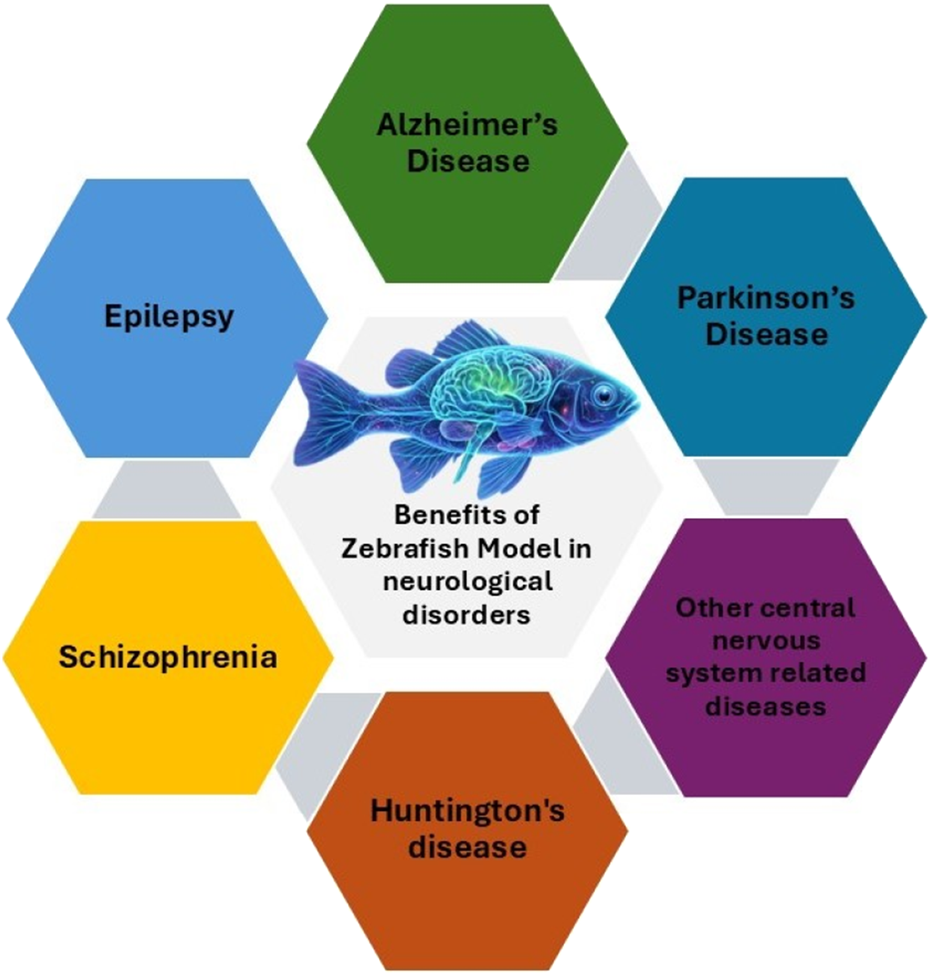
Application of zebrafish as a model organism.
Zebrafish, in contrast to C. elegans, possess the major organ systems found in vertebrates like humans, such as the heart, eyes, and kidneys, making them ideal for studying organ development (Martin et al., 2019). Notably, features like blood vessels can be observed at relatively low magnification. Martin et al. recently showcased the feasibility of deriving heart rate data from multiple zebrafish using a high-throughput platform with Andor’s Zyla 4.2 sCMOS camera (Gomes and Mostowy, 2020). About 80% of genes involved in human diseases have counterparts in zebrafish, making them versatile for targeted genetic manipulations (Haldi et al., 2006). Unlike mice, which have limited breeding capacity, adult zebrafish breed readily and produce large clutches of eggs every 10 days, facilitating research with multiple offspring (Martin et al., 2019). Zebrafish embryos are externally laid and fertilized, allowing easy manipulation, including in vitro fertilization and genetic modifications through DNA or RNA injections. This is more complicated in mice due to their internal development and the need for embryo transplantation. Moreover, zebrafish embryos’ transparency permits real-time observation of development under a microscope and visualization of fluorescently labeled tissues in transgenic lines, which is not feasible in opaque mouse embryos. However, zebrafish may not be suitable for studying diseases caused by genes absent in zebrafish or those predominantly affecting tissues absent in zebrafish anatomy, such as the prostate or mammary glands.
Zebrafish models in neuronal development
Zebrafish have emerged as an invaluable model for investigating both neuronal development and neurological disorders, thanks to their see-through embryos, easy-to-edit genes, and surprising similarities to the human nervous system (Gomes and Mostowy, 2020; Haldi et al., 2006; Shams et al., 2018). This versatility allows researchers to observe real-time biological processes, manipulate genes, and rapidly screen potential therapeutic compounds, accelerating discoveries in neuroscience. Zebrafish serve as a prime model for understanding the intricacies of neuronal differentiation, migration, and circuit formation (Sakai et al., 2018). Originally used to explore the basics of embryonic growth, these tiny fish have helped scientists dig deeper into how neurons form, move, and connect, shedding light on the molecular pathways and gene networks that shape the brain (Sakai et al., 2018; Panula et al., 2010). Zebrafish contain orthologs for approximately 70% of human genes. Their brain structure, chemical signalling, and even behaviours share striking parallels with humans, making zebrafish a fantastic tool for unraveling the mysteries of the nervous system, its disorders (autism, Alzheimer’s disease, or epilepsy) (Panula et al., 2010; Spence et al., 2008; Bandmann and Burton, 2010; Bashirzade et al., 2022; Wang et al., 2021; Grone and Baraban, 2015), and even the new treatment discoveries (Paquet et al., 2010).
Neurological disorders–autism spectrum disorders (ASD)
Zebrafish have been game-changers in understanding conditions like autism spectrum disorders (ASD) (Sager et al., 2010; Wasel and Freeman, 2020; Stewart et al., 2015). Zebrafish are valuable in ASD research because their behaviours, like social interactions, repetitive habits, and cognitive flexibility, mirror those seen in humans and rodents (Tayanloo-Beik et al., 2022; Iyer and Girirajan, 2015; Rea and Van Raay, 2020). The Simons Foundation Autism Research Initiative (SFARI) has pinpointed 12 ASD-related genes with validated zebrafish models, letting researchers zoom in on how specific genes contribute to ASD (Newman et al., 2014). Monogenic zebrafish models of ASDs are readily available, allowing researchers to investigate the role of individual genes in ASD pathology. Unlike rodent models, zebrafish knockout models can be studied using only one gene in an ortholog pair, simplifying genetic investigations. The zebrafish’s version of the stress response system, called the hypothalamic-pituitary-interrenal (HPI) axis, works much like the human hypothalamic-pituitary-adrenal (HPA) axis, releasing cortisol under stress and offering a great way to study stress-related aspects of ASD. Furthermore, drugs can be added to the water to test potential treatments, and their transparent bodies let scientists watch processes like axon movement in real time, deepening our understanding of ASD’s roots.
Neurological disorders–Alzheimer’s disease
The Danio rerio genome shows a lot of similarities to the human genome, with about 80% of genes that are linked to human diseases also having zebrafish orthologs. This genetic similarity extends to the neuroanatomical and neurochemical pathways of the zebrafish brain, which closely resemble those of the human brain, and this type of evolutionary conservation includes neurotransmitter systems like dopaminergic, serotonergic, GABAergic, and cholinergic pathways. It supports zebrafish as a great model for studying different neurological disorders (Adhish and Manjubala, 2023; Choi et al., 2021; Chia et al., 2022; Verma et al., 2022).
Zebrafish serve as effective models for human diseases and biological research throughout various stages of drug development and toxicity testing (Geng and Peterson, 2019). They are especially suitable for pathological studies due to their numerous advantages. The embryonic and larval stages of zebrafish provide valuable insights into neuronal development, cell migration, and disease progression in real time without the need for invasive procedures (Geng and Peterson, 2019; Cassar et al., 2020; Habjan et al., 2024). Additionally, the similarities in behavioral patterns, either physiological, emotional, or social, between zebrafish and humans enable extensive behavioral phenotyping for neurological disorders (Wang et al., 2025; Saleem and Kannan, 2018) Zebrafish model is valuable for studying Alzheimer’s (Saleem and Kannan, 2018; Thawkar and Kaur, 2021; Javed et al., 2019; Cosacak et al., 2017) by mimicking key disease features, like amyloid-beta (Aβ) plaques and tau protein tangles, through genetic tweaks or drug treatments (Cosacak et al., 2017; Stewart et al., 2012). These models give us a window into how AD develops and help test new therapies, though there are hurdles, like inconsistent drug absorption in water and the lack of a zebrafish-specific Aβ peptide. Interestingly, their ability to regrow neurons, which can complicate studying degeneration, also opens exciting possibilities for exploring ways to repair brain damage in neurodegenerative diseases.
Rihel et al., 2010 provide insight on zebrafish AD readouts which contains (1) biochemical assays in brain homogenates (AChE inhibition), (2) Aβ peptide injections or chemical induction (Aβ toxicity models), (3) transgenic overexpression of human tau variants and assessment of tau phosphorylation/neuronal loss (tauopathy models), and (4) behavioural endpoints for high-throughput phenotypic profiling. Tests may ascertain if a natural substance mitigates Aβ/tau toxicity, enhances behaviour, or alters neuroinflammation, prompting additional investigations in mice (Rihel et al., 2010; Nelson and Granato, 2022).
Behavioural phenotyping using techniques such as larval locomotion, light/dark preferences, habituation tasks, and social/cognitive proxies allows for sensitive, high-throughput screening of natural-product libraries. This method, exemplified by the Rihel behavioural profile technique, helps in clustering chemicals with common effects. Initial screenings typically involve zebrafish brain homogenates or ex vivo enzymatic assays following the exposure of larvae or adults to natural products, including alkaloids and flavonoids, assessing acetylcholinesterase (AChE) inhibition (Rihel et al., 2010; Pitchai et al., 2018). The use of zebrafish for isolating AChE inhibitors, such as trans-tephrostachin, highlights the efficacy of whole-organism phenotyping alongside biochemical validation. Furthermore, models simulating amyloid-beta (Aβ) toxicity, like microinjections or expression lines, demonstrate quantifiable toxicity that can be alleviated by natural products, improving survival rates, reducing neuronal death, and promoting behavioural recovery (Javed et al., 2019; Liu, 2023). These models assist in identifying compounds that minimize Aβ aggregation, oxidative stress, and subsequent toxicity. Moreover, tauopathy models utilizing transgenic zebrafish with human tau mutations enable the measurement of tau phosphorylation, aggregation, neuronal loss, and motor dysfunction. Although these models are less common compared to Aβ evaluations, they are becoming increasingly prevalent for exploring the anti-tau effects of natural substances. Finally, fluorescence reporters are employed to ascertain whether a candidate affects neuroinflammation or apoptosis, providing valuable mechanistic insights into Alzheimer’s disease pathogenesis (Javed et al., 2019; Liu, 2023; Dey et al., 2024).
Neurological disorders–epilepsy
Zebrafish are emerging as a powerful tool in epilepsy research due to their fast reproduction, quick development, and low maintenance costs (Yaksi et al., 2021; Chitolina et al., 2023). Researchers can trigger seizure-like behaviors using trauma, genetics, or chemicals like PTZ, AG, EKP, and kainate, giving them flexible ways to study what causes seizures, epileptiform discharges, and underlying mechanisms (Ochenkowska et al., 2022; Mandrekar and Thakur, 2009). High-resolution imaging and movement tracking let scientists screen drugs rapidly, with promising candidates validated through brain activity recordings in larvae before moving to rodent studies. This highlights zebrafish’s power to push epilepsy research and drug discovery forward.
Zebrafish models, with their genetic and physiological parallels to humans, have transformed how we study brain development and neurological disorders (Balkrishna et al., 2021). Their ability to let us watch processes in real time, tweak genes, and test drugs quickly has provided critical insights into disease mechanisms and potential treatments. By filling gaps in our understanding and complementing other model systems, zebrafish are helping tackle some of the biggest challenges in neurology, paving the way for new therapies.
Application of the zebrafish model in natural products screening and bioactivity-guided isolation
The zebrafish (Danio rerio) usage in natural product drug discovery is an emerging important in vivo model. The natural product research starts from crude extract, fractionation, and isolation of pure compounds. Novel compounds will be screened using in vitro studies, like whole cells, cell fractions, and recombinant enzymes. Initially, zebrafish models were established to understand the embryonic development of humans/mice. Later, it became an excellent model due to its ease of maintenance, high reproducibility, and optically transparent embryos (Crawford et al., 2008). High-throughput screening is possible with zebrafish, with advantages including being an in vivo model, low cost, and requiring fewer compounds.
Some of the examples are described below (Table 1):
TABLE 1
| Compound/Type | Disease/Condition | Effect | References |
|---|---|---|---|
| Chyawanprash (Ayurvedic medicinal food) | Inflammation (LPS-induced in zebrafish) | Anti-inflammatory; reduced IL-6, TNF-α, IL-1β expression, fever, hyperventilation, fin loss | Crawford et al. (2011) |
| Angelica sinensis extract | Angiogenesis-related disorders | Pro-angiogenic; stimulated proliferation, migration, and tube formation in HUVEC | Bohni et al. (2013) |
| Compounds from Tripterygium wilfordii | Angiogenesis | Anti-angiogenic; identified via zebrafish embryo histochemistry | Pitchai et al. (2019) |
| Δ9-Tetrahydrocannabinol (marijuana) | Neurotoxicity screening | Psychoactive; tested in zebrafish embryos | Rihel et al. (2010) |
| Arecoline (betel nut) | Neurotoxicity screening | Psychoactive; zebrafish embryos | Rihel et al. (2010) |
| Solenopsin (Solenopsis invicta, fire ants) | Angiogenesis | Anti-angiogenic activity in zebrafish | Zon and Peterson (2005) |
| Oxygonum sinatum extract | Angiogenesis | Inhibited vascular development in zebrafish (fli-1:EGFP model) | Rihel et al. (2010) |
| Plectranthus barbatus extract | Angiogenesis | Inhibited vascular development | Zon and Peterson (2005) |
| Emodin and coleon A lactone (from P. barbatus) | Angiogenesis | Anti-angiogenic | Zon and Peterson (2005) |
| Isoflavone derivatives (Rhynchosia viscosa): genistein, sophoraisoflavone A | Angiogenesis, inflammation | Anti-angiogenic and anti-inflammatory activity in zebrafish embryos | Kithcart and MacRae (2017) |
| Paniculonin A, Paniculonin B (Solanum torvum) | Convulsions | Anti-convulsant activity | Pitchai et al. (2019) |
| Trans-tephrostachin (Tephrosia purpurea) | Neurodegeneration (acetylcholinesterase-related) | Anti-acetylcholinesterase activity | MacRae and Peterson (2015) |
| Polyphenols (e.g., curcumin, resveratrol) | Alzheimer’s disease | Antioxidant and anti-inflammatory; improved behavior, enhanced brain delivery | Pitchai et al. (2019), Kehinde et al. (2025) |
| Saponins and ginsenosides | Alzheimer’s disease | Improved cognitive function; modulated neurotrophic signaling pathways | Yang et al. (2025) |
| Flavonoid glycosides and essential oils | Alzheimer’s disease | Reduced acetylcholinesterase activity; improved behavioral outcomes | Wang et al. (2021) |
| Marine alkaloids (e.g., isoquinoline alkaloids) | Alzheimer’s disease | Neuroactive | Aktary et al. (2025) |
Natural products screening in zebrafish models associated with neurological diseases.
A study utilized a zebrafish model to demonstrate the anti-inflammatory effects of Chyawanprash, an Ayurvedic medicinal food. Pre-treatment with Chyawanprash significantly protected zebrafish from LPS-induced inflammatory pathology, such as behavioral fever, hyperventilation, loss of caudal fins, and reduced the expression of key pro-inflammatory cytokines like IL-6, TNF-α, and IL-1β (Crawford et al., 2011). The proangiogenic properties of Angelica sinensis extract were demonstrated using a transgenic zebrafish model. It evidenced the extract’s ability to stimulate proliferation, migration, and tube formation in HUVEC (human umbilical vein endothelial cells) (Bohni et al., 2013).
Anti-angiogenic compounds were isolated from Tripterygium wilfordii through a bioactivity-guided isolation using whole-mount histochemistry in zebrafish embryos (Pitchai et al., 2019). Zebrafish bioassay-guided fractionation was successfully used to isolate cyclopamine, a steroidal Veratrum alkaloid, known for its ability to induce cyclopia through inhibition of Hedgehog signaling. Abnormal Hedgehog signaling was observed in several cancers, including basal cell carcinoma (Pitchai et al., 2018).
Zebrafish embryos are used to evaluate the embryotoxicity of natural products, including flavonoids and alkaloids (Rihel et al., 2010). Delta-9-tetrahydrocannabinol, a psychoactive compound, was isolated from marijuana, and arecoline from betel nuts (Rihel et al., 2010). The alkaloid solenopsin, isolated from Solenopsis invicta (fire ants), with anti-angiogenic activity, was characterized using a zebrafish model (Zon and Peterson, 2005). Plant extracts of Oxygonum sinatum and Plectranthus barbatus inhibited vascular development in fli-1:EGFP transgenic zebrafish model, demonstrating their anti-angiogenesis activity. Further, bio-activity guided fractionation led to the isolation of active compounds emodin and coleon A lactone (Rihel et al., 2010; Zon and Peterson, 2005). Novel isoflavone derivatives were isolated from the methanolic extract of Rhynchosia viscosa through bioactivity-guided fractionation. Compounds, including genistein and sophoraisoflavone A, exhibited both anti-angiogenic and anti-inflammatory activity in fli-1:EGFP transgenic zebrafish embryos (Kithcart and MacRae, 2017).
Paniculonin A and paniculonin B, anti-convulsant compounds, were isolated from the methanolic extract of Solanum torvum leaves (Pitchai et al., 2019). Trans-tephrostachin, an anti-acetylcholinesterase compound, was isolated from the leaf extract of Tephrosia purpurea (MacRae and Peterson, 2015).
Zebrafish larvae, due to their sensitivity to neuroactive compounds, are widely used in behavioral assays, such as light/dark transitions and locomotor tracking, to evaluate neurotoxicity and screen for potential therapeutics targeting neurodegenerative diseases (Canedo et al., 2022).
Zebrafish are also employed for early toxicity screening, including teratogenicity, hepatotoxicity, and cardiotoxicity of natural products. This dual role in testing both effectiveness and safety helps quickly identify the most promising drug candidates early in the discovery pipeline (Elmonem et al., 2018). However, compound solubility and uptake via waterborne exposure need careful consideration during experimental design (Elmonem et al., 2018). In summary, the zebrafish model provides a unique and cost-effective platform for the screening of natural products, combining high-throughput capabilities with vertebrate biological relevance (MacRae and Peterson, 2015). Its application has accelerated the identification of lead compounds with therapeutic potential and provided critical insights into their mechanisms of action.
Natural products and neurophenotyping endpoints in zebrafish models of Alzheimer’s disease
Zebrafish are a useful in vivo model for studying Alzheimer’s disease (AD) because their neuroanatomy and neurotransmitter systems are like those of humans, and they have beneficial traits like being very fertile and clear to see through. These characteristics enable the swift evaluation of natural products (NPs) for prospective therapeutic effects prior to mammalian testing. Recent research shows that zebrafish can reproduce essential features of Alzheimer’s disease (AD), such as amyloid and tau pathology, cholinergic deficits, and neuroinflammation. This makes them a promising platform for early drug discovery (Wang et al., 2021).
Past studies provide insights that are concentrated on diverse categories of NPs, encompassing (
Table 1):
Polyphenols (e.g., curcumin, resveratrol): These substances have antioxidant and anti-inflammatory effects that improve behaviour and normalise biomarkers in zebrafish AD models, especially when they are made to work better in the brain (Pitchai et al., 2019; Kehinde et al., 2025).
Saponins and ginsenosides: Systematic preclinical analyses have shown that these compounds may improve cognitive function and affect neurotrophic signalling pathways (70).
Flavonoid glycosides and essential oils: Certain compounds have been associated with diminished acetylcholinesterase activity and enhanced behavioural results in zebrafish models of Alzheimer’s disease (Wang et al., 2021).
Marine alkaloids: Substances such as isoquinoline alkaloids have been recognised for their neuroactivity, underscoring the potential of marine natural products in Alzheimer’s disease research (Aktary et al., 2025).
A multidimensional phenotyping approach is crucial for evaluating the efficacy of these NPs, employing behavioural endpoints (e.g., locomotor activity, startle response, sleep profiling) and cognitive assays in adults to validate findings from larval screens. Imaging methods like GCaMP calcium imaging and amyloid plaque imaging help us understand how neurons work and how much amyloid is in the brain. Moreover, molecular and biochemical endpoints, such as AChE activity assays and biomarker quantification, provide mechanistic insights into the protective effects of natural products against neurotoxicity (Pal et al., 2025; Pham et al., 2016).
Overall, zebrafish models provide a strong platform for finding and testing natural products that target Alzheimer’s disease. This is because they use a wide range of methods, including behavioural, imaging, and molecular tests.
Challenges and considerations
Although zebrafish models have become indispensable tools in neuropharmacological research, several challenges, including differences in brain complexity or behavioural analysis limitations, constrain their translational accuracy. A primary concern lies in the differences in brain complexity and organization compared with mammals. The absence of higher cortical regions restricts the modeling of advanced cognitive and emotional processes, making it necessary to interpret behavioural endpoints, such as anxiety- or depression-like phenotypes, with caution (Shams et al., 2018; Canedo et al., 2022; Elmonem et al., 2018).
Additionally, behavioural assays in zebrafish can be influenced by external factors, including lighting, tank geometry, and stress responses, introducing variability in experimental outcomes. To solve this, the implementation of AI-assisted tracking systems and automated behavioural scoring is now helping to enhance reproducibility and minimize observer bias.
Discrepancies in neurochemical pathways and immune responses between zebrafish and humans may further affect the translation of pharmacological and disease findings. Integrative strategies that combine multi-omics profiling and cross-species validation are therefore essential to strengthen predictive accuracy. Furthermore, the short lifespan and rapid development of zebrafish limit their application in modeling chronic or late-onset neurological disorders. Recent progress in inducible genetic approaches and longitudinal live-imaging techniques offers promising solutions to extend the temporal study window. One of the examples of a successful approach is the Endothelin-1-induced experimental zebrafish stroke model (Chavda et al., 2021). Further, ethical compliance, guided by the 3R principles (Replacement, Reduction, and Refinement), remains a fundamental consideration in all zebrafish-based studies.
Future perspectives
Future efforts should prioritize enhancing the translational and mechanistic depth of zebrafish research. The integration of CRISPR-Cas9 gene editing, real-time calcium imaging, and optogenetic technologies is expanding opportunities to dissect neural circuitry with higher precision. Combining zebrafish data with mammalian and in vitro systems can further bridge mechanistic insights across biological scales.
Advances in AI-driven behavioural analytics and high-throughput drug screening will accelerate the identification of neuroactive compounds. Moreover, coupling zebrafish findings with genomic and patient-derived datasets may enable the development of personalized therapeutic strategies. Collectively, these innovations position zebrafish as a robust and evolving platform for elucidating neural mechanisms and advancing translational neuroscience.
Conclusion
Zebrafish models have demonstrated their effectiveness in unravelling the mechanisms underlying various human diseases. Their unique attributes make them a valuable tool for natural products screening and disease research, enabling the exploration of disease pathogenesis, drug discovery, and potential therapeutic interventions. While zebrafish have limitations, their contributions to biomedical research are undeniable, fostering advancements in our understanding of human diseases. The exceptional advantages offered by zebrafish models have revolutionized biomedical research across multiple disciplines. Their genetic similarity, rapid development, transparency, and regenerative capabilities provide unique insights into fundamental biological processes and complex diseases. As zebrafish research techniques continue to evolve, their contributions are poised to further enhance our understanding of biology and accelerate therapeutic discoveries for human health. Zebrafish models have played a pivotal role in unravelling the mysteries of neuronal development and associated disorders. Their ability to recapitulate disease phenotypes, combined with their genetic tractability and rapid development, positions them as an indispensable tool in neuroscience research. As we venture into the future, zebrafish models promise to illuminate the complexities of neurodevelopmental disorders, potentially leading to innovative therapeutic strategies for individuals affected by these conditions.
Statements
Author contributions
AC: Conceptualization, Writing – original draft. TR: Formal Analysis, Writing – review and editing. RS: Conceptualization, Writing – original draft. AD: Writing – review and editing. MS: Writing – original draft. MK: Formal Analysis, Funding acquisition, Validation, Writing – review and editing.
Funding
The author(s) declared that financial support was received for this work and/or its publication. This study was supported by grants from the National Science and Technology Council (NSTC), Taiwan (NSTC 114-2320-B-037-020-MY3 and 113‐2320‐B‐037‐023, granted to MK and NSYSU‐KMU joint research project (NSYSU‐KMU‐114‐P16) awarded to MK.
Acknowledgments
AC and other authors are grateful to the Chancellor, Shoolini University, for continuous motivation and support. Also, the authors are grateful to the Drug Chemistry Research Centre for their support in the manuscript preparation.
Conflict of interest
The author(s) declared that this work was conducted in the absence of any commercial or financial relationships that could be construed as a potential conflict of interest.
Generative AI statement
The author(s) declared that generative AI was used in the creation of this manuscript. Generative AI was used to improve grammar and clarity of the manuscript. All content was critically reviewed and finalized by the author(s).
Any alternative text (alt text) provided alongside figures in this article has been generated by Frontiers with the support of artificial intelligence and reasonable efforts have been made to ensure accuracy, including review by the authors wherever possible. If you identify any issues, please contact us.
Publisher’s note
All claims expressed in this article are solely those of the authors and do not necessarily represent those of their affiliated organizations, or those of the publisher, the editors and the reviewers. Any product that may be evaluated in this article, or claim that may be made by its manufacturer, is not guaranteed or endorsed by the publisher.
References
1
Adhish M. Manjubala I. (2023). “Effectiveness of zebrafish models in understanding human diseases—A review of models,”, 1. Elsevier Ltd March. 10.1016/j.heliyon.2023.e14557
2
Aktary N. Jeong Y. Oh S. Shin Y. Sung Y. Rahman M. et al (2025). “Unveiling the therapeutic potential of natural products in Alzheimer’s disease: insights from in vitro, and clinical studies,” in Frontiers in pharmacology. (Lausanne, Switzerland: Frontiers Media SA). 10.3389/fphar.2025.1601712
3
Balkrishna A. Tomer M. Manik M. Srivastava J. Dev R. Haldar S. et al (2021). Chyawanprash, an ancient Indian ayurvedic medicinal food, regulates immune response in zebrafish model of inflammation by moderating inflammatory biomarkers. Front. Pharmacol.12, 751576. 10.3389/fphar.2021.751576
4
Bandmann O. Burton E. A. (2010). Genetic zebrafish models of neurodegenerative diseases. Neurobiol. Dis.40 (1), 58–65. 10.1016/j.nbd.2010.05.017
5
Bashirzade A. A. Zabegalov K. N. Volgin A. D. Belova A. S. Demin K. A. de Abreu M. S. et al (2022). Modeling neurodegenerative disorders in zebrafish. Neurosci. and Biobehav. Rev.138, 104679. 10.1016/j.neubiorev.2022.104679
6
Bohni N. Cordero-Maldonado M. L. Maes J. Siverio-Mota D. Marcourt L. Munck S. et al (2013). Integration of microfractionation, qNMR and zebrafish screening for the in vivo bioassay-guided isolation and quantitative bioactivity analysis of natural products. PLoS One8 (5), e64006. 10.1371/journal.pone.0064006
7
Canedo A. Saiki P. Santos A. L. Carneiro K. D. Souza A. M. Qualhato G. et al (2022). Zebrafish (Danio rerio) meets bioethics: the 10Rs ethical principles in research. Ciência Anim. Bras.23, e-70884. 10.1590/1809-6891v22e-70884
8
Cassar S. Adatto I. Freeman J. L. Gamse J. T. Iturria I. Lawrence C. et al (2020). Use of zebrafish in drug discovery toxicology. Chem. Res. Toxicol.33 (1), 95–118. 10.1021/acs.chemrestox.9b00335
9
Chavda V. Patel S. Alghamdi B. S. Ashraf G. M. (2021). Endothelin-1 induced global ischaemia in adult zebrafish: a model with novel entity of stroke research. J. Chem. Neuroanat.118, 102025. 10.1016/j.jchemneu.2021.102025
10
Chia K. Klingseisen A. Sieger D. Priller J. (2022). Zebrafish as a model organism for neurodegenerative disease. Front. In Mol. Neurosci. Front. Media S.A. Oct.13, 940484. 10.3389/fnmol.2022.940484
11
Chitolina R. Gallas-Lopes M. Reis C. G. Benvenutti R. Stahlhofer-Buss T. Calcagnotto M. E. et al (2023). Chemically-induced epileptic seizures in zebrafish: a systematic review. Epilepsy Res.1, 107236. 10.1016/j.eplepsyres.2023.107236
12
Choi T. Y. Choi T. I. Lee Y. R. Choe S. K. Kim C. H. (2021). “Zebrafish as an animal model for biomedical research,” in Experimental and molecular medicine. Springer Nature, 310–317. 10.1038/s12276-021-00571-5
13
Cosacak M. I. Bhattarai P. Bocova L. Dzewas T. Mashkaryan V. Papadimitriou C. et al (2017). Human TAUP301L overexpression results in TAU hyperphosphorylation without neurofibrillary tangles in adult zebrafish brain. Sci. Rep.7 (1), 12959. 10.1038/s41598-017-13311-5
14
Crawford A. D. Esguerra C. V. de Witte P. A. (2008). Fishing for drugs from nature: zebrafish as a technology platform for natural product discovery. Planta Medica74 (06), 624–632. 10.1055/s-2008-1034374
15
Crawford A. D. Liekens S. Kamuhabwa A. R. Maes J. Munck S. Busson R. et al (2011). Zebrafish bioassay-guided natural product discovery: isolation of angiogenesis inhibitors from East African medicinal plants. PLoS One6 (2), e14694. 10.1371/journal.pone.0014694
16
Dash S. N. Patnaik L. (2023). Flight for fish in drug discovery: a review of zebrafish-based screening of molecules. Biol. Lett.19 (8), 20220541. 10.1098/rsbl.2022.0541
17
Dey S. Thamaraikani T. Vellapandian C. (2024). Advancing alzheimer’s research with zebrafish models: current insights, addressing challenges, and charting future courses. Cureus16, e66935. 10.7759/cureus.66935
18
Elmonem M. A. Berlingerio S. P. Van den Heuvel L. P. De Witte P. A. Lowe M. Levtchenko E. N. (2018). Genetic renal diseases: the emerging role of zebrafish models. Cells7 (9), 130. 10.3390/cells7090130
19
Geng Y. Peterson R. T. (2019). “The zebrafish subcortical social brain as a model for studying social behavior disorders,” in DMM disease models and mechanisms. (Cambridge, United Kingdom: Company of Biologists Ltd.). 10.1242/dmm.039446
20
Giong H. K. Subramanian M. Yu K. Lee J. S. (2021). Non-rodent genetic animal models for studying tauopathy: review of drosophila, zebrafish, and C. elegans models. Int. J. Mol. Sci.22 (16), 8465. 10.3390/ijms22168465
21
Gomes M. C. Mostowy S. (2020). The case for modeling human infection in zebrafish. Trends Microbiol.28 (1), 10–18. 10.1016/j.tim.2019.08.005
22
Grone B. P. Baraban S. C. (2015). Animal models in epilepsy research: legacies and new directions. Nat. Neurosci.18 (3), 339–343. 10.1038/nn.3934
23
Habjan E. Schouten G. K. Speer A. Van Ulsen P. Bitter W. (2024). “Diving into drug-screening: zebrafish embryos as an in vivo platform for antimicrobial drug discovery and assessment,”, 1. Oxford University Press May. 10.1093/femsre/fuae011
24
Haldi M. Ton C. Seng W. L. McGrath P. (2006). Human melanoma cells transplanted into zebrafish proliferate, migrate, produce melanin, form masses, and stimulate angiogenesis in zebrafish. Angiogenesis9, 139–151. 10.1007/s10456-006-9040-2
25
Howe K. Clark M. D. Torroja C. F. Torrance J. Berthelot C. Muffato M. et al (2013). The zebrafish reference genome sequence and its relationship to the human genome. Nature496 (7446), 498–503. 10.1038/nature12111
26
Iyer J. Girirajan S. (2015). Gene discovery and functional assessment of rare copy-number variants in neurodevelopmental disorders. Briefings Funct. Genomics14 (5), 315–328. 10.1093/bfgp/elv018
27
Javed I. Peng G. Xing Y. Yu T. Zhao M. Kakinen A. et al (2019). Inhibition of amyloid beta toxicity in zebrafish with a chaperone-gold nanoparticle dual strategy. Nat. Commun.10 (1), 3780. 10.1038/s41467-019-11762-0
28
Kehinde S. A. Lin W. P. Lay B. B. Phyo K. Y. San M. M. Pattanayaiying R. et al (2025). “Curcumin and dementia: a systematic review of its effects on oxidative stress and cognitive outcomes in animal models,” in International journal of molecular sciences. Multidisciplinary Digital Publishing Institute (Basel, Switzerland: MDPI). 10.3390/ijms26147026
29
Kithcart A. MacRae C. A. (2017). Using zebrafish for high-throughput screening of novel cardiovascular drugs. JACC. Basic Transl. Sci.2 (1), 1–12. 10.1016/j.jacbts.2017.01.004
30
Leonelli S. Ankeny R. A. (2012). Re-thinking organisms: the impact of databases on model organism biology. Stud. Hist. Philosophy Sci. Part C Stud. Hist. Philosophy Biol. Biomed. Sci.43 (1), 29–36. 10.1016/j.shpsc.2011.10.003
31
Lieschke G. J. Currie P. D. (2007). Animal models of human disease: zebrafish swim into view. Nat. Rev. Genet.8 (5), 353–367. 10.1038/nrg2091
32
Little A. G. Pamenter M. E. Sitaraman D. Templeman N. M. Willmore W. G. Hedrick M. S. et al (2021). Utilizing comparative models in biomedical research. Comp. Biochem. Physiology Part B Biochem. Mol. Biol.255, 110593. 10.1016/j.cbpb.2021.110593
33
Liu Y. (2023). “Zebrafish as a model organism for studying pathologic mechanisms of neurodegenerative diseases and other neural disorders,” in Cellular and molecular neurobiology. Springer, 2603–2620. 10.1007/s10571-023-01340-w
34
MacRae C. A. Peterson R. T. (2015). Zebrafish as tools for drug discovery. Nat. Rev. Drug Discov.14 (10), 721–731. 10.1038/nrd4627
35
Mandrekar N. Thakur N. L. (2009). Significance of the zebrafish model in the discovery of bioactive molecules from nature. Biotechnol. Lett.31, 171–179. 10.1007/s10529-008-9868-1
36
Martin W. K. Tennant A. H. Conolly R. B. Prince K. Stevens J. S. DeMarini D. M. et al (2019). High-throughput video processing of heart rate responses in multiple wild-type embryonic zebrafish per imaging field. Sci. Rep.9 (1), 145. 10.1038/s41598-018-35949-5
37
Mukherjee S. Madamsetty V. S. Bhattacharya D. Roy Chowdhury S. Paul M. K. Mukherjee A. (2020). Recent advancements of nanomedicine in neurodegenerative disorders theranostics. Adv. Funct. Mater.30 (35), 2003054. 10.1002/adfm.202003054
38
Nelson J. C. Granato M. (2022). Zebrafish behavior as a gateway to nervous system assembly and plasticity. Dev. Camb.149 (9), dev177998. 10.1242/dev.177998
39
Newman M. Ebrahimie E. Lardelli M. (2014). Using the zebrafish model for Alzheimer’s disease research. Front. Genet.5, 89269. 10.3389/fgene.2014.00189
40
Norton W. Bally-Cuif L. (2010). Adult zebrafish as a model organism for behavioural genetics. BMC Neurosci.11, 1. 10.1186/1471-2202-11-90
41
Ochenkowska K. Herold A. Samarut É. (2022). Zebrafish is a powerful tool for precision medicine approaches to neurological disorders. Front. Mol. Neurosci.15, 944693. 10.3389/fnmol.2022.944693
42
Pal S. Tarafder B. Dey D. Firdous S. M. (2025). Neurobehavioral effects and brain GFAP modulation by Mimosa pudica extract in zebrafish exposed to zinc oxide nanoparticles. J. Basic Appl. Zoology86 (1), 64. 10.1186/s41936-025-00484-z
43
Panula P. Chen Y. C. Priyadarshini M. Kudo H. Semenova S. Sundvik M. et al (2010). The comparative neuroanatomy and neurochemistry of zebrafish CNS systems of relevance to human neuropsychiatric diseases. Neurobiol. Dis.40 (1), 46–57. 10.1016/j.nbd.2010.05.010
44
Paquet D. Schmid B. Haass C. (2010). Transgenic zebrafish as a novel animal model to study tauopathies and other neurodegenerative disorders in vivo. Neurodegener. Dis.7 (1-3), 99–102. 10.1159/000285515
45
Pham D. H. De Roo B. Nguyen X. B. Vervaele M. Kecskés A. Ny A. et al (2016). Use of zebrafish larvae as a multi-endpoint platform to characterize the toxicity profile of silica nanoparticles. Sci. Rep.6, 37145. 10.1038/srep37145
46
Pitchai A. Nagarajan N. Vincent S. G. P. Rajaretinam R. K. (2018). Zebrafish bio-assay guided isolation of human acetylcholinesterase inhibitory trans-tephrostachin from Tephrosia purpurea (L.) pers. Neurosci. Lett.687, 268–275. 10.1016/j.neulet.2018.09.058
47
Pitchai A. Rajaretinam R. K. Freeman J. L. (2019). Zebrafish as an emerging model for bioassay-guided natural product drug discovery for neurological disorders. Medicines6 (2), 61. 10.3390/medicines6020061
48
Postlethwait J. Amores A. Force A. Yan Y. L. (1998). The zebrafish genome. Methods Cell Biol.60, 149–163. 10.1016/S0091-679X(08)60377-X
49
Rea V. Van Raay T. J. (2020). Using zebrafish to model autism spectrum disorder: a comparison of ASD risk genes between zebrafish and their Mammalian counterparts. Front. Mol. Neurosci.13, 575575. 10.3389/fnmol.2020.575575
50
Rihel J. Prober D. A. Arvanites A. Lam K. Zimmerman S. Jang S. et al (2010). Zebrafish behavioral profiling links drugs to biological targets and rest/wake regulation. Science327 (5963), 348–351. 10.1126/science.1183090
51
Sager J. J. Bai Q. Burton E. A. (2010). Transgenic zebrafish models of neurodegenerative diseases. Brain Struct. Funct.214, 285–302. 10.1007/s00429-009-0237-1
52
Sakai C. Ijaz S. Hoffman E. J. (2018). Zebrafish models of neurodevelopmental disorders: past, present, and future. Front. Mol. Neurosci.11, 294. 10.3389/fnmol.2018.00294
53
Saleem S. Kannan R. R. (2018). Zebrafish: an emerging real-time model system to study Alzheimer’s disease and neurospecific drug discovery. Cell Death Discov.4 (1), 45. 10.1038/s41420-018-0109-7
54
Shams S. Rihel J. Ortiz J. G. Gerlai R. (2018). The zebrafish as a promising tool for modeling human brain disorders: a review based upon an IBNS symposium. Neurosci. and Biobehav. Rev.85, 176–190. 10.1016/j.neubiorev.2017.09.002
55
Spence R. Gerlach G. Lawrence C. Smith C. (2008). The behaviour and ecology of the zebrafish, Danio rerio. Biol. Rev.83 (1), 13–34. 10.1111/j.1469-185X.2007.00030.x
56
Steenbergen P. J. Richardson M. K. Champagne D. L. (2011). The use of the zebrafish model in stress research. Prog. Neuro-Psychopharmacology Biol. Psychiatry35 (6), 1432–1451. 10.1016/j.pnpbp.2010.10.010
57
Stewart A. M. Desmond D. Kyzar E. Gaikwad S. Roth A. Riehl R. et al (2012). Perspectives of zebrafish models of epilepsy: what, how and where next?Brain Res. Bull.87 (2-3), 135–143. 10.1016/j.brainresbull.2011.11.020
58
Stewart A. M. Ullmann J. F. Norton W. H. Parker M. O. Brennan C. H. Gerlai R. et al (2015). Molecular psychiatry of zebrafish. Mol. Psychiatry20 (1), 2–17. 10.1038/mp.2014.128
59
Tayanloo-Beik A. Hamidpour S. K. Abedi M. Shojaei H. Tavirani M. R. Namazi N. et al (2022). Zebrafish modeling of autism spectrum disorders, current status and future prospective. Front. Psychiatry13, 911770. 10.3389/fpsyt.2022.911770
60
Thawkar B. S. Kaur G. (2021). Zebrafish as a promising tool for modeling neurotoxin-induced Alzheimer’s disease. Neurotox. Res.39, 949–965. 10.1007/s12640-021-00343-z
61
Verma R. Raj Choudhary P. Kumar Nirmal N. Syed F. Verma R. (2022). Neurotransmitter systems in zebrafish model as a target for neurobehavioural studies. Mater. Today Proc.69, 1565–1580. 10.1016/j.matpr.2022.07.147
62
Wang X. Zhang J. B. He K. J. Wang F. Liu C. F. (2021). Advances of zebrafish in neurodegenerative disease: from models to drug discovery. Front. Pharmacol.12, 713963. 10.3389/fphar.2021.713963
63
Wang W. Gao X. Liu L. Guo S. Duan J. Xiao P. (2025). Zebrafish as a vertebrate model for high-throughput drug toxicity screening: mechanisms, novel techniques, and future perspectives. J. Pharm. Analysis15 (9), 101195. 10.1016/j.jpha.2025.101195
64
Wasel O. Freeman J. L. (2020). Chemical and genetic zebrafish models to define mechanisms of and treatments for dopaminergic neurodegeneration. Int. J. Mol. Sci.21 (17), 5981. 10.3390/ijms21175981
65
White R. M. Sessa A. Burke C. Bowman T. LeBlanc J. Ceol C. et al (2008). Transparent adult zebrafish as a tool for in vivo transplantation analysis. Cell Stem Cell2 (2), 183–189. 10.1016/j.stem.2007.11.002
66
Woods I. G. Kelly P. D. Chu F. Ngo-Hazelett P. Yan Y. L. Huang H. et al (2000). A comparative map of the zebrafish genome. Genome Res.10 (12), 1903–1914. 10.1101/gr.10.12.1903
67
Yaksi E. Jamali A. Diaz Verdugo C. Jurisch‐Yaksi N. (2021). Past, present and future of zebrafish in epilepsy research. FEBS J.288 (24), 7243–7255. 10.1111/febs.15694
68
Yang Y. Liang S. Xu M. Liu X. Guo Y. Gong J. et al (2025). Neuroprotection and enhanced learning and memory abilities of steamed American ginseng (Panax quinquefolium L.) based on zebrafish. Food Sci. Nutr.13 (6), e70369. 10.1002/fsn3.70369
69
Zon L. I. Peterson R. T. (2005). In vivo drug discovery in the zebrafish. Nat. Rev. Drug Discov.4 (1), 35–44. 10.1038/nrd1606
Summary
Keywords
Danio rerio , zebrafish model, neurological disease, high-throughput screening, regenerative abilities, Alzheimer’s disease
Citation
Chauhan A, Raviraj T, Sobti RC, Dutta A, Shukla MK and Korinek M (2026) Zebrafish models for neurological disorders: a platform for natural product-based drug discovery. Front. Nat. Prod. 4:1679580. doi: 10.3389/fntpr.2025.1679580
Received
04 August 2025
Revised
26 October 2025
Accepted
03 December 2025
Published
06 January 2026
Volume
4 - 2025
Edited by
Luciana Scotti, Federal University of Paraíba, Brazil
Reviewed by
Surjya Narayan Dash, University of Virginia, United States
Updates
Copyright
© 2026 Chauhan, Raviraj, Sobti, Dutta, Shukla and Korinek.
This is an open-access article distributed under the terms of the Creative Commons Attribution License (CC BY). The use, distribution or reproduction in other forums is permitted, provided the original author(s) and the copyright owner(s) are credited and that the original publication in this journal is cited, in accordance with accepted academic practice. No use, distribution or reproduction is permitted which does not comply with these terms.
*Correspondence: Monu Kumar Shukla, dr.shukla2025@gmail.com; Ranbir Chander Sobti, rcsobti@shooliniuniversity.com; Michal Korinek, michalk@kmu.edu.tw
ORCID: Thiyagarajan Raviraj, orcid.org/0009-0005-7548-4497; Ranbir Chander Sobti, orcid.org/0000-0002-2761-6898
Disclaimer
All claims expressed in this article are solely those of the authors and do not necessarily represent those of their affiliated organizations, or those of the publisher, the editors and the reviewers. Any product that may be evaluated in this article or claim that may be made by its manufacturer is not guaranteed or endorsed by the publisher.