AL
andreea l. cojocaru
University of Stavanger
Stavanger, Norway
2,993
Total downloads
21k
Total views and downloads
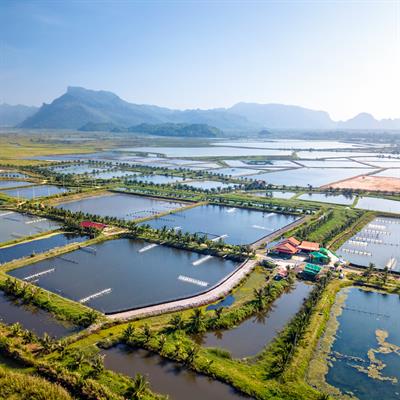
Aquatic foods play important roles in safeguarding both human and planetary well-being, by contributing to food security and nutrition goals. Aquaculture has been identified as a food sector with the potential to offer sustainable (e.g., lower GHG emissions) alternatives to terrestrial animal-sourced foods. Despite this, blue foods are often missing from food system analyses, policies, and investments. At the 2021 UN Food Systems Summit, the role of aquatic foods was mentioned in the pre-summit and throughout dialogues. One outcome of the summit, and one of the first times aquatic foods were taken into account, was a blue food coalition (with Iceland taking the lead). Albeit the opportunity to link terrestrial and aquatic systems in an integrated, systematic way to contribute to safe and healthy food systems, has not been grasped to its full potential.
A paradigm shift to one where agri-food production and aquatic food production are not considered separate systems using the best of both worlds could create resilient solutions for addressing challenges. Challenges include climate change and biodiversity loss. These aggravate already existing pressures such as spatial competition for arable land, sea level rise, increased demand for fresh drinking water, and the need for alternative protein diets. Before new solutions can be applied on a wide scale, the trade-offs and synergies must be understood on a system level, at economic, environmental, and social dimensions. One such example is the Ocean Forest Kelp project (Norway): production of seaweed does not require feed, fertilizer, fresh water, or land, rather, it grows based on sunlight and nutrients already present in surplus from human activities in the ocean. Seaweed contains a large range of nutrients that can be utilized by humans and livestock, and among other benefits, it partly blocks the production of methane gases in ruminants. In this vein, this Research Topic showcases similar opportunities and examples of synergies between agri-food and aquaculture production, examines barriers to enabling such synergies, and discusses potential policies and investments in support of "one food system".
This Research Topic welcomes submissions that address themes such as, but not limited to:
• Nature-inclusive aquaculture to support local communities (support local communities: livelihood and healthy food; SDGs 1-3, 8, 11, 12), biodiversity (life below water and on land; SDGs 14-15), and climate action (SDG 13)
• "One food system" perspective on diet/ food safety/ consumption, essential to fostering change in society as well as production at scale
• Innovative solutions to enable linkages between agri-food production and aquaculture production, and barriers to scaling these solutions in practice
• Analyses of policies and regulatory systems (not) providing incentives toward a "one food system" integrated approach
• Valuations of the economics of circular solutions constructed toward a "one food system" integrated approach
Keywords: agri food, One Food System, nature inclusive aquaculture
Important note: All contributions to this Research Topic must be within the scope of the section and journal to which they are submitted, as defined in their mission statements. Frontiers reserves the right to guide an out-of-scope manuscript to a more suitable section or journal at any stage of peer review.
