WD
w. douglas robinson
Oregon State University
Corvallis, United States
2,509
Total downloads
12k
Total views and downloads
Submit your idea
Select the journal/section where you want your idea to be submitted:
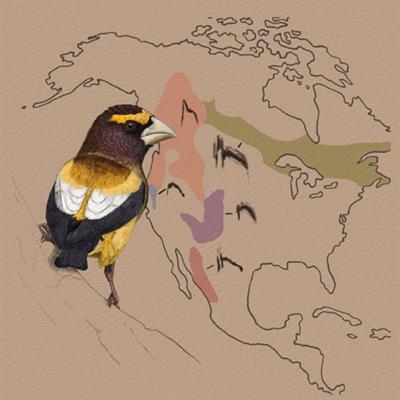
Minor variation in plumage of a species across its geographic range may belie remarkable diversity among its populations. Calls given while in flight appear to be markers of such infraspecific diversity in certain bird lineages. The classic case of cryptic within-species diversity despite relatively minor variation in plumage is the Red Crossbill. Crossbill types have diagnosable calls given primarily in flight. Unlike traditional subspecies, which are often identified by subtle plumage variation linked directly to geography, call types wander widely and overlap geographically. Yet many appear to mate assortatively, suggesting some degree of evolutionary lineage cohesiveness. Recognition of such call-type diversity within Red Crossbills has led to its discovery in other species, such as Evening Grosbeak, and the potential exists that it is much more widespread. Because call type variation within species is subtle, we still have much to reveal about all aspects of this hidden diversity, including discovery of new call types, exploration of seasonal and yearly movements of call-type populations, and discovery of the degree to which call-type populations represent cohesive lineages. The recent proliferation of smart-phone sound recording technology and online archival sites where bird enthusiasts can upload recordings promises to revolutionize the speed and scale at which we can explore this poorly known form of avian diversity.
Our goals are to summarize current knowledge of the lineages most likely to contain:
- Call type diversity,
- Characterize call types for incompletely investigated species,
- Explore best practices for characterizing meaningful differences in call types that warrant further biological study,
- And encourage bird enthusiasts to engage in additional data collection and archival to facilitate rapid advances in our knowledge.
This Research Topic invites research papers that describe novel call type diversity focused on the infraspecific level within currently well-studied as well as previously unstudied species. We are especially interested in the connection between diurnal flight calls and population identities, such as subspecies and ecomorphs. Species-level identifications, such as recognition of night flight calls for particular species, are outside our scope although development of bio-acoustical analytical techniques for documenting subtle differences in sounds that might apply to both cases are welcome. We also welcome papers that review the evolutionary drivers and ecological associations of call type diversity within species, as well as the role that citizen scientists and bird enthusiasts may play to facilitate advancement of this engaging birding activity.
Image credits to artist Tara Kate: https://tarakatedesigns.com
This Research Topic accepts the following article types, unless otherwise specified in the Research Topic description:
Articles that are accepted for publication by our external editors following rigorous peer review incur a publishing fee charged to Authors, institutions, or funders.
Keywords: audio recording, bioacoustics, bird calls, call types, citizen science, infraspecific diversity, flight calls, Fringillidae, Parulidae, sonogram, subspecies, vocalizations
Important note: All contributions to this Research Topic must be within the scope of the section and journal to which they are submitted, as defined in their mission statements. Frontiers reserves the right to guide an out-of-scope manuscript to a more suitable section or journal at any stage of peer review.
Manuscripts can be submitted to this Research Topic via the main journal or any other participating journal.
Submit your idea
Select the journal/section where you want your idea to be submitted:
