LL
lei li
The University of Manchester
Manchester, United Kingdom
1,587
Total downloads
9,671
Total views and downloads
Submit your idea
You will be redirected to our submission process.
Manuscript Extension Submission Deadline 16 January 2026
This Research Topic is still accepting articles.
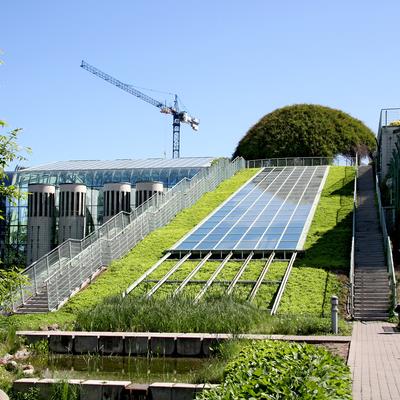
Nature-based solutions (NBS) acted as a bridge and umbrella concept between different research fields and between various actors and stakeholders (i.e., policymakers, researchers, and practitioners) through its emphasis on applied sustainable outcomes. The current state of NBS knowledge encompasses research from within and between a range of disciplines, such as some urban foci ideologies on ecology, hydrology, sociology, and planning perspectives. It has gained increasing attention in academic research and policymaking. The variety of terminologies including sustainable urban drainage systems (SuDs), best management practices (BMPs), low-impact design (LID), water-sensitive urban design (WSUD), Blue-green infrastructure (BGI), and Sponge City Programme (SCP) could all be put under the open umbrella concept of NBS. These relevant concepts are not only limited on sustainable water management, but also considering both short-term and long term-benefits to environment, human and social-economic perspectives in a sustainable manner.
However, policies, practices and lessons from NBS vary globally and remain underexplored in different contexts. Even though the evidence of its effectiveness is growing, there are some cases where policy and management underestimate NBS options and the investment for NBS remain relatively lower especially in developing countries, due to questionable feasibility of those measures in different contexts, poor governance, and limited funding sources especially after the Covid-19 pandemic. The existing frameworks to link different actors (e.g., governments, research institutions, private sectors, financial sectors, news agencies, local communities) and green solutions (e.g., NBS, GI, SCP) are still inadequate. Current research has focused on the production of scientific knowledge and the assessment of technocratic indicators, as such, the policy, institutional arrangement, knowledge transfer, perception and participation within NBS projects need to be paid more attention to enable a faster process of social acceptance of such program.
This research topic will focus on the transition of NBS at the science-policy-practice interface. We welcome interdisciplinary research about NBS and other similar concepts from the global cases to enhance sustainability, resilience, inclusion, diversity, equality and justice. The themes include:
• Practical examples of NBS implementation to enhance sustainability and resilience.
• Barriers, limitations and shortcomings based on learnt case study examples of NBS.
• Assessing multiple scientific and societal benefits of NBS.
• Human-nature interactions of NBS in the city.
• Perceptions, participatory strategies/approaches and social learning for NBS.
• Network and stakeholder engagement, knowledge transfer and governance within NBS projects.
This Research Topic accepts the following article types, unless otherwise specified in the Research Topic description:
Articles that are accepted for publication by our external editors following rigorous peer review incur a publishing fee charged to Authors, institutions, or funders.
Keywords: NBS Governance, NBS Policy, NBS Practice, Stakeholders, Perception and Participation
Important note: All contributions to this Research Topic must be within the scope of the section and journal to which they are submitted, as defined in their mission statements. Frontiers reserves the right to guide an out-of-scope manuscript to a more suitable section or journal at any stage of peer review.
Manuscripts can be submitted to this Research Topic via the main journal or any other participating journal.
Submit your idea
You will be redirected to our submission process.
