VM
vivek mann
Texas Southern University
Houston, United States
79
Total downloads
2,350
Total views and downloads
Submit your idea
You will be redirected to our submission process.
The topic of Emerging Extra-Terrestrial Space Platforms explores the evolving landscape of human-made structures and platforms designed for space exploration and habitation beyond Earth. As advancements in space technology continue to push the boundaries of human space exploration, the establishment of extraterrestrial platforms has become a crucial aspect of expanding our presence in the cosmos. The development of extra-terrestrial space platforms represents an exciting and important area of research that has the potential to transform our understanding of space and its applications. There are several new platforms being developed for research in low Earth orbit (LEO). As technology advances and private companies become more involved in space exploration, we can expect to see even more innovative platforms for research in LEO and beyond.
This Research Topic seeks to bring together research scholars and practitioners interested in exploring the emerging extra-terrestrial space platforms and their implications for research in LEO and beyond. We invite research papers presenting novel insights and advances in this field that promote space exploration, including those that highlight new approaches to the development of extra-terrestrial space platforms.
The topics to be covered in this Research Topic include, but are not limited to:
1. Historical context:
• An overview of the development of space platforms, starting from early space stations like Skylab and Mir to the International Space Station (ISS);
• Exploration of the lessons learned from previous platforms and their impact on current and future designs;
2. Current extraterrestrial platforms:
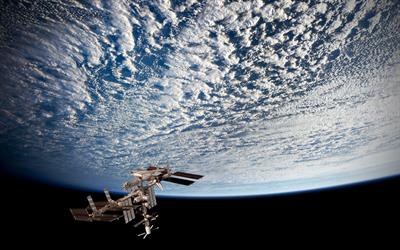
• Detailed examination of the International Space Station (ISS), including its design, purpose, and ongoing research activities. The ISS has been in operation since 1998 and is a joint project between the space agencies of the United States, Russia, Europe, Japan, and Canada. It serves as a laboratory for a wide range of scientific experiments in fields such as biology, physics, and materials science. Commercial Crew Program (CCP): NASA's Commercial Crew Program (CCP) is working with private companies to develop spacecraft that can transport crew and cargo to and from the ISS. This program includes companies such as SpaceX and Boeing;
• Analysis of other existing platforms or planned missions, such as China's Tiangong Space Station, the Russian Orbital Segment, and potential commercial ventures like the Bigelow Aerospace habitats. The Bigelow Expandable Activity Module (BEAM): BEAM is an inflatable habitat that was launched to the ISS in 2016. It is being used to test the feasibility of expandable habitats for use in future space missions. Dream Chaser is a reusable spaceplane being developed by Sierra Nevada Corporation. It is designed to transport crew and cargo to and from the ISS and is set to begin its first missions in the mid-2020s. Blue Origin New Shepard is a suborbital rocket that can take people and payloads on short trips to space. While not in LEO, it can provide opportunities for researchers to conduct experiments in microgravity;
3. Emerging Platforms for Lunar exploration:
• Exploration of proposed lunar platforms, such as the Lunar Gateway, a small space station intended to orbit the Moon and serve as a staging point for future missions;
• Analysis of other lunar surface habitats or infrastructure concepts, including planned rovers, landers, and potential human bases;
4. Emerging Platforms for Mars exploration:
• Discussion of potential platforms or habitats for manned missions to Mars, including concepts like Mars Base Camp or other modular systems;
• Examination of planned missions, such as NASA's Artemis program and SpaceX's Mars colonization plans;
5. Innovative technologies and designs:
• Exploration of cutting-edge technologies and designs that are being considered or developed for future space platforms, such as inflatable habitats, 3D printing, and autonomous systems. Microgravity analogs such as RWV, RPM, sounding rockets, drop towers, etc;
• Analysis of how these technologies may revolutionize the construction, maintenance, and sustainability of extraterrestrial platforms;
6. Challenges and considerations:
• Discussion of the unique challenges and considerations associated with the design, construction, and operation of extraterrestrial platforms, including radiation protection, life support systems, resupply missions, and long-duration habitation;
7. Prospects and implications:
• Speculation on the future of extraterrestrial platforms, including the potential for permanent human presence beyond Earth;
• Exploration of the societal, scientific, and economic implications of establishing and maintaining extraterrestrial platforms.
This Research Topic accepts the following article types, unless otherwise specified in the Research Topic description:
Articles that are accepted for publication by our external editors following rigorous peer review incur a publishing fee charged to Authors, institutions, or funders.
Keywords: Extra-terrestrial platforms, Space exploration, Low Earth orbit (LEO), International Space Station (ISS), Commercial Crew Program (CCP), Lunar exploration, Mars exploration, Innovative technologies and designs, Challenges and considerations
Important note: All contributions to this Research Topic must be within the scope of the section and journal to which they are submitted, as defined in their mission statements. Frontiers reserves the right to guide an out-of-scope manuscript to a more suitable section or journal at any stage of peer review.
Manuscripts can be submitted to this Research Topic via the main journal or any other participating journal.
Submit your idea
You will be redirected to our submission process.
