PA
pietro aricò
Sapienza University of Rome
Rome, Italy
3,733
Total downloads
24k
Total views and downloads
Passive Brain-Computer Interfaces (pBCIs) have shown significant advancements in recent years, indicating their readiness for practical, everyday applications beyond research laboratories. Developments in graphical user interfaces, classification algorithms, wearable technology, and sensor quality have made pBCIs increasingly viable as consumer products. Many companies are now focused on creating wearable and minimally invasive biosignal acquisition devices, particularly EEG systems with dry sensors or water-based technologies, improving comfort and signal quality and reducing the gap with traditional gel-based electrodes.
pBCIs have significant potential to enhance human-environment interactions by deriving insights from involuntary brain activity—implicit user states such as workload, attention, emotions, and task-induced mental states—which conventional methods like questionnaires and reaction times struggle to reliably capture. Recent advances in artificial intelligence, including pattern recognition, machine learning, and deep learning, have further enabled the development of "neurometrics" capable of tracking specific human behaviors, even in real-time.
This Research Topic aims to showcase the current state-of-the-art in neuroscience-based passive BCI applications within real-world settings, addressing present challenges and future trends. The primary focus is on how pBCIs can be effectively utilized outside laboratory environments, particularly through wearable technologies, enhancing interaction between humans and their surroundings.
We invite contributions such as original research articles, experimental studies, empirical investigations, and theoretical frameworks on passive BCI systems, including but not limited to the following areas:
- Advances in graphical user interfaces and classification algorithms that improve pBCI usability.
- Recent developments and enhancements in wearable and minimally invasive biosignal acquisition devices.
- Comparative analyses between gel-based and dry electrode technologies for practical pBCI use.
- Applications of artificial intelligence techniques (pattern recognition, machine learning, deep learning) in biosignal processing for developing neurometrics.
- Challenges, limitations, and future directions in applying passive BCIs in real-world environments.
- Innovative case studies demonstrating pBCI applications in consumer products and daily life scenarios.
- Assessment of reliability and accuracy of implicit information detection (workload, attention, emotions) using pBCIs.
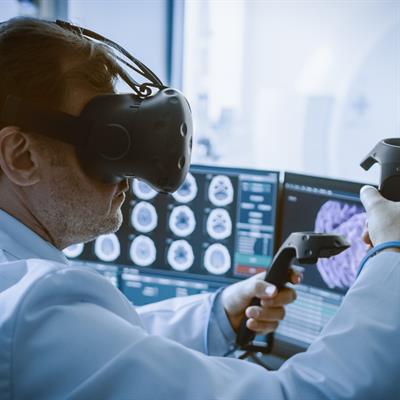
Keywords: Passive Brain-Computer Interfaces (pBCI), Wearable Devices, Gel-based and Dry Electrode Technologies, passive brain-computer interfaces, pBCI, wearable EEG, dry electrodes, neurometrics, biosignal processing, graphical user interfaces, classification algorithms, artificial intelligence, machine learning, deep learning, implicit information, human-computer interaction, real-world applications, consumer neurotechnology
Important note: All contributions to this Research Topic must be within the scope of the section and journal to which they are submitted, as defined in their mission statements. Frontiers reserves the right to guide an out-of-scope manuscript to a more suitable section or journal at any stage of peer review.
