CL
chuang liu
Hohai University
Nanjing, China
549
Total downloads
3,750
Total views and downloads
Submit your idea
You will be redirected to our submission process.
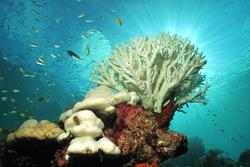
Biomineralization is a fundamental process in the world's oceans, it is the mechanism whereby the calcium dissolved in seawater is used to produce solid crystal mineralized structures (i.e. biominerals). Biominerals produced by eukaryotes are all organo-mineral composites, with the organic phase (the organic matrix, OM) composed of a mixture of different macromolecules, including polysaccharides, lipids, and proteins. These organic molecules operate like a template for biomineral deposition, driving crystal growth in particular specific and influencing biomineral mechanical properties. Characterizing biominerals from a molecular and mechanical point of view will provide crucial insights on how these organisms biomineralize far from thermodynamic equilibrium, and potentially will survive the coming crisis of climate change of the world’s oceans. Moreover, understanding the inherent complexity of the molecular systems controlling the biomineralization process is useful to the development and utilization of new nanomaterials, but could also be potentially helpful to treat abnormal mineralization that is caused by the human body disease, such as osteoporosis, osteomalacia, hypophosphatasia, kidney stones, and atherosclerosis.
The focus of this Research Topic is on studies that use either biochemical methods or material characterization methods to characterize marine biominerals at various scales from the macro, nano, to the molecular levels. The topic will provide insight into how biominerals grow and develop in multiple scales, and hint at how they function or evolve. It calls for original and novel papers (or reviews) related to marine biominerals in the following research topics:
• Characterizing functional marine biominerals at multiple levels using micro-CT, electron microscopy, spectroscopy, EBSD, etc.
• Omics (genomics, transcriptomics, proteomics, single-cell omics) methods in understanding biomineralization molecules and process
• Functional and evolutionary analysis of biomineralization molecules
• Response of these functional biominerals to changing environmental conditions (e.g. ocean acidification)
• Development of novel (physical or numeric) methods to characterize biominerals
This Research Topic accepts the following article types, unless otherwise specified in the Research Topic description:
Articles that are accepted for publication by our external editors following rigorous peer review incur a publishing fee charged to Authors, institutions, or funders.
Keywords: biomineralization, biomineral, omics, multiscale characterization
Important note: All contributions to this Research Topic must be within the scope of the section and journal to which they are submitted, as defined in their mission statements. Frontiers reserves the right to guide an out-of-scope manuscript to a more suitable section or journal at any stage of peer review.
Hohai University
Nanjing, China
University of Concepcion
Concepción, Chile
Department of Biology, Hong Kong Baptist University
Kowloon Tong, China
Centro de Investigación Biológica del Noroeste (CIBNOR)
La Paz, Mexico
Rutgers, The State University of New Jersey
New Brunswick, United States
Manuscripts can be submitted to this Research Topic via the main journal or any other participating journal.
Submit your idea
You will be redirected to our submission process.
