MA
morten allentoft
Curtin University
Perth, Australia
1,198
Total views and downloads
Submit your idea
You will be redirected to our submission process.
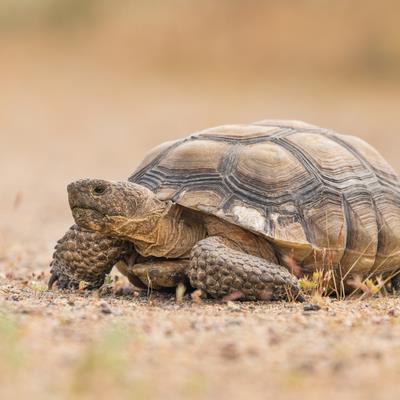
Reptiles are declining at a global scale with >20% of the world’s species threatened by extinction. Despite this, reptiles are notoriously understudied in many regions, hampering efficient protection and management strategies. This calls for action and at the forefront of this conservation effort is efficient monitoring. Environmental DNA (eDNA) technology is transforming biomonitoring worldwide and is particularly pertinent to species of conservation concern that are difficult to monitor with traditional methods (e.g. camera traps, visual surveys) – both of which apply to many reptiles. Unfortunately, the general notion is that reptiles are challenging to monitor with eDNA technology due to limited shedding of DNA into the environment, probably owing to hard keratinized scales and highly concentrated waste products. Conclusively, if we cannot resolve this, we will have to accept that eDNA technology has major constraints as a biomonitoring tool for terrestrial vertebrates.
The overriding goal is to advance eDNA research on reptiles. Through a series of publications on this topic the aim is to:
i) summarize the current state of knowledge and identify the main knowledge gaps;
ii) present case studies that point to both the prospects and the challenges; and
iii) present new methods aiming to advance eDNA research on reptiles.
These contributions can be used to provide guidelines, inform on study design, and help establish realistic expectations for using eDNA as a biomonitoring tool for reptiles. Importantly, they will also set the scene for future research on this topic.
We encourage the submission to this Research topic of any research contribution that examines or reports eDNA derived from reptiles, either specifically targeted at reptiles or from broader biodiversity surveys – as long as the focus on reptiles is maintained in the manuscript. We are particularly interested in studies that are testing new approaches, whether this concerns new sample substates, new eDNA collecting methods in the field, new lab protocols, or analytical considerations.
Negative results are often not published, but when exploring possibilities and limitations in an advancing research field, such insights are highly valuable. Thus, we would welcome the submission of negative results as short communications when the method and study design (number of replicates, negative controls etc) is of sufficient quality to rule out methodological flaws.
Review papers that effectively manage to synthesize the state of knowledge and contribute with new perspectives on this research field are also highly relevant.
This Research Topic accepts the following article types, unless otherwise specified in the Research Topic description:
Articles that are accepted for publication by our external editors following rigorous peer review incur a publishing fee charged to Authors, institutions, or funders.
Keywords: eDNA, reptiles, extinction, environmental DNA, conservation, biomonitoring, terrestrial vertebrates, biodiversity
Important note: All contributions to this Research Topic must be within the scope of the section and journal to which they are submitted, as defined in their mission statements. Frontiers reserves the right to guide an out-of-scope manuscript to a more suitable section or journal at any stage of peer review.
Manuscripts can be submitted to this Research Topic via the main journal or any other participating journal.
Submit your idea
You will be redirected to our submission process.
