EH
erik hanschen
Los Alamos National Laboratory (DOE)
Los Alamos, United States
40
Total downloads
1,449
Total views and downloads
Submit your idea
You will be redirected to our submission process.
Manuscript Submission Deadline 2 June 2026
This Research Topic is currently accepting articles
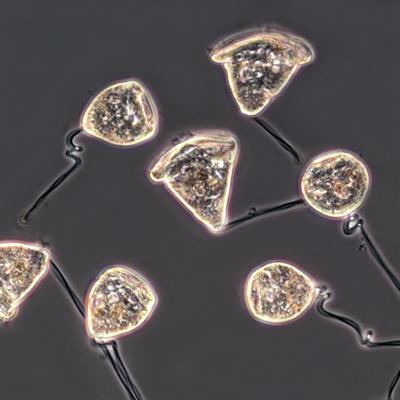
Protists, despite their solitary appearance as single-celled organisms, engage in intricate interplay with various other life forms. Far from leading solitary lives, many protists form complex relationships with both unicellular and multicellular organisms. For instance, predatory protists can identify and capture prey, as well as evade their own predators through accurate recognition. Furthermore, some protists exhibit the remarkable ability to discern cells of the same species but of different types, facilitating processes like sexual phenomena. Additionally, symbiotic relationships abound, with protists harboring other eukaryotes or prokaryotes within their own cells or coexisting symbiotically within the bodies of larger organisms. Notably, some protozoa possess the capacity to infect metazoans, causing diseases. Recent research has delved into the mechanisms underlying protists' recognition of other organisms, yielding valuable insights into the molecular network of cellular interactions and their role in driving biological evolution. This topic aims to spotlight these complex cell-cell interactions of protists, particularly emphasizing their molecular and evolutionary dimensions, and will showcase the latest advancements in this field.
This research topic aims to elucidate the molecular basis of interactions between protists and various organisms. The main objectives include understanding the mechanisms of recognition and interaction at the cellular level, exploring the evolutionary implications of these interactions, and identifying the molecular pathways involved. Specific questions to be addressed include: How do protists recognize and differentiate between various organisms? What molecular mechanisms facilitate these interactions? How do these interactions influence evolutionary processes?
To gather further insights into the molecular basis of protist interactions, we welcome articles addressing, but not limited to, the following themes:
- Molecular mechanisms of prey recognition and capture by predatory protists
- Symbiotic relationships between protists and other organisms
- Molecular pathways involved in protist-protist interactions
- Evolutionary implications of protist interactions with other life forms
- Pathogenic interactions between protists and metazoans
- Advances in imaging and molecular techniques for studying protist interactions
The article types accepted in this Research Topic are Original Research, Systematic Review, Review, Brief Research Report, and Hypothesis & Theory.
This Research Topic accepts the following article types, unless otherwise specified in the Research Topic description:
Articles that are accepted for publication by our external editors following rigorous peer review incur a publishing fee charged to Authors, institutions, or funders.
Keywords: Cell-cell interactions in protists, protist sexual recognition, predator-prey interactions in protists, symbiosis in protists, host-parasite interactions in protists
Important note: All contributions to this Research Topic must be within the scope of the section and journal to which they are submitted, as defined in their mission statements. Frontiers reserves the right to guide an out-of-scope manuscript to a more suitable section or journal at any stage of peer review.
Manuscripts can be submitted to this Research Topic via the main journal or any other participating journal.
Submit your idea
You will be redirected to our submission process.
