TO
takashi oda
Tokyo Medical University Hachioji Medical Center
Tokyo, Japan
589
Total downloads
4,084
Total views and downloads
Submit your idea
Select the journal/section where you want your idea to be submitted:
Manuscript Summary Submission Deadline 15 March 2026 | Manuscript Submission Deadline 15 September 2026
This Research Topic is currently accepting articles.
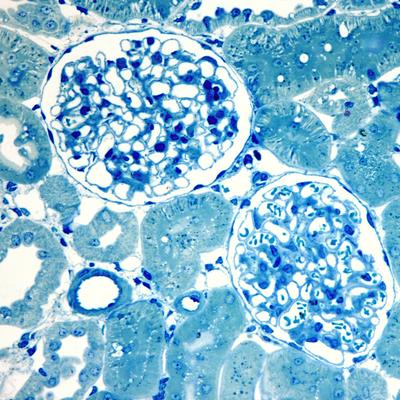
Glomerular lipidosis is a rare and distinct histological phenomenon characterized by the widespread accumulation of lipids within the glomeruli, often resulting in a foamy appearance. This condition can arise from a variety of genetic and acquired disorders, such as lipoprotein glomerulopathy, lecithin-cholesterol acyltransferase deficiency, familial type 3 hyperlipidemia, Fabry’s disease, hemophagocytic syndrome/macrophage activation syndrome, and thrombotic microangiopathy. The underlying etiology may be linked to lipid metabolism or associated with immunological abnormalities unrelated to lipid metabolism. Differentiating the pathology is crucial, as treatment strategies vary significantly depending on the specific etiology. Recent studies have highlighted the role of immunostaining for CD68 in categorizing glomerular lipidosis into histiocytic and nonhistiocytic types. Despite these advancements, there remains a need for further investigation into the diverse renal clinical manifestations, which range from acute kidney injury to chronic nephritic and nephrotic syndromes, and the differentiation of systemic versus renal-limited forms of the disease.
This Research Topic aims to deepen the understanding of glomerular lipidosis by exploring its diagnosis, etiology, differential diagnostic methods, and treatment options. The objective is to address specific questions regarding the mechanisms underlying lipid accumulation in the glomeruli, the role of immunological factors, and the implications for patient management. By testing hypotheses related to the differentiation of histiocytic and nonhistiocytic forms, this research seeks to enhance diagnostic accuracy and inform therapeutic approaches.
To gather further insights into the complex nature of glomerular lipidosis, we welcome Case Reports, Original Research and Review articles articles addressing, on glomerular diseases characterized by prominent lipid deposition. These include, but are not limited to, Fabry disease, LCAT deficiency, lipoprotein glomerulopathy, macrophage activation syndrome, focal segmental glomerulosclerosis, cryoglobulin nephropathy, and thrombotic microangiopathy. We also welcome manuscripts covering the following themes;
• The role of genetic and acquired factors in the development of glomerular lipidosis.
• Advances in immunostaining techniques for differentiating histiocytic and nonhistiocytic forms.
• Case studies highlighting diverse renal clinical manifestations and their management.
• The impact of systemic diseases on the development of secondary glomerular lipidosis.
• Novel therapeutic strategies tailored to specific etiologies of glomerular lipidosis.
This Research Topic accepts the following article types, unless otherwise specified in the Research Topic description:
Articles that are accepted for publication by our external editors following rigorous peer review incur a publishing fee charged to Authors, institutions, or funders.
Keywords: Glomerular Lipidosis, Lipoprotein Glomerulopathy (LPG), Lecithin-cholesterol Acyltransferase (LCAT) Deficiency, Familial Type 3 Hyperlipidemia, Fabry’s Disease, Hemophagocytic Syndrome (HPS)/Macrophage Activation Syndrome (MAS), Thrombotic Microangiopathy
Important note: All contributions to this Research Topic must be within the scope of the section and journal to which they are submitted, as defined in their mission statements. Frontiers reserves the right to guide an out-of-scope manuscript to a more suitable section or journal at any stage of peer review.

Manuscripts can be submitted to this Research Topic via the main journal or any other participating journal.
Submit your idea
Select the journal/section where you want your idea to be submitted: