CP
carli peters
Interdisciplinary Center for Archaeology and Evolution of Human Behaviour, Faculty of Humanities and Social Sciences, University of Algarve
Faro, Portugal
3,379
Total downloads
15k
Total views and downloads
Submit your idea
You will be redirected to our submission process.
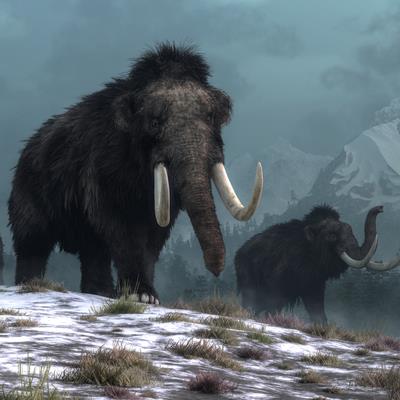
During the Late Pleistocene, a large number of megafauna species (i.e., animals >44 kg) on Earth became extinct. The timing and intensity of these extinctions varied across different regions and continents. The exact causes remain a topic of debate, with discussions focusing on the relative importance of human activities, climate change, and the interplay between these two factors. Gaining a better understanding of human-climate-megafauna dynamics is crucial for clarifying the processes that led to these extinctions. Megafauna extinctions also had significant impacts on ecosystem structure and dynamics on inter-regional and global scales. This loss of ecosystem function has legacy effects that are still noticeable to this day, including dispersal and endemism, plant composition, nutrient cycling and atmospheric contributions, that are of concern for the development of wildlife conservation and rewilding strategies.
Despite decades of intensive research, significant spatial and temporal gaps in the megafauna record remain, especially in historically understudied regions. The recent development of innovative analytical methodologies - such as isotope analysis, palaeoproteomics, and ancient DNA - along with the rise of big data approaches, opens up new research avenues to address these data gaps. These novel methods can be used to extract new insights from pre-existing collections and data, and, in this way, offer a deeper understanding of megafauna ecology, human-megafauna interactions, and extinction dynamics.
The regional focus of the contributions to this collection can be from anywhere around the globe, although specific interest will be given to regions that are understudied. We welcome both small-scale (i.e., local, regional) and large-scale (i.e., continental, global) analyses. We are particularly interested in contributions that use biogeochemical/biomolecular methods or big data approaches to obtain novel insights about the extinctions. We also accept contributions that present paleontological/zooarchaeological analyses from new megafauna sites.
This Research Topic accepts the following article types, unless otherwise specified in the Research Topic description:
Articles that are accepted for publication by our external editors following rigorous peer review incur a publishing fee charged to Authors, institutions, or funders.
Keywords: Megafauna, extinction, Late Pleistocene, Late Quaternary, ecology, isotopes, palaeoproteomics, aDNA, big data
Important note: All contributions to this Research Topic must be within the scope of the section and journal to which they are submitted, as defined in their mission statements. Frontiers reserves the right to guide an out-of-scope manuscript to a more suitable section or journal at any stage of peer review.
Interdisciplinary Center for Archaeology and Evolution of Human Behaviour, Faculty of Humanities and Social Sciences, University of Algarve
Faro, Portugal
Max Planck Institute of Geoanthropology
Jena, Germany
Australian Research Centre for Human Evolution, Environmental Futures Research Institute, Griffith University
Nathan, Australia
Manuscripts can be submitted to this Research Topic via the main journal or any other participating journal.
Submit your idea
You will be redirected to our submission process.
