EM
erik-jan malta
CTAQUA Aquaculture Tecnological Centre
El Puerto de Santa María, Spain
1,166
Total views and downloads
Submit your idea
You will be redirected to our submission process.
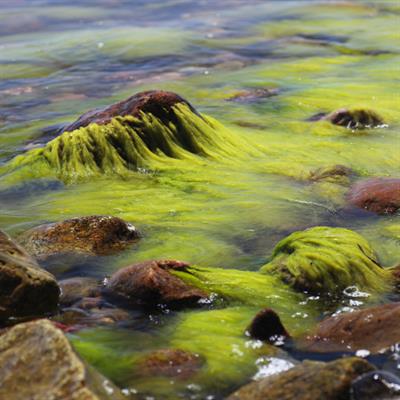
Marine agriculture in the form of seaweed cultivation is swiftly evolving as an answer to global food security challenges. The green algal genus Ulva is used as a model species for sustainable innovative aquaculture, described as a "wheat of the sea” and as such is the focus of the EU COST action SeaWheat (Tomorrow’s ‘wheat of the sea’: Ulva a model for an innovative mariculture - CA20106). Recent studies have highlighted the importance of the seaweed microbiome in many aspects of seaweed cultivation and applications, including post-harvest biomass treatments. Manipulation of the seaweed microbiome opens a novel and innovative avenue of new opportunities. However, research in this field is still in its infancy. There exist substantial knowledge gaps on the role of the microbiome and its influence on the growth, life-cycle, health, biochemical composition, and nutritional value of Ulva and other seaweeds and how this can be used in scaling up their cultivation and to intensify and broaden the potential of their applications (e.g. in food, feed, pharma- and cosmeceuticals, etc.).
This Research Topic aims to further elucidate the role of the microbiome in the growth, life-cycle control, biomass composition, and post-harvest biomass utilization of Ulva and other seaweeds. The goal is to enhance the scalability and viability of mariculture of Ulva and other seaweed species to meet ecological (e.g., impact minimization, etc.) and economic (improve cultivation efficiency and broadening application potential) demands.
To gather further insights into optimized mariculture practices for Ulva and other seaweeds, we welcome articles addressing, but not limited to, the following themes:
o Ecology: Dynamics in Ulva-microbial communities and the environmental forces that govern community structure, function, and interactions.
o Growth: Role of microbiome in regulating seaweed growth and potential applications for enhancing growth, yield, and stress tolerance.
o Seaweed pathogens and disease control: Identification of main bacterial seaweed pathogens, disease prevention, and associated antimicrobials-resistant microbes
o Life cycle: Effects of microbiome on life-cycle events such as sporulation, potential sporulation control (both in stimulating as well as in inhibition of sporulation).
o Industrial Applications: Manipulating the microbiome to stimulate other functions in aquaculture, application in the microbiome as post-harvest improvement of biomass (e.g. fermentation, etc.)
o Impact Assessments: Studies on the ecological impacts of seaweed farming on marine microbial diversity.
By tackling these themes, the collection aims to compile a breadth of research that could set a precedent for future mariculture practices and the broader application of seaweed farming innovations.
This Research Topic accepts the following article types, unless otherwise specified in the Research Topic description:
Articles that are accepted for publication by our external editors following rigorous peer review incur a publishing fee charged to Authors, institutions, or funders.
Keywords: Seaweed, Mariculture, Strain Improvement, Strain Conservation, Model Organisms
Important note: All contributions to this Research Topic must be within the scope of the section and journal to which they are submitted, as defined in their mission statements. Frontiers reserves the right to guide an out-of-scope manuscript to a more suitable section or journal at any stage of peer review.
CTAQUA Aquaculture Tecnological Centre
El Puerto de Santa María, Spain
Center of Marine Sciences, Faculty of Sciences and Technology, University of Algarve
Faro, Portugal
Leon H. Charney School of Marine Sciences, University of Haifa
Mount Carmel, Israel
Naturalis Biodiversity Center
Leiden, Netherlands
Manuscripts can be submitted to this Research Topic via the main journal or any other participating journal.
Submit your idea
You will be redirected to our submission process.
