JL
jingfei liu
Texas Tech University
Lubbock, United States
712
Total views and downloads
Submit your idea
You will be redirected to our submission process.
Manuscript Submission Deadline 24 February 2026
This Research Topic is currently accepting articles.
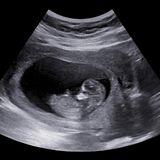
Ultrasound imaging is a cornerstone of diagnostic medicine due to its inherent advantages, such as real-time visualization, non-invasiveness, deep tissue penetration, and the absence of ionizing radiation. Conventional ultrasound imaging offers two-dimensional or three-dimensional anatomical and functional representations of soft tissues, organs, and vascular structures, and has been widely utilized in medical practices for decades. Despite its value, conventional ultrasound still faces some limitations, including limited spatial and contrast resolution, operator dependence, and limited functional information. Over the past decade, technological advancements and ongoing research efforts have significantly enhanced the capabilities of ultrasound imaging, broadening its scope and utility.
This Research Topic aims to promote the recent advances in biomedical ultrasound imaging research by collecting and presenting the research efforts and improvements in different areas of ultrasound imaging. This article collection will provide an overview of the forefront of medical ultrasound imaging development to the community and, in the meantime, inspire new research topics and guide further development.
This collection encompasses various topics in biomedical ultrasound imaging, including new beamforming methods, imaging mechanisms, imaging devices, contrast enhancement, and super-resolution imaging. We highly welcome the recent advances in areas such as super-resolution imaging, contrast-enhanced imaging, genetically induced gas vesicles for cell imaging, AI-powered ultrasound imaging, elastography, null subtraction imaging, 3D & 4D ultrasound imaging, fusion & integrated imaging, and vector flow imaging. Both original research and topical review articles are welcome.
This Research Topic accepts the following article types, unless otherwise specified in the Research Topic description:
Articles that are accepted for publication by our external editors following rigorous peer review incur a publishing fee charged to Authors, institutions, or funders.
Keywords: ultrasound imaging, super-resolution imaging, contrast enhanced imaging, genetically induced gas vesicles for cell imaging, AI-powered ultrasound imaging, elastography, null subtraction imaging, fusion & integrated imaging, vector flow imaging, 3D ultrasound imaging, 4D ultrasound imaging
Important note: All contributions to this Research Topic must be within the scope of the section and journal to which they are submitted, as defined in their mission statements. Frontiers reserves the right to guide an out-of-scope manuscript to a more suitable section or journal at any stage of peer review.
Manuscripts can be submitted to this Research Topic via the main journal or any other participating journal.
Submit your idea
You will be redirected to our submission process.
