LG
letterio guglielmo
Anton Dohrn Zoological Station Naples
Naples, Italy
293
Total downloads
7,932
Total views and downloads
Submit your idea
You will be redirected to our submission process.
Manuscript Submission Deadline 31 March 2026
This Research Topic is currently accepting articles.
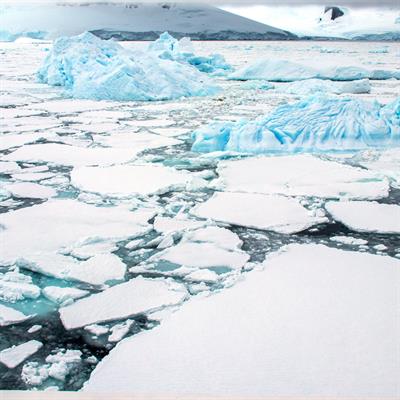
Polar pelagic ecosystems, which include the open waters of the Arctic and Antarctic, are experiencing significant changes due to climate change. Rising temperatures are melting sea ice, affecting species that depend on it, such as krill in the Southern Ocean and polar cod in Arctic waters. As ice recedes, new ecosystems are forming, but they may not support the same biodiversity. Warmer waters also lead to shifts in species distributions, with temperate species moving poleward, sometimes outcompeting native species. Additionally, ocean acidification, caused by increased CO2 absorption, is harming shell-forming organisms like pteropods, which are crucial for the food web. These changes disrupt the entire ecosystem, from plankton to marine predators including penguins and seals. As the polar regions continue to warm, these ecosystems face a delicate balance between adaptation and collapse, highlighting the need for urgent conservation efforts to protect these vital marine environments.
Changing ice conditions will result in a reduction of sympagic (sea ice-associated) blooms with increases in pelagic production in the Arctic and, most likely, the Antarctic. However, sea ice melt is not uniform in nature, and it has been found that pelagic blooms can occur under thin ice cover (in the Arctic, Assmy et al. 2017). The future of the contributions of these two production pools within food webs remain uncertain. Furthermore, there is evidenced expansion of primary producers northward (Winter et al. 2014), with linkages of faster Atlantic water facilitating transport into the Arctic (Ozeil et al. 2020).
Increases in pelagic production and concomitant warming is likely to support a more diverse pelagic predator community and enhance habitat suitability for boreal predators in the Arctic Ocean, which are expanding their distribution range. Evidence of range expansions in the Arctic have already been documented for boreal fish species (reviewed in Husson et al. 2024), along with higher trophic level organisms (Heide-Jørgensen et al. 2023).
While these changes have been documented in the Arctic, there is less information available about effects of sea ice changes on Antarctic ecosystems, and these remain a key knowledge gap.
The Research Topic welcomes manuscripts related to:
• Food webs
• Coupling physical oceanography to biological trends in phytoplankton and zooplankton
• Better seasonal coverage studies on a particular species or community
• Experimental studies
• Predictive models
• Links between pelagic prey and marine predators
• How changes in the sea ice habitats are influencing biology and ecology
The Arctic and Southern Ocean are undergoing rapid change with unknown consequences for species biodiversity, resilience of marine food webs, and ocean health. Investigative studies that delve into these rates of change and predictive models will be relevant to this proposed research topic.
This Research Topic accepts the following article types, unless otherwise specified in the Research Topic description:
Articles that are accepted for publication by our external editors following rigorous peer review incur a publishing fee charged to Authors, institutions, or funders.
Keywords: Sea ice, Trophic ecology, Southern Ocean, Carbon flux, Antarctica, Arctic, Food webs, Energetics
Important note: All contributions to this Research Topic must be within the scope of the section and journal to which they are submitted, as defined in their mission statements. Frontiers reserves the right to guide an out-of-scope manuscript to a more suitable section or journal at any stage of peer review.
Anton Dohrn Zoological Station Naples
Naples, Italy
University of Messina
Messina, Italy
Institute for Marine and Antarctic Studies, College of Sciences and Engineering, University of Tasmania
Hobart, Australia
Norwegian University of Science and Technology
Trondheim, Norway
Manuscripts can be submitted to this Research Topic via the main journal or any other participating journal.
Submit your idea
You will be redirected to our submission process.
