SG
simon galas
Université de Montpellier
Montpellier, France
574
Total views and downloads
Submit your idea
You will be redirected to our submission process.
Manuscript Submission Deadline 28 February 2026
This Research Topic is currently accepting articles.
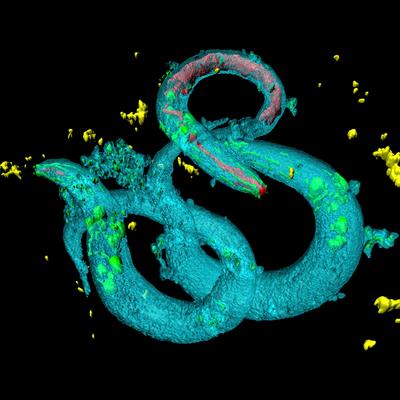
Following the first collection entitled Model Organisms in Aging Research: Caenorhabditis elegans, this Research Topic showcases the next volume in our successful collection. Model organisms like Caenorhabditis elegans (C. elegans) have been instrumental in uncovering fundamental longevity pathways, serving as a foundational platform for genetic manipulation and environmental intervention studies. Their simplicity and adaptability allow for the development of advanced concepts and technologies, which can be translated to more complex systems, including human biology.
The overall aim of this second volume is to extend the exploration of successful research strategies to C. elegans. The organism has been pivotal in developing in vivo tools that assess various aging research dimensions, such as cross-tissue regulation, longevity signaling, and host-microbiota interactions. These tools have offered crucial insights into the intricate relationship between metabolism, proteostasis, and aging. Moreover, the rapid advancement of in silico tools is transforming predictive medicine. Our goal with this Research Topic is to capture studies exploring these areas within the framework of C. elegans research.
This volume is dedicated to uncovering the potential of C. elegans in aging research. Manuscripts should feature or incorporate C. elegans in the context of aging studies. The scope includes, but is not restricted to, the following themes:
1. The prevention of molecular dysfunction by longevity pathways
2. The influence of molecular dysfunction on the aging of tissues and organisms
3. Development of technologies furthering aging research using C. elegans insights
4. Advances in mitochondrial biology and metabolism, especially in host-microbiota interactions
5. Systems physiology and integrative cross-tissue interactions
6. Advantages and challenges of using C. elegans in aging research
This Research Topic accepts the following article types, unless otherwise specified in the Research Topic description:
Articles that are accepted for publication by our external editors following rigorous peer review incur a publishing fee charged to Authors, institutions, or funders.
Keywords: Caenorhabditis elegans, Longevity pathways, Aging mechanisms, Molecular dysfunction, Host-microbiota interactions
Important note: All contributions to this Research Topic must be within the scope of the section and journal to which they are submitted, as defined in their mission statements. Frontiers reserves the right to guide an out-of-scope manuscript to a more suitable section or journal at any stage of peer review.
Manuscripts can be submitted to this Research Topic via the main journal or any other participating journal.
Submit your idea
You will be redirected to our submission process.
