JF
jason fanning
Wake Forest University
Winston-Salem, United States
1,992
Total views and downloads
Submit your idea
Select the journal/section where you want your idea to be submitted:
Manuscript Submission Deadline 1 March 2026
This Research Topic is currently accepting articles.
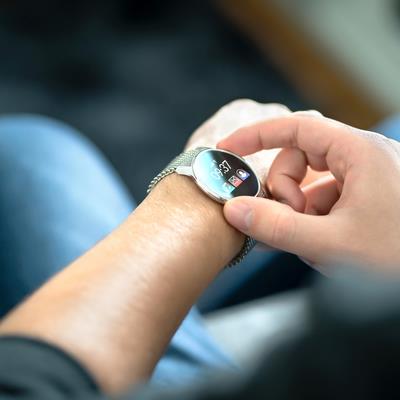
The rapid growth of wearable and mobile sensing technologies has enabled the continuous collection of highly granular behavioral data over time. These intensively longitudinal data streams provide unprecedented insight into the dynamic nature of health-related behaviors and their interaction with environmental and contextual factors. Despite this promise, behavioral scientists face challenges in fully harnessing this data to generate actionable knowledge.
The goal of this Research Topic is to catalyze progress in behavioral and digital health research by showcasing how intensive longitudinal data can reveal dynamic, context-sensitive, and person-specific insights into health behavior. This collection aims to bridge methodological innovation with applied science by offering tangible strategies for analyzing and interpreting high-frequency data from wearables, mobile sensors, and other sources.
Suitable themes for manuscripts include (but are not limited to):
• Analytical strategies for modeling behavior dynamics, such as transitions, rhythms, or bursts in movement or physiological signals,
• Use of intensively longitudinal data to better understand behavior change processes (e.g., habit formation, relapse, adherence),
• Cross-domain applications of intensive data (e.g., integrating physical activity, sleep, mood, or social interaction data),
• Methods for detecting person-specific patterns or tailoring interventions using individual-level data streams,
• Applications of intensively longitudinal data to characterize intraindividual variability in health-related behaviors,
• Approaches for linking behavioral time series data with environmental or contextual covariates (e.g., geolocation, EMA, weather),
• Methodological tutorials or walkthroughs that help demystify analytic techniques for high-frequency behavioral data,
• Comparative analyses of analytic methods (e.g., functional data analysis, machine learning, time-series modeling) applied to shared datasets,
• Ethical, privacy, and feasibility considerations in collecting and using intensively longitudinal data in behavioral health.
All article types accepted by Frontiers in Digital Health are welcome, including Original Research, Methods, Reviews, and Technology Reports. We especially encourage contributions that combine real-world applications with methodological transparency and accessibility.
This Research Topic accepts the following article types, unless otherwise specified in the Research Topic description:
Articles that are accepted for publication by our external editors following rigorous peer review incur a publishing fee charged to Authors, institutions, or funders.
Keywords: intensive longitudinal data, wearables, mHealth, digital phenotyping, behavioral science, time-series analysis
Important note: All contributions to this Research Topic must be within the scope of the section and journal to which they are submitted, as defined in their mission statements. Frontiers reserves the right to guide an out-of-scope manuscript to a more suitable section or journal at any stage of peer review.

Manuscripts can be submitted to this Research Topic via the main journal or any other participating journal.
Submit your idea
Select the journal/section where you want your idea to be submitted: