HG
hongyuan guo
Hong Kong Polytechnic University
Kowloon, Hong Kong, SAR China
249
Total views and downloads
Submit your idea
You will be redirected to our submission process.
Manuscript Summary Submission Deadline 14 January 2026 | Manuscript Submission Deadline 4 May 2026
This Research Topic is currently accepting articles.
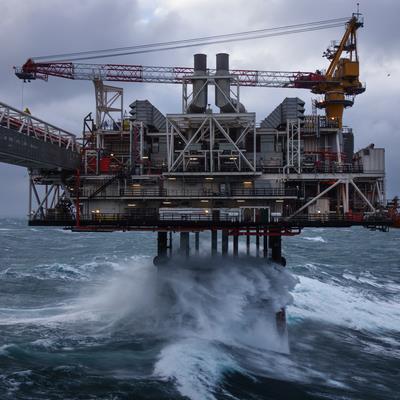
Coastal and marine infrastructure underpins global trade, energy, and coastal safety, operating in highly dynamic, corrosive environments under accelerating climate pressures. Traditional maintenance methods, often intrusive and material-intensive, can incur significant socio-ecological and carbon costs. The challenge lies in managing time-dependent deterioration (e.g., corrosion, fatigue, scour) and multi-hazard interactions with predictive accuracy, while ensuring our interventions are low-impact and regenerative. The increasing availability of sensing, inspection data, and high-fidelity modeling offers an opportunity to shift toward an AI-driven life-cycle framework that optimizes for both performance and positive environmental outcomes.
This Research Topic aims to reposition AI-enabled, uncertainty-aware life-cycle management as a core mechanism for achieving regenerative, low-carbon, and climate-adaptive coastal infrastructure systems. We specifically seek to integrate life-cycle engineering with socio-ecological and policy dimensions. Key gaps addressed include: (1) fragmented approaches that fail to quantify positive environmental and socio-ecological outcomes (e.g., reduced material use, minimized seabed disturbance); (2) limited coupling of technical performance with blue natural capital protection and community resilience; and (3) insufficient translation of AI-driven insights into interdisciplinary adaptation pathways and stakeholder co-designed interventions. We welcome contributions that articulate measurable positive impacts on sustainable ocean and coastal futures.
Topics of interest, especially those demonstrating whole-system and interdisciplinary integration, include:
• AI-enhanced reliability and risk assessment that explicitly quantifies environmental benefits (e.g., low-carbon maintenance, reduced ecological disturbance).
• Linking infrastructure life-cycle engineering with blue natural capital, ecosystem services, and community risk reduction.
• Frameworks for regenerative and nature-positive infrastructure systems enabled by predictive maintenance and reduced material use.
• Integrating life-cycle decisions with policy, governance, and stakeholder dimensions (e.g., co-design, adaptation pathways).
• Surrogate/reduced-order models and multi-fidelity schemes for probabilistic performance and system reliability in a socio-ecological context.
This Research Topic accepts the following article types, unless otherwise specified in the Research Topic description:
Articles that are accepted for publication by our external editors following rigorous peer review incur a publishing fee charged to Authors, institutions, or funders.
Keywords: Coastal and Marine Infrastructure, Artificial Intelligence, Digital Twins, Resilience, Life Cycle Assesment, Nature-Positive, Low-Carbon, Blue Natural Capital, Socio-Ecological Systems, Adaptation Pathways, Risk-Based Inspection Description
Important note: All contributions to this Research Topic must be within the scope of the section and journal to which they are submitted, as defined in their mission statements. Frontiers reserves the right to guide an out-of-scope manuscript to a more suitable section or journal at any stage of peer review.
Manuscripts can be submitted to this Research Topic via the main journal or any other participating journal.
Submit your idea
You will be redirected to our submission process.
