MM
mrunmayee manjari sahoo
Lovely Professional University
Phagwara, India
619
Total views and downloads
Submit your idea
You will be redirected to our submission process.
Manuscript Summary Submission Deadline 21 March 2026 | Manuscript Submission Deadline 26 September 2026
This Research Topic is currently accepting articles.
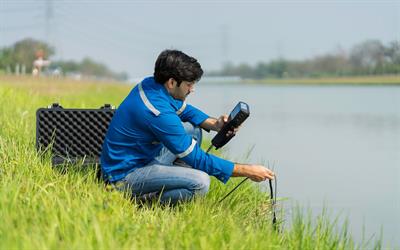
The presence of emerging contaminants in water poses a significant challenge to environmental sustainability and public health. In recent studies, a wide range of micro- and macro-pollutants has been reported in the aquatic environment, including industrial chemicals, microplastics, and pharmaceutical byproducts at trace levels. The contaminants accumulate and have a significant impact on both ecology and human health. Auditing and monitoring of these pollutants are difficult due to their dynamic properties, chemical structure and limitations of conventional laboratory-based procedures. Therefore, there is a growing need for advanced, real-time water quality detection systems that can provide accurate, regular, and rapid assessments of pollutants associated with health risks to humans and aquatic organisms.
The research topic aims to bring together cutting-edge technologies, such as the integration of automation, sensors, machine learning, and artificial Intelligence (AI), in the detection of water contaminants and the evaluation of risk from emerging contaminants. The innovative sensor technologies, including biosensors, optical sensors, and nano-material-based applications, are gradually capable of detecting pollutants at low concentrations and in complex aqueous matrices. The evaluation of contaminants techniques, when integrated with automation and AI-driven analytics, offer remarkable potential for real-time water quality monitoring, early warning systems, and predictive contaminant modelling. Such developments can play an essential role in preserving water resources, ensuring compliance with water quality regulatory standards, and protecting ecological health.
Relevant contributions may include, but are not limited to:
1. Innovation and application of novel sensor techniques for real-time emerging water contaminants detection.
2. Artificial Intelligence, machine learning, automation and remote sensing methods for continuous monitoring of water pollution.
3. Statistical modelling, prediction, trend analysis and ecological health risk assessment.
4. Case studies based on integrated water systems to monitor water quality in urban, rural and industrial settings.
5. Assessment of ecological (animal and human) health risks associated with exposure to emerging contaminants and evaluation of intervention strategies.
6. Advancements in data segregation, integration in cloud-based platforms and applications of the Internet of Things (IoT) for water quality management
By integrating interdisciplinary studies from environmental scientists, engineers, data scientists, scholars, and public health researchers, the collection seeks a holistic understanding of how next-generation water systems can transform water quality management and development. The main goal is to highlight innovative methods and techniques that can bridge technological advancements with real-time monitoring, ensuring safe water resources for future generations.
We encourage the submission of original research articles, reviews and case studies that address these themes. Submissions should emphasize methodological innovation, outcomes, deliverables and forward-looking concepts that can shape the future of water quality monitoring and health risk assessments.
This Research Topic accepts the following article types, unless otherwise specified in the Research Topic description:
Articles that are accepted for publication by our external editors following rigorous peer review incur a publishing fee charged to Authors, institutions, or funders.
Keywords: Water Quality, Health Risk, Artificial Intelligence, Sensors, Modelling, Statistical Analysis
Important note: All contributions to this Research Topic must be within the scope of the section and journal to which they are submitted, as defined in their mission statements. Frontiers reserves the right to guide an out-of-scope manuscript to a more suitable section or journal at any stage of peer review.
Manuscripts can be submitted to this Research Topic via the main journal or any other participating journal.
Submit your idea
You will be redirected to our submission process.
