
No drugs can be effective for treating many diseases simultaneously or preventing them, except one recently attracted by the scientific community, that is, physical exercise can partially or fully cure them, therefore called a miracle cure (BMJ, 2019). Nevertheless, exercise-induced benefits should carefully be evaluated with deep dubieties. Otherwise, oxidative stress or damage can overshadow the physical exercise benefits, as high intensity and duration generate both reactive oxygen/nitrogen species (RONS) in the skeletal muscle and other tissues. Therefore, proposing the idea of exercise as an essential tool for improving health benefits is on the fence. Indeed, from the last four decades, we understand how exercise softens RONS toxicity depending on their production source, types, and training status for regulating various physiological functions, such as controlling gene expression and cellular processes, rather than merely inducing oxidative damage. For example, the increase of hydrogen peroxide (H2O2) in the contracting skeletal muscles has been reported in response to exercise (Jackson et al., 2020). This scenario activates various redox molecules, especially thiol-based molecules in the proteins, maintaining muscle mass and improving muscle function.Consequently, this can help the elderly community be more susceptible to muscle weakness and loss (Jackson et al., 2020). However, higher concentrations of these reactive molecules can disrupt exercise-induced adaptive benefits when performing high-intensity exercise with longer duration . Notably, prolonged physical exercise with high intensities improves a cell's or tissue's tolerance rate against oxidative damage by setting a new threshold limit for the cells and tissues . Furthermore, defining the concentration of ROS and their production site, and transient effect of ROS in the different cells and tissues, and the steady state of enzymatic antioxidants during different exercise types with various intensities can rule out the negative perception of exercise performance. Indeed, current advancements in these fields will help overcome these issues and firmly recommend exercise as a primary noninvasive method for improving a healthy lifestyle rather than simply prescribing antioxidants to overcome exercise-induced oxidative damage.Although initial studies found that supplements such as Vitamin E can effectively reduce exercise-induced oxidative damage, later studies concluded that these supplements do not promote exercise performance by overcoming oxidative stress. For example, studies reported that the use of vitamins C and E hinders the increase of PGC-1 alpha and mitochondrial biogenesis in the skeletal muscles from preventing exercise-induced muscle adaptation (Quintanilha et al., 1983;Gomez-Cabrera et al., 2005), suggesting the role of ROS as a crucial player in normal physiological functions. In addition, these supplements disturb the bearable threshold level of ROS within the specific site when used excessively. In this scenario, specific exercises such as resistance type may be approached to disperse the transient effect of ROS or external administration of antioxidants from one site to another cellular site to prevent local oxidative damage and create synergy between different tissues for maintaining total redox homeostasis the entire system, mainly by activating the endogenous antioxidant system in an intensity and duration-dependent manner (post-translational modification) such as superoxide dismutase and glutathione peroxidase The current research topic covers seven articles dealing with exercise effects on various physiopathological functions, primarily related to oxidative stress as a main platform for inducing exercise benefits. An article dealt with the role of strenuous exercise as a potential candidate for inducing myocardial damage. It is reported that an increased volume of cardiac load can increase oxidative stress causing myocardial damage, suggesting the careful need for exercise before recommending it. This may be due to the increased HMGB1 and sRAGE reverted after 72 hours, indicating transient ischemic alteration rather than direct necrosis in the cardiac system (Schoenfeld et al., 2023). Another systematic meta-analysis reported that combined exercise protocols such as aerobic and low-intensity resistance exercises dampen oxidative damage and suggested additional antioxidants are unnecessary during exercise (Ni et al., 2023). As mentioned above, resistance exercise may disperse the local oxidative damage, and aerobic exercise may help carry this effect to the entire system. Nevertheless, this should be established with the proper oxidative damage-related mechanism. Several studies have reported the use of antioxidants for preventing exercise-induced oxidative damage. In this special research topic, Wang et al. used taurine as an external antioxidant for preventing inflammation during running (Wang et al., 2022) and concluded that taurine affects reducing inflammatory markers. Another study reported that treadmill exercise maintains a balanced oxidative-reductive environment within the joint by regulating inflammation (da Silva LA et al., 2023). Another study observed that physical activity improved the inflammatory status in the multiple myeloma condition (Wang et al., 2023). Apart from these, two studies reported the effect of exercise on different biomechanical properties, which helps recommend exercise as one of the essential strategies for preventing injury.In summary, this research topic addressed several aspects of physical exercise to prevent oxidative damage-related diseases. In particular, how physical activity can be recommended for maintaining a healthy lifestyle within this platform. Nevertheless, how types of exercise with different intensities control the generation of ROS within the limit or induce the adaptation with the specific concentration of ROS will need to be established along with determining these ROS molecules during exercise. Finally, we thank all the authors, reviewers, and editors who contributed and spent their precious time making this special issue successful.
Editorial25 May 2023
Editorial: Exercise friend or foe? for the management of oxidative stress in health and diseases Volume II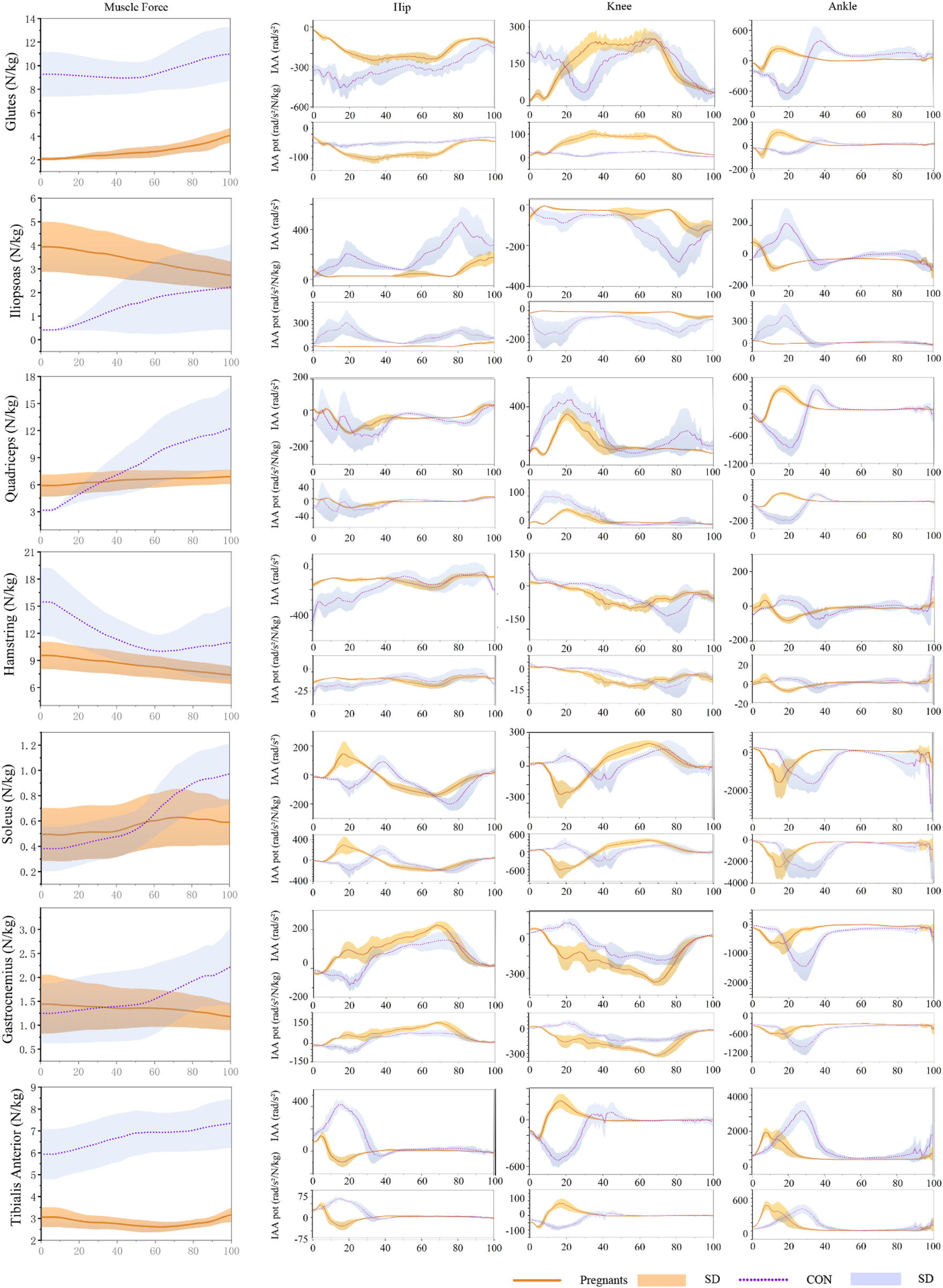
ORIGINAL RESEARCH
16 May 2023
Xin Li, 5 more and Yaodong Gu
7 Authors
- XL
Xin Li
Faculty of Sports Science, China
- ZL
Zhenghui Lu
Faculty of Sports Science, China
- XC
Xuanzhen Cen
Faculty of Sports Science, China
- YZ
Yizheng Zhou
Faculty of Sports Science, China
- RX
Rongrong Xuan
The Affiliated Hospital of Medical School, China
- DS
Dong Sun
Faculty of Sports Science, China
- YG
Yaodong Gu
Faculty of Sports Science, China
The changes in physical shape and center of mass during pregnancy may increase the risk of falls. However, there were few studies on the effects of maternal muscles on gait characteristics and no studies have attempted to investigate changes in induced acceleration during pregnancy. Further research in this area may help to reveal the causes of gait changes in women during pregnancy and provide ideas for the design of footwear and clothing for pregnant women. Forty healthy participants (20 pregnant and 20 non-pregnant women) participated in this study. The portable gait analyzer was used to collect participants’ conventional gait parameters. The adjusted OpenSim personalized musculoskeletal model analyzed the participants’ kinematics, kinetics, and induced acceleration. Independent sample T-test and one-dimensional parameter statistical mapping analysis were used to compare the differences in gait characteristics between pregnant and non-pregnant women in the third trimester. Compared with the control group, the women’s walking speed, stride length, stride frequency, thigh acceleration, swing work, and leg falling strength in the third trimester of pregnancy were significantly decreased (p<0.01). Induced acceleration analysis showed that muscle-induced acceleration decreased in the third trimester of pregnancy (p<0.01). However, the contribution of gastrocnemius muscle to the hip joint and knee joint increased (p<0.01). Compared with non-pregnant women, the gait characteristics, movement amplitude, and joint moment of women in the third trimester of pregnancy changed significantly. In addition, the results of induced acceleration analysis showed that the effect of gastrocnemius muscle on hip flexion and knee joint extension increased. This change may be due to an adaptive change in body shape and mass during pregnancy.
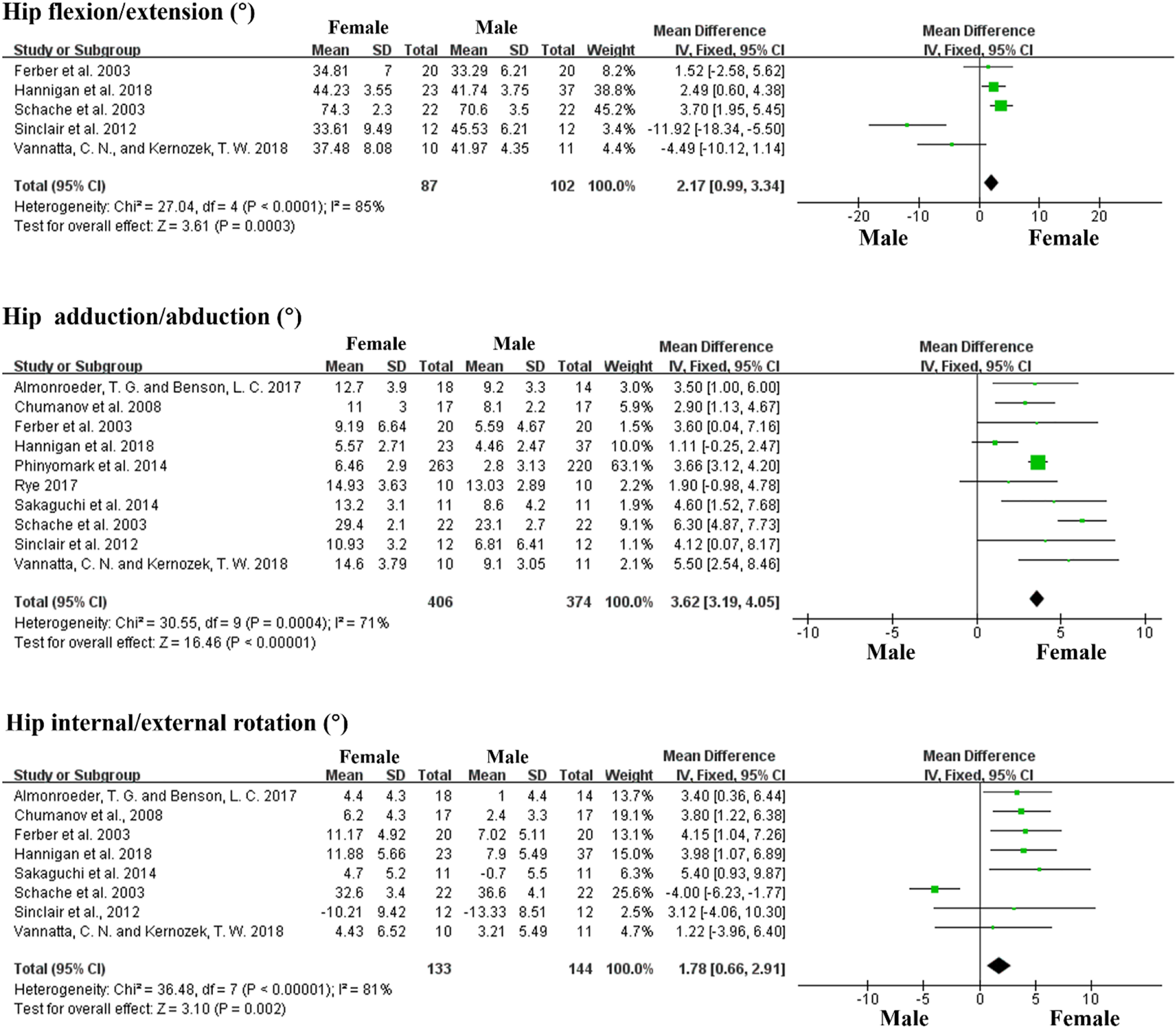
Patellofemoral disorders in female runners are more common in comparison with their male counterparts. The difference in biomechanical characteristics between female and male runners could provide the relative evidence for higher injuries rate happen in female runners, would be beneficial for physical therapists, athletic trainers to develop the individual’s prevention program. This review aimed at comparing biomechanical characteristics between female and male runners. Four electronic databases were searched. Crossover design studies comparing gender differences in lower extremity mechanics during running in healthy participants and written in English were involved. Mate-analyses were used where possible. 10 studies were selected. The difference of kinetic variables and muscle activation between females and males cannot be conducted a meta-analysis due to the insufficient data. The meta-analyses of kinematic variables, revealed that females exhibited significantly greater hip adduction angle, hip internal rotation angle, as well as keen flexion angle than males during running. There are significant differences in kinematic variables between female and male runners during running. Physical therapists, athletic trainers who work with running should be aware of these characteristics to develop injuries prevention programs and provide training advice.