 Annika M. Voogt
 Winanda W. Ursinus
 Dick T. H. M. Sijm
 Johan H. Bongers
- Office for Risk Assessment & Research (BuRO), Netherlands Food and Consumer Product Safety Authority (NVWA) , Utrecht, Netherlands
One of the aims of the Dutch Animals Act is to protect animal welfare. The assumption that animal welfare risks are managed and mitigated by the Act, however, has not been studied before. The aim of this paper is to evaluate whether or not animal welfare risks can be managed adequately under the current Dutch Animals Act and what modifications to the legislation could improve animal welfare in the Netherlands. For that purpose, welfare consequences identified in various supply chain risk assessments from the Office of Risk Assessment & Research (BuRO) were assessed in conjunction with the Dutch Animals Act and related legislation. A distinction was made between means- and goal-oriented legislation. The current Dutch Animals Act uses the “Five Freedoms” to define animal welfare. However, this seems outdated, given that current scientific insight also indicates that positive experiences should be included as an integral part of animal welfare. Currently, most welfare consequences in supply chains are linked to factors that are regulated by Dutch legislation as qualitative, goal-oriented, open standards. Furthermore, there is no species-specific legislation for some of the most common farm animals in the Netherlands, e.g., dairy cattle. By applying the latest scientific insights, both the current Dutch Animals Act and associated legislation can be improved to more appropriately manage animal welfare risks. As suggestions for improvement, we propose that the definition of animal welfare in the Dutch Animals Act is updated, that species-specific legislation for farm animals is developed where not already applicable, and that animal-based measures (ABMs) are integrated into legislation. As amendments to animal welfare legislation at the European level are currently being developed, our proposals to include the most recent scientific insights in animal welfare legislation also hold for European legislators.
1 Introduction
Legislation is one of the policy instruments available to improve and protect animal welfare. In the past, significant improvements in animal welfare were made by new legislation, for instance when the use of battery cages for laying hens and crates for veal calves was banned (Broom, 2017). The aim of current animal welfare legislation is to prevent unnecessary suffering and should therefore cover animal welfare risks (Lundmark et al., 2018). With the Treaty of Amsterdam (1997) and the Treaty of Lisbon (2007), animals are recognized as sentient beings in the European Union (EU). This means that they have an intrinsic value that needs to be taken into account, i.e., the animal’s integrity must be respected when making policy and drafting new legislation (Miele et al., 2013; Broom, 2017; Lundmark Hedman et al., 2021b). Intrinsic value can be understood as an animal having its own value independent of its use to humans or other animals (Brennan and Lo, 2020). The kind of value ascribed to animals can differ and is of ethical concern (Broom, 2014). As the intrinsic value of animals is considered in legislation, animal welfare is inherently involved as well. When animals are considered to possess intrinsic value, people who exploit them should avoid poor animal welfare (Broom, 2014). However, there is no uniform definition of the term “animal welfare”, and views on animal welfare in science and society are constantly developing (Fraser, 2008; Robbins et al., 2018). The term “animal welfare” is used frequently in society, in the media, and in politics. Definitions of acceptable or good animal welfare are influenced by the moral and ethical standards of society. The determination of what constitutes an acceptable level is strongly influenced by the knowledge of society regarding animal welfare on the one hand and public values on the other hand (Mellor et al., 2009; Green and Mellor, 2011; Ohl and van der Staay, 2012). From an animal science point of view, animal welfare involves the physical and mental state of animals, not the ethical duty that people have to take care of animals or the value that people should attribute to animals (Keeling et al., 2018). In this paper, animal welfare is regarded from the animal science point of view: the physical and mental state of animals.
Today, it is widely accepted in science that good animal welfare involves more than just the absence of negative experiences for the animal; animals should also have positive experiences (Boissy et al., 2007; Edgar et al., 2013; Mattiello et al., 2019). Initial definitions of animal welfare were based primarily on the importance of biological function, good health and growth, production, and reproduction. Attention was largely focused on the negative consequences of poor animal welfare (Yeates and Main, 2008; FAWC, 2009; Ohl and van der Staay, 2012). Examples of how animal welfare has been defined in the past include the definition of Simonsen (1982) of animal welfare as “a state in which animals are free of pain and suffering” and the Five Freedoms as stated by the British Farm Animal Welfare Council (FAWC) in 1993, based on the requirements for animal welfare formulated by the Brambell Committee in 1965 (FAWC, 1993; FAWC, 2009; Ohl and van der Staay, 2012; Broom, 2017). These Five Freedoms are as follows:
1. freedom from hunger and thirst;
2. freedom from discomfort;
3. freedom from pain, injury, and disease;
4. freedom to express normal behavior; and
5. freedom from fear and distress.
Over the years, new scientific insights have emerged, and the term “animal welfare” is evolving toward a concept in which the experiences of animals themselves (including positive experiences) and their ability to cope with their environment are considered. Several examples of these later definitions are as follows:
The term “welfare” refers to the state of an individual in relation to its environment, and this can be measured. Both failure to cope with the environment and difficulty in coping are indicators of poor welfare (Broom, 1991).
Animal welfare is the quality of life as it is experienced by the animal itself (Bracke et al., 1999).
Animal welfare is to do with the feelings experienced by animals: the absence of strong negative feelings, usually called suffering, and (probably) the presence of positive feelings, usually called pleasure (Duncan, 2005).
Positive welfare means that animals have the ability to respond appropriately (i.e. adaptively) to positive and potentially harmful (negative) stimuli (Ohl and van der Staay, 2012).
The Five Freedoms seem an idealized goal (an animal’s life will never be completely free of hunger, thirst, discomfort, disease, etc.) and consider negative animal experiences (by using words such as fear and distress) rather than focusing directly on the positive experiences of the animal (the absence of fear or distress does not equate to positive experiences and, therefore, good welfare) (Mellor, 2016). In recent decades, the Five Freedoms have evolved into the concept of the Five Domains Model, consisting of the nutritional, environmental, health, behavioral, and mental domains. Each domain can compromise the animal’s welfare. Compromises in the four physical/functional domains, i.e., nutrition, environment, health, and behavior, affect the emotional experience of the animal in the fifth, mental, domain (see Figure 1) (Mellor and Reid, 1994; Mellor et al., 2009; Green and Mellor, 2011).
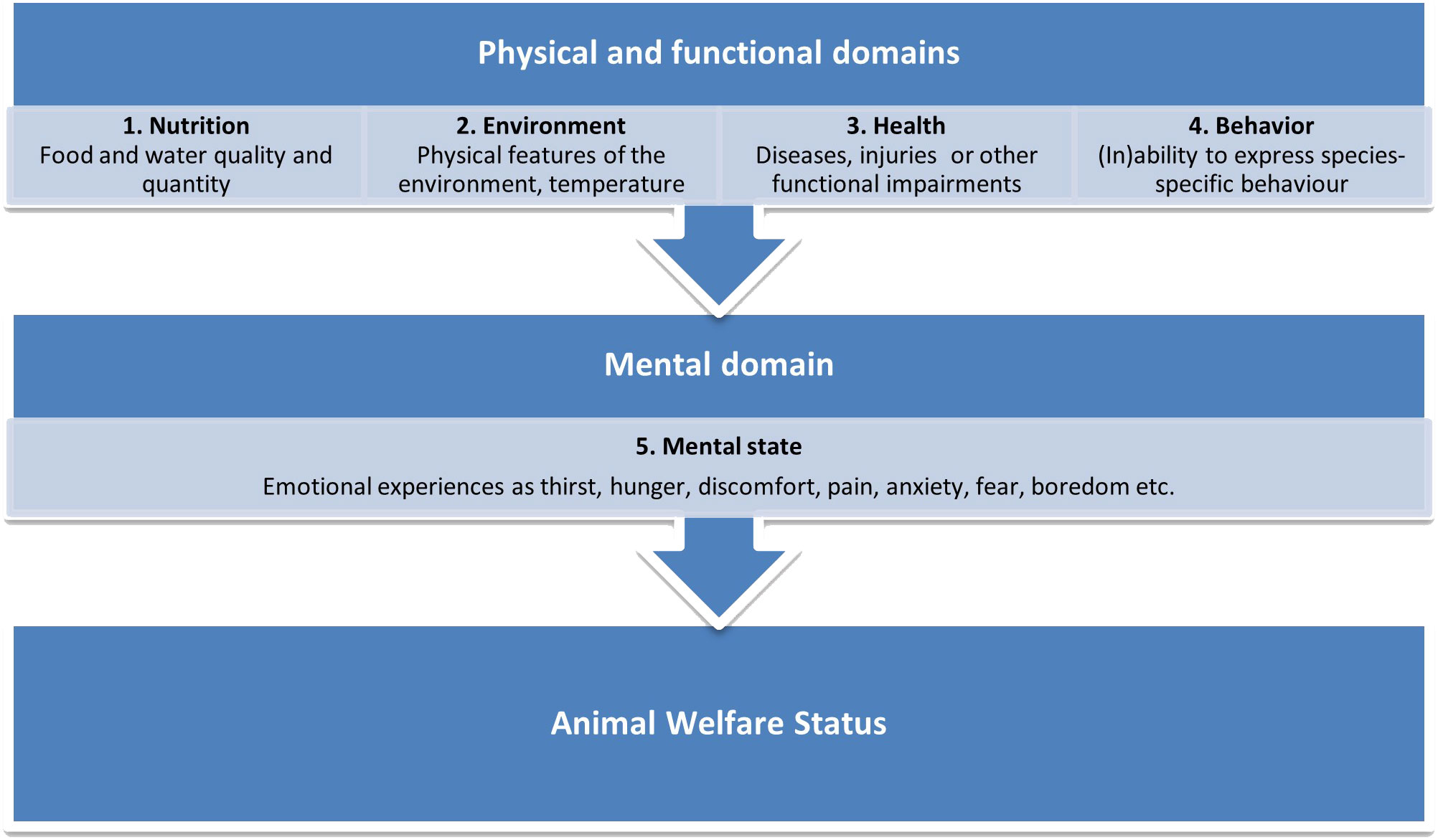
Figure 1 The Five Domains Model. The four physical and functional domains, i.e., nutrition, environment, health, and behavior, affect the emotional experience of the animal, i.e. the fifth domain, and together the five domains define the animal’s welfare status (Mellor et al., 2009; Mellor and Beausoleil, 2015; Mellor, 2016).
Animal welfare can be approached from a holistic perspective (Figure 2), as stated by Blokhuis et al. (2013): “Animal welfare is viewed as a holistic concept: it emerges from various components but is more than a mere sum of these components.” According to Fraser et al., the animal welfare concept consists of basic health and functioning (health, growth, and productivity), natural living (fairly natural life and expression of normal and species-specific behavior), and affective state (emotions and feelings that are experienced as pleasant or unpleasant). Good animal welfare will be achieved only if all three of these aspects are taken into consideration (Fraser et al., 1997; Fraser, 2003; Fraser, 2008).
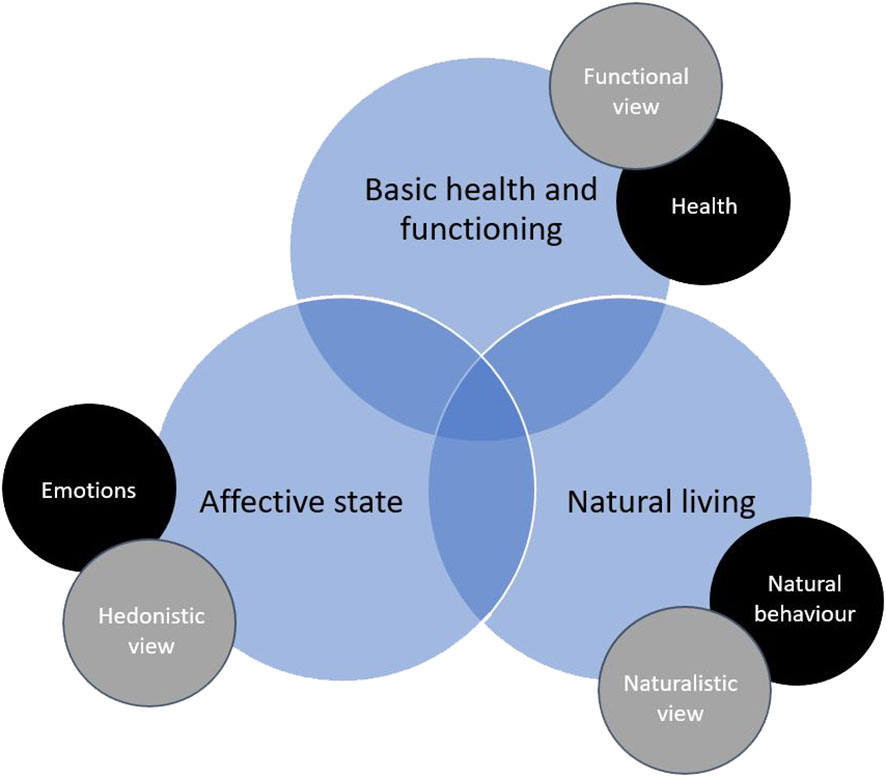
Figure 2 The three suggested concerns of animal welfare according to Fraser (2008). These concerns are sometimes presented from the human perspective [gray; (Fraser et al., 1997; Forkman, 2018; Rault et al., 2020)] or the animal perspective [black; (Fraser et al., 1997)].
How animals cope with positive and negative experiences and how they are able to adapt to their environment are discussed in the dynamic welfare concept of Ohl and van der Staay (2012). Animal welfare is, for example, not immediately poor when an animal is hungry; in some cases the animal can adapt by foraging and eating, thus meeting its nutritional needs. Arndt et al. (2022) elaborated on this concept and presented the Dynamic Animal Welfare Concept (DAWCon), focusing on the dynamic aspects of animal welfare and the adaptive capacity of the animal, and highlighting the relevance of positive experiences and normal behavior:
An individual animal is likely in a positive welfare state when it is mentally and physically capable and possesses the ability and opportunity to react adequately to sporadic or lasting appetitive and adverse internal and external stimuli, events, and conditions. Adequate reactions are elements of an animal’s normal behaviour. They allow the animal to cope with and adapt to the demands of the (prevailing) environmental circumstances, enabling it to reach a state that it perceives as positive, i.e., that evokes positive emotions(Arndt et al., 2022).
Mellor (2016) developed the Quality-of-Life concept to assess animal welfare in the long term, considering the balance between positive and negative experiences. This resulted in the assessment of the life of an animal on a scale from “a life not worth living” to “a life worth living” and “a good life”. This scale is a continuation of the notions of “a life (not) worth living” and a “good life” developed by the British Farm Animal Welfare Council (FAWC, 2009).
The welfare of an animal is influenced by its physical environment, including the available resources for the animal, such as the available space, type of housing, and bedding/litter. These are “resource-based measures” or environmental factors. The farmer’s “management-based measures”, i.e., the management factors, also play a role. For example, appropriate animal handling, adequate food, and pain relief medication are essential for an animal’s welfare. In addition, individual animal characteristics, such as age, breed, and sex, affect the animal’s ability to cope with a stressor and, thus, the animal’s wellbeing. These environmental factors affect the animal, which may result in a physiological and/or behavioral reaction, i.e., the welfare consequence (Figure 3) (EFSA, 2012f; Miele et al., 2013). Therefore, animal-based measures would be most suitable to be used as indicators of animal welfare (EFSA, 2012f; Velarde and Dalmau, 2012; Blokhuis et al., 2013; Maisano et al., 2020). By considering animal-based measures that are related to the behavior and physiology of the animal, the emotion of the animal is acknowledged as well. Broom (2014) explains that, for instance, fear is a feeling and that “feeling” encompasses the emotion. Fear is expressed by physiological changes, such as increased heart rate and increased sweating, and behavioral changes, such as facial movements and a greater tendency to flee.
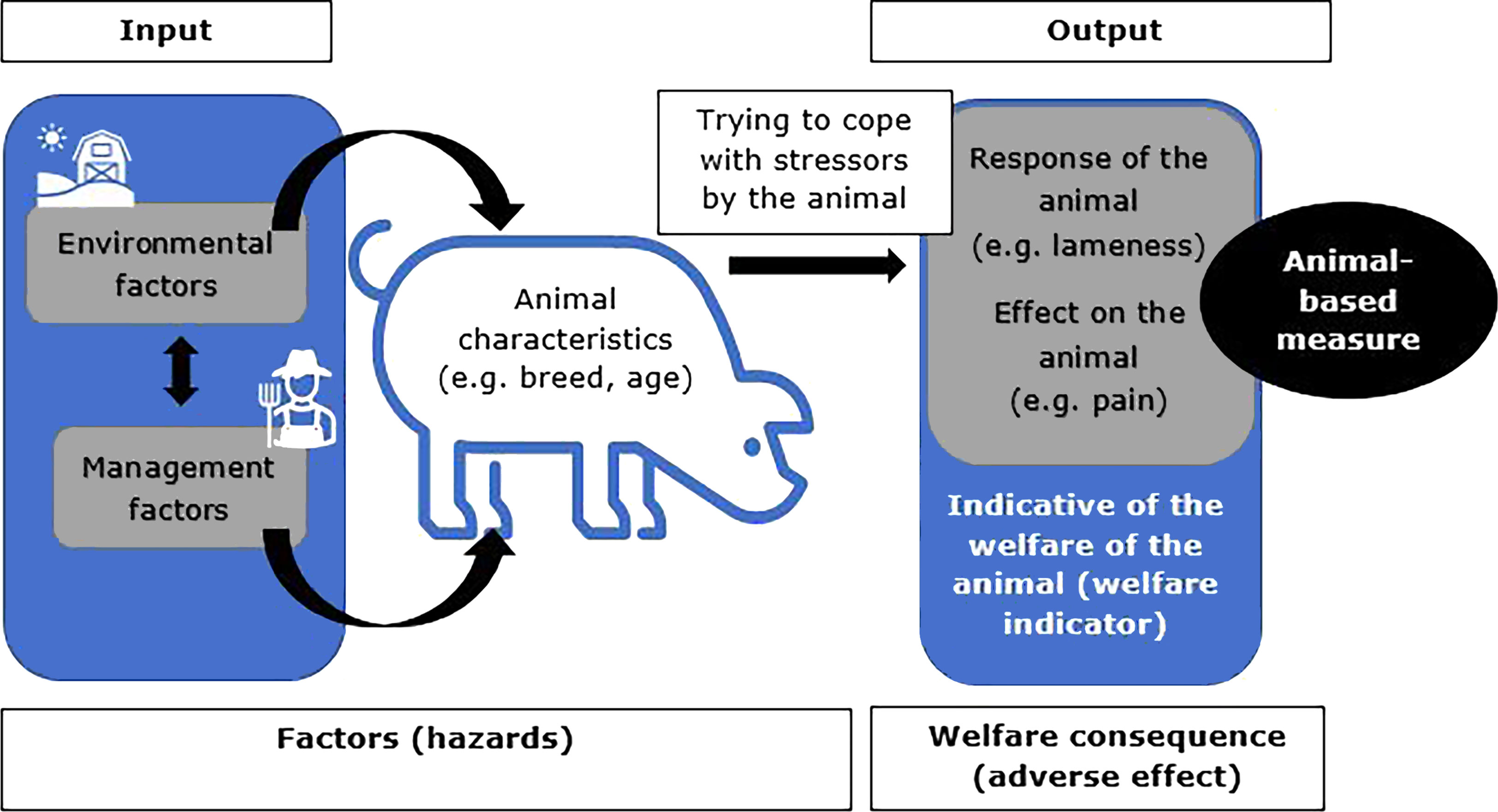
Figure 3 Overview of the factors and their relation on influencing the animal’s welfare, including the indicators for welfare, adjusted from EFSA (2012f). This figure represents a negative effect and how different factors can have a negative influence; however, a welfare consequence can also be positive, as certain factors can have a positive effect.
Relevant animal welfare issues can be identified using a risk assessment. In a risk assessment, exposure to hazard(s) and the severity, duration, and prevalence of the welfare consequence(s) are taken into account (EFSA, 2009a; EFSA, 2012a; EFSA, 2012e; EFSA, 2012f). An animal welfare risk is defined as “a function of the probability of negative welfare consequences and the magnitude of those consequences, following exposure to a particular factor or exposure scenario, in a given population” (EFSA, 2012a). In a risk assessment, environmental and management factors and animal characteristics are referred to as “hazards”.
As the process of creating and implementing legislation is long, legislation usually lags behind scientific progress. Thus, it remains to be determined whether or not current Dutch legislation covers relevant welfare risks that have been identified by the most recent scientific insights.
The Dutch Animals Act (Wet dieren) is one of a number of policy instruments used to safeguard animal welfare and animal and public health in the Netherlands. The underlying decrees and ministerial regulations include the Animal Keepers Decree, the Animal Keepers Regulation, and the Veterinarians Decree. Many aspects of Dutch legislation and regulations on animal welfare originate from EU legislation. EU Member States are required to implement EU directives in their national legislation (Veissier et al., 2008; Vogeler, 2019b). The national legislation of EU Member States must be at least equivalent to EU directives, but can also be stricter. There are EU directives regarding farm animals (98/58/EC), and more detailed directives on the housing and keeping of calves confined for rearing and fattening (2008/119/EC), pigs confined for rearing and fattening (2008/120/EC), broilers (2007/43/EC), and laying hens (1999/74/EC).
According to EU Directive 98/58/EC, animal welfare is a static concept (“the welfare should be ensured”) and not a concept that has a range from very poor to very good, as is the accepted view in current science (“good welfare should be ensured”). Positive experiences, e.g., joy, are not represented or specified in EU Directive 98/58/EC (von Gall and Gjerris, 2017). The EU Directive mentions the protection of animals but does not mention animal welfare, as it focuses on the prevention of unnecessary suffering. In addition, national animal welfare legislation (i.e., in Sweden, Norway, Austria, Germany, the United Kingdom, and Spain) focuses on the prevention of animal suffering, avoiding negative welfare consequences by doing no harm to the animals, and giving the animals proper care. This is to be expected, as the concept of the Five Freedoms was the basis of the European legislation that EU Member States are required to implement (De Cock Buning, 2009; von Gall and Gjerris, 2017; Lundmark et al., 2018). Because legislation focuses not on the prevention of suffering entirely but on the prevention of “unnecessary” suffering, animal suffering or pain can occur when other concerns (i.e., human benefits) prevail (von Gall and Gjerris, 2017; Lundmark et al., 2018). In the four EU directives (relating to farm animals, laying hens, broilers, and pigs), concerns other than animal welfare alone were taken into account when setting the standards for mutilation, environmental enrichment, and stocking density (Näsström, 2021). Similar trends can be observed in national legislation on animal welfare in Sweden, Germany, the United Kingdom, and Spain (Lundmark et al., 2014). Consequently, despite the obvious negative animal welfare consequences, some types of mutilation, such as beak trimming in poultry and teeth grinding and tail docking in young piglets, are permitted under certain conditions in the EU. Another example is the slurry system, which overrules the behavioral needs of sows. In the week before the expected farrowing date, sows and gilts must receive sufficient quantities of suitable nesting material, unless this is technically not feasible because of the slurry system used at the farm (Näsström, 2021).
In general, different stakeholders influence the content and details of legislation and, therefore, concerns other than the needs of the animal, such as the economy, tradition, and expectations from society, are also taken into account (De Cock Buning, 2009; Lundmark Hedman et al., 2021b). Lundmark Hedman et al. (2021b) analyzed the impact of animal welfare research and the interest of NGOs, industry, and other stakeholders on revisions to the Swedish legislation on animal welfare between 1988 and 2019 by the Swedish Central Competent Authority (CCA). Amendments to Swedish legislation were mainly made to improve animal welfare, but were also in the interest of the industry. In the case of a large number of the revisions, the determining influence of a specific stakeholder was not clear, but 14% of amendments were in response to feedback from industry, 5% were in response to feedback from regional control authorities, and 4% were implemented to address comments from researchers. This indicates that industry seemed to have the greatest impact, and the resulting amendments led to a relaxation of some requirements in the Swedish animal welfare legislation. However, over the past 30 years, Swedish requirements for animal welfare have increased. Moreover, there is a trend toward more goal-oriented legislation, with fewer details, in Sweden (Lundmark Hedman et al., 2021a). The advantage of goal-oriented legislation is that the focus is on the welfare outcome envisaged for animals, rather than, for example, on fixed housing requirements and dimensions (O'Hara and O'Connor, 2007). Therefore, legislation is more flexible and leaves room for the implementation of innovations in the industry. On the other hand, goal-oriented legislation can be considered more vague, leaving room for misinterpretation or different interpretations by animal keepers and inspectors (Lundmark Hedman et al., 2021a).
No scientific research has been carried out on the relationship between animal welfare risks and Dutch animal welfare legislation and, therefore, the suitability of the legislation to cover these risks is not well understood. The Dutch Animals Act was implemented in stages from January 2013 to July 2014. Article 10.11 of the Act stipulates that the Act has to be evaluated after 5 years. Therefore, the Dutch Animals Act was evaluated in 2019–2020 by an independent organization (Berenschot), with the main focus on the design of the legislation (Berenschot, 2020). The Office for Risk Assessment & Research (BuRO) of the Netherlands Food and Consumer Product Safety Authority (NVWA) has provided a separate evaluation and advice (which later became part of the independent evaluation of Berenschot), which focused on the content of the legislation (BuRO, 2021). The current analysis is part of the evaluation carried out by BuRO and is an elaboration on the advice. Animal welfare risks identified in previous risk assessments by BuRO on animal welfare in the food chain are evaluated in conjunction with the topics and types of legislation in the Dutch Animals Act. We aimed to examine whether or not animal welfare risks can be regulated under the current Dutch Animals Act and what modifications could safeguard the welfare of livestock in the Netherlands.
2 Materials and methods
2.1 Context and design of the Dutch Animals Act
In the Explanatory Memorandum of an act, the legislator clarifies the background and context of the act and the envisaged measures. To include this context and these considerations in the current analysis, as well as the definition used for animal welfare, both the Dutch Animals Act and the accompanying Explanatory Memorandum were studied (Minister van Landbouw Natuur en Voedselkwaliteit, 2009).
2.2 Identifying welfare consequences from risk assessments
In recent years, BuRO has performed several risk assessments on farm animal production chains. The risk assessments by BuRO are based on the EFSA assessment method (EFSA, 2009a; EFSA, 2012a; EFSA, 2012e), which is in line with the “Food Code” (Codex Alimentarius) (FAO/WHO, 1995) and Regulation (EC) No. 178/2002. Between 2015 and 2019, BuRO published risk assessments of the red meat supply chain (mainly focused on pigs and veal calves) (BuRO, 2015; BuRO, 2019c), the dairy supply chain (dairy cows, sheep, goats, and their offspring) (BuRO, 2017), the poultry meat supply chain (ducks, turkeys, and all phases of broiler breeding) (BuRO, 2019b), the egg supply chain (laying hens in different housing systems) (BuRO, 2019a), and the food crop and animal feed supply chains (focusing only on the health of livestock in general) (BuRO, 2019d). In the present analysis, the results of these risk assessments by BuRO were used (i.e., no new or integral risk assessment was conducted in the present study) to identify the relevant hazards and welfare consequences, and the impact (severity and duration) and prevalence, of the welfare consequences.
The identified animal welfare consequences were gathered from the various supply chains and categorized in accordance with the Welfare Quality® principles and criteria (see Table 1; Figure 4). Note that these were considered the most relevant welfare consequences at the time of compiling the BuRO risk assessments, i.e., not all welfare consequences are included. Welfare consequences with a very low impact and, for example, animal diseases that were not prevalent in the Netherlands were not included. Therefore, it is the welfare consequences, and not the underlying risk factors, that were used as the starting point for the analyses. Welfare consequences are the effects animals experience based on the risks they are exposed to, and, therefore, these consequences directly affect animal welfare.

Table 1 The Welfare Quality® principles and criteria (Jones and Manteca, 2009).
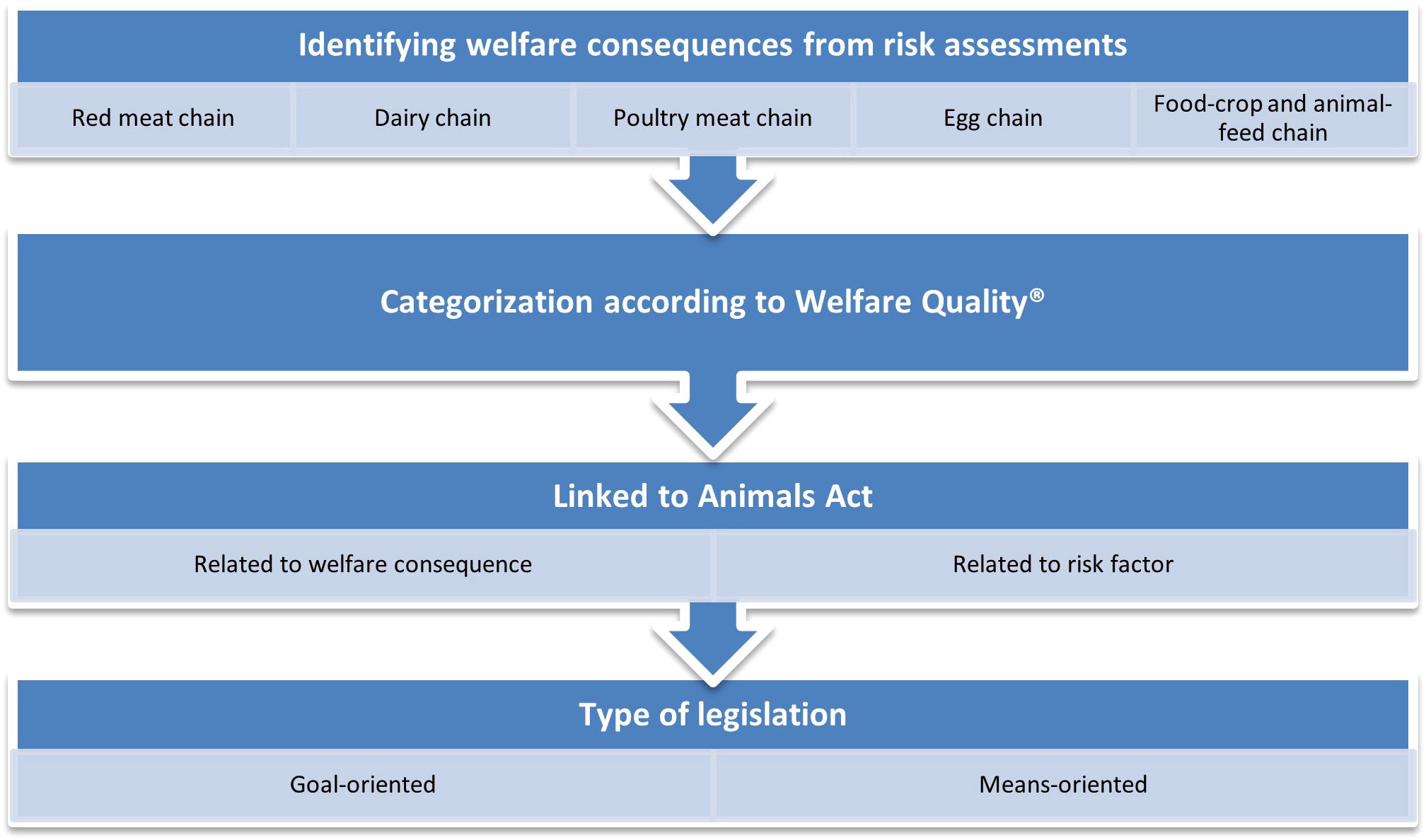
Figure 4 Simplified representation of the steps taken in this analysis to identify the welfare consequences in the various risk assessments and their representation in the legislation.
EFSA’s definitions of a welfare consequence, factor, and hazard, which are as follows, are used:
Welfare consequences are changes in welfare that result from the effect of a factor or factors. Factors are defined as any aspect of the environment of the animals in relation to housing and management, animal genetic selection, transport and slaughter, which may have the potential to impair or improve their welfare. A hazard is a factor with the potential to cause poor welfare (EFSA, 2012a).
The diseases identified in the dairy supply chain risk assessment were summarized as viral and bacterial infections and metabolic diseases to be comparable with the results of the other risk assessments, in which diseases were not listed individually. Welfare consequences related to transport and the slaughterhouse stage were disregarded, since the Dutch Animals Act and underlying regulations do not include any national standards regarding welfare consequences in the transport and slaughterhouse stages.
2.3 Welfare consequences and legislation and regulations
The welfare consequences gathered from the BuRO risk assessments of the different supply chains (BuRO, 2015; BuRO, 2017; BuRO, 2019a; BuRO, 2019b; BuRO, 2019c; BuRO, 2019d) were compared with the rules in the Dutch Animals Act and the underlying decrees and ministerial regulations, such as the Animal Keepers Decree and the Animal Keepers Regulation. Regulations were checked to ascertain whether (1) each of the welfare consequences were addressed or if options to prevent these welfare consequences were provided; (2) regulations were related to the welfare consequence or a risk factor that contributed to the welfare consequence (e.g., hygiene requirements, which are a risk factor for disease); and (3) the rule was a goal-oriented regulation or a means-oriented regulation (see Table 2). There are two types of goal-oriented regulations: quantitative and qualitative. A quantitative goal-oriented regulation requires the achievement of a specific and measurable result. An example of a quantitative goal-oriented regulation is Article 2.23(1) of the Animal Keepers Decree: “The light intensity in a housing unit intended for pigs will be a minimum of 40 lux, measured vertically at animal height, for a minimum of 8 hours a day” (derived from requirement 2 of Annex 1, Chapter 1, of EU Directive 2008/120/EC). Qualitative goal-oriented regulations are so-called open standards (ter Borg et al., 2009) that state the intended goal or outcome, but do not specify the immediate, measurable result required to meet the needs of the animal. An example of a qualitative goal-oriented regulation is Article 1.6(2) of the Animal Keepers Decree: “Animals must be given the space they need to meet their physiological and ethological needs” (derived from EU Directive 98/58/EC). A means-oriented regulation stipulates which technical means or technologies must be used to meet the goal (Uylenburg et al., 2010), such as Article 2.22(4) of the Animal Keepers Decree: “Piglets must have a solid floor or a floor covered with a rubber mat; the floor space provided must be a minimum of 0.6 m2 per litter of piglets” (derived from C.1 of Annex 1, Chapter 2, of EU Directive 2008/120/EC).
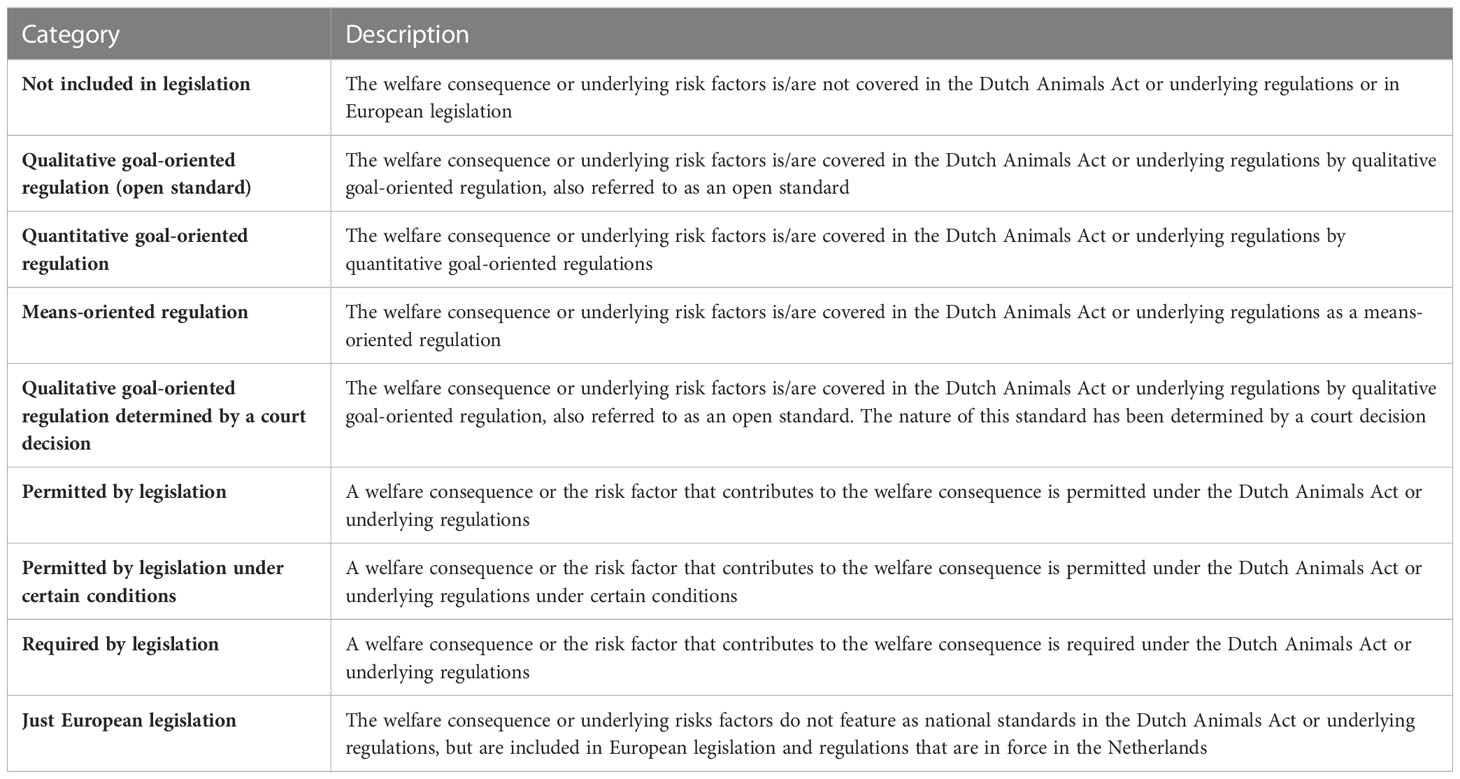
Table 2 Description of the categorization of legislation defined in this analysis.
3 Results
3.1 Definition of animal welfare in the Dutch Animals Act
As previously stated, the Dutch Animals Act derives its animal welfare principles from the Five Freedoms, as described by the Farm Animal Welfare Council (FAWC, 1993). The Dutch Animals Act and the Explanatory Memorandum recognize the intrinsic value of the animal and acknowledge that animals have their own rights as sentient beings. According to the Dutch Animals Act, any violation of the integrity or well-being of animals, beyond what is reasonably necessary, has to be avoided. In addition, all the care reasonably required for the animals must be guaranteed, which includes safeguarding the animals against (1) thirst, hunger, and malnutrition; (2) physical and physiological discomfort; (3) pain, injury, and diseases; (4) fear, distress, and chronic stress; and (5) the limitation of their natural behavior. The Dutch Animals Act refers to natural behavior, while the original Five Freedoms refer to normal behavior.
3.2 Welfare consequences from risk assessments
In total, 109 welfare consequences (see Table 3) were identified in the risk assessments of the various animal supply chains, as previously assessed by BuRO. The general Welfare Quality® principle “good health” accounted for the majority of the identified welfare consequences (74 out of 109), of which the greatest portion (41) related to the criterion “absence of disease”. Discomfort from ear tagging or disbudding is an example of the 19 welfare consequences caused by “pain due to management procedures”. The principle of “appropriate behavior” could be associated with 21 welfare consequences, in particular with the criterion “expression of other welfare related behaviors” (14 out of 109).
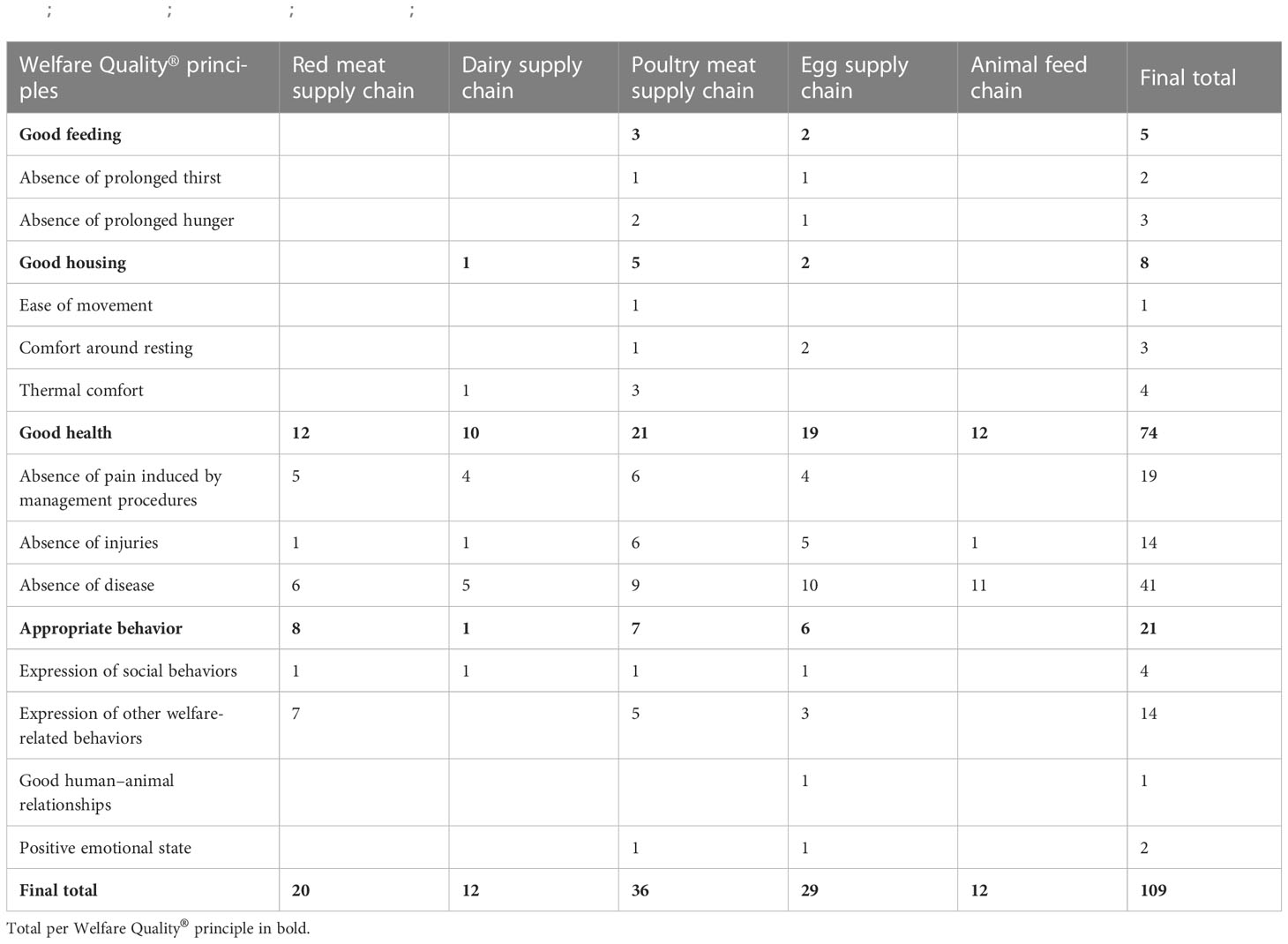
Table 3 Number of welfare consequences identified in the red meat, dairy, poultry meat, egg, and animal-feed supply chains (BuRO, 2015; BuRO, 2017; BuRO, 2019a; BuRO, 2019b; BuRO, 2019c; BuRO, 2019d), categorized in accordance with the Welfare Quality® concept.
In the red meat supply chain, examples of welfare consequences are social stress caused by the separation of cows and calves, tail and ear biting among pigs, the stress and pain caused by the castration of piglets, and claw problems in veal calves. The majority of welfare consequences in the dairy supply chain are categorized as “pain due to management procedures” and “disease” aspects of the “good health” principle. Welfare consequences include discomfort from ear tagging or disbudding, and viral, bacterial, and endoparasitic infections. In the poultry meat and egg supply chains, the majority of welfare consequences identified can be categorized as aspects of the “good health” principle. Examples of welfare consequences are footpad dermatitis, beak trimming, gastrointestinal problems, and respiratory problems. In the animal feed supply chain, the identified welfare consequences are categorized as aspects of the “good health” principle, for instance copper poisoning, reduced weight, and botulism.
3.3 Identified welfare consequences and Dutch legislation and regulations
Most welfare consequences identified in the risk assessments of the various animal supply chains previously assessed by BuRO are included in Dutch legislation and regulations only as part of a qualitative goal-oriented regulation (i.e., an open standard) (Table 4). These goal-oriented regulations relate to both welfare consequences and risk factors (see the supplementary material for a complete overview of the welfare consequences per animal supply chain and the details of the Dutch legislation). Seventeen welfare consequences were linked to means-oriented regulations, for example footpad dermatitis scores for broilers, housing provided for broiler parent stock, ventilation, cooling, and heating systems for broilers, and enrichment for pigs.
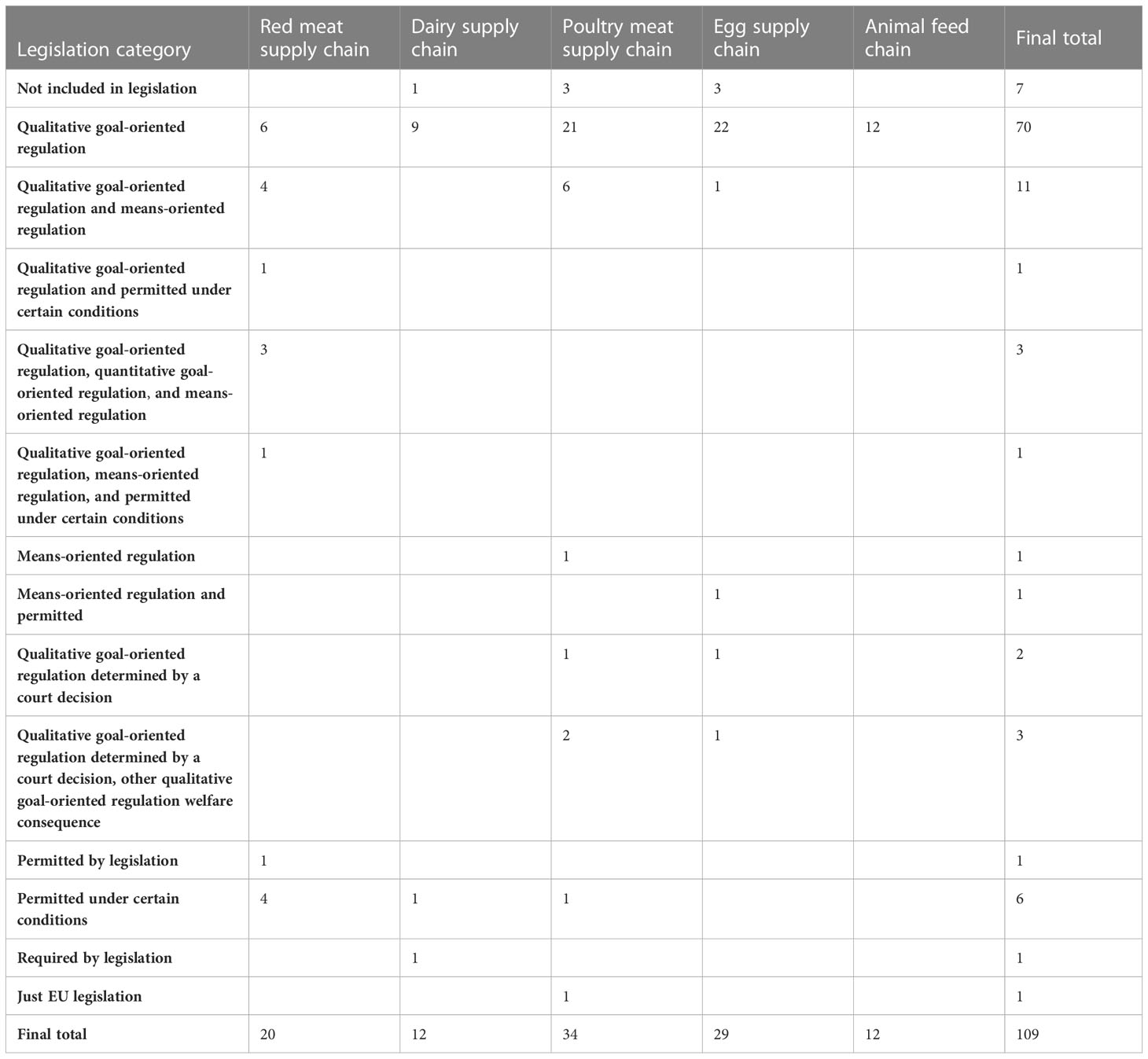
Table 4 Number of welfare consequences mentioned in the red meat, dairy, poultry meat, egg, and animal feed supply chains (BuRO, 2015; BuRO, 2017; BuRO, 2019a; BuRO, 2019b; BuRO, 2019c; BuRO, 2019d), categorized by type of legislation and supply chain.
The following seven welfare consequences identified in the risk assessments carried out in the various supply chains were not addressed in the legislation or regulations:
1. breeding-related health problems in cattle;
2. the effects of beak trimming after the intervention itself on poultry kept for meat production;
3. the effects of beak trimming after the intervention itself on laying hens;
4. skeletal abnormalities in ducks, broilers, and their grandparent and parent stock;
5. damage to the plumage of the grandparent and parent stock of broilers;
6. the smothering of laying hens (caused by them huddling together); and
7. fear of people in laying hens.
According to legislation and regulations, six welfare consequences are permitted under certain conditions (indicated in brackets in the text below). These consequences are the result of the following animal management interventions:
1. the disbudding of cattle, sheep, and goats (under supervision of a veterinarian and with local anesthetic);
2. the killing of cattle, sheep, and goats without prior stunning (for ritual slaughter);
3. the grinding of piglets’ teeth (if the animal is not older than 7 days, the teeth stay smooth and intact, injuries have been found in other pigs, and other measures have not proved effective);
4. the castration of piglets (if the animal is older than 7 days and the procedure is performed under anesthesia with additional long-term analgesia);
5. the tail docking of piglets (if the animal is not older than 4 days, injuries have been found in other pigs, and other measures have not proved effective); and
6. the cutting of the back toe of grandparent and parent poultry rearing stock (with a dispensation for roosters until January 2023 and if the animal is not older than 2 days).
In contrast to the six welfare consequences mentioned above, which are permitted under certain conditions, the welfare consequence of limiting the behavioral repertoire of sows by individually housing them prior to farrowing and during nursing is allowed in conventional farming according to legislation and regulations. The welfare consequence “pain” is related to the risk factor “ear tagging”, which applies to, for example, cattle, sheep, and goats. Ear tagging is even compulsory by law, as it is considered to be necessary for the identification and registration of the animals.
Within supply chains and different animal species, different types of legislation and regulations are applicable (Table 4). In the poultry and red meat supply chains, means-oriented regulations and quantitative goal-oriented regulations are common, and, in the red meat supply chain, many welfare consequences are conditionally permitted, such as piglet castration, teeth grinding, and tail docking. By contrast, most welfare consequences in the dairy and egg supply chains are related to qualitative goal-oriented regulations (i.e., open standards).
4 Discussion
Welfare consequences derived from previous risk assessments on animal welfare carried out by BuRO were compared with the rules set by the legislation of the Dutch Animals Act. Most of the identified welfare consequences were included in legislation and regulations only as part of a qualitative goal-oriented regulation (open standard). Animal welfare risks appear to be insufficiently mitigated by the Dutch national legislation. Given that the current legislation is based on the historical animal welfare concept of the Five Freedoms, we propose the use of a more holistic approach in animal welfare policy development.
4.1 Animal welfare in the Dutch Animals Act
The definition of animal welfare used in the Dutch Animals Act is not in line with recent scientific developments in animal welfare. It is based on the Five Freedoms (FAWC, 1993), and thus defines welfare as the absence of negative welfare consequences. The Netherlands is not unique in adopting this approach. European legislation and other national legislations (e.g., in the UK, Sweden, Spain, and Germany) also base their animal welfare legislation on the Five Freedoms (Lundmark et al., 2018; Vogeler, 2019a; Vogeler, 2019b). The Five Freedoms are frequently used as the basis for (inter)national policy and for marketing and quality systems (FAWC, 2009; Ohl and van der Staay, 2012; Mellor and Webster, 2014; Mellor, 2016). This approach, however, no longer reflects scientific developments in animal welfare, as positive experiences are also important to ensure good welfare. Positive experiences have yet to be included explicitly in Dutch legislation and regulations. Again, this is not unique to the Netherlands and may be a direct result of using the Five Freedoms; neither the German Animal Protection Law (GAPL) (Deutsches Tierschutzgesetz) nor EU Directive 98/58/EC mentions positive welfare experiences, such as joy (von Gall and Gjerris, 2017). The wording “freedom to express normal behavior” does provide room for positive experiences, but these are not mentioned explicitly (Yeates and Main, 2008; Lawrence et al., 2019). The Dutch Animals Act, rather than referring to “normal behavior”, as stated in the Five Freedoms, uses the term “natural behavior”. This is also the case in Austria and Norway. This reference to natural species-specific behavior in legislation can be regarded as a development in the positive welfare debate (De Cock Buning, 2009). Bracke and Hopster (2006) also recognized positive experiences as part of normal patterns of natural behavior: “We defined natural behavior as behavior that animals have a tendency to perform under natural conditions because these behaviors are pleasurable and because they promote biological functioning. It includes behaviors such as foraging, grooming, exploration, and play.” However, these positive experiences are not specifically mentioned in the Dutch legislation or Explanatory Memorandum. Therefore, we suggest that the definition of animal welfare in the Dutch legislation is updated to reflect the most recent accepted scientific insights. This definition should at least include positive experiences and the opportunity for animals to, as far as possible within their abilities, adapt and return to a good welfare state.
In common with EU, Swedish, British, German, and Spanish legislation, the current Dutch Animals Act focuses on the prevention of unnecessary suffering and, as a result, leaves room for suffering or pain when other concerns (human benefits) prevail and other, for example economic, concerns are also taken into account (Lundmark et al., 2014; Lundmark et al., 2018; Berg and Lundmark Hedman, 2020; Näsström, 2021; Lundmark Hedman et al., 2021b). This is underlined by an article in the Dutch Animals Act that states that “it is prohibited to cause pain or injury to an animal or to harm the animal’s health or well-being without a reasonable aim or with exceeding what is permissible for achieving such aim”. As a result, some welfare consequences are permitted (under certain conditions), such as the disbudding of cattle, sheep, and goats; the castration and tail docking of piglets; and limiting the behavioral repertoire of sows by housing them individually shortly before farrowing and during nursing. The “ear tagging” intervention, which causes pain as a welfare consequence, is compulsory. The inclusion of these interventions in the Dutch legislation is mandatory under EU directives. Some of these interventions are permitted only when using local or general anesthesia (disbudding) or anesthesia, and additional long-term analgesia (castration of piglets if they are older than 7 days), but long-term pain control and local anesthetics are not compulsory in very young animals, and not in every intervention. The suffering of animals is therefore not prevented as much as is possible. The lack of long-term pain control in legislation is an example of the current Dutch Animals Act not adequately mitigating animal welfare risks.
Another example of other concerns often being considered more important than animal welfare is the recurring—often species-specific—welfare consequences that follow selection for high productivity. Fast-growing broilers are restricted in their movement and activity as a result of their heavy weight, and have a limited behavioral repertoire (de Jong et al., 2012; Visser et al., 2015c). Other examples include spent hens and skeletal abnormalities in ducks, broilers, and parent and grandparent stock (de Jong et al., 2012; Visser et al., 2015c). In these cases, animal welfare has been secondary to (high) productivity. Legislation often applies to the welfare consequences resulting from these breeding strategies. For example, animals that appear to be sick or injured must immediately receive appropriate care, but no direct legislation applies to the underlying risk factor (the hazard), i.e., selection for high productivity, for farm animals in the Netherlands and Europe. Thus, current legislation does not directly protect farm animals from the negative consequences of breeding strategy.
4.2 Welfare consequences in risk assessments
In a risk assessment, the prevalence of welfare consequences in the population as a whole and exposure to hazards are taken into account. By identifying animal welfare at a population level, structural problems are distinguished (Lundmark et al., 2018). In practice, a complete risk assessment of production chains is often not possible, owing to a lack of sufficient data on the prevalence of the welfare consequences and the exposure to the hazards (i.e., the likelihood of the threat). Therefore, the focus of the current analysis is on the welfare consequences and their impact. In a complete risk assessment, a welfare risk is not considered relevant for animal welfare when the prevalence of the welfare consequence is relatively low and the exposure to the underlying hazard(s) is also relatively low. By focusing on the welfare consequences only, and not the actual risk, i.e., by not taking into account the prevalence of the welfare consequence and exposure to the hazards, irrelevant welfare consequences (at a population level) might be included in the analysis, thereby potentially leading to an overestimation of the risks to animal welfare in the Netherlands. However, the welfare consequences mentioned in the risk assessments by BuRO were mainly based on reports written by researchers at Wageningen Livestock Research (WLR) (Visser et al., 2015a; Visser et al., 2015b; Visser et al., 2015c), who used scientific literature, expert panels, and recent EFSA reports [such as EFSA (2009b); EFSA (2010b); EFSA (2014)]. The identified welfare consequences are therefore presumably the most relevant welfare consequences in the Dutch production chain and reflect important risks for animal welfare. We therefore consider the focus on welfare consequences instead of the actual risk in this current analysis as justifiable.
Dutch animal welfare legislation cannot prevent every possible welfare consequence from occurring, but ideally it aims to mitigate the risk of the most relevant welfare consequences based on a risk assessment. Of the 109 identified relevant welfare consequences, only a few (i.e., seven) are not addressed in legislation, but addressing a welfare consequence in legislation is not equivalent to mitigating the risk. Furthermore, the legislation focuses on the welfare of the individual animal. If only a few animals in the population are in a poor condition, this will not be considered as one of the biggest welfare risks but is still non-compliant with the legislation (Lundmark et al., 2018; Berg and Lundmark Hedman, 2020).
4.3 Type of legislation for animal welfare
Most welfare consequences are covered by Dutch animal welfare legislation as part of a qualitative goal-oriented regulation (i.e., open standard). A similar trend is seen in the Swedish animal welfare legislation, where the amount of goal-oriented legislation has increased over the years (Lundmark Hedman et al., 2021b). As stated in the Explanatory Memorandum, goal-oriented regulations were preferred when drafting the Dutch Animals Act, to encourage animal keepers to use their initiative and take responsibility. From a regulator’s point of view, the regulation should meet the minimum standards on animal welfare, but should not prevent innovation and the development of new housing and management systems. Minimum welfare requirements must focus on the needs of animals and be goal-oriented rather than demand-specific characteristics (means-oriented regulations) for housing and management (O'Hara and O'Connor, 2007; Dalla Villa et al., 2014). With this in mind, the goal-oriented regulations used in the Dutch Animals Act and underlying regulations would appear to be a suitable legislative instrument for safeguarding animal welfare. However, these goal-oriented regulations are insufficiently articulated in Dutch legislation and regulations. For example, according to the legislation, laying hens must have sufficient space for their physiological and ethological needs, and part of the floor should be covered with litter for the hens to peck and scratch, instead of directing this behavior at their conspecifics. However, the amount of litter on the floor is not specified in legislation (Näsström, 2021). The welfare consequence of feather pecking by laying hens has a high impact and high prevalence (Lambton et al., 2010; Lambton et al., 2015; Visser et al., 2015a), demonstrating that open standards in the legislation do not mitigate the risk and are clearly not sufficient to prevent this welfare consequence.
Some open standards in the Dutch Animals Act are clearer than others, such as the requirement that sick and wounded animals must be cared for. Others leave a great deal of room for interpretation by, e.g., animal keepers and enforcement agencies. For example, the standard that animals must be given sufficient space for their physiological and ethological needs opens a discussion on what “sufficient space” is. Lundmark et al. (2016) observed that Swedish legislation and regulations use comparable text, including words such as “satisfactory”. The interpretation of “sufficient” or “satisfactory” depends on the individual, and may potentially leave room for a large gray area, with non-uniformity, uncertainty, and legal injustice as a result (Lundmark et al., 2018; Berg and Lundmark Hedman, 2020). One of the consequences for the authorities of adopting these open standards is that enforcement is possible only in clear and extreme cases, in which it can be proved that the observed deviation was caused by insufficiency of the relevant factor. As stated by Lundmark et al. (2018), “the goal has to be clear both regarding its content, and when it is achieved; it is only the method to reach the given goal that may vary, not the goal itself, or else the risk for poor legal predictability is obvious”.
We suggest that goal-oriented regulations are elaborated on by specifying the relevant welfare requirements for the goal-oriented regulations. Limits to or the desired result of the welfare outcome can be described. Animal-based measures are preferable, because the ability of an animal to sufficiently adapt to a certain situation is also determined by various animal characteristics, such as age and the genetic background of the animal (EFSA, 2012f; Ohl and van der Staay, 2012; Velarde and Dalmau, 2012; Battini et al., 2014; Maisano et al., 2020). By using animal-based measures, the welfare and experiences of animals, and not their environment, become paramount. However, we believe a combination of input-based measures (resource-based measures and management-based measures) and output-based measures (animal-based measures) is needed. Some animal-based measures might take time to develop in the animal, e.g., a low body condition score as a result of poor-quality food or a low quantity of food. Considering resource-based measures therefore remains important as well. Input-based measures are needed to mitigate animal welfare risks and thus prevent animal welfare consequences, whereas output-based measures (animal-based measures) are needed to actually verify the welfare of the animal (how the animal is coping with its environment) (Lundmark et al., 2016; Lundmark et al., 2018; Berg and Lundmark Hedman, 2020). Lundmark et al. (2016) classified measures in Swedish legislation on dairy cattle welfare as input-based and output-based measures, and found that most measures were resource- and management-based measures. EU legislation is also mainly resource and management based, focusing on housing and management requirements (Blokhuis et al., 2013), as is the case in Dutch legislation. Mortality is an animal-based measure that is required by Dutch legislation to be recorded for some animal species (i.e., broilers, meat rabbits, and calves) but, except for broilers, no thresholds of mortality are set. For broilers, thresholds are set in legislation for mortality and footpad dermatitis scores, and the farmer needs to take action when these become too high.
By specifying welfare indicators (both input-based and animal-based measures), livestock farmers would have the opportunity to meet minimum welfare requirements using their own knowledge and experience. O'Hara and O'Connor (2007) gave an example of how this was implemented in legislation in New Zealand. The New Zealand Animal Welfare Act 1999 states that laying hens must have enough suitable food and water. According to the minimum requirements stipulated in the New Zealand Animal Welfare (Layer Hens) Code of Welfare 2005, this means—among other things—that food has to be provided every day and that the feeding method must be designed in such a way that competition and injuries are avoided. The indicators of acceptable welfare named by O'Hara and O'Connor (2007) include the daily inspection of available food, the absence of competition at the troughs, and the possibility for smaller chickens to also access feeding troughs. These parts of the New Zealand Animal Welfare Act and Code of Welfare are similar to the requirements set out in the Dutch Animals Act and Dutch Animal Keepers Decree. However, the welfare indicators referred to are not specified in Dutch legislation. In addition to including welfare indicators in legislation, another option would be to include these welfare indicators and detailed goal-oriented regulations in good practice guides. The Dutch Animals Act stipulates the drafting of good practice guides that contain recommendations for compliance with legislation by the business community or sector organizations themselves. The drafting of such guides by the industry is advantageous, as the concrete interpretation and elaboration of the legislation comes from those involved in the industry, and support by the sector as a whole is thereby expected. These recommendations can be seen as an interpretation of a legal requirement and can also be used as a guideline for enforcement. Since 27 November 2019, it has been possible to submit good practice guides that elaborate on the goal-oriented regulations of the Dutch Animals Act to the Netherlands Enterprise Agency for assessment (RVO.Nl, 2019). In July 2022, no good practice guides had been officially adopted yet.
In recent years, more scientific research has been carried out regarding the use of animal-based measures and environmental factors to assess animal welfare (Spigarelli et al., 2020; Brscic et al., 2021). Animal-based measures have also been developed at a European level. EFSA has published various scientific opinions on this topic, including a scientific opinion on animal-based measures for dairy cattle (EFSA, 2012c) and pigs (EFSA, 2012b). Animal-based measures are also being considered by EU Reference Centres for Animal Welfare (EURCAW), created by the European Commission (European Commission, 2020). In addition, within the Welfare Quality® project, protocols using resource-, management-, and animal-based measures have been developed to assess the welfare of pigs, poultry, and cattle (Welfare Quality®, 2009a; Welfare Quality®, 2009b; Welfare Quality®, 2009c; Blokhuis et al., 2013). In the European Animal Welfare Indicators Project (AWIN), animal-based welfare indicators for goats, sheep, horses, donkeys, and turkeys have been developed (AWIN, 2015a; AWIN, 2015b; AWIN, 2015c; AWIN, 2015d; AWIN, 2015e). These animal-based welfare indicators can be used to specify legislation, and improve and substantiate the enforcement of animal welfare legislation.
4.4 Types of legislation in different livestock species
There is inconsistency in the amount of legislation and types of legislation available for different animal species in the Dutch Animals Act. Broom (2017) also observed this inconsistency in EU legislation. The number of animals kept in the EU does not correspond to specific legislation regarding these animal species. Broilers are the most commonly kept animal in the EU, and specific EU legislation is in place for this type of farm animal. However, there is no specific EU legislation that applies to the following five most commonly kept livestock species: trout, salmon, rabbits, ducks, and turkeys. Moreover, no specific legislation is in place for some of the 10 most kept farm animals in the Netherlands (see Table 5). In other countries, there is not always specific legislation for all livestock species either, but this differs per country depending on, for example, the export market and public concern for the animal welfare of farm animals (Vogeler, 2017; Vogeler, 2019b). In Germany and France, for example, there is no specific legislation that applies to sheep, beef cattle, and ducks. In the case of dairy cattle, there is specific legislation available in Germany and Sweden, but not in France (Lundmark et al., 2016; Vogeler, 2019a). In the Netherlands, the general rules regarding keeping animals for agricultural purposes, based on the EU directive for farm animals (Directive 98/58/EC), apply to 2.8 million cattle, 1.8 million parent stock of laying hens, 0.9 million sheep, 0.6 million goats, and 0.6 million meat ducks (CBS, 2022). This general legislation does not include any means-oriented regulations or quantitative goal-oriented regulations. In comparison, the legislation for poultry, pigs, and veal calves in the Dutch Animals Act, originating from the European directives, has many means-oriented regulations and quantitative goal-oriented regulations.
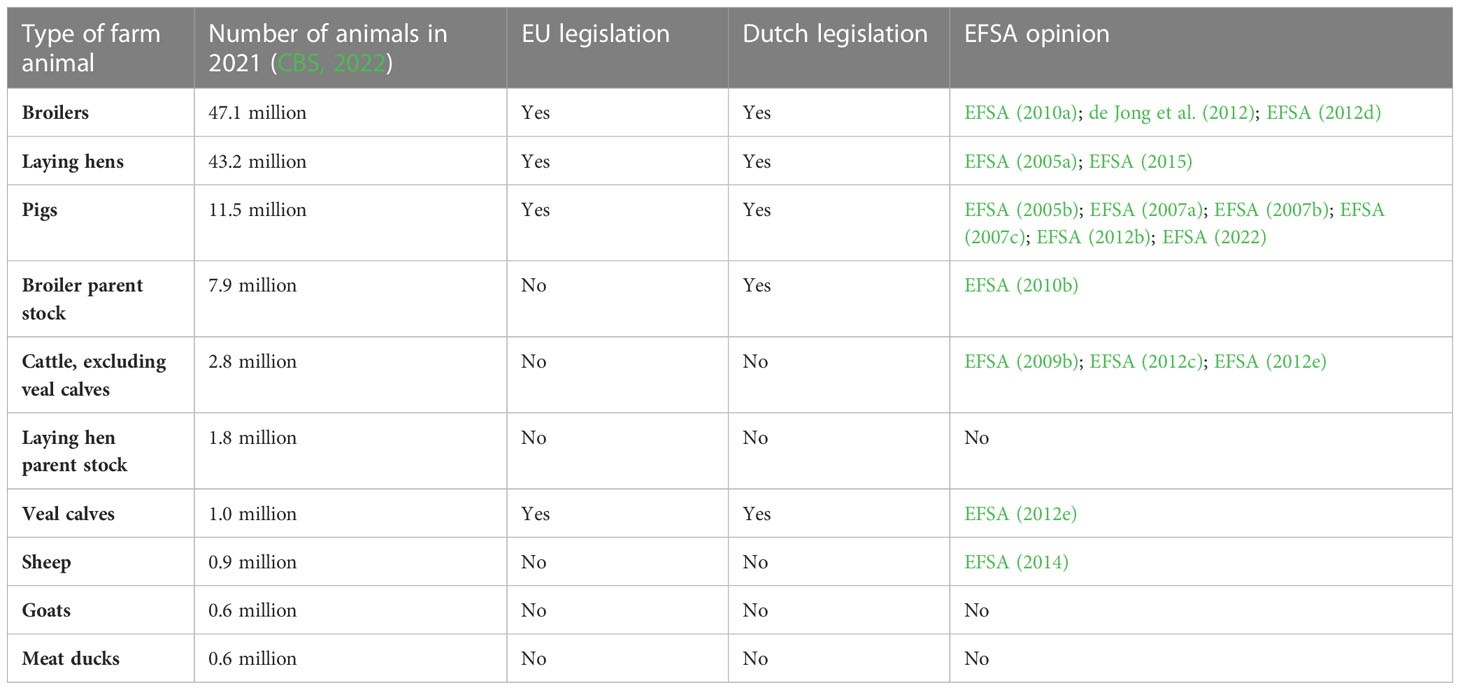
Table 5 The top 10 farm animals kept for commercial purposes in the Netherlands, based on numbers in 2021, and the availability of relevant species-specific EU or Dutch legislation and EFSA opinions.
Given these differences in legislation, there are major differences between animal species in the way comparable welfare consequences are legally covered. For example, the incidence of footpad dermatitis in each flock of broilers kept under a high stocking density must be scored. These data must be retained and, depending on the average score per year, the farmer must draft an improvement plan or even decrease the maximum stocking density in the event of high scores. However, if meat ducks have footpad dermatitis, this is covered solely by the goal-oriented regulations on hygienic housing and caring for sick animals. No data on footpad dermatitis in meat ducks have to be retained, and, in the case of severe footpad dermatitis, the farmer does not have to change the stocking density or make an improvement plan. Even within a single species there are differences in applicable legislation depending on the purpose for keeping the animal (Lundmark et al., 2013). For laying hens, there are requirements for fulfilling the need for perching; for other poultry, such as broilers, there are no such requirements (Näsström, 2021).
Scientific research on animal welfare from the animal science point of view and on the public opinion on animal welfare is an important part of the legislation and policy development process in the EU (Broom, 2017). When the European Commission initiates the drafting of legislation on animal welfare, the Directorate-General for Health and Food Safety (DG-SANTE) at the European Commission may consult the EFSA, whose Panel on Animal Health and Welfare will draft scientific reports as input (Veissier et al., 2008). EFSA has drafted scientific reports and opinions for many livestock animal species since the EU directives came into force and after the drafting of the Dutch Animals Act, for example on dairy cattle (EFSA, 2009b), beef cattle (EFSA, 2012e), and sheep (EFSA, 2014) (see Table 5 for an overview). However, despite the existing scientific overviews in these reports on the relevant welfare consequences for these species (e.g., thermal stress, lameness, and mastitis in sheep; respiratory diseases and digestive and behavioral disorders in beef cattle; and the breeding for high milk yield in dairy cattle, which can result in mastitis, lameness, and metabolic disorders), these reports have not yet resulted in specific EU (Broom, 2017) or Dutch legislation or good practice guides for these animal species.
4.5 Compliance and enforcement of legislation
Legislation, combined with monitoring and enforcement by the authorities, is the regulatory basis for the protection of animal welfare in the EU. The introduction of (specific) legislation will, however, not necessarily guarantee good animal welfare, as the legislation does not automatically guarantee high levels of compliance, or the legislation may allow room for exceptions (Jones et al., 2017; Vogeler, 2019b; Berg and Lundmark Hedman, 2020). For example, broilers in Europe are still frequently experiencing leg problems and the tails of most pigs are still being docked because of the exceptions allowed for in legislation, despite the applicability of specific legislation for both issues (Broom, 2017). Enforcement of the legislation is necessary to achieve compliance and improve animal welfare (Vogeler, 2019b; Berg and Lundmark Hedman, 2020). Compliance is influenced by the frequency and quality of animal welfare inspections (Broom, 2009; Broom, 2017). Nevertheless, the correct welfare indicators need to be used (Berg and Lundmark Hedman, 2020).
The European Commission has created EU Reference Centres for Animal Welfare (EURCAWs) to support and facilitate the enforcement of animal welfare legislation. In 2018, the EU Reference Centre for Animal Welfare—Pigs (EURCAW-Pigs) was created, followed by the Reference Centre for animal welfare for poultry and other small farmed animals (rabbits, for example) in 2019, and the Reference Centre for the welfare of ruminants and equines in 2021 (European Commission, 2022a). EURCAW-Pigs has already developed various factsheets containing indicators on, for example, tail biting and housing sows in farrowing crates. The factsheet on tail biting and tail docking summarizes the risk factors, animal-based measures, and legal requirements, to support animal welfare inspectors (EURCAW-Pigs, 2020).
However, as mentioned before, open standards with vague wording such as “satisfactory” are hard to enforce (Lundmark et al., 2018). When scientific standards are available, terms such as “sufficient” and “adequate” should be replaced by a science-based minimum standard. For example, it is scientifically substantiated that horses are herd animals, and, therefore, a legal minimum standard could be that a horse should be housed with at least one conspecific, instead of the current standard in the Animal Keepers Decree, which states that “animals must be given the space they need to meet their physiological and ethological needs”. Legislation should cover a minimum science-based standard of acceptable animal welfare; for example, the welfare of an animal will probably be better if it has more space, but the animal requires a minimum amount of space and, in our opinion, this minimum should be a legal minimum. Quantitative goal-oriented regulations are easier to enforce, because they consist of specific and measurable outcomes. To ensure good welfare, it is important that legislation corresponds to recent accepted scientific insights. For example, the results of several research projects have indicated that the amount of roughage to be fed to veal calves according to EU and Dutch legislation is not enough to meet the behavioral needs of veal calves during the finishing period (Webb et al., 2012). Therefore, it is in our opinion crucial to regularly update the legislation.
4.6 Recent developments
Although the current Dutch Animals Act does not include up-to-date scientific insights on animal welfare, there are some developments regarding animal welfare policy in the Netherlands. In 2020, the Dutch Minister of Agriculture, Nature and Food Quality stated in response to the results of the evaluation of the Dutch Animals Act (Minister van Landbouw Natuur en Voedselkwaliteit, 2020) that, although not specifically mentioned in the legislation or Explanatory Memorandum, the definition of Bracke et al. (1999) is currently used when developing policy regarding animal welfare: “Animal welfare is the quality of life as it is experienced by the animal itself.” By acknowledging this definition, the importance that the animal can experience a positive state of well-being is included. In addition, the intrinsic value of the animal is taken into account and balanced against other interests when drafting new legislation, for instance in the ban on the use of wild animals in circuses in 2015 (Berenschot, 2020). In addition, the Dutch Council on Animal Affairs (RDA) produced a report, as requested by the minister, on “animal-worthy” (i.e., humane) livestock farming with attention for positive animal welfare. This report proposes six leading principles for animal-worthy livestock farming: recognition of the intrinsic value of the animal, followed by five principles based on the Five Domains Model of Mellor (2016) (RDA, 2021). In 2022, an initiative of the new government, a covenant between farmers, market parties, NGOs, and other stakeholders to focus on animal-worthy livestock farming, commenced. The six principles on animal-worthy livestock farming by the RDA and the behavioral needs of animals are the starting point of this covenant. The outcomes of this covenant will, if appropriate, form the basis of new legislation on animal-worthy livestock farming. The minister also intends to change the model underpinning the Dutch Animals Act from the Five Freedoms to the Five Domains of Mellor. With this shift, more emphasis is placed on the importance of animals having positive experiences, and not just on meeting their basic needs (Minister van Landbouw Natuur en Voedselkwaliteit, 2022).
In 2020, the European Commission announced that, as part of its Farm to Fork strategy, it will revise the animal welfare legislation by the end of 2023, using the latest scientific findings. This includes the general legislation on farm animals and the specific legislation on laying hens, broilers, pigs, calves, transport, and killing/slaughter. Newly developed scientific opinions from EFSA on these subjects will be used as input (European Commission, 2022b). The new scientific opinion on welfare of pigs on farm was the first in this series to be published in 2022 (EFSA, 2022). The governments of the Netherlands, Denmark, Belgium, Germany, and Sweden wrote a position paper on a new EU legislative frame for animal welfare. They called for, among other things, the use of scientific animal-based measures for species- and production type-specific legislation (for pullets, broiler breeders, laying hen breeders, dairy cows, rabbits, and turkeys), and an update of the pigs, laying hens, broilers, and calves directives (Danish Veterinary and Food Administration, 2021). With the changes at EU level, the Dutch legislation will also change, since the Netherlands, being an EU Member State, is required to implement EU legislation. However, it will take some years until this new EU and Dutch legislation will be developed and implemented; thus, no changes in the Dutch animal welfare legislation are expected in the near future.
4.7 Other ways to safeguard animal welfare
Overall, it needs to be emphasized that legislation is not the only way to improve and safeguard animal welfare. Good animal welfare can be promoted not only by legislation but also by tools such as animal welfare assurance schemes, knowledge dissemination, and the education of consumers and stakeholders in the production chain. It has been proposed that increasing compliance with legislation is the first step in the roadmap to achieve higher animal welfare standards, followed by raising public awareness of the importance of good animal welfare through information and education, resulting in animal welfare labels with higher animal welfare standards (Broom, 2009; Keeling et al., 2012; Broom, 2017; Jones et al., 2017; Sandøe et al., 2020; Sandøe et al., 2022). Animal welfare policy can be government based, market based, or farmer based and can be used side by side.
There are different animal welfare policy instruments that can be used by a government for different levels of intervention. Legislation is the most powerful policy instrument, because it can be enforced by strict intervention by authorities. Other policy instruments include governmental subsidies on higher animal welfare standards (e.g., subsidies for building stables with higher welfare standards), labeling made compulsory by the government (e.g., for free-range eggs), and voluntary agreements between the government and the sector (e.g., the Dutch covenant animal-worthy livestock farming of 2022). Higher welfare standards set by retail companies, and corresponding labeling are instruments requiring low levels of governmental intervention.
Historically, agricultural policy has been driven by governmental intervention, but this is transitioning toward more market-driven policy (Vogeler, 2017; Lundmark et al., 2018; Vogeler, 2019a). In the face of societal demands for the implementation of good animal welfare, the market and retail sectors are having to assume greater responsibility for improving animal welfare. Large retail companies can play an important role in setting higher welfare standards for their producers by creating welfare labels (Broom, 2017; Jones et al., 2017; Vogeler, 2019a). Sandøe et al. (2022) compared the effects of market-driven and legislative-driven strategies on broiler welfare in five Western European countries using a benchmark method. Sweden had the highest legislative standards and scored highest on the benchmark. However, despite having lower legislative standards than Denmark, as a result of market-driven requirements, the Netherlands and the UK had a similar total benchmark score to Denmark. Dutch retail saw a shift to selling fresh broiler meat with higher welfare standards instead of meat from broilers kept under the conventional standards. As a result, 30% of the broilers in the Netherlands are kept under higher welfare standards (Saatkamp et al., 2019; Sandøe et al., 2022). The welfare score of those broilers was indeed higher than the welfare score of broilers housed under conventional conditions in the Netherlands (de Jong et al., 2022). The current study did not analyze whether the animal welfare risks as identified in the BuRO risk assessments (for instance BuRO (2019b) on broilers) can be mitigated by private standards in the Netherlands, but this could be the subject of future studies.
A limitation of market-based policy instruments, such as welfare labels, is that they are often based on the consumers’ view of good animal welfare, and not necessarily on the welfare experienced by the animal. The focus is often on the public perception of natural behavior, for instance outdoor access. Focusing solely on natural behavior, however, does not necessarily equal good animal welfare; other aspects, such as nutrition, health (basic health and functioning), and the mental or affective state of the animal, including their interrelations, are also important for good animal welfare. Animals in a natural environment can suffer, for instance, from thirst or predation and fear (Mellor and Reid, 1994; Fraser et al., 1997; Fraser, 2003; Fraser, 2008; Mellor et al., 2009; Green and Mellor, 2011; Broom, 2014; Lundmark et al., 2018; Yeates, 2018; Vogeler, 2019a; Broom, 2022). In addition, the welfare assessment for private standards is often done on a group level, and a threshold is set. This implies that, if only a few animals in the herd are in poor condition, the group still complies with the private standards, whereas the same animals would not comply with legislation, which focuses on the welfare of the individual animal. Thus, meeting private standards does not equal good animal welfare for all individual animals, nor does it equal compliance with legislation (Lundmark et al., 2018; Berg and Lundmark Hedman, 2020). Another downside of a consumer-driven policy in exporting countries, such as the Netherlands, is the likelihood that only farms producing for the national market will increase their welfare standards, while farmers producing for the export market (with no extra payments for the higher welfare standards) will remain at the minimal legally required level (Vogeler, 2019a). This is already seen in the broiler and pig sector in the Netherlands: broilers for the Dutch market are kept under higher welfare standards because of demand from the Dutch market (Sandøe et al., 2020; de Jong et al., 2022; Sandøe et al., 2022). The best strategy to improve animal welfare will therefore probably differ by country, depending on, among other things, public concern for animal welfare, export status, trust in different stakeholders, and trust in the private standards by consumers (Keeling et al., 2012; Vogeler, 2017; Lundmark et al., 2018). Considering the above, we reason that, despite the market-based initiatives, inclusion of higher welfare standards in legislation remains needed to guarantee that those welfare standards are applicable to all kept farm animals in a country.
5 Conclusion
By being based on the Five Freedoms and with the focus on the prevention of unnecessary suffering, the position of animal welfare in the Dutch Animals Act is similar to its position in European legislation and the legislation of other EU Member States. Based on the latest scientific insights and results from our analysis, the current Dutch Animals Act and underlying legislation should be improved to better manage and mitigate relevant animal welfare risks. The Dutch Animals Act provides a basis (e.g., most relevant welfare consequences are covered at a general level), but underlying regulations lack sufficient detail. For example, many of the risks are covered by qualitative goal-oriented regulations (open standards), which are difficult to enforce, or are solely resource or management-based and therefore lack animal-based measures. Moreover, there are no specific regulations for a number of commonly farmed animal species, e.g., dairy cows and sheep. In addition, animal welfare science has evolved since the legal framework was written and adopted. Animal welfare involves more than the absence of negative experiences. There is a lack of attention in legislation on the positive experiences of animals and the basic behavioral needs specific to each animal species. Developments on measuring animal welfare with animal-based measures and EFSA opinions of the last 10–15 years on risks for animal welfare are not included in the content and drafting process of the Dutch Animals Act. Consequently, to better ensure the current translation and understanding of the concept of animal welfare, the Dutch framework requires improvement. In addition, it is considered advantageous if legislation is in line with the most recent scientific insights and updated regularly. This includes the latest definition of animal welfare, which includes positive experiences, and the use of indicators to assess animal welfare. In addition, species-specific legislation, where not already applicable, needs to be developed. By optimally using not only resource- and management-based measures but, more importantly, animal-based measures, a more holistic perspective of animal welfare in legislation can be achieved.
6 Legislation
“Besluit diergeneeskundigen,” (2014a) in BWBR0035091.
“Besluit houders van dieren,” (2014b) in BWBR0035217.
The Council of the European Union. (1998). Directive 98/58/EC of the council of 20 July 1998 concerning the protection of animals kept for farming purposes.
Council of Europe. (1999). “Directive 1999/74/EC of the council of 19 July 1999 laying down minimum standards for the protection of laying hens,” in OJ L, vol. 203.
Council of Europe. (2007a). “Directive 2007/43/EC of the council of 28 June 2007 laying down minimum rules for the protection of chickens kept for meat production,” in OJ L, vol. 182.
Council of Europe. (2008a). Directive 2008/119/EC of the council of 18 December 2008 laying down minimum standards for the protection of calves.
Council of Europe. (2008b). Directive 2008/120/EC of the council of 18 December 2008 laying down minimum standards for the protection of pigs.
“Regeling diergeneeskundigen,” (2014c) in BWBR0035238.
“Regeling houders van dieren,” (2014d) in BWBR0035248.
The European Parliament and the Council of the European Union. (2002). “Regulation (EC) no. 178/2002 of the European parliament and of the council of 28 January 2002 laying down the general principles and requirements of food law, establishing the European food safety authority and laying down procedures in matters of food safety,” in OJ L, vol. 31.
European Union. (1997). Treaty of Amsterdam amending the treaty on European union, the treaties establishing the European communities and certain related acts.
“Wet dieren,” (2011) in BWBR0030250.
Author’s note
The authors work at the Office for Risk Assessment & Research (BuRO), an independent part of the Netherlands Food and Product Safety Authority (NVWA) and are also the authors of the advice of the Netherlands Food and 1740 Product Safety Authority on the evaluation of the Dutch Animals Act published in 2020. This advice is the basis of this manuscript and is elaborated into a scientific manuscript by the authors with additional literature. In this advice, BuRO made an attempt to associate the animal welfare risks identified in the risk assessments to the rules presented in the Dutch Animals Act. By doing this, BuRO aimed to establish whether or not animal welfare risks could be managed adequately under the current Dutch Animals Act and also which modifications it deemed necessary. An English version of this advice is published in 2021 (BuRO, 2021). There is no copyright on this advice and there is overlap in the text between the advice and this manuscript.
BuRO provides independent advice to the Inspector-General of the NVWA, the Dutch Ministry of Health, Welfare and Sport, and the Ministry of Agriculture, Nature and Food Quality. The science-based risk assessments encompass food safety, consumer product safety, animal health, animal welfare, plant health, and nature. Advice can be provided on request or on BuRO’s own initiative. The advice on the evaluation of the Dutch Animals Act was written on BuRO’s own initiative.
Data availability statement
The original contributions presented in the study are included in the article/Supplementary Material. Further inquiries can be directed to the corresponding author.
Author contributions
AV wrote and prepared the original draft. WU wrote and revised early versions of the manuscript. DS supervised the preparation of the manuscript and revised it in collaboration with WU and JB. JB was project leader of the advice from BuRO on which this manuscript was based and was highly involved in writing and revising of this advice. All authors contributed to the article and approved the submitted version.
Acknowledgments
We thank our colleagues from the Netherlands Food and Product Safety Authority for providing feedback on draft versions of the earlier BuRO advice, and especially our colleagues from the legal department for answering our questions on EU and Dutch legislation on animal welfare. We also thank Godelieve Kranendonk for her revisions with respect to the English language and the reviewers for their extensive review, which resulted in a considerable improvement of the quality of the manuscript.
Conflict of interest
The authors declare that the research was conducted in the absence of any commercial or financial relationships that could be construed as a potential conflict of interest.
Publisher’s note
All claims expressed in this article are solely those of the authors and do not necessarily represent those of their affiliated organizations, or those of the publisher, the editors and the reviewers. Any product that may be evaluated in this article, or claim that may be made by its manufacturer, is not guaranteed or endorsed by the publisher.
Supplementary material
The Supplementary Material for this article can be found online at: https://www.frontiersin.org/articles/10.3389/fanim.2023.1026224/full#supplementary-material
References
Battini M., Vieira A., Barbieri S., Ajuda I., Stilwell G., Mattiello S. (2014). Invited review: Animal-based indicators for on-farm welfare assessment for dairy goats. J. Dairy Sci. 97, 6625–6648. doi: 10.3168/jds.2013-7493
Berg C., Lundmark Hedman F. (2020). Compliance with animal welfare regulations: drivers and consequences. CAB Rev. Perspect. Agric. Veterinary Sci. Nutr. Natural Resour. 15, 1–10. doi: 10.1079/PAVSNNR202015025
Blokhuis H., Veissier I., Jones B., Miele M. (2013). “The welfare quality® vision,” in Improving farm animal welfare (Wageningen, the Netherlands: Wageningen Academic Publishers), 71–89.
Boissy A., Manteuffel G., Jensen M. B., Moe R. O., Spruijt B., Keeling L. J., et al. (2007). Assessment of positive emotions in animals to improve their welfare. Physiol. Behav. 92, 375–397. doi: 10.1016/j.physbeh.2007.02.003
Bracke M. B., Hopster H. (2006). Assessing the importance of natural behavior for animal welfare. J. Agric. Environ. Ethics 19 (1), 77–89. doi: 10.1007/s10806-005-4493-7
Bracke M. B., Spruijt B. M., Metz J. H. (1999). Overall animal welfare reviewed. part 3: Welfare assessment based on needs and supported by expert opinion. NJAS Wageningen J. Life Sci. 307–322. doi: 10.18174/njas.v47i3.468
Brennan A., Lo N. Y. S. (2020). Environmetal ethics (Stanford: Metaphysics Research Lab, Stanford University).
Broom D. M. (1991). Animal welfare: concepts and measurement. J. Anim. Sci. 69, 4167–4175. doi: 10.2527/1991.69104167x
Broom D. M. (2009). Animal welfare and legislation. Food Saf. Assur. veterinary Public Health 5, 339–352. doi: 10.3920/978-90-8686-690-8
Broom D. M. (2017). Animal welfare in the European union. (Brussels: Policy Department for Citizens’ Rights and Constitutional Affairs).
Broom D. M. (2022). “Animal welfare concepts,” in Routledge handbook of animal welfare (Oxon: Routledge), 12–21.
Brscic M., Contiero B., Magrin L., Riuzzi G., Gottardo F. (2021). The use of the general animal-based measures codified terms in the scientific literature on farm animal welfare. Front. Veterinary Sci. 8. doi: 10.3389/fvets.2021.634498
BuRO. (2019a). Advice of BuRO on the risks in the egg supply chain (Netherlands Food and Consumer Product Safety Authority).
BuRO. (2019b). Advice of BuRO on the risks in the poultry meat supply chain (Netherlands Food and Consumer Product Safety Authority).
BuRO. (2019c). Advice of BuRO on the risks in the read meat supply chain (Netherlands Food and Consumer Product Safety Authority).
BuRO. (2019d). Advies over de risico's van de keten 'voedergewassen en plantaardig diervoeder' (Utrecht: NVWA).
CBS. (2022). Landbouw; gewassen, dieren, grondgebruik en arbeid op nationaal niveau (Centraal Bureau voor de Statistiek). Available at: https://opendata.cbs.nl/statline/#/CBS/nl/dataset/81302ned/table?ts=1569229788986 (Accessed 12-08-2022).
Dalla Villa P., Matthews L. R., Alessandrini B., Messori S., Migliorati G. (2014). Drivers for animal welfare policies in Europe. OIE Rev. Scientifique Technique 33 (1), 39–46. doi: 10.20506/rst.33.1.2266
Danish Veterinary and Food Administration. (2021). Position paper on a new EU legislative frame for animal welfare (Danish Veterinary and Food Administration).
De Cock Buning T. (2009). “Comparative analysis of the inclusion of animal ethics in European animal welfare policy-making,” in Ethical futures: Bioscience and food horizons. (Wageningen, the Netherlands: Wageningen Academic Publishers), 135–141.
de Jong I., Berg C., Butterworth A., Estevéz I. (2012). Scientific report updating the EFSA opinions on the welfare of broilers and broiler breeders. EFSA Supporting Publications 9 (6), 295E. doi: 10.2903/sp.efsa.2012.EN-295
de Jong I. C., Bos B., Van Harn J., Mostert P., Te Beest D. (2022). Differences and variation in welfare performance of broiler flocks in three production systems. Poultry Sci. 101 (7), 101933. doi: 10.1016/j.psj.2022.101933
Duncan I. (2005). Science-based assessment of animal welfare: farm animals. Rev. scientifique technique-Office Int. Des. epizooties 24 (2), 483.
Edgar J., Mullan S., Pritchard J., Mcfarlane U., Main D. (2013). Towards a 'Good life' for farm animals: Development of a resource tier framework to achieve positive welfare for laying hens. Animals 3, 584–605. doi: 10.3390/ani3030584
EFSA. (2005a). Opinion of the scientific panel on animal health and welfare (AHAW) on a request from the commission related to the welfare aspects of various systems of keeping laying hens. EFSA J. 3 (3), 197. doi: 10.2903/j.efsa.2005.197
EFSA. (2005b). Opinion of the scientific panel on animal health and welfare (AHAW) on a request from the commission related to welfare of weaners and rearing pigs: effects of different space allowances and floor. EFSA J. 3 (10), 268. doi: 10.2903/j.efsa.2005.268
EFSA. (2007a). Animal health and welfare aspects of different housing and husbandry systems for adult breeding boars, pregnant, farrowing sows and unweaned piglets-scientific opinion of the panel on animal health and welfare. EFSA J. 5 (10), 572. doi: 10.2903/j.efsa.2007.572
EFSA. (2007b). Opinion of the scientific panel on animal health and welfare on a request from the commission related to animal health and welfare in fattening pigs in relation to housing and husbandry. EFSA J. 5 (10), 564. doi: 10.2903/j.efsa.2007.564
EFSA. (2007c). Scientific report on the risks associated with tail biting in pigs and possible means to reduce the need for tail docking considering the different housing and husbandry systems (Question number: EFSA-Q-2006-013). EFSA J. 611, 2–13. doi: 10.2903/j.efsa.2007.611
EFSA. (2009a). Scientific opinion on welfare of dairy cows in relation to udder problems based on a risk assessment with special reference to the impact of housing, feeding, management and genetic selection. EFSA J. 7 (7), 1141.
EFSA. (2009b). Scientific report on the effects of farming systems on dairy cow welfare and disease. EFSA J. 7 (7), 1143r. doi: 10.2903/j.efsa.2009.1143r
EFSA. (2010a). Scientific opinion on the influence of genetic parameters on the welfare and the resistance to stress of commercial broilers. EFSA J. 8 (7), 1666. doi: 10.2903/j.efsa.2010.1666
EFSA. (2010b). Scientific opinion on welfare aspects of the management and housing of the grand-parent and parent stocks raised and kept for breeding purposes. EFSA J. 8 (7), 1667. doi: 10.2903/j.efsa.2010.1667
EFSA. (2012a). Guidance on risk assessment for animal welfare. EFSA J. 10 (1), 2513. doi: 10.2903/j.efsa.2012.2513
EFSA. (2012b). Scientific opinion on the use of animal-based measures to assess welfare in pigs. EFSA J. 10 (1), 2512. doi: 10.2903/j.efsa.2012.2512
EFSA. (2012c). Scientific opinion on the use of animal-based measures to assess welfare of dairy cows. EFSA J. 10 (1), 2554. doi: 10.2903/j.efsa.2012.2554
EFSA. (2012d). Scientific opinion on the use of animal-based measures to assess welfare of broilers. EFSA J. 10 (7), 2774. doi: 10.2903/j.efsa.2012.2554
EFSA. (2012e). Scientific opinion on the welfare of cattle kept for beef production and the welfare in intensive calf farming systems. EFSA J. 10 (7), 2669. doi: 10.2903/j.efsa.2012.2669
EFSA. (2012f). Statement on the use of animal-based measures to assess the welfare of animals. EFSA J. 10 (6), 2767. doi: 10.2903/j.efsa.2012.2767
EFSA. (2014). Scientific opinion on the welfare risks related to the farming of sheep for wool, meat and milk production. EFSA J. 12 (12), 3933. doi: 10.2903/j.efsa.2014.3933
EFSA. (2015). Scientific opinion on welfare aspects of the use of perches for laying hens. EFSA J. 13 (6), 4131. doi: 10.2903/j.efsa.2015.4131
EURCAW-Pigs. (2020). Indicator factsheets. Available at: https://www.eurcaw.eu/en/eurcaw-pigs/output/Indicator-factsheets.htm (Accessed 25-02-2020).
European Commission. (2020). EU Reference centres for animal welfare. Available at: https://ec.europa.eu/food/animals/welfare/eu-ref-centre_en (Accessed 25-02-2020).
European Commission. (2022a). EU Reference centres for animal welfare. Available at: https://ec.europa.eu/food/animals/animal-welfare/eu-reference-centres-animal-welfare_en#welfare_of_ruminants_and_ (Accessed 19-1-2022).
European Commission. (2022b). Revision of the animal welfare legislation. Available at: https://ec.europa.eu/food/animals/animal-welfare/evaluations-and-impact-assessment/revision-animal-welfare-legislation_en (Accessed 19-1-2022).
FAO/WHO. (1995). Application of risk analysis to food standards issues : report of the joint FAO/WHO expert consultation, Geneva, Switzerland, 13-17 march 1995" (Geneva: World Health Organization).
FAWC. (2009). FAWC report on farm animal welfare in great Britain: Past, present and future. FAWC advice to government.
Forkman B. (2018). The risk assessment model in animal welfare, concepts, terminologies and methods. Better Training Safer Food.
Fraser D. (2003). Assessing animal welfare at the farm and group level: the interplay of science and values. Anim. Welfare 12, 433–443. doi: 10.1017/S0962728600026038
Fraser D. (2008). Understanding animal welfare. Acta Veterinaria Scandinavica 50 (1), S1. doi: 10.1186/1751-0147-50-S1-S1
Fraser D., Weary D. M., Pajor E. A., Milligan B. N. (1997). A scientific conception of animal welfare that reflects ethical concerns. Anim. Welfare 6 (3), 187–205. doi: 10.1017/S0962728600019795
Green T. C., Mellor D. J. (2011). Extending ideas about animal welfare assessment to include ‘Quality of life’ and related concepts. New Z. Vet. J. 59, 263–271. doi: 10.1080/00480169.2011.610283
Jones P., Lensink J., Mancini M. C., Tranter R. (2017). Designing an institutional network for improving farm animal welfare in the EU. JCMS: J. Common Market Stud. 55, 1081–1093. doi: 10.1111/jcms.12547
Jones B., Manteca X. (2009). Practical strategies for improving farm animal welfare: an information resource. Welfare Quality® project.
Keeling L., Immink V., Hubbard C., Garrod G., Edwards S., Ingenbleek P. (2012). Designing animal welfare policies and monitoring progress. Anim. Welfare 21 (1), 95. doi: 10.7120/096272812X13345905673845
Keeling L. J., Rushen J., Duncan I. J. (2018). “Understanding animal welfare,” in Animal welfare, 3rd edition (CAB International), 16–35.
Lambton S. L., Knowles T. G., Yorke C., Nicol C. J. (2010). The risk factors affecting the development of gentle and severe feather pecking in loose housed laying hens. Appl. Anim. Behav. Sci. 123 (1-2), 32–42. doi: 10.1016/j.applanim.2009.12.010
Lambton S., Knowles T. G., Yorke C., Nicol C. (2015). The risk factors affecting the development of vent pecking and cannibalism in free-range and organic laying hens. Anim. Welfare 24, 101–111. doi: 10.7120/09627286.24.1.101
Lawrence A. B., Vigors B., Sandoe P. (2019). What is so positive about positive animal welfare?-a critical review of the literature. Animals 9 (10). doi: 10.3390/ani9100783
Lundmark F., Berg C., Röcklinsberg H. (2013). “Unnecessary suffering’as a concept in animal welfare legislation and standards,” in The ethics of consumption (Wageningen: Wageningen Academic Publishers), 114–119.
Lundmark F., Berg C., Röcklinsberg H. (2018). Private animal welfare standards–opportunities and risks. Animals 8 (1), 4. doi: 10.3390/ani8010004
Lundmark F., Berg C., Schmid O., Behdadi D., Röcklinsberg H. (2014). Intentions and values in animal welfare legislation and standards. J. Agric. Environ. Ethics 27, 991–1017. doi: 10.1007/s10806-014-9512-0
Lundmark F., Röcklinsberg H., Wahlberg B., Berg C. (2016). Content and structure of Swedish animal welfare legislation and private standards for dairy cattle. Acta Agriculturae Scandinavica Section A—Animal Sci. 66 (1), 35–42. doi: 10.1080/09064702.2016.1198417
Lundmark Hedman F., Berg C., Stéen M. (2021a). Thirty years of changes and the current state of Swedish animal welfare legislation. Animals 11, 2901. doi: 10.3390/ani11102901
Lundmark Hedman F., Berg C., Stéen M. (2021b). “Whose interest matters when regulating animal welfare? a Swedish case study,” in Justice and food security in a changing climate (Wageningen: Wageningen Academic Publishers), 423–432.
Maisano A. M., Luini M., Vitale N., Rota Nodari S., Scali F., Alborali G. L., et al. (2020). Animal-based measures on fattening heavy pigs at the slaughterhouse and the association with animal welfare at the farm level: a preliminary study. Animal 14 (1), 108–118. doi: 10.1017/S1751731119001320
Mattiello S., Battini M., De Rosa G., Napolitano F., Dwyer C. (2019). How can we assess positive welfare in ruminants? Animals 9 (10), 758. doi: 10.3390/ani9100758
Mellor D. J. (2016). Updating animal welfare thinking: Moving beyond the "Five freedoms" towards "A life worth living. Animals 6 (3), 21. doi: 10.3390/ani6030021
Mellor D., Beausoleil N. (2015). Extending the ‘Five domains’ model for animal welfare assessment to incorporate positive welfare states. Anim. Welfare 24 (3), 241–253. doi: 10.7120/09627286.24.3.241
Mellor D., Patterson-Kane E., Stafford K. J. (2009). The sciences of animal welfare (John Wiley & Sons).
Mellor D., Reid C. (1994). Concepts of animal well-being and predicting the impact of procedures on experimental animals. Improving well-being Anim. Res. Environ., 3–18.
Mellor D., Webster J. (2014). Development of animal welfare understanding drives change in minimum welfare standards. Rev. scientifique technique-office Int. Des. epizooties 33, 121–130. doi: 10.20506/rst.33.1.2258
Miele M., Blokhuis H., Bennett R., Bock B. (2013). “Changes in farming and in stakeholder concern for animal welfare,” in Improving farm animal welfare (Wageningen: Wageningen Academic Publisher), 19–47.
Minister van Landbouw Natuur en Voedselkwaliteit. (2009). “Een integraal kader voor regels over gehouden dieren en daaraan gerelateerde onderwerpen (Wet dieren)’. Tweede Kamer der Staten-Generaal).
Minister van Landbouw Natuur en Voedselkwaliteit. (2020). “Evaluatie Wet dieren’. Tweede Kamer der Staten-Generaal).
Minister van Landbouw Natuur en Voedselkwaliteit. (2022). “Aanpak dierwaardige veehouderij en vervolgstappen amendement artikel 2.1 Wet dieren’. Ministerie van Landbouw, Natuur en Voedselkwaliteit).
Näsström M. (2021). “Does the EU legislation on the protection of farm animals protect their welfare?,” in The language of law and food. (Oxon: Routledge), 159–190.
O'Hara P., O'Connor C. (2007). Challenge of developing regulations for production animals that produce the welfare outcomes we want. J. Vet. Behav. 2 (6), 205–212. doi: 10.1016/j.jveb.2007.09.004
Ohl F., van der Staay F. J. (2012). Animal welfare: At the interface between science and society. Vet. J. 192 (1), 13–19. doi: 10.1016/j.tvjl.2011.05.019
Rault J.-L., Hintze S., Camerlink I., Yee J. R. (2020). Positive welfare and the like: Distinct views and a proposed framework. Front. Vet. Sci. 7, 370. doi: 10.3389/fvets.2020.00370
Robbins J., Franks B., Von Keyserlingk M. A. (2018). ‘More than a feeling’: An empirical investigation of hedonistic accounts of animal welfare. PloS One 13 (3). doi: 10.1371/journal.pone.0193864
RVO.Nl. (2019). Beoordeling gids goede praktijken vanaf 27 november 2019 (Rijksdienst voor Ondernemend Nederland). Available at: https://www.rvo.nl/actueel/nieuws/beoordeling-gids-goede-praktijken-vanaf-27-november-2019.
Saatkamp H. W., Vissers L. S., Van Horne P. L., De Jong I. C. (2019). Transition from conventional broiler meat to meat from production concepts with higher animal welfare: Experiences from the Netherlands. Animals 9 (8), 483. doi: 10.3390/ani9080483
Sandøe P., Hansen H. O., Forkman B., Van Horne P., Houe H., De Jong I. C., et al. (2022). Market driven initiatives can improve broiler welfare - a comparison across five European countries based on the benchmark method. Poultry Sci. 101 (5), 101806. doi: 10.1016/j.psj.2022.101806
Sandøe P., Hansen H. O., Rhode H. L. H., Houe H., Palmer C., Forkman B., et al. (2020). Benchmarking farm animal welfare–a novel tool for cross-country comparison applied to pig production and pork consumption. Animals 10 (6), 955. doi: 10.3390/ani10060955
Simonsen H. (1982). Role of applied ethology in international work on farm animal welfare. Vet. Rec. 111 (15), 341–342. doi: 10.1136/vr.111.15.341
Spigarelli C., Zuliani A., Battini M., Mattiello S., Bovolenta S. (2020). Welfare assessment on pasture: A review on animal-based measures for ruminants. Animals 10 (4). doi: 10.3390/ani10040609
ter Borg S., Huls N., Saanen-Siebenga N., Stoter W., Stout H. (2009). Doelgericht wetgeven. doelvoorschriften in literatuur en praktijk (Den Haag).
Uylenburg R., Van Rijswick M., Duijkersloot T., De Gier T., Groothuijse F. (2010). Algemeen geregeld is goed geregeld? (Utrecht).
Veissier I., Butterworth A., Bock B., Roe E. (2008). European Approaches to ensure good animal welfare. Appl. Anim. Behav. Sci. 113 (4), 279–297. doi: 10.1016/j.applanim.2008.01.008
Velarde A., Dalmau A. (2012). Animal welfare assessment at slaughter in Europe: Moving from inputs to outputs. Meat Sci. 92 (3), 244–251. doi: 10.1016/j.meatsci.2012.04.009
Visser K., Ouweltjes W., Jong I. D., Gerritzen M., Niekerk T. V. (2015a). Risicoanalyse dierenwelzijn eierketen : Deskstudie en expert opinie (Wageningen: Wageningen UR Livestock Research).
Visser K., Rommers J., Ipema B., Verkaik J., Gerritzen M., Van Reenen K. (2015b). Risicoanalyse dierenwelzijn zuivelketen: Deskstudie en expert opinie (Wageningen: Wageningen UR Livestock Research).
Visser K., Rommers J., Ruis M., Gerritzen M., Veldkamp T., Jong I. D. (2015c). Risicoanalyse dierenwelzijn witvleesketen : deskstudie en expert opinie (Wageningen: Wageningen UR Livestock Research).
Vogeler C. S. (2017). Farm animal welfare policy in comparative perspective: Determinants of cross-national differences in Austria, Germany, and Switzerland. Eur. Policy Anal. 3 (1), 20–47. doi: 10.1002/epa2.1015
Vogeler C. S. (2019a). Market-based governance in farm animal welfare–a comparative analysis of public and private policies in Germany and France. Animals 9 (5), 267.
Vogeler C. S. (2019b). Why do farm animal welfare regulations vary between EU member states? a comparative analysis of societal and party political determinants in France, Germany, Italy, Spain and the UK. J. Common Market Stud. 57 (2), 317–335. doi: 10.1111/jcms.12794
von Gall P., Gjerris M. (2017). Role of joy in farm animal welfare legislation. Soc. Anim. 25 (2), 163–179. doi: 10.1163/15685306-12341444
Webb L. E., Bokkers E., Engel B., Gerrits W. J. J., Berends H., Van Reenen C. G. (2012). Behaviour and welfare of veal calves fed different amounts of solid feed supplemented to a milk replacer ration adjusted for similar growth. Appl. Anim. Behav. Sci. 136 (2), 108–116. doi: 10.1016/j.applanim.2011.12.004
Welfare Quality®. (2009a). Welfare quality® assessment protocol for cattle (Lelystad: Welfare Quality® Consortium).
Welfare Quality®. (2009b). Welfare quality® assessment protocol for pigs (sows and piglets, growing and finishing pigs) (Lelystad: Welfare Quality® Consortium).
Welfare Quality®. (2009c). Welfare quality® assessment protocol for poultry (Lelystad: Welfare Quality® Consortium).
Keywords: welfare problems, animal law, animal welfare assessment, hazards, welfare indicator, animal welfare policy, enforcement, livestock production
Citation: Voogt AM, Ursinus WW, Sijm DTHM and Bongers JH (2023) From the Five Freedoms to a more holistic perspective on animal welfare in the Dutch Animals Act. Front. Anim. Sci. 4:1026224. doi: 10.3389/fanim.2023.1026224
Received: 23 August 2022; Accepted: 24 February 2023;
Published: 18 April 2023.
Edited by:
Linda Jane Keeling, Swedish University of Agricultural Sciences, SwedenReviewed by:
Mette S. Herskin, Aarhus University, DenmarkAnne-Marieke Cathérine Smid, University of Calgary, Canada
Copyright © 2023 Voogt, Ursinus, Sijm and Bongers. This is an open-access article distributed under the terms of the Creative Commons Attribution License (CC BY). The use, distribution or reproduction in other forums is permitted, provided the original author(s) and the copyright owner(s) are credited and that the original publication in this journal is cited, in accordance with accepted academic practice. No use, distribution or reproduction is permitted which does not comply with these terms.
*Correspondence: Annika M. Voogt, YS5tLnZvb2d0QG52d2Eubmw=