 Cara Loomis
 Carol Kerven
- 1The Sustainable Fibre Alliance, Mold, United Kingdom
- 2Odessa Centre Ltd, Great Wolford, United Kingdom
Every few years, an old story resurfaces in the popular media: goats are especially harmful to the environment because they uproot plants, preventing them from regrowing and thus turning grasslands into deserts. The destructive tendencies of goats in these accounts have “unleashed some of the worst dust storms on record”, overgrazed Mongolia’s “once verdant land”, and prevented entire ecosystems from growing back. However, what evidence exists to demonstrate that goats are uniquely predisposed to uproot grasses and cause untold environmental damage? When we turn to the scientific literature on goat grazing habits, we find that there is a lack of evidence to support the claim that goats dig up plant roots. This leads us to scrutinise the putative role that goats have played in causing overgrazing, ecological decline, and ultimately, desertification. What emerges reverses the widely held view; rather than causing desertification, goats are best equipped to deal with its effects. The physiology of goats makes them particularly well-suited to exploiting marginal ecological zones created through changing climate patterns. The final section calls for a revaluation of goats. Frequently raised by some of the most economically and environmentally marginalised populations across the world, goats offer these communities a degree of food security that is unmatched by other livestock species. What if built into the cost of a cashmere sweater is not environmental decline, but economic support for communities bearing the brunt of shifts in global climate patterns that are out of their control and not of their making?
Introduction: scapegoat
Every few years, an old story resurfaces in the popular media: goats are especially harmful to the environment because they uproot plants, preventing them from regrowing and thus turning grasslands into deserts. The destructive tendencies of goats in these accounts have “unleashed some of the worst dust storms on record” (LA Times, 2006), overgrazed Mongolia’s “once verdant land” (BBC, 2020), and prevented entire ecosystems from growing back (New York Times, 2009). One characteristic about goats is singled out as the root cause of the destruction:
New York Times (2023): “Goats are much more destructive than other livestock to grassland ecosystems, like those of the Central Asian steppe. Whereas sheep nibble the tops of grasses but leave the base and roots intact, goats eat plants down to the roots so they cannot regrow, degrading habitat and causing soil erosion.”
CNN Style (2023): “Yaks’ grazing habits are kinder on the ecosystem. For example, while goats uproot plants as they eat, yaks only touch the leaves, making it easier for pastures to regrow.”
Sustain Your Style (n.d.): “The main environmental issue stemming from cashmere is the fact that goats pull the grass out by the roots when they eat instead of cutting it. As a result, the grass does not grow back, leading to land desertification. This, combined with an overpopulation of goats, results in a real environmental threat.”
BBC (2020): “About 70% of this once verdant land [of Mongolia] has now been damaged, mostly due to overgrazing. The main culprit is the country’s estimated 27 million cashmere goats, which are farmed for their highly-prized wool. Unlike the country’s 31 million sheep, the goats dig out and eat the roots of the grass, making re-growth much harder.”
Peta (2023): Cashmere holds the dubious distinction of having the most destructive environmental impact of all animal-derived fibres … goats consume entire plants, including the roots, which prevents them from growing back.”
Methods
We have reviewed the historical and contemporary literature on the question of whether, why, and how goats destroy the environment.
Cashmere-producing goats more than any other type of goat are subject to these damning critiques. A recently published opinion piece in the New York Times titled, “This holiday, consider the true cost of cheap cashmere”, warns consumers that their “cozy cashmere sweater [bought] at a bargain price may seem like a win … But it comes at a steep cost to one of our most fragile environmental systems” (New York Times, 2023). It is 2025 and this season, the devil wears cashmere. Indeed, to speak of the devil has, at least since early Medieval Christianity, often implied the bestiary form of the goat (Kulik, 2013). Little wonder perhaps, given the immortalisation of goats in the Bible as sinful (Matthew 25:31–46):
“He will separate people one from another as a shepherd separates the sheep from the goats. And he will place the sheep on his right, but the goats on the left. Then the King will say to those on his right, ‘Come, you who are blessed by my Father, inherit the kingdom prepared for you from the foundation of the world’ … Then he will say to those on his left, ‘Depart from me, you cursed, into the eternal fire prepared for the devil and his angels’.”
The current perception of goats as unusually environmentally destructive draws some other uncomfortable parallels with a long European history that has seen goats as morally culpable. In an example from post-revolutionary 18th-century France where “goats emerged as a symbol of disorderly opposition to rationalising progress [and] characterised goats as “voracious and destructive animals … a most detrimental public nuisance”, with “murderous teeth”, just as the rural poor were “trespassers, ne’er-do-wells, and bad citizens” (Matteson, 2006:148). Fast forward several centuries and a similarly menacing vocabulary pertained to describe these animals, aptly summarised by the 20th-century French writer in his book The War on Goats Under the Old Regime: “the billy goats and their flocks … are nasty, odious, bad tempered, noisy, beasts” (Segui, 1946:11 in: Siddle, 2009:521).
By the turn of the 20th century, the critique of goats had acquired a more familiar tenor, which the following excerpt from Major C.S. Jarvis almost a century ago testifies to:
“The goat is the one animal that can exist on the very sparse feeding that the deserts provide … he is the one factor that prevents the half-starved Beduin[sic] from starving altogether … My charge against the goat is that he is to a very considerable extent responsible for the desert … he bites the heart out of all living things and gnaws down to the roots” (Jarvis, 1937:318).
This argument was taken up by some especially unsavoury advocates during the 20th century. In Mussolini’s Italy, the 1927 special Goat tax was directed at poor communities reliant on goats in rugged mountainous regions for sustenance, in an aim to control degradation, promote reforestation and cattle farming, and to stabilise peasants (Morettini, 2023). During a similar timeframe in Greece, the Metaxas regime declared “a war against goats” placing “strict restrictions … on the number of goats, on the extent of pastureland, and on grazing rights, because as Metaxas put it, “Goats and forests cannot coexist” (Kostopoulos, 2020). And when Europeans ventured abroad, as during the period of British colonial in Rhodesia, they carried with them their opinions on goats directed at illogical economies, where “goats seemed to have no economic value to Africans but destroyed rangelands, pastures, decimated forests, and caused massive erosion” (Doro, 2022), a scenario replicated when the British acquired the Mandate for Palestine (Bieling, 2022). Fast forward seven decades and little has changed. A 2019 article published in Science journal (McLaughlin, 2019) describes an initiative to help Mongolian herders support the “voracious herds” that have caused overgrazing and an 80% decline in vegetation. Of the multiple species raised by Mongolian herders, goats are singled out as “much more destructive than the sheep they’ve replaced because they eat roots and the flowers that seed new grasses”.
But what evidence exists to demonstrate that goats are uniquely predisposed to uproot grasses and cause untold environmental damage? When we turn to the scientific literature on goat grazing habits, we find that there is a lack of evidence to support the claim that goats dig up plant roots. This leads us to scrutinise the putative role goats have played in causing overgrazing, ecological decline and ultimately desertification. What emerges reverses the widely-held view; rather than causing desertification, goats are best equipped to deal with the effects of it. The physiology of goats makes them particularly well-suited to exploiting marginal ecological zones created through changing climate patterns. The final section calls for a revaluation of the goat. Uniformly raised by some of the most economically and environmentally marginalised populations across the world, goats offer these communities a degree of food security that is unmatched by other livestock species. What if built into the cost of a cashmere sweater is not environmental decline, but economic support for communities bearing the brunt of shifts in global climate patterns that are out of their control and not of their making?
Results: grass roots
Because there is so little of it, the evidence for the peculiarly root-ripping destructiveness of goats is easily summarised. The only recorded cases of goats digging plants and denuding landscapes occur when goats have been introduced to islands where they have no natural predators (Fenning and Collyer, 1770; Schofield, 1989; Bramwell and Caujapé-Castells, 2011). In such cases, goat populations can grow until any further increase is checked by their limited food supply. Confined on an island with no alternative food sources, goats may uproot plants when they have nothing else to eat. But domestic feral goats are not alone in exhibiting unusual behaviour when confined on islands. Island populations of many large herbivores – musk oxen, reindeer, caribou and wild goat species, among others – exhibit population dynamics with worrying environmental implications (see Gunn, 2003 for a review).
We have been unable, however, to locate any scientific evidence that under continental management goats dig up plants by the roots, and it is unlikely that such a notorious habit has gone unmentioned given the voluminous research on how goats feed and what they eat – for just a few examples, see Aldezabal and Garin (2000), Devendra (1990), Dias-Silva and Abdalla Filho (2020), García et al. (2012), Samuels et al. (2016), Silanikove (2000), and Török et al. (2024). The American Society of Animal Science commissioned a comprehensive global review of the feeding behaviour of “freely moving domestic goats on pastures and rangelands” (Goetsch et al., 2010:361) which makes no reference to this habit. In fact, a recent review summed up the evidence that “In a natural extensive system, goats ingest more plant species than their ruminant counterparts, cover a wider range of field, and exert less pressure on plant and environmental degradation and maintain landscape diversity” (Lu, 2023:4). There is at present missing evidence to support the conclusion that goats are unusually destructive of the environments in which they graze.
Yet there are other potentially devastating and often irreversible environmental impacts routinely attributed to goat grazing habits. Concerns about the role of livestock in land degradation and desertification were well-established in Europe by the 18th century and were carried abroad with European imperial expansion and colonialism (Davis, 2016; Matteson, 2006). Goats – hardy, useful, and widespread–have been heavily implicated in this environmental narrative.
Throughout much of the late 20th century, livestock owners in parts of Sahelian Africa were subject to “desertification” or “desiccation”. In its most extreme form, the proponents of desiccation theory held that many if not most deserts were created by the people who lived in them (Davis, 2016). That the Sahel droughts of the 1970s and the purported expansion of the Sahara were caused by local land use practices, especially overgrazing by pastoralists, was for decades an integral part of the United Nations Convention to Combat Desertification (UNCCD) policy, funding appeals, and project formulation, in defiance of mounting scientific evidence to the contrary (Thomas and Middleton, 1994; Behnke and Mortimore, 2016).
Recent advances in climatology and changing weather patterns in the Sahel have effectively forestalled further scientific debate about the existence of widespread desertification. Whilst the mirage of desertification has been largely dispelled, it has been supplanted by degradation, defined here by the UNCCD as “the result of human-induced actions which exploit land, causing its utility, biodiversity, soil fertility, and overall health to decline” (UNCCD, 2024). Goats, not uniquely implicated in the former, have acquired a prominent guilt for the latter.
Mongolia’s Gobi Desert is often cited in tirades on the assumed relationship between consumer excess and environmental destruction, via cashmere-producing goats. In a recent study, scientists, supported by NASA funding and tools, used satellite data to monitor and predict the impact of cashmere goats grazing on the Gobi rangelands. The models they built found that weather and climate had a much stronger impact on rangeland conditions than the goats’ grazing. Although herders’ management practices certainly played a role, the team noticed a huge difference between a wet year in 2018 and a dry year in 2019 – from flash floods to major droughts (NASA, 2022). These results are supported by additional studies that indicate despite high grazing pressure, it is likely that warming temperatures have had the greater impact on steppe and mountain-steppe degradation in Mongolia (Khishigbayar et al., 2015; Zhang et al., 2020).
The lead scientist on Stanford University’s Natural Capital “Sustainable Cashmere” NASA project in the Gobi desert commented that:
“…herbivores don’t always have the impacts you expect them to. In this case, we saw that climate was a stronger driver of rangeland condition than grazing” (Stanford University, n.d.).
In publishing these results, the researchers explained that “In semi-arid and arid rangeland systems, interannual variability in rainfall is a determining factor both of forage production and of the response of the rangeland ecosystem to grazing” (Kowal et al., 2021).
Understanding the role of goats in causing “degradation” is further compounded by the polysemy of the term. To paraphrase the definition from UNCCD (2024) above, degradation represents a decline in the overall health of land caused by human profiteering. Resting the definition of degradation on a mutable concept of decline makes determining the baseline for analysis critical. But it leaves unmoored whether the baseline favours cattle, goats or indeed seemingly any other rangeland user, with the notable exception of humans. Livestock exploit grazing environments differently; what “good” looks like to cattle might be quite different for goats. The lack of a clear definition of “degradation” makes it plausible to claim that environments shaped by the grazing habits of goats represent degradation from the perspective of the grazing requirements of other livestock species and rangeland users.
Wrong place, wrong time
When we turn to look at how goats do inhabit their environment, we find that the association of goats with difficult environments persists and for good reasons. The higher adaptivity and resilience of goats means they are much more likely to be found in certain harsher geographical regions and countries (Pragna et al., 2018; Koluman, 2023; Lu, 2023; Martin and Huss, 1981). Goats’ ability to exploit marginal environments renders them prime suspects in creating those environments. Because goats can use land no longer attractive to other livestock species, they are “frequently blamed for the damage done by many decades of abuse by other classes of livestock” (Green, 1982:1). To understand the relationship between goats and environments that might appear degraded requires separating out a causal argument – in which goats are responsible for creating the marginal environments – to a correlative argument – in which goats are best able to exploit these kinds of environments. Goats, for example in the Mediterranean, are “really only the last link in a vicious chain of land devastation brought on by in-discriminate burning, cutting, grazing slope denudation, and cultivation” (Naveh, 1974).
Goats are anatomically equipped to be catholic but selective feeders on mixed herbaceous and woody vegetation. This means that they can eat the palatable parts of a diverse range of plants (Silanikove, 2000). Because they are active and inquisitive, goats are also likely to find whatever food exists in their environment. The physiological advantages goats have over the world’s other main ruminant livestock – cattle and sheep – allow them to be more efficient in using plants higher in fibrous woody material and lower in protein compared to grasses and herbs grazed by cows and sheep, as reviewed in Kerven (2024).
Goats can be found in such challenging environments because “Relative to their ruminant counterparts, with a capacity of endocrine control, goats employ greater metabolic adaptations to water deprivation, scarcity of feed, heat stress, cold stress, high altitude, and plant anti-nutritional factors” (Lu, 2023:107056). Therefore, “breeds of goats which are indigenous to semi-arid and arid areas are able to utilise low quality high-fibre food more efficiently than other types of indigenous ruminants, or exotic breeds of goats” (Silanikove, 2000:184). Their climatic adaptability and disease resistance allows them to thrive in diverse climatic conditions; their agility enables them to navigate rugged steep terrains inaccessible to cattle and sheep (Lu, 2023).
Discussion and conclusion: goat – a”poor man’s mart”
“While foresters and policy-makers [in India] cry themselves hoarse calling for bans and pointing accusing fingers at goats, the animals themselves go on unperturbed, secure in the fact that for the poorer sections, they are often the only means of survival … The blame for encouraging desertification is heaped on the goat because it is often the last animal to be spotted wresting sustenance from denuded areas” (Khanna, 1992).
Because these traits allow goats to exploit marginal or degraded environments where food is scarce, scattered, and predominately inedible, goats are equipped to be kept by people who are unable to purchase feed to supplement natural forage supplies. In fact, goat husbandry has multiple attractions for poor livestock owners – goats are resilient and can take care of themselves, are generally cheaper to buy than the other livestock species, also have a higher reproductive rate than other ruminant livestock, with a propensity for twinning, early sexual maturity and high fertility (Lu, 2023). Goats also provide a wide range of useful products, most importantly meat, milk, hides, and fibre for sale or use by their owners (Silanikove, 2000; Pragna et al., 2018). Goats are, in sum, admirably equipped to meet the needs of impoverished people living in degraded or marginal environments.
These biological advantages mean that goats are not only prevalent in those places with more limited feed but also in low-income countries. Historically in Europe, goats were kept by some of the poorest households. Smith (2022:90), referring to 17th-century Scotland writes that an “even lowlier substratum of society living on the land … were the most likely to own goats … the animal [goat] was known somewhat scornfully as the ‘poor man’s mart’, a mart being a surplus animal fattened for slaughter before winter came (Fenton, 1976:171). As European agriculture shifted from subsistence farming to commercial production, the goat population declined. With the shift to wool as the base of the mediaeval economy in Northern Europe, “the poor man’s goat came increasingly in competition more directly with richer man’s sheep” (Siddle, 2009:524). The Enclosures Acts in England (17th century) is recognised to have favoured sheep-farming, “as enclosures multiplied, sheep were better fed, and the fleece increased in weight and length” (Lord Ernle in Bowden, 1956:44).
Whilst European agriculture has shifted away from goat husbandry, globally there has been a 300% rise in the population of goats over the past 60 years, a response in part to shifts in climate trends that are creating environments less favourable to sheep and cattle production, where global populations have only risen by less at 130% and 160% respectively (FAOSTAT, 2024). Much of the global goat population today is concentrated in the arid and semi-arid agroecological zones of Africa and Asia, subject to heat or extreme winter cold, droughts, and seasonal forage limitations (Koluman, 2023). South and Central American deserts and Andean regions also contain many goats relied upon by poorer households for dairy sales (Escareño et al., 2012; Oseguera Montiel et al., 2014; Westreicher et al., 2007).
Figure 1 shows how certain countries in Africa, Middle East and Asia have disproportionately large numbers of goats relative to the size of the country.
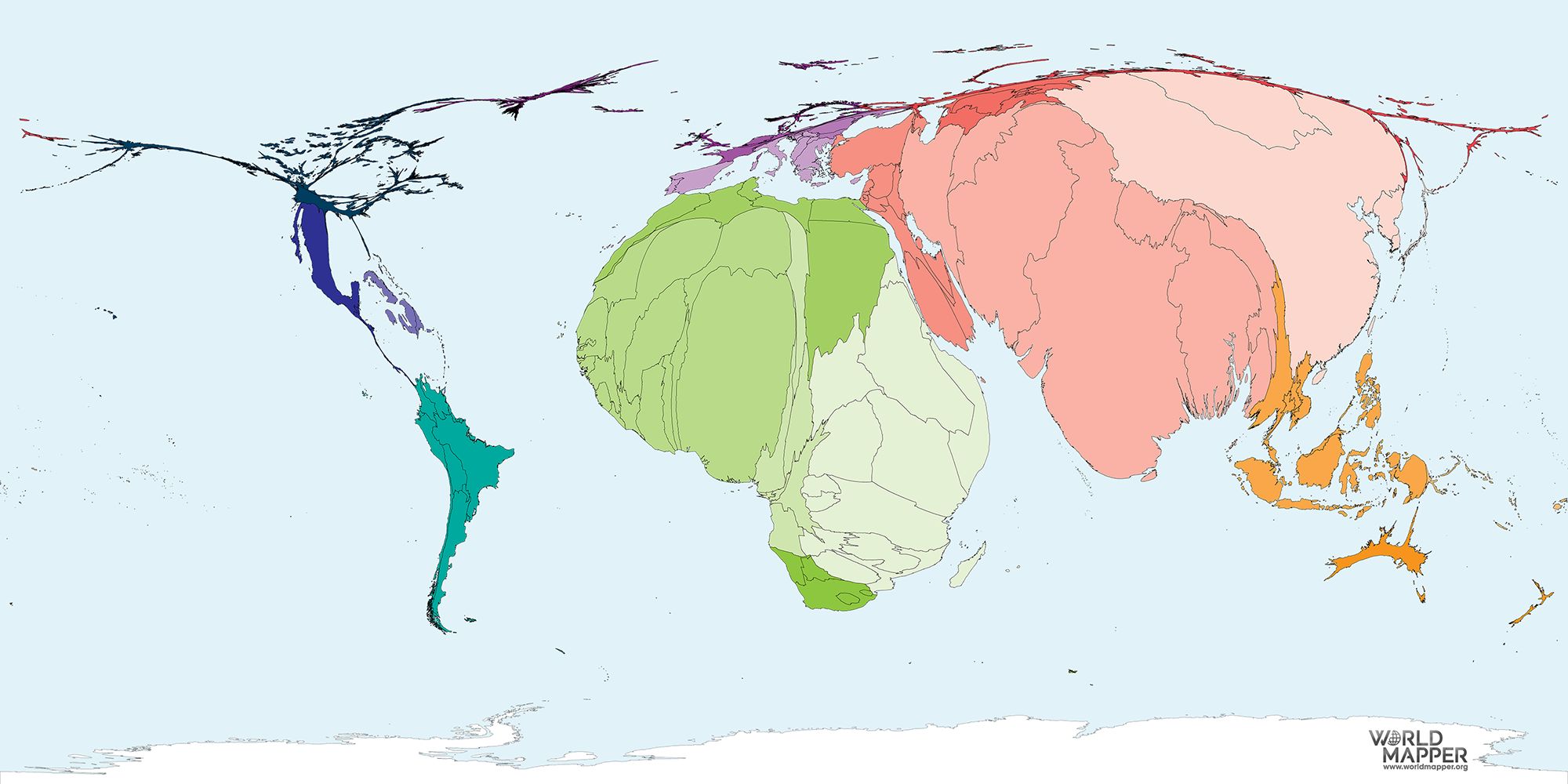
Figure 1. Country sizes in proportion to number of goats in the world, 2016. Source: Reproduced from worldmapper.org, "Goats", https://worldmapper.org/maps/goats-2016/, licensed under CC BY-NC 4.0.
Africa, Asia, and South/Central America are also, not incidentally, where most lower income countries are also found; these goats are raised by pastoralists who exist at the ecological and economic margins. In arid and semi-arid Africa, the economic significance of goats is most substantial (Peacock, 2005; Peacock and Sherman, 2010). Whilst in Asia, the cashmere fibre that can be harvested from goats native to the region represents an important source of additional income for millions of often poorer farmers and herders (Kerven et al., 2009). For households living on precarious subsistence depending on goats, small shifts in economic margins can have profound consequences, as case studies show in places as diverse as Mexico, India and Ethiopia (Navarrete-Molina et al., 2020; Roy and Tiwari 2016; Woldu et al., 2016).
Figure 2 shows that 80% of global goat populations are found in the low and lower-middle income countries as defined by the World Bank based on gross national income (GNI) per capita data in U.S. dollars. The great majority of these countries are in sub-Saharan Africa (excluding southern Africa) and in south Asia (World Bank, 2022).
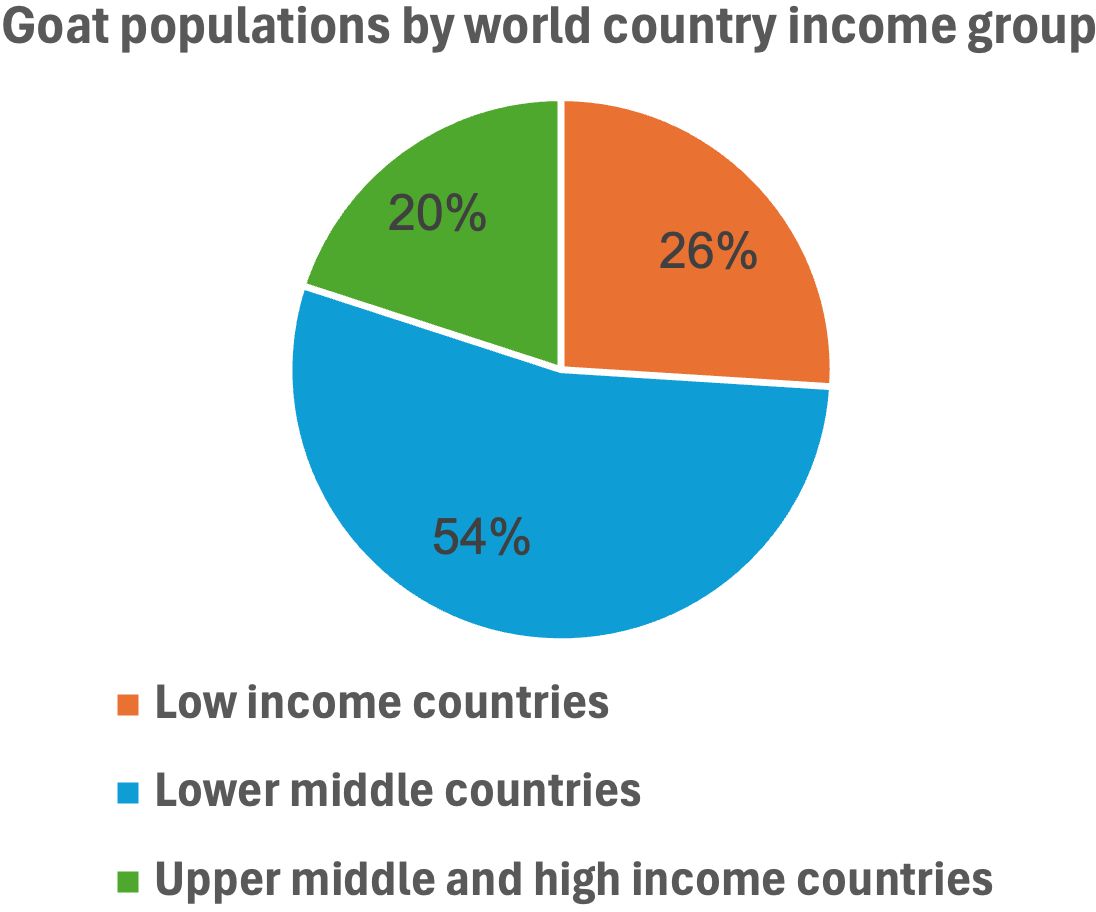
Figure 2. Goat populations by world country income group.
The international outcry against goats is a high stakes exercise. Those who must shoulder the consequence of misguided critiques of goat grazing behaviours are the economically and ecologically precarious households who are forced to rely on them for their livelihoods. The stigma associated with goats ignores their potential value and undercuts the people who are forced to inhabit landscapes that can only support goats. Careful work has separated the causal and correlative relationship between goats and ecologically marginal environments. Equally careful thought must be applied to interrogate any easy dismissal of goats.
Data availability statement
The original contributions presented in the study are included in the article/supplementary material. Further inquiries can be directed to the corresponding author.
Author contributions
CL: Writing – original draft, Writing – review & editing. CK: Writing – original draft, Writing – review & editing.
Funding
The author(s) declare financial support was received for the research, authorship, and/or publication of this article. This work was partially supported by the Sustainable Fibre Alliance.
Conflict of interest
CK is a founder of the company Odessa Centre Ltd.
The remaining author declares that the research was conducted in the absence of any commercial or financial relationships that could be construed as a potential conflict of interest..
Generative AI statement
The author(s) declare that no Generative AI was used in the creation of this manuscript.
Publisher’s note
All claims expressed in this article are solely those of the authors and do not necessarily represent those of their affiliated organizations, or those of the publisher, the editors and the reviewers. Any product that may be evaluated in this article, or claim that may be made by its manufacturer, is not guaranteed or endorsed by the publisher.
References
Aldezabal A., Garin I. (2000). Browsing preference of feral goats (Capra hircus L.) in a Mediterranean mountain scrubland. J. Arid Environ. 44, 133–142. doi: 10.1006/jare.1999.0573
BBC. (2020). Cashmere and climate change threaten nomadic life. Available online at: https://www.bbc.co.uk/news/business-51315490 (Accessed February 12, 2025).
Behnke R., Mortimore M. (Eds.) (2016). The end of desertification (Berlin: Springer Earth System Sciences).
Bieling M. (2022). British environmental orientalism and the Palestinian goat 1917–1948. DIYÂR J. Ottoman Turkish Middle Eastern Stud. 3.1, 67–84. doi: 10.5771/2625-9842-2022-1-67
Bowden P. J. (1956). Wool supply and the woollen industry. Econ. History Rev. 9.1, 44–58. doi: 10.2307/2591530
Bramwell D., Caujapé-Castells J. (Eds.) (2011). The biology of island floras (New York: Cambridge University Press).
CNN Style. (2023). Cashmere demand is threatening Mongolia’s steppe. Can the industry go sustainable? Available online at: https://edition.cnn.com/style/Mongolia-cashmere-sustainable/index.html (Accessed February 12, 2025).
Devendra C. (1990). “Comparative aspects of digestive physiology and nutrition in goats and sheep,” in Ruminant nutrition and physiology in Asia. Eds. Devendra C., Imaizumi E. (Sendai, Japan: VII International Symposium on Ruminant Physiology), 45–60.
Dias-Silva T. P., Abdalla Filho A. L. (2020). Sheep and goat feeding behavior profile in grazing systems. Acta Scientiarum. Anim. Sci. 43, e51265. doi: 10.4025/actascianimsci.v43i1.51265
Doro E. (2022). “African goats, the state and conservation in colonial Zimbabwe 1892–1970s,” in Environmental Humanities of Extraction in Africa. Eds. Ogude J., Mushonga T. (Abingdon: Routledge), 38–55.
Escareño L., Salinas-González H., Wurzinger M., Iñiguez L., Sölkner J., Meza-Herrera C. (2012). Dairy goat production systems: status quo, perspectives and challenges. Trop. Anim. Health product. 45, 17–34. doi: 10.1007/s11250-012-0246-6
FAOSTAT (2024). Food and agriculture data. (Rome: Food and Agriculture Organization of the United Nations). Available online at: https://www.fao.org/faostat/en/data/QCL(Accessed February 12, 2025).
Fenning D., Collyer J. (1770). A new system of geography: United Kingdom. Ed. Payne J. (London: Gale Research).
García R. R., Celaya R., García U., Osoro K. (2012). Goat grazing, its interactions with other herbivores and biodiversity conservation issues. Small Ruminant Res 107(2-3), 49–64. doi: 10.1016/j.smallrumres.2012.03.021
Goetsch A. L., Gipson T. A., Askar A. R., Puchala R. (2010). Invited review: Feeding behavior of goats. J. Anim. Sci. 88, 361–373. doi: 10.2527/jas.2009-2332
Green L. R. (1982). Using goats to control brush regrowth on fuelbreaks Vol. 59 (Placerville, California: US Department of Agriculture, Forest Service, Pacific Southwest Forest and Range Experiment Station).
Gunn A. (2003). Voles, lemmings and caribou-population cycles revisited? Rangifer, 105–111. doi: 10.7557/2.23.5.1689
Jarvis C. S. (1937). The goat standard. J. R. Cent. Asian Soc. 24, 318–326. doi: 10.1080/03068373708730797
Kerven C. (2024). Contribution of goats to climate change: How and where? Pastoral. research Policy Pract. 14, 13988. doi: 10.3389/past.2024.13988
Kerven C., McGregor B., Toigonbaev S. (2009). “Cashmere-producing goats in central Asia and Afghanistan,” in Animal Genetic Resources, vol. 45. (UN FAO, Rome), 15–27.
Khanna A. (1992). Environmental scapegoats. Down to Earth 1, 19920615. Available online at: http://admin.indiaenvironmentportal.org.in/feature-article/environmental-scapegoats (Accessed 26 February 2025).
Khishigbayar J., Fernández-Giménez M. E., Angerer J. P., Reid R. S., Chantsallkham J., Baasandorj Y., et al. (2015). Mongolian rangelands at a tipping point? Biomass and cover are stable but composition shifts and richness declines after 20 years of grazing and increasing temperatures. J. Arid Environ. 115, 100–112. doi: 10.1016/j.jaridenv.2015.01.007
Koluman N. (2023). Goats and their role in climate change. Small Ruminant Res. 228, 107094. doi: 10.1016/j.smallrumres.2023.107094
Kowal V. A., Ahlborn J., Jamsranjav C., Avirmed O., Chaplin-Kramer R. (2021). Modeling integrated impacts of climate change and grazing on Mongolia’s rangelands. Land 10, 397. doi: 10.3390/land10040397
Kulik A. (2013). How the devil got his hooves and horns: the origin of the motif and the implied demonology of 3 Baruch. Numen 60, 195–229. doi: 10.1163/15685276-12341263
LA Times (2006). How your cashmere pollutes the air. Available online at: https://www.latimes.com/archives/la-xpm-2006-dec-24-adfg-cashmere24-story.html (Accessed February 12, 2025).
Lu C. D. (2023). The role of goats in the world: Society, science, and sustainability. Small Ruminant Res. 227, 107056. doi: 10.1016/j.smallrumres.2023.107056
Matteson C. K. (2006). “‘Bad citizens’ with ‘murderous teeth’: Goats into Frenchmen 1789–1827,” in Proceedings of the Western Society for French History, vol. 34. (Ann Arbor: Michigan Publishing, University of Michigan Library).
McLaughlin K. (2019). Exploding demand for cashmere wool is ruining Mongolia’s grasslands. Sci. News. Available at: https://www.science.org/content/article/exploding-demand-cashmere-wool-ruining-Mongolia-s-grasslands (Accessed February 14, 2024).
Morettini G. (2023). Demographic and socioeconomic effects of environmental policies: the 1927 special goat tax and mountain depopulation in Italy. Popul. Environ. 45, 16. doi: 10.1007/s11111-023-00430-7
NASA Applied Sciences (2022). Making cashmere more sustainable: From desert to runway. Available online at: https://appliedsciences.nasa.gov/our-impact/story/making-cashmere-more-sustainable-desert-runway (Accessed February 12, 2025).
Navarrete-Molina C., Meza-Herrera C. A., Herrera-Machuca M. A., Macias-Cruz U., Veliz-Deras F. G. (2020). Not all ruminants were created equal: Environmental and socio-economic sustainability of goats under a marginal-extensive production system. J. Clean. Product. 255, 120237. doi: 10.1016/j.jclepro.2020.120237
Naveh Z. (1974). Effects of fire in the Mediterranean region. Fire Ecosyst. 321, 364. doi: 10.1016/B978-0-12-424255-5.50017-1
New York Times. (2009). Soft market for cashmere takes its toll in China. Available online at: https://www.nytimes.com/2009/06/20/business/global/20cashmere.html (Accessed February 12, 2025).
New York Times. (2023). This holiday, consider the trye cost of cheap cashmere. Available online at: https://www.nytimes.com/2009/06/20/business/global/20cashmere.html (Accessed February 12, 2025).
Oseguera Montiel D., Keilbach Baer N. M., van der Zijpp A., Sato C., Udo H. (2014). It is better to herd than be herded: making a living with goats in the Bajío region, Mexico. Pastoralism 4, 1–18. doi: 10.1186/s13570-014-0009-2
Peacock C. (2005). Goats-A pathway out of poverty. Small Ruminant Res. 60, 179–186. doi: 10.1016/j.smallrumres.2005.06.011
Peacock C., Sherman D. M. (2010). Sustainable goat production – Some global perspectives. Small Ruminant Res. 89, 70–80. doi: 10.1016/j.smallrumres.2009.12.029
Peta. (2023). How cashmere production is turning our planet into a desert. The people for the ethical treatment of animals. Available online at: https://www.peta.org.uk/blog/cashmere-production-desert/ (Accessed February 12, 2025).
Pragna P., Chauhan S. S., Sejian V., Leury B. J., Dunshea F. R. (2018). Climate change and goat production: Enteric methane emission and its mitigation. Animals 8, 235. doi: 10.3390/ani8120235
Roy R., Tiwari R. (2016). Socio-personal and socio-economic profile of goat owners in India. Indian J. Extens. Educ. 52, 57–60. Available online at: https://krishi.icar.gov.in/jspui/bitstream/123456789/32968/1/Socio-economics%20of%20goat%20rearing%20in%20India.pdf.
Samuels I., Cupido C., Swarts M. B., Palmer A. R., Paulse J. W. (2016). Feeding ecology of four livestock species under different management in a semi-arid pastoral system in South Africa. Afr. J. Range Forage Sci. 33, 1–9. doi: 10.2989/10220119.2015.1029972
Schofield E. K. (1989). Effects of introduced plants and animals on island vegetation: examples from Galápagos Archipelago. Conserv. Biol. 3, 227–239. doi: 10.1111/j.1523-1739.1989.tb00081.x
Segui. (1946). La Guerre aux Chèvres sous L’Ancien Régime’Cahiers d’histoire et d’archaéologue (Nimes). Nouvelle serie. 1, 11–21.
Siddle D. (2009). Goats, marginality and the ‘dangerous other’. Environ. History 15, 521–536. doi: 10.3197/096734009X12532652872117
Silanikove N. (2000). The physiological basis of adaptation in goats to harsh environments. Small Ruminant Res. 35, 181–193. doi: 10.1016/S0921-4488(99)00096-6
Smith C. (2022). The ‘Poor Man’s Mart’: history and archaeology of goats in Scotland. Tayside Fife Archaeol. J. 28, 81–99. Available online at: https://www.tafac.org.uk/wp-content/uploads/2022/11/V28-p81-99-Smith.pdf.
Stanford University. (n.d.). The Natural Capital Project. Available online at: https://naturalcapitalproject.stanford.edu/ (Accessed February 12, 2025).
Sustain your Style. (n.d.). Cashmere. Available online at: https://www.sustainyourstyle.org/en/cashmere (Accessed February 12, 2025).
Thomas D. S. G., Middleton N. J. (1994). Desertification: exploding the myth (Chichester, UK: John Wiley & Sons Ltd.).
Török P., Lindborg R., Eldridge D., Pakeman R. (2024). Grazing effects on vegetation: Biodiversity, management, and restoration. Appl. Veget. Sci. 27, e12794. doi: 10.1111/avsc.12794
UNCCD. (2024). Land degradation neutrality. United Nations Convention to Combat Desertification. Available online at: https://www.unccd.int/land-and-life/land-degradation-neutrality/overview:~:text=Land%20degradation%20is%20the%20result,land%20resources%20and%20flourishing%20ecosystems (Accessed February 12, 2025).
Westreicher C. A., Mérega J. L., Palmili G. (2007). The economics of pastoralism: Study on current practices in South America. Nomadic Peoples 11, 87–105. doi: 10.3167/np.2007.110205
Woldu T., Markemann A., Reiber C., Muth P. C., Valle Zárate A. (2016). Optimising contributions of goat farming to household economic success and food security in three production systems in Ethiopia. J. Agric. Rural Dev. Tropics Subtrop. 117, 73–85. Available online at: http://nbn-resolving.de/urn:nbn:de:hebis:34-2016011149582.
World Bank (2022). The world by income and region. Available online at: https://datatopics.worldbank.org/world-development-indicators/the-world-by-income-and-region.html (Accessed February 12, 2025).
Keywords: rangeland, goats, degradation, desertification, pastoralism
Citation: Loomis C and Kerven C (2025) The environmental impact of goats: uprooting the narrative. Front. Anim. Sci. 6:1544366. doi: 10.3389/fanim.2025.1544366
Received: 12 December 2024; Accepted: 27 January 2025;
Published: 07 March 2025.
Edited by:
Juan Mauricio Alvarez, National Institute of Agricultural Technology (INTA), ArgentinaReviewed by:
Maria Wurzinger, University of Natural Resources and Life Sciences Vienna, AustriaMaria Rosa Lanari, Instituto Nacional de Tecnología Agropecuaria, Argentina
Copyright © 2025 Loomis and Kerven. This is an open-access article distributed under the terms of the Creative Commons Attribution License (CC BY). The use, distribution or reproduction in other forums is permitted, provided the original author(s) and the copyright owner(s) are credited and that the original publication in this journal is cited, in accordance with accepted academic practice. No use, distribution or reproduction is permitted which does not comply with these terms.
*Correspondence: Cara Loomis, Y2FyYS5rZXJ2ZW5AY2FudGFiLm5ldA==