 Mirela Ranta
 Ioana Crișan
 Anca Pleșa
 Andrada Ihuț
- 1Department of Grassland and Forage Crops, Faculty of Agriculture, University of Agricultural Sciences and Veterinary Medicine, Cluj-Napoca, Romania
- 2Department of Botany, Faculty of Agriculture, University of Agricultural Sciences and Veterinary Medicine, Cluj-Napoca, Romania
- 3Department of Technological Sciences, Faculty of Animal Science and Biotechnologies, University of Agri-cultural Sciences and Veterinary Medicine Cluj-Napoca, Cluj-Napoca, Romania
In the Apuseni Mountains, a particular type of short-distance transhumance has been practiced for hundreds of years, in which people move a proportion of their cattle to grassland at higher altitudes, allowing them to save the hay from the grassland closer to home as winter fodder. This sustainable use of grassland is based on traditional practices. However, scientific research into the influence of this practice on milk production and quality is limited, an aspect analyzed in this study. The results showed that grasslands at higher altitudes have more limited biodiversity, and while the fat content increases, the milk production decreases. Pendular movement maintains grasslands in good condition and preserves cultural landscapes. This sustainable practice is still common in many mountainous regions today, providing economic benefits to local communities. During the summer months, some of the cattle herds are moved to mountain grazing areas (called temporary farms, TFs) in order to conserve the hay closer to home for winter fodder. This study investigated the impact of this practice on the milk yield and quality of Bălțată Românească tip Simmental cattle. All of the cattle included in the study were at the same stage of lactation at the start of the experimental period. The results showed that, during the summer months (June–August), the milk yield in the TF was significantly lower. However, the milk fat content was significantly higher in June and July, and a highly significant negative correlation was found between the milk yield and the milk fat content (rs = −0.94). The protein content of the milk was not significantly different between the permanent farm (PF) and the TF during the summer months. The PF grassland was more species-rich than the TF grassland. However, both were dominated by Poaceae species, and the forage quality parameters were not significantly different between farms. These results demonstrate that pendular movement causes moderate changes in milk production and composition, primarily due to variations in the forage quality and the pasture species composition. Pendular movement remains a sustainable grazing practice of ecological and economic importance to the mountain communities in the Apuseni Mountains. This type of pastoralism is still practiced in the mountain ranges of Europe and is closely linked to the lifestyle of mountain communities and contributes to their sufficiency.
1 Introduction
Transhumance has been practiced since prehistoric times. It is still widespread in mountain livestock systems (Mack et al., 2013). In the mountain and alpine regions of several European countries, transhumance of cattle to temporary grassland during the few summer months is an important traditional practice (Sturaro et al., 2013; Fuerst-Waltl et al., 2018). Semi-natural grasslands are the main food source for ruminants during the summer (Bunce et al., 2004). The season of high mountain and alpine vegetation is short, with the growing season beginning around May/June and lasting until September. The vegetation in this area is characterized by a rapid increase in biomass in early summer, followed by a progressive decline in the growth rate of grass with relatively high lignification levels, high fiber ratios, and poor digestibility (Bovolenta et al., 2002; Mayer et al., 2005; Jayanegara et al., 2011).
Grazing of cattle on middle and high mountain grassland affects the milk yield and composition. The milk yield and the milk protein and lactose concentrations often decrease due to the lower energy intake (Zemp et al., 1989a; Berry et al., 2001; Jayanegara et al., 2011). In contrast, the milk fat content increases, in particular at the beginning of the transhumance period, which may be a response to the higher fiber content of the diet (Dorland et al., 2007; Niero et al., 2018). Higher milk somatic cell counts (SCCs) can be observed in cattle grazing at higher altitudes, together with changes in the milk composition, which may be due to the physical demands of foraging under transhumance conditions and the possibly unfavorable hygienic conditions of pasture milking (Lamarche et al., 2000; Coulon and Pérochon, 2000; Koczura et al., 2020).
Dairy cattle transhumance is also practiced in the Carpathian Mountains in Romania, as well as in western mountains such as the Apuseni Mountains, where the maximum altitude is 1,848 m.a.s.l (Bunce et al., 2004). Transhumance in Romania can be classified into small-scale transhumance (pendular movement) between environmental zones and large-scale transhumance (practiced with sheep) between regions and counties. Currently, large-scale transhumance remains less important than pendular movement for the conservation of semi-natural grasslands and cultural landscapes in Romania in terms of the relative number of animals in each category, similar to reports of older autochthonous sources (Pauca-Comanescu and Marusca, 1999; Dacid and Constantin, 2020).
The practice of transhumance in Romania is to ensure winter fodder for livestock herds. The transhumant herds originate from villages in mountainous areas, where the owned pasture land is limited and the vegetation period is short: the production of hay for winter feeding may therefore be insufficient (Pauca-Comanescu and Marusca, 1999; Dacid and Constantin, 2020). Hence, the people communities in the mountains developed the practice of transhumance by moving at least a proportion of the animals to the upper mountain temporary grassland in order to save the hay from the grassland closer to home as winter fodder, therefore ensuring the sustainability of their livestock system. Hence, the animals of the mountain inhabitants are moved at the beginning of summer in the months of May or early June to “mountain grassland” at relatively short distances but at higher altitudes, where seasonal housing “huts” are constructed. The permanent farm grasslands they own near the houses are mowed for the necessary hay during the winter period. The animals return home in early fall in September. This type of transhumance is mainly specific to the Apuseni Mountains (Stanciu et al., 2010).
With the current concern regarding the ecosystem degradation in mountain areas, as well as the consistent evidence of the importance of biodiversity conservation of mountain grasslands, transhumance is seen as a potential practice that might make mountain communities more sustainable and might reduce their ecological footprint on these fragile ecosystems. For this reason, traditional practices that sustain a moderate impact and reduce the intensification of mountain grassland use that can actually promote biodiversity and preserve cultural landscapes are to be encouraged and promoted. However, as with many traditional practices, transhumance is in decline. Its revival and its potential are dependent on evidence that the animal-based products obtained can be of desired quality and hence can be a feasible approach for grassland management of these areas. While conservation movements encourage the return and up-scaling of such traditional practices, people and communities also need evidence of their feasibility, an aspect that has been little documented and insufficiently addressed and, in some instances, might even hinder their implementation.
In this study, we will further focus on the summer dairy cattle transhumance (pendular movement), which is a traditional practice in the Apuseni Mountains and is a sustainable method of using grassland and maintaining a high biodiversity of species. Despite the fact that, in the Carpathians, floristic studies have been conducted attesting to the high biodiversity of grasslands, only very few studies have been carried out to date on the influence of grassland on milk quality through transhumance of cattle (Marusca et al., 2018; Janišová et al., 2020; Ibric et al., 2024). With this in mind, the present work aimed to update the perspective between transhumance, grassland, cattle grazing, and milk quality.
In view of the significance of transhumance as a customary method of utilizing mountain grasslands, as well as its possible consequences on the milk output and quality, this study aids in the comprehension of how pendular movement, as a traditional and sustainable practice, influences the milk production and quality in mountain cattle farming systems. The present study aimed to evaluate the variations in the milk yield and quality of cattle that were moved to summer dairy cattle transhumance compared with those that were kept on a permanent grassland farm. Our specific objectives were (1) to evaluate the productivity and the quality of the milk obtained from permanent and transhumance farms and (2) to analyze the influence of grassland composition (species composition and forage quality) on the milk characteristics (productivity and quality).
2 Materials and methods
2.1 Study locations: farms, animals, and sample collection
The experiment was conducted in the Apuseni Mountains, the Carpathians, in Romania [46° 34' 19" N, 23° 21' 45" E (PF) and 46° 33' 12" N, 23° 17' 12" E (TF); altitude, 856–1,374 m.a.s.l.], during three experimental years: 2021, 2022, and 2023. The region is characterized by a low mean annual temperature of 6.1°C (2021–2023), averaging 15.56°C during June–August, and a high mean annual precipitation of 1,056.3 mm/year, averaging 131.1 mm during June–August.
The study was carried out with a herd of 40 local dairy cattle, i.e., Bălțată Românească tip Simmental, divided into two herds during the grazing season from the beginning of June to the end of August (2021–2023) as follows: (1) in a permanent farm (PF), at an altitude of 856–995 m.a.s.l. (20 multiparous cattle grazed in large fences, with the possibility of rotation according to the available grassland and with water and salt available), and (2) in a temporary farm (TF), at an altitude of 1,374 m.a.s.l. (another 20 multiparous cattle of the same breed that underwent transhumance for summer grazing). In this area, grazing is not rational and the cattle are not ingrazed: they graze as they like. There is also spring water in this area, with a drink trough for the animals. To ensure a comparable basis between herds, all cattle included in the study were at the same stage of lactation at the start of the experimental period, and the age and the number of lactations were similar between groups.
The cattle in both herds received no supplementary feed. In accordance with the current veterinary legislation, vaccinations and deworming were carried out by a veterinarian (National Sanitary Veterinary and Food Safety Authority, 2016, National Sanitary Veterinary and Food Safety Authority, 2024).
The animal study protocol was approved by the Ethics Committee of the University of Agricultural Sciences and Veterinary Medicine Cluj-Napoca (protocol code 490; date of approval: 18.02.2025).
2.2 Milk sampling and analysis
The dairy cattle enrolled in the experimental trial were registered in the National Official Milk Production Control Programme and in the National Breed Register of Romania. All cattle were milked in the morning and evening, at 7:00 a.m. and 7:00 p.m., using a mobile milking machine (Afibanat, manufactured in Timis, Romania). Throughout the 3-year study period, the quality of the milk samples was checked monthly, and the milk production of each animal was recorded using a milk meter mounted on the milking machine. Individual milk samples were collected, cooled, and then sent for analysis to the authorized laboratory of the Foundation for Milk Quality Control, Cluj-Napoca, Romania. For milk analysis, the fat, protein, lactose, and SCCs were determined using CombiFoss™ 7, calibrated for each sample according to reference methods (Ali and Shook, 1980; ISO 1211:2010; ISO 26462:2010; ISO 8968-1:2014).
2.3 Vegetation study
The floristic composition of the grasslands was studied for both PF and TF. Representative areas were divided into study units and described on the basis of abundance–dominance according to the Braun–Blanquet method (Cristea and Denaeyer de Smet, 2004; Păcurar and Rotar, 2014) at the moment when the species of the Poaceae family were in the flowering phase, after a complex study with 100 floristic surveys. A uniform area of each site was selected to avoid degraded or shaded areas. Assessments were carried out directly in the field without prior conditioning. The grassland types were determined: Agrostis capillaris and A. capillaris + Festuca rubra on the PF and A. capillaris + F. rubra and Nardus stricta + F. rubra on the TF.
Vegetation was surveyed on 100 plots (50 PFs and 50 TFs). Uniform sample plots were selected for each site, avoiding degraded or shaded areas. The assessments were carried out directly in the field without prior conditioning. The area has a cool continental climate on the Köppen scale (National Meteorological Administration of Romania). The landscape is hilly, with altitudes ranging from 856 to 1,374 m.a.s.l. It is characterized by a high variability of land use and topological climatic conditions, as well as a fine-grained mosaic of different land uses, including a significant amount of semi-natural vegetation, with an average temperature of 6.1°C (Păcurar and Rotar, 2014).
2.4 Quality of forage
Forage quality samples were collected during the floristic survey of both grasslands (PF and TF) included in the study and analyzed in the Laboratory of Applied Biological Sciences, University of Agricultural Sciences and Veterinary Medicine, Cluj-Napoca, Romania. The protein content of the grassland was determined using the Kjeldahl method, which is based on digestion of the sample with sulfuric acid using catalysts. Crude fat was determined with the Soxhlet procedure, where total fat is extracted using light petroleum (De Castro and Priego-Capote, 2010). The ash content was determined by combustion of the sample at 600°C for a period of 4 h. Crude fiber was determined with the Weende method based on solubilizing the non-cellulosic compounds using sulfuric acid and potassium hydroxide solutions. The Van Soest method (Dale, 2011) was used to determine the neutral detergent fiber (NDF) and the acid detergent fiber (ADF).
2.5 Statistical analyses
2.5.1 Milk and forage parameters
The milk yield and quality datasets fulfilled the Shapiro–Wilk normality test, indicating that the milk yield, lactose, and SCC data met the normality assumption, while the fat and protein data did not meet the normality distribution assumption. Two-way analysis of variance (ANOVA) was applied to study the influence of farm type and month. For these data, a further pairwise t-test was used to identify differences among the milk parameters (i.e., yield, lactose, and SCC) between the two farms in each of the 3 months. For fat and protein, two-way permutational multivariate analysis of variance (PERMANOVA) was applied in order to study the influence of farm type and month based on the Bray–Curtis similarity index matrix, followed by a pairwise Mann–Whitney test for stochastic equality to identify differences between farms in each of the 3 months. Spearman’s rs test was applied to study the relationship between the forage quality and the milk parameters. Differences between the quality parameters of the grassland from PF versus TF were analyzed using a t-test. Two-way hierarchical clustering built based on the UPGMA (unweighted pair group method with arithmetic mean) algorithm with distance based on the Bray–Curtis similarity index was applied for the vegetation parameters. Statistical tests were conducted with PAST 4.17 (NHM, Oslo, Norway).
2.5.2 Vegetation analysis
The floristic composition was interpreted using an enhanced Braun–Blanquet scale with subdivisions (Braun-Blanquet et al., 1932; Păcurar and Rotar, 2014). The sward fodder value was calculated using the methodology of Dierschke and Briemle (2002) and modified by Păcurar and Rotar (2014). The fodder value of the sward was assessed on a scale from 1 (poor sward quality dominated by toxic species) to 9 (excellent quality). ANOVA was used to process data on the proportions of the economic groups [e.g., Poaceae, Cyperaceae–Juncaceae, Fabaceae, and other botanical families (OBF)] and the number of species.
Descriptive statistics (Cristea and Denaeyer de Smet, 2004) were used, classified into two categories: central tendency parameters and data dispersion indicators. The central tendency parameters included those processes that provide a representative (central) value measured for the data flow. There are three estimators that can be used for this purpose: the mean value, the median value, and the module. Based on the data from the spectrum, the average indicator of a phytocenosis can be calculated.
3 Results
3.1 Forage quality
The forage quality parameters between the TF and the PF were not significant (p > 0.05). This suggests that the forage provided overall a similar nutritional value to the cattle (Table 1).
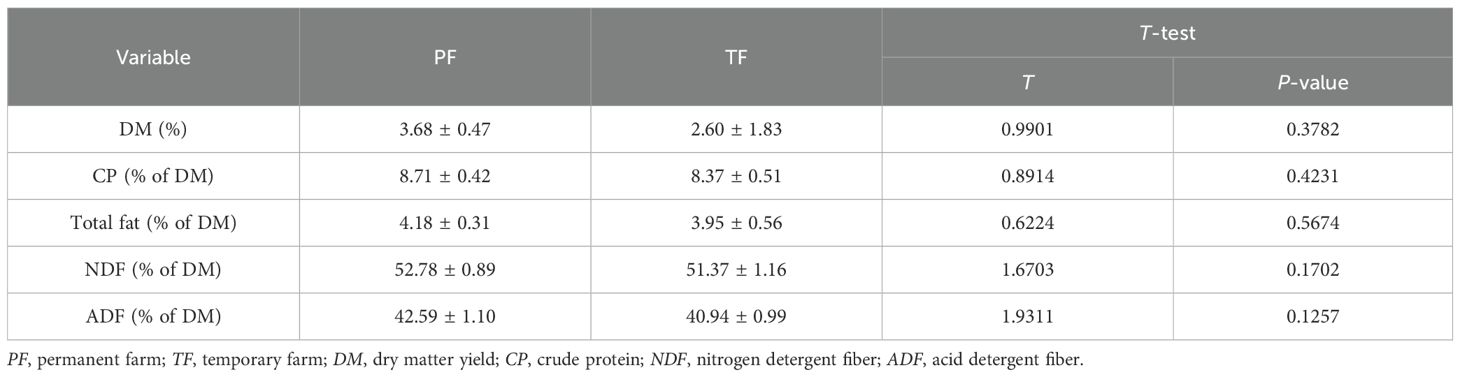
Table 1. Forage quality of the grassland grazed by the herds.
3.2 Milk yield and composition
The statistical analysis revealed that the farm type exercised a highly significant influence on the milk yield and the lactose content, and its influence was also significant on the fat content. Month exercised a significant influence only on the milk yield and the lactose content of milk (Table 2).

Table 2. Influence of factors and their interactions on the milk parameters.
Further exploration of the differences between the two farms in each of the 3 months showed different trends dependent on the parameters. The milk yield in the TF was significantly lower between June and August (Figure 1A). For the PF, the milk yield varied between 20.54 and 18.56 kg/day, while that for the TF varied between 17.99 and 16.00 kg/day (Supplementary Table S1). However, the fat content of milk was significantly higher in the TF in the months of June and July (Figure 1B). The fat content varied between 3.65% and 3.93% in the PF and between 3.99% and 4.18% in the TF (Supplementary Table S1). The protein content of milk was non-significantly different between the two farms during the summer months but was lower in value in July and August in the TF (Figure 1C). The protein content of milk varied between 3.26% and 3.33% in the PF and between 3.25% and 3.27% in the TF (Supplementary Table S1). The lactose content showed a decreasing trend between June and August in both farms but with lower values in the TF (Figure 1D). The lactose content varied between 4.65% and 4.67% in the PF and between 4.59% and 4.80% in the TF (Supplementary Table S1). The SCCs increased between June and August in both farms, but the differences between farms were not statistically significant (Figure 1E). The SCCs varied between 175.89 and 212.11 in the PF and between 202.00 and 239.44 in the TF (Supplementary Table S1).
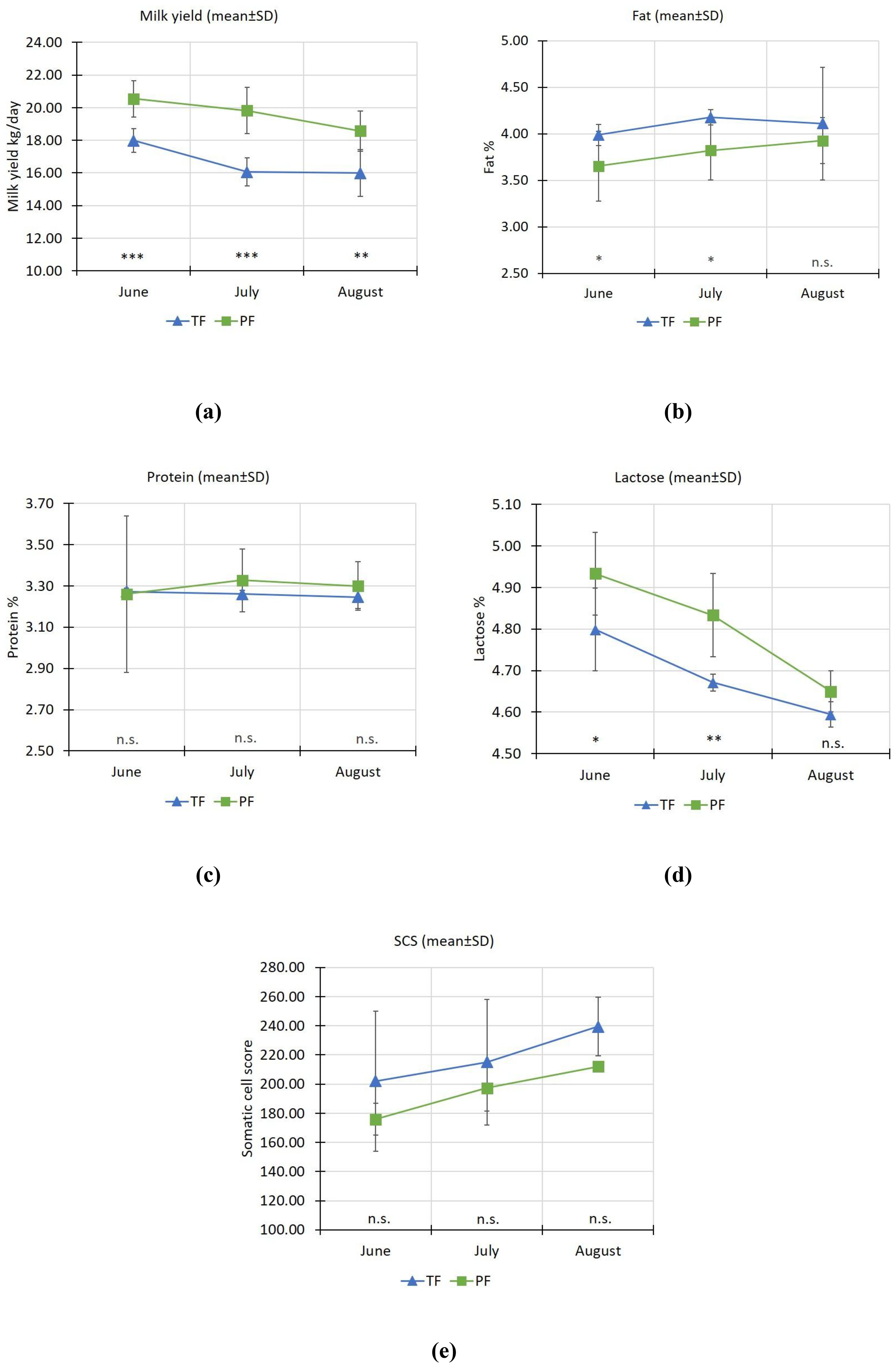
Figure 1. Pairwise comparisons of the milk parameters—milk yield (A), fat (B), protein (C), lactose (D), and somatic cell count (E)—during summer transhumance in the permanent farm (PF) and the temporary farm (TF). *p < 0.05; **p < 0.01; ***p < 0.001 ns, not significant.
3.3 Relationship between forage quality and the milk quality parameters
Regarding the forage parameters, the correlation analysis revealed a statistically significant positive relationship between the dry matter content of the forage and the crude protein (rs = 0.89) and fat (rs = 0.94) from the forage. Furthermore, the relationship between the crude protein NDF and ADF was also positively significant (rs = 0.89). Regarding the milk parameters, a positive significant relationship was found between the SSCs and the fat content of milk. There was also a positive relationship between milk yield and farm type (rs = 0.88). A positive relationship was identified between farm type and the protein (rs = 0.59) and lactose (rs = 0.49) contents of milk. Similarly, a positive relationship between the milk yield ADF and NDF was also found (rs = 0.43). A positive relationship was also found between SCCs and the dry matter content of forage (rs = 0.20) but was weaker. A highly significant negative correlation was found between milk yield and the fat content of milk (rs = −0.94) (Figure 2).

Figure 2. Spearman’s rs correlation between forage quality (DM, dry matter; CP, crude protein; Fa, crude fat) and the milk parameters (YL, milk yield; FA, fat; PR, protein; LA, lactose; SC, somatic cells). FT, farm type. An “×” indicates a non-significant relationship at α = 0.05, and the size of the ellipse is proportional to the coefficient value. The scale represents the range of coefficients, where 1 (yellow is perfectly positive) and -1 (purple represents perfectly negative correlation).
3.4 Grassland floristic composition
The lowest number of species was found in TF G2 (13). TF G1 and PF G2 had 17 species each, forming a first group with high similarity. In comparison, PF G1 had the highest number of species (34). Poaceae species predominated in all four grasslands, representing 41.38%–38.79% of the species in PF and 21.44%–36.00% in TF. The floristic composition of both TF G2 and PF G2 comprised 4.57% Fabaceae species. OBF was higher in PF G1 (14.72%), with the other three grasslands having a much lower percentage of ≤ 6% (Figure 3). The maximum number of plants per plot was found in PF G1, where the grassland type A. capillaris was identified. The A. capillaris grassland type identified in the 50 sites had a composition of 34 species. The A. capillaris grassland type can be dominant on poor and acidic soils and is well adapted to grazing pressure. The floristic composition of the PF revealed the occurrence of three species with excellent fodder values: Dactylis glomerata, Festuca pratensis, and Phleum pretense (Table 3). The small differences in the quality between the farms may also be related to the higher number of plants belonging to the Fabaceae family (mainly white and red clovers) present in the PF. All of these species have very good forage value. The average A. capillaris grassland type had a total cover of 23.71%. Holcus lanatus, with an average cover of 8.26%, and T. pratense, with an average cover of 7.52%, were also observed in this type of grassland. On the other hand, the A. capillaris–F. rubra type identified was found to be composed of only 17 high fodder species, with the dominant species being A. capillaris, with 23.17%, followed by F. rubra with 15.42%. In this type of grassland, there were no species with excellent fodder value, only with good fodder value. In the TF, the first grassland type identified was A. capillaris with F. rubra. The average cover of the dominant species was 20.83% for A. capillaris and 13.39% for F. rubra (Table 4). The floristic composition of the TF revealed the occurrence of species of the A. capillaris–F. rubra grassland type; however, there were no species of excellent forage value as reported in the PF. This could be due to the conditions typical of the high mountain: summer farming has created an open landscape where the flora of the lowlands and the alpine meadows meet.
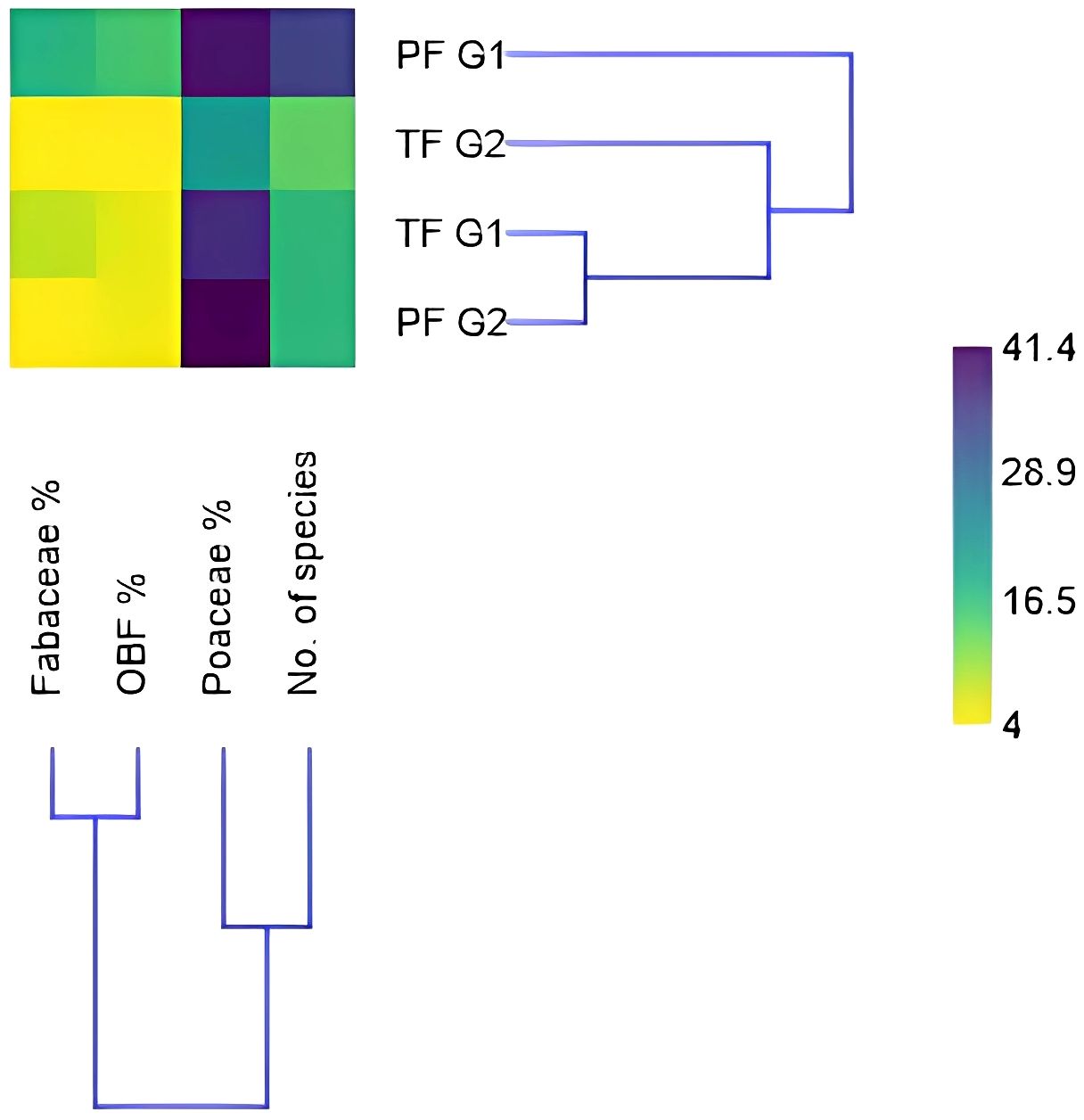
Figure 3. Hierarchical clustering of the grassland composition (G) in the permanent farm (PF) and the temporary farm (TF). Gradient expresses the percentage value. OBF, other botanical families.
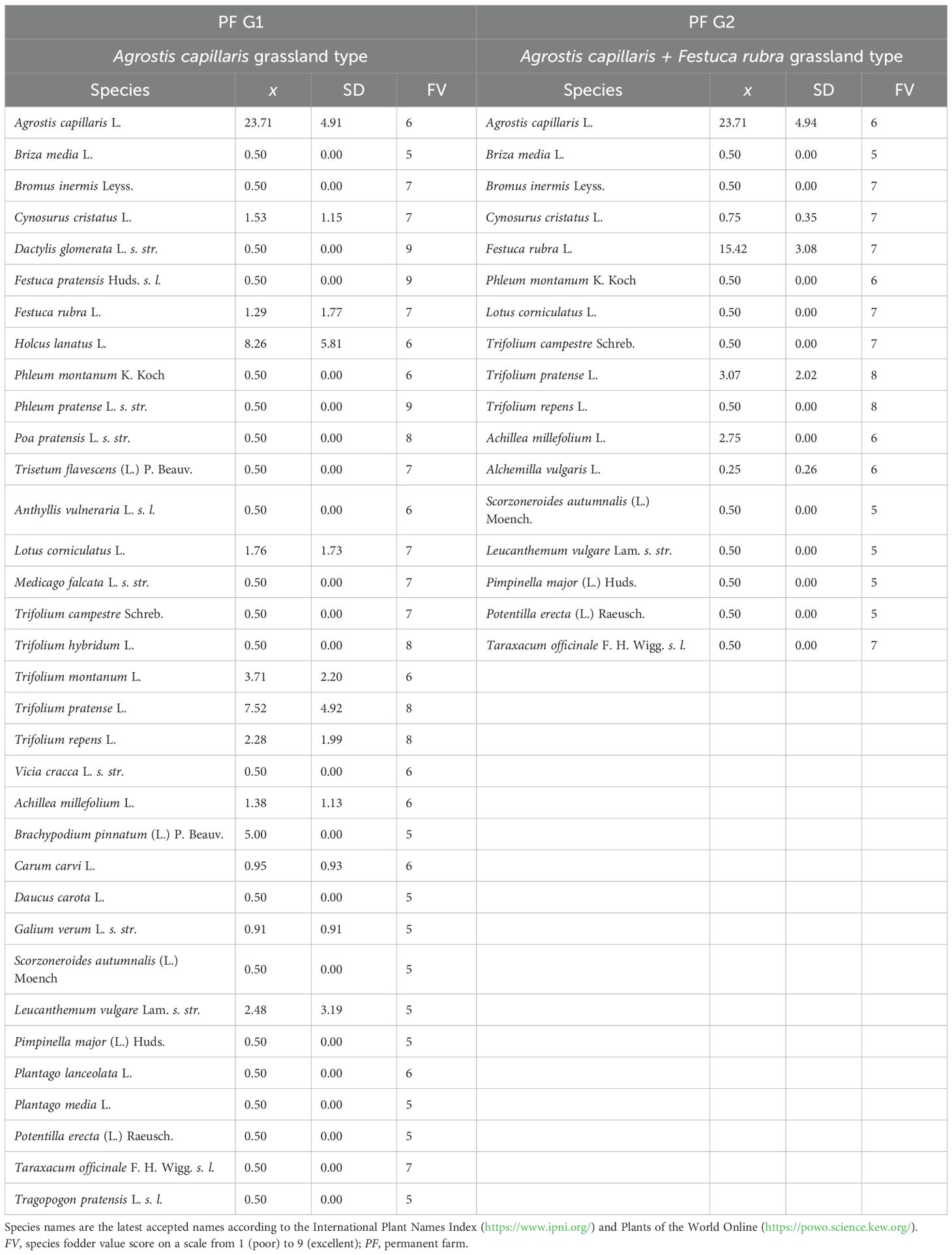
Table 3. Floristic composition of the grassland from the mountain permanent farm and fodder value of species.
For the grassland type N. stricta–F. rubra, the average cover of the dominant species was 24.16%, while that for the co-dominant species F. rubra was 15.42%, with deviations of 3.08% and 4.27% for A. capillaris (with a standard deviation of 6.27). It can be noted that, in this type of grassland, there were only 13 species with good and high fodder values, with the predominant species not having good fodder value. Another species that stands out in this type of grassland is Trifolium repens, with an average of 3.07%.
4 Discussion
Traditional households in the Apuseni Mountains have always been self-sufficient and have maintained their way of life, which guarantees their self-sustainability (buying very few things and only those they are unable to produce themselves). In this area, although milk is not sold commercially, it is used by people to make local products in their own households that have a short shelf life, mostly fresh produce.
Thus, the inhabitants of this area claim that, although the milk production decreases with the transhumance pendular movement, the milk has more fat and is very good for the production of butter.
The quality of the grassland therefore influences the milk parameters of interest to mountain inhabitants that own cattle. This manner of exploiting grasslands has been practiced for hundreds of years and is an integral part of the mountain inhabitants’ way of life to this day in the Apuseni Mountains.
Although the sustainability of this grassland use is well known, more attention has generally been focused on studies of intensive dairy cattle farming than on transhumance. Therefore, in the last years, there has been a gap in the literature on the influence of this practice on milk quality, although it is still widely practiced across the mountain ranges of Europe: Carpathians, Alps, and Pyrenees (Bunce et al., 2004a; Herzog and Seidl, 2018; Saha et al., 2019; García-Ruiz et al., 2020).
This practice has economic and cultural value: it preserves cultural practices and landscapes, and it is important for serving consumers who are connoisseurs of regional, local, and traditional products, which are not necessarily organic. This is an important trend in the European Union with regard to regional products (European protection of regional products). In this context, this work makes a valuable contribution to the current interests of consumers and farmers alike that deserve further exploration.
The results of our study indicate that the dry matter content of the fodder from PF was higher than that from TF, mainly due to the higher fiber content. Overall, all of the forage quality indicators were lower in the TF. This suggests that the decrease in milk production in the TF compared with that in the PF could be due to two factors: the lower nutritional value of the forage (see Tables 1, 3, and 4) and the animals’ effort in walking to find more palatable plants. This is consistent with previous studies that have observed a similar trend (Zemp et al., 1989b; Bovolenta et al., 2008; Bergamaschi et al., 2016; Niero et al., 2018).

Table 4. Floristic composition of the grassland from the mountain temporary farm and fodder value of species.
A high-fiber diet increases rumen acetate production, thereby contributing to higher milk fat yields. A diet with a low fiber content is likely to result in a reduction of acetate, in turn leading to a decrease in the milk fat percentages. More fiber in the diet leads to higher levels of acetate in the rumen. This, in turn, makes more substrates available for the synthesis of milk fat. A diet rich in fiber, particularly from grazing on mountain grasslands with higher fiber content, has been shown to directly impact the milk fat content. This suggests a link between the type of fiber the cows consume, the process of ruminal fermentation, and the fat content of the milk they produce (Matamoros et al., 2022; Urrutia et al., 2025). During periods of intense physical activity or reduced energy intake, cattle mobilize their fat reserves. The resulting non-esterified fatty acids are transported to the mammary gland, where they are incorporated into milk fat. This often leads to an increase in the milk fat percentage despite a lower production (Churakov et al., 2021). Simmental cattle raised on mountain grazing systems produce milk with a higher fat content and lower protein content than those raised in lowland systems. The nutritional profile of mountain forage, which is characterized by a high fiber content and botanical diversity, contributes to a more favorable fatty acid composition and higher levels of conjugated linoleic acid (Corazzin et al., 2019). During the summer, heat stress causes a reduction in milk production and an increase in SCC. This reflects an impaired udder health and indicates an increased susceptibility to mastitis during periods of high temperature (Raboisson et al., 2013; Doelman et al., 2015).
A key advantage of transhumance is the potential to prevent grassland abandonment while maintaining important species in the grassland cover. This leads to the desired outcome of twofold benefits. For this reason, this practice could be incorporated into modern, multidimensional approaches to grassland use, such as temporary and permanent farming, as a practical tool that can be successfully replicated in other mountain regions. This could inform land management policies and practices at local and regional levels.
The different types of grasslands (as the ones from our study) come with their particular challenges. Some of the main factors that influence the quality and the quantity of production in A. capillaris grasslands are as follows: climate, grassland location, use, and the soil nutrient content (Maczey, 2016; Onete et al., 2024). From an economic point of view, the A. capillaris grassland type is characterized by a pastoral value of 1.3–2 (Barbulescu et al., 1991; Hulme et al., 2001; Cojocariu, 2011; Maruşca et al., 2014). This type of grassland in the analyzed TF, and especially its phytodiversity, is subject to anthropogenic pressures with unequal distribution and impact. Therefore, effective grassland management would require the adoption of strategies based on particular local conditions and pressures, thus leading to the rational use of grasslands in TF, such as those from the study area. Major challenges may include underexploitation due to the annual decrease in animal number and poor infrastructure, exacerbated by vulnerability to environmental conditions and climate trends.
Concerning the grassland type N. stricta, these are ecosystems where net changes occur in the grassland class, changes that materialize through loss of surface area, mainly through the transition to forest or shrubland (Măgureanu, 2024). The grassland type N. stricta–F. rubra could be the result of the abandonment of agroecosystems. Abandonment often leads to a remarkable further deterioration of the grasslands, caused by the spread of woody vegetation (i.e., trees and shrubs) or of invasive species that impact the biodiversity and the quality of the grasslands.
Regarding the milk parameters in this study, such as the fat content of the milk in TF, the lowest values were recorded in June, with an increase in July and a slight decrease in August. At the same time, milk production was lower in July, with a decreasing trend throughout the transhumance period. Fat maintained a higher value, which has been found by other researchers to be an effect of transhumance as well (Zemp et al., 1989b; Christen et al., 1996; Saha et al., 2019; Collomb et al., 2002). The number of somatic cells increased constantly during the summer months in both farms, which has also been observed by other authors under transhumance conditions (Ali and Shook, 1980; Schepers et al., 1997; Lamarche et al., 2000).
Although the animals are making more of an effort to find plants with a high palatability in the TF during transhumance, they feel free and benefit from having more space to move, which contribute to their welfare. Similarly to other mountain ranges, in the Apuseni Mountains, the practice of short-distance transhumance of cattle is extremely important for maintaining the grasslands in good condition, for preserving the cultural landscape, and for sustaining the livelihoods of mountain people.
5 Conclusion
This study investigated the influence of a particular type of transhumance (pendular movement) practiced in the Apuseni Mountains on the milk yield and quality of Romanian cattle breed commonly owned by the people in this region.
The present research examined the influence of a particular type of transhumance (pendular movement) that the farmers in the Apuseni Mountains practice on the milk production and the quality of Bălțată Românească tip Simmental cattle, which the farmers in the region traditionally own. The results showed a lower milk production during the mountain grazing period but a higher fat content, while protein and lactose showed moderate variations between farms. Mountain pastures had reduced biodiversity compared with pastures at lower altitudes; however, the dominant species maintained satisfactory forage value.
The seasonal movement of cattle to high-altitude grasslands appears to have a significant impact on the composition of milk, primarily through variations in the quality and the composition of the feed. Pendular movement remains an important traditional practice that ensures sustainable use of mountain grasslands and contributes to preserving their biodiversity and valuable cultural landscapes. The local products obtained following this practice have a regional characteristic that is currently sought after by consumers.
Future research should carry out analyses of how traditional transhumance practices can be adapted to current climatic and economic conditions while maintaining the quality of dairy products and the ecological balance of mountain pastures. It is also crucial to evaluate the contribution of these systems to the conservation of biodiversity and the sustainable development of rural communities in the Carpathian region.
Data availability statement
The original contributions presented in the study are included in the article/Supplementary Material. Further inquiries can be directed to the corresponding authors.
Ethics statement
The animal studies were approved under the conditions mentioned in Application Form No. 490 dated 18.02.2025 the favorable opinion of the Bioethics Committee of USAMV Cluj-Napoca is valid for the entire period necessary to carry out the scientific study. The studies were conducted in accordance with the local legislation and institutional requirements. Written informed consent was obtained from the owners for the participation of their animals in this study.
Author contributions
MR: Resources, Project administration, Formal Analysis, Writing – original draft, Visualization, Data curation, Investigation, Writing – review & editing, Conceptualization, Validation, Software, Methodology, Funding acquisition, Supervision. IC: Writing – review & editing, Formal Analysis, Methodology, Writing – original draft, Software, Conceptualization, Validation. AP: Resources, Conceptualization, Validation, Methodology, Formal Analysis, Writing – original draft, Data curation, Writing – review & editing. AI: Methodology, Conceptualization, Funding acquisition, Supervision, Writing – review & editing, Software, Visualization, Formal Analysis, Data curation, Writing – original draft.
Funding
The author(s) declare that no financial support was received for the research, and/or publication of this article.
Conflict of interest
The authors declare that the research was conducted in the absence of any commercial or financial relationships that could be construed as a potential conflict of interest.
Generative AI statement
The author(s) declare that no Generative AI was used in the creation of this manuscript.
Any alternative text (alt text) provided alongside figures in this article has been generated by Frontiers with the support of artificial intelligence and reasonable efforts have been made to ensure accuracy, including review by the authors wherever possible. If you identify any issues, please contact us.
Publisher’s note
All claims expressed in this article are solely those of the authors and do not necessarily represent those of their affiliated organizations, or those of the publisher, the editors and the reviewers. Any product that may be evaluated in this article, or claim that may be made by its manufacturer, is not guaranteed or endorsed by the publisher.
Supplementary material
The Supplementary Material for this article can be found online at: https://www.frontiersin.org/articles/10.3389/fanim.2025.1720225/full#supplementary-material
References
Ali A. K. A. and Shook G. E. (1980). An optimum transformation for somatic cell concentration in milk. J. Dairy Sci. 63, 487–490. doi: 10.3168/jds.S0022-0302(80)82959-6
Barbulescu C., Puia I., Motca G. H., and Moisuc A. (1991). Cultura pajistilor si a plantelor furajere (Romania: Bucuresti).
Bergamaschi M., Cipolat-Gotet C., Stocco G., Valorz C., Bazzoli I., Sturaro E., et al. (2016). Cheesemaking in highland pastures: Milk technological properties, cream, cheese and ricotta yields, milk nutrients recovery, and products composition. J. Dairy Sci. 99, 9631–9646. doi: 10.3168/jds.2016-11199
Berry N. R., Sutter F., Bruckmaier R. M., Blum J. W., and Kreuzer M. (2001). Limitations of high Alpine grazing conditions for early-lactation cows: effects of energy and protein supplementation. Anim. Sci. 73, 149–162. doi: 10.1017/S1357729800058148
Bovolenta S., Spanghero M., Dovier S., Orlandi D., and Clementel F. (2008). Chemical composition and net energy content of alpine pasture species during the grazing season (DOI:10.1016/j.anifeedsci.2007.02.002). Anim. Feed Sci. Technol. - Anim. FEED Sci. TECH 140, 164–177. doi: 10.1016/j.anifeedsci.2007.02.002
Bovolenta S., Ventura W., and Malossini F. (2002). Dairy cows grazing an alpine pasture: Effect of pattern of supplement allocation on herbage intake, body condition, milk yield and coagulation properties. Anim. Res. - Anim. Res. 51, 15–23. doi: 10.1051/animres:2002007
Braun-Blanquet J., Conard H. S., and Fuller G. D. (1932). Plant sociology: the study of plant communities (New York and London: McGraw-Hill Book Company).
Bunce R. G. H., Pérez-Soba M., Jongman R. H. G., Gómez Sal A., Herzog F., Austad I., et al. (2004). Transhumance and biodiversity in European mountains (Ponsen & Looijen).
Christen R. E., Kunz P. L., Langhans W., Leuenberger H., Sutter F., Kreuzer M., et al. (1996). Productivity, requirements and efficiency of feed and nitrogen utilization of grass-fed early lactating cows exposed to high Alpine conditions. J. Anim. Physiol. Anim. Nutr. 76, 22–35. doi: 10.1111/j.1439-0396.1996.tb00673.x
Churakov M., Karlsson J., Edvardsson Rasmussen A., and Holtenius K. (2021). Milk fatty acids as indicators of negative energy balance of dairy cows in early lactation. Animal 15, 100253. doi: 10.1016/j.animal.2021.100253
Cojocariu L. (2011). “Evolution of the development and management of grasslands from timi? - Romania,” in Included in the ecologic natura 2000 network. International Multidisciplinary Scientific GeoConference: SGEM. 13, 307–313. doi: 10.5593/sgem2017/54
Collomb M., Bütikofer U., Sieber R., Jeangros B., and Bosset J. O. (2002). Correlation between fatty acids in cows’ milk fat produced in the Lowlands, Mountains and Highlands of Switzerland and botanical composition of the fodder. Int. Dairy J. - Int. DAIRY J. 12, 661–666. doi: 10.1016/S0958-6946(02)00062-6
Corazzin M., Romanzin A., Sepulcri A., Pinosa M., Piasentier E., Bovolenta S., et al. (2019). Fatty acid profiles of cow’s milk and cheese as affected by mountain pasture type and concentrate supplementation. Anim. (Basel) 9, 68. doi: 10.3390/ani9020068
Coulon J. B. and Pérochon L. (2000). Evolution de la production laitière au cours de la lactation : modèle de prédiction chez la vache laitière. INRAE Productions Animales 13, 349–360. doi: 10.20870/productions-animales.2000.13.5.3803
Dacid L. and Constantin M. (2020). Yearbook of the “Constantin brăiloiu” Institute of ethnography and folklore – new series tome 2020 (Bucharest: Anuar IEF).
Dale L. (2011). Determinarea calită-ii furajelor prin metode destructive si non–destructive (Doctorat) (Cluj-Napoca: University of Agricultural Sciences and Veterinary Medicine, Cluj-Napoca, Romania).
De Castro M. L. and Priego-Capote F. (2010). Soxhlet extraction: Past and present panacea. Journal of chromatography A, 1217, 2383–2389.
Dierschke H. and Briemle G. (2002). Kulturgrasland. Ökosysteme Mitteleuropas aus geobotanischer Sicht. 22, 168–180.
Doelman J., Curtis R. V., Carson J. J., Kim M., Metcalf J. A., Cant J. P., et al. (2015). Essential amino acid infusions stimulate mammary expression of eukaryotic initiation factor 2Bϵ but milk protein yield is not increased during an imbalance. J. Dairy Sci. 98, 4499–4508. doi: 10.3168/jds.2014-9051
Dorland H. A. V., Wettstein H. R., and Kreuzer M. (2007). Species-rich swards of the Alps: constraints and opportunities for dairy production. Frontis 18, 27–43.
Fuerst-Waltl B., Aichhorn T., and Fuerst C. (2018). Mountain pasturing of rearing stock reduces the culling risk as dairy cows. animal 13, 1–4. doi: 10.1017/S1751731118001465
Garcıa-Ruiz J. M., Tomás-Faci G., Diarte-Blasco P., Montes L., Domingo R., Sebastián M., et al. (2020). Transhumance and long-term deforestation in the subalpine belt of the central Spanish Pyrenees: An interdisciplinary approach. CATENA 195, 104744. doi: 10.1016/j.catena.2020.104744
Herzog F. and Seidl I. (2018). Swiss alpine summer farming: Current status and future development under climate change. Rangeland J. 40, 501–511. doi: 10.1071/RJ18031
Hulme P. D., Pakeman R. J., Torvell L., Fisher J. M., and Gordon I. J. (2001). The effects of controlled sheep grazing on the dynamics of Agrostis-Festuca grassland. J. Appl. Ecol. 36, 886–900.
Ibric A. I., Cocan I., Alexa E., Jianu C., Negrea M., Dragoescu A. A., et al. (2024). Geographical variation in pasturelands and their impact on the physicochemical characterization and fatty acid composition of cheese in caras-severin county, Romania. Sustainability 16, 7179. doi: 10.3390/su16167179
ISO 1211 (2010). Milk — Determination of fat content — Gravimetric method. Available online at: https://www.iso.org/standard/51348.html (Accessed October 14, 2025).
ISO 26462 (2010). Milk—Determination of lactose content—Enzymatic method using difference in pH;ISO-IDF (Geneva, Switzerland; Brussels, Belgium: ISO: International Organization for Standardization and International Dairy Federation).
ISO 8968-1 (2014). Milk and milk products — Determination of nitrogen content Part 1: Kjeldahl principle and crude protein calculation. Available online at: https://www.iso.org/standard/61020.html (Accessed October 14, 2025).
Janišová M., Iuga A., Ivașcu C. M., and Magnes M. (2020). Species-rich grasslands of the Apuseni Mts (Romania): role of traditional farming and local ecological knowledge. Tuexenia 40, 409–427. doi: 10.14471/2020.40.017
Jayanegara A., Marquard S., et al. (2011). Nutrient and energy content, in vitro ruminal fermentation characteristics and methanogenic potential of alpine forage plant species during early summer | Request PDF. Available online at: https://www.researchgate.net/publication/51039184_Nutrient_and_energy_content_in_vitro_ruminal_fermentation_characteristics_and_methanogenic_potential_of_alpine_forage_plant_species_during_early_summer (Accessed August 15, 2025).
Koczura M., Bouchon M., Turille G., De Marchi M., Kreuzer M., Berard J., et al. (2020). Consequences of walking or transport by truck on milk yield and quality, as well as blood metabolites, in Holstein, Montbéliarde, and Valdostana dairy cows. J. Dairy Sci. 103, 3470–3478. doi: 10.3168/jds.2019-17467
Lamarche A., Martin B., Hauwuy A., Coulon J. B., and Poutrel B. (2000). Evolution of milk somatic cell count of cows grazing an alpine pasture according to the infection of udder by pathogens. Annales zootechnie 49, 45–54. doi: 10.1051/animres:2000107
Mack G., Walter T., and Flury C. (2013). Seasonal alpine grazing trends in Switzerland: Economic importance and impact on biotic communities. Environ. Sci. Policy 32, 48–57. doi: 10.1016/j.envsci.2013.01.019
Maczey N. (2016). “Agrostis capillaris (common bent),” in CABI compendium (CABI Compendium), 3830. doi: 10.1079/cabicompendium.3830
Măgureanu M. C. (2024). Dinamica si monitorizarea pajistilor montane în contextul schimbărilor spa-io-temporale si socio-economice (PhD Thesis) (Timisoara: Universitatea de stiin-e Agricole si Medicină Veterinară Timisoara).
Marușca T., Blaj V. A., Mocanu V., Andreoiu A., and Zevedei P. M. (2018). “Long term influence of botanical composition of alpine pastures on cow milk production,” in Sustainable meat and milk production from grasslands, (Ireland: Cork). 283.
Maruşca T., Mocanu V., Haş E. C., Tod M. A., Andreoiu A. C., Dragoş M. M., et al. (2014). Ghid de întocmire a amenajamentelor pastorale (Braşov: Editura Capolavoro).
Matamoros C., Hao F., Tian Y., Patterson A. D., and Harvatine K. J. (2022). Interaction of sodium acetate supplementation and dietary fiber level on feeding behavior, digestibility, milk synthesis, and plasma metabolites. J. dairy Sci. 105, 8824–8838. doi: 10.3168/jds.2022-21911
Mayer A. C., Stöckli V., et al. (2005). Herbage selection by cattle on sub-alpine wood pastures. Available online at: https://www.researchgate.net/publication/223206015_Herbage_selection_by_cattle_on_sub-alpine_wood_pastures (Accessed August 15, 2025).
National Sanitary Veterinary & Food Safety Authority (ANSVSA) (2016). Order No. 35/2016 approving the Strategic Program for the surveillance, prevention, control and eradication of animal diseases and zoonoses (Bucharest: ANSVSA).
National Sanitary Veterinary & Food Safety Authority (ANSVSA) (2024). Strategic veterinary health program for the surveillance and control of animal diseases (Bucharest: ANSVSA).
Niero G., Koczura M., De Marchi M., Currò S., Kreuzer M., Turille G., et al. (2018). Are cheese-making properties of dual purpose cattle impaired by highland grazing? A case study using Aosta Red Pied cows. Ital. J. Anim. Sci. 17, 827–834. doi: 10.1080/1828051X.2018.1443289
Onete M., Mihai L., Nicoara R., Bodescu F. P., and Manu M. (2023). Agrostis capillaris L. -A review of the distribution, characteristics, ecological and agronomic aspects, and usage.
Păcurar F. and Rotar I. (2014). Metode de studiu si interpretare a vegetatiei pajistilor. (Romania: Risoprint, Cluj-Napoca).
Pauca-Comanescu M. and Marusca T. (1999). Considerations on the dynamics of the mountain grasslands in the south carpathians (Romania) (Austrian: Austrian Academy of Sciences).
Raboisson D., Delor F., Cahuzac E., Gendre C., Sans P., and Allaire G. (2013). Perinatal, neonatal, and rearing period mortality of dairy calves and replacement heifers in France. J. Dairy Sci. 96, 2913–2924. doi: 10.3168/jds.2012-6010
Saha S., Amalfitano N., Sturaro E., Schiavon S., Tagliapietra F., Bittante G., et al. (2019). Effects of summer transhumance of dairy cows to alpine pastures on body condition, milk yield and composition, and cheese making efficiency. Animals 9, 192. doi: 10.3390/ani9040192
Schepers A. J., Lam T. J., Schukken Y. H., Wilmink J. B. M., Hanekamp W. J. A., et al. (1997). Estimation of variance components for somatic cell counts to determine thresholds for uninfected quarters. J. Dairy Sci. 80, 1833–1840. doi: 10.3168/jds.S0022-0302(97)76118-6
Stanciu M., Sand C., Savoiu G., Vlad I., Antofie M., Antonie I., et al. (2010). Studiu privind stâna, produsele şi subprodusele tradiţionale de stână din arealul rural montan (Lucian Blaga: Editura Universității).
Sturaro E., Marchiori E., Cocca G., Penasa M., Ramanzin M., and Bittanteet G. (2013). Dairy systems in mountainous areas: Farm animal biodiversity, milk production and destination, and land use. Livestock Sci. 158, 157–168. doi: 10.1016/j.livsci.2013.09.011
Urrutia N. L., Muñoz C., Ungerfeld E. M., Cisterna C., and Harvantine K. J. (2025). Interaction between ruminal acetate infusion and diet fermentability on milk fat production in dairy cows. Anim. (Basel) 15, 1931. doi: 10.3390/ani15131931
Zemp M., Leuenberger H., Künzi N., and Blum J. W. (1989a). Influence of high altitude grazing on productive and physiological traits of dairy cows. J. Anim. Breed. Genet. 106, 278–288. doi: 10.1111/j.1439-0388.1989.tb00242.x
Keywords: cattle milk, grassland, grazing, milk yield, milk quality
Citation: Ranta M, Crișan I, Pleșa A and Ihuț A (2025) Influence of summer transhumance practice in the Carpathians, Apuseni Mountains, Romania, on cattle milk production and quality. Front. Anim. Sci. 6:1720225. doi: 10.3389/fanim.2025.1720225
Received: 08 October 2025; Accepted: 21 October 2025;
Published: 13 November 2025.
Edited by:
Petru Alexandru Vlaicu, National Research Development Institute for Animal Biology and Nutrition, RomaniaReviewed by:
Grigore Daniela-Mihaela, University of Agronomic Sciences and Veterinary Medicine of Bucharest, RomaniaLefter Nicoleta Aurelia, Research Station for Sericulture Baneasa, Romania
Alexandra Oancea, National Research Development Institute for Animal Biology and Nutrition, Romania
Copyright © 2025 Ranta, Crișan, Pleșa and Ihuț. This is an open-access article distributed under the terms of the Creative Commons Attribution License (CC BY). The use, distribution or reproduction in other forums is permitted, provided the original author(s) and the copyright owner(s) are credited and that the original publication in this journal is cited, in accordance with accepted academic practice. No use, distribution or reproduction is permitted which does not comply with these terms.
*Correspondence: Anca Pleșa, YW5jYS5wbGVzYUB1c2FtdmNsdWoucm8=; Andrada Ihuț, aWh1dC5hbmRyYWRhQHVzYW12Y2x1ai5ybw==