 Peilong Ju
 Mingru Chen1,3,4*
 Yongjun Tian
- 1State Key Laboratory of Marine Environmental Science, and College of Ocean and Earth Sciences, Xiamen University, Xiamen, China
- 2Laboratory of Fisheries Oceanography, Fisheries College, Ocean University of China, Qingdao, China
- 3Xiamen City Key Laboratory of Urban Sea Ecological Conservation and Restoration (USER), Xiamen University, Xiamen, China
- 4China-ASEAN College of Marine Sciences, Xiamen University Malaysia, Sepang, Malaysia
- 5Frontiers Science Center for Deep Ocean Multispheres and Earth System, Ocean University of China, Qingdao, China
- 6Laboratory for Marine Fisheries Science and Food Production Processes, Pilot National Laboratory for Marine Science and Technology (Qingdao), Qingdao, China
Five shark stocks in the waters around Taiwan were assessed using the LBB method, addressing the present gap. Among them, only one filter-feeding shark, megamouth shark Megachasma pelagios, qualified as having a healthy status. Of the remaining filter-feeding shark, whale shark Rhincodon typus, was seriously overexploited, possibly even collapsed, spadenose shark Scoliodon macrorhynchos, and other two large sharks (dusky shark Carcharhinus obscurus and silky shark Carcharhinus falciformis) were also overexploited. These stock status estimates for the five shark species using the LBB method were consistent with international agreements such as IUCN, CITES and CMS.
Introduction
Sharks and their relatives (chondrichthyans, herein “sharks”) are more vulnerable to overfishing due to their conservative life-history traits, such as slow growth, old ages of reproduction, long gestation periods, and high levels of maternal investment (Cortés, 2000; Dulvy et al., 2014; Adams et al., 2018; Booth et al., 2019). On the other hand, sharks as predators not only play critical roles in maintaining the stability, functionality and productivity of ecosystems (McCann et al., 2005; Heupel et al., 2014), but also have important socio-economic roles in coastal communities (Booth et al., 2019).
The increasing global demand and high market value for shark fins exacerbates the depletion of low-productivity sharks (Cortés, 2000; Booth et al., 2019), which is more serious in Chinese waters (Eriksson and Clarke, 2015). Therefore, sharks have been listed in international agreements to regulate fishing and trade (Booth et al., 2019), such as the Convention on International Trade in Endangered Species of Wild Fauna and Flora (CITES). However, globally many sharks are still overfished (Davidson et al., 2016) and remain under-managed, particularly in many developing countries (Momigliano and Harcourt, 2014; Simpfendorfer and Dulvy, 2017). Indeed, it is estimated that a quarter of shark species are threatened with extinction (Dulvy et al., 2014).
As bycatch especially for pelagic longline fisheries in the high seas (Oliver et al., 2015), production of sharks is rarely recorded, or even reported in official fishery statistics at the species level (Clarke et al., 2006). Therefore, poor catches data make stock assessment more difficult.
The waters around Taiwan, one of the marine “hotspots” (Hobday and Pecl, 2014), has the fifth richest chondrichthyan faunas in the world, with at least 181 known species inhabiting there (Ebert et al., 2013). Yet most of the shark stocks in this area are not assessed and the majority of sharks have not been recorded in official fishery statistics. Thus, it is necessary to use other measures and not rely on catches to fill the gaps in shark stock assessment in the waters around Taiwan. To address this gap, a length-based Bayesian biomass estimation method (LBB) was applied to estimate stock status of 5 shark species in the waters around Taiwan. The results would benefit “shark” conservation and management.
Materials and Methods
Data Source
The basic information and data source of 5 shark species during different time periods since 2000 were summarized in Table 1. The original total length data of spadenose shark (Scoliodon macrorhynchos) were from a Master thesis (Zhao, 2018). The original total length frequency data of silky shark (Carcharhinus falciformis) were from Joung et al. (2008). Two species data were read from figures in published scientific papers (dusky shark Carcharhinus obscurus: Joung et al., 2015; whale shark Rhincodon typus: Hsu et al., 2014) using OriginPro 2018C. The length data of megamouth shark (Megachasma pelagios) were from the Fisheries Agency1.
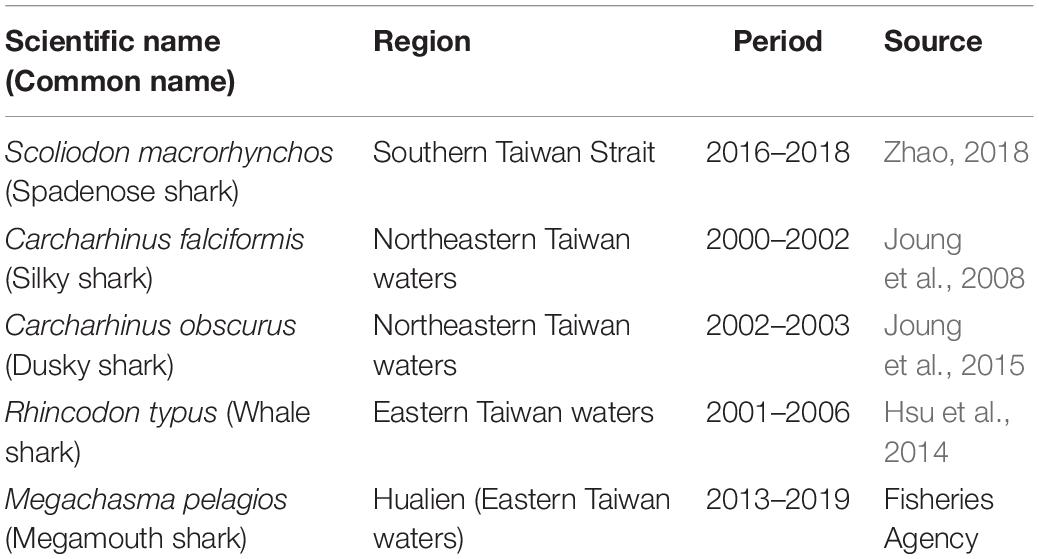
Table 1. The basic data information of five sharks in the waters around Taiwan.
General Description of the LBB Method
The length-based Bayesian biomass estimation (LBB), a new method for the analysis of length- frequency data from the commercial fishery, was developed by Froese et al. (2018). LBB is applicable for species that grow throughout their lives, such as most of the commercial fish and invertebrates, and require no input in addition to length-frequency data. It estimates asymptotic length (Linf), length at first capture (Lc), relative natural mortality (M/K), and relative fishing mortality (F/M) which means over the age range represented in the length-frequency sample. If a good estimate of Linf from an independent study is available, this value can be introduced by the user, thus decreasing uncertainty in LBB results (Froese et al., 2018). With these parameters as input, standard fisheries’ equations can be used to estimate depletion or current exploited biomass relative to unexploited biomass (B/B0). These parameters also allow the estimation of the length at first capture that would maximize catch and biomass for the given fishing effort (Lc_opt), and estimation of a proxy for the relative biomass capable of producing maximum sustainable yields (BMSY/B0). Relative biomass estimates of LBB were not significantly different from the “true” values in simulated data and were similar to independent estimates from full stock assessments (Froese et al., 2018). Further details and more complete information about LBB can be found in Froese et al. (2018) and Froese et al. (2019).
Using the LBB method here, priors for Linf, Z/K and Lc were estimated according to accumulated length data (Figure 1A). The fitting curves were used to estimate Linf, Lc, Z/K, M/K, and F/K, and Lopt was calculated based on Linf and M/K (Figure 1B). To reduce uncertainty in LBB results, Linf in bold values were introduced from the corresponding data sources referenced (Table 2).
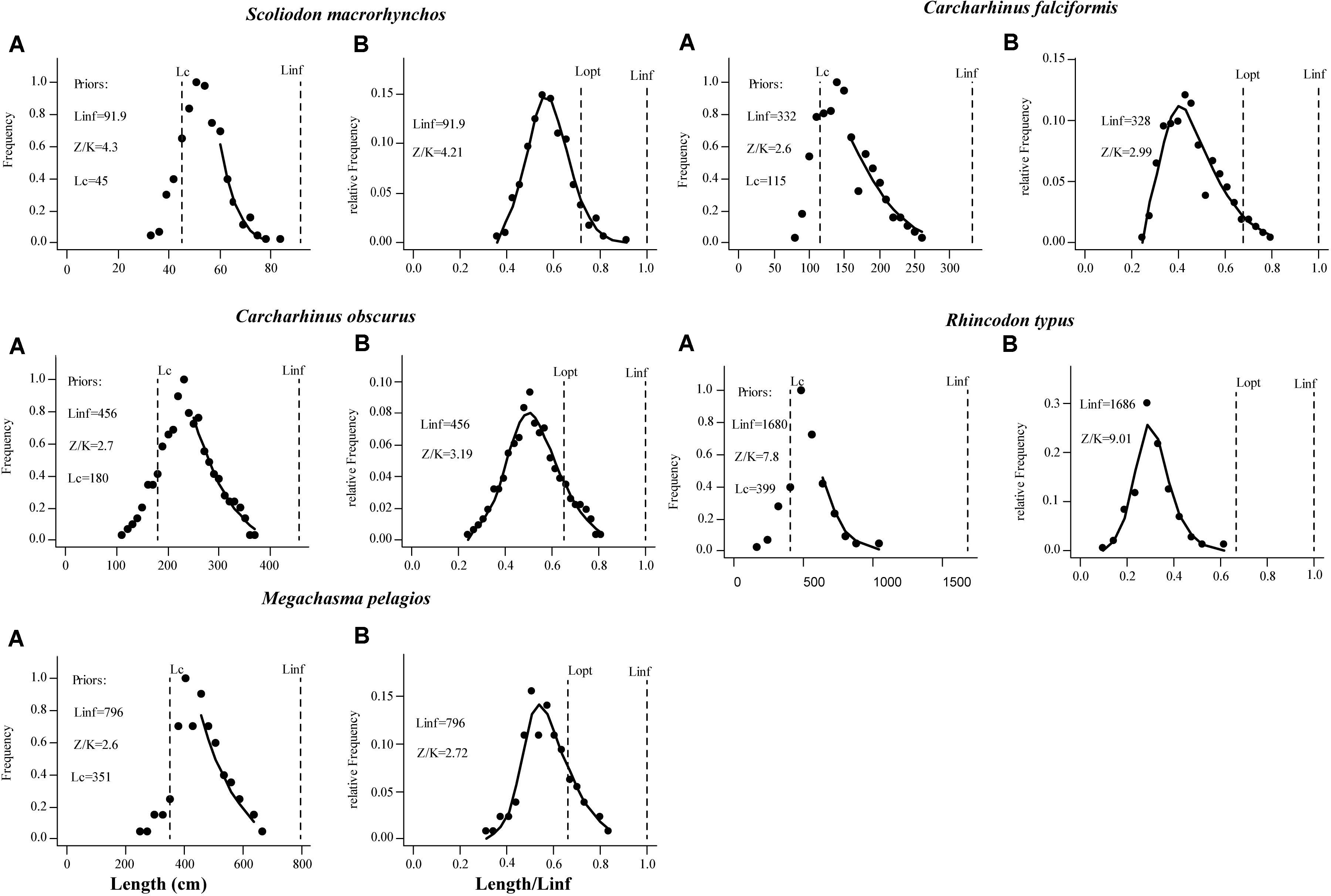
Figure 1. Graphical output produced by LBB for the five species. Panels (A) show the accumulated length frequency (LF) data used to estimate priors for Linf, Z/K and Lc. Panels (B) show Linf, Z/K and Lopt estimated by the fitting curve. Linf is asymptotic length, Z is the total mortality, K is somatic growth rate from the von Bertalanffy growth equation, Lc is the length at first capture, Lopt is the length in the unfished population.
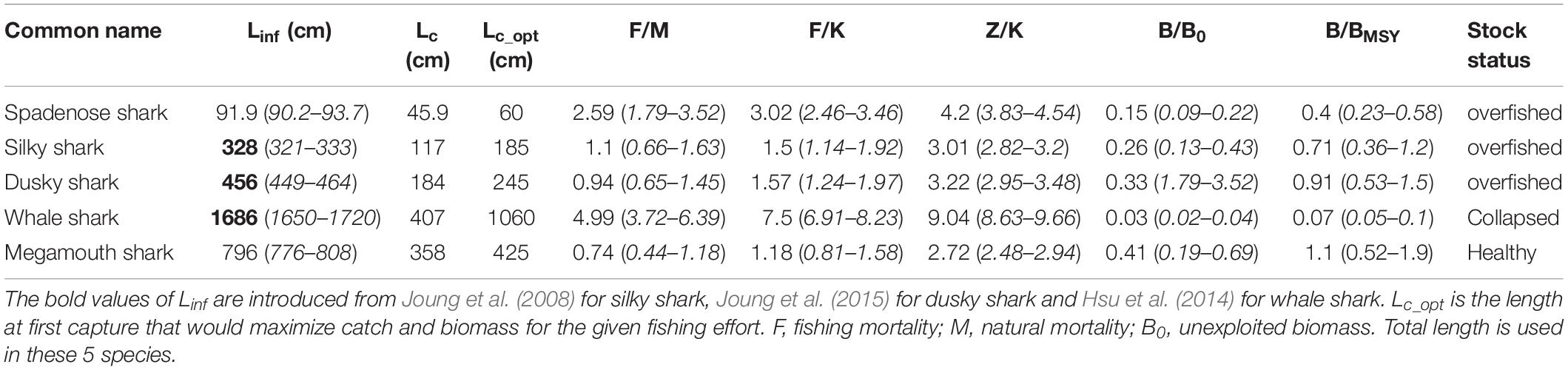
Table 2. Length reference points (Linf, Lc and Lc_opt), F/M, F/K, Z/K and relevant biomass (B/B0 and B/BMSY) and their 95% confidence intervals (italic number in brackets) of 5 sharks species estimated by the LBB method.
Results
The outputs of five shark species produced by LBB are shown in Figure 1 and summarized in Table 2. The proxies for B/BMSY (1, Froese et al., 2018; Palomares et al., 2018) and B/B0 (0.4–0.5, Froese et al., 2018) can be thought as the lower bounds of desirable stock sizes. Therefore, the stock status of five shark species can be defined based on the two proxies and summarized in Table 2. Indeed, among these 5 stocks, one filter-feeding shark, megamouth shark Megachasma pelagios, is in healthy status (B/BMSY > 1, B/B0 > 0.4; Table 2), the other filter-feeding shark species such as whale shark Rhincodon typus are seriously overexploited, possibly even collapsed (B/BMSY and B/B0 < 0.1; Table 2). The others 3 stocks are overfished (the degree of overfishing for the small shark, spadenose shark Scoliodon macrorhynchos is higher than that in two large sharks: dusky shark (Carcharhinus obscurus), and silky shark (Carcharhinus falciformis).
Discussion
LBB is a new method for the assessment of data-poor stocks with missing or unreliable catch data. The most important limitation is that the length-frequency data should represent the composition of the exploited stock (Froese et al., 2018). For this study, all the length data were collected over at least 2 years and most data were from population growth studies; therefore, the length-frequency data fully meets the requirements of LBB.
A key problem of shark stock assessment is the incomplete reporting of shark catches, because a large number of sharks are caught and discarded at sea (Stevens et al., 2000; Clarke et al., 2006; Worm et al., 2013). Nevertheless, it is estimated that about 63–273 million sharks are killed globally per year, and the exploitation rates exceed the average rebound rate for most sharks (Worm et al., 2013). As a result, many sharks are overfished globally (Davidson et al., 2016), and their populations have rapidly decreased regionally (Musick et al., 2000; Baum et al., 2003; Ferretti et al., 2010). Although chondrichthyan faunas are rich in the waters around Taiwan (Ebert et al., 2013), stock status of sharks is still unevaluated, and stock assessments are focused on age and growth studies (e.g., Joung et al., 2008; Hsu et al., 2014; Joung et al., 2015).
The Megamouth shark stock in Taiwan waters is in healthy status based on LBB results (Table 2). The Megamouth shark is the third biggest filter-feeding shark (the other two sharks: basking shark Cetorhinus maximus and whale shark Rhincodon typus) (Nakaya et al., 2008). Although they are distributed widely in the Pacific and Atlantic Oceans (Froese and Pauly, 2019), they are rarely seen. There is no detailed information about this stock or population so far, therefore, this study is the first analyses for stock assessment. The healthy status of the megamouth shark may be supported by being listed as Least Concern (LC) in International Union for Conservation of Nature (IUCN) Red List of Threatened Species (Kyne et al., 2019). More data are required for accurate estimates.
Unlike the megamouth shark, another filter-feeding whale shark in the Taiwan waters is overexploited and the stock has even possibly collapsed, according to LBB results, despite this species being fully protected in Taiwan waters since November 2007 (Hsu et al., 2012). Although the whale shark is estimated as Endangered (IUCN, Pierce and Norman, 2016) and listed in Appendix II of CITES and Convention on the Conservation of Migratory Species of Wild Animals (CMS), the stock status is still in an unsustainable state in Asia due to the growing international demand for their fins, meat and liver oil (Hsu et al., 2012, 2014), despite the species being ovoviviparous and producing up to 300 pups per litter. Therefore, the stock assessment of the species can provide the basic information for stock status, and several fisheries reference points would be beneficial to fisheries’ management of whale sharks in Taiwan waters.
The Spadenose shark is a commercial small demersal shark species, abundant in the southwestern Taiwan waters (Chen et al., 2001). The intersexuality of this species was reported in the southern Taiwan strait (Zhao et al., 2017). However, this stock has not been assessed due to lack of inclusion in official fishery statistics for China Mainland and Taiwan Province. The Spadenose shark may be overfished in the coastal and offshore fisheries and overexploited on the China Mainland (Kang et al., 2018) and Taiwan Province (Chen et al., 2018; Liao et al., 2019). Correspondingly, this stock has been assessed to be grossly overfished with an LBB estimated depletion rate of 85% (B/B0 = 0.15) being reasonable.
Two large “sharks,” including the dusky shark and silky shark are also assessed to be overfished. Both of these species were estimated as Vulnerable in IUCN, and the latter species is also listed in Appendix II of CITES and CMS. The dusky shark is viviparous with a litter size of 3–14 pups. Dusky sharks in the U.S. waters have been overfished since 1990 (Sulikowski et al., 2020). The medium sized fins make dusky shark a major target species in Taiwan waters (Joung et al., 2015). The mean annual landing of the dusky shark is 210 metric tons which accounts for 11.5% of the total shark landings from1990 to 2008 in northeastern Taiwan (Joung et al., 2015). The high commercial values of the fins may lead the dusky shark to be overexploited in northeastern Taiwan waters. Silky shark is abundant with 1–16 pups, and the annual landing about 241 tonnes in northeastern Taiwan waters (Joung et al., 2008). However, the smaller body size (mean body weight) suggested that the silky shark stock might be overexploited in northeastern Taiwan waters (Joung et al., 2008). Consequently, the silky shark stock status estimated by LBB is reasonable.
Conclusion
Five shark stocks in the waters around Taiwan were evaluated using the LBB method. The resulting estimates indicate that only megamouth shark stock is in healthy status, while whale shark, spadenose shark (small shark) and other two large sharks (dusky shark and silky shark) are overfished. The stock status of the five sharks estimated using the LBB method are consistent with international agreements such as IUCN, CITES, and CMS. Consequently, stock status estimated by LBB are credible. In addition, this study fills gaps in shark stock status assessment in the Taiwan waters and provides the basic fisheries with reference points for conservation and management of these sharks. Meanwhile, further investigative work on shark resources should be both continued and utilized, since these top predators in the marine ecosystem play important roles to both ecosystems and human society.
Data Availability Statement
The datasets generated for this study are included in the article/Supplementary Material.
Ethics Statement
Ethical review and approval was not required for the animal study because although our research was about shark stock assessment, all the data for stock assessment were from the scientific papers or thesis and Fisheries Agency.
Author Contributions
PJ, YZ, and JX collected data. PJ analyzed data and drafted this original manuscript. MC, YT, and SY edited the manuscript. All authors contributed to the article and approved the submitted version.
Funding
MC, YZ, SY, and JX were partly funded by the National Key R&D Program of China (No. 2018YFC1406301), the Natural Science Foundation of Fujian Province, China (No. 2018J01066), and Xiamen University Malaysia Research Fund (No: XMUMRF/2020-C5/ICAM/0007). PJ and YT were partially supported by National Key Research and Development Project (No. 2018YFD0900902) and National Natural Science Foundation of China (Nos. 41930534 and 41861134037).
Conflict of Interest
The authors declare that the research was conducted in the absence of any commercial or financial relationships that could be construed as a potential conflict of interest.
Acknowledgments
The authors thank Dr. Maria Lourdes Palomares, Dr. Rainer Froese, Dr. Cui Liang, and Dr. Daniel Pauly for the constructive comments on LBB results. The authors also thank Prof. Robin Robertson for editing the manuscript.
Supplementary Material
The Supplementary Material for this article can be found online at: https://www.frontiersin.org/articles/10.3389/fmars.2020.00632/full#supplementary-material
Footnotes
References
Adams, K. R., Fetterplace, L. C., Davis, A. R., Taylor, M. D., and Knott, N. A. (2018). Sharks, rays and abortion: the prevalence of capture-induced parturition in elasmobranchs. Biol. Conserv. 217, 11–27. doi: 10.1016/j.biocon.2017.10.010
Baum, J. K., Myers, R. A., Kehler, D. G., Worm, B., Harley, S. J., and Doherty, P. A. (2003). Collapse and conservation of shark populations in the Northwest Atlantic. Science 299, 389–392. doi: 10.1126/science.1079777
Booth, H., Squires, D., and Milner-Gulland, E. J. (2019). The neglected complexities of shark fisheries, and priorities for holistic risk-based management. Ocean Coast. Manage. 182:104994. doi: 10.1016/j.ocecoaman.2019.104994
Chen, J. L., Lin, Y. S., and Chuang, C. T. (2018). Improving the management of Taiwanese fishery resource conservation zones based on public perceptions and willingness to pay for ecosystem services. J. Coast. Conserv. 22, 385–398. doi: 10.1007/s11852-017-0586-5
Chen, M. R., Qiu, S. Y., and Yang, S. Y. (2001). The reproductive biology of the spadenose shark, Scoliodon laticaudus, from southern Fujian coastal waters. Acta Oceanologica Sinica 23, 92–98.
Clarke, S. C., McAllister, M. K., Milner-Gulland, E. J., Kirkwood, G. P., Michielsens, C. G. J., Agnew, D. J., et al. (2006). Global estimates of shark catches using trade records from commercial markets. Ecol. Lett. 9, 1115–1126. doi: 10.1111/j.1461-0248.2006.00968.x
Cortés, E. (2000). Life history patterns and correlations in sharks. Rev. Fish. Sci. 8, 299–344. doi: 10.1080/10408340308951115
Davidson, L. N. K., Krawchuk, M. A., and Dulvy, N. K. (2016). Why have global shark and ray landings declined: improved management or overfishing? Fish Fish. 17, 438–458. doi: 10.1111/faf.12119
Dulvy, N. K., Fowler, S. L., Musick, J. A., Cavanagh, R. D., Kyne, P. M., Harrison, L. R., et al. (2014). Extinction risk and conservation of the world’s sharks and rays. eLife 3:e00590. doi: 10.7554/eLife.00590.001
Ebert, D. A., Ho, H.-C., White, W. T., and Carvalho, M. R. D. (2013). Introduction to the systematics and biodiversity of sharks, rays, and chimaeras (Chondrichthyes) of Taiwan. Zootaxa 3752, 5–19. doi: 10.11646/zootaxa.3752.1.3
Eriksson, H., and Clarke, S. (2015). Chinese market responses to overexploitation of sharks and sea cucumbers. Biol. Conserv. 184, 163–173. doi: 10.1016/j.biocon.2015.01.018
Ferretti, F., Worm, B., Britten, G. L., Heithaus, M. R., and Lotze, H. K. (2010). Patterns and ecosystem consequences of shark declines in the ocean. Ecol. Lett. 13, 1055–1071. doi: 10.1111/j.1461-0248.2010.01489.x
Froese, R., and Pauly, D. (eds) (2019). FishBase. World Wide Web Electronic Publication. www.fishbase.org, version (08/2019)
Froese, R., Winker, H., Coro, G., Demirel, N., Tsikliras, A. C., Dimarchopoulou, D., et al. (2018). Estimating stock status from length frequency data. ICES J. Mar. Sci. 75, 2004–2015. doi: 10.1093/icesjms/fsy078
Froese, R., Winker, H., Coro, G., Demirel, N., Tsikliras, A. C., Dimarchopoulou, D., et al. (2019). On the pile-up effect and priors for Linf and M/K: response to a comment by Hordyk et al. on “A new approach for estimating stock status from length frequency data”. ICES J. Mar. Sci. 76, 461–465. doi: 10.1093/icesjms/fsy199
Heupel, M. R., Knip, D. M., Simpfendorfer, C. A., and Dulvy, N. K. (2014). Sizing up the ecological role of sharks as predators. Mar. Ecol. Prog. Ser. 495, 291–298. doi: 10.3354/meps10597
Hobday, A. J., and Pecl, G. T. (2014). Identification of global marine hotspots: sentinels for change and vanguards for adaptation action. Rev. Fish Biol. Fisher. 24, 415–425. doi: 10.1007/s11160-013-9326-6
Hsu, H. H., Joung, S. J., Hueter, R. E., and Liu, K. M. (2014). Age and growth of the whale shark (Rhincodon typus) in the north-western Pacific. Mar. Freshwater Res. 65, 1145–1154. doi: 10.1071/MF13330
Hsu, H. H., Joung, S. J., and Liu, K. M. (2012). Fisheries, management and conservation of the whale shark Rhincodon typus in Taiwan. J. Fish Biol. 80, 1595–1607. doi: 10.1111/J.1095-8649.2012.03234.X
Joung, S.-J., Chen, C.-T., Lee, H.-H., and Liu, K.-M. (2008). Age, growth, and reproduction of silky sharks. Carcharhinus falciformis, in northeastern Taiwan waters. Fish. Res. 90, 78–85. doi: 10.1016/j.fishres.2007.09.025
Joung, S.-J., Chen, J.-H., Chin, C.-P., and Liu, K.-M. (2015). Age and growth of the dusky shark. Carcharhinus obscurus, in the Western North Pacific Ocean. Terr. Atmos. Ocean. Sci. 26, 153–160. doi: 10.3319/TAO.2014.10.15.01(Oc)
Kang, B., Liu, M., Huang, X.-X., Li, J., Yan, Y.-R., Han, C.-C., et al. (2018). Fisheries in Chinese seas: what can we learn from controversial official fisheries statistics? Rev. Fish. Biol. Fisher. 28, 503–519. doi: 10.1007/s11160-018-9518-1
Kyne, P. M., Liu, K. M., and Simpfendorfer, C. (2019). Megachasma Pelagios. the IUCN Red List of Threatened Species 2019. e.T39338A124402302. doi: 10.2305/IUCN.UK.2019-1.RLTS.T39338A124402302.en
Liao, C. P., Huang, H. W., and Lu, H. J. (2019). Fishermen’s perceptions of coastal fisheries management regulations: key factors to rebuilding coastal fishery resources in Taiwan. Ocean Coast. Manage. 172, 1–13. doi: 10.1016/j.ocecoaman.2019.01.015
McCann, K. S., Rasmussen, J. B., and Umbanhowar, J. (2005). The dynamics of spatially coupled food webs. Ecol. Lett. 8, 513–523. doi: 10.1111/j.1461-0248.2005.00742.x
Momigliano, P., and Harcourt, R. (2014). “Shark conservation, governance and management: the science-law disconnect,” in Sharks: Conservation, Governance and Management, eds N. Klein and E. Techera (New York, NY: Earthscan press), 89–106. doi: 10.4324/9780203750292
Musick, J. A., Burgess, G., Cailliet, G., Camhi, M., and Fordham, S. (2000). Management of Sharks and Their Relatives (Elasmobranchii). Fisheries 25, 9–13. doi: 10.1577/1548-8446(2000)025<0009:mosatr>2.0.co;2
Nakaya, K., Matsumoto, R., and Suda, K. (2008). Feeding strategy of the megamouth shark Megachasma pelagios (Lamniformes:Megachasmidae). J. Fish. Biol. 73, 17–34. doi: 10.1111/j.1095-8649.2008.01880.x
Oliver, S., Braccini, M., Newman, S. J., and Harvey, E. S. (2015). Global patterns in the bycatch of sharks and rays. Mar. Policy 54, 86–97. doi: 10.1016/j.marpol.2014.12.017
Palomares, M. L. D., Froese, R., Derrick, B., Nöel, S.-L., Tsui, G., Woroniak, J., et al. (2018) “A preliminary global assessment of the status of exploited marine fish and invertebrate populations,” in A Report Prepared by the Sea Around Us for OCEANA (Vancouver: The University of British Columbia), 64.
Pierce, S. J., and Norman, B. (2016). Rhincodon Typus. The IUCN Red List of Threatened Species 2016. e.T19488A2365291. doi: 10.2305/IUCN.UK.2016-1.RLTS.T19488A2365291.en
Simpfendorfer, C., and Dulvy, N. K. (2017). Bright spots of sustainable shark fishing. Curr. Biol. 27, R97–R98. doi: 10.1016/j.cub.2016.12.017
Stevens, J. D., Bonfil, R., Dulvy, N. K., and Walker, P. A. (2000). The effects of fishing on sharks, rays, and chimaeras (chondrichthyans), and the implications for marine ecosystems. ICES J. Mar. Sci. 57, 476–494. doi: 10.1006/jmsc.2000.0724
Sulikowski, J. A., Golet, W., Hoffmayer, E. R., Driggers, W. B. III, Natanson, L. J., Carlson, A., et al. (2020). Observing post-release mortality for dusky sharks, Carcharhinus obscurus, captured in the U.S. pelagic longline fishery. Fish. Res. 221:105341. doi: 10.1016/j.fishres.2019.105341
Worm, B., Davis, B., Kettemer, L., Ward-Paige, C. A., Chapman, D., Heithaus, M. R., et al. (2013). Global catches, exploitation rates, and rebuilding options for sharks. Mar. Policy 40, 194–204. doi: 10.1016/j.marpol.2012.12.034
Zhao, Y., Chen, M., Jiang, C., Yang, S., and Xiao, J. (2017). Occurrence of an Intersexual Pacific Spadenose Shark Scoliodon macrorhynchos from the Southern Taiwan Strait. Mar. Coast. Fish. 9, 573–576. doi: 10.1080/19425120.2017.1383326
Keywords: sharks, stock status, Taiwan waters, LBB, stock assessments
Citation: Ju P, Chen M, Tian Y, Zhao Y, Yang S and Xiao J (2020) Stock Status Estimating of 5 Shark Species in the Waters Around Taiwan Using a Length-Based Bayesian Biomass Estimation (LBB) Method. Front. Mar. Sci. 7:632. doi: 10.3389/fmars.2020.00632
Received: 04 January 2020; Accepted: 09 July 2020;
Published: 15 September 2020.
Edited by:
Cui Liang, Institute of Oceanology (CAS), ChinaReviewed by:
Brett W. Molony, Oceans and Atmosphere (CSIRO), AustraliaFelipe Galván-Magaña, Centro Interdisciplinario de Ciencias Marinas (IPN), Mexico
Copyright © 2020 Ju, Chen, Tian, Zhao, Yang and Xiao. This is an open-access article distributed under the terms of the Creative Commons Attribution License (CC BY). The use, distribution or reproduction in other forums is permitted, provided the original author(s) and the copyright owner(s) are credited and that the original publication in this journal is cited, in accordance with accepted academic practice. No use, distribution or reproduction is permitted which does not comply with these terms.
*Correspondence: Mingru Chen, bXJjaGVuQHhtdS5lZHUuY24=; Yongjun Tian, eWp0aWFuQG91Yy5lZHUuY24=