 Murilo R. Santos
 Luis C. Dias
 Maria C. Cunha
 João R. Marques
- 1University of Coimbra, CeBER, Faculty of Economics, Coimbra, Portugal
- 2Association BLC3 - Technology and Innovation Campus, Centre Bio R&D Unit, Macedo de Cavaleiros, Portugal
- 3University of Coimbra, CEMMPRE, Department of Civil Engineering, Coimbra, Portugal
This paper is a systematic review of studies that used multicriteria decision analysis (MCDA) to address plastic waste management. A literature search for scientific articles in online databases (Web of Science and Scopus) enabled us to identify 20 relevant papers from 2008 to 2021, spanning case studies in three continents. These studies focus on: plastics as a resource (material), plastics as a product (reverse logistics), and plastics as a problem (pollution). Content analysis methodology was used, with the focus being on how the authors used MCDA for managing plastic waste, which has relevance for researchers and practitioners. Alternative solutions were found for the selection of disposal methods for almost all types of plastic categorized in this review. The most popular method was AHP, followed by TOPSIS, outranking methods, MAUT/MAVT and simple weighted sums, with some studies including more than one method. The choice of criteria spanned operational (mostly), but also environmental and economic aspects to evaluate the alternatives. Less frequently, one finds criteria related to social, managerial, and political aspects. The weighting of the criteria was performed mainly by consulting experts, followed by decision makers. Representatives of the affected population or other stakeholders have been consulted only on a few occasions. The authors of the studies consider their application of MCDA was successful, highlighting mainly the importance of being able to encompass different dimensions in the evaluation of the alternatives and the transparency of the process. In most cases, a winning alternative emerged clearly, which sometimes was a combination of multiple strategies. We also report other recommendations of these authors concerning marine and terrestrial plastic waste management.
Introduction
The invention of plastic as a material dates back to 1909. It has improved the comfort, quality, and safety of our societies. As the world population increased and new technological developments gave rise to a very extensive use of commercial and industrial plastic-based materials, these resources became essential in the various different supply chains of many goods. However, the effects of these plastics have relatively recently turned out to be considered a major concern to sustainable development. More and more activities are focused on the life-cycle of plastics and on design innovation for end-of-life actions, to reduce the environmental impact of plastic pollution.
When a plastic component or plastic based good no longer works within the specified parameters which it has been designed for, it has reached its end-of-life. At this point it frequently becomes waste. Increasingly often, it turns out to be considered a valuable resource. However, there are still end-of-life options just using landfills for its disposal. Around the world, a huge number of plastic objects are abandoned or rejected without any concern about the consequences for the environment. Sources of plastic waste are multiple: sanitation and sewage, electrical components, automotive and air industries, commercial fishing activities, tourism, health care systems, construction, agriculture, and packaging, among many others. Terrestrial and marine settings are being impacted and aquatic wildlife and ecosystems (both freshwater and marine) are being radically harmed.
Chrissley et al. (2017) found that 80% of the eight billion kilograms of human generated debris reaching the oceans in 2010 (growing exponentially by 10% each year) consisted of plastic. Many activities, such as marine transportation and fishing industries, are suffering extensive damage. Plastics take a long time to decompose, and they become persistent pollution (see Besseling et al., 2017; Lebreton et al., 2017; Thiel et al., 2018).
Therefore life-cycle, particularly end-of-life plastics management actions are a growing priority and key political issue. From fundamental research to the integration of knowledge sourced from different areas, to industry, consumer behaviors and the public, regulatory, and business worlds, this must be a collective will.
The European Union defined a waste hierarchy that shall apply as a priority order in waste prevention and management legislation and policy: (a) prevention; (b) preparing for re-use; (c) recycling; (d) other recovery, e.g., energy recovery; and (e) disposal (European Council, 2008).
Improving the development of sound solutions for responding to these sustainability challenges has to be the focus. These are quite complex problems involving many actors with conflicting perspectives, including industry, tourism, fishing activities, vessel owners, environmentalists, consumers, financial institutions, governments, etc. This is crucial because the decision-making process depends on the input of the different points of view provided by all the stakeholders. Multicriteria decision analysis (MCDA) can offer a clear, well-organized way to better inform decision-making. It can simultaneously encompass so many different facets covering all the different issues at stake and account for the priorities set by stakeholders for evaluating solutions for plastic waste management (Bachér et al., 2018; Cunha et al., 2019).
Multicriteria decision analysis is a way to address problems in which the decision alternatives to improve a problematic situation can be evaluated according to multiple criteria. According to Ishizaka and Nemery (2013), MCDA can be used to solve any problem where a significant decision needs to be made: choosing the single best option, sorting options, ranking alternatives, describing options and their consequences, eliminating alternatives, and identifying or creating a new strategy. MCDA helps to find better decisions not only by using an appropriate method but also, as Keeney (1996) notes, because of the insights provided throughout the reasoning process and “value-focused glasses” perspective used. The values approach guides the decision-maker not only to find better suited alternatives but also to recognize improved decision situations. MCDA fosters the use of a value-based perspective aggregating multiple dimensions, with a recognized potential to involve the concerns and aspirations of multiple stakeholders.
This is a systematic review paper whose main purpose is answering the following questions: (a) How do studies use multicriteria decision methods to manage plastic waste in the marine and terrestrial environments? (b)What are the recommendations to address marine and terrestrial plastic management?
The study presents an overview of existing multicriteria decision methods for managing plastic waste and related approaches in an increasingly plastic-using context. A systematic literature search delivered 20 papers matching the purpose of this review. 80% of them were published in the last 5 years, showing this is an emerging area of research. Although these studies are ultimately addressing pollution by plastics they have different foci. Some studies focus on plastic as a resource, seen as a beneficial material that offers unparalleled functionality, so how to maintain and improve it through recycling and reuse is the issue. Other studies focus on plastics as a product through reverse logistics, a process that offers customers the chance to return end-of-life plastics or raw equipment to suppliers or manufacturers and, as such, can be revaluated and reintroduced into the supply chain. And another group focuses on plastics as a problem, causing great damage when they reach the environment. This is why it is essential to devise actions to address the negative impacts of this pollution on the most diverse natural terrestrial, freshwater and marine habitats. Content analysis methodology was used, and the focus was on how the authors used the multicriteria decision approaches for managing plastic waste. Figure 1 provides a graphical summary of the characteristics of the studies analyzed in this review. This can help to better understand the use of this methodology for decision making in this field. It can also provide benchmarking for carrying out subsequent studies and to create guidelines for policy and practices.
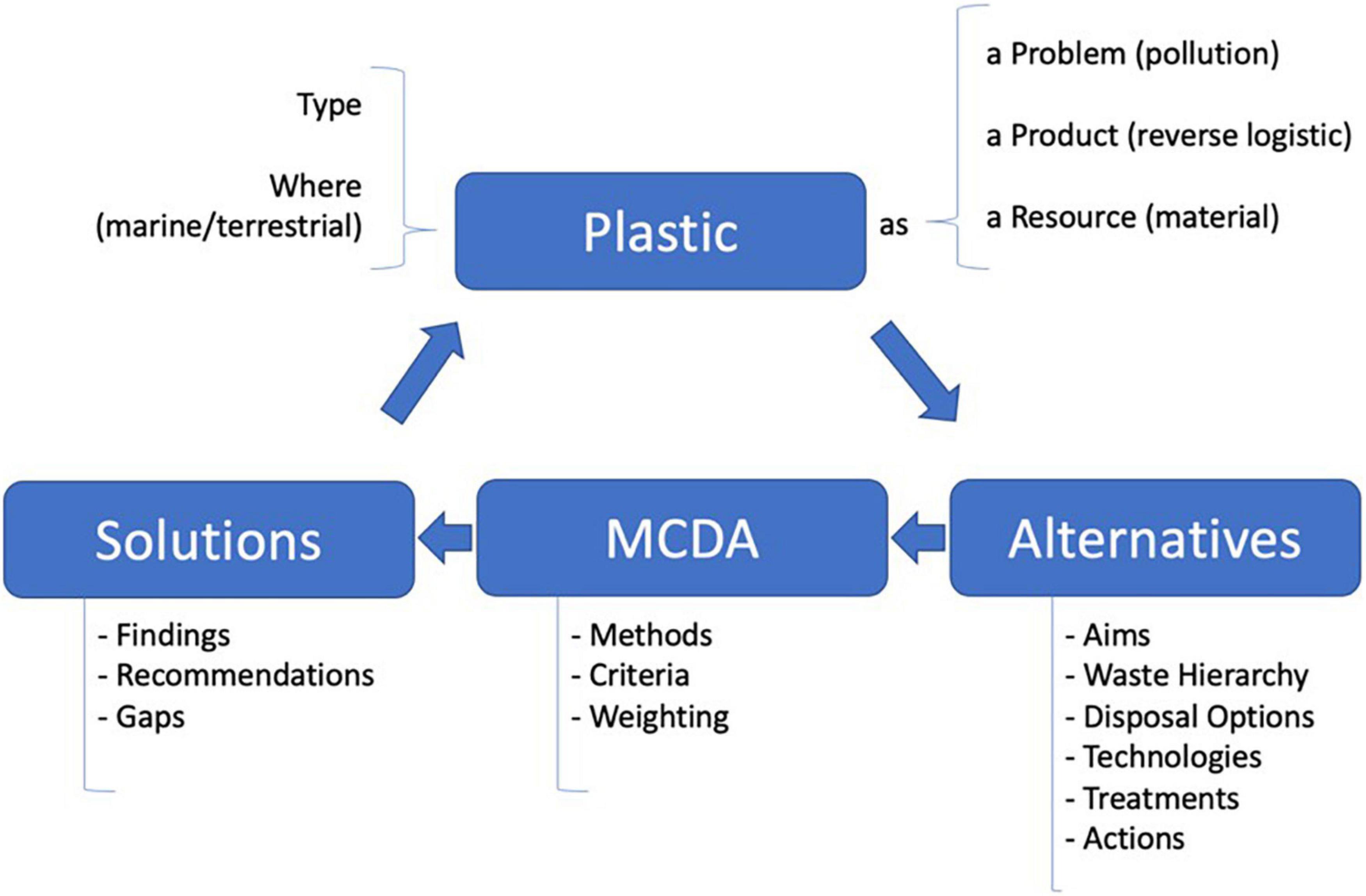
Figure 1. Characteristics of the studies analyzed in this review.
Previous systematic reviews have also addressed specific aspects or applications in environmental sciences, including waste management issues as in Huang et al. (2011) and Cegan et al. (2017). Achillas et al. (2013) just tackled waste management problems, while energy systems, including waste energy generation appears in Martín-Gamboa et al. (2017). More generally, Juul et al. (2013) reviewed five models addressing waste treatment problems: MCDA models, simulation models, forecasting models, cost-benefit analyses and optimization models. To the best of our knowledge the present work is the first review to focus on MCDA applied to marine and terrestrial plastics waste management.
This systematic review has five sections, which are structured as follows: after this introduction, the second section shows how this review was carried out; the third section looks at the alternatives to cope with plastic waste management and describes and discusses the MCDA methods used along with their criteria and weights; recommendations for plastics waste management decision making issues are set out in the fourth section, before the conclusion in the final section.
Materials and Methods
This study is based on a scientific literature review. Articles using the online databases Web of Science™ and Scopus® were searched for, with the following queries: (multicriteria OR multi-criteria OR multiattribute OR multi-attribute OR MCDA OR MCDM OR AHP) AND (Plastic). April 22nd (2021) was the last time the data bases were checked, returning 233 results from Web of Science and 360 from Scopus, although 176 documents were referenced in both databases (417 different documents in total).
The abstracts of these documents were analyzed to find studies in which a multicriteria decision approach for solving a problem with plastic waste in the environment or general marine litter including plastics was used. Sometimes the entire manuscript was examined to see if they could be added to this review. These findings comprise 20 papers in 19 sources from 2008 to 2021 (see Table 1), referring to case studies on three continents (including one in a laboratory).
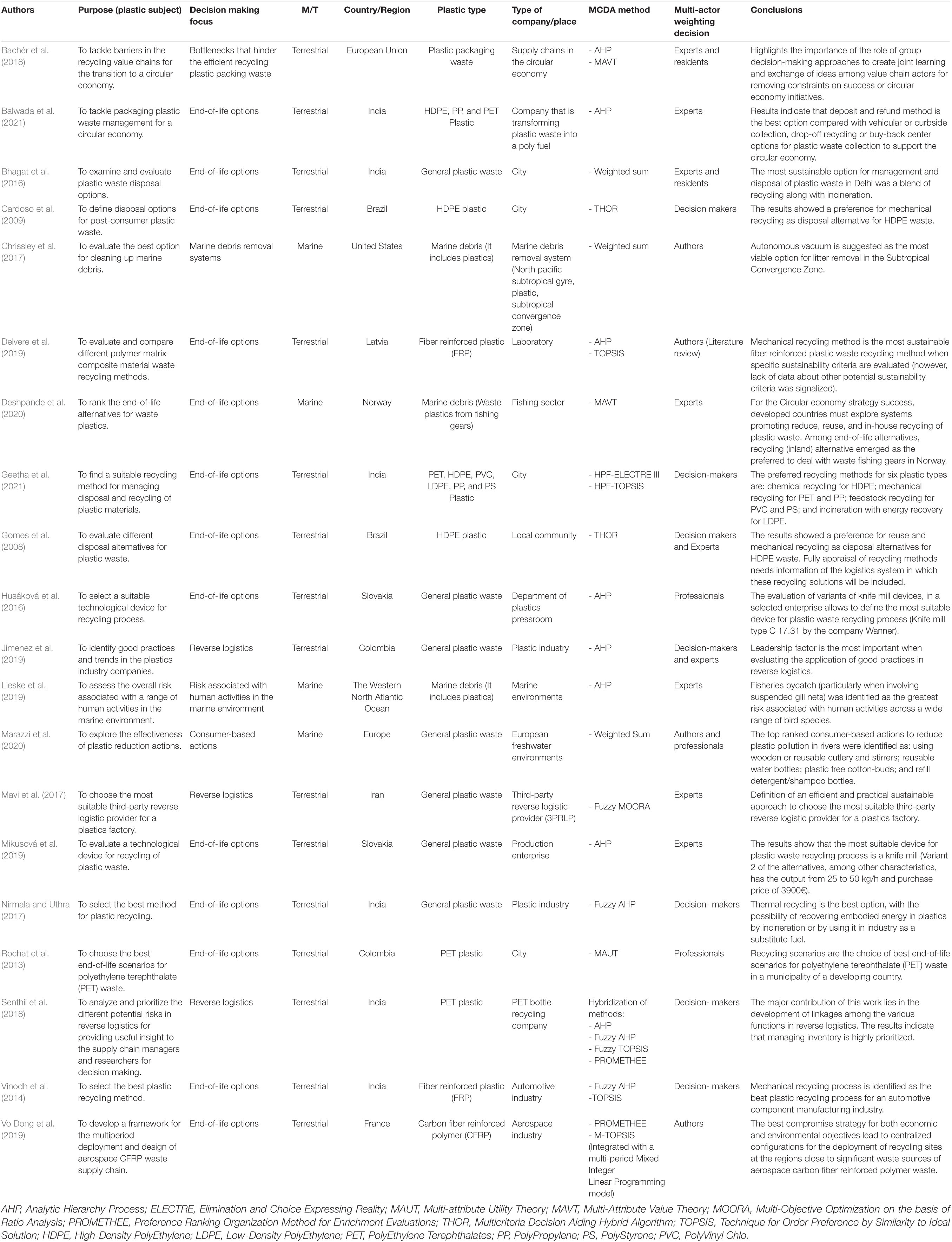
Table 1. List of papers.
These 20 papers were fully analyzed and the information categorized in Table 1 and Supplementary Tables 1, 2, and commented on in the next sections of this paper.
A content analysis of these selected papers has been performed, we developed categorizations and coding using ATLAS.ti (2020) software. Considering the studies addressed different purposes and contexts, our focus was about the alternative solutions proposed, their evaluation criteria and how they used the MCDA approach. The studies were organized through two main groups such as: marine and terrestrial.
The selected articles exclude studies focused on: supply chains selection; choosing locations or routing models; design or alternative material choice; theoretical studies (reviews); specific products with plastic components (e.g., batteries and vehicles) or studies addressing general waste. For marine studies, however, we kept papers that do not involve an exclusive plastic focus, namely three studies on marine debris which include plastic pollution litter (e.g., beach litter and fishing gear).
Results and Discussion
Overview
Table 1 presents an overview of the 20 papers reviewed using different types of information and categorization. After the author’s name, the main purpose of the paper and decision focus are briefly presented. The type of settings (marine or terrestrial) addressed by each paper, geographic information (continent, region, country, or city), the type of plastic dealt with and type of company or place involved in the case study are then mentioned. The next two columns are about the MCDA methods applied to solve problem proposed and the weighting strategy used. The last column summarizes the main conclusions of each paper.
Most studies are concerned with terrestrial settings (80%). Bachér et al. (2018) evaluated bottlenecks in the recycling value chains and waste collection methods is the subject of Balwada et al. (2021). A large part of terrestrial environment studies deals with end-of-life options (Gomes et al., 2008; Cardoso et al., 2009; Rochat et al., 2013; Vinodh et al., 2014; Bhagat et al., 2016; Husáková et al., 2016; Nirmala and Uthra, 2017; Delvere et al., 2019; Mikusová et al., 2019; Vo Dong et al., 2019; Geetha et al., 2021). Different disposal options (including recycling options) are considered in the MCDA frameworks built for each of these papers. Reverse logistics is examined by Mavi et al. (2017); Senthil et al. (2018), and Jimenez et al. (2019) (see Table 1).
Meanwhile, the MCDA case studies in a marine setting deal with plastic litter management, namely, Chrissley et al. (2017) present cleaning options for marine debris removal systems and Deshpande et al. (2020) look at end-of-life issues. Risks associated with human activities are assessed by Lieske et al. (2019), and the effectiveness of plastic reduction consumer-based actions is studied by Marazzi et al. (2020) (see Table 1).
Case studies reported in the reviewed articles span three continents and more than 12 countries, with some studies covering larger regions (please see column Country/Region of Table 1, where 3 regions are mentioned). For seven of these studies, the location of the first author was used to define the place of the study (Cardoso et al., 2009; Husáková et al., 2016; Chrissley et al., 2017; Nirmala and Uthra, 2017; Delvere et al., 2019; Mikusová et al., 2019; Geetha et al., 2021).
Europe and Asia are viewed as the continents with most studies in MCDA papers in the environmental field (Huang et al., 2011) and this review corroborates this (see Figure 2). By country, India leads with six studies. However, the analysis by country is debatable because some studies are focused on more extensive regions rather than a country, for example, the European Union; the Western North Atlantic Ocean; and Europe. The oldest study in this review concerns Brazil and was published in 2008 in Omega-International Journal of Management Science, and few articles appeared between then and 2015 (Figure 2). Since 2016, on average three papers have been published per year.
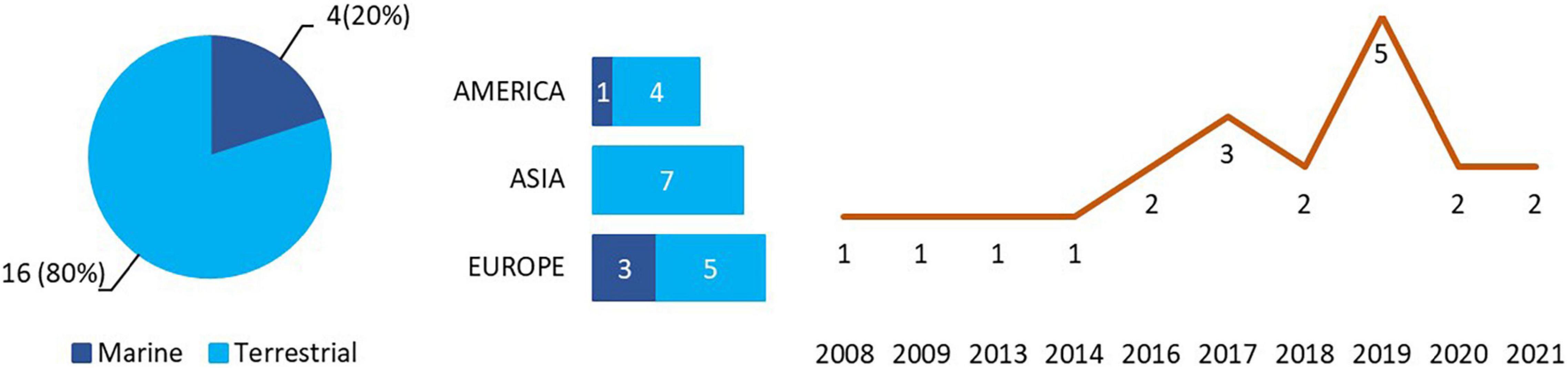
Figure 2. Number of papers per setting (marine or terrestrial), geography, and year.
Alternatives
Many types of alternatives to manage plastic waste have been considered. It is important to group the alternatives so that the studies can be compared. Supplementary Table 1 depicts an organized presentation of different types of alternatives. There are three levels of categorization: Aim, Alternative type, and Alternatives (detailed for each paper).
Figure 3 shows the number of distinct alternatives (some options are repeated through the studies, such as recycling, for example) considering the choices proposed in the studies when the type of plastic (using classification assigned by the author) dealt with is the issue (combined information from Table 1 and Supplementary Table 1).
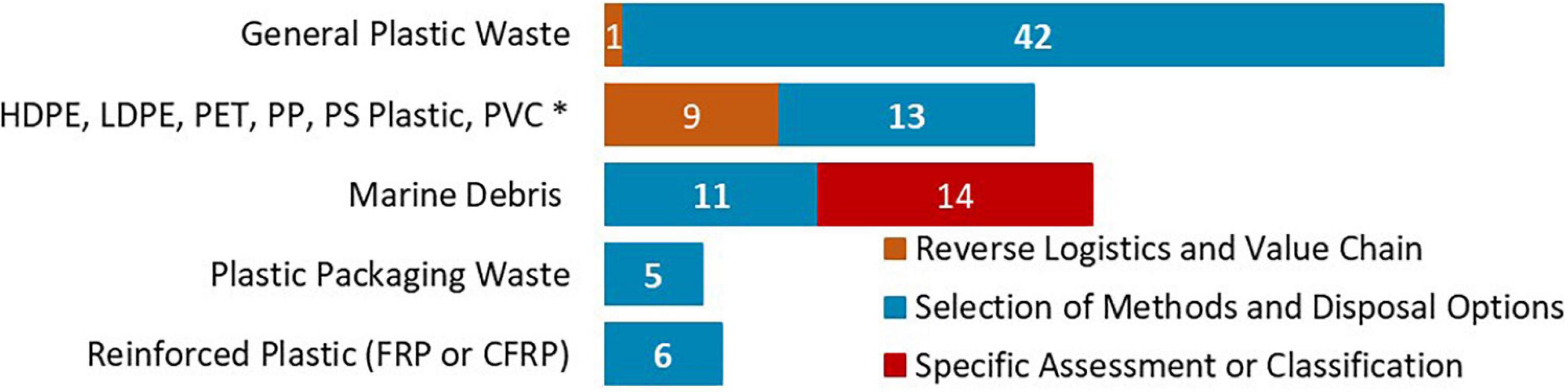
Figure 3. Number of alternatives by plastic type and aim. *HDPE, High-Density PolyEthylene; LDPE, Low-Density PolyEthylene; PET, PolyEthylene Terephthalates; PP, PolyPropylene; PS, PolyStyrene; PVC, PolyVinyl Chloride.
Alternatives concerning the selection of cleaning methods (e.g., waste collection systems and cleaning plastics from the seas) and disposal alternatives were found in almost all types of plastic categorized in this review. The most common purpose is to make a choice from the end-of-life disposal options, such as different forms of recycling, incineration, landfilling, etc. (Supplementary Table 1). This also involves choosing technological devices.
Actions and processes group of alternatives include the work of Bachér et al. (2018) who proposed the assessment and prioritization of five bottlenecks in the recycling value chains to improve the co-operation between stakeholders and the circular economy. Also the work of Marazzi et al. (2020) evaluated 27 consumer-based plastic reduction actions. In fact, people’s individual behavior in consuming single-use plastics is an active focus of concern for the management of plastics pollution in rivers, since in far too many cases this plastic waste ends up in coastal areas and seas, where it impacts aquatic wildlife and ecosystems (both freshwater and marine). Alternatives about selecting methods of cleaning and disposal options are numerous (34 alternatives are mentioned in Supplementary Table 1) and are those used by the highest number of authors (15 authors are mentioned in the same table).
Regarding removing plastics from a marine environment or freshwater systems, seven cleaning alternatives have been considered for plastic cleaning by Chrissley et al. (2017). They assessed options such as vacuum, vessel, barge (two types) and artificial floating island (three types). Although they found that an autonomous vacuum had the most favorable cost, the artificial floating island (types with motor and a sail) are too close to the first option to make a clear-cut decision possible about which is the best solution to this problem. They also added that the development (by increasing its rate of removal or capacity) of the artificial floating island (with motor) concept could alter the values of the scores achieved by the alternatives and new better positioned alternatives could emerge.
In terrestrial settings, regarding capturing and removing, Balwada et al. (2021) assess plastic waste collection methods to support the circular economy. Their results state that the deposit and refund method is the best option compared with vehicular or curbside collection, drop-off recycling or buy-back center options.
Several disposal options are evaluated as alternatives in 12 papers. Five types of recycling were examined in the selected studies: mechanical, chemical, feedstock, thermal, and bottle-to-bottle. These options were evaluated individually or in combination with other strategies.
In some studies, the traditional (or mechanical) recycling is the leading alternative for general plastic waste, marine debris, and reinforced plastic: either individually (Vinodh et al., 2014; Delvere et al., 2019; Deshpande et al., 2020), or associated with incineration (Bhagat et al., 2016). However, Nirmala and Uthra (2017) found thermal recycling the best option, with the possibility of recovering embodied energy in plastics by incineration or by using it in industry as a substitute fuel.
Pyrolysis alternatives did not perform well for Bhagat et al. (2016). This was because the technique was associated with increased incidence of air pollution and long-term illness, although techniques like plasma pyrolysis technology (PPT) could be cleaner and more efficient. Microwave pyrolysis was performed in laboratory conditions on small material samples of FRP (fiber reinforced plastics) by Delvere et al. (2019). For them, this technique is very similar to pyrolysis where waste is subjected to very high temperatures in the absence of oxygen. The outcome is a recycled fiber with almost the same tensile strength as that of the virgin fiber.
In the case of polyethylene terephthalate (PET) waste management, Rochat et al. (2013) have chosen bottle-to-bottle recycling as the best option. They assert that bottle-to-bottle recycling is a combination of conventional mechanical recycling and chemical recycling. Furthermore, this leads to a product that can be reused straightaway for food and drinks because the quality does not infringe any legal requirements stipulated for such use. For fiber reinforced plastics (FRP), Delvere et al. (2019) reports that studies suggest that chemical recycling can recover high quality fibers.
Gomes et al. (2008) and Cardoso et al. (2009) observed that there are many different kinds of plastic with specific properties (chemical and mechanical), so they studied just one type, high-density polyethylene—HDPE. These two studies were the only ones that considered a reuse alternative, and both concluded it was the best option (in Gomes et al., 2008 mechanical recycling is also in joint first place together with reuse). Geetha et al. (2021), meanwhile, compared recycling methods for six plastic types: the preferred methods are chemical recycling for HDPE; mechanical recycling for PET (polyethylene terephthalates) and PP (polypropylene); feedstock recycling for PVC (polyvinyl chloride) and PS (polystyrene); and incineration with energy recovery for LDPE (low-density polyethylene).
Landfilling is addressed for general waste, marine debris, and polyethylene. That option was in general ranked as the least favored (Gomes et al., 2008; Cardoso et al., 2009; Rochat et al., 2013; Bhagat et al., 2016). That option was also evaluated by Cardoso et al. (2009), who noted it could be the alternative that requires less energy but it does not generate income with selling products. Rochat et al. (2013) assert that landfilling plastics can be an economic loss since plastic is a reusable resource.
Bhagat et al. (2016) refer to landfilling as being a significant source of contamination, and they used mixing landfill alternatives along with recycling or incineration. However, this mixing was not enough to put alternatives of that kind in the top places. The study by Deshpande et al. (2020) identified with stakeholders two main factors (transport and the processing cost of fishing tackle and rope waste) that could result in landfilling being preferred over recycling or incineration.
For Gomes et al. (2008), landfilling was considered to have the lowest CO2 emission. However, Rochat et al. (2013) asserted that in theory the amounts of carbon dioxide (CO2) emitted to the atmosphere over a very long time horizon should be the same for landfilling and incineration. Rochat et al. (2013) were the only researchers that used a landfill with extract and burning gases as an alternative. Still, even that was not enough to be better than recycling, which they consider could provide employment and profits.
Referring to the choice of a location for recycling, Deshpande et al. (2020) highlight the importance of recycling operations within the region because the possible positive effects for the environment and society could lead to improved economic benefits from resource conservation and energy recovery. These situations depend on how the authors designed their studies. For example, Deshpande et al. (2020) did not consider the energy recovered, plastic resources conserved, and the revenue generated from recycling (occurring outside the system boundaries) for exported litter, and so they considered only the transport costs of exports. Two studies analyzed technological devices for recycling, both in Slovakia (Husáková et al., 2016; Mikusová et al., 2019). They evaluated variants of knife mill devices and both chose an option with similar characteristics and price.
Vo Dong et al. (2019) developed a “multi-period approach for the deployment of new recycling sites (Grinding, Pyrolysis, Supercritical Water, Microwave)” in France, relating to aerospace carbon fiber reinforced polymer waste. They perform their alternative evaluation through scenarios pondering the amount of waste generated per 20 years: “business as usual,” “strong/light increase,” and “strong/light decrease.” They stated that “the compromise strategy for both economic and environmental objectives lead to centralized configurations at the regions close to significant waste sources.”
Reverse logistics is a process for moving materials and raw equipment back through the supply chain, i.e., from customers to suppliers or manufacturers. Returns are managed efficiently and economically to extract as much value as possible and they become a competitive advantage (Panigrahi et al., 2018). Reverse logistics is turning out to be a promising activity of interest for many practitioners (Panigrahi et al., 2018). Three papers were analyzed in this context: Jimenez et al. (2019), to identify “good practices and trends” in the plastic industry companies; Mavi et al. (2017), to choose the most suitable third-party reverse logistic provider for a plastics factory; and Senthil et al. (2018), to analyze and prioritize the different potential risks in reverse logistics for providing useful insight to the supply chain managers and researchers for decision making.
A rather different type of study is a specific assessment (hierarchization) of different seabird species sensitivity to the risk associated with human activities in the marine environment (Lieske et al., 2019). In fact, the alternatives (i.e., the object of the evaluation) dealt with in this case study are living organisms (seabird species) as mentioned in Supplementary Table 1 and not end-of-life options or reverse logistics issues. Fisheries bycatch (particularly when involving suspended gill nets) was “identified as the greatest risk across a wide range of species.”
Multicriteria Decision Analysis Methods, Criteria, and Weights
It is challenging to find the best options when they have very different (often conflicting) impacts. Multicriteria decision analysis (MCDA) is a way to embrace different dimensions and values to inform decision making.
Many MCDA methodologies and techniques were used in the studies reviewed. Five MCDA approaches were used by the authors of the studies to address plastic waste:
In these five approaches (Table 2 and Figure 4), the most frequent are the analytic hierarchy process (AHP) followed by TOPSIS and outranking approaches (ELECTRE III, PROMETHEE, and THOR). This trend and popularity of AHP is also mentioned in the studies by Huang et al. (2011) and Cegan et al. (2017). They suggest it is because of the accessibility and user-friendliness of the AHP method. Some studies used different MCDA methods to address the same case or plastic type (Table 1).
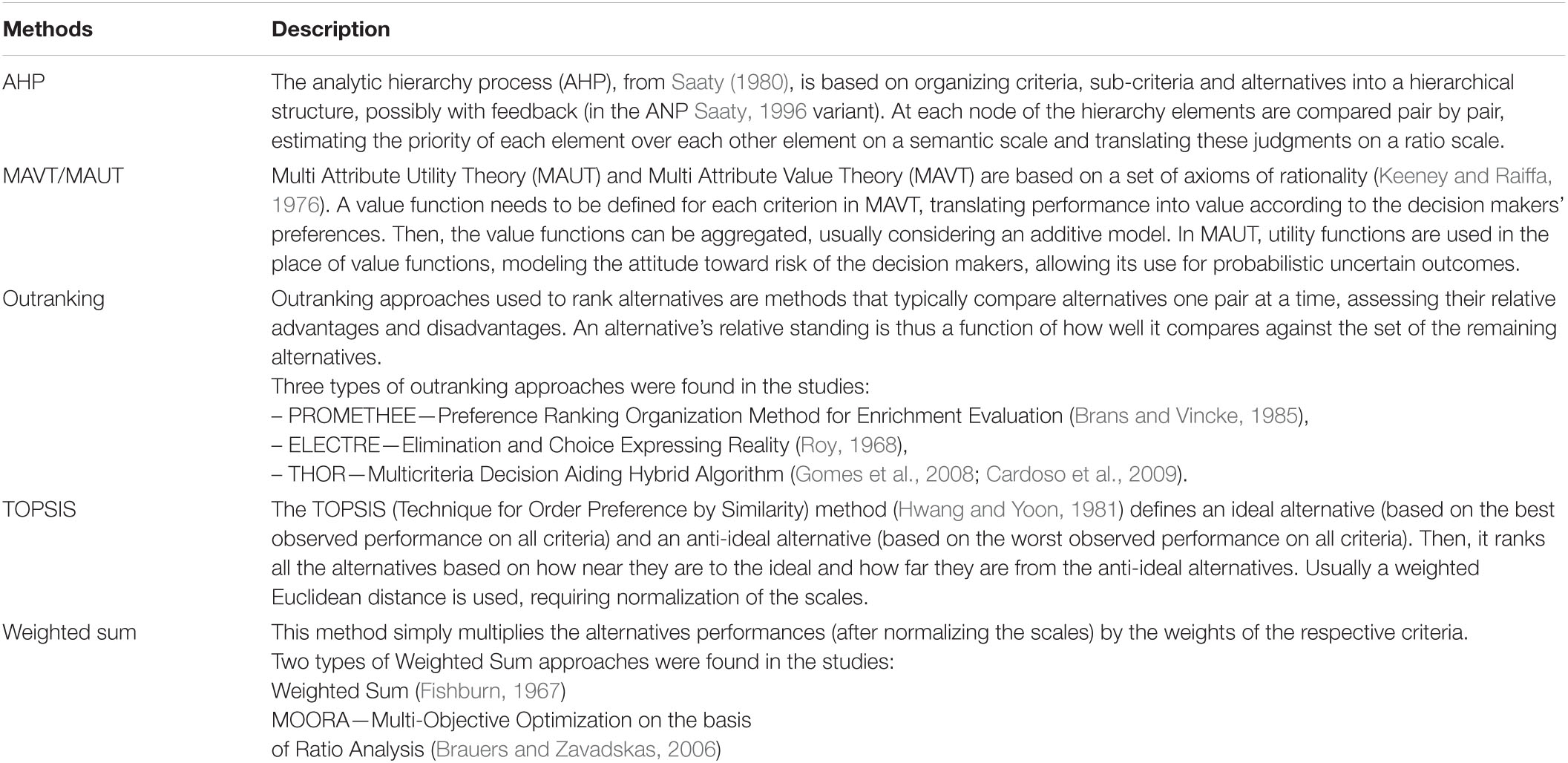
Table 2. MCDA methods.

Figure 4. Number of sources by MCDA methods.
The AHP is also the method most often combined with other methods: MAVT/MAUT, TOPSIS, or Outranking (Vinodh et al., 2014; Bachér et al., 2018; Senthil et al., 2018; Delvere et al., 2019). Vo Dong et al. (2019) used Outranking (PROMETHEE) and TOPSIS in their study, while Geetha et al. (2021) used Outranking (ELECTRE III) to choose their alternatives and TOPSIS for a comparative analysis.
The criteria (Supplementary Table 2 and Figure 5) are grouped into a small number of dimensions (economic, environmental, operational, other managerial, political, and social). The operational dimension is the most frequent, being found in 43 studies, followed by the environmental dimension that is casted in 37 studies and still the economic dimension appearing also in a large number of studies (22). The political criteria were not present in marine environment studies, although international border issues do emerge in these cases.
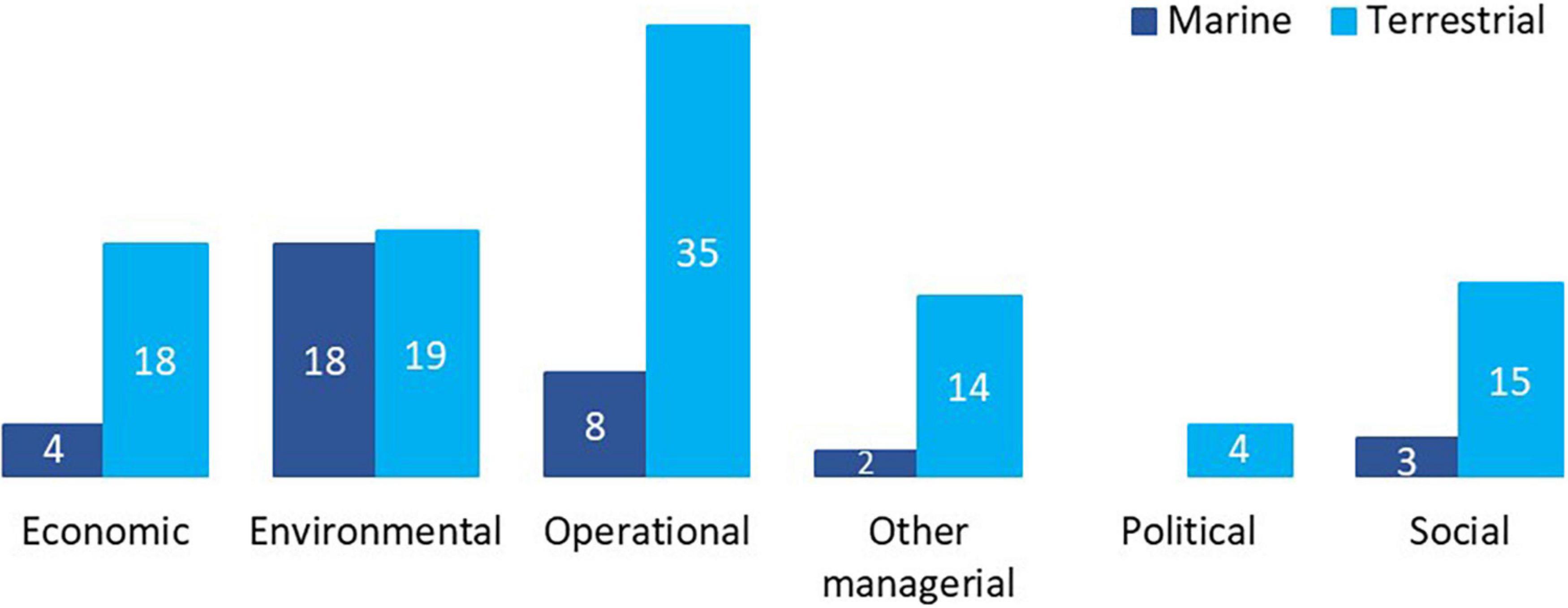
Figure 5. Number of criteria by marine and terrestrial environments.
Some patterns were found in the criteria used by the authors through the dimensions. These were grouped in categories and subcategories (Supplementary Table 2). Comparing the criteria from the studies showed that “Performance” is an intersectional area since diverse criteria are carrying it out in different dimensions (e.g., financial performance in the “Economic” dimension; production, resources consumption, and waste reduction performance in the “Environmental” dimension; and managerial performance in “Other managerial” dimension). “Organizational” is another intersectional category that can be found in different dimension (e.g. leadership and planning in the “Environmental” dimension; reverse logistics and service in the “Operational” dimension; feasibility, stakeholder in “Other managerial” dimension; and labor and workers safety in the “Social” dimension). It can also be noticed that “risk” is an important subcategory of criteria.
MCDA typically requires setting the value of the method’s parameters that reflect preferences, namely, the criteria weights. These parameters are elicited from the decision makers, experts, or other actors involved in the construction of the MCDA evaluation model. The actors most often consulted were identified as experts and followed those identified as decision makers (see Figure 6). It is important to mention that some authors distinguish between experts and decision makers, and that some professionals can be experts as well as decision makers. The authors of a study may be experts themselves and in some studies the criteria weights were chosen by them.
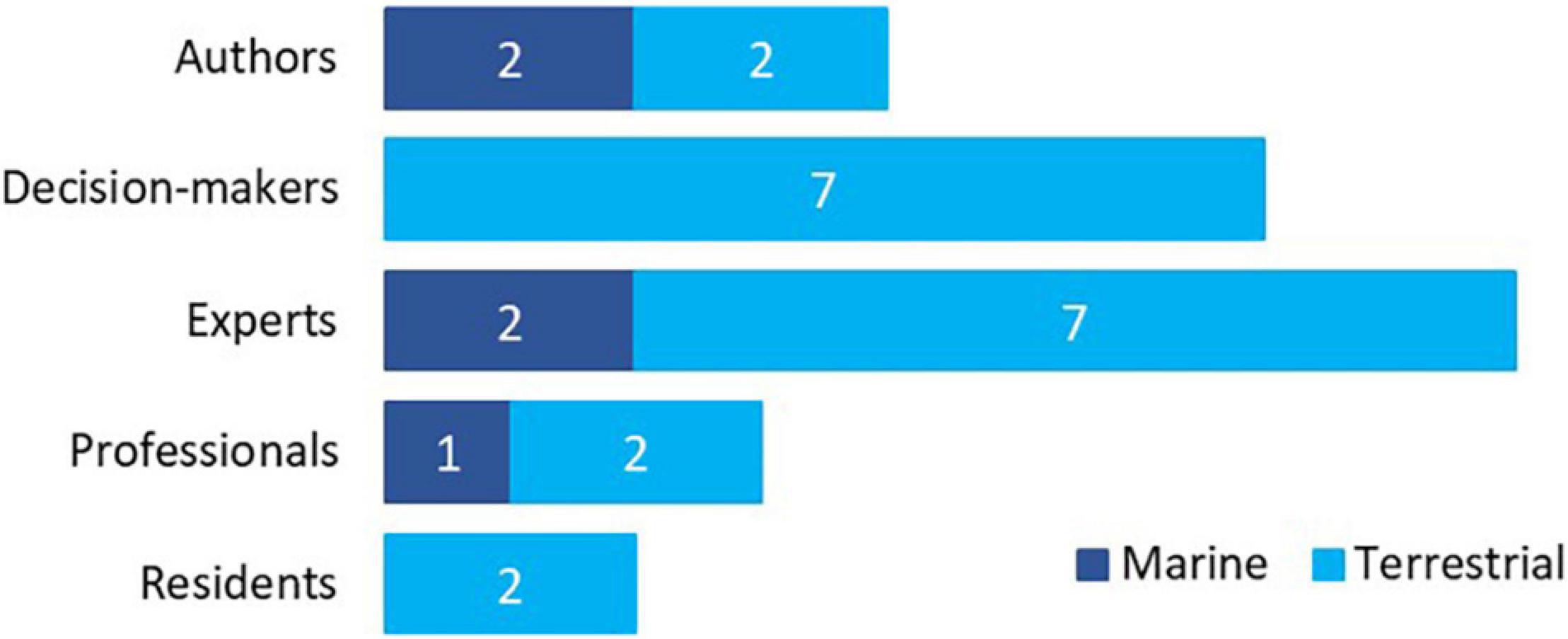
Figure 6. Multi-actor weighting decisions.
Some of these weights were assigned by panels in the context of workshops (Rochat et al., 2013; Bhagat et al., 2016; Bachér et al., 2018) or inquired about through questionnaires or surveys (Mavi et al., 2017; Jimenez et al., 2019; Deshpande et al., 2020).
Recommendations for Marine and Terrestrial Plastic Management
The literature reviewed includes several recommendations stemming from the analysis of the alternatives that were assessed and the MCDA method’s results. Supplementary Tables 1, 2 present an extensive list of alternatives and criteria used in the studies reviewed here, which can serve either as a checklist or as a source of inspiration when using MCDA to address marine and terrestrial plastic waste management. In the following discussion we also mention the studies of Andreoni et al. (2015) and Rodrigues et al. (2018), which computed impacts on multiple criteria but did not aggregate the results using an MCDA method.
The recommendations of a study depend on the alternatives and criteria considered, and can also be contingent on specific aspects, such as the resources and culture of each company in business decisions (Jimenez et al., 2019). In some of the studies a clear winning solution emerged. For instance, Andreoni et al. (2015) found that socio-economic and environmental benefits across the EU would be significant if their recommended alternative was implemented, e.g., reducing approximately 1.5 × 10⁶ tons of CO2 eq emissions and saving tens of millions of euro in waste management costs. The same authors suggest these benefits might be even larger, if technological developments or faster adoption paths were considered. The study by Marazzi et al. (2020) found several of their top-ranked solutions to reduce plastic pollution in rivers were actually actions already implemented in several countries (e.g., banning plastic straws). Other results reflected the conflicting nature of different criteria, e.g., economic viability vs. other qualities (Delvere et al., 2019), leading those authors to conclude that much work remains to be done to develop better solutions.
The best alternative is often a combination of multiple strategies, e.g., combining recycling and incineration (Bhagat et al., 2016), combining alternatives to benefit from different types of litter removal (Chrissley et al., 2017), or combining technologies in a waste supply chain (Vo Dong et al., 2019). Yet, in their analysis of recycling alternatives, Rochat et al. (2013) point out that the interest of recycling options depends on wider factors, such as collection rate or the availability of other traditional outlets for recycled plastic. Similarly, Gomes et al. (2008) remark that solutions such as recycling methods often cannot be fully appraised without considering the logistics system in which these recycling solutions will be included. Therefore, if the best alternative is a combination of multiple elements, it must be kept in mind that the number of potential combinations when considering a broader system can be even larger.
As policy recommendations, Andreoni et al. (2015) suggest that more challenging targets could be set by the EU or its Member States, while taking into account the associated costs and the feasibility of meeting such targets, alongside the potential benefits. Bachér et al. (2018) call for the drafting of detailed statistics on waste across the EU and technological solutions to enable the flow of materials to be tracked. This would include both quantitative and qualitative data encompassing economic, social, and environmental aspects. Improving data collection methods is also important to determine the relevant material flows (Rochat et al., 2013). Marazzi et al. (2020) call for more data on impacts such as water consumption and carbon emission impacts, and the use of life cycle assessment in combination with MCDA (on this topic, see also Rochat et al., 2013; Dias et al., 2019). Delvere et al. (2019) point out that MCDA results might depend on just a few criteria in cases where data is available only for those criteria, but not for other ones. Also concerning data, specifically on microplastics, Rodrigues et al. (2018) call for improved monitoring and the adoption of more stringent size limits, in order to not underestimate the problem and also to allow comparing the results of different research works.
For Deshpande et al. (2020), it is important to engage communities, and MCDA can be instrumental in this regard. Focusing on end of life alternatives, they recommend clearer regulations on recycling and more work on the assessment of environmental and economic impacts of different alternatives so that choices can be made with less uncertainty in the context of the EU’s circular economy strategy for plastics. Clear incentives for consumers to change their behavior and favor pro-environmental behaviors have also been suggested (Marazzi et al., 2020).
Complementing these analyses, Khandelwal and Barua (2020) evaluated several policy-related barriers to implementing a circular economy in the plastics industry. Per their results, more active measures from governments are needed. In particular, economic incentives and tax benefits are needed for organizations to build technology and innovation. Training and awareness programs to enhance the knowledge and skills of stakeholders are also a priority.
In general, the authors of the studies reviewed recommended MCDA as a tool for choosing the best solutions for clearing marine litter or, more generally, in environmental management (e.g., Bhagat et al., 2016). MCDA proved to be useful in that it enabled environmental, socioeconomic, and other criteria to be considered simultaneously. The possibility of considering qualitative criteria has also been praised, along with the possibility of involving different stakeholders (Bhagat et al., 2016; Deshpande et al., 2020). In participatory decision making, participants have the opportunity to learn from each other. Feedback from the stakeholders and experts involved in MCDA has been reported to be positive (Bachér et al., 2018). Another reported advantage of MCDA is its transparency (Bhagat et al., 2016; Deshpande et al., 2020).
However, most authors point out that MCDA is limited by the availability of comprehensive, updated and sufficiently detailed data. Also, results are often based on inputs provided by experts, reflecting their interpretation of the available information, and thus being dependent on the situation and possibly varying in time (Bachér et al., 2018). In contexts involving value chains, they recommend involving experts in the analysis at all stages of the chain and having a clearly defined goal for MCDA. Some authors also remark that MCDA requires resources such as time and money to gather all the information required (Bachér et al., 2018). Finally, MCDA results can also depend on a number of modeling choices, including choice of variables and normalization operations (Rochat et al., 2013).
Conclusion
This review provides an account of studies that used multicriteria decision approaches to address plastic waste in terrestrial and marine environments. The content analysis methodology was chosen for this purpose. Based on this review, the solutions considered were then summarized and discussed in terms of how they were evaluated.
A first surprising conclusion is the very low number of MCDA studies addressing the issue of plastic waste in terrestrial and marine environments. MCDA is a well-known evaluation tool that has been applied in many fields, and plastics is no exception with over 400 articles found for this review. However, most of the MCDA applications found either address general waste or address alternative ways of making or transporting plastics, or products incorporating plastics, and managerial decisions concerning location, supply chain and distribution options. MCDA has only recently been used to address the issue of plastic waste in terrestrial and marine environments (first article in 2008) and authors are based mainly in Europe, followed by Asia and the Americas. The most common purpose has been to choose an end-of-life disposal option, such as different forms of recycling, incineration, landfilling, etc., which could prevent plastics from reaching marine environments. A few other studies address options for getting rid of plastics that have already reached these environments.
With regard to how the MCDA was performed, this review has analyzed the methods selected, the criteria considered, and the criteria weighting process. The reviewed studies are quite diverse in the modeling choices they make, which are specific for their purposes. Therefore, a consolidated best practice pattern does not emerge from this review.
The most popular method was AHP, followed by TOPSIS and outranking methods, and then MAUT/MAVT and simple weighted sums. Some authors have used more than one method to analyze the same problem. Overall, the choice of criteria spans operational (mostly), but also environmental and economic aspects to evaluate the alternatives. Less often, criteria are found to be related to social, managerial, and political factors. However, the studies addressing the marine environment emphasize the environmental dimension in their choice of evaluation criteria. The weighting of the criteria, required by all the MCDA methods that were used, was performed mainly by consulting experts, followed by decision makers. In a few cases the authors themselves proposed the weights. Representatives of the affected population or other stakeholders have been consulted on a few occasions. Apart from these panel-based methods, no other approaches to weighting, such as using monetization techniques or finding the weights based solely on statistical considerations, were found.
Overall, the authors of the studies consider their application of MCDA was successful. They stress the importance of being able to encompass environmental, socioeconomic, and operational factors in the evaluation of the alternatives. Other strengths identified were transparency, the possibility of using qualitative assessments, and the potential for involving stakeholders. When stakeholders were involved, the authors report their feedback was positive. However, the authors pointed out that MCDA can be limited by the availability of data and resources for its implementation, as well as the evolving nature of the perspectives of experts and stakeholders. Some authors called for improved monitoring and data collection methods to better appraise the performance of the alternatives on multiple indicators. MCDA results can also depend on the choice of indicators and other modeling choices.
When analyzing the problems that they addressed, the authors in most cases have managed to identify a clearly winning alternative, which was sometimes a combination of several strategies. But some authors pointed out that the number of possible combinations can lead to a large number of alternatives, and their analysis can be limited by the need to make assumptions about factors and choices related to parts of the overall system outside the scope of their studies.
Given the urgent need to tackle the impact of plastic waste on terrestrial and marine environments, more studies are clearly needed to identify the most adequate solutions. Such solutions involve not only developing technologies, but also creating or updating policies and regulations. The authors hope this review will help to raise awareness of the problem and the need to address it with MCDA, thereby taking into account its environmental, economic, social, and technical dimensions.
Author Contributions
MS: methodology, investigation, writing—original draft, and visualization. LD: conceptualization, writing—review and editing, and visualization. MC: conceptualization, writing—review and editing, visualization, and funding acquisition. JM: writing—review and editing. All authors read and approved the submitted version and listed have made a substantial, direct, and intellectual contribution to the work.
Funding
This work was funded under the EU project CLAIM (Cleaning Litter by developing and Applying Innovative Methods in European seas) H2020 Grant agreement ID: 774586. MC and JM were acknowledged the support of national funds through FCT, under the project UID/EMS/00285/2020. MS was acknowledged a research grant awarded by the University of Coimbra.
Conflict of Interest
The authors declare that the research was conducted in the absence of any commercial or financial relationships that could be construed as a potential conflict of interest.
Publisher’s Note
All claims expressed in this article are solely those of the authors and do not necessarily represent those of their affiliated organizations, or those of the publisher, the editors and the reviewers. Any product that may be evaluated in this article, or claim that may be made by its manufacturer, is not guaranteed or endorsed by the publisher.
Supplementary Material
The Supplementary Material for this article can be found online at: https://www.frontiersin.org/articles/10.3389/fmars.2021.747712/full#supplementary-material
References
Achillas, C., Moussiopoulos, N., Karagiannidis, A., Banias, G., and Perkoulidis, G. (2013). The use of multi-criteria decision analysis to tackle waste management problems: a literature review. Waste Manag. Res. 31, 115–129. doi: 10.1177/0734242X12470203
Andreoni, V., Saveyn, H. G. M., and Eder, P. (2015). Polyethylene recycling: waste policy scenario analysis for the EU-27. J. Environ. Manage. 158, 103–110. doi: 10.1016/j.jenvman.2015.04.036
ATLAS.ti (2020). Scientific Software Development GmbH. Version 9. Available online at: http://atlasti.com (accessed July 20, 2021).
Bachér, J., Pihkola, H., Kujanpää, L., and Mroueh, U.-M. (2018). Advancing the circular economy through group decision-making and stakeholder involvement. Detritus 4, 22–35. doi: 10.31025/2611-4135/2018.13741
Balwada, J., Samaiya, S., and Mishra, R. P. (2021). Packaging Plastic Waste Management for a Circular Economy and Identifying a better Waste Collection System using Analytical Hierarchy Process (AHP). Procedia CIRP 98, 270–275. doi: 10.1016/j.procir.2021.01.102
Besseling, E., Quik, J. T. K., Sun, M., and Koelmans, A. A. (2017). Fate of nano- and microplastic in freshwater systems: a modeling study. Environ. Pollut. 220, 540–548. doi: 10.1016/j.envpol.2016.10.001
Bhagat, S., Bhardawaj, A., Mittal, P., Chandak, P., Akhtar, M., and Sharma, P. (2016). Evaluating plastic waste disposal options in Delhi using multi criteria decision analysis. IIOAB J. 7, 25–35.
Brans, J. P., and Vincke, P. (1985). A Preference Ranking Organisation Method (The PROMETHEE Method for Multiple Criteria Decision-Making). Manag. Sci. 31, 647–656. doi: 10.1287/mnsc.31.6.647
Brauers, W. K., and Zavadskas, E. K. (2006). The MOORA method and its application to privatization in a transition economy. Control Cybern. 35, 445–469.
Cardoso, R. S., Xavier, L. H., Gomes, C. F. S., and Adissi, P. J. (2009). Uso de SAD no apoio à decisão na destinação de resíduos plásticos e gestão de materiais. Pesqui. Oper. 29, 67–95. doi: 10.1590/s0101-74382009000100004
Cegan, J. C., Filion, A. M., Keisler, J. M., and Linkov, I. (2017). Trends and applications of multi-criteria decision analysis in environmental sciences: literature review. Environ. Syst. Decis. 37, 123–133. doi: 10.1007/s10669-017-9642-9
Chrissley, T., Yang, M., Maloy, C., and Mason, A. (2017). “Design of a Marine Debris Removal System,”in 2017 Systems and Information Engineering Design Symposium (Bengaluru: SIEDS), 10–15. doi: 10.1109/SIEDS.2017.7937696
Cunha, M., Marques, J., Creaco, E., and Savic, D. A. (2019). Dynamic Adaptive Approach for Water Distribution Network Design. J. Water Resour. Plan. Manag. 145:04019026. doi: 10.1061/(ASCE)WR.1943-5452.0001085
Delvere, I., Iltina, M., Shanbayev, M., Abildayeva, A., Kuzhamberdieva, S., and Blumberga, D. (2019). Evaluation of Polymer Matrix Composite Waste Recycling Methods. Environ. Clim. Technol. 23, 168–187. doi: 10.2478/rtuect-2019-0012
Deshpande, P. C., Skaar, C., Brattebø, H., and Fet, A. M. (2020). Multi-criteria decision analysis (MCDA) method for assessing the sustainability of end-of-life alternatives for waste plastics: a case study of Norway. Sci. Total Environ. 719:137353. doi: 10.1016/j.scitotenv.2020.137353
Dias, L., Freire, F., and Geldermann, J. (2019). “Perspectives on Multi-criteria Decision Analysis and Life-Cycle Assessment,” in New Perspectives in Multiple Criteria Decision Making, ed. M. Doumpos (Cham: Springer), 315–329. doi: 10.1007/978-3-030-11482-4_12
Fishburn, P. C. (1967). Additive Utilities with Incomplete Product Sets: application to Priorities and Assignments. Oper. Res. 15, 537–542. doi: 10.1287/opre.15.3.537
Geetha, S., Narayanamoorthy, S., Kureethara, J. V., Baleanu, D., and Kang, D. (2021). The hesitant Pythagorean fuzzy ELECTRE III: an adaptable recycling method for plastic materials. J. Clean. Prod. 291:125281. doi: 10.1016/j.jclepro.2020.125281
Gomes, C. F. S., Nunes, K. R. A., Xavier, L. H., Cardoso, R., and Valle, R. (2008). Multicriteria decision making applied to waste recycling in Brazil. Omega 36, 395–404. doi: 10.1016/j.omega.2006.07.009
Huang, I. B., Keisler, J., and Linkov, I. (2011). Multi-criteria decision analysis in environmental sciences: ten years of applications and trends. Sci. Total Environ. 409, 3578–3594. doi: 10.1016/j.scitotenv.2011.06.022
Husáková, N., Fedorko, G., Molnár, V., and Honus, S. (2016). “Example of selection of suitable way for the process of recycling,” in Proceedings of the 16th International Multidisciplinary Scientific GeoConference Surveying Geology and Mining Ecology Management (SGEM), Albena, 357–364. doi: 10.5593/SGEM2016/B52/S20.046
Hwang, C.-L., and Yoon, K. (1981). Multiple Attribute Decision Making: Methods and Applications A State-of-the-Art Survey. In Lecture Notes in Economics and Mathematical Systems. Berlin: Springer.
Ishizaka, A., and Nemery, P. (2013). Multi-Criteria Decision Analysis: Methods and Software. Hoboken: john wiley & sons. doi: 10.1002/9781118644898
Jimenez, G., Santos, G., Félix, M., Hernández, H., and Rondón, C. (2019). Good Practices and Trends in Reverse Logistics in the plastic products manufacturing industry. Procedia Manuf. 41, 367–374. doi: 10.1016/j.promfg.2019.09.021
Juul, N., Münster, M., Ravn, H., and Söderman, M. L. (2013). Challenges when performing economic optimization of waste treatment: a review. Waste Manag. 33, 1918–1925. doi: 10.1016/j.wasman.2013.04.015
Keeney, R. L. (1996). Value-focused thinking: identifying decision opportunities and creating alternatives. Eur. J. Operat. Res. 92, 537–549. doi: 10.1016/0377-2217(96)00004-5
Keeney, R. L., and Raiffa, H. (1976). Decisions with Multiple Objectives: Preferences and Value Tradeoffs. Hoboken: John Wiley & Sons.
Khandelwal, C., and Barua, M. K. (2020). Prioritizing circular supply chain management barriers using fuzzy AHP: case of the Indian plastic industry. Glob. Bus. Rev. 1–20. doi: 10.1177/0972150920948818
Lebreton, L. C. M., Van Der Zwet, J., Damsteeg, J.-W., Slat, B., Andrady, A., and Reisser, J. (2017). River plastic emissions to the world’s oceans. Nat. Commun. 8:15611. doi: 10.1038/ncomms15611
Lieske, D. J., Tranquilla, L. M. F., Ronconi, R., and Abbott, S. (2019). Synthesizing expert opinion to assess the at-sea risks to seabirds in the western North Atlantic. Biol. Conserv. 233, 41–50. doi: 10.1016/j.biocon.2019.02.026
Marazzi, L., Loiselle, S., Anderson, L. G., Rocliffe, S., and Winton, D. J. (2020). Consumer-based actions to reduce plastic pollution in rivers: a multi-criteria decision analysis approach. PLoS One 15:e0236410. doi: 10.1371/journal.pone.0236410
Martín-Gamboa, M., Iribarren, D., García-Gusano, D., and Dufour, J. (2017). A review of life-cycle approaches coupled with data envelopment analysis within multi-criteria decision analysis for sustainability assessment of energy systems. J. Clean. Prod. 150, 164–174. doi: 10.1016/j.jclepro.2017.03.017
Mavi, R. K., Goh, M., and Zarbakhshnia, N. (2017). Sustainable third-party reverse logistic provider selection with fuzzy SWARA and fuzzy MOORA in plastic industry. Int. J. Adv. Manuf. Technol. 91, 2401–2418. doi: 10.1007/s00170-016-9880-x
Mikusová, N., Stopka, O., Stopkova, M., Mikušová, N., Stopka, O., and Stopkova, M. (2019). Application of Multi-criteria Decision-making Methods for the Area of Recycling. TEM J. 8, 827–835. doi: 10.18421/TEM83-19
Nirmala, G., and Uthra, G. (2017). Selecting best plastic recycling method using trapezoidal linguistic fuzzy preference relation. Int. J. Civ. Eng. Technol. 8, 850–855.
Panigrahi, S. K., Kar, F. W., Fen, T. A., Hoe, L. K., and Wong, M. (2018). A Strategic Initiative for Successful Reverse Logistics Management in Retail Industry. Glob. Bus. Rev. 19, 151–175. doi: 10.1177/0972150918758096
Rochat, D., Binder, C. R., Diaz, J., and Jolliet, O. (2013). Combining Material Flow Analysis, Life Cycle Assessment, and Multiattribute Utility Theory Assessment of End-of-Life Scenarios for Polyethylene Terephthalate in Tunja, Colombia. J. Indus. Ecol. 17, 642–655. doi: 10.1111/jiec.12025
Rodrigues, M. O., Gonçalves, A. M. M., Gonçalves, F. J. M., Nogueira, H., Marques, J. C., and Abrantes, N. (2018). Effectiveness of a methodology of microplastics isolation for environmental monitoring in freshwater systems. Ecol. Indic. 89, 488–495. doi: 10.1016/j.ecolind.2018.02.038
Roy, B. (1968). Classement et choix en présence de points de vue multiples (La methode ELECTRE). Rev. Inf. Rech. Oper. 8, 57–75.
Saaty, T. L. (1996). Decision Making with Dependence and Feedback: The Analytic Network Process. Pittsburgh: RWS Publications.
Senthil, S., Murugananthan, K., and Ramesh, A. (2018). Analysis and prioritisation of risks in a reverse logistics network using hybrid multi-criteria decision making methods. J. Clean. Prod. 179, 716–730. doi: 10.1016/j.jclepro.2017.12.095
Thiel, M., Luna-Jorquera, G., Álvarez-Varas, R., Gallardo, C., Hinojosa, I. A., Luna, N., et al. (2018). Impacts of marine plastic pollution from continental coasts to subtropical gyres-fish, seabirds, and other vertebrates in the SE Pacific. Front. Mar. Sci. 5:238. doi: 10.3389/fmars.2018.00238
Vinodh, S., Prasanna, M., and Hari Prakash, N. (2014). Integrated Fuzzy AHP-TOPSIS for selecting the best plastic recycling method: a case study. Appl. Math. Model. 38, 4662–4672. doi: 10.1016/j.apm.2014.03.007
Keywords: multicriteria decision analysis, MCDA, MCDM, plastic waste, waste management, clean seas
Citation: Santos MR, Dias LC, Cunha MC and Marques JR (2022) Multicriteria Decision Analysis Addressing Marine and Terrestrial Plastic Waste Management: A Review. Front. Mar. Sci. 8:747712. doi: 10.3389/fmars.2021.747712
Received: 26 July 2021; Accepted: 17 December 2021;
Published: 07 January 2022.
Edited by:
Roy Brouwer, University of Waterloo, CanadaReviewed by:
Periyadan K. Krishnakumar, King Fahd University of Petroleum and Minerals, Saudi ArabiaGabriela Verónica Aguirre-Martínez, Arturo Prat University, Chile
Copyright © 2022 Santos, Dias, Cunha and Marques. This is an open-access article distributed under the terms of the Creative Commons Attribution License (CC BY). The use, distribution or reproduction in other forums is permitted, provided the original author(s) and the copyright owner(s) are credited and that the original publication in this journal is cited, in accordance with accepted academic practice. No use, distribution or reproduction is permitted which does not comply with these terms.
*Correspondence: Maria C. Cunha, bWNjdW5oYUBkZWMudWMucHQ=