Abstract
COVID-19 was declared a global pandemic by the World Health Organization in 2020 with countries putting up several measures to mitigate and flatten the curve of hospitalizations and death from travel bans to home confinements and local lockdowns. This pandemic created health and economic crises, leading to increased incidence of poverty and food crisis especially on both agriculture and the fisheries in many developing nations including the Philippines. The specific objectives of this study were to assess the impact of COVID-19 restrictions on the catch per unit effort (CPUE) of small-scale fishers and to determine what factors could influence the volume of their catch during this time of pandemic. Moreover, this also investigated the impact of COVID-19 restrictions to fishers and their families. To do that we surveyed N = 200 small-scale fishers around the Davao gulf using semi-structured questionnaire and inquired on the impact of the COVID-19 to their fishing operation, catch, fishing costs, and their families. The collected socioeconomic variables, including emotional responses to the pandemic were then related to the CPUE and the volume of catch. The results show that fishers were highly affected by the pandemic due to the lockdown policy imposed in the fishing villages during the earlier phases of restrictions by the government. Fishers were affected in terms of the volume of their catch, also fishing costs, and emotionally as they were also frustrated due to the impacts of the hard lockdown. The restricted fishing access was found to have important and major set-back on the fishing operations of fishers and the same was experienced also by the middlemen given the low fish price and reduced mobility of the fish traders. COVID-19 also impacted the fishers, and their families through lack of mobility, food inadequacy, travel restrictions and their children’s education.
Introduction
COVID-19 and Impact on Fisheries
In 2020, COVID-19 was declared a global pandemic by the World Health Organization (WHO, 2020). Countries worldwide have taken several measures to mitigate and flatten the curve of hospitalization and death through travel bans, home confinement, social distancing, local lockdowns, and business closure methods were implemented by governments all over the world (Jomitol et al., 2020; UN, 2020). This pandemic created health and economic crises, leading to increased incidence of poverty and food crisis especially on both agriculture and the fisheries (Sumner et al., 2020). Southeast Asian nations were also affected by the pandemic slowly taking over each country including the Philippines (Ferrer et al., 2021). With an island-dwelling population of more than 100 million and more than 7,100 islands, the Philippines is considered a major fishing nation with 1.6 million Filipino fishers; of these, an estimated 957,551 fishers use traditional hooks and lines, and gillnets for their daily fishing on small boats (<3 gross tons) (BFAR, 2015). The small-scale or municipal fisheries in the Philippines play a critical role in the livelihoods and food security of coastal communities and the nation (Perez et al., 2012). The drastic implications of COVID-19 lockdown in small-scale fisheries (SSF) have become evident, manifestations include, closing down of fishing operations, closed market stalls affecting food security (Béné et al., 2015; Gregorio and Ancog, 2020; Ferrer et al., 2021). Past pandemics show that quarantines and panic not only affect human activities and economic growth but it also affects fisheries supply chains, tourism, and agricultural activities that induces hunger and malnutrition as well as psychological impacts (Bermejo, 2004; Cullen et al., 2020; Sunny et al., 2021).
COVID-19 and Movement Restrictions
Enhanced Community Quarantine (ECQ) started in mid-March 2020 in response to the COVID-19 pandemic. The ECQ meant “stay at home” as mobility and transportation (air, water, and land) were restricted (Ferrer et al., 2021). It affected people’s daily activity patterns or regular movements and habits from jogging, walking to dining in restaurants, which were previously thought normal or usual (Simunek et al., 2021). In the fisheries, movement restrictions significantly affected the fishers and also affected fish supply and demand, including fish distribution, labor and production of fish (Love et al., 2020; Belton et al., 2021). It is estimated that 10% of the global population depends on SSF for their livelihood, resulting in rising food insecurity among fishing communities (Sunny et al., 2021). In Sabah, Malaysia, researchers found that mobility control procedures negatively affected fish trading of small-scale fishers (Jomitol et al., 2020).
Further, crowding at fish landing sites in Ghana suggested the potential for spreading COVID-19 within the fisheries sector (Okyere et al., 2020). In the case of Wuhan and Shenzhen in China they imposed a draconian measure of travel restrictions and mobility limitations to evaluate whether this will help control the rapid spread of the virus (Chinazzi et al., 2020; Zhou et al., 2020). Responses to COVID-19 pandemic varied from one place to another, some countries are reopening workplaces, schools and social gatherings to adapt to their economies and others are suppressing transmission through restricting business industries, and schools while waiting for the vaccines (Abolfotouh et al., 2021).
COVID-19 and Disruptions on Families of Fishers
This pandemic had affected almost every aspect of life, including fishers and their families (Bennett et al., 2020; Demirci et al., 2020). During the pandemic, the price of fish decreased due to restrictions making it more difficult for fishing families to conduct their daily activities (Hidayati et al., 2021). Even though the situation has disrupted the fishers’ economy, most of them still fished every day and ignored its possible effect on their health and fishing costs (Kaewnuratchadasorn et al., 2020). This is because they have no alternative livelihood (Avtar et al., 2021). The closing of educational institutions also appears to be a problem for the fisher’s family (Chaturvedi et al., 2021). With the school closures implemented, a rapid transition from physical to digital sphere of learning emerged (Kapasia et al., 2020). Online learning has now become an alternative to conventional learning (Bestiantono et al., 2020). Due to this abrupt change, students from less privilege homes experienced a more significant negative impact due to reduction of family income caused by the COVID-19 outbreak; this also made it more challenging to have access to digital resources such as costly internet connection (Aucejo et al., 2020; Lee, 2020). Because of the preceding reasons, fishers need to make a tough decision by risking themselves to feed their family although by continuing to operate their fishing ventures makes them vulnerable to the disease (FAO, 2020a). This study aimed to understand and assess the impact of COVID-19 to small-scale fishers of Davao Gulf, Mindanao. The specific objectives of this study were to assess the impact of COVID-19 restrictions on the catch per unit effort (CPUE) of small-scale fishers and to determine what factors could influence the volume of their catch during this time of pandemic. Moreover, this also investigated the impact of COVID-19 restrictions to fishers and their families.
Methodology
Description of the Study Area
The study was conducted in Davao Gulf, located in southern Philippines on the Island of Mindanao (Figure 1). It lies approximately between 6°30′00″ North longitude and 125°58′35″ East latitude. The water surface area is about 3,087 km2 and tide in the area is predominantly semi-diurnal, with two high and two low water levels occurring in a day. Fisheries production in Davao Gulf was dominated by commercial fishing having an annual average catch percentage of 88% compared to municipal fishing (SSF) which only comprised 12% of the average catch in past years (Villanueva, 2018).
FIGURE 1
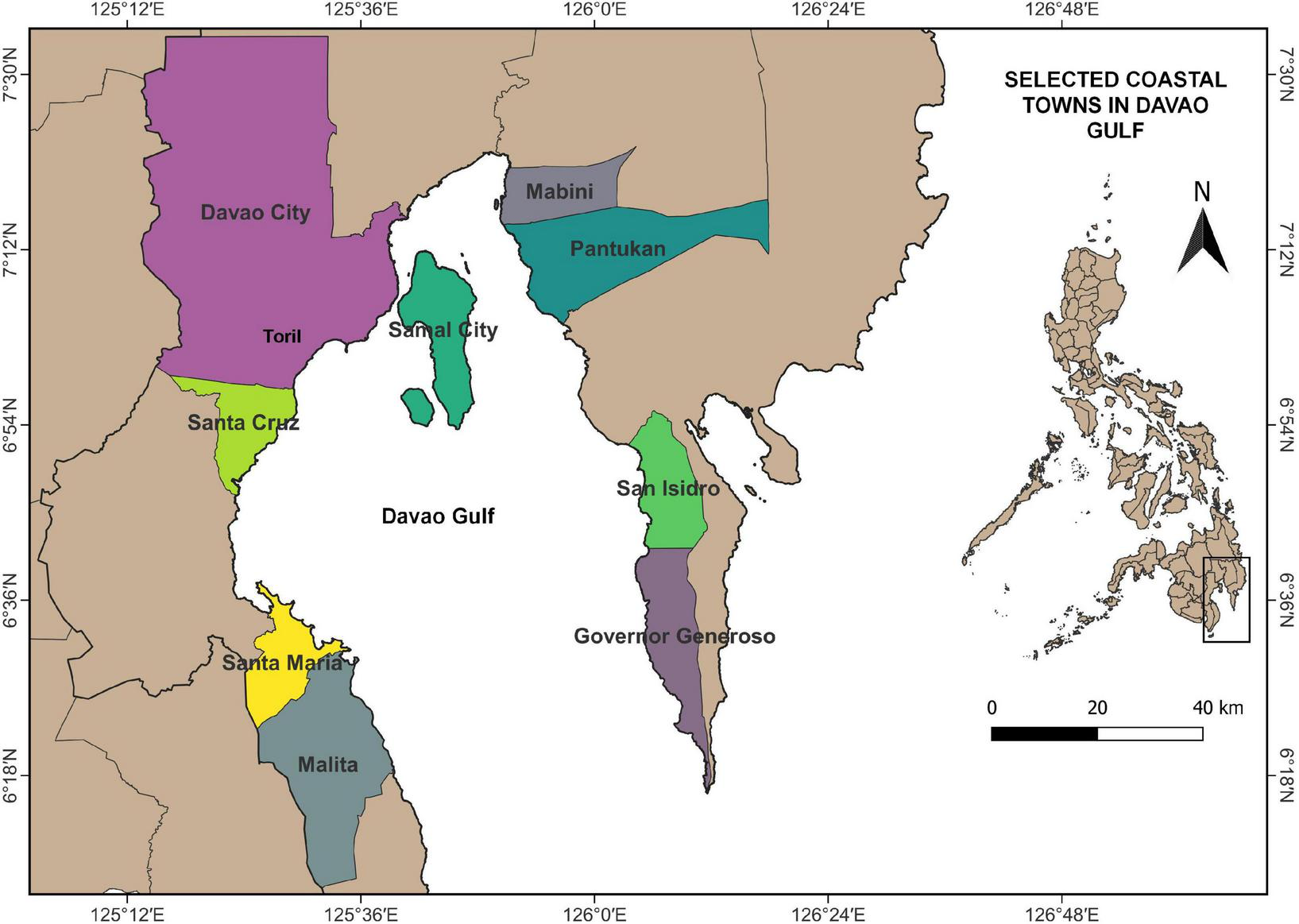
The study sites around the Davao Gulf where the impact of COVID-19 surveys were conducted with small-scale fishers (SSF) and their families.
The different study sites include Governor Generoso, San Isidro, Pantukan, Mabini, Toril in Davao City, Samal Island, Sta Cruz, Sta Maria, and Malita. These areas were mainly agricultural producing towns with known products such as banana, coconuts, cacao, durian, and pomelo, and harboring rich fishing grounds. Some of these sites have well-paved roads, irrigation and farm-to-market roads, food terminals and fish ports, access to micro-credits, and rural banks and cooperatives (see Table 1). However, the lack of centralized market depot for agricultural and fish products logistics are missing even in Davao City. Normally, small-scale fishers use hooks and lines, traps, spear fishing, longlines, gillnets, and payaos in their fishing activities (Macusi, 2017). Common catch species in the area include bigeye scad, roundscad, frigate tuna, bullet tuna, bali sardines, skipjack tuna, yellowfin tuna, groupers, and other coral reef fish species (Macusi et al., 2021). Other marine life forms found in the Davao Gulf include sea turtles and other cetaceans that face the brunt of climate change impacts and marine pollution (Abreo, 2016; Abreo et al., 2016).
TABLE 1
| Profile | Governor Generoso | San Isidro | Pantukan | Mabini | Samal | Davao City | Sta Maria | Sta Cruz | Malita |
| Population | 55,109 | 36,032 | 85,899 | 41,102 | 1,04,123 | 1.63M | 53,671 | 90,987 | 1,17,746 |
| Registered Fishers | 2,300 | 1,551 | 1,904 | 1,067 | 5,936 | 5,510 | 3,200 | 4,011 | 800 |
| Average Farm Area (h) | 2.7 | 2.5 | 2.7 | 4.5 | 3 | ||||
| Annual Municipal Fisheries Production (mt) | 9.38 | 1.43 | 4.98 | 16.09 | 13.66 | ||||
| Agricultural sources of livelihood | Fishing, farming (coconut and banana), mining, community fish port, and services | Fishing, farming (coconut and banana), tourism, and services | Fishing, farming (coconut and banana), tourism, mining, and services | Fishing, farming (banana), services, shipping, and tourism | Fishing, farming, tourism, port, and services | Fishing, farming (coconut, cacao and banana), banking services, shipping, and ports | Fishing, farming, services, and makeshift fish port | Fishing, farming, industrial, services, makeshift fish port, and ice plant | Fishing, farming (coconut and banana) community fish port |
| Infrastructure | Ice plants, community fish port, and paved roads | Ice plants, community fish port, paved roads, and small public market | paved roads, small public markets, and recreation centers | paved roads, small public market, and recreation centers | Ice plants, community fish port, paved roads, parks, and recreation | Ice plants, industrial area, community fish port, paved roads, parks, and recreation | Ice plants, community fish port | Ice plants, community fish port, paved roads, and recreation centers | Ice plants, community fish port, and paved roads |
Number of population and registered fishers and their livelihood in the various study sites around Davao Gulf.
Data Collection
A survey interview was conducted using the semi-structured questionnaire which contained both close-ended and open-ended questions in order to obtain information from the respondents. The information obtained included the names of fishers, their residence area, age, household size, fishing hours, fishing frequency and fishing areas, catch composition, fish prices, fishing costs, and their reactions to the impact of the COVID-19 restrictions. The respondents of the study were 90% boat owners which was also the same as in the study of Macusi et al. (2021) on SSF in Davao Gulf. Fishers (N = 200 respondents) were randomly selected from various study sites and they were engaged in fishing and fishing-related activities for at least a year or full-time. They use simple fishing gears such as hook and line, multiple hook and line and gill nets. According to the Bureau of Fisheries and Aquatic Resources (BFAR), vessel with the capacity of 3 tons below is considered to be small-scale fishing boats in the Philippines. The interview lasted for 15–20 mins, and was conducted one-to-one while the interviewer listed down the answers of the respondents. The interview was carried out at the homes of the respondents, near the community fish port and barangay halls. Before the interview, permission letters were sent to the office of the barangay captain and repeated visits required also the same courtesy call to the local government because of the present pandemic.
Data Analyses
Statistical Analysis
After the interview, all data were encoded in Microsoft excel 2016 and subsequently a preliminary analysis was done using Analyse-it excel add-on software. All possible dependent variables were checked for their normality and homogeneity, with the catch and CPUE in particular and plotted on graphs for visualizations [The CPUE was derived from the average reported catch (kg) and from the number of fishing hours (hr) spent by the fisher when fishing]. This data was then log10 transformed when it violated the assumptions of ANOVA. To analyze the data on the influence of various factors on the CPUE of the small-scale fishers during the time of COVID-19, we reduced the number of factors into four variables namely fisheries (fishing frequency, fish hold capacity, and proportion of catch sold), emotional (frustrating, anger, fear, and hope), sociodemographic (age, household size, number of years fishing, and years of education), and financial variables (revenue, gear maintenance, boat maintenance, and total fish costs) using PCA (principal component analysis). This was similar to the method used in our previous manuscripts for variable reduction (Macusi et al., 2020, 2021). The obtained variables were then used as predictors for what mainly influences the CPUE (dependent variable) using a multiple linear regression. Aiming to further analyze the data on which factors were highly influencing the volume of catch during the time of pandemic (on whether it causes a reduction of the volume or it remains the same as the pre-pandemic volume of catch), a binary logistic regression was done and different factors were related to the response variable. These variables are shown in Table 2 which shows their description and mean, fishing hours, proportion catch sold, fishing costs (Php), fish hold capacity (kg), fishing frequency, age (years), education (years), household size, number of years fishing, revenue (Php), emotions (frustrating, anger, fear, and hope). All data analyses were conducted using MINITAB 17.0 (State College, PA, United States).
TABLE 2
| Variables | Definition | Mean (min, max) |
| Age (years) | Age of individual fishers | 42 (15, 82) |
| Education (years) | Number of years of fishing experience of fisher | 6 (0, 13) |
| Household size | Number of individual members of the family | 4 (1, 14) |
| Number of years fishing (years) | Number of years of fishing experience | 21 (1, 62) |
| Catch per trip (kg/trip) | The volume or amount of fish catch per fishing trip | 9.84 (0.4, 40) |
| Number of fishing hours | Number of fishing hours from the time of arrival in the fishing ground up to the last fish catch | 9.64 (1, 48) |
| Catch per unit effort (CPUE; kg/hr) | Catch per unit effort based on the volume of fish catch (kg) per trip divided by the number of fishing hours | 1.28 (0.03, 7) |
| Fishing frequency | The number of times that fishers go out and fish in a week | 5 (1, 7) |
| Fish cost (Php) | The combined costs of fishing per trip, e.g., cost of bait, ice, foodpacks, and fuel | 425 (0, 8,500) |
| Proportion catch sold | The percentage or amount of fish catch sold after the portion for their families or crew members are separated | 93 (20, 100) |
| Fish price (Php) | The average fish price of all species caught by individual fishers | 135 (3, 300) |
| Fish-hold capacity (kg) | The average fish holding capacity of individual boats | 200 (35, 1,000) |
| Revenue (Php) | The amount of total fish catch (kg) multiplied by the average fish price (Php) for the fishing trip | 1300 (40, 8,700) |
| Electric bill (Php) | Latest electric bill paid during the time of pandemic (October–November 2020) | 400 (0, 3,000) |
| Water bill (Php) | Latest water bill paid during the time of pandemic (October–November 2020) | 82 (0, 600) |
Mean and range of variables used in the data analysis.
Qualitative Data Analysis
Qualitative data analyses were conducted using the coding method (Dey, 2005) where specific words that are often repeated by respondents were counted, classified and then discussed. To do that, a general and bigger category or theme was identified based on the responses regarding impacts of COVID-19 that is about 15 groups and then reduced to 10 categories or themes for frequently cited impacts of the COVID-19 restrictions, and the challenges that the particular fishers and their families faced during the height of the pandemic in 2020. These were subjective groupings and frequently influenced by previous readings on the current impacts of COVID-19. The resulting frequency was visualized and refined further, and the final result was organized on a table.
Results
Socio-Demographic Profile
Results show that the average age of fishers in the study sites: San Isidro (48 years old), Samal (47 years old) and Toril (46 years old) were highest; this was followed by Pantukan (43 years old), Mabini (42 years old), Governor Generoso and Sta Cruz (41 years old), while Malita (39 years old) and Sta Maria (36 years old) were the lowest in age (Figure 2A). Toril (Davao City) had the highest average fishing experience of 28 years followed by San Isidro with 26, Samal and Pantukan with 25, Sta Cruz with 21, Malita with 20 while Governor Generoso and Mabini shared the same fishing experience of 19 years and Sta Maria with 12 years of fishing experience had the lowest (Figure 2B). The highest number of respondents mentioned elementary level as their highest level of education with a percentage of 33% followed by elementary graduate with 28%, high school with 20%, high school graduates with 16%, and 3% were able to reach college level and finish their vocational courses. About 1% of the fishers have no educational attainment, 0.5% for senior high level and no college graduate (Figure 2C). In terms of the number of household size, Governor Generoso, Mabini, and Pantukan have an average of five members, followed by Samal, San Isidro, Sta Maria, Sta Cruz, and Malita with an average of four members, overall the number of the household size was from 1 to 13 (Figure 2D). The dominant fish species caught were: Island mackerel (Rastrelliger faughni) with a frequency of 33 followed by Bali Sardines (Sardinella lemuru) with 31, Bigeye scad (Selar crumenophthalmus) with 27, roundscad (Decapterus macrosoma) with 18 and Frigate tuna (Auxis thazard) with 16 together with common squid (Sepioteuthis lessoniana) of the same frequency (Figure 2E). Out of this volume of fish catch, 52% will go to the financiers and traders, 23% will go directly to buyers, while 11% will be sold to their neighbors, 7% for family consumption, and 6% for the local markets (Figure 2F).
FIGURE 2
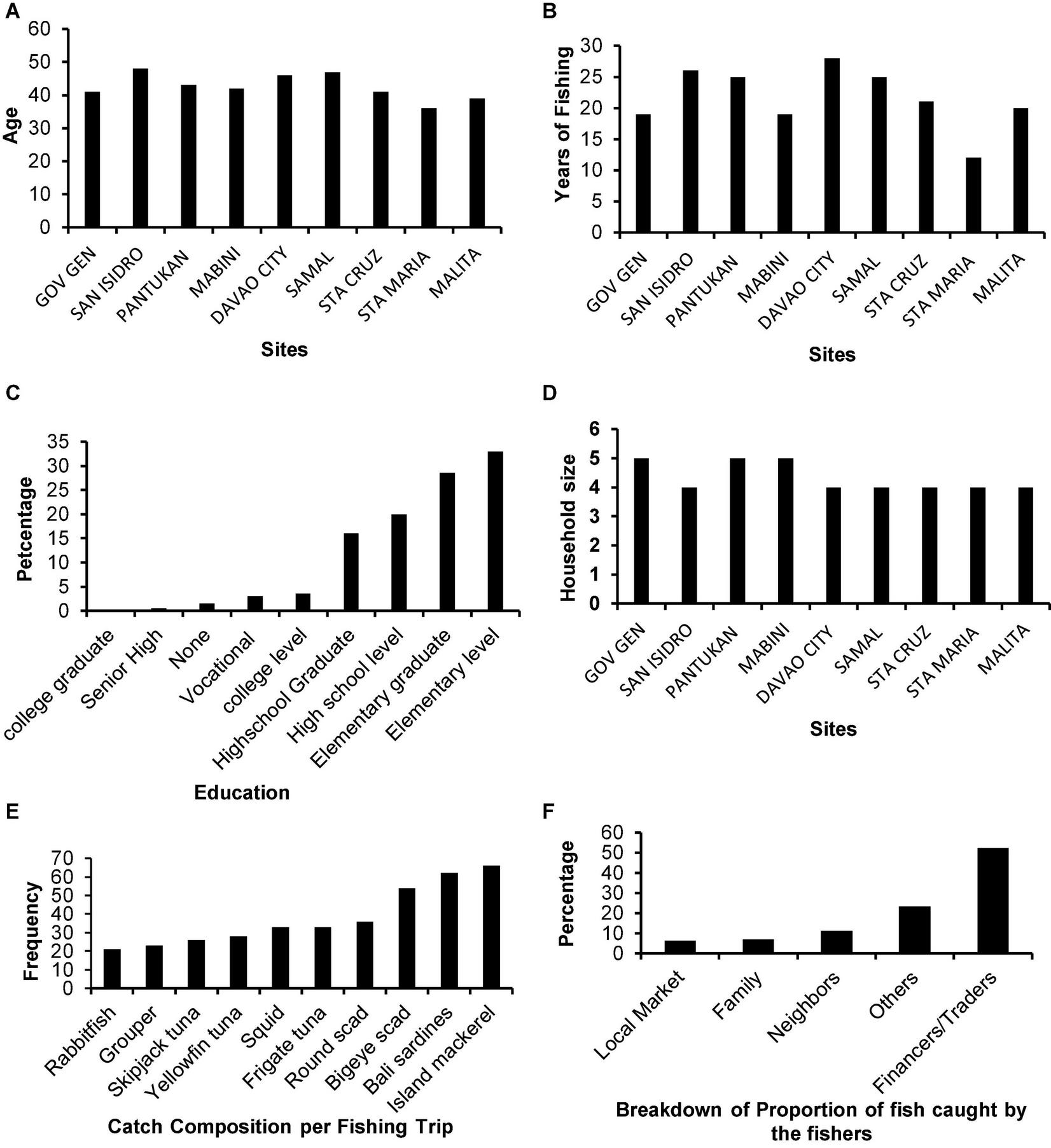
Age of respondents (A), household size (B), years of education and (C) years of fishing (D), catch composition (E), and breakdown of proportion of fish caught by fishers (F).
Impact on the Catch Per Unit Effort of Fishers and Influencing Factors
Results of the multiple linear regression show that the CPUE was highly influenced by the fisheries factors (df = 4, MS = 1.63, F = 10.40, p ≤ 0.0001). These fisheries factors were mainly: fish hold capacity of the boat, proportion of fish catch sold, fishing frequency, revenue and fishing costs more than any other variable such as sociodemographic (age, household size, education, and fishing experience), financial (electric and water bills) or emotional response (frustration, anger, fear, and hope). There is no relationship between the CPUE of fishers and their emotion or sociodemographic profile or bills to pay during the time of pandemic. But in terms of analyses of the influencing factors on the volume of catch (whether the volume remained the same or decreased due to the pandemic), both economic (proportion of catch sold and total fishing costs) and the emotional factor, frustration, played key roles. The logistic regression equation was highly significant (df = 14, X2= 32.98, p < 0.003), showing that COVID-19 highly affected the volume of catch and particularly influenced by the variables “proportion of catch sold” [B = 0.035 (SE = 0.0173), Wald = 4.45, df = 1, p = 0.035], and “fishing costs” [B = −0.0006 (SE = 0.0003), Wald = 4.99, df = 1, p = 0.026] and the emotional factor “frustration” [B = 1.425 (SE = 0.55), Wald = 7.78, df = 1, p = 0.005; See Table 3].
TABLE 3
| Variables | B (SE) | Odds ratio | 95% Confidence Interval for odds ratio |
|
| Lower | Upper | |||
| Fish Price (Php) | –0.003 (0.003) | 0.997 | 0.992 | 1.003 |
| Number of fishing hours | 0.0179 (0.027) | 1.018 | 0.965 | 1.074 |
| Proportion of catch sold (kg) | 0.0350 (0.017)* | 1.036 | 1.001 | 1.071 |
| Fishing costs (Php) | –0.00064 (0.0003)* | 0.999 | 0.999 | 1 |
| Fish hold capacity | 0.00016 (0.001) | 1 | 0.998 | 1.002 |
| Fishing frequency | –0.017 (0.085) | 0.983 | 0.832 | 1.162 |
| Age (years) | –0.007 (0.018) | 0.992 | 0.958 | 1.028 |
| Education (years) | –0.0196 (0.0610) | 0.981 | 0.87 | 1.105 |
| Household size | 0.0757 (0.077) | 1.079 | 0.928 | 1.253 |
| Fishing experience (years) | –0.0278 (0.018) | 0.973 | 0.939 | 1.007 |
| Frustration | 1.425 (0.550)** | 4.159 | 1.415 | 12.223 |
| Anger | 0.119 (0.590) | 1.127 | 0.354 | 3.581 |
| Fear | –0.325 (0.349) | 0.723 | 0.365 | 1.432 |
| Hope | 0.557 (0.364) | 1.745 | 0.856 | 3.558 |
| Constant | –2.16 (1.85) | 1.32 | ||
Factors that are influencing the change in the volume of fish catch during the time of Pandemic in Davao Gulf (Significantly different factors are in bold).
Cox and Snell R2 = 0.153; Nagelkerke R2= 0.205; Model X2 = 32.99, p = < 0.003.
*p < 0.05.
**p < 0.001.
Challenges Due to COVID-19 Impact in the Fisheries
The consistently high percentage ratings of restricted fishing areas (32% in Mabini and 16% in Pantukan and Malita, 11% in San Isidro and Samal, 5% in Governor Generoso, 4% in Toril and Sta Maria and 2% in Sta Cruz or an overall percentage of 36%) have shown that this was the main impact to the fisheries operation. While having a low fish price was also a similar problem (29% in Governor Generoso, 24% in Samal, 22% in Malita, 20% in San Isidro, and 2% in Malita and Sta Maria or an overall percentage of 29%). This was followed by reduced mobility by fish traders (22% in Sta Maria, and Sta Maria, 13% in Governor Generoso, Mabini and Samal, 9% in San Isidro, and 4% in Toril and Sta Cruz or an overall percentage of 15%) and travel restrictions (38% in Mabini, 22% in Malita, 15% in Sta Maria and Sta Cruz, and 8% in Samal and San Isidro or an overall percentage of 8%) (Table 4).
TABLE 4
| Challenges | Governor Generoso | San Isidro | Pantukan | Mabini | Davao City | Samal | Sta Cruz | Sta Maria | Malita |
| Restricted market | 0 | 1 (14%) | 0 | 0 | 0 | 0 | 0 | 3 (43%) | 3 (43%) |
| Lack of fish buyers | 0 | 0 | 0 | 1 (33%) | 0 | 0 | 2 (67%) | 0 | 0 |
| Reduced income | 0 | 0 | 0 | 0 | 2 (22%) | 0 | 1 (11%) | 5 (56%) | 1 (11%) |
| Restricted fishing areas | 3 (5%) | 6 (11%) | 9 (16%) | 18 (32%) | 2 (4%) | 6 (11%) | 1 (2%) | 2 (4%) | 9 (16%) |
| Reduced mobility for fish traders | 3 (13%) | 2 (9%) | 0 | 3 (13%) | 1 (4%) | 3 (13%) | 1 (4%) | 5 (22%) | 5 (22%) |
| Travel restrictions | 0 | 1 (8%) | 0 | 5 (38%) | 0 | 1 (8%) | 2 (15%) | 2 (15%) | 2 (15%) |
| Low fish price | 13 (29%) | 9 (20%) | 0 | 1 (2%) | 0 | 11 (24%) | 0 | 1 (2%) | 10 (22%) |
Cross-tabulation of challenges experienced by fishers during COVID-19 pandemic.
Challenges Due to COVID-19 Impact to Fishers’ Families
Results show that the high percentage ratings of lack of mobility (21% in for Governor Generoso, 17% in Malita, 15% in Samal, 11% in San Isidro, 4% in Sta Cruz, and 2% in Davao City or an overall percentage of 46%) was the main impact experienced by the fishers’ families. While food inadequacy was also a similar problem (45% in Malita, 16% in Samal, 13% in San Isidro and Davao City, 10% in Mabini and 2% Sta Maria and Sta Cruz or an overall percentage of 30%). This was followed by travel restrictions (40% in Mabini, 33% in San Isidro, 20% in Sta Maria, and 7% in Samal or an overall percentage of 15%) and education of their children (30% in Samal and 10% in Mabini, San Isidro, Davao City, Governor Generoso, Sta Maria, Sta Cruz, and Malita or an overall percentage of 10%) (see Table 5).
TABLE 5
| Challenges | Governor Generoso | San Isidro | Pantukan | Mabini | Davao City | Samal | Sta Cruz | Sta Maria | Malita |
| Lack of mobility | 10 (21%) | 5 (11%) | 4 (9%) | 10 (21%) | 1 (2%) | 7 (15%) | 2 (4%) | 0 | 8 (17%) |
| Food inadequacy | 0 | 4 (13%) | 0 | 3 (10%) | 1 (3%) | 5 (16%) | 2 (6%) | 2 (6%) | 14 (45%) |
| Education (modular and online) | 1 (10%) | 1 (10%) | 0 | 1 (10%) | 1 (10%) | 3 (30%) | 1 (10%) | 1 (10%) | 1 (10%) |
| Travel restrictions | 0 | 5 (33%) | 0 | 6 (40%) | 0 | 1 (7%) | 0 | 3 (20%) | 0 |
Cross-tabulation of challenges experienced by fisher’s family during COVID-19 pandemic.
Discussion
Impacts of COVID-19 Restrictions on the Fisheries
This study revealed that there is a struggle among the fishers during the first three months of the lockdown (March–May 2020). Children stopped going to school thus, giving the burden of teaching to their parents while staying at home and also working from home for these mothers. Many of the women also struggled to find jobs because they had completely stopped working to attend to their children at home. In addition, the impacts of COVID-19 was expected to take a significant toll on global fisheries with predictions of potentially negative consequences for the livelihood and income of the SSF in developing countries (Bennett et al., 2020; FAO, 2020b). Small-scale fisheries contribute to coastal communities’ social and economic development as they provide food, livelihood, and income to the poor, vulnerable and marginal sectors (FAO, 2020a; Ferrer et al., 2021). However, severe implications of COVID-19 for the SSF have become more obvious (Simunek et al., 2021). Fishing area restrictions due to the implementation of border lockdowns was a major problem experienced by the fishers in Davao Gulf (Jomitol et al., 2020), complete shutdowns of fisheries were also experienced, stay-at-home orders preventing travel to and within fishing areas during imposition of draconian measures of lockdown (Okyere et al., 2020). Aside from these, there was a heightened apprehension in which fishing communities are at high risk of COVID-19 due to their migratory and clustering behavior, making fishing communities potential hotspots for rapid spread of the virus (FAO, 2020a). Moreover, the reduction in market demands of fish products resulted in lower prices of fish products; for this reason many fishers reduced their fishing activities and some have completely stopped as their work have become unprofitable (FAO, 2021). In some cases, quotas were not attained due to low demand and lack of storage for a perishable product which makes them desperate to sell their catch immediately (White et al., 2021).
Impacts of COVID-19 Restrictions on Fisher Families
A fisher’s struggle also reflects the struggles of his family. When fishing becomes difficult for them, it will also be difficult to put food on their tables and feed their families. This can result to inadequate food and later manifest as malnutrition. For this study alone, one of the statistically significant factors was the fisheries variable, on a previous work by Macusi et al. (2021), it was found that some factors that had an effect on the CPUE were years of fishing, revenue and catch left for the family (during closed fishing season in the same area). Even though revenue was not found significant in this study, the financial factor mainly, fishing cost was nonetheless present and was the main thing in the minds of fishers as they were anxious for their profitability and food security (Fabinyi et al., 2017). In addition, fishers were not exempted from the impacts of lockdowns and with their inability to go outside their homes during the earlier phases of the lockdown (non-essential workers were not allowed outside their homes or to conduct other activities), survival was a challenge (February to May 2020). The longer they stayed at home to stay safe from the virus, the longer they worried about feeding their families (Ercilla et al., 2021). Lack of mobility resulted in food inadequacy (Workie et al., 2020). During this pandemic, food supply declined because of the disrupted food supply chain and prices for common goods skyrocketed (FAO, 2021). Since fishers were prevented from fishing, this frustrated the family as they cannot do anything about their situation other than to wait for foodpacks from the local government (Mukhtar, 2020). During this time (February 2020–May 2020), travel restrictions were implemented preventing the movement or travel of workers seeking to go from their residence to their work sites, or offices. This was a big challenge for the fishers’ families because according to many of them, their other family members capable of finding jobs or already working outside their place of residence were not able to travel due to the tight policy restrictions from border to border (Simunek et al., 2021). In addition, the closing of the educational institutions (basic education to college level) was not very helpful for the fishers’ families, as this has the unintended effect of some of the families unable to cope up with the sudden change in the education system (Chaturvedi et al., 2021). There was a real struggle to teach their children at home since they could not teach their children the lessons because of their very low educational attainment (Aucejo et al., 2020). This abrupt change was a great challenge to most, especially to the less privilege homes such as the fishers. Their income cannot cope up to access the digital resources and costly internet connections available (Lee, 2020).
Impacts of COVID-19 and the Challenges of Policy Restrictions
Policy restrictions during COVID-19 brought about several problems toward the fishing communities of Davao Gulf. A struggle to find someone to lend them money to fish was found out to impact their fishing activities during the COVID-19 pandemic. Fishing costs or capital used by the fishers and the prices of fish they caught were influenced by middlemen (Jomitol et al., 2020), often times middlemen do not only direct fish buyers but also, act as financiers that for their fishing operation. The fishers will then tacitly agree to sell their fish catch to them instead of other middlemen in return for the money lent (Surtida, 2000). Financiers often act as middlemen and perform important functions such as, delivery of fishes from one fishing site to another, processing fish or selling them directly to the local buyers and bigger public markets (Crona et al., 2010; Arya et al., 2015). Additionally, financiers and middlemen make it convenient for the fishers to market their catch in which they find difficult to do due to their limited education, knowledge in trading and negotiation as well as limited market network (Ruddle, 2011). Thus, they are forced to rely on financial assurance provided by the middlemen during fishing periods, especially in periods with low catches (Tháy et al., 2019). As some of the fishers lack fishing assets like boats, fishing gears due to poverty, this put them at a disadvantage when applying for a loan from a rural or agricultural bank because they lack collateral security (Nazir et al., 2018). In order to compensate the financial needs of the fishers, informal credits occur (Asogwa and Asogwa, 2019). These informal credits provided by the financiers and other microcredit lending schemes help to dispose and sell their catch without delay and provide them flexible loan without cumbersome formalities (Palanivelu and Malarvizhi, 2019). In return for the financiers help, a steady and substantial supply of fish is of crucial importance, these concerns form into a situation where financiers are ready to meet the needs of the fishers to the best possible extent (Asante et al., 2021). However, this system has a number of disadvantages for the fishers such as high interest rates and exploitative terms and conditions regarding the disposal and price of fish, also informal credit sources are limited and unequally distributed (Apituley et al., 2019). In addition, COVID-19 has disrupted the fish market supply due to the fragmented operation by the financiers and middlemen that resulted to lesser or limited lending for the fishers as they also struggled to dispose/sell the fish catches due to the consequences punitive travel restrictions (Ruddle, 2011; Asante et al., 2021). On the other hand, the COVID-19 pandemic caused a major emotional distress to the fishers (Terry et al., 2020). They were worried on how to provide for their family and at the same time afraid of acquiring the virus, some fishers tried other jobs just to provide food in their table and some still go out to the sea despite the warnings from authorities to stay home (Bollido and Irene, 2020). The pandemic-related restraints such as social-distancing, home quarantine and isolation have impacted the economic sustainability and well-being of the fishers and their families. This has induced negative emotions like sadness, worry, fear, anger, annoyance, helplessness, loneliness and frustration (Auriemma and Iannaccone, 2020; Mamun et al., 2020; Bhuiyan et al., 2021). These negative emotions experienced due to the current situation are common amongst marginalized sectors such as these fishers, yet if only the government can provide stable financial and food support, then the fishers will heed the warnings of authorities and stay home (Sheek-Hussein et al., 2021). This study will help us in the next pandemic that essential workers such as fishers should not be included in lockdowns for food security. Moreover, about 30–50% of animal protein of Filipinos comes from seafoods (Macusi et al., 2011) provided by the fisheries sector, when hindered it will decrease the protein source and affect the food security of the nation.
Conclusion
The impacts of COVID-19 are both direct and indirect, the fishers were affected directly due to lack of financiers and middlemen to transport their products, their families suffer inadequate food and could barely teach their children at home both due to lack of knowledge and also lack of additional finances for internet connection. This occurred largely during the first few months (February to May 2020) of the restriction imposed by the government (Ferrer et al., 2021). Further, our study revealed that COVID-19 highly affected the fishers and their fish catch economically and socially. The restricted fishing access was found to have important and major set-back on the fishing operations of fishers and the same was experienced also by the middlemen given the low fish price and reduced mobility of the fish traders. COVID-19 also impacted the fishers, and their families through lack of mobility, food inadequacy, travel restrictions and their children’s education. Despite all these challenges of policy restrictions imposed upon the fishers during the pandemic’s early period, they again began to operate when the enhanced community quarantine classification of the Davao region was lifted (around June 2020). It took a pandemic to highlight the importance of the fisheries, emphasizing the fishers’ role in maintaining food supply amid crisis (Ferrer et al., 2021). Despite their income and livelihood disruptions, the local fishers remained positive and hopeful to weather this pandemic.
Publisher’s Note
All claims expressed in this article are solely those of the authors and do not necessarily represent those of their affiliated organizations, or those of the publisher, the editors and the reviewers. Any product that may be evaluated in this article, or claim that may be made by its manufacturer, is not guaranteed or endorsed by the publisher.
Statements
Data availability statement
The raw data supporting the conclusions of this article will be made available by the authors, without undue reservation.
Ethics statement
The studies involving human participants were reviewed and approved by Emily Antonio.
Author contributions
EdM, ErM, and LD designed and conceptualized the study. EdM, SS, and MaB wrote the original draft of the manuscript. EdM, MC, MiB, and SS conducted the fieldwork. MaB, SS, and EdM analyzed and visualized the data. LD did overall supervision of the study. All authors contributed to the article and approved the submitted version.
Funding
This research project was funded by the Philippine Council for Agriculture, Aquatic and Natural Resources Research and Development of the Department of Science and Technology (DOST-PCAARRD) through the project entitled: Fisheries catch assessment using GPS trackers and effort survey of municipal and commercial fishers in Mindanao.
Acknowledgments
We would like to acknowledge the help of fishers in Governor Generoso, San Isidro, Pantukan, Mabini, Samal, Toril, Sta Maria, Sta Cruz, and Malita, as well as the various offices of the municipal/city agriculturist for taking part in this study and helping us during the conduct of the interview. We are also thankful to Rickster Verzosa for the map of the study area.
Conflict of interest
The authors declare that the research was conducted in the absence of any commercial or financial relationships that could be construed as a potential conflict of interest.
References
1
Abolfotouh M. A. Almutairi A. F. Banimustafa A. Hagras S. A. Jeraisy M. (2021). Behavior responses and attitude of the public to covid-19 pandemic during movement restrictions in Saudi Arabia.Int. J. Gen. Med.14741–753. 10.2147/IJGM.S296867
2
Abreo N. A. S. Macusi E. D. Blatchley D. D. (2016). Ingestion of marine plastic debris by green turtle(Chelonia mydas) in Davao gulf, Mindanao, Philippines.Philip. J. Sci.14517–23.
3
Abreo N. A. (2016). First evidence of plastic ingestion by the Rare Deraniyagala’s Beaked Whale (Mesoplodon hotaula).IAMURE Int. J. Ecol. Conserv.1916–36.
4
Apituley Y. M. T. N. Savitri I. K. E. Bawole D. Tuapetel F. (2019). A broker: role and function in small pelagic fish marketing in traditional market in Ambon.IOP Conf. Ser. Earth Environ. Sci.339:012012. 10.1088/1755-1315/339/1/012012
5
Arya A. Löffler C. Mittendorf B. Pfeiffer T. (2015). The middleman as a panacea for supply chain coordination problems.Eur. J. Operat. Res.240393–400. 10.1016/j.ejor.2014.07.007
6
Asante E. O. Blankson G. K. Sabau G. (2021). Building back sustainably: Covid-19 impact and adaptation in newfoundland and labrador fisheries.Sustainability (Switzerland)131–14. 10.3390/su13042219
7
Asogwa V. C. Asogwa J. (2019). Marketing of fish products.J. Aquac. Mar. Biol.855–61. 10.15406/jamb.2019.08.00243
8
Aucejo E. M. French J. Ugalde Araya M. P. Zafar B. (2020). The impact of COVID-19 on student experiences and expectations: evidence from a survey.J. Public Econ.191:104271. 10.1016/j.jpubeco.2020.104271
9
Auriemma V. Iannaccone C. (2020). COVID-19 pandemic: socio-economic consequences of social distancing measures in Italy.Front. Sociol.5. 10.3389/fsoc.2020.575791
10
Avtar R. Singh D. Umarhadi D. A. Yunus A. P. Misra P. Desai P. N. et al (2021). Impact of covid-19 lockdown on the fisheries sector: a case study from three harbors in Western India.Remote Sens.131–20. 10.3390/rs13020183
11
Belton B. Rosen L. Middleton L. Ghazali S. Mamun A. A. Shieh J. et al (2021). COVID-19 impacts and adaptations in Asia and Africa’s aquatic food value chains.Mar. Policy129:104523. 10.1016/j.marpol.2021.104523
12
Béné C. Barange M. Subasinghe R. Pinstrup-Andersen P. Merino G. Hemre G. I. et al (2015). Feeding 9 billion by 2050–putting fish back on the menu.Food Secur.7261–274. 10.1007/s12571-015-0427-z
13
Bennett N. J. Finkbeiner E. M. Bennett N. J. Finkbeiner E. M. Ban N. C. Belhabib D. et al (2020). The COVID-19 pandemic, small-scale fisheries and coastal fishing.Coast. Manag.48336–347. 10.1080/08920753.2020.1766937
14
Bermejo A. (2004). HIV/AIDS in Africa.New Econ.11164–169.
15
Bestiantono D. S. Agustina P. Z. R. Cheng T.-H. (2020). How students’ perspectives about online learning amid the COVID-19 pandemic?Stud. Learn. Teach.1133–139. 10.46627/silet.v1i3.46
16
BFAR (2015). Philippine Fisheries Profile 2015.Quezon: BFAR.
17
Bhuiyan A. K. M. I. Sakib N. Pakpour A. H. Griffiths M. D. Mamun M. A. (2021). COVID-19-related suicides in Bangladesh due to lockdown and economic factors: case study evidence from media reports.Int. J. Ment. Health Addict.192110–2115. 10.1007/s11469-020-00307-y
18
Bollido M. E. Irene E. A. (2020). Lived experiences of fishermen in the midst of Coronavirus (Covid-19) pandemic.J. Aust. Soc. Agric. Econ. (JASAE)16169–177.
19
Chaturvedi K. Vishwakarma D. K. Singh N. (2021). COVID-19 and its impact on education, social life and mental health of students: a survey.Child. Youth Serv. Rev.121:105866. 10.1016/j.childyouth.2020.105866
20
Chinazzi M. Davis J. T. Ajelli M. Gioannini C. Litvinova M. Merler S. et al (2020). The effect of travel restrictions on the spread of the 2019 novel coronavirus (2019-nCoV) outbreak.medRxiv[Preprint]10.1101/2020.02.09.20021261
21
Crona B. Nyström M. Folke C. Jiddawi N. (2010). Middlemen, a critical social-ecological link in coastal communities of Kenya and Zanzibar.Mar. Policy34761–771. 10.1016/j.marpol.2010.01.023
22
Cullen W. Gulati G. Kelly B. D. (2020). Mental health in the COVID-19 pandemic.QJM113311–312. 10.1093/QJMED/HCAA110
23
Demirci A. Şimşek E. Can M. F. Akar Ö Demirci S. (2020). Has the pandemic (COVID-19) affected the fishery sector in regional scale? A case study on the fishery sector in Hatay province from Turkey.Mar. Life Sci.213–17.
24
Dey I. (2005). Qualitative Data Analysis: A User-Friendly Guide for Social Scientists.New York, NY: Routledge. 10.4324/9780203412497
25
Ercilla L. I. Espinosa-Romero M. J. Rivera-Melo F. J. F. Fulton S. Fernández R. Torre J. et al (2021). The voice of Mexican small-scale fishers in times of COVID-19: impacts, responses, and digital divide.Mar. Policy131:104606. 10.1016/j.marpol.2021.104606
26
Fabinyi M. Dressler W. H. Pido M. D. (2017). Fish, trade and food security: moving beyond ‘availability’discourse in marine conservation.Hum. Ecol.45177–188.
27
FAO (2020a). How is Covid-19 outBreak Impacting the Fisheries and Aquaculture Food Systems and What can FAO do.Rome: FAO.
28
FAO (2020b). Summary of the Impacts of the Covid-19 Pandemic on the Fisheries and Addendum to the State of World Fisheries and Aquaculture.Rome: FAO.
29
FAO (2021). The Impact of COVID-19 on Fisheries and Aquaculture Food Systems, Possible Responses.Rome: FAO.
30
Ferrer A. J. G. Pomeroy R. Akester M. J. Muawanah U. Chumchuen W. Lee W. C. et al (2021). Covid-19 and small-scale fisheries in southeast asia: impacts and responses.Asian Fish. Sci.3499–113. 10.33997/j.afs.2021.34.1.011
31
Gregorio G. B. Ancog R. C. (2020). Assessing the impact of the COVID-19 pandemic on agricultural production in Southeast Asia: toward transformative change in agricultural food systems.Asian J. Agric. Dev.171–13. 10.22004/ag.econ.303781
32
Hidayati I. Putri I. A. P. Ghani M. W. Situmorang A. Widayatun (2021). Small-scale fishing families and their daily multiple-stressor on climate change and COVID-19: preliminary findings.Earth Environ. Sci.739:012047. 10.1088/1755-1315/739/1/012047
33
Jomitol J. Payne A. J. Sakirun S. Bural M. O. (2020). The impacts of covid-19 to small scale fisheries in Tun Mustapha Park, Sabah, Malaysia?: What do we know so far?Preprints.10.20944/preprints202005.0287.v1
34
Kaewnuratchadasorn P. Smithrithee M. Sato A. Wanchana W. (2020). Capturing the impacts of COVID-19 on the fisheries value chain of Southeast Asia.Fish People182–8.
35
Kapasia N. Paul P. Roy A. Saha J. Zaveri A. Mallick R. et al (2020). Impact of lockdown on learning status of undergraduate and postgraduate students during COVID-19 pandemic in West Bengal, India.Child. Youth Serv. Rev.116:105194. 10.1016/j.childyouth.2020.105194
36
Lee J. (2020). Mental health effects of school closures during COVID-19.Lancet Child Adolesc. Health4:421. 10.1016/S2352-4642(20)30109-7
37
Love D. C. Allison E. H. Asche F. Belton B. (2020). Emerging COVID-19 impacts, responses, and lessons for building resilience in the seafood system.Glob. Food Secur.28:100494. 10.31235/osf.io/x8aew
38
Macusi E. D. (2017). Fish Aggregating Devices and the Role of Scocio-Economic Factors in Driving Spatial Effort Allocation of Fishers. SEARCA Agriculture and Development Discussion Paper Series, No.2016-4. Available online at: https://www.searca.org/pubs/discussion-papers?pid=367(accessed September 5, 2021).
39
Macusi E. D. Katikiro R. E. Deepananda K. H. M. A. Jimenez L. A. Conte A. R. Fadli N. (2011). Human induced degradation of coastal resources in Asia-Pacific and implications on management and food resources.J. Nat. Stud.9/1013–28.
40
Macusi E. D. Kay A. Liguez O. Macusi E. S. Digal L. N. (2021). Factors influencing catch and support for the implementation of the closed fishing season in Davao Gulf, Philippines.Mar. Policy130:104578.
41
Macusi E. D. Macusi E. S. Jimenez L. A. Catam-isan J. P. (2020). Climate change vulnerability and perceived impacts on small-scale fisheries in eastern Mindanao.Ocean Coast. Manag.189:105143. 10.1016/j.ocecoaman.2020.105143
42
Mamun M. A. Bhuiyan A. K. M. I. Manzar M. D. (2020). The first COVID-19 infanticide-suicide case: financial crisis and fear of COVID-19 infection are the causative factors.Asian J. Psychiatry54:102365. 10.1016/j.ajp.2020.102365
43
Mukhtar S. (2020). Psychological health during the coronavirus disease 2019 pandemic outbreak.Int. J. Soc. Psychiatry66512–516. 10.1177/0020764020925835
44
Nazir I. Chauhan R. S. Khati A. Arya P. (2018). Role of credit for the upliftment of the fisheries sector.Int. J. Fish. Aquat. Stud.61–4.
45
Okyere I. Chuku E. O. Ekumah B. Angnuureng D. B. Boakye-Appiah J. K. Mills D. J. et al (2020). Physical distancing and risk of COVID-19 in small-scale fisheries: a remote sensing assessment in coastal Ghana.Sci. Rep.10:22407. 10.1038/s41598-020-79898-4
46
Palanivelu N. Malarvizhi P. (2019). Middlemen role in fish marketing along the Pudukkottai coastal area.Int. J. Res. Eng. IT Soc. Sci.9262–269.
47
Perez M. L. Pido M. D. Garces L. R. Salayo N. D. (2012). Towards Sustainable Development of Small-Scale Fisheries in the Philippines: Experiences and Lessons Learned from Eight Regional Sites. Lessons Learned Brief 2012-10.Kuala Lumpur: World Fish Center Report.
48
Ruddle K. (2011). “Informal” credit systems in fishing communities: issues and examples from Vietnam.Hum. Organ.70224–232. 10.17730/humo.70.3.v4810k37717h9g01
49
Sheek-Hussein M. Abu-Zidan F. M. Stip E. (2021). Disaster management of the psychological impact of the COVID-19 pandemic.Int. J. Emerg. Med.141–10. 10.1186/s12245-021-00342-z
50
Simunek M. Smutny Z. Dolezel M. (2021). The impact of the COVID-19 movement restrictions on the road traffic in the Czech Republic during the state of emergency.J. Adv. Transport.20211–20. 10.1155/2021/6622028
51
Sumner A. Hoy C. Ortiz-Juarez E. (2020). Estimates of the Impact of COVID-19 on Global Poverty.Helsinki: UNU-WIDER. 10.35188/UNU-WIDER/2020/800-9
52
Sunny A. R. Sazzad S. A. Prodhan S. A. Ashrafuzzaman M. Datta G. C. Sarker A. K. et al (2021). Assessing impacts of COVID-19 on aquatic food system and small-scale fisheries in Bangladesh.Mar. Policy126:104422. 10.1016/j.marpol.2021.104422
53
Surtida A. P. (2000). Middlemen: the most maligned players in the fish distribution channel.SEAFDEC Asian Aquac.2221–22,26.
54
Terry P. C. Parsons-Smith R. L. Terry V. R. (2020). Mood responses associated with COVID-19 restrictions.Front. Psychol.11:589598. 10.3389/fpsyg.2020.589598
55
Tháy P. T. T. Flaaten O. Skonhoft A. (2019). Middlemen: good for resources and fishermen?Environ. Dev. Econ.24437–456. 10.1017/S1355770X19000196
56
UN (2020). Policy Brief: The Impact of COVID-19.New York, NY: UN
57
Villanueva J. A. (2018). Assessment of commercially important small pelagic fishes in Davao Gulf CY 2004–2013.Philipp. J. Fish.25163–182. 10.31398/tpjf/25.1.2017C0013
58
White E. R. Froehlich H. E. Gephart J. A. Cottrell R. S. Branch T. A. Agrawal Bejarano R. et al (2021). Early effects of COVID-19 on US fisheries and seafood consumption.Fish Fish.22232–239. 10.1111/faf.12525
59
WHO (2020). Covid-19 Strategy Update. Available online at: https://www.who.int/docs/default-source/coronaviruse/covid-strategy-update-14april2020.pdf?sfvrsn=29da3ba0_19(accessed April 3, 2018).
60
Workie E. Mackolil J. Nyika J. Ramadas S. (2020). Deciphering the impact of COVID-19 pandemic on food security, agriculture, and livelihoods: a review of the evidence from developing countries.Curr. Res. Environ. Sustain.2:100014. 10.1016/j.crsust.2020.100014
61
Zhou Y. Xu R. Hu D. Yue Y. Li Q. Xia J. (2020). Effects of human mobility restrictions on the spread of COVID-19 in Shenzhen, China: a modelling study using mobile phone data.Lancet Digit. Health2e417–e424. 10.1016/S2589-7500(20)30165-5
Summary
Keywords
COVID-19, Davao Gulf, education, fishers, fisheries management, health, small-scale fisheries (SSF)
Citation
Macusi ED, Siblos SKV, Betancourt ME, Macusi ES, Calderon MN, Bersaldo MJI and Digal LN (2022) Impacts of COVID-19 on the Catch of Small-Scale Fishers and Their Families Due to Restriction Policies in Davao Gulf, Philippines. Front. Mar. Sci. 8:770543. doi: 10.3389/fmars.2021.770543
Received
04 September 2021
Accepted
20 December 2021
Published
14 January 2022
Volume
8 - 2021
Edited by
Sebastian Villasante, University of Santiago de Compostela, Spain
Reviewed by
Md. Abdul Wahab, Bangladesh Agricultural University, Bangladesh; Morteza Eighani, Technical University of Denmark, Denmark
Updates
Copyright
© 2022 Macusi, Siblos, Betancourt, Macusi, Calderon, Bersaldo and Digal.
This is an open-access article distributed under the terms of the Creative Commons Attribution License (CC BY). The use, distribution or reproduction in other forums is permitted, provided the original author(s) and the copyright owner(s) are credited and that the original publication in this journal is cited, in accordance with accepted academic practice. No use, distribution or reproduction is permitted which does not comply with these terms.
*Correspondence: Edison D. Macusi, edmacusi@gmail.com
This article was submitted to Marine Fisheries, Aquaculture and Living Resources, a section of the journal Frontiers in Marine Science
Disclaimer
All claims expressed in this article are solely those of the authors and do not necessarily represent those of their affiliated organizations, or those of the publisher, the editors and the reviewers. Any product that may be evaluated in this article or claim that may be made by its manufacturer is not guaranteed or endorsed by the publisher.