Abstract
Marine Protected Areas (MPAs) are essential to reach the UN Ocean’s Decade challenges and the Sustainable Development Goal 14 (life bellow water – conserve coastal and marine areas), and their crucial role for the health of the planet was highlighted in the United Nations Ocean Conference. However, often these MPA’s are no more than Paper Parks, with poor financial and human resources, thus lacking effectiveness. Moreover, they frequently trigger conflicts with local communities, by imposing restrictions to their activities with no alternative or compensations, causing serious governance inefficiencies. Thus, within the UN Oceans Decade, MPA’s must face simultaneously three of the challenges: Protect and restore ecosystems and biodiversity (Challenge 2); Develop a sustainable and equitable ocean economy (Challenge 4) and Change humanity’s relationship with the ocean (Challenge 10). To address those challenges, it becomes clear that management models of MPA’s had to find ways to value natural capital and, at the same time, involve local communities and stakeholders in the governance processes. The conservation of biodiversity has both direct and indirect economic benefits for many sectors of the economy, namely tourism, being ecotourism considered one of the segments particularly adequate to value natural capital. Ecotourism, defined as “environmentally responsible travel and visitation to relatively undisturbed natural areas”, to enjoy and appreciate nature, is often used to enhance the natural capital, while protecting and promoting protected areas. Several studies have been carried out about ecotourism in MPA’s all over the world, particularly in the 21st century. In this article, we analyzed several case studies focusing ecotourism in MPAs, to better understand the connection between the development of this industry, the development of sustainable blue economy, and the efforts for ocean conservation. From the analysis conducted, we conclude that ecotourism development and community participation are of paramount importance in achieving sustainable development in MPAs, although there is still room to new advances improving good marine governance.
1 Introduction
Marine Protected Areas (MPAs) are vital for biodiversity (Agardy et al., 2003). The UN Ocean’s Decade challenges, the Sustainable Development Goal 14, and several other global and European agendas, policies and agreements, identify as a major goal for the protection of the marine environment and biodiversity the establishment of MPAs (European Commission, 2019; European Commission, 2020). The EU Biodiversity strategy for 2030 sets the goal for 30% of the seas to be under protection by 2030 (European Commission, 2020; UNOC, 2022).
There are many types of MPAs, and they can vary in several aspects such as size, conservation goals, governance, level of protection, among other factors (Pham, 2020). MPAs are favorable areas for the development of environmental education actions, scientific research, and tourism activities (Abbad et al., 2022).
MPAs and other diverse coastal ecosystems all have a great potential for nature-based ecotourism, due to their natural and cultural heritage, landscape, seascape, and recreational opportunities. Coastal and marine protected areas have natural capital stocks that provide several ecosystem services vital to humans. The delivery of these benefits depends on the protection and sustainable management of natural capital through effective nature conservation strategies (Gollier, 2019; Hooper et al., 2019). Since the United Nations General Assembly has designated 2002 as the International Year of Ecotourism (IYE), this type of tourism has been seen as a sustainable way to value natural capital (Eagles et al., 2002). Furthermore, the IUCN considers Ecotourism as a key tool for the financing of protected areas while contributing to improve incomes of local communities and the involvement of stakeholders. Since than ecotourism, particularly in protected areas, has greatly evolved all over the world and MPA’s have shown to have great potential. Effective management of MPAs involves high costs and human resources, with the financial funds usually coming from national public funds devoted to the creation and management of MPAs, but also from International or European projects, private funds (foundations), and revenues generated on-site for some MPAs (entrance fees, development of ecotourism activities - example: in the Galapagos Marine Reserve tourism is a major economic activity) (Drumm, 2003; Balmford et al., 2004; Gabrié et al., 2012; BlueSeeds, 2020).
Tourism is a major economic activity in the European Union, and the EU Blue Economy Report (2022), establishes tourism as the EU “third-largest economic sector with a wide-ranging impact on economic growth, employment, and social development”, and coastal areas and islands tend to be major tourism hotspots (European Commission, 2022). The increasing number of tourists rises some concerns regarding the environmental impacts that tourism has on marine ecosystems, and the sustainable development of coastal areas, since the more attractive a place is the more tourists it will attract, which may diminish the quality of the experience (Hillery et al., 2001; Queiroz et al., 2014; Kurniawan et al., 2022).
However, tourism is an important economic asset for many countries, especially in small islands’ states (Seetanah, 2011), with a wide-ranging impact on economic growth, employment, and social development (Scheyvens and Momsen, 2008; Queiroz et al., 2014; Bhuiyan et al., 2016). Increased environmental awareness of the public, who is increasingly looking for more sustainable and responsible options, both for the environment and local communities, has provided the rise of ecotourism. Ecotourism is often considered a potential approach to strengthen conservation of natural ecosystems while, at the same time, enhancing a more sustainable local development (Ross and Wall, 1999; Chen et al., 2020). Therefore, ecotourism is an alternative solution that aims to protect natural resources, especially biodiversity, to promote the sustainable use of those resources, to create an ecological experience and environmental awareness for tourists and, at the same time, protect and respect the natural heritage of destinations and benefit the local communities (Mosammam et al., 2016; Chen et al., 2020). Ecotourism rapidly expanded across the world and can be a key component to ensure a more sustainable and equitable Blue Economy (Cisneros-Montemayor et al., 2019; Stronza et al., 2019).
Around the world, the number of tourists seeking destinations where they can enjoy natural spaces and biodiversity is increasing (Moniz et al., 2009; Drumm et al., 2016; Noll et al., 2019). An example of the increased valuation of biodiversity is the observation of whales and dolphins in their natural habitat, the so-called “whale watching”, which has become a relevant and growing marine ecotourist activity worldwide (Hoyt, 2005; Silva, 2015; Vieira et al., 2018). There is thus a need to align the goals of conservation and protection of nature with the enhancement of its natural capital, through Ecotourism and Nature-based Tourism, safeguarding nature, but making the protection and enhancement become an asset to the surrounding communities (Laulhe et al., 2012). The valorization of natural capital through ecotourism and nature tourism will actively contribute to achieve the goals established in the EU strategy for Biodiversity and the UN Ocean’s Decade challenges.
In this article, we reviewed several studies focusing on ecotourism in MPAs, to understand the governance models that best enhance the relationship between ecotourism and the good management/effectiveness of MPAs, based on the valuation of natural capital.
2 Methods
In May 2022 we used the database Web of Science to identify studies about ecotourism in MPA’s all over the world, from 2011 to 2022, in all languages and published as articles. The systematic literature review followed the Preferred Reporting Items for Systematic Reviews and Meta-Analyses (PRISMA) guide (Moher et al., 2009). The search query looked for studies with titles, abstracts, and/or keywords that included the words: “ecotourism” and “marine governance” and “natural capital” and “MPA” or “marine protected area*” and “nature tourism” or “conservation “marine area*”. The asterisk (*) symbol was used for the truncation and its effect is to retrieve all the words that contain the part of the word preceding the asterisk. The selection of words is representative of the focus of this research: ecotourism targeting MPAs, as a way to value the potential natural capital of those areas, and search for models of good governance that can make compatible ecotourism and conservation. This query generated a list of 404 publications with these criteria, and no publication was discarded due to the language. The PRISMA model was used to filter documents obtained from the databases according to the eligibility criteria. We discarded 33 of the publications before the screening process since they were not available (free access was not available). During the screening process, through peer review to minimize bias risk, 273 of the publications were excluded, since they did not include a clear reference to marine protected areas (MPAs) governance models, a reference to ecotourism in MPAs, or a reference to the economy or financing of MPAs (see Figure 1). In the end, 98 publications were included in the analysis.
Figure 1
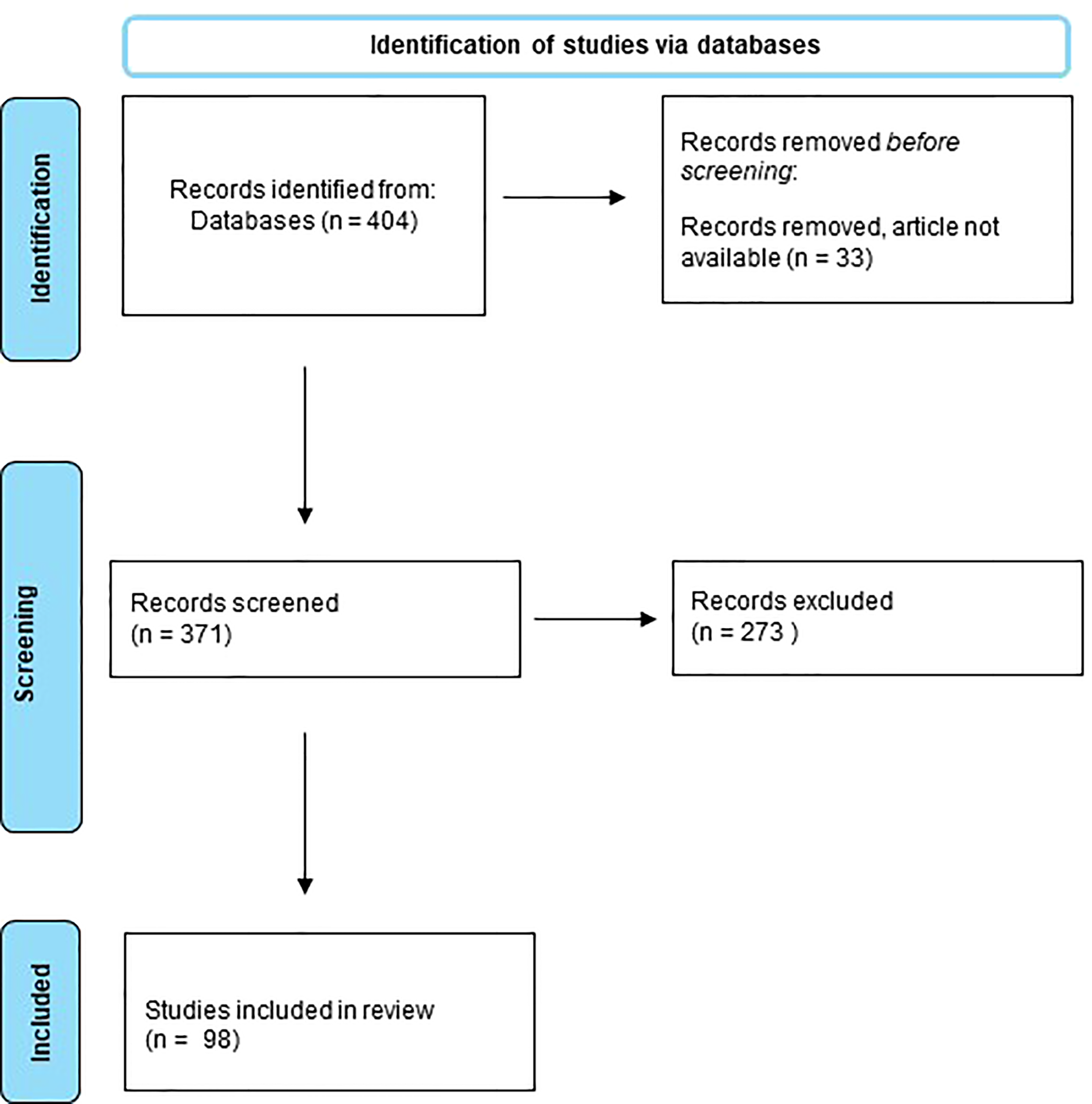
Screening process of the literature sample. Diagram of selection and eligibility criteria, including sample sizes, using the PRISMA model.
We will analyze the spatial distribution by region/continent of the selected articles, whenever possible (since there must be some articles that are more global), to infer about representativity regarding the input for the research from different areas and continents.
Four main criteria of research were defined: Governance, Ecotourism, Stakeholders involvement, and Economy, to code the studies regarding the inclusion of these criteria.
2.1 Governance (C1)
Governance consists of the interactions between structures, processes, and traditions, which determine how responsibilities are exercised, how decisions are taken, and how the views of citizens and interest groups (stakeholders) are integrated into the decision-making process.
The concept of marine governance, mostly began to be elaborated during the second half of the 90’s of the last century, particularly during the UN 1998 International Year of the Oceans, where the issues of ocean governance and sustainability were a key stone of the report “The Ocean Our future” of the Independent World Commission on the Oceans (Independent World Commission on the Oceans, 1998). Following, Paquet developed one of the first theoretical concepts defining marine governance: “The governance of marine spaces is the management of stakeholder activities in these spaces. To optimize this management and to address stakeholder issues requires that effective governance frameworks be in place. Collaborative, cooperative, and integrative governance are improved frameworks for dealing with stakeholder issues. Traditional governance models have been based on a management science approach where the premise is that leadership of organizations (public, private or civic) is strong, and have good understanding of their environment (future trends, rules of the game, and the organization’s goals)” (Paquet, 1999).
Governance can also be defined as “the structural, institutional, ideological, and procedural umbrella under which development programs and management practices operate” (Bennett and Dearden, 2014), and it also determines “how and if the interaction between structures, processes, and institutions merges to solve social and environmental problems” (Plummer and Fennell, 2009).
Thus, the governance of MPAs is a determining factor for their success. Governance applies a systems’ perspective on MPAs, both as a “governing system” and as a “system-to be-governed”. In this studied we searched for information regarding the institutional and legal framework for the governance and management of MPA’s in the sample of articles.
2.2 Ecotourism in MPAs (C2)
Marine ecotourism is an important sector for the development of sustainable tourism, that considers environmental conservation efforts, by reducing environmental impacts and promoting the local communities’ needs and involvement (Eagles et al., 2002; Spenceley, 2017; Wiltshier et al., 2022). It is considered a growing and profitable sector. In the analyzed studies, we searched for the reference and examples of ecotourism in marine protected areas.
2.3 Stakeholder involvement in MPAs (C3)
Stakeholder engagement is vital for the success of MPAs. Stakeholder is essentially “any group or individual with a direct or indirect interest, or stake, in the resources of that the MPA has authority to manage. Stakeholders may include government agencies, non-governmental agencies (NGOs), local community groups, local communities, and other resource management agencies” (Walton et al., 2013). Stakeholder involvement is an ongoing process that intends to include the interested parties in the assessing, planning, and implementation of the MPA, and is widely known as an indicator of success for MPAs and marine conservation (Pomeroy and Douvere, 2008; Hoelting et al., 2013; Cárcamo et al., 2014). The concept of integrated frameworks involving stakeholders in a collaborative and cooperative approach of management made its path and reached the governance and management of protected areas. In the analyzed studies we searched for references or indications of active engagement of stakeholders in every stage of the development of MPAs.
2.4 Economy of MPAs (C4)
Ecological benefits can translate into economic benefits, and this includes market benefits (goods or services observed through a market transaction; example: the increase in tourism) and non-market benefits (not achieved by a market transaction; example: the benefit to people from knowing that a threatened species is protected). We searched for references or indications to the funding and economic benefits of MPAs.
The publications were coded to identify the defined criteria. The content of each publication was further analyzed to establish the clear presence of the defined criteria.
3 Results
Using the PRISMA model to filter documents obtained from the databases according to the eligibility criteria, we obtained 98 publications to analyze. Of these publications, 393 were in English, 8 were available in Spanish and 3 in Brazilian Portuguese, and no article was discarded based on the language.
Table 1 summarizes the characteristics identified for each of the 98 studies reviewed in terms of criteria compliance of particular interest in this review.
Table 1
Description of the literature sample based on the criteria (n= 98).
The table is organized by author(s) and year. Complete references are in Supplementary Table 1. Columns C1 to C4 correspond to the criteria used to analyze the literature sample. C1 – Governance in MPAs; C2 – Ecotourism in MPAs; C3- Stakeholder involvement in MPAs; and C4 – Economy or finances of MPAs. + indicates that the study satisfies the column category; - indicates that it does not; and +/- indicates that partially meets the criteria (some references about the topic, but not enough related to the main objectives of the criteria).
The distribution of the articles sample by Region (geographic continent) is shown in Figure 2, revealing that 19% of the analyzed studies were from Europe, 17% from South America, 12% from Asia,11% from Oceania, 11% from Africa, 10% from North America, 3% from Central America and 1% from Antarctica. There’s a 16% of studies labeled with “others” meaning that those articles were not confined to a specific continent, mostly being worldwide examples. The results show that there is a significant balance between the number of analyzed articles by region, only with Antarctica with a low representation, which was expected, given the fact that it is a continent with no permanent human inhabitants.
Figure 2
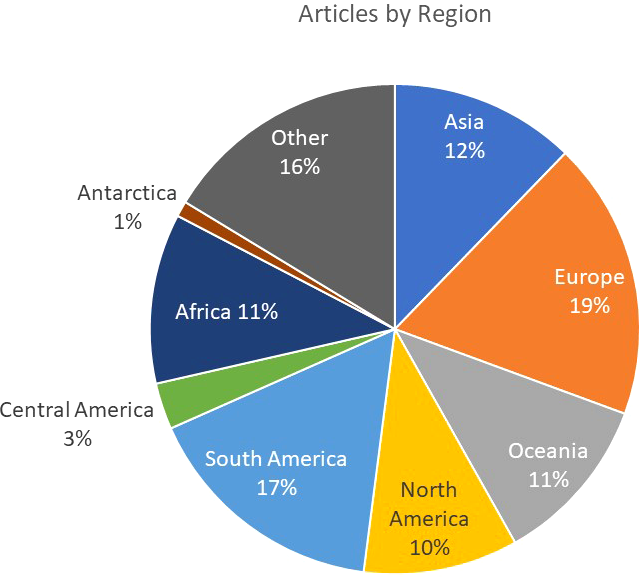
Distribution by region/continent of the articles sample.
The broader spectrum of our literature analysis is available in Figure 3, demonstrating that only a small percentage of studies fully includes the topics of the defined criteria in spite of governance being essential for MPA effectiveness. Criteria C1 (governance) is completely included in only 16 studies of the universe among the 98 analyzed.
Figure 3
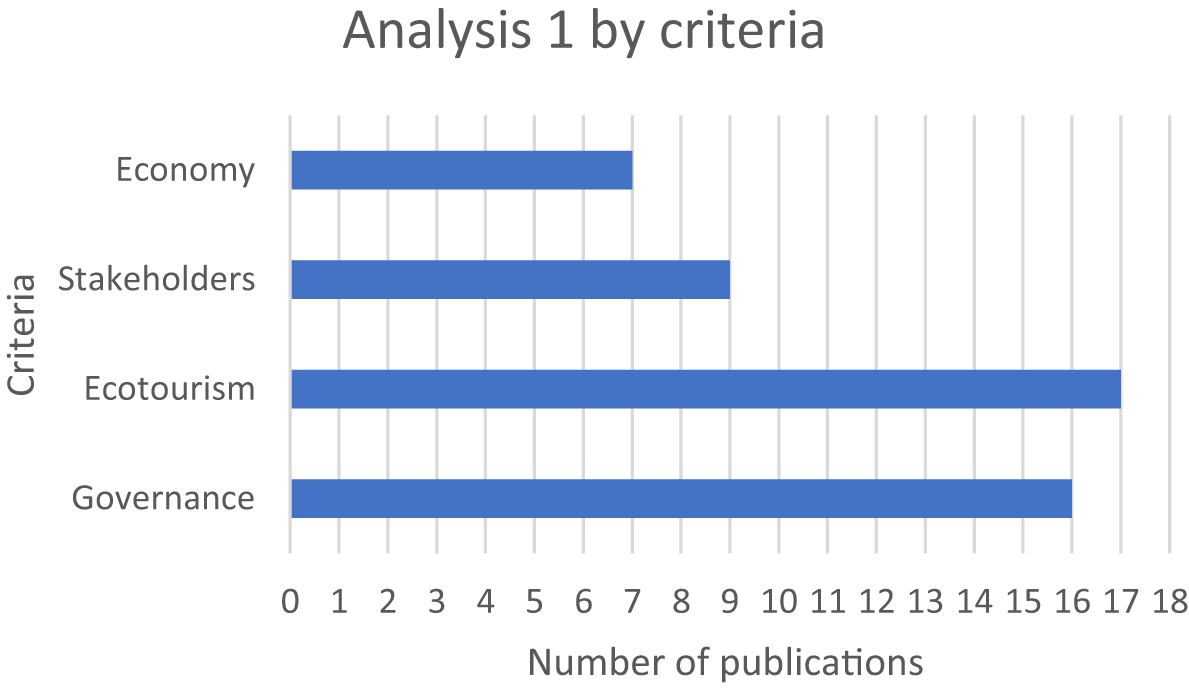
Number of publications in which the articles fully meet the criteria.
Regarding governance, most studies identify as a major challenge the complexity of governance structures, demanding institutional cooperation and collaboration to avoid overlaps, and most of them identified a top-bottom approach to governance in most MPAs, governed primarily by the state under a clear legal framework (Mackelworth et al., 2013; Qiu, 2013; Lucrezi et al., 2019; Pereira da Silva, 2019). Multilevel governance is also referred in some studies that support that a multilevel governance is necessary for good governance practice in MPAs (Zoppi, 2018). As an interpretive framework concerning intertwined relationships between different governmental levels (international, national, regional, local), non-governmental organizations and private enterprises and stakeholders, multilevel governance stands for the need of interactions at various levels and the need for cooperation and participation (Bache, 2010). Multilevel governance processes are particularly important, regarding policies concerning economic and social cohesion and nature conservation, since they are intrinsically connected to mutual relationships between municipalities, provinces, regions and national states (Bache, 2010; Zoppi, 2018). For example, in Brazil, the governance of large scale marine protected areas is a challenge, since it requires good institutional collaboration and involves a wide range of agencies and shared accountability, which often lead to overlaps of roles (Pereira da Silva, 2019). In Croatia, in the Cres-Lošinj special marine reserve, it is possible to have an example of how governance made without the cooperation and involvement of local communities and local authorities, leads to unsuccess and unbalanced governance. A legal change made by the government in 2006, led to a discrepancy between the objectives of local development and the international commitments, which led to a proposed downgrading of the MPA (Mackelworth et al., 2013).
The analysis of the literature sample identified 17 studies that completely include the criteria C2 (ecotourism), with clear examples of ecotourism development in MPAs. Tourism is broadly known as a major economic driver for MPAs and their communities (Hunt and Vargas, 2018; Tyllianakis et al., 2019; Cisneros-Montemayor et al., 2020). Some of the activities developed in marine protected areas mentioned in the studies are diving, marine mammal observation and tours (whales, dolphins, turtles, sharks, etc.), recreational fishing, surfing, and beach based tourism (Kessel et al., 2017; Cisneros-Montemayor et al., 2020; Fernández-Llamazares et al., 2020). Some MPAs plans include cooperative management for the conservation and protection of their natural values, including the endorsement of activities that are aligned with objectives of the MPA, such as well-managed ecotourism (Lucrezi et al., 2019). The management plan of Ponta do Ouro Partial Marine Reserve, in Mozambique, endorses activities that are aligned with the objectives of the plan, such as ecotourism activities of scuba diving, shark diving, whale watching and others (Lucrezi et al., 2019).
Stakeholders’ involvement (criteria C3) is mostly recognized as an indicator of effectiveness and success of MPAs, but only nine of the analyzed studies openly indicated the direct involvement of stakeholders in the development, implementation, and management phases of MPAs. Some MPAs management plans detail stakeholder involvement in their governance schemes and in all phases of the implementation of a MPA (Lucrezi et al., 2019; Ullah et al., 2022). Most studies recognize that usually stakeholders are NGOs, local communities, local authorities, governmental agencies, tourism operators, fisheries operators, and scientists (Calado et al., 2012; Mackelworth et al., 2013; Ratsimbazafy et al., 2019).
Regarding the criteria C4, economy and finance of MPAs, only seven of the literature sample had some reference to economic values and finance of MPAs. Some studies identified that the most important ‘economic’ variables in MPAs are linked to fishing, shipping and aquaculture activities (Rodríguez-Rodríguez et al., 2015), and other studies clearly indicate that the development of tourism, mainly ecotourism, has in general changed and improved the livelihoods of the communities that live in the MPA, providing job opportunities and a significant increase in the annual income of local residents, as for example in the Sanya Coral Reef National Marine Reserve in China (Qiu, 2013; Kessel et al., 2017; Wiltshier et al., 2022). The application of tourist fees to MPAs is also generally mentioned as a way to finance MPAs (Gelcich et al., 2013; Batel et al., 2014).
Most studies ended up being assessed as “partially meet the defined criteria, since they have some references about the topic, but not enough related to the main objectives of the defined criteria” (Figure 4), since they were lacking essential information to fulfil the criteria; e.g. some might refer that governance is important, but they do not present the governance structures or frameworks (institutional and/or legal), not including ecotourism examples or products, stakeholder engagement was just briefly mentioned and not indicating specifically economic or financing information about MPAs.
Figure 4
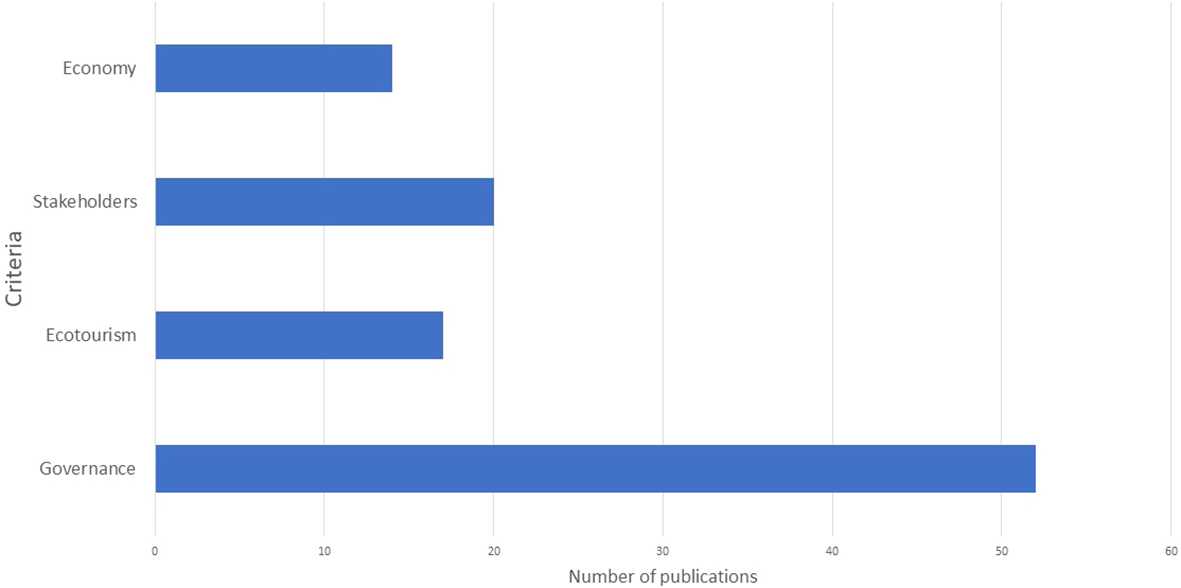
Number of publications in which the articles partially meet the defined criteria.
4 Discussion
The increased interest in oceans as vectors for strategic development, within the framework of the Ocean Science for Sustainable Development decade and in view of the global goals established by the Sustainable Development Goals (SDGs), particularly SDG 14 “Conserve and sustainably use the oceans, seas and marine resources for sustainable development”, makes it essential to value marine natural resources to achieve a sustainable future. The conservation of Biodiversity has potential direct economic benefits for many sectors of the economy, including tourism, which is why it is necessary to slow down the biodiversity loss of the recent decades, through valuing natural capital. In this context, ecotourism arises as an opportunity to reconcile nature conservation policies with the economic and social needs of the population. The marine protected areas are generally established with a firm understanding that their management will involve balancing the relationship between people and marine ecosystems (Pomeroy and Douvere, 2008; Lucrezi et al., 2019). Due to their elevated management costs, some MPAs are appealing to ecotourism to achieve some economical sustainability and to bring benefits for their local communities (Drumm, 2003; Balmford et al., 2004; Gabrié et al., 2012; BlueSeeds, 2020). Tourism is a major contributor for the economy of MPAs and their gateway communities, with a wide range of benefits (Spenceley, 2017; Wiltshier et al., 2022).
First, we find that ecotourism products in protected areas can help to integrate local communities and stakeholders (e.g. local guides, restaurants, NGOs, travel agencies, etc.), and when this integration is successful, it creates strong incentives for local communities for nature conservation, by linking economic benefits to healthy and well-managed protected areas (Drumm et al., 2016; Pham, 2020). Several of the studies analyzed identified ecotourism as an economic driver for MPAs and their communities. A practical example of valuing nature through ecotourism was the creation of the organization MEET, an EU organization (founded by IUCN-Med), which works as a consultant for the Protected Areas of the Mediterranean in the area of ecotourism ideals (Figueiredo, 2020). This network is constantly developing, continually including new protected areas in its program, and currently has 44 Protected Areas from 10 different Mediterranean countries. MEET ecotourism products rely on the creation of a local cluster, which includes at least one protected area, a tour operator and several local providers of tourist services (eg accommodation, recreation, transport, food, etc.). In addition, the purchase of a MEET product contributes to a conservation fund for the protected area involved and to the distribution of capital fairly to the surrounding communities (Drumm et al., 2016; Noll et al., 2019). MEET is a good example of how MPAs and ecotourism can benefit local communities and try to achieve an effective connection between tourism and conservation.
Second, we recognized that despite all the benefits, tourism can also have impacts on biodiversity and that’s why it is important that MPAs managers and tourist operators work together regarding ecotourism (Qiu, 2013; Silva, 2015; Spenceley, 2017; Hampton and Jeyacheya, 2020). There are also some negative impacts for the gateway communities such as the increased of the living cost in these major tourist areas (Wolf et al., 2019; Wiltshier et al., 2022). For example, in Fernando de Noronha, the application of high taxes to access the Island has increased and impacted the prices of goods and services (Wiltshier et al., 2022) and in Croatia, the increased of tourism boosted issues related to housing affordability since the prizes of rentals and real estate became too high for the residents (Mikulić et al., 2021).
Third, we find that MPA governance faces many challenges partially related to a complex institutional and legal framework, difficulties to adapt to changes, a wide range of stakeholders involved, and social-natural relations. Several studies identified that a fair and effective collaborative governance model can enhance positive socio-economic benefits to the community through ecotourism (Keyim, 2018; Forje and Tchamba, 2022). From the articles analyzed, most governance models when defined, do not consider the component of natural capital appreciation, and it makes it look as if governance and management models of MPA might not be in line with the product of ecotourism. Moreover, even though there was a global movement towards a new approach to the governance and management of protected areas, shifting from a centralized/state model to a model involving stakeholders and local communities, more adapted to the needs of the XXIst century (Phillips, 2003), most of the analyzed studies still identify a top-bottom, governed centered approach to governance models in MPAs (Qiu, 2013; Lucrezi et al., 2019). Ineffective governance leads to failure to deliver the estimated socioeconomical and environmental outcomes expected from MPAs (Hughes, 2011; Turner et al., 2016). More research into understanding the interconnection between MPA governance models and the ecotourism product is needed to better enhance the natural capital of these protected areas.
Fourth, we conclude that stakeholders’ involvement in the MPAs processes of planning and management is very important (Lucrezi et al., 2019), and usually referred in several of the studies, from all the regions. Stakeholders’ involvement creates an environment for exchange and interaction between different stakeholder groups, allowing early identification of potential conflicts and enabling collaborative problem solving. MPAs with active stakeholders tend to be more effective (Walton et al., 2013; Rodríguez-Rodríguez et al., 2015). The financial sustainability of MPAs is a challenge worldwide and a cornerstone to achieve effective management (Reid-Grant and Bhat, 2009; Thur, 2010).
Regarding the analysis by geographical region, we concluded that there was representativity regarding the input for the research from different areas and continents.
The concepts of participatory governance and management models are being subsequently adopted by IUCN as a way to make more effective the management of protected areas (Borrini-Feyerabend et al., 2013) but, at the same time, to help sustainable financing of protected areas, particularly by favoring economic activities compatible with nature conservation, such as ecotourism (Eagles et al., 2002; Emerton, 2006; Shiiba et al., 2022). These trends were particularly important in marine protected areas where marine ecotourism revealed to be critical, not only for economical revenue based on the natural assets, but also by involving local communities in the management process. Furthermore, marine ecotourism showed to be a keystone economic activity, particularly in small island development states (SIDS). For example, in Seychelles, a stakeholder driven process involving dive and boat operators, conservation organizations and governmental agencies instigated and enabled the sustainable use of whale sharks as an ecotourism resource (Rowat and Engelhardt, 2007).
This literature review aimed to understand the governance models that best enhance the relationship between ecotourism and a good management/effectiveness of MPAs, based on the enhancement of natural capital through ecotourism. A combination of good governance model, that brings stakeholders into the decision making process, can help ecotourism to boost the value of the natural capital of MPAs, without compromising their conservation values and priorities (Eagles et al., 2002; Borrini-Feyerabend et al., 2013; Long et al., 2021; Shiiba et al., 2022). The concept of sustainability stated in the sustainable development goal 14 (SDG 14) – Life Below Water, highlights the need to balance the three essential dimensions of sustainability – economic, social and environmental (Recuero Virto, 2018), with the first two pillars being somehow dependent on the environmental priorities (Scott Cato, 2009).There is no successful conservation without the involvement and support of local communities (Eagles et al., 2002), and to attain that goal, communities need to develop sources of income to compensate for economic restrictions that arise from the conservation goals of the MPAs. In this context, ecotourism appears as an excellent opportunity to improve the livelihoods of the communities whose income comes from these MPAs, through the creation of job opportunities (Qiu, 2013; Kessel et al., 2017; Wiltshier et al., 2022). We conclude that there is a knowledge gap regarding the enhancement of natural capital though ecotourism, and that governance models of MPAs might not be ready to fully support ecotourism has a booster of the sustainability of MPAs so, there is an opportunity for further development of research in this area.
Statements
Data availability statement
The original contributions presented in the study are included in the article/Supplementary Material. Further inquiries can be directed to the corresponding author.
Author contributions
DC wrote the manuscript. MV, JG, and AB provided guidance and feedback on data analysis, peer review and revised the manuscript. All authors contributed to the article and approved the submitted version.
Funding
DC benefits from a PhD scholarship from Fundo Regional da Ciência e Tecnologia (FCTR – Açores), with the reference M3.1.a/F/011/2021. This work is funded by National Funds through FCT - Foundation for Science and Technology under the project UIDB/50027/2020.
Conflict of interest
The authors declare that the research was conducted in the absence of any commercial or financial relationships that could be construed as a potential conflict of interest.
Publisher’s note
All claims expressed in this article are solely those of the authors and do not necessarily represent those of their affiliated organizations, or those of the publisher, the editors and the reviewers. Any product that may be evaluated in this article, or claim that may be made by its manufacturer, is not guaranteed or endorsed by the publisher.
Supplementary material
The Supplementary Material for this article can be found online at: https://www.frontiersin.org/articles/10.3389/fmars.2022.1002677/full#supplementary-material
Supplementary Table 1Description of the literature sample based on the criteria (n=98).
Supplementary Table 2References of literature sample (n=98).
Supplementary Table 3Search criteria for the databases.
References
1
Abbad K. Semroud R. Andreu-Boussut V. Bengoufa S. (2022). Underwater trail: A tool for an integrated management of marine protected areas in the Western Mediterranean basin. Reg. Stud. Mar. Sci.49, 102095. doi: 10.1016/j.rsma.2021.102095
2
Agardy T. Bridgewater P. Crosby M. P. Day J. Dayton P. K. Kenchington R. et al . (2003). Dangerous targets? unresolved issues and ideological clashes around marine protected areas. Aquat. Conserv. Mar. Freshw. Ecosyst.13, 353–367. doi: 10.1002/aqc.583
3
Afonso A. S. Fidelis L. L. Roque P. L. Galindo R. Dionisio W. Veras L. B. et al . (2019). Public support for conservation may decay with increasing residence time in suboptimal marine protected areas. Mar. Policy108, 103665. doi: 10.1016/j.marpol.2019.103665
4
Amengual J. Alvarez-Berastegui D. (2018). A critical evaluation of the aichi biodiversity target 11 and the Mediterranean MPA network, two years ahead of its deadline. Biol. Conserv.225, 187–196. doi: 10.1016/j.biocon.2018.06.032
5
Aswani S. Albert S. Love M. (2017). One size does not fit all: Critical insights for effective community-based resource management in Melanesia. Mar. Policy81, 381–391. doi: 10.1016/j.marpol.2017.03.041
6
Bache I. (2010). Europeanization and multi-level governance: EU cohesion policy and pre-accession aid in southeast Europe. J. Southeast Eur. Black Sea10, 1–12. doi: 10.1080/14683851003606739
7
Balmford A. Gravestock P. Hockley N. McClean C. J. Roberts C. M. (2004). The worldwide costs of marine protected areas. Proc. Natl. Acad. Sci. U. S. A.101, 9694–9697. doi: 10.1073/pnas.0403239101
8
Barragan-Paladines M. J. Chuenpagdee R. (2017). A step zero analysis of the Galapagos marine reserve. Coast. Manage.45, 339–359. doi: 10.1080/08920753.2017.1345606
9
Bax N. J. Cleary J. Donnelly B. Dunn D. C. Dunstan P. K. Fuller M. et al . (2016). Results of efforts by the convention on biological diversity to describe ecologically or biologically significant marine areas. Conserv. Biol.30, 571–581. doi: 10.1111/cobi.12649
10
Batel A. Basta J. Mackelworth P. (2014). Valuing visitor willingness to pay for marine conservation - the case of the proposed cres-lošinj marine protected area, Croatia. Ocean Coast. Manage.95, 72–80. doi: 10.1016/j.ocecoaman.2014.03.025
11
Bennett N. J. Dearden P. (2014). From measuring outcomes to providing inputs: Governance, management, and local development for more effective marine protected areas. Mar. Policy50, 96–110. doi: 10.1016/j.marpol.2014.05.005
12
Biggs D. Amar F. Valdebenito A. Gelcich S. (2016). Potential synergies between nature-based tourism and sustainable use of marine resources: Insights from dive tourism in territorial user rights for fisheries in Chile. PloS One11, 1–12. doi: 10.1371/journal.pone.0148862
13
Bhuiyan M. A. H. Siwar C. Ismail S. M. (2016). Sustainability measurement for ecotourism destination in Malaysia: A study on lake kenyir, terengganu. Soc Indic. Res.128, 1029–1045. doi: 10.1007/s11205-015-1068-5
14
BlueSeeds (2020). Financing mechanisms: A guide for Mediterranean marine protected areas. (Bordeaux, France: BlueSeeds, MAVA Foundation). doi: 10.1007/978-981-16-8252-0_8
15
Bond P. (2019). Blue economy threats, contradictions and resistances seen from south Africa. J. Polit. Ecol.26, 341–362. doi: 10.2458/v26i1.23504
16
Borrini-Feyerabend G. Dudley N. Jaeger T. Lassen B. Pathak Broome N. Phillips A. et al . (2013). Governance of protected areas: From understanding to action. Developing capacity protected planet.
17
Brouwer R. Brouwer S. Eleveld M. A. Verbraak M. Wagtendonk A. J. van der Woerd H. J. (2016). Public willingness to pay for alternative management regimes of remote marine protected areas in the north Sea. Mar. Policy68, 195–204. doi: 10.1016/j.marpol.2016.03.001
18
Buonocore E. Appolloni L. Russo G. F. Franzese P. P. (2020). Assessing natural capital value in marine ecosystems through an environmental accounting model: A case study in southern Italy. Ecol. Modell.419, 108958. doi: 10.1016/j.ecolmodel.2020.108958
19
Calado H. Bentz J. Ng K. Zivian A. Schaefer N. Pringle C. et al . (2012). NGO Involvement in marine spatial planning: A way forward? Mar. Policy36, 382–388. doi: 10.1016/j.marpol.2011.07.009
20
Carvache-Franco M. Segarra-Oña M. Carrascosa-López C. (2019). Segmentation and motivations in eco-tourism: The case of a coastal national park. Ocean Coast. Manage.178, 104812. doi: 10.1016/j.ocecoaman.2019.05.014
21
Cárcamo P. F. Garay-Flühmann R. Squeo F. A. Gaymer C. F. (2014). Using stakeholders’ perspective of ecosystem services and biodiversity features to plan a marine protected area. Environ. Sci. Policy40, 116–131. doi: 10.1016/j.envsci.2014.03.003
22
Cerveny L. K. Miller A. Gende S. (2020). Sustainable cruise tourism in marine world heritage sites. Sustain.12. doi: 10.3390/su12020611
23
Chen F. Lai M. Huang H. (2020). Can marine park become an ecotourism destination? evidence from stakeholders’ perceptions of the suitability. Ocean Coast. Manage.196, 105307. doi: 10.1016/j.ocecoaman.2020.105307
24
Cheng I. N. Y. Cheung L. T. O. Chow A. S. Y. Fok L. Cheang C. (2018). The roles interpretative programmes in supporting the sustainable operation of the nature-based activities. C. J. Clean. Prod.200, 380–389. doi: 10.1016/j.jclepro.2018.07.293
25
Cheung S. Y. Leung Y. F. Larson L. R. (2022). Citizen science as a tool for enhancing recreation research in protected areas: Applications and opportunities. J. Environ. Manage.305, 114353. doi: 10.1016/j.jenvman.2021.114353
26
Chimienti G. Stithou M. Mura I. D. Mastrototaro F. D’Onghia G. Tursi A. et al . (2017). An explorative assessment of the importance of mediterranean coralligenous habitat to local economy: The case of recreational diving. J. Environ. Account. Manage.5, 315–325. doi: 10.5890/jeam.2017.12.004
27
Cini F. Saayman M. (2013). Understanding visitors’ image of the oldest marine park in Africa. Curr. Issues Tour.16, 664–681. doi: 10.1080/13683500.2013.785481
28
Cisneros-Montemayor A. M. Moreno-Báez M. Voyer M. Allison E. H. Cheung W. W. L. Hessing-Lewis M. et al . (2019). Social equity and benefits as the nexus of a transformative blue economy: A sectoral review of implications. Mar. Policy109. doi: 10.1016/j.marpol.2019.103702
29
Cisneros-Montemayor A. M. Townsel A. Gonzales C. M. Haas A. R. Navarro-Holm E. E. Salorio-Zuñiga T. et al . (2020). Nature-based marine tourism in the gulf of California and Baja California peninsula: Economic benefits and key species. Nat. Resour. Forum44, 111–128. doi: 10.1111/1477-8947.12193
30
da Silva (2019). Brazilian large-scale marine protected areas: Other paper parks? doi: 10.1016/j.ocecoaman.2018.12.012
31
Davis K. J. Vianna G. M. S. Meeuwig J. J. Meekan M. G. (2019). And pannell, d Estimating the economic benefits and costs of highly-protected marine protected areas. J. Ecosphere10. doi: 10.1002/ecs2.2879
32
Drumm A. (2003). “Tourism-based revenue generation mechanisms,” in Tourism and protected areas: Benefits beyond boundaries (The Vth IUCN World Parks Congress). https://www.researchgate.net/publication/237484048_Tourism-Based_Revenue_Generation_Mechanisms.
33
Drumm A. Rodríguez A. Danelutti C. Santarossa L. (2016). Mediterranean Experience of ecotourism manual. a guide to discover the MEET approach. https://portals.iucn.org/library/node/46252.
34
Dube K. Nhamo G. (2021). Sustainable development goals localisation in the tourism sector: lessons from grootbos private nature reserve, south Africa. GeoJournal86, 2191–2208. doi: 10.1007/s10708-020-10182-8
35
Eagles P. F. J. McCool S. F. Haynes C. D. A. (2002). Sustainable tourism in protected areas: Guidelines for planning and management (IUCN, Gland, Switzerland, and Cambridge, UK: United Nations Environment Programme and the World Tourism Organization). doi: 10.1111/j.1755-3768.1951.tb07631.x
36
Emerton L. (2006). Sustainable financing of protected areas : a global review of challenges and options. doi: 10.2305/iucn.ch.2005.pag.13.en
37
Estradivari Agung M. F. Adhuri D. S. Ferse S. C. A. Sualia I. Andradi-Brown D. A. et al . (2022a). Marine conservation beyond MPAs: Towards the recognition of other effective area-based conservation measures (OECMs) in Indonesia. Mar. Policy137, 104939. doi: 10.1016/j.marpol.2021.104939
38
Estradivari A.-B. Amkieltiela D. A. Handayani C. N. Sjahruddin F. F. Agung M. F. et al . (2022b). Marine conservation in the sunda banda seascape, Indonesia. Mar. Policy138, 104994. doi: 10.1016/j.marpol.2022.104994
39
European Commission (2019). The European green deal. https://eur-lex.europa.eu/legal-content/EN/TXT/?uri=COM%3A2019%3A640%3AFIN.
40
European Commission (2020). EU Biodiversity strategy for 2030. https://eur-lex.europa.eu/legal-content/EN/TXT/?uri=CELEX:52011DC0244.
41
European Commission (2022). The EU blue economy report 2022 (Publications Office of the European Union). https://op.europa.eu/en/publication-detail/-/publication/156eecbd-d7eb-11ec-a95f-01aa75ed71a1.
42
Fache E. Breckwoldt A. (2018). Small-scale managed marine areas over time: Developments and challenges in a local Fijian reef fishery. J. Environ. Manage.220, 253–265. doi: 10.1016/j.jenvman.2018.05.029
43
Fernández-Llamazares Á. Fraixedas S. Brias-Guinart A. Terraube J. (2020). Principles for including conservation messaging in wildlife-based tourism. People Nat.2, 596–607. doi: 10.1002/pan3.10114
44
Figueiroa A. C. Brasil G. Pellin A. Scherer M. E. G. (2016). Evaluation of the integration effectiveness among the coastal marine federal protected areas of Santa catarina. Desenvolv. e Meio Ambient.38, 361–375. doi: 10.5380/dma.v38i0.46974
45
Figueiredo T. (2020). Viability assessment of a MEET ecotourism product around brijuni national park , Croatia. https://repositorio.ul.pt/handle/10451/45484?locale=en.
46
Forje G. W. Tchamba M. N. (2022). Ecotourism governance and protected areas sustainability in Cameroon: The case of campo ma’an national park. Curr. Res. Environ. Sustain4, 100172. doi: 10.1016/j.crsust.2022.100172
47
Gabrié C. Lagabrielle E. Bissery C. Crochelet E. Meola B. Webster C. et al . (2012). The status of marine protected areas in the Mediterranean Sea 2012.
48
Gairin E. Andréfouët S. (2020). Role of habitat definition on aichi target 11: Examples from new caledonian coral reefs. Mar. Policy116. doi: 10.1016/j.marpol.2020.103951
49
Gallacher J. Simmonds N. Fellowes H. Brown N. Gill N. Clark W. et al . (2016). Evaluating the success of a marine protected area: A systematic review approach. J. Environ. Manage.183, 280–293. doi: 10.1016/j.jenvman.2016.08.029
50
Galparsoro I. Borja Á. (2021). Defining cost-effective solutions in designing marine protected areas, using systematic conservation planning. Front. Mar. Sci.8. doi: 10.3389/fmars.2021.683271
51
Gardner C. J. Cripps G. Day L. P. Dewar K. Gough C. Peabody S. et al . (2020). A decade and a half of learning from madagascar’s first locally managed marine area. Conserv. Sci. Pract.2, 1–14. doi: 10.1111/csp2.298
52
Gelcich S. Amar F. Valdebenito A. Castilla J. C. Fernandez M. Godoy C. et al . (2013). Financing marine protected areas through visitor fees: Insights from tourists willingness to pay in Chile. Ambio42, 975–984. doi: 10.1007/s13280-013-0453-z
53
Giraldo A. Diazgranados M. C. Gutiérrez-Landázuri C. F. (2014). Isla gorgona, enclave estratégico para los esfuerzos de conservación en el pacífico oriental tropical. Rev. Biol. Trop.62, 1. doi: 10.15517/rbt.v62i0.15975
54
Gladun E. (2015). Environmental protection of the artic region: Effective mechanisms of legal regulation. Russ. Law J.3, 92–109. doi: 10.5539/jpl.v6n2p90
55
Gollier C. (2019). Valuation of natural capital under uncertain substitutability. J. Environ. Econ. Manage.94, 54–66. doi: 10.1016/j.jeem.2019.01.003
56
Gonzalez-Bernat M. J. Clifton J. (2017). “Living with our backs to the sea”: A critical analysis of marine and coastal governance in Guatemala. Mar. Policy81, 9–20. doi: 10.1016/j.marpol.2017.03.003
57
Gownaris N. J. Santora C. M. Davis J. B. Pikitch E. K. (2019). Gaps in protection of important ocean areas: A spatial meta-analysis of ten global mapping initiatives. Front. Mar. Sci.6. doi: 10.3389/fmars.2019.00650
58
Hampton M. P. Jeyacheya J. (2020). Tourism-dependent small islands, inclusive growth , and the blue economy. One Earth2, 8–10. doi: 10.1016/j.oneear.2019.12.017
59
Harris L. R. Holness S. D. Finke G. Amunyela M. Braby R. Coelho N. et al . (2022). Practical marine spatial management of ecologically or biologically significant marine areas: Emerging lessons from evidence-based planning and implementation in a developing-world context. Front. Mar. Sci.9. doi: 10.3389/fmars.2022.831678
60
Hillery M. Nancarrow B. Griffin G. Syme G. (2001). Tourist perception of environmental impact. Ann. Tour. Res.28, 853–867. doi: 10.1016/S0160-7383(01)00004-4
61
Hiriart-Bertrand L. Silva J. A. Gelcich S. (2020). Challenges and opportunities of implementing the marine and coastal areas for indigenous peoples policy in Chile. Ocean Coast. Manage.193, 105233. doi: 10.1016/j.ocecoaman.2020.105233
62
Hoelting K. R. Hard C. H. Christie P. Pollnac R. B. (2013). Factors affecting support for puget sound marine protected areas. Fish. Res.144, 48–59. doi: 10.1016/j.fishres.2012.10.006
63
Hooper T. Börger T. Langmead O. Marcone O. Rees S. E. Rendon O. et al . (2019). Applying the natural capital approach to decision making for the marine environment. Ecosyst. Serv.38, 100947. doi: 10.1016/j.ecoser.2019.100947
64
Hoyt E. (2005). Sustainable ecotourism on Atlantic islands, with special reference to whale watching, marine protected areas and sanctuaries for cetaceans. Biol. Environ.154, 141–154. doi: 10.3318/BIOE.2005.105.3.141
65
Hao H. Bin C. Jinlan L. (2015). The marine spatial classification and the identification of priority conservation areas (PCAs) for marine biodiversity conservation - a case study of the offshore China. Ocean Coast. Manage.116, 224–236. doi: 10.1016/j.ocecoaman.2015.06.027
66
Hughes K. A. Convey P. Turner J. (2021). Developing resilience to climate change impacts in Antarctica: An evaluation of Antarctic treaty system protected area policy. Environ. Sci. Policy124, 12–22. doi: 10.1016/j.envsci.2021.05.023
67
Hughes T. (2011). The future of marine governance. Solut. Sustain. desirable Futur.2. doi: 10.1073/pnas.0909335107
68
Hunt C. A. Vargas E. (2018). Turtles, ticos, and tourists: Protected areas and marine turtle conservation in Costa Rica. J. Park Recreat. Admi.36, 101–114. doi: 10.18666/jpra-2018-v36-i3-8820
69
Independent World Commission on the Oceans . (1998). The ocean: Our future. Available at: https://www.cambridge.org/core/books/ocean-our-future/FA4B2D9B3198A7CE43EC0DCD3B6D2C12.
70
Ison S. Hills J. Morris C. Stead S. M. (2018). Sustainable financing of a national marine protected area network in Fiji. Ocean Coast. Manage.163, 352–363. doi: 10.1016/j.ocecoaman.2018.07.011
71
Johnson D. Barrio Froján C. Bax N. Dunstan P. Woolley S. Halpin P. et al . (2019). The global ocean biodiversity initiative: Promoting scientific support for global ocean governance. Aquat. Conserv. Mar. Freshw. Ecosyst.29, 162–169. doi: 10.1002/aqc.3024
72
Katikiro R. E. Macusi E. D. Ashoka Deepananda K. H. M. (2015). Challenges facing local communities in Tanzania in realising locally-managed marine areas. Mar. Policy51, 220–229. doi: 10.1016/j.marpol.2014.08.004
73
Kawaka J. A. Samoilys M. A. Murunga M. Church J. Abunge C. Maina G. W. (2017). Developing locally managed marine areas: Lessons learnt from Kenya. Ocean Coast. Manage.135, 1–10. doi: 10.1016/j.ocecoaman.2016.10.013
74
Kessel S. T. Elamin N. A. Yurkowski D. J. Chekchak T. Walter R. P. Klaus R. et al . (2017). Conservation of reef manta rays (Manta alfredi) in a UNESCO world heritage site: Large-scale island development or sustainable tourism? PloS One12, 1–16. doi: 10.1371/journal.pone.0185419
75
Keyim P. (2018). Tourism collaborative governance and rural community development in Finland: The case of vuonislahti. J. Travel Res.57, 483–494. doi: 10.1177/0047287517701858
76
Kirkman S. P. Holness S. Harris L. R. Sink K. J. Lombard A. T. Kainge P. et al . (2019). Using systematic conservation planning to support marine spatial planning and achieve marine protection targets in the transboundary benguela ecosystem. Ocean Coast. Manage.168, 117–129. doi: 10.1016/j.ocecoaman.2018.10.038
77
Kurniawan F. Adrianto L. Bengen D. G. Prasetyo L. B. (2022). Hypothetical effects assessment of tourism on coastal water quality in the marine tourism park of the gili matra islands, Indonesia. Environ. Dev. Sustain. doi: 10.1007/s10668-022-02382-8
78
Kusumawati R. Visser L. E. (2014). Collaboration or contention? decentralised marine governance in berau. Anthropol. Forum24, 21–46. doi: 10.1080/00664677.2014.868783
79
Kyvelou S. S. I. Ierapetritis D. G. (2021). Fostering spatial efficiency in the marine space, in a socially sustainable way: Lessons learnt from a soft multi-use assessment in the mediterranean. Front. Mar. Sci.8. doi: 10.3389/fmars.2021.613721
80
Lai S. Leone F. (2020). To what extent is integration pursued in compulsory planning tools concerning coastal and marine areas? evidences from two Mediterranean protected areas. Land Use Policy99, 104859. doi: 10.1016/j.landusepol.2020.104859
81
Laulhe P. Caetano D. Ventura M. A. (2012). Good practices guide for recreational activities in protected areas. são Miguel island: terrestrial part. https://www.researchgate.net/publication/259018443_Good_Practices_Guide_for_Recreational_Activities_in_Protected_Areas_Sao_Miguel_Island_Terrestrial_Part.
82
Lemelin R. H. Dawson J. (2014). Great expectations: Examining the designation effect of marine protected areas in coastal Arctic and sub-Arctic communities in Canada. Can. Geogr.58, 217–232. doi: 10.1111/j.1541-0064.2013.12059.x
83
Li Y. Fluharty D. L. (2017). Marine protected area networks in China: Challenges and prospects. Mar. Policy85, 8–16. doi: 10.1016/j.marpol.2017.08.001
84
Lima A. L. R. Zapelini C. Schiavetti A. (2021). Governance of marine protected areas of the royal Charlotte bank, bahia, east coast of Brazil. Ocean Coast. Manage.207. doi: 10.1016/j.ocecoaman.2021.105615
85
Llausàs A. Vila-Subirós J. Pueyo-Ros J. Fraguell R. M. (2019). Carrying capacity as a tourism management strategy in a marine protected area: A political ecology analysis. Conserv. Soc17, 366–376. doi: 10.4103/cs.cs_18_154
86
Long S. Thurlow G. Jones P. J. S. Turner A. Randrianantenaina S. M. Gammage T. et al . (2021). Critical analysis of the governance of the sainte Luce locally managed marine area (LMMA), southeast Madagascar. Mar. Policy127, 103691. doi: 10.1016/j.marpol.2019.103691
87
Lucrezi S. Esfehani M. H. Ferretti E. Cerrano C. (2019). The effects of stakeholder education and capacity building in marine protected areas: A case study from southern Mozambique. Mar. Policy108, 103645. doi: 10.1016/j.marpol.2019.103645
88
Mackelworth P. Holcer D. Fortuna C. M. (2013). Unbalanced governance: The cres-lošinj special marine reserve, a missed conservation opportunity. Mar. Policy41, 126–133. doi: 10.1016/j.marpol.2012.12.017
89
MacKinnon D. Lemieux C. J. Beazley K. Woodley S. Helie R. Perron J. et al . (2015). Canada And aichi biodiversity target 11: understanding ‘other effective area-based conservation measures’ in the context of the broader target. Biodivers. Conserv.24, 3559–3581. doi: 10.1007/s10531-015-1018-1
90
Maretti C. C. Leão A. R. Prates A. P. Simões E. Silva R. B. A. Ribeiro K. T. et al . (2019). Marine and coastal protected and conserved areas strategy in Brazil: Context, lessons, challenges, finance, participation, new management models, and first results. Aquat. Conserv. Mar. Freshw. Ecosyst.29, 44–70. doi: 10.1002/aqc.3169
91
McKinley E. Aller-Rojas O. Hattam C. Germond-Duret C. San Martín I. V. Hopkins C. R. et al . (2019). Charting the course for a blue economy in Peru: a research agenda. Environ. Dev. Sustain.21, 2253–2275. doi: 10.1007/s10668-018-0133-z
92
Mikulić J. Vizek M. Stojčić N. Payne J. E. Čeh Časni A. Barbić T. (2021). The effect of tourism activity on housing affordability. Ann. Tour. Res.90. doi: 10.1016/j.annals.2021.103264
93
Mills M. Jupiter S. D. Pressey R. L. Ban N. C. Comley J. (2011). Incorporating effectiveness of community-based management in a national marine gap analysis for Fiji. Conserv. Biol.25, 1155–1164. doi: 10.1111/j.1523-1739.2011.01749.x
94
Moher D. Liberati A. Tetzlaff J. Altman D. G. (2009). Preferred reporting items for systematic reviews and meta-analyses: The PRISMA statement. BMJ339, 332–336. doi: 10.1136/bmj.b2535
95
Moniz A. I. A. Hill M. M. Silva J. A. (2009). Measuring the quality of tourist experience: the case study of Azores. Estud. Reg.1–15.
96
Morzaria-Luna H. Turk-Boyer P. Polanco-Mizquez E. I. Downton-Hoffmann C. Cruz-Piñón G. Carrillo-Lammens T. et al . (2020). Coastal and marine spatial planning in the northern gulf of California, Mexico: Consolidating stewardship, property rights, and enforcement for ecosystem-based fisheries management. Ocean Coast. Manage.197. doi: 10.1016/j.ocecoaman.2020.105316
97
Mosammam H. M. Sarrafi M. Nia J. T. Heidari S. (2016). Typology of the ecotourism development approach and an evaluation from the sustainability view: The case of mazandaran province, Iran. Tour. Manage. Perspect.18, 168–178. doi: 10.1016/j.tmp.2016.03.004
98
Murphy S. E. Campbell I. Drew J. A. (2018). Examination of tourists’ willingness to pay under different conservation scenarios; evidence from reef manta ray snorkeling in Fiji. PloS One13, 1–15. doi: 10.1371/journal.pone.0198279
99
Navarro-Martínez Z. M. Crespo C. M. Hernández-Fernández L. Ferro-Azcona H. González-Díaz S. P. McLaughlin R. et al (2020). Using SWOT analysis to support biodiversity and sustainable tourism in caguanes national park, Cuba. J. Ocean Coast. Manage.193. doi: 10.1016/j.ocecoaman.2020.105188
100
Nicoll R. Vick C. Laffoley D. Hajduk T. Zuccarino-Crowe C. Bianco M. et al . (2016). MPAs, aquatic conservation and connecting people to nature. Aquat. Conserv. Mar. Freshw. Ecosyst.26, 142–164. doi: 10.1002/aqc.2678
101
Noble M. M. Harasti D. Pittock J. Doran B. (2019). Understanding the spatial diversity of social uses, dynamics, and conflicts in marine spatial planning. J. Environ. Manage.246, 929–940. doi: 10.1016/j.jenvman.2019.06.048
102
Noll D. Scott A. Danelutti C. Sampson J. Galli A. Mancini S. et al . (2019). A guide to plan and promote ecotourism activities and measure their impacts in Mediterranean protected areas following the MEET approach (DestiMED project, Interreg Med Programme). Available at: https://wwfeu.awsassets.panda.org/downloads/destimed_guide_2019.pdf?362672/A-guide-to-plan-and-promote-ecotourism-activities-and-measure-their-impacts-in-Mediterranean-Protected-Areas-following-the-MEET-approach&362672/A-guide-to-plan-and-promote-ecotourism-activities-and-measure-their-impacts-in-Mediterranean-Protected-Areas-following-the-MEET-approach&362672/A-guide-to-plan-and-promote-ecotourism-activities-and-measure-their-impacts-in-Mediterranean-Protected-Areas-following-the-MEET-approach.
103
Padash A. Jozi S. A. Nabavi S. M. B. Dehzad B. (2016). Stepwise strategic environmental management in marine protected area. Glob. J. Environ. Sci. Manage.2, 49–60. doi: 10.7508/gjesm.2016.01.006
104
Paquet G. (1999). Governance through social learning (Ottawa: University of Ottawa Press).
105
Patrizzi N. S. Dobrovolski R. (2018). Integrating climate change and human impacts into marine spatial planning: A case study of threatened starfish species in Brazil. Ocean Coast. Manage.161, 177–188. doi: 10.1016/j.ocecoaman.2018.05.003
106
Pereira da Silva A. (2019). Brazilian Large-scale marine protected areas: Other “paper parks”? Ocean Coast. Manage.169, 104–112. doi: 10.1016/j.ocecoaman.2018.12.012
107
Perera-Valderrama S. Cerdeira-Estrada S. Martell-Dubois R. de la Cruz L. R. Caballero-Aragón H. Valdez-Chavarin J. et al . (2020). A new long-term marine biodiversity monitoring program for the knowledge and management in marine protected areas of the Mexican Caribbean. Sustain.12. doi: 10.3390/SU12187814
108
Pham T. T. T. (2020). Tourism in marine protected areas: Can it be considered as an alternative livelihood for local communities? Mar. Policy115, 103891. doi: 10.1016/j.marpol.2020.103891
109
Phillips A. (2003). Turning ideas on their head: The new paradigm for protected areas. George Wright Forum.49, 8–32.
110
Plummer R. Fennell D. A. (2009). Managing protected areas for sustainable tourism: Prospects for adaptive co-management. J. Sustain. Tour.17, 149–168. doi: 10.1080/09669580802359301
111
Pomeroy R. Douvere F. (2008). The engagement of stakeholders in the marine spatial planning process. Mar. Policy32, 816–822. doi: 10.1016/j.marpol.2008.03.017
112
Qiu W. (2013). The sanya coral reef national marine nature reserve, China: A governance analysis. Mar. Policy41, 50–56. doi: 10.1016/j.marpol.2012.12.030
113
Queiroz R. E. Guerreiro J. Ventura M. A. (2014). Demand of the tourists visiting protected areas in small oceanic islands: the Azores case-study. Environ. Dev. Sustain.16, 1119–1135. doi: 10.1007/s10668-014-9516-y
114
Quintana A. C. E. Giron-Nava A. Urmy S. Cramer A. N. Domínguez-Sánchez S. Rodríguez-Van Dyck S. et al . (2021). Positive social-ecological feedbacks in community-based conservation. Front. Mar. Sci.8. doi: 10.3389/fmars.2021.652318
115
Ratsimbazafy H. Lavitra T. Kochzius M. Hugé J. (2019). Emergence and diversity of marine protected areas in Madagascar. Mar. Policy105, 91–108. doi: 10.1016/j.marpol.2019.03.008
116
Recuero Virto L. (2018). A preliminary assessment of the indicators for sustainable development goal (SDG) 14 “Conserve and sustainably use the oceans, seas and marine resources for sustainable development.”Mar. Policy98, 47–57. doi: 10.1016/j.marpol.2018.08.036
117
Rees S. E. Foster N. L. Langmead O. Pittman S. Johnson D. E. (2018). Defining the qualitative elements of aichi biodiversity target 11 with regard to the marine and coastal environment in order to strengthen global efforts for marine biodiversity conservation outlined in the united nations sustainable development goal 14. Mar. Policy93, 241–250. doi: 10.1016/j.marpol.2017.05.016
118
Reid-Grant K. Bhat M. G. (2009). Financing marine protected areas in Jamaica: An exploratory study. Mar. Policy33, 128–136. doi: 10.1016/j.marpol.2008.05.004
119
Robb C. K. Bodtker K. M. Wright K. (2015). Marine protected areas in the Canadian pacific: Do they fulfill network criteria? Coast. Manage.43, 253–269. doi: 10.1080/08920753.2015.1030306
120
Rodríguez-Rodríguez D. Rees S. E. Rodwell L. D. Attrill M. J. (2015). Assessing the socioeconomic effects of multiple-use MPAs in a European setting: A national stakeholders’ perspective. Environ. Sci. Policy48, 115–127. doi: 10.1016/j.envsci.2014.12.020
121
Rodríguez-Rodríguez D. Rees S. E. Rodwell L. D. Attrill M. J. (2015). Assessing the socioeconomic effects of multiple-use MPAs in a European setting: A national stakeholders’ perspective. Environ. Sci. Policy48, 115–127. doi: 10.1016/j.envsci.2014.12.020
122
Rodríguez-Rodríguez D. Rodríguez J. Abdul Malak D. Nastasi A. Hernández P. (2016b). Marine protected areas and fisheries restricted areas in the Mediterranean: Assessing “actual” marine biodiversity protection coverage at multiple scales. Mar. Policy64, 24–30. doi: 10.1016/j.marpol.2015.11.006
123
Rodríguez-Rodríguez D. Rodríguez J. Abdul Malak D. (2016a). Development and testing of a new framework for rapidly assessing legal and managerial protection afforded by marine protected areas: Mediterranean Sea case study. J. Environ. Manage.167, 29–37. doi: 10.1016/j.jenvman.2015.11.016
124
Ross S. Wall G. (1999). Ecotourism: Towards congruence between theory and practice. Tour. Manage.20, 123–132. doi: 10.1016/S0261-5177(98)00098-3
125
Rowat D. Engelhardt U. (2007). Seychelles: A case study of community involvement in the development of whale shark ecotourism and its socio-economic impact. Fish. Res.84, 109–113. doi: 10.1016/j.fishres.2006.11.018
126
Frazão Santos C. Agardy T. Andrade F. Crowder L. B. Ehler C. N. Orbach M. K. (2021). Major challenges in developing marine spatial planning. Mar. Policy132. doi: 10.1016/j.marpol.2018.08.032
127
Scheske C. Arroyo Rodriguez M. Buttazzoni J. E. Strong-Cvetich N. Gelcich S. Monteferri B. et al . (2019). Surfing and marine conservation: Exploring surf-break protection as IUCN protected area categories and other effective area-based conservation measures. Aquat. Conserv. Mar. Freshw. Ecosyst.29, 195–211. doi: 10.1002/aqc.3054
128
Scheyvens R. Momsen J. H. (2008). Tourism and poverty reduction: Issues for small island states. Tour. Geogr.10, 22–41. doi: 10.1080/14616680701825115
129
Schiavetti A. Manz J. Zapelini dos Santos C. Magro T. C. Pagani M. I. (2013). Marine protected areas in Brazil: An ecological approach regarding the large marine ecosystems. Ocean Coast. Manage.76, 96–104. doi: 10.1016/j.ocecoaman.2013.02.003
130
Schoning L. (2021). The contribution of integrated marine policies to marine environmental Protection : The case of Norway this article investigates the contribution of the Norwegian integrated marine management ( IMM ) plans to marine environmental protection and conservati. Int. J. Mar. Coast. Law36, 263–293. doi: 10.1163/15718085-BJA10048
131
Schram C. Ladell K. Mitchell J. Chute C. (2019). From one to ten: Canada’s approach to achieving marine conservation targets. Aquat. Conserv. Mar. Freshw. Ecosyst.29, 170–180. doi: 10.1002/aqc.3133
132
Sciberras M. Jenkins S. R. Mant R. Kaiser M. J. Hawkins S. J. Pullin A. S. (2015). Evaluating the relative conservation value of fully and partially protected marine areas. Fish Fish.16, 58–77. doi: 10.1111/faf.12044
133
Scott Cato M. (2009). Green economics - an introduction to theory, policy and practice (Routledge). doi: 10.1177/002795019113500104
134
Scully-Engelmeyer K. M. Granek E. F. Nielsen-Pincus M. Brown G. (2021). Participatory GIS mapping highlights indirect use and existence values of coastal resources and marine conservation areas. Ecosyst. Serv.50, 101301. doi: 10.1016/j.ecoser.2021.101301
135
Seetanah B. (2011). Assessing the dynamic economic impact of tourism for island economies. Ann. Tour. Res.38, 291–308. doi: 10.1016/j.annals.2010.08.009
136
Shiiba N. Wu H. H. Huang M. C. Tanaka H. (2022). How blue financing can sustain ocean conservation and development: A proposed conceptual framework for blue financing mechanism. Mar. Policy139, 104575. doi: 10.1016/j.marpol.2021.104575
137
Silva L. (2015). How ecotourism works at the community-level: the case of whale-watching in the Azores. Curr. Issues Tour.18, 196–211. doi: 10.1080/13683500.2013.786027
138
Smallhorn-West P. F. Stone K. Ceccarelli D. M. Malimali S. Halafihi T. Bridge T. C. L. et al . (2020). Community management yields positive impacts for coastal fisheries resources and biodiversity conservation. Conserv. Lett.13, 1–12. doi: 10.1111/conl.12755
139
Spenceley A. (2017). Tourism and protected areas: Comparing the 2003 and 2014 IUCN world parks congress. Tour. Hosp. Res.17, 8–23. doi: 10.1177/1467358415612515
140
Steinfurth A. Oppel S. Dias M. P. Starnes T. Pearmain E. J. Dilley B. J. et al . (2020). Important marine areas for the conservation of northern rockhopper penguins within the Tristan da cunha exclusive economic zone. Endanger. Species Res.43, 409–420. doi: 10.3354/ESR01076
141
Strickland-Munro J. Kobryn H. Brown G. Moore S. A. (2016). Marine spatial planning for the future: Using public participation GIS (PPGIS) to inform the human dimension for large marine parks. Mar. Policy73, 15–26. doi: 10.1016/j.marpol.2016.07.011
142
Stronza A. L. Hunt C. A. Fitzgerald L. A. (2019). Ecotourism for conservation? Annu. Rev. Environ. Resour. doi: 10.1146/annurev-environ-101718-033046.
143
Syakur A. Wibowo J. T. Firmansyah F. Azam I. Linkie M. (2012). Ensuring local stakeholder support for marine conservation: Establishing a locally-managed marine area network in aceh. Oryx46, 516–524. doi: 10.1017/S0030605312000166
144
Nur Syamsi M. Lee J. H. (2021). A longitudinal study of the local community perspective on ecotourism development in lombok, indonesia. H. Water (Switzerland)13. doi: 10.3390/w13172398
145
Teh L. C. L. Teh L. S. L. Pitcher T. J. (2012). A tool for site prioritisation of marine protected areas under data poor conditions. Mar. Policy36, 1290–1300. doi: 10.1016/j.marpol.2012.04.010
146
Thur S. M. (2010). User fees as sustainable financing mechanisms for marine protected areas: An application to the bonaire national marine park. Mar. Policy34, 63–69. doi: 10.1016/j.marpol.2009.04.008
147
Turner R. A. Addison J. Arias A. Bergseth B. J. Marshall N. A. Morrison T. H. et al . (2016). Trust, confidence, and equity affect the legitimacy of natural resource governance. Ecol. Soc21. doi: 10.5751/ES-08542-210318
148
Tyllianakis E. Grilli G. Gibson D. Ferrini S. Conejo-Watt H. Luisetti T. (2019). Policy options to achieve culturally-aware and environmentally-sustainable tourism in Fiji. Mar. Pollut. Bull.148, 107–115. doi: 10.1016/j.marpolbul.2019.07.031
149
Ullah Z. Wu W. Wang X. H. Pervez R. Ahmed A. Baloch A. (2022). Improving coastal and marine resources management through a co-management approach: A case study of Pakistan. Environ. Res. Commun.4. doi: 10.1088/2515-7620/ac5088
150
UNOC (2022) in Political Declaration UNOC_2022, 2003–2005.
151
Vieira J. Santos C. Silva F. Lopes F. (2018). When watching replaces hunting: An analysis of customer participation and satisfaction with cetacean-watching in the Azores. Ocean Coast. Manage.160, 86–92. doi: 10.1016/j.ocecoaman.2018.04.008
152
Vilar C. C. Magris R. A. Loyola R. Joyeux J. C. (2020). Strengthening the synergies among global biodiversity targets to reconcile conservation and socio-economic demands. Aquat. Conserv. Mar. Freshw. Ecosyst.30, 497–513. doi: 10.1002/aqc.3269
153
Virtanen E. A. Viitasalo M. Lappalainen J. Moilanen A. (2018). Evaluation, gap analysis, and potential expansion of the Finnish marine protected area network. Front. Mar. Sci.9. doi: 10.3389/fmars.2018.00402
154
Walton A. Marina G. Di Carlo G. (2013). Stakeholder engagement. participatory approaches for the planning and development of marine protected areas (World Wide Fund for Nature and NOAA —National Marine Sanctuary Program), 32. Available at: http://awsassets.panda.org/downloads/stakeholder_engagement.pdf.
155
Watson M. S. Hewson S. (2018). Securing protection standards for canada’s marine protected areas. M. Mar. Policy95, 117–122. doi: 10.1016/j.marpol.2018.07.002
156
Wiltshier P. Basil J. Iv R. (2022). Tourism transformations in protected area gateway communities. Available at: https://www.cabidigitallibrary.org/doi/10.1079/9781789249033.0000.
157
Wolf I. D. Croft D. B. Green R. J. (2019). Nature conservation and nature-based tourism: A paradox? Environ. - MDPI6. doi: 10.3390/environments6090104
158
Zoppi C. (2018). Integration of conservation measures concerning natura 2000 sites into marine protected areas regulations: A study related to Sardinia. Sustain10. doi: 10.3390/su10103460
159
Zorondo-Rodríguez F. Díaz M. Simonetti-Grez G. Simonetti J. A. (2019). Why would new protected areas be accepted or rejected by the public?: lessons from an ex-ante evaluation of the new Patagonia park network in Chile. Land Use Policy89, 104248. doi: 10.1016/j.landusepol.2019.104248
Summary
Keywords
Marine Protected Areas, blue economy, ecotourism, conservation, sustainability, governance
Citation
Casimiro D, Ventura MA, Botelho AZ and Guerreiro J (2023) Ecotourism in Marine Protected Areas as a tool to valuate natural capital and enhance good marine governance: A review. Front. Mar. Sci. 9:1002677. doi: 10.3389/fmars.2022.1002677
Received
25 July 2022
Accepted
19 December 2022
Published
24 February 2023
Volume
9 - 2022
Edited by
Lewis T. O. Cheung, The Education University of Hong Kong, Hong Kong SAR, China
Reviewed by
Javier García Sanabria, University of Cádiz, Spain; Amin Setyo Leksono, University of Brawijaya, Indonesia; Harsuko Riniwati, University of Brawijaya, Indonesia
Updates
Copyright
© 2023 Casimiro, Ventura, Botelho and Guerreiro.
This is an open-access article distributed under the terms of the Creative Commons Attribution License (CC BY). The use, distribution or reproduction in other forums is permitted, provided the original author(s) and the copyright owner(s) are credited and that the original publication in this journal is cited, in accordance with accepted academic practice. No use, distribution or reproduction is permitted which does not comply with these terms.
*Correspondence: Daniela Casimiro, daniela.fm.casimiro@uac.pt
This article was submitted to Marine Affairs and Policy, a section of the journal Frontiers in Marine Science
Disclaimer
All claims expressed in this article are solely those of the authors and do not necessarily represent those of their affiliated organizations, or those of the publisher, the editors and the reviewers. Any product that may be evaluated in this article or claim that may be made by its manufacturer is not guaranteed or endorsed by the publisher.