Abstract
The Guishan Offshore Wind Farm is the first offshore wind power facility located within the habitat of Indo-Pacific humpback dolphins (Sousa chinensis) in Guangdong province of China. To assess the Indo-Pacific humpback dolphin’s response to wind farm construction, this study deployed a broadband passive acoustic monitoring system to investigate the acoustic behavior of humpback dolphins during pile driving activities. Results indicate that Indo-Pacific dolphins were acoustically detected at the wind farm site both pre-construction and during construction in an area previously identified to provide critical habitat to this population. However, temporal presence patterns differed compared to previous studies. While multiple environmental factors influence the habitat selection of Indo-Pacific dolphins, the result from this study confirmed that Indo-Pacific dolphins altered their occurrence following construction initiation. Pile driving exhibited a minor adverse effect on dolphin presence, though statistically insignificant. This persistence may stem from the area's ecological importance as a core habitat, compelling the dolphins to continue utilizing these waters despite construction disturbances. These findings enhance the understanding of marine engineering impacts on marine mammal habitat ecology and provide a scientific basis for formulating habitat conservation strategies and management measures.
1 Introduction
Offshore wind power, as an important form of renewable energy, has received increasing attention from many countries and regions in recent years, particularly due to its potential to address climate change impacts and promote sustainable development (Higgins and Foley, 2014; Soares-Ramos et al., 2020). Over the past decade, offshore wind energy technology has made tremendous progress, with advancements in the design, manufacturing, installation, and maintenance of wind turbines. These technological improvements have not only enhanced the electricity generation efficiency of wind power but also reduced construction and operational costs, making offshore wind projects increasingly economically competitive (Chen, 2011; Erlich et al., 2013). Additionally, offshore wind farms are typically located near densely populated coastal areas, facilitating energy transmission and further advancing offshore wind development. However, the development of offshore wind energy has also raised widespread concerns about marine ecological issues (Gill, 2005; Bailey et al., 2014; Galparsoro et al., 2022). Currently, offshore wind farms are categorized into two types: fixed-bottom and floating, with the majority of installed offshore turbines utilize fixed foundations (Rezaei et al., 2023). During construction, pile-driving noise poses the greatest threat to marine mammals, as high-intensity sound can cause direct mortality, hearing damage, or displacement from habitats (Dähne et al., 2013; Amaral et al., 2020). Moreover, increased vessel traffic increases collision risks and noise exposure for marine mammals (Bailey et al., 2014; Thompson et al., 2020; Benhemma-Le Gall et al., 2021). During operation, noise from both fixed-bottom and floating turbines, along with maintenance vessel activity, constitutes the primary impact on marine mammals. Although operational noise intensity is significantly lower, the long-term cumulative effects on marine animals require greater attention (Risch et al., 2024; Tougaard et al., 2020; Stöber and Thomsen, 2021).
The Guishan Offshore Wind Farm is one of China’s projects, located in the Pearl River Estuary (PRE) of the South China Sea. Approved in 2012, construction began late September 2016, and once completed, will provide a total capacity of 196 MW from 66 turbines covering 32.6 km2. The Guishan Offshore Wind Farm exemplifies the increasing number of projects overlapping important marine mammal habitat, as the farm is located within a core habitat of the Indo-Pacific humpback dolphin, Sousa chinensis (Chen et al., 2010; Wang et al., 2015; Man, 2017; Pine et al., 2017). The species ranges somewhere east of India to the Indo-Malay Archipelago, north to east Asia and south to northern Australia (Jefferson and Smith, 2016). As one of the world’s most severely human-impacted inshore cetaceans, the species is listed as Vulnerable by the IUCN (IUCN, 2018). The humpback dolphin population in focus in this study, is a resident group in the PRE, with an estimated size of approximately 2,500 individuals. Dolphins in this population exhibit relatively small home ranges (average 99.5 km2), ranging from 24 km2 to 304 km2 (Hung and Jefferson, 2004; Chen et al., 2010, 2011). As such, substantial interaction between these dolphins and the construction and operation of the Guishan Wind Farm is expected, raising public concern about potential negative impacts. These concerns are greater than in other parts of China because the PRE is the country’s busiest embayment and has already experienced dramatic development in recent years, including the construction of the Hong Kong–Macau–Zhuhai bridge, the Third Runway Project of Hong Kong International Airport, and extensive maintenance dredging by three of the world’s busiest ports. These dolphins are already facing habitat degradation, high volumes of marine traffic, pollutant accumulation, entanglement in fishing gear, and noise pollution (Karczmarski et al., 2016). As a consequence, the PRE population is declining at a rate of approximately 2.46% per year, which is projected to result in a 74% loss of the current population (approximately 2,500 individuals) over three generations (Huang et al., 2012).
Passive acoustics is an effective tool for assessing the impact of sound disturbances on vocalizing marine animals, as well as for evaluating the use of key habitats by marine mammals (Mellinger et al., 2007; Zimmer, 2011). Passive acoustics has also been widely applied in studies investigating the effects of offshore wind turbine pile driving on cetaceans (Carstensen et al., 2006; Thompson et al., 2010; Brandt et al., 2011; Dähne et al., 2013; Benhemma-Le et al., 2021; Fang et al., 2023; Holdman et al., 2023). This study investigated the temporal presence of Indo-Pacific humpback dolphins during the construction of the Guishan Offshore Wind Farm and assessed their response to pile-driving noise and construction-associated activities. The results are also relevant to the future management of offshore wind farm developments in or near humpback dolphin habitats in China and globally.
2 Materials and methods
2.1 Study site and recording system
The passive acoustic monitoring (PAM) station was deployed near the Guishan Offshore Wind Farm construction site. Specifically, it was located between Sanjiao and Chitan Islands, approximately 690 m from Sanjiao Island (Figure 1). Sanjiao Island lies 10.7 km east of Macau and 14.7 km west of Hong Kong’s Lantau Island. The waters around Sanjiao Island are a core foraging area for humpback dolphins (50% isopleths) in the PRE and, prior the construction of the Guishan Wind Farm, were less developed than other areas of the estuary (Man, 2017).
Figure 1
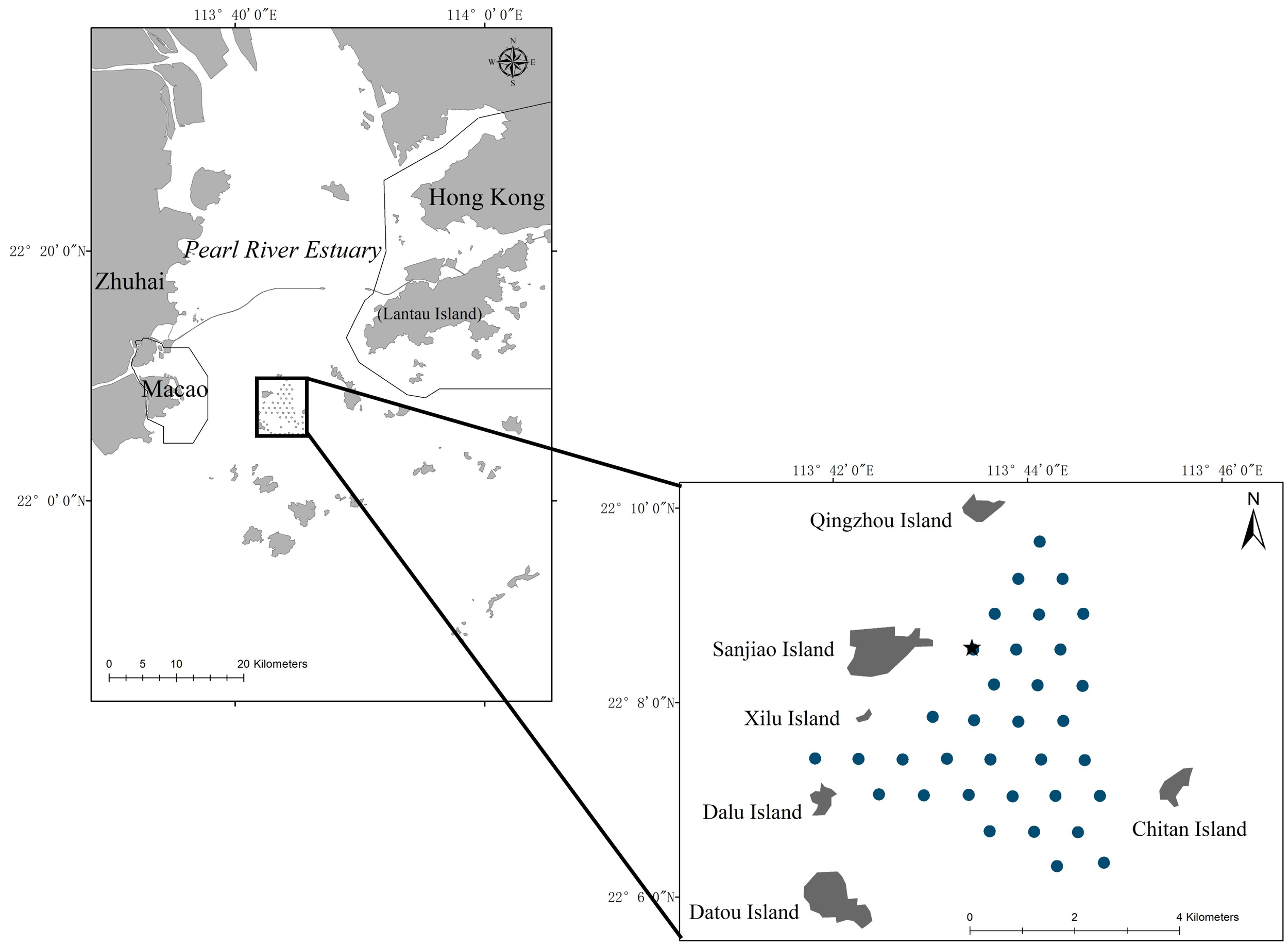
Map of location of the wind farm and passive acoustic listening station in the PRE (the turbine locations are presented by the blue circles and that the listening station is represented by the star).
To investigate the acoustic occurrence of humpback dolphins during wind farm construction, an autonomous passive acoustic recorder (SoundTrap HF 300 model) was moored 1 m above the seafloor on a 50-kg concrete platform, recording for 5 min per hour at a sample rate of 288 kHz. The SoundTrap recorder is a compact autonomous unit with a frequency range of 20 Hz to 150 kHz and 256 GB memory. The deployment duration depended on the unit’s battery and memory, as well as weather conditions, and lasted between 40 and 60 days. In this study, recordings were conducted from July 2016 to March 2017, covering the baseline and piling phases of wind farm construction.
2.2 Data collection and analysis
All acoustic data were manually examined using Adobe Audition 3.0, and automated detectors were not used upon due to the high background sound levels at the study site. Humpback dolphins are highly vocal, emitting whistles and echolocation clicks, which makes them easily identifiable in waveforms and spectrograms. In this study, only the presence of echolocation clicks (Figure 2A) was used to identify Indo-Pacific humpback dolphin occurrence. This was because (1) Indo-Pacific humpback dolphins are the only odontocete in the area that emit broadband echolocation clicks; (2) these dolphins rely heavily on echolocation to navigate a turbid environment and therefor echolocate frequently; and (3) whistles were sometimes masked by higher background noise levels, reducing their reliability. The identified click trains had a sufficient signal-to-noise ratio to be detected above background noise levels, even when the clicks were off-axis (a common occurrence given the bottom-mounted recorders).
Figure 2
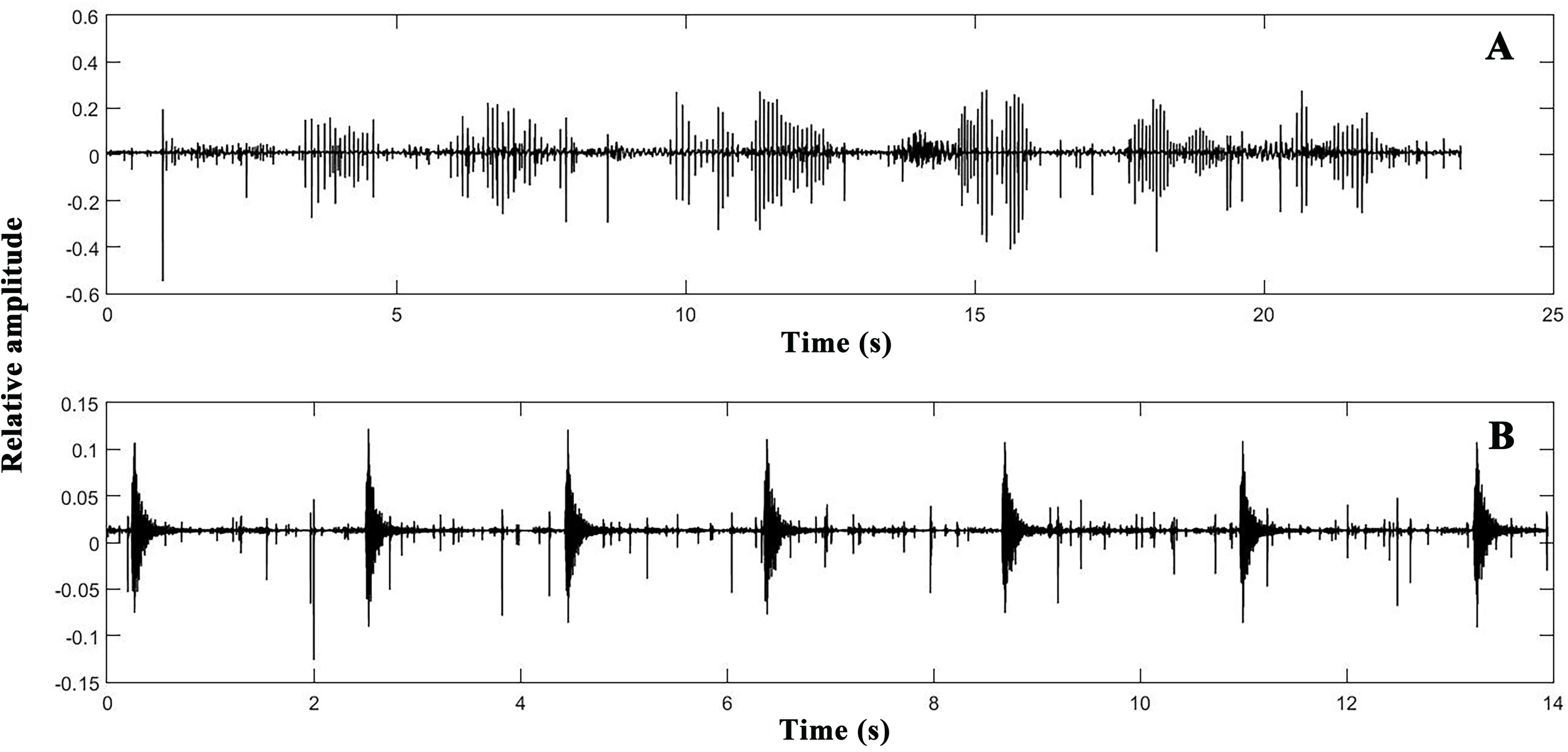
Example of the waveform of click train from Indo-Pacific humpback dolphin (A) and the pulses of pile driving (B).
To better understand the potential influence of offshore wind farm construction on the temporal presence of humpback dolphins, dolphin acoustic occurrences were quantified as hourly detection probabilities, defined as the total number of 5-min recordings containing echolocation click trains divided by the total number of recordings in a given month. Percussive pile driving was an important source of noise during wind farm construction and the most concerning in terms of its impacts on marine mammals. Pile driving noise was identified in the acoustic data manually by examining the waveform and spectrograms, and the waveform of pile driving in this study is presented in Figure 2B. Piling activity was quantified as a detection probability in each hour. The method used to calculate the hourly detection probability of pile driving was similar to that used for humpback dolphins. The hourly detection probability of pile driving was defined as the total number of recording hours (represented by the 5-min recording on the hour of every hour during a deployment) with pile driving activity detected, divided by the total number of recording hours in each month.
The received sound pressure level (SPL) of pile driving, recorded by the acoustic device, was expressed as a peak-to-peak SPL according to the following equation:
Where M is the hydrophone sensitivity of the acoustic equipment, Ppeak is the peak-to-peak sound pressure, and the reference P0 is 1 µPa. The SPL of each pile driving event (5-min resolution) was calculated by averaging the SPL of all impulsive signals within each 5-min file.
Finally, we quantified the waiting time, defined as the interval between the end of pile driving and the first detected acoustic occurrence of a humpback dolphin afterward. Waiting time serves as a bioacoustic metric for assessing anthropogenic noise-induced avoidance or displacement behavior in cetaceans, including those associated with offshore wind farm development. Difference in waiting time between the pre-construction and construction periods were tested using the Wilcoxon test for non-parametric paired samples.
3 Results
Acoustic data were collected between July 2016 and March 2017. An overview of the monthly acoustic monitoring days is presented in Table 1. The dataset, comprising 3,936 five-minute acoustic recordings, was manually analyzed for dolphin echolocation and pile driving activity. Of the 3,936 five-minute recordings, 554 contained dolphin detections, while pile driving activity was identified in 59. However, the persistent typhoon-induced severe weather in August 2016 prevented replacement of the acoustic recorder, resulting in missing data for that month.
Table 1
| Date (year-month) | Number of total five-minute files | Monitoring effort (number of recording days per month) | Dolphin acoustic detection | Pile driving detection |
|---|---|---|---|---|
| 2016-07 | 336 | 14 | 81 | 0 |
| 2016-08 | 0 | 0 | 0 | 0 |
| 2016-09 | 360 | 15 | 47 | 0 |
| 2016-10 | 192 | 8 | 23 | 7 |
| 2016-11 | 720 | 30 | 65 | 16 |
| 2016-12 | 384 | 16 | 32 | 0 |
| 2017-01 | 744 | 31 | 151 | 1 |
| 2017-02 | 456 | 19 | 83 | 10 |
| 2017-03 | 744 | 31 | 72 | 25 |
Overview of the passive acoustic monitoring recording dates and setting parameters before and during the construction of Guishan Offshore Wind Farm.
Initial pile driving activities were detected in October 2016, marking the start of construction operations that continued intermittently until March 2017, with no detections recorded in December 2016. Temporal clustering of pile driving events occurred in two primary phases: October–November 2016 and February–March 2017. Analysis revealed distinct temporal patterns in dolphin occurrence: pre-construction monitoring showed peak detection rates in July (24.1%), whereas during the active pile driving period, the maximum monthly detection frequency declined to 20.3% in January 2017 and reached a minimum of 8.3% in December 2016. A comparative visualization of monthly detection rates for dolphin presence and pile driving intensity is presented in Figure 3, highlighting the temporal overlap between construction activities and cetacean acoustic occurrence.
Figure 3
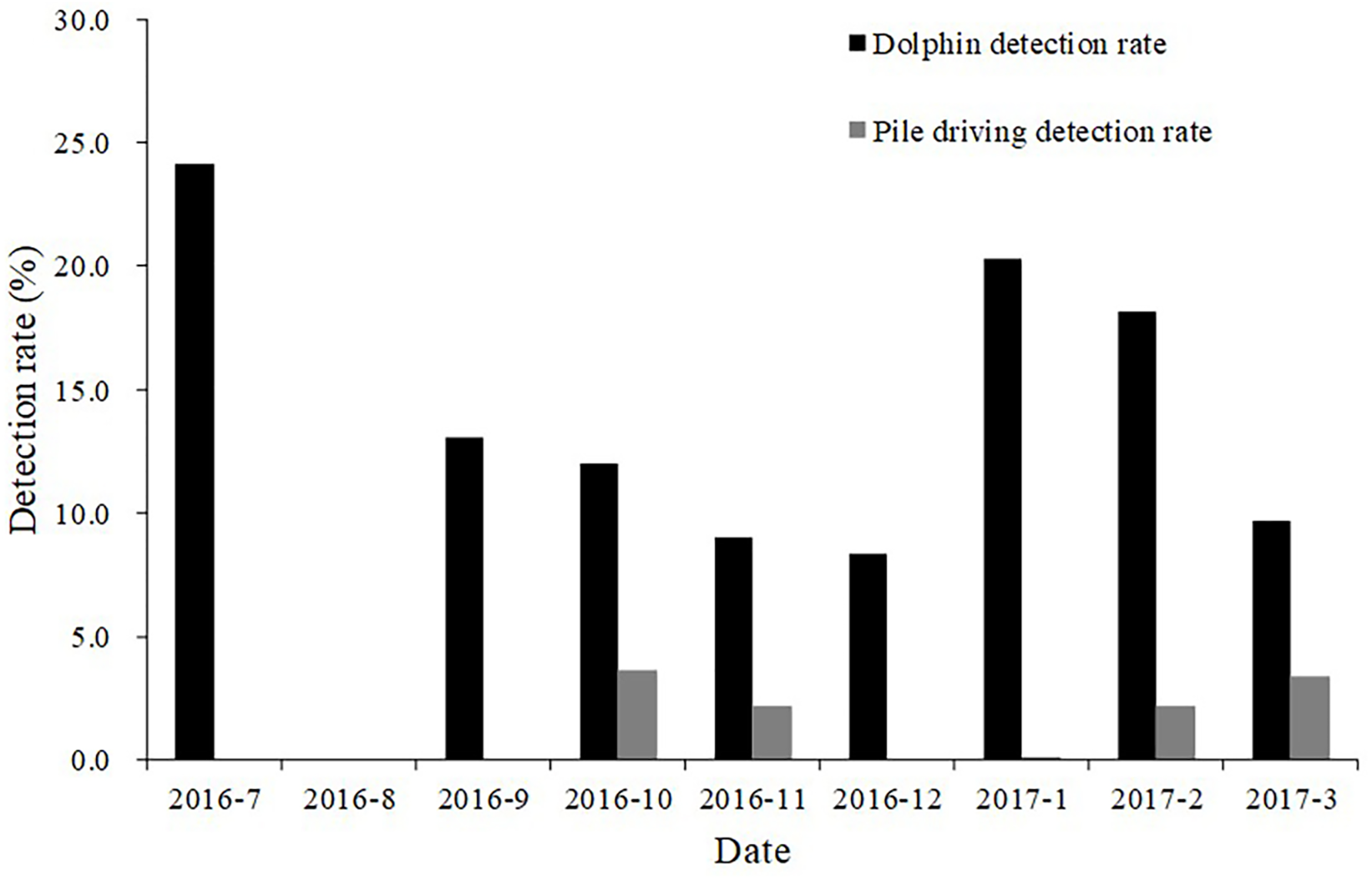
Histogram of hourly acoustic detection rates of Indo-Pacific humpback dolphin and pile driving activity in each month of monitoring.
A total of 57 pile driving noise events were recorded. As shown in Figure 4, the received noise level distribution exhibited a pronounced peak, with 40% of events (n = 23) occurring within the 140 dB–145 dB re 1 μPa bin. While 87.7% of recorded events (n = 50) remained below the 155 dB threshold, notable exceptions were observed, with 12.3% of cases (n = 7) exceeding 160 dB.
Figure 4
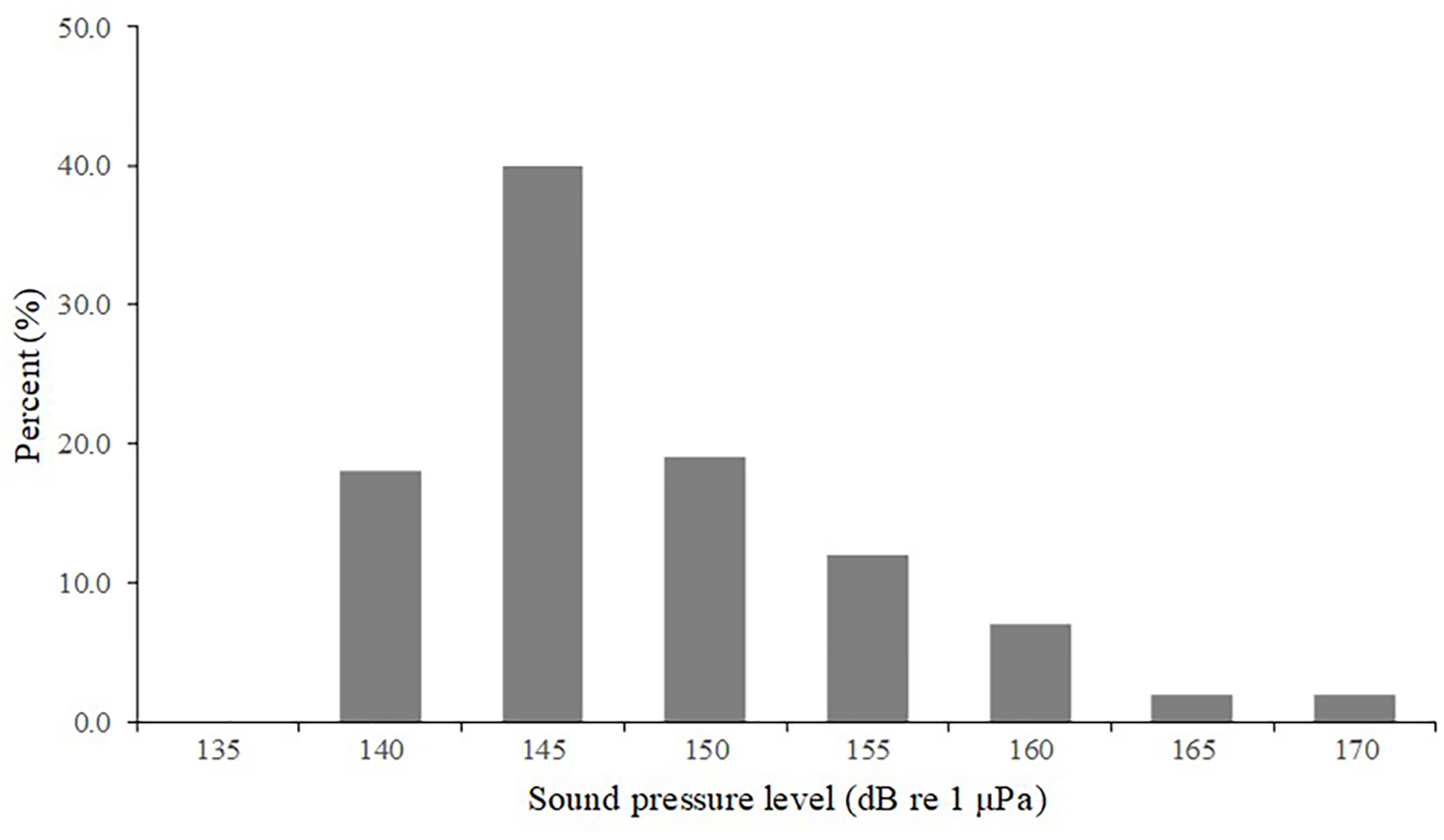
The distribution of sound pressure level of pile driving.
Figure 5 illustrates the relationship between pile driving activities and monthly acoustic detections of the Indo-Pacific humpback dolphin. Linear regression analysis revealed a non-significant inverse association (β = −2.7467, p >0.05), with construction activity intensity accounting for 55.1% of the variance in dolphin acoustic occurrence.
Figure 5
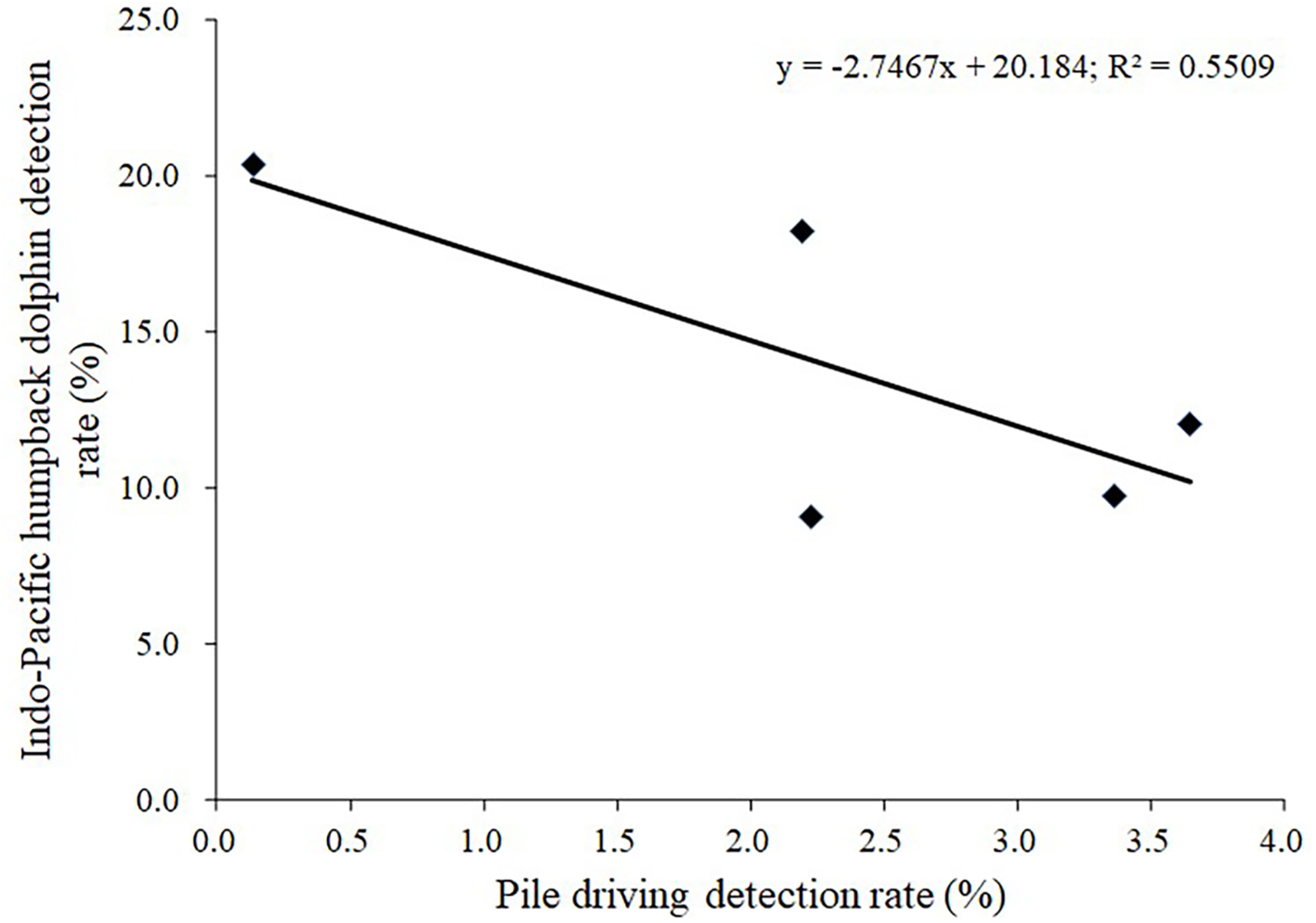
The relationship between the hourly detection rate of Indo-Pacific humpback dolphin and pile driving detection rate.
This study identified 29 occasions in which waiting time could be calculated. Of these, 55% had a waiting time less than 5 h, and 93% had a waiting time of less than 10 h. The waiting times of Indo-Pacific humpback dolphins in relation to pile driving events are presented in Figure 6.
Figure 6
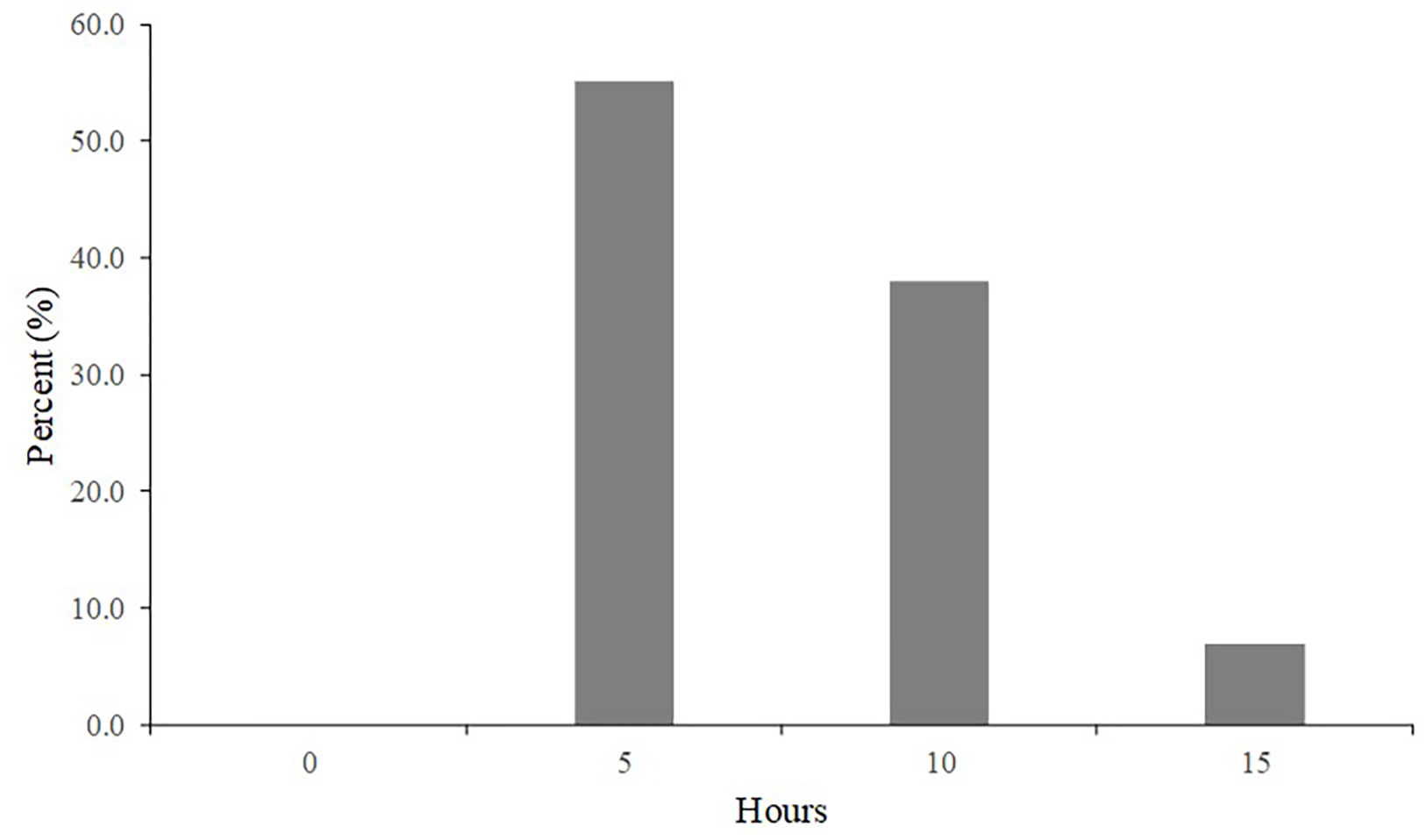
The waiting time of Indo-Pacific humpback dolphins to pile driving.
The first pile driving event was detected on 24 October 2016 at 18:00. The average waiting time for acoustic detection of humpback dolphin before construction (prior to the first pile driving) was 4.39 h, while the average waiting time of after the first pile driving (during the construction period) was 5.68 h, as shown in Figure 7. No significant difference was observed between waiting times prior to and during construction, as revealed by the Wilcoxon test (p >0.05).
Figure 7
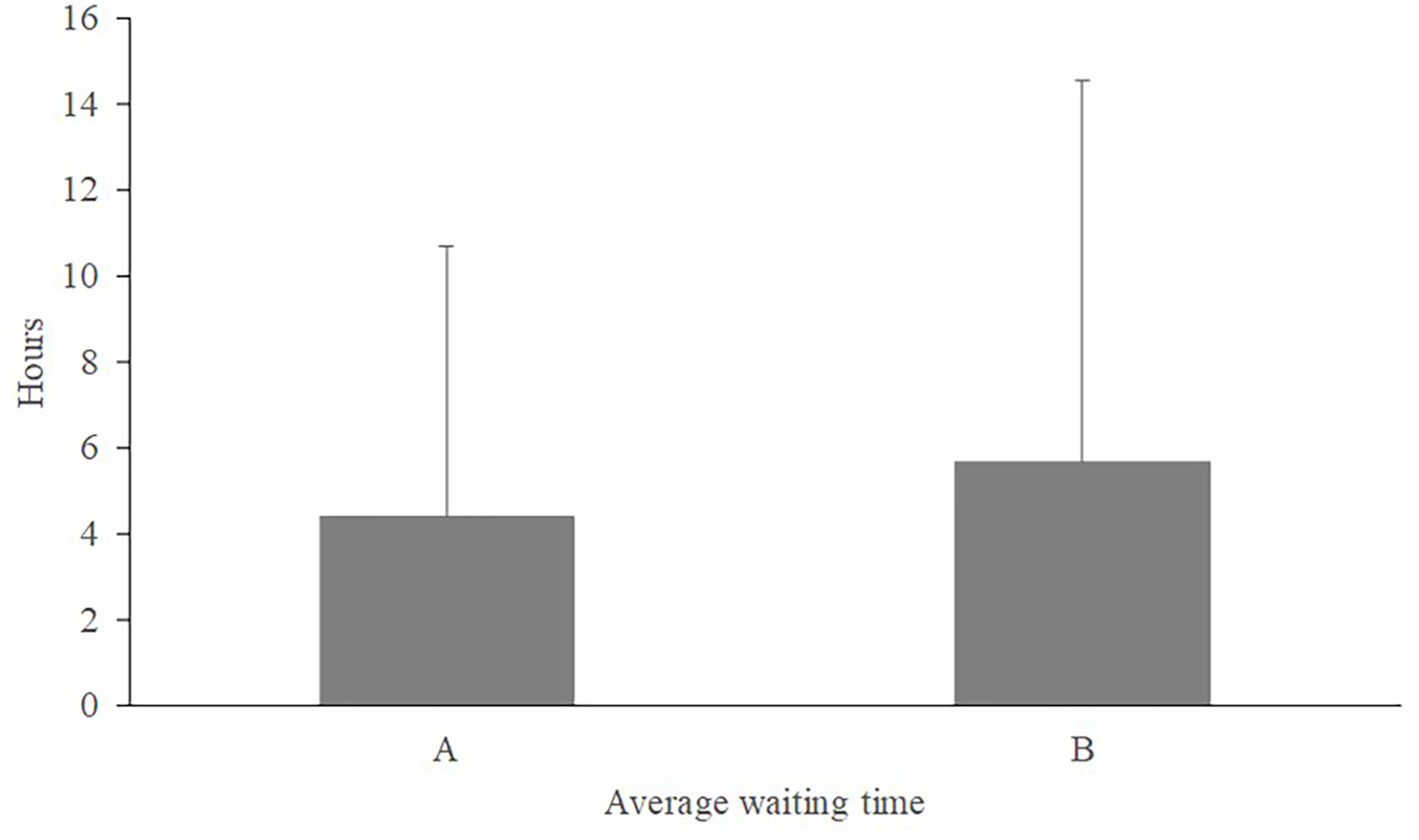
The average waiting time of acoustic detection of Indo-Pacific humpback dolphin before (A) and after (B) the first pile driving. Error bars indicate standard deviation.
4 Discussion
Our findings demonstrate the continued presence of humpback dolphins throughout the monitoring period, with detections occurrence during approximately 9%–24% of monitored time. This indicates that the waters of the PRE maintained their ecological significance as critical habitat for Indo-Pacific humpback dolphins during the construction phase of the Guishan Offshore Wind Farm (2016–2017). However, quantifiable shifts in temporal presence patterns emerged after construction began (September 2016), with dolphin acoustic detection rates decreasing as monthly piling activity increased. In addition to known natural drivers of dolphin distribution, many environmental factors may influence the habitat use of Indo-Pacific humpback dolphins. For example, Lin et al. (2013, 2015) suggested that tidal cycles and upstream rainfall could affect the habitat use of humpback dolphins in estuarine areas. Lee et al. (2016) suggested that dolphin occurrence in the estuary was driven by the prey availability, which was influenced by the temporal changes in freshwater runoff. Similarly, Chen et al. (2010) found that the distribution of humpback dolphins in the PRE shifted between the wet (summer and autumn) and dry (winter and spring) seasons, likely in response to seasonal movements of their prey. Pine et al. (2016) found a positive relationship between fish chorus rates (representing prey activity) and dolphin detection rates, but no relationship between vessel presence and dolphin detection in PRE. Wang et al. (2015) reported significant diurnal variation in humpback dolphin echolocation clicks, along with changes in click behavior across during different tidal phases and seasons at the Guishan Offshore Wind Farm site prior to construction. Despite the natural variation in humpback dolphin presence around the PRE, changes in detection probability at the construction site were observed in this study. The distribution of hourly detection rates in this study differed from those reported in previous studies of the PRE. For instance, the highest detection rates in our study occurred in spring and winter, whereas in a previous study conducted at a nearby location within the same wind farm, peak detection rates occurred in summer and autumn (Wang et al., 2015). Such changes in fine-scale habitat use due to offshore wind farm construction activities have been reported in previous studies (Carstensen et al., 2006; Thompson et al., 2010; Brandt et al., 2011; Dähne et al., 2013).
Underwater noise from the pile driving and associated activities is widely accepted as a key factor causing potential disturbances in marine mammals during the construction of offshore wind farms (Carstensen et al., 2006; Bailey et al., 2010; Thompson et al., 2010; Nedwell et al., 2012; Dähne et al., 2013). Pile driving generates high levels of sound energy (sound pressure levels over 190 dB re 1 µPa at 1 m range; Tougaard et al., 2009; Bailey et al., 2010; Brandt et al., 2011), to which range of marine mammal species are known to be sensitive (Au, 2000; Au and Hastings, 2008; Li et al., 2012; Surlykke et al., 2014). In this study, pile driving was detected in the recordings and may have contributed to the observed changes in dolphin detection rates, as the hourly detection rate of humpback dolphins was negatively correlated with increased piling activity. Additionally, the waiting time of acoustic detection for humpback dolphin prior to piling was shorter than those recorded after piling initiation, though the difference was not significant. Habitat avoidance, or displacement, in response to pile driving noise has also been observed in harbor porpoises (Phocoena phocoena). Aerial surveys found lower porpoise densities during the construction of an offshore wind farm in the North Sea compared to pre-construction densities (Dähne et al., 2013). During construction, aerial sightings revealed that porpoises maintained a distance of 20 km from the piling location, and acoustic monitoring showed lower porpoise detections within 10.8 km of piling activity than beyond this distance (Dähne et al., 2013).
High-intensity noise has been widely demonstrated to mask communication signals, induce behavioral responses (e.g., habitat avoidance), and cause temporary and permanent hearing damage (Southall et al., 2008; Richardson et al., 2013; Nachtigall and Schuller, 2014). Unfortunately, the source level of pile-driving noise could not be accurately quantified in the present study. Nevertheless, although not investigated in the present study, high received sound levels could cause hearing damage to Indo-Pacific humpback dolphins. Although not directly comparable to our peak-to-peak SPL values, for ‘High-Frequency species’ such as the humpback dolphin, the onset threshold for permanent threshold shift (PTS) when exposed to impulsive noise is 230 dB re 1 μPa (unweighted zero-to-peak SPL), and that for temporary threshold shift (TTS) is 193 dB re 1 μPa (unweighted zero-to-peak SPL) (Southall et al ., 2019; NMFS, 2024). Previous research has confirmed that Indo-Pacific humpback dolphins possess exceptionally acute auditory capabilities (Li et al., 2012; 2013). Given that most offshore wind farms employ gravity hammer systems, which generate extremely loud noise, the injurious effects of pile-driving noise on this species warrants thus urgent attention.
Indo-Pacific humpback dolphins exhibited high fidelity in the present study. The waiting time distribution indicated that individuals returned to the monitoring location within 5 h after piling cessation—a faster recovery time than the avoidance duration observed in finless porpoises (Neophocaena phocaenoides) at the adjacent Jinwan Offshore Wind Farm (Fang et al., 2023). Several studies have confirmed that waters adjacent to Sanjiao Island and Qingzhou Island constitute critical core habitat for humpback dolphins in the Pearl River Estuary (Chen et al., 2010; Huang et al., 2024; Tang et al., 2025). Despite anthropogenic disturbance from piling, humpback dolphins rapidly returned to these critical habitats once pile driving stopped. This quick return further highlights the importance of this core area to the species and warrants enhanced protective measurements and continued monitoring throughout a development’s construction (i.e., pre-, during, and post-construction) to minimize and assess impacts on this conservation-priority species. Mitigation measures to reduce noise outputs will help minimize masking and displacement of dolphins. Although dolphins do return, displacement from, and subsequent return to, a core area will have energetic consequences, which will be amplified when the site is also an important foraging area. As such, mitigation measures will be beneficial.
We aim to continue this study by investigating humpback dolphin occurrence during the operational phase of the Guishan Offshore Wind Farm.
5 Conclusion
Nine months of PAM were conducted before and during construction of the Guishan Offshore Wind Turbine Farm in the Pearl River Estuary, China. The data obtained provide valuable insights into potential temporal presence changes during the construction of large-scale coastal developments. Results suggest that the study area remained an important habitat for humpback dolphins both before and during the construction of the wind farm. Despite many factors affecting the temporal presence of these dolphins, the results presented of this study provide evidence that humpback dolphins altered their temporal presence around the Sanjiao Islands after construction commenced, compared with a previous study (Wang et al., 2015). Underwater noise emissions from construction and increased vessel traffic are expected to be the key factors leading to these observations, with pile-driving noise detections negatively correlated with dolphin detection rates. As the Chinese government continues to increase their investment in offshore wind farms that overlap with humpback dolphin habitat, these data are crucial first steps toward justifying further regulation, mitigation, and marine mammal monitoring. Continued research at the Guishan Offshore Wind Farm will focus on impacts to humpback dolphins during the remaining construction activities and the post-construction operational phase. Collectively, these results will inform government efforts to improve management practices in China and beyond.
Statements
Data availability statement
The raw data supporting the conclusions of this article will be made available by the authors, without undue reservation.
Ethics statement
Ethical approval was not required for the study involving animals in accordance with the local legislation and institutional requirements because there is no negative effect on Indo-Pacific humpback dolphin by a station passive acoustic monitoring.
Author contributions
LF: Conceptualization, Data curation, Formal Analysis, Funding acquisition, Investigation, Methodology, Project administration, Resources, Software, Supervision, Validation, Visualization, Writing – original draft, Writing – review & editing. YW: Conceptualization, Funding acquisition, Investigation, Writing – review & editing, Data curation. MP: Conceptualization, Methodology, Project administration, Writing – review & editing. XW: Conceptualization, Data curation, Project administration, Writing – review & editing. TC: Conceptualization, Funding acquisition, Investigation, Project administration, Supervision, Writing – review & editing.
Funding
The author(s) declare financial support was received for the research and/or publication of this article. This research was supported by grants from the Natural Science Foundation of China (32202937), the Hainan Provincial Science and Technology Plan under the Science and Technology Innovation Joint Project of the Sanya Yazhou Bay Science and Technology City (2021CXLH0004), the Ocean Park Conservation Foundation of Hong Kong (AW01.1718), and the Natural Science Foundation of Guangdong Province, China (2018A030310289 and 2017A030308005).
Acknowledgments
We are very grateful to the members of the Cetacean Research and Conservation Group at the School of Marine Science, Sun Yat-Sen University, China, for their assistance with fieldwork.
Conflict of interest
The authors declare that the research was conducted in the absence of any commercial or financial relationships that could be construed as a potential conflict of interest.
Generative AI statement
The author(s) declare that no Generative AI was used in the creation of this manuscript.
Any alternative text (alt text) provided alongside figures in this article has been generated by Frontiers with the support of artificial intelligence and reasonable efforts have been made to ensure accuracy, including review by the authors wherever possible. If you identify any issues, please contact us.
Publisher’s note
All claims expressed in this article are solely those of the authors and do not necessarily represent those of their affiliated organizations, or those of the publisher, the editors and the reviewers. Any product that may be evaluated in this article, or claim that may be made by its manufacturer, is not guaranteed or endorsed by the publisher.
References
1
Amaral J. Vigness-Raposa K. Miller J. H. Potty G. R. Newhall A. Lin Y.-T. (2020). The underwater sound from offshore wind farms. Acoust. Today16, 13. doi: 10.1121/AT.2020.16.2.13
2
Au W. W. (2000). “Hearing in whales and dolphins: An overview,” in Hearing by whales and dolphins (New York: Springer Verlag), 1–42.
3
Au W. W. Hastings M. C. (2008). Principles of marine bioacoustics (Springer Verlag), 1–661.
4
Bailey H. Brookes K. L. Thompson P. M. (2014). Assessing environmental impacts of offshore wind farms: lessons learned and recommendations for the future. Aquat. Biosyst.10, 1–13. doi: 10.1186/2046-9063-10-8
5
Bailey H. Senior B. Simmons D. Rusin J. Picken G. Thompson P. M. (2010). Assessing underwater noise levels during pile-driving at an offshore windfarm and its potential effects on marine mammals. Mar. pollut. Bull.60, 888–897. doi: 10.1016/j.marpolbul.2010.01.003
6
Benhemma-Le Gall A. Graham I. M. Merchant N. D. Thompson P. M. (2021). Broad-scale responses of harbor porpoises to pile-driving and vessel activities during offshore windfarm construction. Front. Mar. Sci.8, 664724. doi: 10.3389/fmars.2021.664724
7
Brandt M. J. Diederichs A. Betke K. Nehls G. (2011). Responses of harbour porpoises to pile driving at the Horns Rev II offshore wind farm in the Danish North Sea. Mar. Ecol. Prog. Ser.421, 205–216. doi: 10.3354/meps08888
8
Carstensen J. Henriksen O. Teilmann J. (2006). Impacts of offshore wind farm construction on harbour porpoises: acoustic monitoring of echolocation activity using porpoise detectors (T-PODs). Mar. Ecol. Prog. Ser.321, 295–308. doi: 10.3354/meps321295
9
Chen T. Hung S. K. Qiu Y. Jia X. Jefferson T. A. (2010). Distribution, abundance, and individual movements of Indo-Pacific humpback dolphins (Sousa chinensis) in the Pearl River Estuary, China. Mammalia74, 117–125. doi: 10.1515/mamm.2010.024
10
Chen T. Qiu Y. Jia X. Hung S. K. Liu W. (2011). Distribution and group dynamics of Indo-Pacific humpback dolphins (Sousa chinensis) in the western Pearl River Estuary, China. Mamm Biol. 76, 93–96. doi: 10.1016/j.mambio.2010.01.001
11
Chen J. (2011). Development of offshore wind power in China. Renewable Sustain. Energy Rev.15, 5013–5020. doi: 10.1016/j.rser.2011.07.053
12
Dähne M. Gilles A. Lucke K. Peschko V. Adler S. Krügel K. et al . (2013). Effects of pile-driving on harbour porpoises (Phocoena phocoena) at the first offshore wind farm in Germany. Environ. Res. Lett.8, 025002. doi: 10.1088/1748-9326/8/2/025002
13
Erlich I. Shewarega F. Feltes C. Koch F. W. Fortmann J. (2013). Offshore wind power generation technologies. Proc. IEEE101, 891–905. doi: 10.1109/JPROC.2012.2225591
14
Fang L. Li M. Wang X. Chen Y. Chen T. (2023). Indo-Pacific finless porpoises presence in response to pile driving on the Jinwan Offshore Wind Farm, China. Front. Mar. Sci.10, 1005374. doi: 10.3389/fmars.2023.1005374
15
Galparsoro I. Menchaca I. Garmendia J. M. Borja Á. Maldonado A. D. Iglesias G. et al . (2022). Reviewing the ecological impacts of offshore wind farms. NPJ Ocean Sustainability1, 1–8. doi: 10.1038/s44183-022-00003-5
16
Gill A. B. (2005). Offshore renewable energy: ecological implications of generating electricity in the coastal zone. J. Appl. Ecol.42, 605–615. doi: 10.1111/j.1365-2664.2005.01060.x
17
Higgins P. Foley A. (2014). The evolution of offshore wind power in the United Kingdom. Renewable Sustain. Energy Rev.37, 599–612. doi: 10.1016/j.rser.2014.05.058
18
Holdman A. Tregenza N. Van Parijs S. DeAngelis A. (2023). Acoustic ecology of harbour porpoise (Phocoena phocoena) between two US offshore wind energy areas. ICES J. Mar. Sci.82 (3), fsad150 doi: 10.1093/icesjms/fsad150
19
Huang Z. Fang L. Wen H. Zhang K. Wang X. Chen T. (2024). Responses of Indo-Pacific humpback dolphins (Sousa chinensis) to construction of the Hong Kong–Zhuhai–Macao Bridge. Front. Mar. Sci.11, 1407937. doi: 10.3389/fmars.2024.1407937
20
Huang S.-L. Karczmarski L. Chen J. Zhou R. Lin W. Zhang H. et al . (2012). Demography and population trends of the largest population of Indo-Pacific humpback dolphins. Biol. Conserv.147, 234–242. doi: 10.1016/j.biocon.2012.01.004
21
Hung S. K. Jefferson T. A. (2004). Ranging patterns of Indo-Pacific humpback dolphins (Sousa chinensis) in the Pearl River estuary, Peoples Republic of China. Aquat. Mammals30, 159–174. doi: 10.1578/AM.30.1.2004.159
22
IUCN (2018). The IUCN Red List of Threatened Species. Version 2018-1. Available online at: www.iucnredlist.org (Accessed June 28, 2018).
23
Jefferson T. A. Smith B. D. (2016). Re-assessment of the conservation status of the Indo-Pacific humpback dolphin (Sousa chinensis) using the IUCN Red List Criteria. Adv. Mar. Biol.73, 1–26. doi: 10.1016/bs.amb.2015.04.002
24
Karczmarski L. Huang S.-L. Or C. K. Gui D. Chan S. C. Lin W. et al . (2016). Humpback dolphins in Hong Kong and the Pearl River Delta: Status, threats and conservation challenges. Adv. Mar. Biol.73, 27–64. doi: 10.1016/bs.amb.2015.09.003
25
Lee C.-Y. Lin T.-H. Akamatsu T. Chou L.-S. (2016). Spatiotemporal variation in habitat utilization of humpback dolphins (Sousa chinensis) potentially affected by freshwater discharge. J. Acoustical Soc. America140, 3019–3019. doi: 10.1121/1.4969366
26
Li S. Wang D. Wang K. Hoffmann-Kuhnt M. Fernando N. Taylor E. A. et al . (2013). Possible age-related hearing loss (presbycusis) and corresponding change in echolocation parameters in a stranded Indo-Pacific humpback dolphin. J. Exp. Biol.216, 4144–4153. doi: 10.1242/jeb.091504
27
Li S. Wang D. Wang K. Taylor E. A. Cros E. Shi W. et al . (2012). Evoked-potential audiogram of an Indo-Pacific humpback dolphin (Sousa chinensis). J. Exp. Biol.215, 3055–3063. doi: 10.1242/jeb.070904
28
Lin T. H. Akamatsu T. Chou L. S. (2013). Tidal influences on the habitat use of Indo-Pacific humpback dolphins in an estuary. Mar. Biol.160, 1353–1363. doi: 10.1007/s00227-013-2187-7
29
Lin T. H. Akamatsu T. Chou L. S. (2015). Seasonal distribution of Indo-Pacific humpback dolphins at an estuarine habitat: Influences of upstream rainfall. Estuaries Coasts38, 1376–1384. doi: 10.1007/s12237-014-9886-2
30
Man O. K. (2017). Socio-spatial ecology of Indo-Pacific humpback dolphins (Sousa chinensis) in Hong Kong and the Pearl River Estuary. The University of Hong Kong, Hong Kong.
31
Mellinger D. K. Stafford K. M. Moore S. E. Dziak R. P. Matsumoto H. (2007). An overview of fixed passive acoustic observation methods for cetaceans. Oceanography20, 36–45. doi: 10.5670/oceanog.2007.03
32
Nachtigall P. E. Schuller G. (2014). “Hearing during echolocation in whales and bats,” in the Biosonar (New York: Springer Verlag), 143–167.
33
Nedwell J. Mason T. Barham R. Cheesman S. (2012). “Assessing the environmental impact of underwater noise during offshore windfarm construction and operation,” in Proceedings of Acoustics (New York: AIP Publishing).
34
NMFS N. (2024). Update to: Technical guidance for assessing the effects of anthropogenic sound on marine mammal hearing (version 3.0): Underwater and in air criteria for onset of auditory injury and temporary threshold shifts (Silver Spring: US Dept. of Commer., NOAA).
35
Pine M. K. Wang K. Wang D. (2016). “Monitoring rising ambient sound levels from vessels and impacts on Indo-Pacific humpback dolphin (Sousa chinensis) occurrences,” in Proceedings of meetings on acoustics (New York: AIP Publishing), 27, 070003.
36
Pine M. K. Wang K. Wang D. (2017). Fine-scale habitat use in Indo-Pacific humpback dolphins, Sousa chinensis, may be more influenced by fish rather than vessels in the Pearl River Estuary, China. Mar. Mammal. Sci.33, 291–312. doi: 10.1111/mms.12366
37
Rezaei F. Contestabile P. Vicinanza D. Azzellino A. (2023). Towards understanding environmental and cumulative impacts of floating wind farms: Lessons learned from the fixed-bottom offshore wind farms. Ocean Coast. Manage.243, 106772. doi: 10.1016/j.ocecoaman.2023.106772
38
Richardson W. J. Greene C. R. Jr. Malme C. I. Thomson D. H. (2013). Marine mammals and noise (San Diego: Academic Press).
39
Risch D. Marmo B. van Geel N. C. Gillespie D. Hastie G. Sparling C. et al . (2024). “Underwater noise of two operational tidal stream turbines: A comparison,” in The effects of noise on aquatic life: Principles and practical considerations (New York: Springer Verlag), 157–178.
40
Soares-Ramos E. P. de Oliveira-Assis L. Sarrias-Mena R. Fernández-Ramírez L. M. (2020). Current status and future trends of offshore wind power in Europe. Energy202, 117787. doi: 10.1016/j.energy.2020.117787
41
Southall B. L. Bowles A. E. Ellison W. T. Finneran J. J. Gentry R. L. Greene C. R. Jr. et al . (2008). Marine mammal noise-exposure criteria: initial scientific recommendations. Bioacoustics17, 273–275. doi: 10.1080/09524622.2008.9753846
42
Southall B. L. Finneran J. J. Reichmuth C. Nachtigall P. E. Ketten D. R. Bowles A. E. et al . (2019). Marine mammal noise exposure criteria: updated scientific recommendations for residual hearing effects. Aquat. Mammals45, 125–232. doi: 10.1578/AM.45.2.2019.125
43
Stöber U. Thomsen F. (2021). How could operational underwater sound from future offshore wind turbines impact marine life? J. Acoustical Soc. America149, 1791–1795. doi: 10.1121/10.0003760
44
Surlykke A. Nachtigall P. E. Fay R. R. Popper A. N. (2014). Biosonar (New York: Springer Verlag).
45
Tang X. Luo D. Sun X. Sun B. Guo L. Wang H. et al . (2025). Seasonal distribution and nature reserve planning of indo-pacific humpback dolphins in the Pearl River estuary from South China Sea. Global Ecol. Conserv.61, e03639. doi: 10.1016/j.gecco.2025.e03639
46
Thompson P. M. Graham I. M. Cheney B. Barton T. R. Farcas A. Merchant N. D. (2020). Balancing risks of injury and disturbance to marine mammals when pile driving at offshore windfarms. Ecol. Solutions Evidence1, e12034. doi: 10.1002/2688-8319.12034
47
Thompson P. M. Lusseau D. Barton T. Simmons D. Rusin J. Bailey H. (2010). Assessing the responses of coastal cetaceans to the construction of offshore wind turbines. Mar. pollut. Bull.60, 1200–1208. doi: 10.1016/j.marpolbul.2010.03.030
48
Tougaard J. Carstensen J. Teilmann J. Skov H. Rasmussen P. (2009). Pile driving zone of responsiveness extends beyond 20 km for harbor porpoises (Phocoena phocoena (L.)). J. Acoustical Soc. America126, 11–14. doi: 10.1121/1.3132523
49
Tougaard J. Hermannsen L. Madsen P. T. (2020). How loud is the underwater noise from operating offshore wind turbines? J. Acoustical Soc. America148, 2885–2893. doi: 10.1121/10.0002453
50
Wang Z.-T. Nachtigall P. E. Akamatsu T. Wang K.-X. Wu Y.-P. Liu J.-C. et al . (2015). Passive acoustic monitoring the diel, lunar, seasonal and tidal patterns in the biosonar activity of the Indo-Pacific humpback dolphins (Sousa chinensis) in the Pearl River Estuary, China. PloS One10, e0141807. doi: 10.1371/journal.pone.0141807
51
Zimmer W. M. (2011). Passive acoustic monitoring of cetaceans (Cambridge: Cambridge University Press).
Summary
Keywords
passive acoustic monitoring, pile driving, offshore wind farm, Indo-Pacific humpback dolphin, acoustic occurrence
Citation
Fang L, Wu Y, Pine MK, Wang X and Chen T (2025) Temporal presence of Indo-Pacific humpback dolphins to the piling during the first offshore wind farm construction in the Pearl River Estuary, China. Front. Mar. Sci. 12:1578855. doi: 10.3389/fmars.2025.1578855
Received
18 February 2025
Accepted
13 August 2025
Published
29 August 2025
Volume
12 - 2025
Edited by
Xuelei Zhang, Ministry of Natural Resources, China
Reviewed by
Mridula Srinivasan, NMFS, United States
Nienke Van Geel, Scottish Association for Marine Science, United Kingdom
Updates
Copyright
© 2025 Fang, Wu, Pine, Wang and Chen.
This is an open-access article distributed under the terms of the Creative Commons Attribution License (CC BY). The use, distribution or reproduction in other forums is permitted, provided the original author(s) and the copyright owner(s) are credited and that the original publication in this journal is cited, in accordance with accepted academic practice. No use, distribution or reproduction is permitted which does not comply with these terms.
*Correspondence: Tao Chen, chent@scsfri.ac.cn
Disclaimer
All claims expressed in this article are solely those of the authors and do not necessarily represent those of their affiliated organizations, or those of the publisher, the editors and the reviewers. Any product that may be evaluated in this article or claim that may be made by its manufacturer is not guaranteed or endorsed by the publisher.