Abstract
Introduction:
Colorectal cancer (CRC) is the third most diagnosed cancer worldwide and the second leading cause of cancer-related deaths. A major challenge in CRC treatment is drug resistance, which limits the efficacy of conventional therapies. Ferroptosis, an iron-dependent form of regulated cell death driven by the accumulation of reactive oxygen species (ROS), has emerged as a promising therapeutic strategy. Erastin (ER), a small-molecule compound, induces ferroptosis through ROS accumulation.
Methods:
We performed microarray gene expression analysis on two CRC cell lines, HCT116 and HT-29, to examine the transcriptional response to ER exposure and identify differentially expressed genes and pathways involved in ER-induced ferroptosis.
Results:
Our gene expression analysis revealed distinct transcriptional profiles between the two cell lines, and 26 transcripts commonly enriched in response to ER treatment were identified in both HCT116 and HT-29 cells. Notably, several of these genes—including ASNS, PCK2, CHAC1, and DDIT4—were significantly enriched, suggesting a conserved ferroptotic response. The induction of these genes was further confirmed in an additional CRC cell line, DLD-1. Interestingly, SOD1 and NQO1 genes, involved in oxidative stress response, were significantly upregulated by ER in HCT116 cells.
Conclusion:
Our findings highlight ASNS, CHAC1, PCK2, DDIT4, and ATF3/4 as potential biomarkers for ferroptosis in CRC. Monitoring the expression of these genes may help identify patients who are responsive to ferroptosis inducers and facilitate the development of personalized treatment strategies.
Introduction
Cancer is one of the leading causes of death worldwide. Colorectal cancer (CRC) is the third most prevalent cancer around the world, with increasing morbidity and mortality every year (Biller and Schrag, 2021; Bray et al., 2018). The incidence of CRC has been rising (Sung et al., 2021) and according to the International Agency for Research on Cancer (IARC) there were roughly 200,000 new cases of CRC and 1.0 million deaths worldwide in 2020. CRC accounted for 10% of overall cancer incidence (Sung et al., 2021). Currently, the treatment of CRC mainly consists of surgery, targeted therapy, radiotherapy, and chemotherapy (Dekker et al., 2019). Chemotherapy is one of the most used therapies for patients with advanced CRC and usually provided following surgery as adjuvant therapy. While chemotherapy has improved the overall survival of patients with advanced CRC in the past decades, many CRC patients develop drug resistance with poor survival (Wang et al., 2022). Development of chemotherapy resistance, including multidrug resistance (MDR) results in therapy failure in human CRC and other cancers in the clinic. Understanding mechanisms of drug resistance and overcoming this resistance has become a clinical priority. The development of newer drugs, selectively effective against CRC, are urgently needed.
Ferroptosis is a distinct form of regulated cell death involving cellular lipid peroxidation and iron, and it has potential therapeutic implications in cancer treatment (Dixon et al., 2014; Yang and Stockwell, 2016; Singh et al., 2025). Ferroptosis is considered a form of caspase-independent programmed cell death which relies on the mitochondrial and membrane-involved accumulation of reactive oxygen species and lipid peroxides leading to non-caspase-mediated cell death (Dixon et al., 2012). In comparison to conventional cell death forms, iron-dependent lipid peroxidation is considered a potential avenue for targeting cancer cells that display resistance to conventional chemotherapies (Chen et al., 2015; Zhou et al., 2019; Perera et al., 2025). Among various components of metabolic heterogeneity in cancer cells, iron-catalyzed pathways in lipid metabolism are more abundant in cancer cells. Ferroptosis inducers, like Erastin (ER) and RSL3, have shown promise in sensitizing resistant tumor cells to various chemotherapeutics agents (Zhou et al., 2019; Brown et al., 2024; Perera et al., 2025) and have emerged as promising candidates for addressing MDR. Cancer cells are more vulnerable to iron toxicity due to high dependency on iron metabolism than noncancerous cells, making cancer cells more vulnerable to ferroptosis. Combining ferroptosis inducers with chemotherapeutics offers a novel strategy to enhance treatment efficacy and overcome resistance.
Studies have shown that the CRC cell lines, HT-29 and HCT116, undergo ferroptosis (Wang et al., 2022; Sinha et al., 2023; Yan et al., 2023; Wu et al., 2023). Our recent study has indicated that ER and RSL3 act synergistically with NCX4040, a non-steroidal drug, to induce ferroptotic cell death in both HT-29 and HCT116 cells (Sinha et al., 2023). Pathways leading to ferroptosis are complicated and little is known about specific genes involved in inducing ferroptosis in CRC. Because no single cell line fully captures the complexity of colorectal cancer (CRC)—including tumor microenvironment, immune interactions, and heterogeneity—HCT116 and HT-29 represent two highly distinct CRC subtypes: MSI-high/KRAS-mutant (HCT116) and MSS/BRAF-mutant (HT-29). Together, they provide a broader view of CRC heterogeneity. Both are among the most cited and validated CRC models, with extensive omics data. Additionally, we have a long-standing experience working with them, including recent metabolomic studies with ER. We have, therefore, utilized human colon cancer HT-29 and HCT116 cell lines to examine the effects of Erastin short (4 h) and long (24 h) exposure on global gene expression patterns in using gene expression microarray analysis to identify molecular pathways involved in ER-induced ferroptosis in CRC.
Methods
Chemicals: Erastin was purchased from Sigma Chemicals (St. Louis, MO, United States) and was dissolved in DMSO. Stock solutions were stored at −80 °C. Fresh drug solutions, prepared from the stock solutions, were used in all experiments.
Cell culture and drug treatment
Authenticated human colon tumor cells, HT-29 cells, HCT116 cells and DLD-1were obtained from ATCC (Manassas, VA, United States) and were grown in Phenol Red-free RPMI 1640 media supplemented with 10% fetal bovine serum and antibiotics. Tumor cells were routinely used for 20–25 passages, after which the cells were discarded, and a new cell culture was started from the frozen stock.
Three independent experiments of exponentially growing cells (0.5–1.06 cells, 65%–70% confluency) were left untreated or treated with ER (2.5 µM) for 4 h, and 24 h, and then washed twice with ice-cold PBS (pH 7.4). For the gene profiling studies presented here, we used 2.5 μM ER at shorter time points, consistent with our earlier metabolomic work (Sinha et al., 2023). This concentration was selected to minimize cytotoxicity: at 4 h, ER showed no measurable toxicity in these cells and even at later points induced only modest cell death (<20%). Total RNA was extracted with TRIzol (Ambion, Life Technologies, Grand Island, NY, United States) and purified using RNeasy mini kit columns (Qiagen, Valencia, CA, United States). The purity of RNA was assessed with a NanoDrop spectrophotometer and the 260/280 ratio determination.
Global gene expression and data acquisition
A gene array expression analysis was conducted using Affymetrix Human Whole Transcriptome 2.0 arrays (Affymetrix, Santa Clara, CA). One hundred nanograms (100 ng) of total RNA were amplified and labeled as directed using the Affymetrix WT Plus Reagent Kit (WT Plus Kit). Five and one-half micrograms (5.5 μg) of amplified biotin-cDNAs were fragmented and hybridized to each array for 16 h at 45 °C in a rotating hybridization oven Array slides were stained with streptavidin/phycoerythrin utilizing a double-antibody staining procedure and then washed for antibody amplification per the GeneChip Hybridization, Wash and Stain Kit and user manual following protocol FS450-0001. Arrays were scanned in an Affymetrix Scanner 3000 and data was obtained using TAC Software.
The data is available in the Gene Expression Omnibus under GEO accession GSE299397 (https://www.ncbi.nlm.nih.gov/geo/query/acc.cgi?acc=GSE299397).
Normalization
The raw probe-set level signal from CEL files were extracted for ∼1.3 million probe-sets. The oligo R package (Carvalho and Irizarry, 2010) was utilized to perform Robust Multiarray Average (RMA) normalization of the probe-set level signal. Normalization was performed separately for each cell line. Mean summarization was utilized to derive expression signal for ∼138K transcripts, and subsequently for ∼38K unique NCBI curated genes. Log2 transformation was applied to the normalized signal.
Outlier detection
The systematic quality assessment of the samples was performed via principal component analysis, hierarchical clustering, and inter-replicate correlation analysis. These analyses and resulting plots were used to detect potential outliers. No samples were determined to be outliers.
Gene and pathway analysis
Differentially expressed transcript (DET) analysis was performed using Student’s t-test and permutation-based p-value computation. DETs were detected using balanced criteria (foldchange ≥1.2 and unadjusted p-value ≤0.005).
Transcripts that passed the DET criteria were used for pathway analysis. Differentially enriched pathways (DEPs) with an overrepresentation of DETs were detected using customized functional analysis approach via normalized enrichment score (NES) and Fisher’s exact test p-value. DEP analysis was performed on the Molecular Signature Database (MSigDB v7.5.1) (Liberzon et al., 2011; Liberzon et al., 2015) on a total of 2,834 pathways that had a minimum of five genes present on the microarray. The set of pathways included 29 C2-CP pathways, 292 BIOCARTA pathways, 186 KEGG pathways, 1613 REACTOME pathways, 664 WikiPathways, and 50 Hallmark pathways. Significance criteria for DEPs required NES ≥2 and Benjamini & Hochberg adjusted p-value ≤0.05.
RT-PCR studies
The expression levels of selected transcripts were confirmed by reverse transcription polymerase chain reaction (RT-PCR) using absolute SYBR green ROX Mix (ThermoFisher Scientific, Rochester, NY, United States) as previously described (Sinha et al., 2020). Data were analyzed using the ΔΔCt method of relative quantification and to determine transcript levels, cycle times (Ct) were compared from the same sample and were normalized to β-actin from the same sample. Primers (Supplementary Table 1) for the selected genes were purchased from Origene (Gaithersburg, MD, United States). Complementary DNA was transcribed from the purified RNA using the Bio-Rad iScript cDNA Synthesis Kit. Using the cDNA, fast SYBR green master mix and primers, the RT-PCR was performed on the Quant Studio 7 Flex to determine the expression levels of selected genes.
All experiments were conducted in triplicates (n = 3) and results are expressed as mean ± SEM. Significance was assessed using an unpaired Student’s t-test and considered significant when p < 0.05.
Results
Our previous studies have shown that ER induces ferroptosis in several human tumor cell lines, including CRC at micromolecular (1–5 µM) concentrations (Sinha et al., 2023; Perera et al., 2025). Furthermore, several investigators have also found that CRC undergo ER-mediated ferroptosis (Wu et al., 2023). In this study, we found ER to be significantly cytotoxic to both HT-29 and HCT116 cells (Figure 1). Interestingly, ER was less cytotoxic to HCT116 cells than HT-29 cells. DLD-1 cells had similar cytotoxic profiles as HCT116 cells (data not shown). While the exact mechanism is not clear, the response to ER can vary across different colon cancer cell lines. Different CRC have been shown to have different sensitivity to ER (Hu et al., 2022; Zheng et al., 2023) due to either GPX4 levels or tumor heterogeneity where different clones may have different mechanisms for resisting ferroptosis-induced cell death.
FIGURE 1

Cytotoxicity of Erastin in HT-29 and HCT116 cells as determined by CellTiterGlO (Promega) cytotoxicity assay following 72 h ER treatment.
Principal Component Analysis (PCA) of transcripts following ER treatment at 4 h and 24 h are shown in Figures 2, 3 using boxplots to observe the distribution of individual scores on each principal component. For HT-29 cells, there is not an obvious time effect based on PC#1 and PC#2 (not shown, captures 13% variability). 24 h samples do not differ much from Control and 4 h samples until PC#3 which indicates clustering of samples at both 4 h and 24 h (Figure 2). For HCT116 cell line, there is an observable time effect and the 24 h samples separate from Control and 4 h samples in clustering and on PC#1 and PC#2.
FIGURE 2
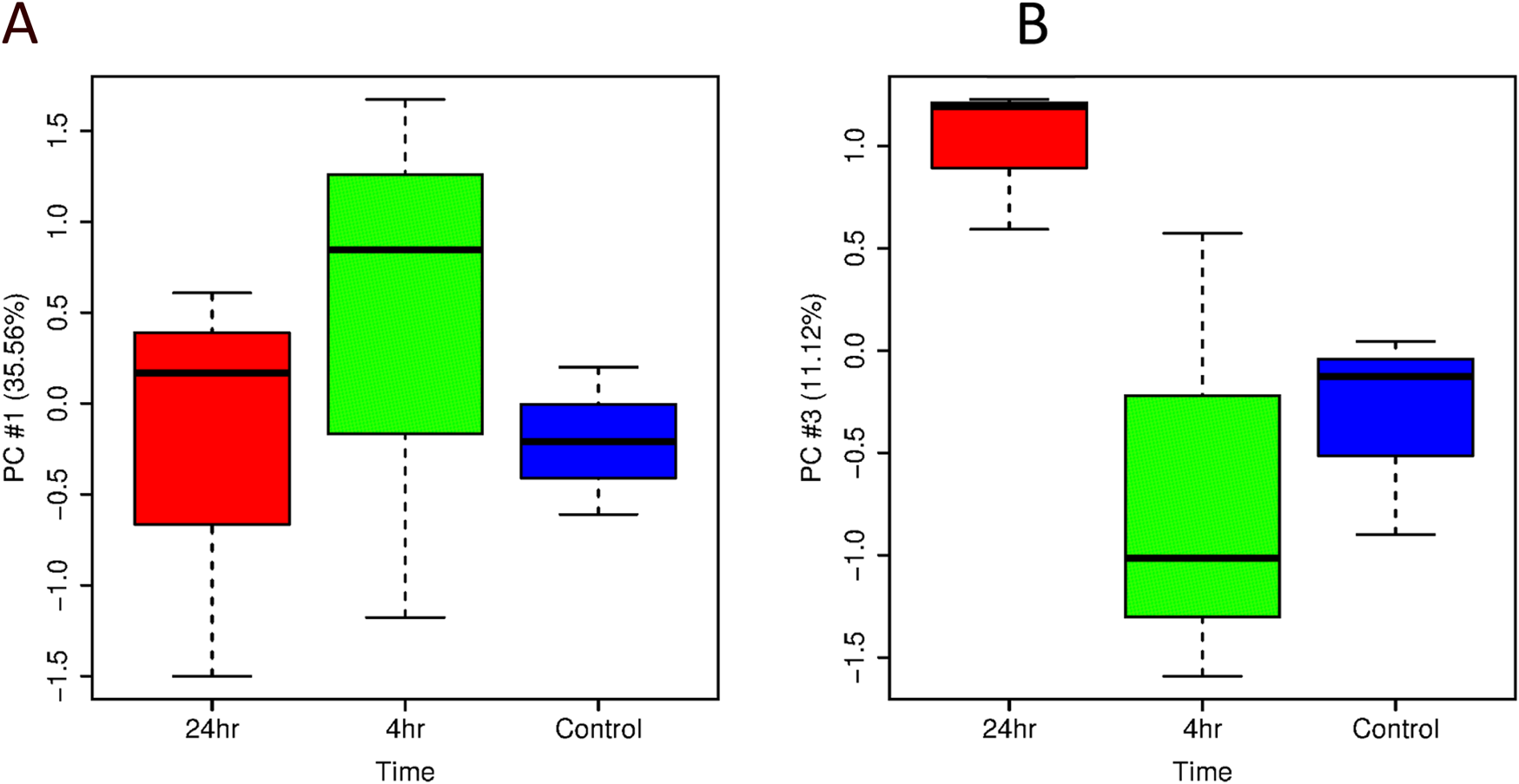
Boxplots of (A) PC#1 and (B) PC#2 from the PCA analysis of all HT-29 samples broken down by time (control, treated with ER at 4 h, treated with ER at 24 h).
FIGURE 3
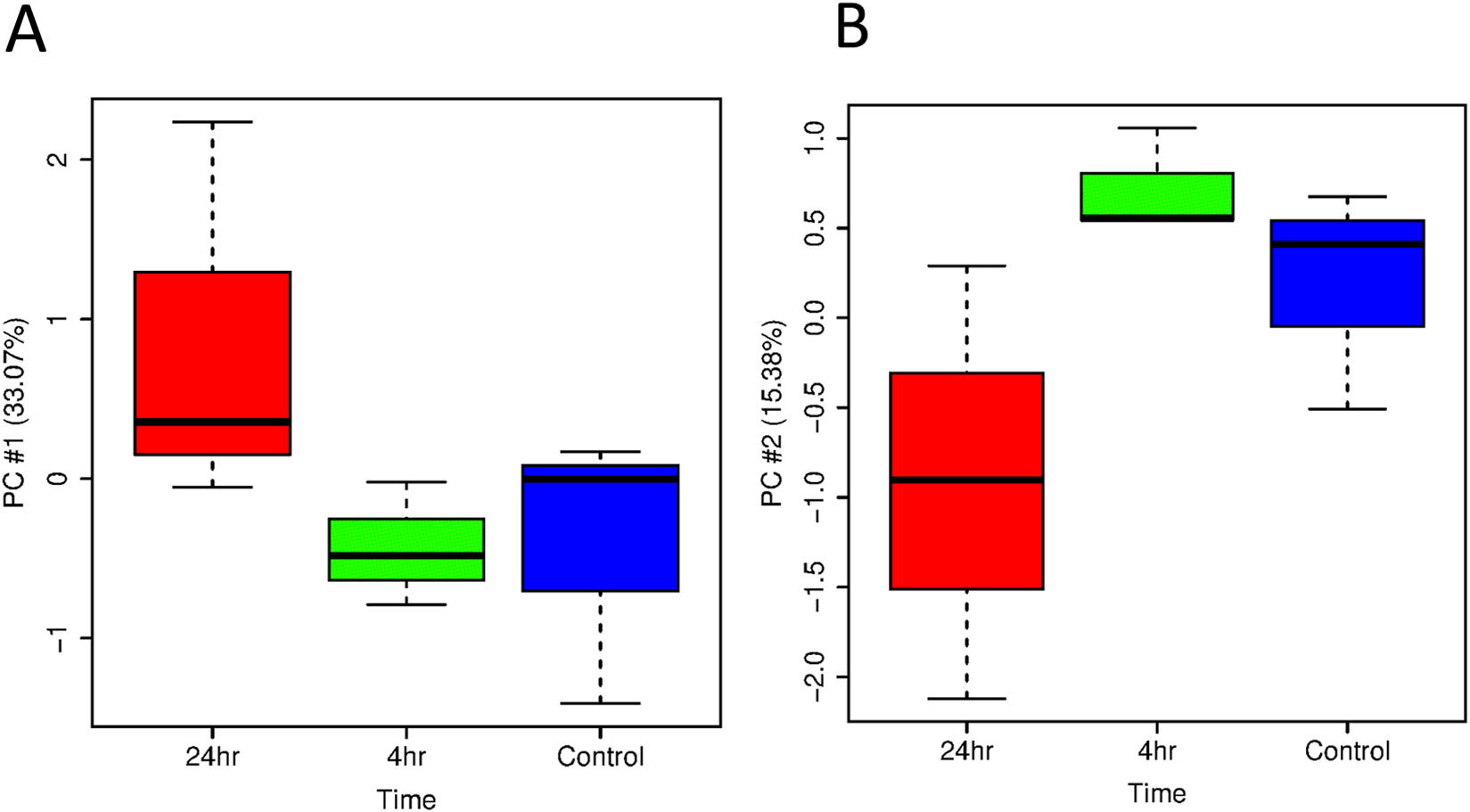
Boxplots of (A) PC#1 and (B) PC#2 from the PCA analysis of all HCT116 samples broken down by time (control, treated with ER at 4 h, treated with ER at 24 h).
Analysis of overlay of DETs in HT-29 and HCT116 cells
Venn diagrams of differentially expressed transcripts (DETs) showed significant number of genes were either upregulated or downregulated at early time points (4 h) in either HT-29 or HCT116 cells, however very few transcripts were commonly regulated in both cell types (Figure 4). Many transcripts, common to both cell lines, however, were differentially expressed at 24 h of ER treatment. Analysis of DETs revealed distinct transcriptional responses across the different treatment conditions (HCT116 and HT-29) and time points (4 h and 24 h). For upregulated transcripts, the majority of DETs were unique to each condition, with minimal overlap observed between groups. No transcripts were commonly upregulated across all four conditions, and only minor overlaps were noted between related groups (e.g., 25 transcripts between HCT116 24 h and HT-29 4 h). Similarly, downregulated transcripts exhibited highly condition-specific patterns. Most downregulated transcripts were unique to each condition, with extremely limited overlap between groups (1–13 transcripts shared between pairs) and no transcripts were commonly downregulated across all conditions. Together, these findings suggest the specificity and dynamic nature of gene expression regulation in response to treatment and time course.
FIGURE 4
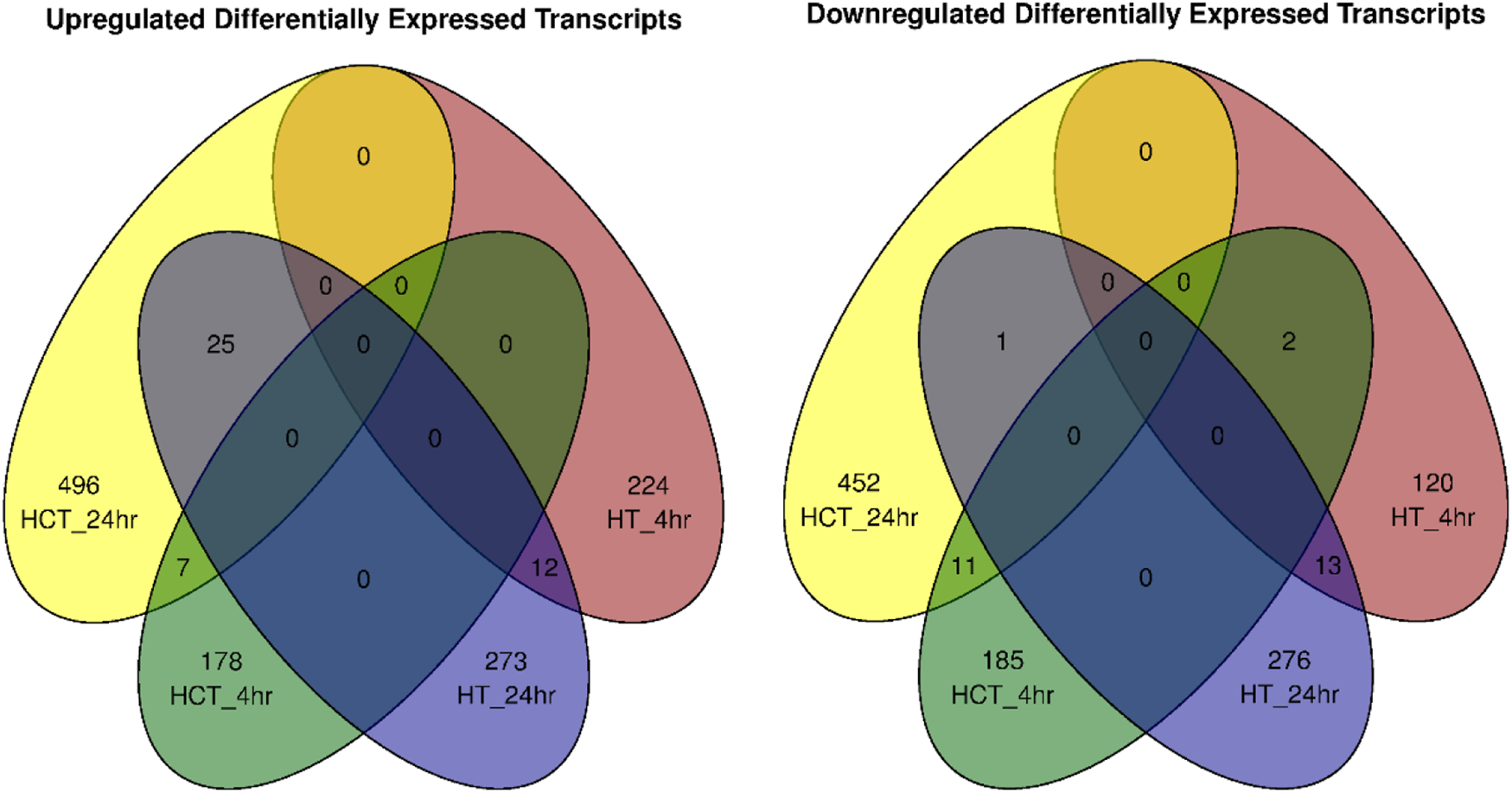
Venn diagrams of overlay of differentially expressed transcripts (DETs) at 0, 4 and 24 following ER treatment of HT-29 and HCT116 cells.
Because there were only two DETs changed at 4 h of ER treatment in both cell types, we compared common DETs at 24 h in these cells (Supplementary Table 2). We found that 26 common transcripts were expressed in both HT-29 and HCT116 cells. Several of these transcripts are associated with genes that have been shown to be expressed during ferroptosis, e.g., ASNS, CHAC1, DDIT4 and FYN (Sinha et al., 2023; Gan et al., 2024; Zhou et al., 2021; Qi et al., 2025). Interestingly, ASNS, CHAC1, PCK2 and DDTI4 transcripts were noticeably highly expressed in both cell lines, indicating possible similar responses to ER treatment.
Figure 5 shows clustering of DETs in HT-29 and HCT116 cells following ER treatment. The expression pattern shows a clear time-dependency of ER effects and in both cell lines, 24 h treatment elicited largest numbers DETs/genes regulated by ER. Further, the clustering pattern shows a clear difference in gene regulation in HT-29 and HCT116 cell types.
FIGURE 5
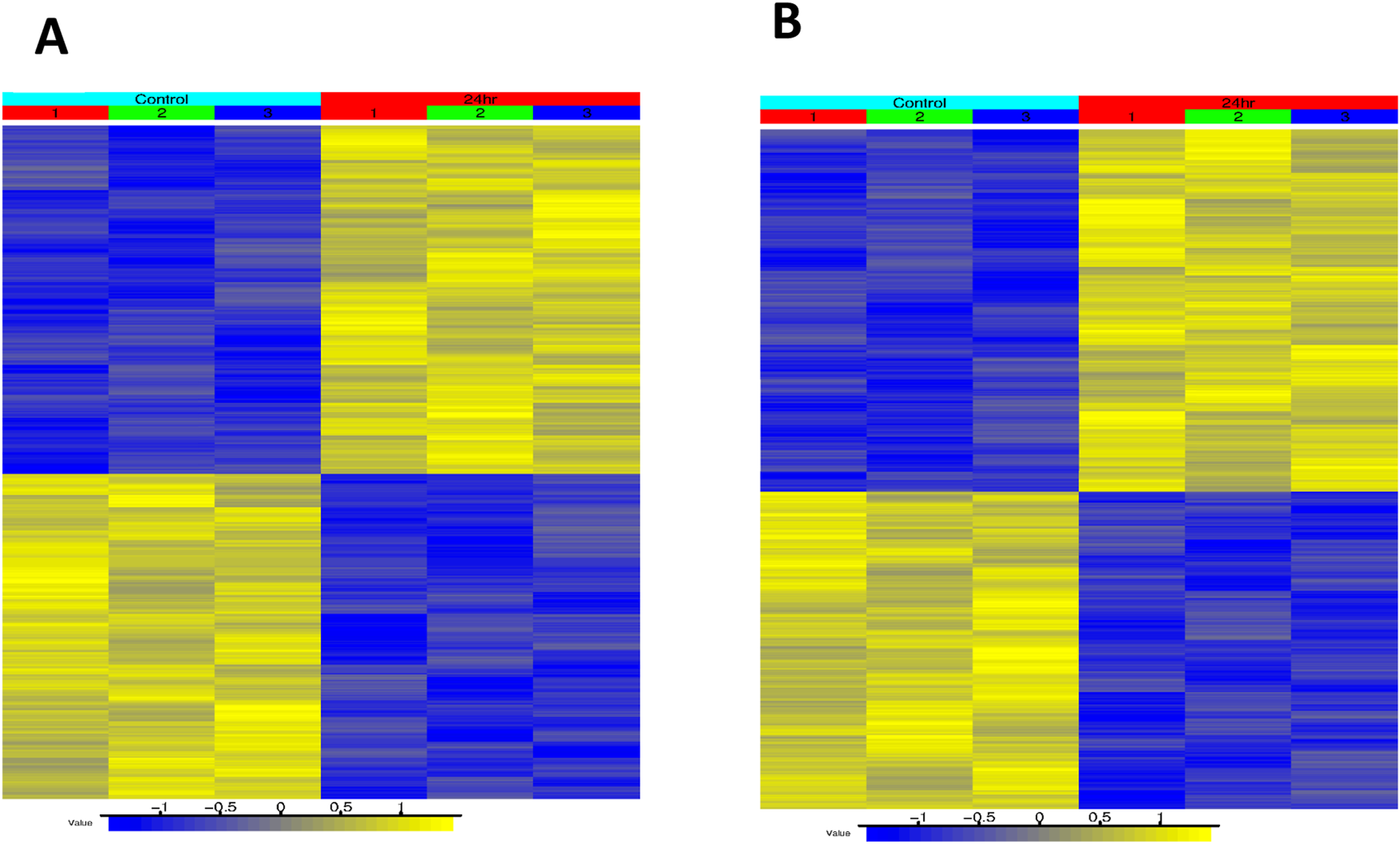
Heat map showing hierarchical clustering DETs of HT-29 [(A) 600 DET’s] and HCT116 [(B) 992 DET’s] following treatment with Erastin at 24 h. Yellow represents upregulated DET’s, and blue indicates downregulated DET’s.
Pathways analysis
Several differentially expressed pathways were identified in HT-29 and HCT116 cells following ER treatment (Supplementary Table 3). At 4 h ER treatment, one pathway was identified in HT-29 and no pathways in HCT116 cells. In contrast, several pathways could be identified in both cell lines at 24 h: more in HT-29 than HCT116. These findings would suggest that ER does not significantly induce early response in these cells and that HT-29 cells are more sensitive to ER-dependent late responses than HCT116 cells. Additionally, this may indicate cell line-specific sensitivity, pathway activation, or stress responses.
Furthermore, pathway analysis indicated that several pathways were common to both cell lines in response to 24 h ER treatment (Supplementary Table 4).
Our data indicate that several important biological pathways are modulated by ER treatment in both HT-29 and HCT116 cells. This suggests a strong stress response activation, likely due to heme or iron metabolism perturbation by ER in both cell types as they are highly enriched in both HT-29 and HCT116 cells (NES = 14.51 and 11.17, respectively) with upregulated genes. Second, Unfolded Protein Response (UPR) is also highly significant in both HT-29 and HCT116 cells, (NES 9.45 and 3.97, respectively)- six of eight significant DETs in Hallmark UPR in HT-29, all 5 UPR DETs in HCT116 are upregulated, indicating endoplasmic reticulum stress, which usually results from the accumulation of misfolded proteins, caused by oxidative stress. Third, there appears to be shift in metabolic and detoxification pathways as these are elevated in both HT-29 and HCT116. This would suggest differential regulation of detoxification genes, possibly due to exposure to ER or its metabolites. Finally, changes in cholesterol homoeostasis pathway suggest changes in lipid metabolism or membrane composition. These are further represented in a heatmap (Figure 6).
FIGURE 6
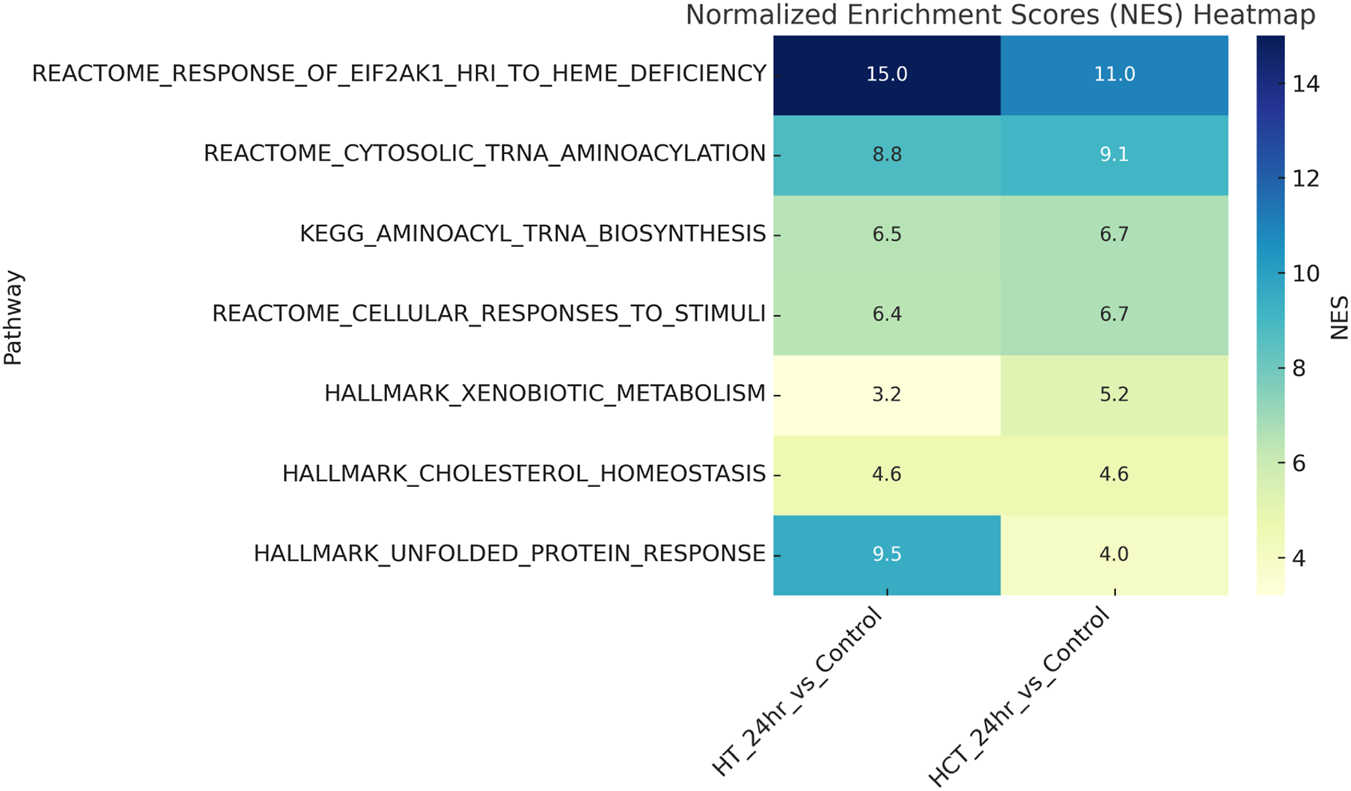
A diagrammatic presentation of common pathways modulated in both HT-29 and HCT116 cells by Erastin at 24 h exposure.
A landscape plot to was constructed to visualize important ferroptotic pathways influenced by ER treatment in both HT-29 and HCT116 cells at 24 h. As shown in Figure 7, several biologically relevant pathways common to both cell lines were affected by ER treatment. Pathways that relate to and define ferroptosis are summarized in Table 1. We found that ROS and unfolded protein response (UPR) pathways were significantly enhanced in both cell lines while M-TORC1 Signaling and Fatty Acid Metabolism were decreased. MTORC1 signaling is indicative of enhanced ferroptosis as MTORC1 controls both lipid metabolism (Cheon and Cho, 2021) and cholesterol synthesis (Lu et al., 2020).
FIGURE 7
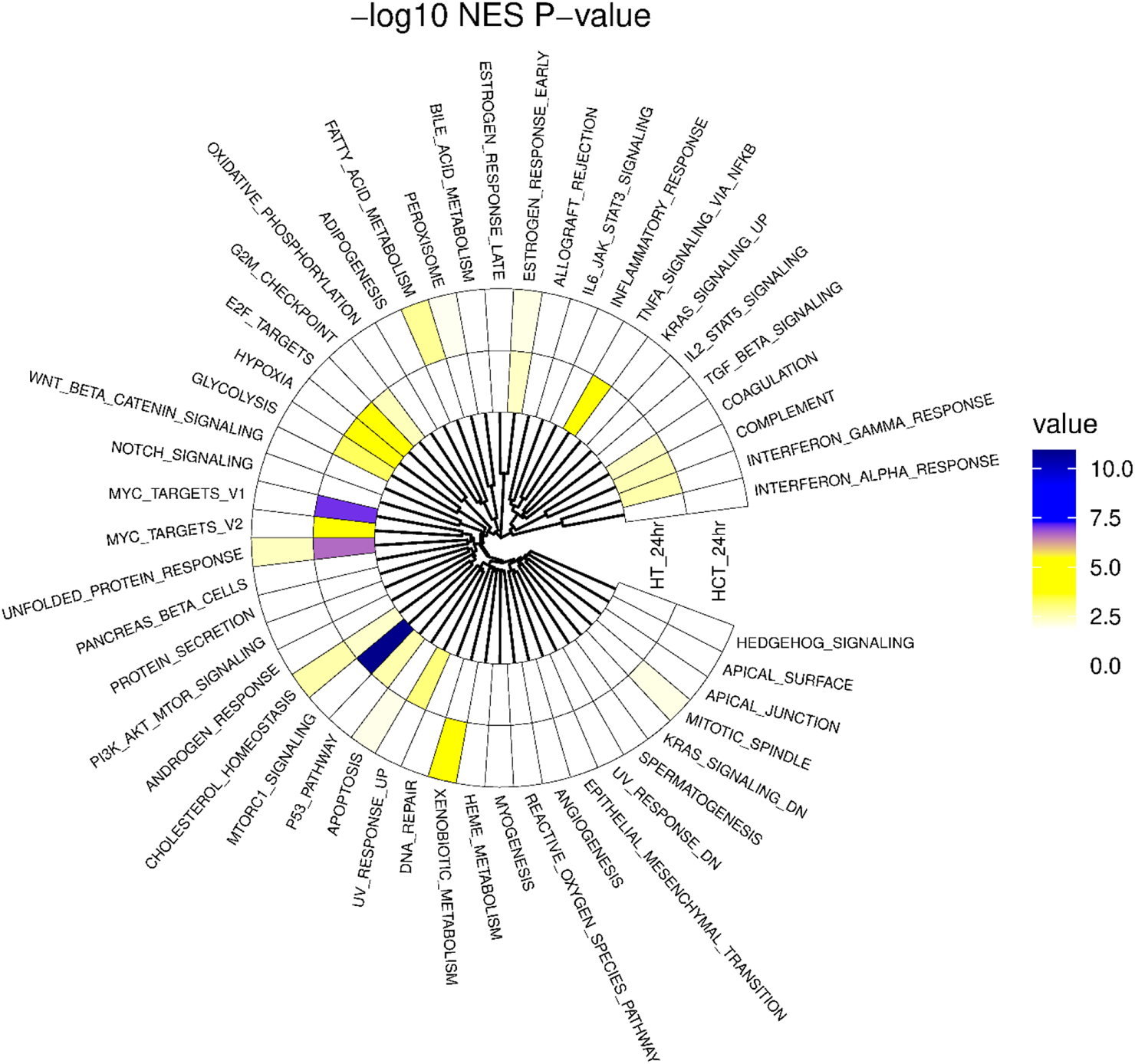
Landscape Plot depicting the -log10p-values of each hallmark (n = 50) pathway across the four exposure groups. Pathways are ordered in the circular view based on hierarchal clustering of the gene membership (i.e., gene set similarity).
TABLE 1
| Pathway | HT-29 NES | HCT116 NES | Significance |
|---|---|---|---|
| Interferon alpha response | 0.74 | 2.47 | Strong immune activation |
| Interferon gamma response | 4.26 | 1.20 | Strong immune activation |
| Glycolysis | 5.03 | 1.85 | Metabolism shift, enhanced in HT-29 |
| ROS pathway | 0.51 | 2.41 | Increased ROS in HCT116 |
| Unfolded protein response (UPR) | 9.45 | 3.97 | Oxidative stress-induced protein folding |
| Xenobiotic metabolism | 3.18 | 5.22 | Detoxification of reactive species |
| Oxidative phosphorylation | 1.06 | 1.13 | Decreased in both, consistent with ferroptosis |
| M-TORC1 signaling | 12.26 | 2.34 | Higher activity in HT-29 than HCT116 |
| Fatty acid metabolism | 1.47 | 4.34 | Increase in lipid metabolism, more in HCT116 |
Comparative table for ferroptosis-related Hallmark pathways common to both HT-29 and HCT116 cells following Erastin treatment for 24 h. NES, Normalized Enrichment Score.
RT-PCR studies
RT-PCR studies were carried out to confirm ER induced DETs that were found to be common in both cell lines by microarray analysis and have been implicated in the process of ferroptosis. To expand our comparisons, we also included DLD-1, another KRAS-mutant cell line representing the more “classical” adenoma–carcinoma pathway. Thus, HCT116, HT-29, and DLD-1 complement each other, reflecting a spectrum of genetic backgrounds frequently used in CRC research. The results of RT-PCR are shown in Figure 8.
Several common DETs observed in Microarray analysis of CRC cells following ER treatment (Supplemetary Table 2) were confirmed by RT-PCR (Figure 8). CHAC1 has been found to be an important gene for oxidative stress (Sun et al., 2024) and ferroptosis (Sinha et al., 2023). We have previously observed significant induction of CHAC1 in CRC during ferroptosis by NCX4040 as well as in other tumor cells undergoing ferroptosis (Sinha et al., 2023). Heme oxygenase1, a biomarker gene for oxidative stress (Liu et al., 2011; Yue et al., 2015), was universally induced in all CRC cell line we tested (Supplementary Table 3) at 24 h, suggesting a strong ER-induced oxidative stress in these cells. Glutathione Peroxidase 4 (GPX4), an important gene for modulating ferroptosis, was slightly induced. It has been suggested that this upregulation of GPX4, in some cancer cells, is a compensatory mechanism to respond to ER-induced stress to prevent death from ferroptosis.
FIGURE 8
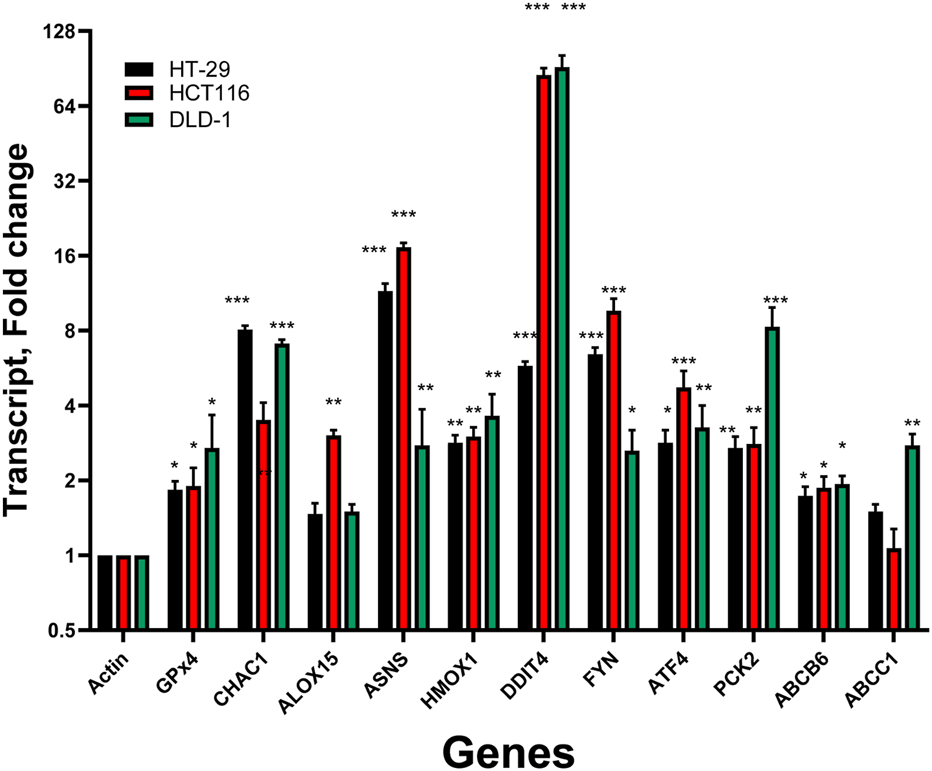
RT-PCR results for colon cancer cells following 24 h of Erastin treatment. RNA was isolated, purified, and subjected to RT-PCR as described in the Methods section. Gene expression was normalized to β-actin, and expression levels in each treatment group were compared with those of time-matched controls. Data are presented as fold change relative to β-actin. *, **, and *** indicate p < 0.05, p < 0.005, and p < 0.001, respectively.
ER treatment slightly increased expressions of ALOX5 gene which encodes for arachidonate15-lipoxygenase (also known as 15-LOX) is known to be involved in generating lipid mediators that regulate inflammation and other biological processes. ALOX15 is an important meditator of ferroptosis as it catalyzes the oxidation of polyunsaturated fatty acids (PUFAs) in cell membranes, leading to the production of ROS and lipid hydroperoxides, a hallmark of ferroptosis.
ASNA (Asparagine synthetase) is a gene that encodes for enzyme asparagine synthetase to produce aspartate and glutamine, an essential amino acid for protein synthesis. ASNS have been reported to be involved in ferroptosis and is now considered a biomarker gene in CRC, hepatocarcinoma and prostate cancer (Chen et al., 2021a; Gan et al., 2024) along with PCK2 gene (Qi et al., 2025; Li et al., 2025). Our RT-PCR results showed that ASNS gene was highly induced by ER in both HT-29 and HCT116, however, less in DLD-1 cells.
Our results also show that DDIT4 (DNA damage-inducible transcript 4) was upregulated in HT-29 cells (5.5-fold) while it was highly induced in both HCT116 and DLD-1 cells. DDIT4 is a stress-related gene that is upregulated in response to DNA damage, hypoxia, and endoplasmic reticulum damage. DDIT4 encodes a protein that has been reported to inhibit mTORC1 activity, a signaling pathway involved in cell growth, metabolism, and survival, resulting in cytotoxicity under stress conditions, especially under oxidative stress. Upregulation of DDIT4 gene has been shown to enhance ferroptotic cell death in lung cancer and in neurons (Zhou et al., 2021; Luo et al., 2023).
RT-PCR indicated ER treatment caused significant upregulations of FYN gene in both HT-29 and HCT116 cells, and a smaller upregulation in DLD-1 cells. The FYN gene encodes Fyn tyrosine kinase, a member of the Src family of kinases which is involved in cell growth, adhesion, and signaling. While Fyn is not directly involved in ferroptosis, Fyn can activate CLDN6 through phosphorylation, promoting NrF2 nuclear export and inducing ferroptosis (Qi et al., 2025). ER treatment also caused an upregulation of ATF4 (Activating transcription factor 4) in all three CRC cells. ATF4, a mediator of metabolic, oxidative homeostasis and cell survival, is upregulated in response to diverse microenvironmental stresses, ER stress damage, and oxidative stress (Kress et al., 2023; Tang et al., 2024). The function of ATF4 in ferroptosis is complex: it can act both as an inhibitor or it can upregulate ferroptosis (Chen et al., 2017; Tang et al., 2024).
ABC transporters, especially ABCB6 and ABCC1, have been implicated in ferroptosis (Zhang et al., 2025; Chen et al., 2021b; Yang et al., 2025). ABCC1 is involved in the efflux of GSH, making cells more susceptible to ferroptosis. High ABCC1 expression in tumor cells can thus make cells more sensitive to ferroptosis-inducing agents, like Erastin, due to the GSH depletion caused by ABCC1’s activity. Our RT-PCR studies showed that ABCB6 was slightly upregulated by ER treatments while ABCC1 expression was only increased in DLD-1 cells.
Discussion
Colon cancer is one of leading causes of death worldwide due to failure to treatment, resulting from the development of chemotherapy resistance. Unfortunately, there are not many CRC-selective, devoid of resistance, drugs available. There is significant need for better drugs or combinations of drugs for treatment of CRC. Ferroptosis, a new form of cell death, is characterized by iron-dependent lipid peroxidation, and has gained a great deal of recognition as a promising therapeutic avenue. Human CRC contain RAS mutations, most commonly at G13D and ferroptosis inducers, such as Erastin or RSL3, are effective against tumors harboring KRAS mutations. Both Erastin and RSL3 induce ferroptosis by inhibiting functions of GPX4, leading to generation of ROS (and lipid ROS) and that ultimately result in extensive cell membrane peroxidation and death. In recent years, combinations of ER and RSL3 with other chemotherapeutic agents have been shown to highly effective against several difficult to cure human cancers, including ABC-overexpressing tumor cells (Zhou et al., 2019; Perera et al., 2025). We have shown that combinations of ER or RSL3 with Doxorubicin or Topotecan were extremely effective in reversing MDR in both ABCB1 and ABCG2-expressing cell lines (Perera et al., 2025). Furthermore, combinations of ER with Taxol were shown to be effective in reversing MDR in a ABCB1-expressing tumor cell line (Zhou et al., 2019). These observations suggest that ferroptosis inducers may be extremely important in combinations with current drugs to treat human cancers.
However, several critical issues remain unresolved. Most importantly, there is the lack of a clear understanding of the mechanisms and pathways involved in ferroptosis. Additionally, different inducers have different mechanisms of action that are tissue and cell dependent. Early research has identified that Glutathione Peroxidase 4 (GPX4), an antioxidant enzyme that utilizes GSH as a cofactor to catalyze the reduction of lipid peroxides, is a key regulator of ferroptosis. Inhibition of Solute Carrier Family 7 Member 11 (SLC7A11) leads to the reduction of GSH, and increase in ROS formation, triggering oxidative damage and ferroptosis. The SLC7A11-GSH-GPX4 pathway is recognized as the classical pathway of ferroptosis.
Inducing or promoting cellular ferroptosis with ER or RSL3 (or their combinations with various other anticancer drugs) is a promising tumor therapy option in the clinic. However, the role of ferroptosis in CRC is not fully elucidated. Furthermore, identification of ferroptosis-related pathways, metabolic and prognostic genetic biomarkers with clinical significance in CRC have not been comprehensively evaluated. In this study, we have explored the differential expression of ferroptosis-related genes in CRC-related HT-29 and HCT116 cells in response to ER. Despite its limited clinical utility due to suboptimal pharmacokinetic properties, ER remains a valuable experimental probe for elucidating the molecular mechanisms and cellular biology of ferroptosis. Here, we have utilized Gene Set Enrichment Analysis (GSEA) to explore functionally related pathways to identify potential biomarkers genes and therapeutic targets for early diagnosis and prognosis of CRC, leading to improved clinical strategies. Biomarkers are important tools for early detection in the treatment of cancers with chemotherapy. Biomarkers, including genes, offer many advantages in chemotherapy, helping in selection of personalized cancer treatment, and improved treatment outcomes with reduced risks. Furthermore, the identification of biomarkers of ferroptosis can significantly enhance the field of chemotherapy by providing tools to monitor, predict, and potentially mitigate cell death of normal cells/tissues due to iron-dependent lipid peroxidation.
Our studies show that some transcripts were highly enriched in both HT-29 and HCT-116 cell line following ER treatment at 24 h. Since few transcripts or pathways were observed at 4 h in these cell lines, most of our analysis with differential gene expressions and pathways were carried out at 24 h. While many transcripts were induced in HT-29 and HCT116 cells by ER, 26 transcripts were found to be common in both cell line (Table 1). Several of the common transcripts (e.g., ASNS, PCK2, CHAC1, and DDTI4) were highly enriched in both cell lines, indicating a common, fundamental response to ER treatment leading to either processes for cell survival or to ER-dependent ferroptotic cell death. Several of these transcripts have been previously shown to be upregulated during the process of ferroptosis, however, the expression these genes have not been observed in colon cell lines. Our RT-PCR studies conducted with HT-29, HCT116 and DLD-1 cells also confirmed the induction of these genes following treatment with ER. Our study suggests that ASNS, CHAC1, PCK2, DDIT4 and ATF3/4 may represent biomarker genes for CRC and other human tumors undergoing ferroptosis.
In this study we have also identified several common pathways that were significantly affected by ER at 24 h (Supplementary Table 4; Figure 5). Notable pathways that were influenced by ER were EIF2AK1-Heme deficiency, unfolded protein response (UPR) and changes in xenobiotic metabolism, indicating differential regulation of detoxification genes, possibly due to exposure to ER or its metabolites. Heme catabolism and UPR are well known oxidative stress responses, leading to ferroptosis. A Landscape plot (Figure 7) also identified important ferroptosis-related pathways that were differently modulated by ER in HT-29 and HCT116 cells. Interferon-dependent immune response was enriched in HT-29 by ER (HALLMARK_INTERFERON_GAMMA_RESPONSE NES = 4.26, adjusted p-value = 0.0115) In HT-29, four of the 5 DETs in this pathway were upregulated. While Hallmark interferon-dependent immune response pathways were not significantly enriched in HCT116, the alpha and gamma response pathways each contained three upregulated DETs.
Our studies also show that ER treatment significantly enriched glycolysis in HT-29 (HALLMARK_GLYCOLYSIS pathway NES = 5.03, adjusted p-value = 0.0034). Four of 6 DETs in this pathway in HT-29 were upregulated. This pathway was not significantly enriched in HCT116 cells (NES = 1.85, adjusted p-value = 0.2216). However, all 4 DETs in this pathway were upregulated. Upregulation of glycolysis concomitantly decreases oxidative phosphorylation, an effect known as the Warburg effect (Vander Heiden et al., 2009; Papaneophytou, 2024). This metabolic rewiring would suggest that ER caused a significant metabolic shift in these cells to produce ATP through glycolysis to compensate for increased cellular oxidative stress to survive ER-induced ferroptosis (Gotorbe et al., 2022).
In this study several pathways were identified, e.g., glycolysis, ROS, UPR, xenobiotic metabolism which are highly relevant to the mechanism of ER-induced ferroptosis. However, it should be noted that their magnitude and mode of activation depend on the inducer’s mechanism—whether upstream (e.g., Xc− inhibition by Erastin) or downstream (e.g., GPX4 inhibition by inducers). These findings also suggest therapeutic opportunities. Since many cancers already harbor elevated ROS, further increasing ROS via ferroptosis inducers could selectively kill tumor cells while sparing normal tissue. This could be enhanced by combining ferroptosis inducers with ROS-generating therapies, e.g., radiation, doxorubicin, photodynamic therapy (Perera et al., 2025; Ye et al., 2020; Lei et al., 2021) while simultaneously blocking antioxidant defenses (NRF2, GSH, thioredoxin).
Erastin-induced glycolysis represents a survival adaptation, rendering tumor cells more dependent on glucose metabolism (Yao et al., 2021; Kirkwood-Donelson et al., 2024). This vulnerability could be exploited by combining ferroptosis inducers with glycolysis inhibitors (e.g., 2-deoxyglucose) or pentose phosphate pathway (PPP) inhibitors, thereby blocking NADPH generation and enhancing tumor killing. UPR pathways were also upregulated in both cells indicating endoplasmic reticulum stress, due to accumulation of misfolded proteins, resulting from oxidative stress, central to ER mechanism of ferroptosis. Xenobiotics pathways identified in this study is a novel finding and has not been previously reported in CRC with ER. This would suggest a shift in metabolism and detoxification of ER as the pathway was found to be elevated in both HT-29 and HCT116. This is currently under investigation as this may have implications in ER resistance in HCT116 cells.
While mechanisms of ER sensitivity were not the focus of this study, differential sensitivity of ER in CRC cell lines have been noted before (Gotorbe et al., 2022; Hu et al., 2022). However, the underlying mechanism of resistance is not known. Hence, elucidating the mechanism of resistance of colon cancer cells to Erastin-induced ferroptosis are of utmost importance.
Our studies, however, indicated that ROS metabolic activity was slightly enhanced in HCT116 cells by ER treatment, as evidenced in the gene enrichment analysis. SOD1 was significantly upregulated in the HCT116 cell line, suggesting detoxication of O2−. (superoxide anion radical) and ROS, thereby decreasing lipid peroxidation, causing a decrease in ER-dependent ferrototic cell death. In addition, gene enrichment analysis showed that expression of NQO1 (NAD(P)H quinone dehydrogenase 1) was also elevated in the HCT116 cell line, suggesting further detoxification of ER-induced ROS and its metabolites in cells as NQO1 inhibits free radical formation and protects cells from oxidative stress (Luo et al., 2018; Ma et al., 2024). NQO1 has also been shown to maintain the reduced forms of endogenous antioxidants (e.g., ubiquinone and alpha-tocopherol), which are crucial for protecting cellular membranes from peroxidation (Ergen et al., 2007; Ross and Siegel, 2017). These events, e.g., increased SOD1 and NQO1 expression would result in enhanced detoxification of ER-dependent ROS, leading to a decreased ER sensitivity to HCT116 cells as observed here. Xenobiotic metabolism pathways were also enriched in HCT116 cells (8 DET’s, six upregulated and two downregulated, NES 5.2) compared to HT-29 cells (4 DET’s, two upregulated and two downregulated, NES 3.18), suggesting an enhanced detoxification of reactive metabolites of ER in HCT116 cell line. Work is in progress to address these in detail and to further evaluate roles of these genes in ER sensitivity in CRC cells and will be reported separately at a future time.
In conclusion, our study has identified several genes in CRC cells that are characteristics of ferroptosis induced by Erastin, and 15 transcripts were found to be common in both cell lines at the more stringent foldchange threshold of 1.5. Several of these genes (e.g., ASNS, PCK2, CHAC1, and DDTI4) were highly enriched in both cell lines, indicating a common response to ER-induced cell death. Induction of these genes was confirmed by RT-PCR in three CRC cell lines; HT-29, HCT116 and DLD-1. Our findings indicate that ASNS, CHAC1, PCK2 DDIT4 along with ATF3/4 may represent major biomarker genes for CRC. Monitoring these ferroptosis-related gene biomarkers may be helpful in identifying patients who will respond to ferroptosis inducers and develop personalize treatment options.
Statements
Data availability statement
The datasets presented in this study can be found in online repositories. The names of the repository/repositories and accession number(s) can be found in the article/Supplementary Material.
Ethics statement
Ethical approval was not required for the studies on humans in accordance with the local legislation and institutional requirements because only commercially available established cell lines were used. Ethical approval was not required for the studies on animals in accordance with the local legislation and institutional requirements because only commercially available established cell lines were used.
Author contributions
MB-M: Methodology, Writing – review and editing, Data curation, Formal Analysis, Validation. DP: Data curation, Formal Analysis, Writing – review and editing, Validation. DM: Data curation, Writing – review and editing, Validation. RS: Formal Analysis, Writing – review and editing, Validation. KS: Data curation, Formal Analysis, Writing – review and editing, Validation. CM: Writing – review and editing, Investigation, Methodology. ET: Methodology, Writing – review and editing. BS: Methodology, Writing – review and editing, Conceptualization, Investigation, Supervision, Writing – original draft.
Funding
The author(s) declared that financial support was received for this work and/or its publication. This research was funded by the intramural research program (Grant number ZIA E505013922 and CARCI-HEI#) of the National Institute of Environmental Health Sciences, NIH. Statements contained herein do not necessarily represent the statements of, opinions or conclusions of NIEHS, NIH, or the US government.
Acknowledgments
Authors thank Brian Silver and B. Alex Merrick for their critical evaluation of the manuscript. Authors also thank Kevin Gerrish of DNA Microarray Center at NIEHS for his invaluable help with these studies. Authors also acknowledge support to Sciome LLC with contract number 75N96024C00003.
Conflict of interest
Authors MB-M, DP, DM, and RS were employed by Sciome LLC.
The remaining author(s) declared that this work was conducted in the absence of any commercial or financial relationships that could be construed as a potential conflict of interest.
Generative AI statement
The author(s) declared that generative AI was not used in the creation of this manuscript.
Any alternative text (alt text) provided alongside figures in this article has been generated by Frontiers with the support of artificial intelligence and reasonable efforts have been made to ensure accuracy, including review by the authors wherever possible. If you identify any issues, please contact us.
Publisher’s note
All claims expressed in this article are solely those of the authors and do not necessarily represent those of their affiliated organizations, or those of the publisher, the editors and the reviewers. Any product that may be evaluated in this article, or claim that may be made by its manufacturer, is not guaranteed or endorsed by the publisher.
Supplementary material
The Supplementary Material for this article can be found online at: https://www.frontiersin.org/articles/10.3389/fmolb.2025.1680206/full#supplementary-material
References
1
Biller L. H. Schrag D. (2021). Diagnosis and treatment of metastatic colorectal cancer: a review. JAMA325, 669–685. 10.1001/jama.2021.0106
2
Bray F. Ferlay J. Soerjomataram I. Siegel R. L. Torre L. A. Jemal A. (2018). Global cancer statistics 2018: GLOBOCAN estimates of incidence and mortality worldwide for 36 cancers in 185 countries. CA Cancer J. Clin.68, 394–424. 10.3322/caac.21492
3
Brown S. M. Sinha B. K. Cannon R. E. (2024). A role for iNOS in erastin mediated reduction of P-Glycoprotein transport activity. Cancers (Basel)16, 1733. 10.3390/cancers16091733
4
Carvalho B. S. Irizarry R. A. (2010). A framework for oligonucleotide microarray preprocessing. Bioinformatics26, 2363–2367. 10.1093/bioinformatics/btq431
5
Chen L. Li X. Liu L. Yu B. Xue Y. Liu Y. (2015). Erastin sensitizes glioblastoma cells to temozolomide by restraining xCT and cystathionine-gamma-lyase function. Oncol. Rep.33, 1465–1474. 10.3892/or.2015.3712
6
Chen D. Fan Z. Rauh M. Buchfelder M. Eyupoglu I. Y. Savaskan N. (2017). ATF4 promotes angiogenesis and neuronal cell death and confers ferroptosis in a xCT-dependent manner. Oncogene36, 5593–5608. 10.1038/onc.2017.146
7
Chen X. Comish P. B. Tang D. Kang R. (2021a). Characteristics and biomarkers of ferroptosis. Front. Cell. Dev. Biol.9, 637162. 10.3389/fcell.2021.637162
8
Chen X. Li J. Kang R. Klionsky D. J. Tang D. (2021b). Ferroptosis: machinery and regulation. Autophagy17, 2054–2081. 10.1080/15548627.2020.1810918
9
Cheon S. Y. Cho K. (2021). Lipid metabolism, inflammation, and foam cell formation in health and metabolic disorders: targeting mTORC1. J. Mol. Med. Berl.99, 1497–1509. 10.1007/s00109-021-02117-8
10
Dekker E. Tanis P. J. Vleugels J. L. A. Kasi P. M. Wallace M. B. (2019). Colorectal cancer. Lancet394, 1467–1480. 10.1016/S0140-6736(19)32319-0
11
Dixon S. J. Lemberg K. M. Lamprecht M. R. Skouta R. Zaitsev E. M. Gleason C. E. et al (2012). Ferroptosis: an iron-dependent form of nonapoptotic cell death. Cell.149, 1060–1072. 10.1016/j.cell.2012.03.042
12
Dixon S. J. Patel D. N. Welsch M. Skouta R. Lee E. D. Hayano M. et al (2014). Pharmacological inhibition of cystine-glutamate exchange induces endoplasmic reticulum stress and ferroptosis. Elife3, e02523. 10.7554/eLife.02523
13
Ergen H. A. Gormus U. Narter F. Zeybek U. Bulgurcuoglu S. Isbir T. (2007). Investigation of NAD(P)H:quinone oxidoreductase 1 (NQO1) C609T polymorphism in prostate cancer. Anticancer Res.27, 4107–4110.
14
Gan T. Wei X. Xing Y. Hu Z. (2024). Construction of prognostic prediction models for colorectal cancer based on ferroptosis-related genes: a multi-dataset and multi-model analysis. Biomed. Eng. Comput. Biol.15, 11795972241293516. 10.1177/11795972241293516
15
Gotorbe C. Durivault J. Meira W. Cassim S. Zdralevic M. Pouyssegur J. et al (2022). Metabolic rewiring toward oxidative phosphorylation disrupts intrinsic resistance to ferroptosis of the Colon adenocarcinoma cells. Antioxidants (Basel)11, 2412. 10.3390/antiox11122412
16
Hu Q. Wei W. Wu D. Huang F. Li M. Li W. et al (2022). Blockade of GCH1/BH4 axis activates ferritinophagy to mitigate the resistance of colorectal cancer to erastin-induced ferroptosis. Front. Cell. Dev. Biol.10, 810327. 10.3389/fcell.2022.810327
17
Kirkwood-Donelson K. I. Jarmusch A. K. Bortner C. D. Merrick B. A. Sinha B. K. (2024). Metabolic consequences of erastin-induced ferroptosis in human ovarian cancer cells: an untargeted metabolomics study. Front. Mol. Biosci.11, 1520876. 10.3389/fmolb.2024.1520876
18
Kress J. K. C. Jessen C. Hufnagel A. Schmitz W. Xavier D Silva T. N. Ferreira Dos Santos A. et al (2023). The integrated stress response effector ATF4 is an obligatory metabolic activator of NRF2. Cell. Rep.42, 112724. 10.1016/j.celrep.2023.112724
19
Lei G. Mao C. Yan Y. Zhuang L. Gan B. (2021). Ferroptosis, radiotherapy, and combination therapeutic strategies. Protein Cell.12, 836–857. 10.1007/s13238-021-00841-y
20
Li H. Hu X. Wang L. Gu X. Chen S. Tang Y. et al (2025). The expression of ferroptosis-related genes in hepatocellular carcinoma and their relationships with prognosis. J. Hepatocell. Carcinoma12, 629–648. 10.2147/JHC.S500394
21
Liberzon A. Subramanian A. Pinchback R. Thorvaldsdottir H. Tamayo P. Mesirov J. P. (2011). Molecular signatures database (MSigDB) 3.0. Bioinformatics27, 1739–1740. 10.1093/bioinformatics/btr260
22
Liberzon A. Birger C. Thorvaldsdottir H. Ghandi M. Mesirov J. P. Tamayo P. (2015). The molecular signatures database (MSigDB) hallmark gene set collection. Cell. Syst.1, 417–425. 10.1016/j.cels.2015.12.004
23
Liu Y. Liang Y. Zheng T. Yang G. Zhang X. Sun Z. et al (2011). Inhibition of heme oxygenase-1 enhances anti-cancer effects of arsenic trioxide on glioma cells. J. Neurooncol104, 449–458. 10.1007/s11060-010-0513-1
24
Lu X. Y. Shi X. J. Hu A. Wang J. Q. Ding Y. Jiang W. et al (2020). Feeding induces cholesterol biosynthesis via the mTORC1-USP20-HMGCR axis. Nature588, 479–484. 10.1038/s41586-020-2928-y
25
Luo S. Lei K. Xiang D. Ye K. (2018). NQO1 is regulated by PTEN in glioblastoma, mediating cell proliferation and oxidative stress. Oxid. Med. Cell. Longev.2018, 9146528. 10.1155/2018/9146528
26
Luo T. Chen S. S. Ruan Y. Chen H. Y. Chen Y. M. Li Y. M. et al (2023). Downregulation of DDIT4 ameliorates abnormal behaviors in autism by inhibiting ferroptosis via the PI3K/Akt pathway. Biochem. Biophys. Res. Commun.641, 168–176. 10.1016/j.bbrc.2022.12.032
27
Ma N. Zhang M. Hu J. Wei Z. Zhang S. (2024). Daphnetin induces ferroptosis in ovarian cancer by inhibiting NAD(P)H:Quinone oxidoreductase 1 (NQO1). Phytomedicine132, 155876. 10.1016/j.phymed.2024.155876
28
Papaneophytou C. (2024). The warburg effect: is it always an enemy?Front. Biosci. (Landmark Ed.)29, 402. 10.31083/j.fbl2912402
29
Perera L. Brown S. M. Silver B. B. Tokar E. J. Sinha B. K. (2025). Ferroptosis inducers erastin and RSL3 enhance adriamycin and topotecan sensitivity in ABCB1/ABCG2-Expressing tumor cells. Int. J. Mol. Sci.26, 635. 10.3390/ijms26020635
30
Qi D. Lu Y. Qu H. Dong Y. Jin Q. Sun M. et al (2025). CLDN6 triggers NRF2-mediated ferroptosis through recruiting DLG1/PBK complex in breast cancer. Cell. Death Dis.16, 122. 10.1038/s41419-025-07448-9
31
Ross D. Siegel D. (2017). Functions of NQO1 in cellular protection and CoQ(10) metabolism and its potential role as a redox sensitive molecular switch. Front. Physiol.8, 595. 10.3389/fphys.2017.00595
32
Singh M. Arora H. L. Naik R. Joshi S. Sonawane K. Sharma N. K. et al (2025). Ferroptosis in cancer: mechanism and therapeutic potential. Int. J. Mol. Sci.26, 10279. 10.3390/ijms262110279
33
Sinha B. K. Tokar E. J. Bushel P. R. (2020). Elucidation of mechanisms of topotecan-induced cell death in human breast MCF-7 cancer cells by gene expression analysis. Front. Genet.11, 775. 10.3389/fgene.2020.00775
34
Sinha B. K. Bortner C. D. Jarmusch A. K. Tokar E. J. Murphy C. Wu X. et al (2023). “Ferroptosis-mediated cell death induced by NCX4040, the non-steroidal nitric oxide donor,” in Human colorectal cancer cells: implications in therapy, 12.Cells
35
Sun J. Ren H. Wang J. Xiao X. Zhu L. Wang Y. et al (2024). CHAC1: a master regulator of oxidative stress and ferroptosis in human diseases and cancers. Front. Cell. Dev. Biol.12, 1458716. 10.3389/fcell.2024.1458716
36
Sung H. Ferlay J. Siegel R. L. Laversanne M. Soerjomataram I. Jemal A. et al (2021). Global cancer statistics 2020: GLOBOCAN estimates of incidence and mortality worldwide for 36 cancers in 185 countries. CA Cancer J. Clin.71, 209–249. 10.3322/caac.21660
37
Tang H. Kang R. Liu J. Tang D. (2024). ATF4 in cellular stress, ferroptosis, and cancer. Arch. Toxicol.98, 1025–1041. 10.1007/s00204-024-03681-x
38
Vander Heiden M. G. Cantley L. C. Thompson C. B. (2009). Understanding the warburg effect: the metabolic requirements of cell proliferation. Science324, 1029–1033. 10.1126/science.1160809
39
Wang Y. Zhang Z. Sun W. Zhang J. Xu Q. Zhou X. et al (2022). Ferroptosis in colorectal cancer: potential mechanisms and effective therapeutic targets. Biomed. Pharmacother.153, 113524. 10.1016/j.biopha.2022.113524
40
Wu Z. Fang Z. X. Hou Y. Y. Wu B. X. Deng Y. Wu H. T. et al (2023). Review of ferroptosis in colorectal cancer: friends or foes?World J. Gastroenterol.29, 469–486. 10.3748/wjg.v29.i3.469
41
Yan H. Talty R. Johnson C. H. (2023). Targeting ferroptosis to treat colorectal cancer. Trends Cell. Biol.33, 185–188. 10.1016/j.tcb.2022.11.003
42
Yang W. S. Stockwell B. R. (2016). Ferroptosis: death by lipid peroxidation. Trends Cell. Biol.26, 165–176. 10.1016/j.tcb.2015.10.014
43
Yang L. Xu Y. Han J. Fang C. Yang Z. Zhang R. et al (2025). SALL4/ABCB6 axis suppresses ferroptosis in Colon cancer by mediating mitophagy. J. Biochem. Mol. Toxicol.39, e70183. 10.1002/jbt.70183
44
Yao X. Li W. Fang D. Xiao C. Wu X. Li M. et al (2021). Emerging roles of energy metabolism in ferroptosis regulation of tumor cells. Adv. Sci. (Weinh)8, e2100997. 10.1002/advs.202100997
45
Ye L. F. Chaudhary K. R. Zandkarimi F. Harken A. D. Kinslow C. J. Upadhyayula P. S. et al (2020). Radiation-induced lipid peroxidation triggers ferroptosis and synergizes with ferroptosis inducers. ACS Chem. Biol.15, 469–484. 10.1021/acschembio.9b00939
46
Yue Z. Zhong L. Mou Y. Wang X. Zhang H. Wang Y. et al (2015). Arsenic trioxide activate transcription of heme Oxygenase-1 by promoting nuclear translocation of NFE2L2. Int. J. Med. Sci.12, 674–679. 10.7150/ijms.12450
47
Zhang M. Zheng H. Zhu X. Liu S. Jin H. Chen Y. et al (2025). Synchronously evoking disulfidptosis and ferroptosis via systematical glucose deprivation targeting SLC7A11/GSH/GPX4 antioxidant axis. ACS Nano19, 14233–14248. 10.1021/acsnano.5c00730
48
Zheng Y. Li L. Chen H. Zheng Y. Tan X. Zhang G. et al (2023). Luteolin exhibits synergistic therapeutic efficacy with erastin to induce ferroptosis in Colon cancer cells through the HIC1-mediated inhibition of GPX4 expression. Free Radic. Biol. Med.208, 530–544. 10.1016/j.freeradbiomed.2023.09.014
49
Zhou H. H. Chen X. Cai L. Y. Nan X. W. Chen J. H. Chen X. X. et al (2019). Erastin reverses ABCB1-Mediated docetaxel resistance in ovarian cancer. Front. Oncol.9, 1398. 10.3389/fonc.2019.01398
50
Zhou J. Wang X. Li Z. Jiang R. (2021). Construction and analysis of a novel ferroptosis-related gene signature predicting prognosis in lung adenocarcinoma. FEBS Open Bio11, 3005–3018. 10.1002/2211-5463.13288
Summary
Keywords
colon cancer, erastin, ferroptosis, biomarker genes, pathway analysis
Citation
Balik-Meisner M, Phadke D, Mav D, Shah R, Shockley KR, Murphy C, Tokar EJ and Sinha BK (2026) Gene expression profiling identifies ferroptosis-related genes and pathways in human colon cancers cell lines. Front. Mol. Biosci. 12:1680206. doi: 10.3389/fmolb.2025.1680206
Received
05 August 2025
Revised
24 November 2025
Accepted
02 December 2025
Published
20 January 2026
Volume
12 - 2025
Edited by
Mahendra Pratap Kashyap, University of Alabama at Birmingham, United States
Reviewed by
Sawanan Saitornuang, University of Alabama at Birmingham Epilepsy Center (UABEC), United States
Celina Kruszniewska-Rajs, Medical University of Silesia, Poland
Updates
Copyright
This work is authored by M. Balik-Meisner, D. Phadke, D. Mav, R. Shah, K. R. Shockley, Carri Murphy, Erik J. Tokar and Birandra K. Sinha on behalf of the U.S. Government and as regards Dr. Balik-Meisner, Dr. Phadke, Dr. Mav, Dr. Shah, Dr. Shockley, Dr. Murphy, Dr. Tokar, Dr. Sinha and the U.S. Government, is not subject to copyright protection in the United States. Foreign and other copyrights may apply.
This is an open-access article distributed under the terms of the Creative Commons Attribution License (CC BY). The use, distribution or reproduction in other forums is permitted, provided the original author(s) and the copyright owner(s) are credited and that the original publication in this journal is cited, in accordance with accepted academic practice. No use, distribution or reproduction is permitted which does not comply with these terms.
*Correspondence: Birandra K. Sinha, sinha1@niehs.nih.gov
Disclaimer
All claims expressed in this article are solely those of the authors and do not necessarily represent those of their affiliated organizations, or those of the publisher, the editors and the reviewers. Any product that may be evaluated in this article or claim that may be made by its manufacturer is not guaranteed or endorsed by the publisher.