 Libertad Rojas Yanez
 Huatian Hu2†
 Cristian Ciracì
 Stefano Palomba
- 1Institute for Photonics and Optical Sciences, School of Physics, University of Sydney, Sydney, NSW, Australia
- 2Istituto Italiano di Tecnologia, Center for Biomolecular Nanotechnologies, Lecce, Italy
Interest and excitement in nanophotonics—the study and control of light-matter interactions at the nanoscale—are driven by the ability to confine light to volumes well below a cubic wavelength, and, thereby, achieve extremely high intensities. This leads to light-matter interactions of unprecedented localization and strength. Such extreme behavior—both in terms of field enhancement and localization—can be achieved using plasmonic nanostructures, which concentrate light in regions much smaller than the wavelength of light, reducing the excitation power and, under certain conditions, removing phase-matching requirements in the nonlinear regime. In this study, we theoretically show that metal–dielectric–metal (MDM) slot waveguides (WGs), consisting of a thin dielectric layer sandwiched between metal films, provide the strongest confinement. We also demonstrate that integrating epsilon-near-zero (ENZ) materials within the MDM slot significantly improves the nonlinear conversion efficiency of these structures. The results show that the degenerate four-wave mixing conversion efficiency of these ENZ-MDM structures surpasses that of regular plasmonic structures and their dielectric counterparts, even under low pump power conditions, and remains robust despite higher losses in the ENZ material.
1 Introduction
As photonic technologies progress, there is a growing need for faster, more compact integrated photonic circuits that deliver ultrafast response times, broad bandwidth, and reduced driving power (Tuniz, 2021; Yue et al., 2024; Garmire, 2013).
Photonic integrated circuits (PICs), which have waveguides (WGs) as their fundamental building block, were developed in the 1960s (Miller, 1969) and are currently an established and successful platform for transporting and processing light on-chip. PICs are nowadays ubiquitous, from telecommunications (Doerr, 2015) to sensing (Subramanian et al., 2015), machine learning (Bogaerts et al., 2020), potential neuromorphic intelligence (Prucnal and Shastri, 2017), and quantum optical technologies (O'Brien, 2007; Kim et al., 2020; Madsen et al., 2022; Bartolucci et al., 2023). Quantum computing advancements, for instance, have been greatly enhanced by PICs, where effects such as spontaneous four-wave mixing (SFWM) and non-classical light states like squeezed light are crucial for achieving advantages in quantum optical computation, as exemplified by advanced photonic systems like the Jiuzhang quantum computer and Xanadu’s Borealis processor (Madsen et al., 2022; Zhong et al., 2020).
PICs have tremendous advantages over their electronic counterparts, like repeatability, robustness to electromagnetic noise, room temperature operation, and the capability to modulate and transport information directly via photons—hence, at the speed of light. However, all optical processing that requires photon–photon interactions, like coherent light generation, all-optical switching, quantum optical squeezing, and terahertz photonics, is impaired because photons do not interact with each other. For this to occur, photon interactions must be mediated by a medium and are essentially photon-electron nonlinear interactions. These interactions are extremely weak and, consequently, require both high light intensities and materials with large intrinsic nonlinearities (Boyd, 2003).
One of the many “nonlinear effects” produced by light-matter interactions is the change in the refractive index
Nonlinear photonic devices are attractive for signal generation and processing in classical and quantum regimes and for applications in sensing and imaging (Wabnitz and Eggleton, 2015; Hendrickson et al., 2014; Garmire, 2013). However, small, efficient, nonlinear nanophotonic devices require huge optical intensities to be confined in nanoscale volumes. PICs are not suitable for this due to their intrinsic limitation caused by the diffraction of light, which constrains waveguides to dimensions larger than
In the work done by Li et al. (2018a), the authors explored the nonlinear performance of plasmonic waveguides by comparing different plasmonic waveguide configurations. In their investigation of the Kerr nonlinear performance of plasmonic waveguides, Li et al. (2018a) focused on the maximum achievable nonlinear effects in waveguides while accounting for optical damage by ensuring that the local field intensity remains below the damage threshold of the nonlinear materials. They highlighted that the best nonlinear plasmonic structure is the MDM. Its enhancement originates from the slow-light effect due to the forward propagation of energy in a nonlinear dielectric and backward propagation in the metal due to its negative permittivity. As a result, this provides a significant increase in the effective interaction length within a nonlinear medium and gives rise to a larger nonlinear response. MDM structures also maintain strong and uniform energy confinement even as the thickness of the central layer approaches 0 (Maradudin et al., 2014). The authors also showed that the maximum nonlinear conversion efficiency is inversely proportional to the linear refractive index of the nonlinear medium to the power of α, which is an integer determined by the structure’s configuration. This relationship suggests significant potential for enhancing performance by selecting materials with lower refractive indices, such as ENZ materials.
Still, ENZ materials alone, like ITO, reach a limit as they suffer from relatively high optical losses that are intrinsically linked to their nonlinear behavior (Tuniz, 2021; Wu et al., 2021). These losses are caused by free carrier scattering, arising from energy dissipation due to ohmic losses (Tuniz, 2021) and making it essential for ENZ materials to be as compact as possible when integrated into plasmonic devices (Li et al., 2024). This constitutes one of the major challenges in the development of nonlinear nanophotonic devices, requiring extreme optical intensities to be confined within nanoscale volumes. As previously mentioned, MDM slot waveguides provide the strongest confinement with the least amount of driving power compared to other waveguide geometries and, therefore, serve as an ideal platform for exploiting the extreme nonlinear effects of ENZ materials.
Multiple works have reported that ENZ films in nano-antenna plasmonic structures result in larger nonlinear responses, achieving high field confinement, tunable second-harmonic generation (SHG), and ultrafast refractive index changes (Schulz et al., 2020; Alam et al., 2018; Dass et al., 2020; Xu et al., 2023). Dass et al. (2020) reported that ENZ-modified metal–insulator–metal (MIM) patch nano-antennas coupled with ITO films showed SHG enhancements up to 50,000 times compared to off-device setups and achieved near-perfect absorption (>98%) across a 245 nm range at a wavelength of 1,150 nm, enabling tunable SHG with high enhancement factors.
In this work, we show that integrating ENZ materials with MDM slot waveguides would boost the nonlinear conversion efficiency, even if the losses of the ENZ are higher than those of the metal. We conduct simulations on MDM slot waveguides integrated with ENZ media, which exhibit unprecedented nonlinear optical conversion efficiency in an ultra-compact device. We first demonstrate that the degenerate four-wave mixing (DFWM) conversion efficiency of MDM slot waveguides integrated with the DDMEBT polymer as the nonlinear medium is significantly higher than that of any dielectric counterpart; furthermore, the device is extremely compact and exhibits a pump power consumption of orders of magnitude lower than any dielectric counterpart. We then theoretically demonstrate that changing the nonlinear polymer with an ENZ material effectively supplies an additional benefit to the nonlinear conversation efficiency.
2 Methods
2.1 Theoretical model
The nonlinear effect of interest in this proposal is the Kerr effect. In conventional treatment, it leads, amongst other things, to a variation
Comparing different classes of devices typically requires an appropriate figure of merit (FOM). FOMs for waveguides that have been used include
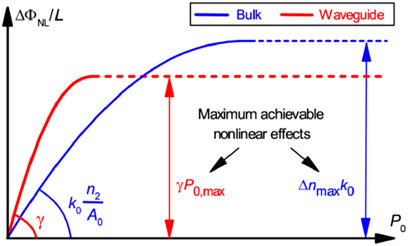
Figure 1. Nonlinear phase shift per unit length
For many years, metal-based waveguide devices have promised to overcome many challenges in nonlinear optics (Palomba et al., 2009; Palomba et al., 2010; Kauranen and Zayats, 2012). Compared to dielectric slot waveguides, MDM plasmonic waveguides have demonstrated higher nonlinear conversion efficiency.
On one hand, metals can strongly compress light, leading to high intensities. On the other hand, losses reduce the power
A subtle deficiency of using γ as a FOM is the implicit assumption that nonlinear effects are independent of power. This cannot be true since, at very high power levels, the material sustains damage and ultimately disintegrates. There must be a power level,
ENZ materials were largely overlooked in nonlinear optics until 2016, when their unusually large nonlinear properties were first reported by Alam et al. (2016) and by Caspani et al. (2016), who conducted free-space, intensity-dependent reflection and transmission measurements on a 310-nm-thick ITO sample. They reported unprecedented changes in the ITO refractive index
This large change in the refractive index can be qualitatively understood from the relation
In summary, thus far, only free-space nonlinear optical experiments with ENZ materials have been reported. These experiments show enormous nonlinear effects, orders of magnitude larger than those in conventional materials. Transferring these experiments to waveguide geometries such as MDMs will enhance the nonlinear effects of such structures.
2.2 Computational details
Following the method reported by Li et al. (2016) and Li et al. (2018a), the DFWM conversion efficiency,
where the attenuation and nonlinear coefficients, respectively,
Here,
We have considered that the linear refractive index (
3 Results and discussion
In this section, we have applied the outlined theory to simulate the DFWM conversion efficiency of a plasmonic MDM slot waveguide, where the dielectric “D” is composed of a highly nonlinear medium, like the DDMEBT polymer. We compared the results with those of the most efficient photonic platform to generate nonlinear signals like DFWM, i.e., a fully dielectric Si-slot waveguide. We have run two simulations: one where the pump power is set to the maximum power threshold (
3.1 MDM with DDMEBT material
The first set of simulations is performed with a highly nonlinear medium, like DDMEBT, inserted within the gap of an MDM slot waveguide. These are shown in Figure 2, where the DFWM conversion efficiency of MDM slot waveguides, with the DDMEBT polymer embedded in the small gap as the nonlinear medium, is higher than its dielectric counterpart, i.e., the Si-slot waveguides.
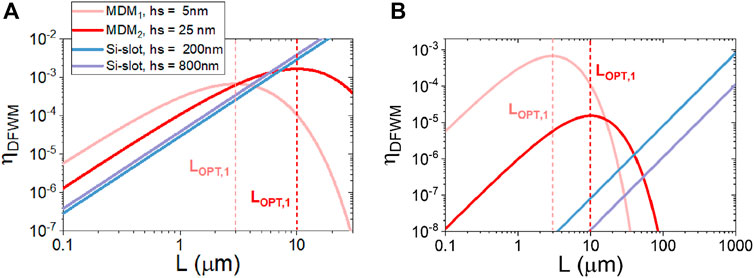
Figure 2. DFWM conversion efficiency of MDM and Si-slot waveguides for two different spacer thicknesses
When the MDM and the Si-slot waveguides are driven at their respective power thresholds (Figure 2A), both plasmonic structures exhibit a nonlinear conversion efficiency at least an order of magnitude higher than their dielectric counterparts at a device length smaller than the optimal length (
Moreover, in terms of nonlinear effectiveness
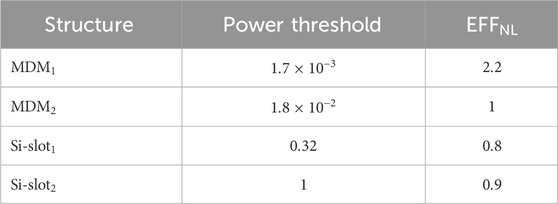
Table 1. Nonlinear effectiveness at each structure’s pump power threshold.
Table 1 shows that the plasmonic slot waveguide with the smallest gap, i.e.,
3.2 MDM with ENZ materials
In the previous section, we have demonstrated that plasmonic slot waveguides outperform their photonic counterparts for small footprints, i.e., length up to
The major issue with ENZ materials is their significant losses, which are higher than those of metals. Therefore, although it may initially appear that the addition of ENZ materials to slot waveguides would not notably enhance plasmonic structures the results shown in Figure 3 demonstrate the opposite. M–ITO–M slot waveguides exhibit a conversion efficiency that is two orders of magnitude higher than that of the most efficient MDM slot waveguide, even considering the substantial loss of the ENZ material at a wavelength where the dielectric function crosses 0.

Figure 3. Comparison of DFWM conversion efficiency of M–ENZ–M and MDM for two different spacer thicknesses
4 Conclusion
The results of our investigation highlight the significant advances achieved through MDM-ENZ slot waveguide architecture. Building on the foundational work by Li et al. (2018a), which identified MDMs as the most effective nonlinear plasmonic waveguides, we compared these structures with Si-slot waveguides and demonstrated the clear superiority of MDMs. This distinction becomes even more pronounced when all waveguides operate under the same pump power, set to the lowest power threshold. Under this condition, MDMs exhibit a nonlinear conversion efficiency approximately five orders of magnitude higher than their photonic counterparts. The unprecedented results, however, were observed when ENZ materials, such as ITO, were incorporated into the MDM structures. These M–ITO–M configurations leveraged the unique properties of ENZ materials to enhance nonlinear interactions while harnessing the strong, uniform field confinement and slow-light effects inherent to plasmonic slot waveguides. This integration resulted in an additional two orders of magnitude improvement in nonlinear conversion efficiency, surpassing even the top-performing MDM slot waveguides. Our findings demonstrate ENZ-MDM waveguide’s ability to contribute to nonlinear plasmonic structure development while also paving the way for their integration into cutting-edge on-chip applications.
Although the performance of ENZ-MDM structures is remarkable, their optimal propagation length (∼100 nm) challenges the conventional definition of waveguides. Despite this, the nonlinear conversion efficiency shown by M–ITO–M slot waveguides underscores their value, especially in applications where compactness and efficiency at a nanoscale outweigh propagation constraints. Potential applications can be sought in the field of quantum optical applications where extreme compactness and high efficiency in harnessing pure and strong nonlinearities become crucial, such as in squeezed light or photon pairs. Overall, this work underscores the untapped potential of ENZ materials in nonlinear optics, suggesting exciting directions for future experimental validation and material optimization.
Data availability statement
The raw data supporting the conclusions of this article will be made available by the authors upon request, without undue reservation.
Author contributions
LY: writing–original draft and writing–review and editing. HH: data curation, software, validation, and writing–review and editing. CC: supervision, validation, and writing–review and editing. SP: conceptualization, supervision, writing–original draft, and writing–review and editing.
Funding
The author(s) declare that no financial support was received for the research, authorship, and/or publication of this article.
Acknowledgments
The authors would like to acknowledge the insightful discussions on this subject with Prof. Martijn de Sterke (University of Sydney) and Assoc/Prof Guangyuan Li (Shenzhen Institute of Advanced Technology), which resulted to be essential for the preparation of this work.
Conflict of interest
The authors declare that the research was conducted in the absence of any commercial or financial relationships that could be construed as a potential conflict of interest.
Generative AI statement
The author(s) declare that no Generative AI was used in the creation of this manuscript.
Publisher’s note
All claims expressed in this article are solely those of the authors and do not necessarily represent those of their affiliated organizations, or those of the publisher, the editors and the reviewers. Any product that may be evaluated in this article, or claim that may be made by its manufacturer, is not guaranteed or endorsed by the publisher.
References
Alam, M. Z., De Leon, I., and Boyd, R. W. (2016). Large optical nonlinearity of indium tin oxide in its epsilon-near-zero region. Science 352, 795–797. doi:10.1126/science.aae0330
Alam, M. Z., Schulz, S. A., Upham, J., De Leon, I., and Boyd, R. W. (2018). Large optical nonlinearity of nanoantennas coupled to an epsilon-near-zero material. Nat. Photonics 12, 79–83. doi:10.1038/s41566-017-0089-9
Bartolucci, S., Birchall, P., Bombín, H., Cable, H., Dawson, C., Gimeno-Segovia, M., et al. (2023). Fusion-based quantum computation. Nat. Commun. 14, 912. doi:10.1038/s41467-023-36493-1
Bogaerts, W., Pérez, D., Capmany, J., Miller, D. A. B., Poon, J., Englund, D., et al. (2020). Programmable photonic circuits. Nature 586, 207–216. doi:10.1038/s41586-020-2764-0
Caspani, L., Kaipurath, R. P. M., Clerici, M., Ferrera, M., Roger, T., Kim, J., et al. (2016). Enhanced nonlinear refractive index in epsilon-near-zero materials. Phys. Rev. Lett. 116, 233901. doi:10.1103/physrevlett.116.233901
Cherchi, M., Ylinen, S., Harjanne, M., Kapulainen, M., and Aalto, T. (2013). Dramatic size reduction of waveguide bends on a micron-scale silicon photonic platform. Opt. Express 21, 17814–17823. doi:10.1364/oe.21.017814
Ciattoni, A., Rizza, C., and Palange, E. (2010). Extreme nonlinear electrodynamics in metamaterials with very small linear dielectric permittivity. Phys. Rev. A 81, 043839. doi:10.1103/physreva.81.043839
Dass, C. K., Kwon, H., Vangala, S., Smith, E. M., Cleary, J. W., Guo, J., et al. (2020). Gap-Plasmon-enhanced second-harmonic generation in epsilon-near-zero nanolayers. ACS Photonics 7, 174–179. doi:10.1021/acsphotonics.9b01350
Diaz, F. J., Li, G., De Sterke, C. M., Kuhlmey, B. T., and Palomba, S. (2016). Kerr effect in hybrid plasmonic waveguides. J. Opt. Soc. Am. B 33, 957–962. doi:10.1364/josab.33.000957
Doerr, C. (2015). Silicon photonic integration in telecommunications. Front. Phys. 3. doi:10.3389/fphy.2015.00037
Garmire, E. (2013). Nonlinear optics in daily life. Opt. Express 21, 30532–30544. doi:10.1364/oe.21.030532
Hendrickson, S. M., Foster, A. C., Camacho, R. M., and Clader, B. D. (2014). Integrated nonlinear photonics: emerging applications and ongoing challenges [Invited]. J. Opt. Soc. Am. B 31, 3193–3203. doi:10.1364/josab.31.003193
Hossain, M. M., Turner, M. D., and Gu, M. (2011). Ultrahigh nonlinear nanoshell plasmonic waveguide with total energy confinement. Opt. Express 19, 23800–23808. doi:10.1364/oe.19.023800
Jood, P., Mehta, R. J., Zhang, Y., Peleckis, G., Wang, X., Siegel, R. W., et al. (2011). Al-doped Zinc oxide nanocomposites with enhanced thermoelectric properties. Nano Lett. 11, 4337–4342. doi:10.1021/nl202439h
Kauranen, M., and Zayats, A. V. (2012). Nonlinear plasmonics. Nat. Photonics 6, 737–748. doi:10.1038/nphoton.2012.244
Kim, J.-H., Aghaeimeibodi, S., Carolan, J., Englund, D., and Waks, E. (2020). Hybrid integration methods for on-chip quantum photonics. Optica 7, 291–308. doi:10.1364/optica.384118
Koos, C., Vorreau, P., Vallaitis, T., Dumon, P., Bogaerts, W., Baets, R., et al. (2009). All-optical high-speed signal processing with silicon-organic hybrid slot waveguides. Nat. Photonics 3, 216–219. doi:10.1038/nphoton.2009.25
Li, G. H. Y., De Sterke, C. M., and Tuniz, A. (2020). Omnidirectional field enhancements drive giant nonlinearities in epsilon-near-zero waveguides. Opt. Lett. 45, 6514–6517. doi:10.1364/ol.412761
Liberal, I., and Engheta, N. (2017). Near-zero refractive index photonics. Nat. Photonics 11, 149–158. doi:10.1038/nphoton.2017.13
Li, G., De Sterke, C. M., and Palomba, S. (2016). Figure of merit for Kerr nonlinear plasmonic waveguides. Laser and Photonics Rev. 10, 639–646. doi:10.1002/lpor.201600020
Li, G., De Sterke, C. M., and Palomba, S. (2018a). Fundamental limitations to the ultimate Kerr nonlinear performance of plasmonic waveguides. ACS Photonics 5, 1034–1040. doi:10.1021/acsphotonics.7b01331
Li, G., Palomba, S., and De Sterke, C. M. (2018b). A theory of waveguide design for plasmonic nanolasers. Nanoscale 10, 21434–21440. doi:10.1039/c8nr04898c
Li, P., Yan, W., Wang, S., Fu, P., Zhang, Y., and Li, Y. (2024). Engineering epsilon-near-zero media with waveguides. Adv. Phys. Res. 3, 2400070. doi:10.1002/apxr.202400070
Madsen, L. S., Laudenbach, F., Askarani, M. F., Rortais, F., Vincent, T., Bulmer, J. F. F., et al. (2022). Quantum computational advantage with a programmable photonic processor. Nature 606, 75–81. doi:10.1038/s41586-022-04725-x
Maradudin, A. A., Sambles, J. R., and Barnes, W. L. (2014). Modern plasmonics. Burlington: Elsevier Science.
Miller, S. E. (1969). Integrated optics: an introduction. Bell Syst. Tech. J. 48, 2059–2069. doi:10.1002/j.1538-7305.1969.tb01165.x
O'Brien, J. L. (2007). Optical quantum computing. Science 318, 1567–1570. doi:10.1126/science.1142892
Oulton, R. F., Soreger, V. J., Genov, D. A., Pile, D. F. P., and Zhang, X. (2008). A hybrid plasmonic waveguide for subwavelength confinement and long range propagation. Nat. Photonics 2, 496–500. doi:10.1038/nphoton.2008.131
Palomba, S., Danckwerts, M., and Novotny, L. (2009). Nonlinear plasmonics with gold nanoparticle antennas. J. Opt. A Pure Appl. Opt. 11, 114030. doi:10.1088/1464-4258/11/11/114030
Palomba, S., Harutyunyan, H., Renger, J., Quidant, R., Hulst, N. F. V., and Novotny, L. (2010). Nonlinear plasmonics at planar metal surfaces. Philosophical Trans. R. Soc. A 369, 3497–3509. doi:10.1098/rsta.2011.0100
Palomba, S., and Novotny, L. (2008). Nonlinear excitation of surface plasmon polaritons by four-wave mixing. Phys. Rev. Lett. 101, 056802. doi:10.1103/physrevlett.101.056802
Peleckis, G., Wang, X., and Dou, S. X. (2006). High temperature ferromagnetism in Ni-doped In2O3 and indium-tin oxide. Appl. Phys. Lett. 89, 022501. doi:10.1063/1.2220529
Pitilakis, A., and Kriezis, E. E. (2013). Highly nonlinear hybrid silicon-plasmonic waveguides: analysis and optimization. J. Opt. Soc. Am. B 30, 1954–1965. doi:10.1364/josab.30.001954
Pitilakis, A., Tsilipakos, O., and Kriezis, E. E. (2014). Optimizing silicon-plasmonic waveguides for $$\chi ^{(3)}$$ χ (3) nonlinear applications. Appl. Phys. a-Materials Sci. and Process. 115, 475–479. doi:10.1007/s00339-013-8055-y
Prucnal, P. R., and Shastri, B. J. (2017). Neuromorphic photonics. Boca Raton: CRC Press, Taylor and Francis Group.
Reshef, O., De Leon, I., Alam, M. Z., and Boyd, R. W. (2019). Nonlinear optical effects in epsilon-near-zero media. Nat. Rev. Mater. 4, 535–551. doi:10.1038/s41578-019-0120-5
Reshef, O., Giese, E., Zahirul Alam, M., De Leon, I., Upham, J., and Boyd, R. W. (2017). Beyond the perturbative description of the nonlinear optical response of low-index materials. Opt. Lett. 42, 3225–3228. doi:10.1364/ol.42.003225
Sachet, E., Shelton, C. T., Harris, J. S., Gaddy, B. E., Irving, D. L., Curtarolo, S., et al. (2015). Dysprosium-doped cadmium oxide as a gateway material for mid-infrared plasmonics. Nat. Mater. 14, 414–420. doi:10.1038/nmat4203
Schulz, S. A., Wynne, L. C., and Falco, A. D. (2020). “Optical metasurfaces based on epsilon-near-zero materials: towards low power nonlinear optics,” in 2020 22nd International Conference on Transparent Optical Networks (ICTON), USA, 19-23 July 2020, 1–4. doi:10.1109/icton51198.2020.9203047
Sederberg, S., and Elezzabi, A. Y. (2015). Coherent visible-light-generation enhancement in silicon-based nanoplasmonic waveguides via third-harmonic conversion. Phys. Rev. Lett. 114, 227401. doi:10.1103/physrevlett.114.227401
Stegeman, G. I., and Stolen, R. H. (1989). Waveguides and fibers for nonlinear optics. J. Opt. Soc. Am. B 6, 652–662. doi:10.1364/josab.6.000652
Subramanian, A. Z., Ryckeboer, E., Dhakal, A., Peyskens, F., Malik, A., Kuyken, B., et al. (2015). Silicon and silicon nitride photonic circuits for spectroscopic sensing on-a-chip [Invited]. Photonics Res. 3, B47–B59. doi:10.1364/prj.3.000b47
Suchowski, H., O’Brien, K., Wong, Z. J., Salandrino, A., Yin, X., and Zhang, X. (2013). Phase mismatch–free nonlinear propagation in optical zero-index materials. Science 342, 1223–1226. doi:10.1126/science.1244303
Tuniz, A. (2021). Nanoscale nonlinear plasmonics in photonic waveguides and circuits. La Riv. del Nuovo Cimento 44, 193–249. doi:10.1007/s40766-021-00018-7
Vincenti, M. A., De Ceglia, D., Ciattoni, A., and Scalora, M. (2011). Singularity-driven second- and third-harmonic generation at ε-near-zero crossing points. Phys. Rev. A 84, 063826. doi:10.1103/physreva.84.063826
Wabnitz, S., and Eggleton, B. J. (2015). All-optical signal processing: data communication and storage applications. Springer Cham.
Wu, J., Xie, Z. T., Sha, Y., Fu, H. Y., and Li, Q. (2021). Epsilon-near-zero photonics: infinite potentials. Photonics Res. 9, 1616–1644. doi:10.1364/prj.427246
Xu, Y., Zhao, L., Chen, G., Bai, Z., and Miao, L. (2023). Enhanced nonlinear optical response by strong coupling between plasmonic antenna arrays and epsilon-near-zero film. Appl. Phys. Express 16, 075002. doi:10.35848/1882-0786/ace025
Yeom, D.-I., Mägi, E. C., Lamont, M. R. E., Roelens, M. A. F., Fu, L., and Eggleton, B. J. (2008). Low-threshold supercontinuum generation in highly nonlinear chalcogenide nanowires. Opt. Lett. 33, 660–662. doi:10.1364/ol.33.000660
Yue, Y., Fang, Y., Geng, W., and Bao, C. (2024). “Conclusions and perspectives,” in Integrated optical supercontinuum generation: physics, advances, and applications. Editors Y. YUE, Y. FANG, W. GENG, and C. BAO (Singapore: Springer Nature Singapore).
Keywords: metal–dielectric–metal slot waveguide, nonlinear plasmonics, epsilon-near-zero materials, nanophotonics, four-wave mixing
Citation: Rojas Yanez L, Hu H, Ciracì C and Palomba S (2025) Plasmonic slot waveguides: a quantum leap in nonlinear nanophotonics. Front. Nanotechnol. 7:1536462. doi: 10.3389/fnano.2025.1536462
Received: 28 November 2024; Accepted: 27 January 2025;
Published: 26 February 2025.
Edited by:
Armando Genco, Polytechnic University of Milan, ItalyReviewed by:
Arindam Dasgupta, University of Central Florida, United StatesMichele Guizzardi, CUNY Advanced Science Research Center, United States
Copyright © 2025 Rojas Yanez, Hu, Ciracì and Palomba. This is an open-access article distributed under the terms of the Creative Commons Attribution License (CC BY). The use, distribution or reproduction in other forums is permitted, provided the original author(s) and the copyright owner(s) are credited and that the original publication in this journal is cited, in accordance with accepted academic practice. No use, distribution or reproduction is permitted which does not comply with these terms.
*Correspondence: Stefano Palomba, c3RlZmFuby5wYWxvbWJhQHN5ZG5leS5lZHUuYXU=
†These authors have contributed equally to this work