 Jing Ren
 Tao Xu
 Tao Xiang
 Dan Lai
- Department of Otolaryngology Head and Neck Surgery, The Affiliated Hospital of Southwest Medical University, Luzhou, China
Objectives: To study the prevalence of hyperacusis in the general population and the special population, and to determine the effect of population differences on hyperacusis.
Methods: The two authors followed a scoping review methodology and screened nearly 30 years of English literature in Pubmed, Web of Science, OVID, and EBSCO. Then, the extracted results of each study were discussed in groups and subgroups.
Results: The authors selected 42 pieces of scientific literature that met the requirements, studying a total of 34,796 subjects, including the general population (28,425 subjects), the special occupation population (2,746 subjects), and the patients with concomitant diseases (5,093 subjects). The prevalence was 0.2–17.2% in the general population, 3.8–67% in the special occupation population, and 4.7–95% in the patients with special diseases. It was found that in the general population, the high prevalence occurs in adolescents and older adults. The prevalence of hyperacusis in women is significantly higher than in men. In people with hearing disorders, the prevalence of hyperacusis is significantly higher than in people with normal hearing. Various diseases (such as Williams syndrome, tinnitus, and autism), as well as various occupations (musicians, music students, teachers, and others), have been found to be high risk factors for hyperacusis.
Conclusion: The high prevalence of hyperacusis and the large differences between reported prevalence in different studies deserves our great attention. Additionally, in order to increase the comparability of the studies, a standardized set of criteria are needed to study the prevalence of hyperacusis.
Introduction
Hyperacusis is defined as a reduced tolerance to sounds of average intensity, sometimes accompanied by painful sensitivity to ordinary environmental sounds, with perceptual, psychological, and social dimensions (1). The sounds may be perceived as uncomfortably loud, unpleasant, frightening, or painful (2). When patients with hyperacusis experience pain at much lower sound levels than listeners with normal hearing, then it can be described as pain hyperacusis. And when moderately intense sounds are judged to be very loud compared with what a person with normal hearing would perceive, it can be called loudness hyperacusis. Additionally, hyperacusis also includes annoyance hyperacusis and fear hyperacusis (3).
Hyperacusis patients acutely capture small sounds or a particular sound, including screams, whistles, thunder, and rattling of dishes, as well as less obtrusive noises, such as televisions, telephones, and cars, then consciously focus on these sounds that make up the background of daily life, thus diverting attention to sounds that should be ignored (4). They often wear earplugs to avoid this type of sound stimulation. In addition, hyperacusis appears to be associated with both tinnitus and hearing impairment (5). Symptoms of hyperacusis include disturbed sleep, fatigue, negative emotional well-being, anxiety, and concentration difficulties (6). Klein's research has observed that children with Williams syndrome (WS) often exhibit behavioral responses to offensive sounds associated with hyperacusis, such as covering ears with hands, crying, and cringing (7).
Many unknowns about hyperacusis remain unexplored and there are currently no formal clinical guidelines for hyperacusis (8). Perhaps it is why more and more literature studying and exploring current situation of hyperacusis. Not limited to the general population, the exploration of the hyperacusis in special population is also gradually deepened. Although there has been a growing body of studies on hyperacusis in recent years, the consistency in methods and studied populations across these studies is limited, which can make comparisons between studies challenging. This is well-presented in studies of its prevalence. Although prevalence studies in different populations are helpful in identifying the epidemiological characteristics of hypreacusis, current studies are chaotic. Different studies have mentioned different prevalence in different populations (8–11). A recent systematic review considering hyperacusis in the childhood and adolescence concluded that making comparisons was not possible at present (12). While it is also not possible to generalize across studies, some data are available (13). Differences in age, sex, occupation, and comorbidities among studies make comparison difficult. However, group comparisons and even subgroup comparisons can increase the credibility of reviews.
The purposes of this review are as follows:
◦To compare the prevalence of hyperacusis across populations of differing age, gender, concomitant diseases, hearing disorders, and specific occupations, and to assess the impact of these differences on the prevalence of hyperacusis.
◦To collect studies on hyperacusis, defining characteristics of hyperacusis patients, as well as cataloging the characteristics of these studies.
Methods
Due to the broad and exploratory nature of the research questions, a scoping review based on the methodological framework proposed by Arksey and O'Malley (14) is most suitable methodology, which is carried out in five stages: (1) identifying the research question; (2) identifying relevant studies; (3) study selection; (4) charting the data; (5) collating, summarizing and reporting the results.
Search Strategy and Data Sources
Two reviewers limited the search period from 1990 to 2020 (The last literature search was conducted on January 17, 2021), and screened the literature separately, with one reviewer searching Pubmed and Web of Science, while the other screened the literature in OVID and EBSCO. Afterwards, two reviewers searched Baidu, Google, and other non-academic websites, and included the studies that meet the criterion in this study. Given the lack of a clear definition of hyperacusis and considering that some authors may compare misophonia and phonophobia with hyperacusis, the first search category is as follows: hyperacusis OR misophonia OR phonophobia OR noise sensitivity. The meaning of the five words, epidemiology, prevalence, morbidity, occurrence and incidence, is similar, so the second category is as follows: epidemiology OR prevalence OR morbidity OR occurrence OR incidence. By combining the first category and the second category, the retrieval results were obtained.
Study Selection
Two authors screened the titles, abstracts and (or) the full text according to the research question and PICOS protocol (the Population, Intervention, Comparisons, Outcomes and Study design), and then extracted and recorded the selected literature's relevant data into the table established before final selecting. The criteria for PICOS are as follows:
Population, general population and special population with hyperacusis of all ages, including patients with hyperacusis of special diseases and (or) special professionals;
Intervention, none;
Comparisons, the control can be or cannot be set according to the needs of the research plan;
Outcomes, prevalence, or consequences related to hyperacusis;
Study design, all study designs, but case series and case studies were not included.
In addition, another inclusion criterion was also used by the two authors: the included articles must contain the prevalence of hyperacusis, or the prevalence of hyperacusis can be calculated. If the definition of hyperacusis is mentioned, a questionnaire is used to assess hyperacusis, or a loudness discomfort area is measured, then the study will be given priority for inclusion.
Data Extraction
Before data extraction, a data extraction table is formulated in excel and piloted on two included records. Then it is modified following group discussions. Data items for charting included: year and country of publication, study design (e.g., control study, retrospective study, prospective study), setting (e.g., special occupation, children, patients with special diseases), basic information of subject (number, age, gender, disease), method to evaluate the hearing status, definition of hyperacusis, diagnosis way, data collection for hyperacusis (the way to collect data), conclusion, prevalence of hyperacusis (mentioned in the literature or self-calculated), 95% CIs, factor linked to prevalence (prevalence of hyperacusis in people with normal hearing, hearing loss, or tinnitus), prevalence on controls, and other outcomes (other important prevalence or outcomes).
Results
Study Selection
As shown in Figure 1, by combining the first category and the second category, as well as non-database retrieval results, 759 retrieval results are obtained. After removing 12 duplicates and excluding 646 studies by title or (and) abstract, 101 articles met the requirements. Subsequently, studies were screened out for the reasons shown in Figure 1, yielding the final count of 42 articles that were included in this review. Among the 42 included studies, 40 were prevalence studies. Two of the studies described the proportion of patients using the term “incidence” (15, 16), but reviewed by two reviewers and a temporary reviewer, the original studies did not indicate that the patients were new cases. Therefore, we decided to add these 2 studies to our review as prevalence studies.
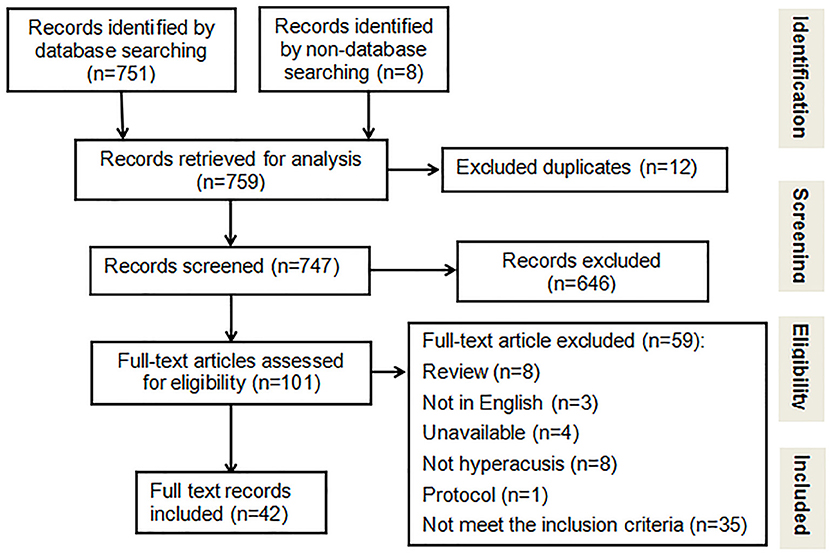
Figure 1. PRISMA flow diagram of the study selection process.
Study Characteristics
The included studies came from different countries: Sweden, USA, Finland, UK, Poland, France, Brazil, Spain, Netherlands, Germany, Portugal, Israel, Italy, and Denmark (Figure 2).
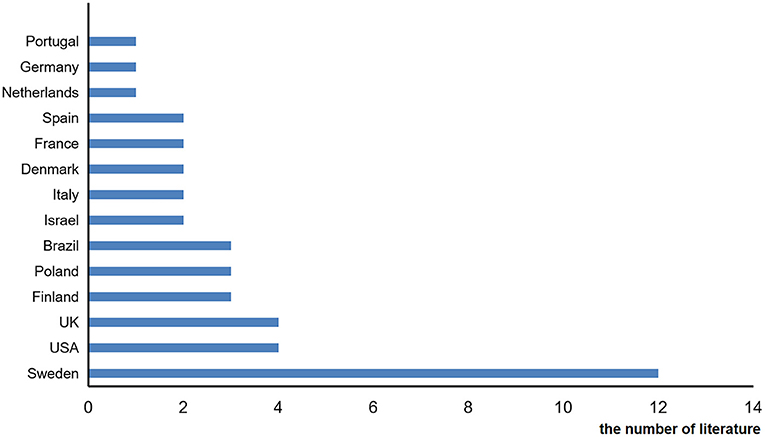
Figure 2. Areas covered by the included literature.
Information from 42 articles was extracted and recorded. As shown in Table 1, they were published since 1990. The number of individuals in the studies range from 18 to 12,000. And they cover a wide range of ages, from 1 to 98.

Table 1. Characteristics of all included studies.
The target populations of the studies are also diverse. Some studies (n = 11) aimed at special occupation groups, for example, 10 studies about musicians and music students (11, 17, 21, 29–31, 37, 38, 42, 47), and 1 study about teachers (10). Some studies focus on patients with cognitive impairment (n = 7), such as patients with WS (7, 15, 25, 26), autism (9, 22), and Asperger's syndrome (AS) (36). In addition, some studies (n = 12) are specific to patients with other comorbidities [tinnitus (2, 20, 32, 33, 35, 40, 46), hearing disorders (HD) (10, 44), Bell 's palsy (24), attention deficit hyperactivity disorder (ADHD) (45) and complex regional pain syndrome related dystonia (CRPS related dystonia) (28)]. Other studies have focused on the general populations (4–6, 16, 18, 19, 23, 27, 34, 39, 41, 43, 48).
Definitions of Hyperacusis
In 25 pieces of selected literature, the definition of hyperacusis is mentioned (2, 4, 6, 7, 15, 19, 21, 24–27, 29, 30, 33–36, 39, 40, 43–48) (Table 2). Additionally, all use the word hyperacusis.
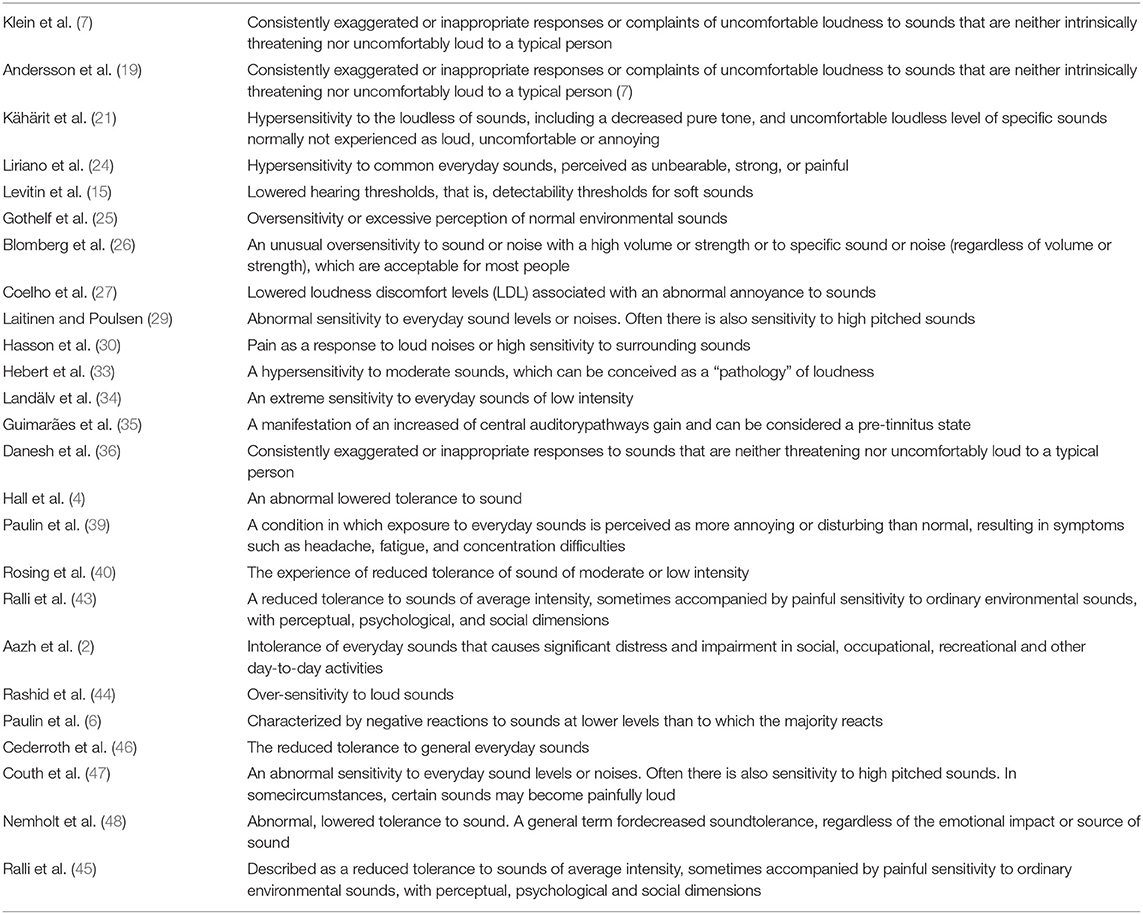
Table 2. The definition of hyperacusis mentioned in 25 studies.
Diagnosis and Evaluation
Diagnostic criteria vary from study to study. For example, in two studies that asked questions to diagnose hyperacusis (23, 37), Widen and Erlandsson's (23) diagnosis is based on the question “Do you consider yourself to be over sensitive to noise?” Or “Have you ever experienced pain in the ears associated with loud noise?” Meanwhile, Halevi-Katz (37) further classified responses into five grades: never, seldom, sometimes, often, or always. There were 8 other studies that were diagnosed by asking questions (4, 6, 7, 19, 23, 25, 34, 37). Only two studies used the same questions for diagnosis (4, 6). The discomfort thresholds (LDL, UCL, intolerance sound level, etc) had been measured in 9 studies (2, 9, 20, 22, 24, 25, 27, 28, 33), of which 6 used lowered discomfort loudness as the diagnostic criteria (2, 9, 15, 20, 22, 28). But only 2 presented the same discomfort loudness (80 dB HL) (9, 22). Different definitions were also used to diagnose hyperacusis (5, 21, 24, 26, 29, 33, 35, 36, 38–41, 43–48). Coelho (27) used both the hyperacusis definition and the discomfort loudness to diagnose. Nine studies did not even give their diagnostic criteria (10, 11, 16–18, 30–32, 42).
As for methods to evaluate hearing status, there are many types and combinations. Except for 2 studies that do not provide listening evaluation methods (6, 7), the rest of the studies describe their own listening assessment methods, with 10 studies using different questionnaires (18, 19, 23, 26, 34, 38, 39, 46) or surveys (10, 36), while 21 studies (2, 9, 15, 17, 20–22, 24, 27, 28, 31–33, 35, 37, 40, 42–45, 48) carrying out by a method of audiology, such as pure tone audiometry (17, 21), hearing tests (27, 32, 42), auditory brainstem response examination (9), and other methods. Also, some studies used both (4, 5, 16, 25, 41, 47). Three other studies (11, 29, 30) evaluated hearing using self-reporting.
Result Assessment and Discovery
The results of each study are shown in Table 3. In the general population, the prevalence of hyperacusis is 0.2% (41)−17.2% (5). In most cases, women have a higher prevalence rate than men. In a study of the prevalence of hyperacusis in the general population, the prevalence increased with age (19). Additionally, in the special occupation groups, the prevalence is 3.8% (17)−67.0% (38). In people with specific conditions (WS, tinnitus, and autism), the prevalence ranges from 4.7% (15) to 95.0% (7). Hyperacusis may be related to certain factors, such as HD and tinnitus, but hyperacusis also exists in the normal hearing population. As described below, different groups of populations were further discussed.
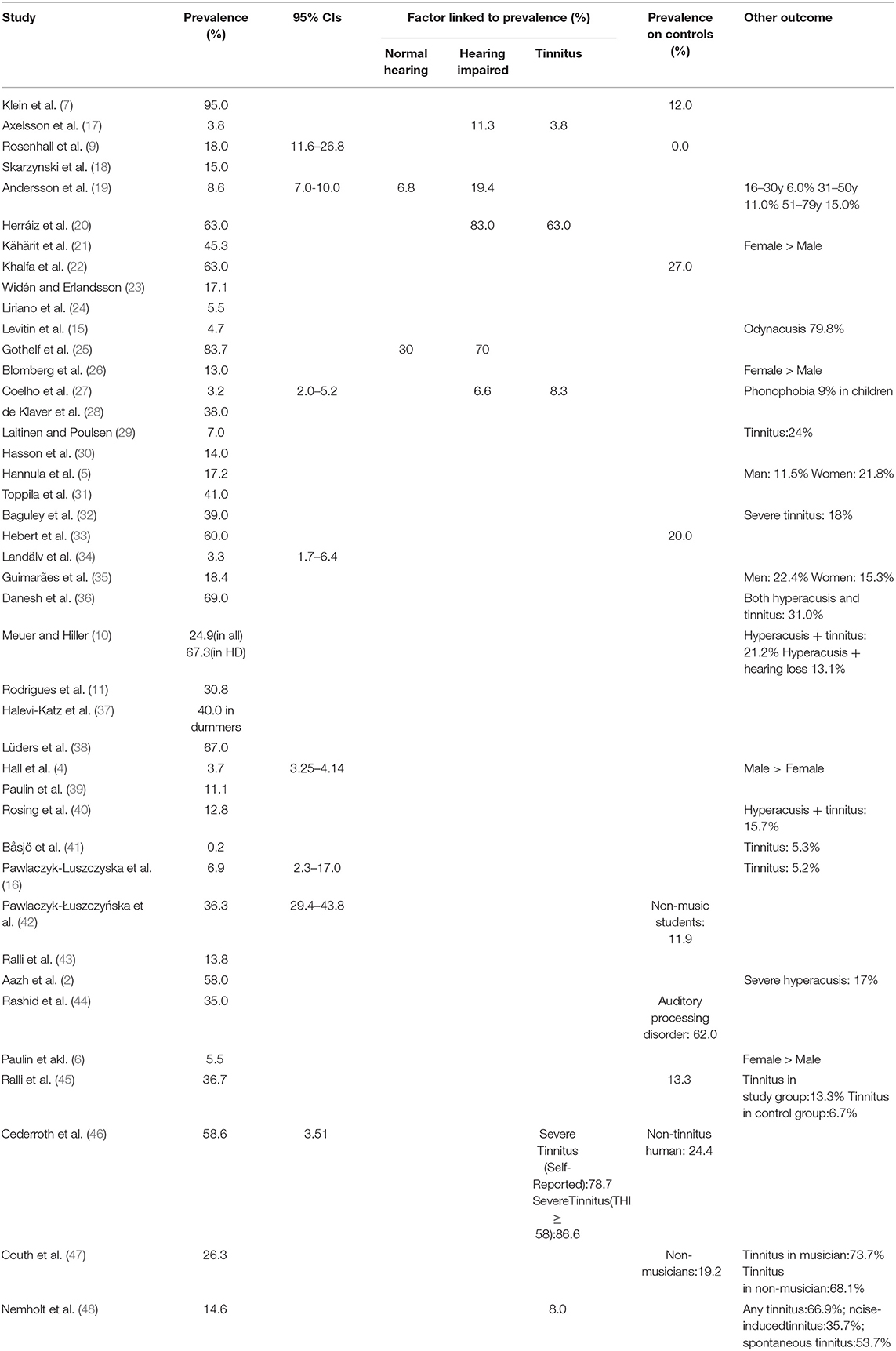
Table 3. Outcome assessment.
Age
As shown in Figure 3, most of the studies (n = 33) (2, 5–7, 9–11, 15, 16, 19–27, 30–32, 34, 36–40, 42–45, 47, 48) focused on a specific age range of people; two studies (4, 41) focused on specific age groups and five studies (17, 28, 33, 35, 46) provided the average age of the subjects, only two studies (18, 29) did not provide age information. These two studies could not be sorted into subgroups to compare by age.
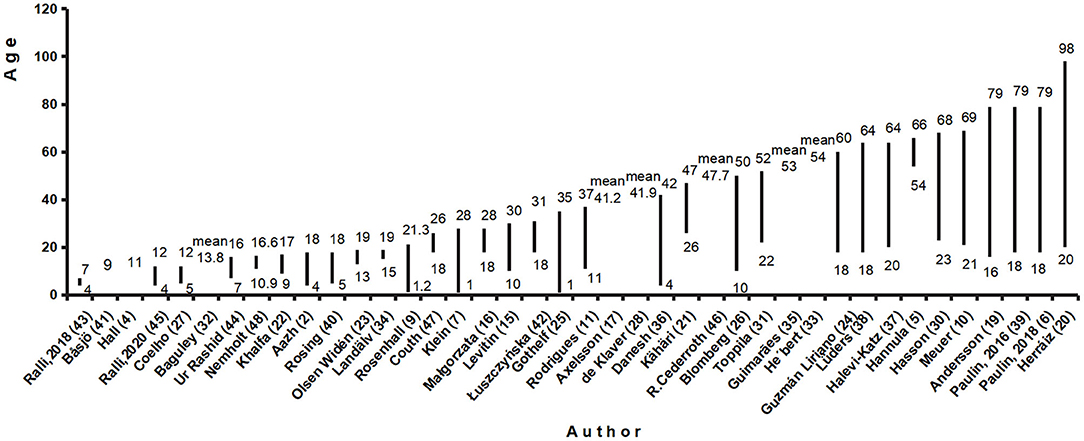
Figure 3. Age/Age range of included studies.
Among these studies, seven pairs of studies had similar average age or age ranges: (9–17, 7–16) (22, 44) (4–18, 5–18) [2, (40)], (13–19, 15–19) (23, 34) (41.2, 41.9) [17, (28)], (53, 54) (33, 35), (20–64,18–64, 18–60) (24, 37, 38), and (21–69, 23–68) (10, 30). The prevalence rates in the first group were 63% (28) and 35% (36). The prevalence rates in the second group were 58% (2) and 12.8% (33). The prevalence rates in the third group were 17.1% (42) and 3.3% (44). The prevalence rates in the fourth group were 3.8% (17) and 38% (39). The prevalence rates in the fifth group were 60% (34) and 18.4% (32). The prevalence rates in the sixth group were 40.0% (22), 67.0% (23), 5.5% (37). The prevalence rates in the seventh group were 24.9% (10) and 14% (30).
Three studies were focused on 17 ± 1 to 79-year-old people. The respective prevalence in these studies was 8.6% (19), 11.1% (39), and 5.5% (6). Two of these studies (6, 39), which were conducted within a 2-year interval, used the same questionnaire. Hyperacusis patients in two studies all gave the affirmative response to the question: “Do you have a hard time tolerating everyday sounds that you believe most other people can tolerate?” and the prevalence in these studies was 11.1% (39) and 5.5% (6) respectively. In another study, the prevalence of hyperacusis was determined by a response of “yes” to the question regarding sensitivity to any sounds, which yielded a prevalence rate of 8.6% (19).
Subjects were divided into Internet groups and a mail group in Andersson's et al. study (19), which were divided into three groups according to age (16–30, 31–50, 51–79), and the prevalence in these three groups was found to be 6.0%, 11.0%, and 15.0%.
Gender
Only six (4–6, 21, 26, 35) provided a comparison of male and female prevalence, Kahari's et al. (21), Blomberg's et al. (26), and Paulin's et al. (6) studies suggest that the prevalence in females is higher than in males. Additionally, only one study's subjects are 11-year-old children (4). This study demonstrated higher prevalence in men than in women. Two other studies (5, 35) provided a concrete prevalence of hyperacusis in men and women, with Hannula et al. (5) finding that male prevalence was 11.5% and the prevalence in women was 21.8% (female prevalence was greater than male prevalence), while contrastingly, Guimaraes et al. (35) found that male prevalence was 22.4%, while the prevalence of women was 15.3% (male prevalence was greater than prevalence in women). Although these two studies provided specific instances across gender demographics, Guimaraes' et al. study (35) was conducted on tinnitus patients, while Hannula's et al. study (5) was conducted on older people and thus had less comparative value.
Hearing
Studies have also been conducted on only the HD population [self-reported hearing disorders (10) and functional hearing loss (FHL) (44)], all of which have a high prevalence of hyperacusis. The correlation between the prevalence of hyperacusis and HD in other three studies was summarized by two reviewers (17, 20, 27), which found that the prevalence of hyperacusis combined with hearing loss in musicians is 11.3% (17), the prevalence of hyperacusis in patients with hearing loss in children is 6.6% (27), and in a study regarding prevalence of hyperacusis in patients with tinnitus, the prevalence of hyperacusis is 63% (20) and the prevalence of hearing loss is as high as 83% (20). Andersson et al. (19) also studied the prevalence in the mixed population. The subjects included people with normal hearing and people with hearing loss. This study found that the prevalence in people with normal hearing was 6.8% (19), compared to 19.4% (19) in people with hearing loss.
People With Special Diseases
Four studies (7, 15, 25, 26) have examined the prevalence of hyperacusis in patients with WS, with results ranging from 4.7% (15) to 95% (7). Seven studies (2, 20, 32, 33, 35, 40, 46) conducted hyperacusis research on patients with tinnitus, with the prevalence ranging from 12.8% (40) to 63% (20), and Aazh et al. (2) found that 17% of patients with tinnitus had severe hyperacusis. Guimaraes et al. also classified the prevalence of hyperacusis in tinnitus patients by gender, finding a rate of 22.4% in men with tinnitus and 15.3% in women (35). In the study conducted by Rosing, 15.7% of subjects showed tinnitus and hyperacusis at the same time (40). What Cederroth's et al. study demonstrated was that the prevalence of hyperacusis increased with the severity of tinnitus and was much higher in tinnitus patients than in the non-tinnitus population (46). Rosenhall et al. (9) and Khalfa et al. (22) studied the prevalence of hyperacusis in children with autism, in which Rosenhall et al. (9) included 199 subjects with a prevalence of 18.0% compared with 0% in the control group, while Khalfa et al. (22) only included 20 subjects with the prevalence of 63.0% compared with 27.0% in the control group. Herraiz et al. (20) found in his study that tinnitus patients not only have a 63% prevalence of hyperacusis but also an 83% prevalence of hearing loss. Additionally, the prevalence of hyperacusis in patients with CRPS related dystonia, Bell's palsy, AS, self-reported hearing disorders, ADHD, and FHL ranged from 5.5% (24) to 69% (36). However, as these studies are about separate conditions, no comparison is proposed.
Special Occupational Group
In studying prevalence of hyperacusis, a number of researchers focused on the occupations regularly exposed to sound. The studies (11, 17, 21, 29–31, 37, 38, 42, 47) conducted on musicians and music students, with the prevalence rating from 3.8% (17) to 67% (38), and another study's prevalence of teachers was 24.9% (10). In accordance with a guideline from Kähärit, a professional pop/rock/jazz musician was considered, Halevi-Katz et al. (37) find the prevalence among drummers was as high as 40%. Without using a strict definition of musician, Luders found that musicians had a prevalence of 67%, with the highest rates in people who play amplified instruments (38). In both controlled studies of music students (42) and musicians (47), rates were higher than in the control group. Meuer conducted a survey on the hyperacusis prevalence among teachers (10). He found that although not significant on a very low level, age, period of occupation, and the daily working hours correlate positively with the Mini-TQ data (Mini-Tinnitus Questionnaire), and in the Mini-TQ, groups including hyperacusis scored considerably higher than those excluding hyperacusis.
Missing Data
There were three conference articles that we did not search for. We attempted to contact the authors, but received no response.
In the results description of two studies, (19, 27) the number of subjects is not consistent with that mentioned in the method. And in another study, (30) the genders of two subjects are unclear. We contacted the authors about this missing data with no results.
Although the website of the questionnaire was given in a study (29), we could not find it according to the website, and there was no detailed content of the questionnaire in the text. In this regard, we contacted the author, but did not get a reply.
Discussion
Our extensive retrieval of hyperacusis literature finds no existing scoping review of its prevalence. This review, which evaluated 42 studies, is the first scoping review of hyperacusis prevalence in both special and general populations. The prevalence of hyperacusis was discussed in groups and even subgroups, which greatly increased the credibility of our review.
Characteristics of Prevalence
It was found that the prevalence of hyperacusis is related to age, gender, hearing, comorbidities, and occupation. Overall, the prevalence increases with age, which may be due to the declining function of the medial olivocochlear efferent system with age (3). While in the general population, adolescents also have a higher prevalence. In the population with hearing disorders, teachers have a higher prevalence of hyperacusis. Among all people with concomitant diseases, young patients with WS had the highest prevalence of hyperacusis. Musicians between the ages of 18 and 64 had the highest prevalence. Among people with specific occupations, as working hours increase, the time spent receiving sound or noise increases and the intensity of sound increases as well, the prevalence of tinnitus, hyperacusis and other related symptoms is higher.
The comparison of prevalence in seven similar age groups is mentioned above (Figure 4). There were three groups of patients of similar ages with comorbid diseases that were partially or completely the same (the second, third, and fifth), but the difference in prevalence is large and difficult to compare. The first group shows that children with autism had a higher prevalence than children with FHL. The fourth group of studies demonstrated that patients with CRPS related-dystonia had a higher prevalence than musicians, a group whose prevalence was relatively high. In the sixth group, however, the musicians had a much higher prevalence of hyperacusis than the Bell's palsy patients. As can be seen from the seventh group of studies, teachers had a higher prevalence than musicians when comparing the prevalence of disease among special occupational groups.
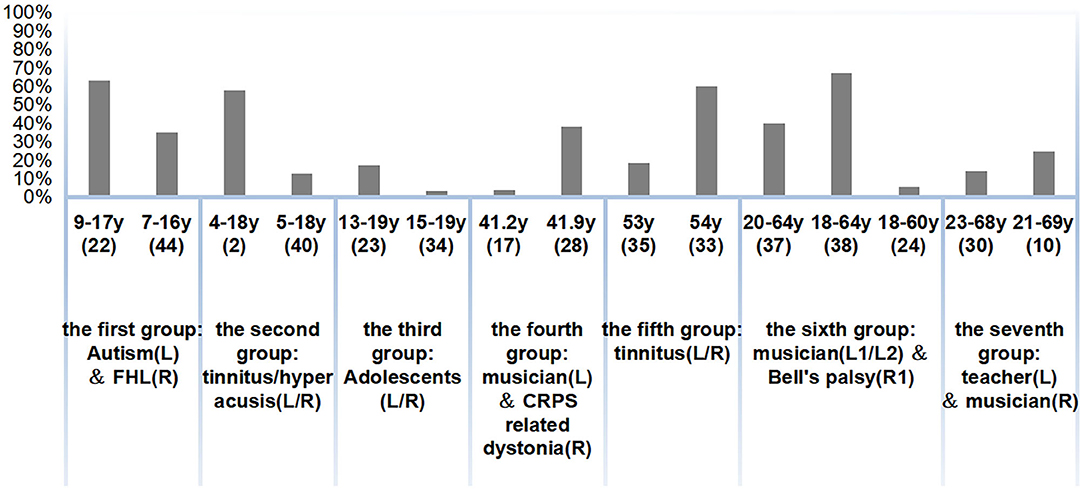
Figure 4. Prevalence of hyperacusis in different age/age range. R, Right; L, Left.
Several studies have shown that women have a higher prevalence than men (5, 6, 21, 26). Among WS patients, the prevalence in female patients was higher than in male patients, and adult female patients have a higher prevalence than young patients and adult male patients (26). Only two studies, with patients of ages 11 and 53, found a higher prevalence in men than in women (4, 35). Although the selected studies did not include people under the age of 10 or over the age of 79, female patients are already clearly at a higher risk of hyperacusis.
Subjects in this review included people with normal hearing, people with disordered hearing, and a mixture of both. Although sensorineural hearing loss may be accompanied by “loudness recruitment,” loudness “catches up” and the person with hearing impairment perceives high-level sounds with a loudness approaching that for listeners with normal hearing, which called “complete” recruitment, and no hyperacusis is present (3, 33). In contrast, the prevalence of hyperacusis was still higher in people with hearing disorders than in people with normal hearing. This is consistent with Andersson's et al. findings, in which the prevalence was 6.8% in the normal hearing population and 19.4% in hearing loss population (19). Hyperacusis, in turn, is considered as a precursor to tinnitus (49), and this conclusion to some extent is consistent with Rosing's finding that tinnitus has the highest prevalence among hearing impaired children (12).
In the population with special diseases [WS (7, 15, 25, 26), tinnitus (2, 20, 32, 33, 35, 40, 46), and autism (9, 22)], the prevalence is mostly higher than in the general population. It is found that tinnitus patients are prone to hyperacusis, and there is a high probability of severe hyperacusis, which is consistent with the hypothesis that tinnitus and hyperacusis may both result from an increase of central gain (33). In randomized controlled trials of WS vs. the general population (7) and randomized controlled trials of autism vs. the general population (9), the hyperacusis prevalence in WS and autism patients is higher than in the general population. These diseases have become risk factors for hyperacusis. Although some studies do not set a control group, it can be seen from the different studies of different populations in this review that the prevalence of hyperacusis in other patients is also significantly higher than that in the general population, such as patients with ADHD, AS, and CRPS related dystonia.
For musicians, music students, and teachers who have been exposed to noise for a long time, the prevalence of the disease is higher than the general population. People working in these professions will not only receive daily noise in the general population (vehicle noise, the noise of construction equipment, and household appliances noise, etc), but also in their occupational environments. They will thus be exposed to noise of wider frequency, different volumes, and longer duration. They are exposed to a great deal of sound during the course of their employment, which explains the increase in prevalence.
Limitations of This Study
First of all, the research purposes of all the studies are different, which makes it difficult to extract data. Although the two authors have a good consensus, sometimes there are disagreements. For the included data with inconsistent opinions, a temporary reviewer is needed to judge.
Secondly, it can be found from the area in which the studies is distributed (Figure 2) that most of the literature come from western countries, while few studies from other regions are included.
Finally, this review restricted the included literature to be in English, so the included articles did not include non-English literature, which may lead to an incomplete summary of current hyperacusis findings.
Future Perspectives and Conclusions
The diverse definition and diagnosis way between the studies cannot be ignored, which may lead to differences in prevalence. It is not difficult to find from the included studies that not every study has a clear definition of hyperacusis, and there is no universal definition at present. Taken together with the definitions already mentioned in the studies included in this review, excessive sensitivity to sound that is acceptable to the general population should be a generally acceptable definition.
What is undoubtedly the most intuitionistic for the measurement and diagnosis of hyperacusis is the audiology examination. In particular, pure tone audiometry can give the study object different loudness and frequency of the stimulus sound, which can measure the severity of hyperacusis. According to the included studies, it is an effective method to measure and diagnose hyperacusis by audiology examination method combined with hyperacusis related questionnaire, such as Hyperacusis Questionnaire (50), which was further specified in Fackrell's review as LDL and self-report questionnaire (51). On the one hand, the research object can be assessed in a more comprehensive way; on the other hand, the questionnaire survey can reflect whether the audiology examination results are consistent with the subjective symptoms of the research object. And for subjects with low cognitive ability, their closest contacts should participate in the whole study process as far as possible to ensure the maximum accuracy of the results. At present, these are still in the groping stage. In the future, more scholars need to further explore and improve it bit by bit.
According to the current scoping review, the prevalence of hyperacusis in different groups have been studied and it is found that the prevalence varies greatly among these groups. The prevalence of hyperacusis is related to several factors (special occupation, special diseases, gender, age, hearing, etc). But the most important next step is to develop unified standards for the definition and diagnosis of hyperacusis. This will improve the comparability of each study, so that reviews of hyperacusis prevalence can be more accurate and more credible.
Data Availability Statement
The original contributions presented in the study are included in the article/supplementary material, further inquiries can be directed to the corresponding author/s.
Author Contributions
DL, LL, and JMP had the idea for the article. JR, TXu, TXi, and YX performed the literature search and data extraction. JR and TXu drafted the work. DL critically revised the work. All authors contributed to the study conception, design, read, and approved the final manuscript.
Funding
This study was supported by the Sichuan Province Administration of Traditional Chinese Medicine (Grant No. 2018KF019) and Doctoral Research Initiation Fund of Affiliated Hospital of Southwest Medical University (Grant No. 19028).
Conflict of Interest
The authors declare that the research was conducted in the absence of any commercial or financial relationships that could be construed as a potential conflict of interest.
Publisher's Note
All claims expressed in this article are solely those of the authors and do not necessarily represent those of their affiliated organizations, or those of the publisher, the editors and the reviewers. Any product that may be evaluated in this article, or claim that may be made by its manufacturer, is not guaranteed or endorsed by the publisher.
Acknowledgments
We thank LetPub for its linguistic assistance during the preparation of this manuscript.
Abbreviations
WS, Williams syndrome; ADHD, attention deficit hyperactivity disorder; CRPS related dystonia, complex regional pain syndrome related dystonia; AS, Asperger's syndrome; LDL, loudness discomfort level; HD, hearing disorders; UCL, uncomfortable loudness; ULL, uncomfortable loudness level; FHL, functional hearing loss.
References
1. Di Stadio A, Dipietro L, Ricci G, Della Volpe A, Minni A, Greco A, et al. Hearing loss, tinnitus, hyperacusis, and diplacusis in professional musicians: a systematic review. Int J Environ Res Public Health. (2018) 15:2120. doi: 10.3390/ijerph15102120
2. Aazh H, McFerran D, Moore BCJ. Uncomfortable loudness levels among children and adolescents seeking help for tinnitus and/or hyperacusis. Int J Audiol. (2018) 57:618–23. doi: 10.1080/14992027.2018.1453617
3. Tyler RS, Pienkowski M, Roncancio ER, Jun HJ, Brozoski T, Dauman N, et al. A review of hyperacusis and future directions: part I. Definitions and manifestations. Am J Audiol. (2014) 23:402–19. doi: 10.1044/2014_AJA-14-0010
4. Hall AJ, Humphriss R, Baguley DM, Parker M, Steer CD. Prevalence and risk factors for reduced sound tolerance (hyperacusis) in children. Int J Audiol. (2016) 55:135–41. doi: 10.3109/14992027.2015.1092055
5. Hannula S, Bloigu R, Majamaa K, Sorri M, Maki-Torkko E. Self-reported hearing problems among older adults: prevalence and comparison to measured hearing impairment. J Am Acad Audiol. (2011) 22:550–9. doi: 10.3766/jaaa.22.8.7
6. Paulin J, Nordin M, Nyback MH, Nordin S. Associations between hyperacusis and psychosocial work factors in the general population. Int Arch Occup Environ Health. (2018) 92:59–65. doi: 10.1007/s00420-018-1356-x
7. Klein AJ, Armstrong BL, Greer MK, Brown FR III. Hyperacusis and otitis media in individuals with Williams syndrome. J Speech Hear Disord. (1990) 55:339–44. doi: 10.1044/jshd.5502.339
8. Fackrell K, Stratmann L, Gronlund TA, Hoare DJ, Hyperacusis Priority Setting Partnership Steering G. Top ten hyperacusis research priorities in the UK. Lancet. (2019) 393:404–5. doi: 10.1016/S0140-6736(18)32616-3
9. Rosenhall U, Nordin V, Sandstrom M, Ahlsen G, Gillberg C. Autism and hearing loss. J Autism Dev Disord. (1999) 29:349–57. doi: 10.1023/a:1023022709710
10. Meuer SP, Hiller W. The impact of hyperacusis and hearing loss on tinnitus perception in German teachers. Noise Health. (2015) 17:182–90. doi: 10.4103/1463-1741.160682
11. Rodrigues MA, Amorim M, Silva MV, Neves P, Sousa A, Inacio O. Sound levels and risk perceptions of music students during classes. J Toxicol Environ Health A. (2015) 78:825–39. doi: 10.1080/15287394.2015.1051174
12. Rosing SN, Schmidt JH, Wedderkopp N, Baguley DM. Prevalence of tinnitus and hyperacusis in children and adolescents: a systematic review. BMJ Open. (2016) 6:e010596. doi: 10.1136/bmjopen-2015-010596
13. Baguley DM, Hoare DJ. Hyperacusis: major research questions. HNO. (2018) 66:358–63. doi: 10.1007/s00106-017-0464-3
14. Arksey H, O'Malley L. Scoping studies: towards a methodological framework. Int J Soc Res Methodol. (2005) 8:19–32. doi: 10.1080/1364557032000119616
15. Levitin DJ, Cole K, Lincoln A, Bellugi U. Aversion, awareness, and attraction: investigating claims of hyperacusis in the williams syndrome phenotype. J Child Psychol Psychiatry. (2005) 46:514–23. doi: 10.1111/j.1469-7610.2004.00376.x
16. Pawlaczyk-Luszczyska M, Zaborowski K, Zamojska-Daniszewska M, Rutkowska-Kaczmarek P, Dudarewicz A, Sliwinska-Kowalska M. Hearing status in young people using portable audio players. Arch Acoust. (2017) 42:113–20. doi: 10.1515/aoa-2017-0012
17. Axelsson A, Eliasson A, Israelsson B. Hearing in pop/rock musicians: a follow-up study. Ear Hear. (1995) 16:245–53. doi: 10.1097/00003446-199506000-00001
18. Skarzynski H, Rogowski M, Bartnik G, Fabijanska A. Organization of tinnitus management in Poland. Acta Otolaryngol. (2000) 120:225–6. doi: 10.1080/000164800750000973
19. Andersson G, Lindvall N, Hursti T, Carlbring P. Hypersensitivity to sound (hyperacusis): a prevalence study conducted via the internet and post. Int J Audiol. (2002) 41:545–54. doi: 10.3109/14992020209056075
20. Herraiz C, Hernandez Calvin J, Plaza G, Toledano A, de los Santos G. [Study of hyperacusis at a tinnitus unit]. Acta Otorrinolaringol Esp. (2003) 54:617–22. doi: 10.1016/s0001-6519(03)78458-1
21. Kaharit K, Zachau G, Eklof M, Sandsjo L, Moller C. Assessment of hearing and hearing disorders in rock/jazz musicians. Int J Audiol. (2003) 42:279–88. doi: 10.3109/14992020309078347
22. Khalfa S, Bruneau N, Roge B, Georgieff N, Veuillet E, Adrien JL, et al. Increased perception of loudness in autism. Hear Res. (2004) 198:87–92. doi: 10.1016/j.heares.2004.07.006
23. Widen SE, Erlandsson SI. Self-reported tinnitus and noise sensitivity among adolescents in Sweden. Noise Health. (2004) 7:29–40.
24. Liriano RYG, Magalhães SLBd, Barros F, Testa JRG, Fukuda Y. Relação da presença de hiperacusia em pacientes com paralisia facial periférica de bell. Rev Bras Otorrinolaringol. (2004) 70:776–9. doi: 10.1590/s0034-72992004000600012
25. Gothelf D, Farber N, Raveh E, Apter A, Attias J. Hyperacusis in williams syndrome: characteristics and associated neuroaudiologic abnormalities. Neurology. (2006) 66:390–5. doi: 10.1212/01.wnl.0000196643.35395.5f
26. Blomberg S, Rosander M, Andersson G. Fears, hyperacusis and musicality in williams syndrome. Res Dev Disabil. (2006) 27:668–80. doi: 10.1016/j.ridd.2005.09.002
27. Coelho CB, Sanchez TG, Tyler RS. Hyperacusis, sound annoyance, and loudness hypersensitivity in children. Prog Brain Res. (2007) 166:169–78. doi: 10.1016/S0079-6123(07)66015-4
28. de Klaver MJ, van Rijn MA, Marinus J, Soede W, de Laat JA, van Hilten JJ. Hyperacusis in patients with complex regional pain syndrome related dystonia. J Neurol Neurosurg Psychiatry. (2007) 78:1310–3. doi: 10.1136/jnnp.2006.111609
29. Laitinen H, Poulsen T. Questionnaire investigation of musicians' use of hearing protectors, self reported hearing disorders, and their experience of their working environment. Int J Audiol. (2008) 47:160–8. doi: 10.1080/14992020801886770
30. Hasson D, Theorell T, Liljeholm-Johansson Y, Canlon B. Psychosocial and physiological correlates of self-reported hearing problems in male and female musicians in symphony orchestras. Int J Psychophysiol. (2009) 74:93–100. doi: 10.1016/j.ijpsycho.2009.07.009
31. Toppila E, Koskinen H, Pyykko I. Hearing loss among classical-orchestra musicians. Noise Health. (2011) 13:45–50. doi: 10.4103/1463-1741.74001
32. Baguley DM, Bartnik G, Kleinjung T, Savastano M, Hough EA. Troublesome tinnitus in childhood and adolescence: data from expert centres. Int J Pediatr Otorhinolaryngol. (2013) 77:248–51. doi: 10.1016/j.ijporl.2012.11.009
33. Hebert S, Fournier P, Norena A. The auditory sensitivity is increased in tinnitus ears. J Neurosci. (2013) 33:2356–64. doi: 10.1523/JNEUROSCI.3461-12.2013
34. Landalv D, Malmstrom L, Widen SE. Adolescents' reported hearing symptoms and attitudes toward loud music. Noise Health. (2013) 15:347–54. doi: 10.4103/1463-1741.116584
35. Guimaraes AC, Carvalho GM, Voltolini MM, Zappelini CE, Mezzalira R, Stoler G, et al. Study of the relationship between the degree of tinnitus annoyance and the presence of hyperacusis. Braz J Otorhinolaryngol. (2014) 80:24–8. doi: 10.5935/1808-8694.20140007
36. Danesh AA, Lang D, Kaf W, Andreassen WD, Scott J, Eshraghi AA. Tinnitus and hyperacusis in autism spectrum disorders with emphasis on high functioning individuals diagnosed with asperger's syndrome. Int J Pediatr Otorhinolaryngol. (2015) 79:1683–8. doi: 10.1016/j.ijporl.2015.07.024
37. Halevi-Katz DN, Yaakobi E, Putter-Katz H. Exposure to music and noise-induced hearing loss (NIHL) among professional pop/rock/jazz musicians. Noise Health. (2015) 17:158–64. doi: 10.4103/1463-1741.155848
38. Luders D, Goncalves CG, Lacerda AB, Silva LS, Marques JM, Sperotto VN. Occurrence of tinnitus and other auditory symptoms among musicians playing different instruments. Int Tinnitus J. (2016) 20:48–53. doi: 10.5935/0946-5448.20160009
39. Paulin J, Andersson L, Nordin S. Characteristics of hyperacusis in the general population. Noise Health. (2016) 18:178–84. doi: 10.4103/1463-1741.189244
40. Rosing SN, Kapandais A, Schmidt JH, Baguley DM. Demographic data, referral patterns and interventions used for children and adolescents with tinnitus and hyperacusis in Denmark. Int J Pediatr Otorhinolaryngol. (2016) 89:112–20. doi: 10.1016/j.ijporl.2016.07.036
41. Basjo S, Moller C, Widen S, Jutengren G, Kahari K. Hearing thresholds, tinnitus, and headphone listening habits in nine-year-old children. Int J Audiol. (2016) 55:587–96. doi: 10.1080/14992027.2016.1190871
42. Pawlaczyk-Luszczynska M, Zamojska-Daniszewska M, Dudarewicz A, Zaborowski K. Exposure to excessive sounds and hearing status in academic classical music students. Int J Occup Med Environ Health. (2017) 30:55–75. doi: 10.13075/ijomeh.1896.00709
43. Ralli M, Greco A, Altissimi G, Tagliaferri N, Carchiolo L, Turchetta R, et al. Hyperacusis in children: a preliminary study on the effects of hypersensitivity to sound on speech and language. Int Tinnitus J. (2018) 22:10–8. doi: 10.5935/0946-5448.20180002
44. Rashid SMU, Mukherjee D, Ahmmed AU. Auditory processing and neuropsychological profiles of children with functional hearing loss. Int J Pediatr Otorhinolaryngol. (2018) 114:51–60. doi: 10.1016/j.ijporl.2018.07.054
45. Ralli M, Romani M, Zodda A, Russo FY, Altissimi G, Orlando MP, et al. Hyperacusis in children with attention deficit hyperactivity disorder: a preliminary study. Int J Environ Res Public Health. (2020) 17:3045. doi: 10.3390/ijerph17093045
46. Cederroth CR, Lugo A, Edvall NK, Lazar A, Lopez-Escamez J-A, Bulla J, et al. Association between hyperacusis and tinnitus. J Clin Med. (2020) 9:2412. doi: 10.3390/jcm9082412
47. Couth S, Prendergast G, Guest H, Munro KJ, Moore DR, Plack CJ, et al. Investigating the effects of noise exposure on self-report, behavioral and electrophysiological indices of hearing damage in musicians with normal audiometric thresholds. Hear Res. (2020) 395:108021. doi: 10.1016/j.heares.2020.108021
48. Nemholt S, Schmidt JH, Wedderkopp N, Baguley DM. A cross-sectional study of the prevalence and factors associated with tinnitus and/or hyperacusis in children. Ear Hear. (2020) 41:344–55. doi: 10.1097/AUD.0000000000000759
49. Jastreboff PJ, Hazell JW. A neurophysiological approach to tinnitus: clinical implications. Br J Audiol. (1993) 27:7–17. doi: 10.3109/03005369309077884
50. Khalfa S, Dubal S, Veuillet E, Perez-Diaz F, Jouvent R, Collet L. Psychometric normalization of a hyperacusis questionnaire. ORL J Otorhinolaryngol Relat Spec. (2002) 64:436–42. doi: 10.1159/000067570
Keywords: prevalence, hyperacusis, special occupation population, general population, special diseases
Citation: Ren J, Xu T, Xiang T, Pu JM, Liu L, Xiao Y and Lai D (2021) Prevalence of Hyperacusis in the General and Special Populations: A Scoping Review. Front. Neurol. 12:706555. doi: 10.3389/fneur.2021.706555
Received: 07 May 2021; Accepted: 09 August 2021;
Published: 03 September 2021.
Edited by:
Louis Murray Hofmeyr, Stellenbosch University, South AfricaReviewed by:
Derek James Hoare, University of Nottingham, United KingdomAlessandra Fioretti, Tinnitus Center, European Hospital, Italy
Copyright © 2021 Ren, Xu, Xiang, Pu, Liu, Xiao and Lai. This is an open-access article distributed under the terms of the Creative Commons Attribution License (CC BY). The use, distribution or reproduction in other forums is permitted, provided the original author(s) and the copyright owner(s) are credited and that the original publication in this journal is cited, in accordance with accepted academic practice. No use, distribution or reproduction is permitted which does not comply with these terms.
*Correspondence: Dan Lai, bHpfbGRAMTI2LmNvbQ==
†These authors have contributed equally to this work and share first authorship