 Nereida Castro-Trancón
 Mónica Zuazua-Vega
 Amparo Osca
 Eva Cifre
 Antonio L. García-Izquierdo
- 1University of Oviedo, Oviedo, Spain
- 2Department of Social and Organizational Psychology, Faculty of Psychology, National University of Distance Education (UNED), Madrid, Spain
- 3Department of Developmental, Educational, Social Psychology and Methodology, Faculty of Health Science, and Purificación Escribano University Institute of Feminist and Gender Studies, Universitat Jaume I, Castellón, Spain
- 4Department of Psychology, University of Oviedo, Oviedo, Spain
Telework has been seen as a crucial tool for enhancing work-home balance, and potentially boosting employee wellbeing. However, contradictory findings highlight the necessity of integrating a gender perspective. This study aims to find out the psychosocial effects of teleworking on wellbeing from a gender perspective through a systematic review since 2010 till 2022. We used PRISMA, SPICE and PICOS models to finally select 37 studies, considering both quantitative and qualitative design perspectives. More than half of the reviewed articles (22) found that telework has negative effects on work-family interaction and work-family balance; and, as expected, these negative effects were greater for women, such as increasing dissatisfaction with work, life and free time. Studies reviewed show that women teleworkers report increased work-family conflict and traditional gender roles relating to household and family care responsibilities. We have found also that 10 studies observed positive effects of telework for both men and women, whilst five papers report both positive and negative effects on wellbeing. Lastly, we discuss the advantages and disadvantages of teleworking from a gender perspective considering the results we have found.
1 Introduction
Telework is generally understood as a modality of work in which employees use communication technologies to perform work tasks away from the employer's facilities (Nilles, 1997). When teleworking was initially introduced, it was generally considered as a tool for improving work-life balance of employees by offering greater flexibility and autonomy and a reduction in work-family conflict (Green and Roberts, 2010). Despite teleworking experienced significant growth in several sectors before 2019, the COVID-19 global pandemic forced many companies to adapt to a necessary and accelerating implementation of teleworking for maintaining production and employee safety (Fontaneda et al., 2023). Consequently, telework has experienced significant transformations worldwide. Data reveal gender disparities in telework adoption along with variations across different sectors and age groups. During 2020, the inaugural year of the pandemic, the prevalence of telework within the European Union saw a notable increase, contrasting with the figures from 2015 where only 5.2 percent of women and 4.6 percent of men engaged in telework, to reaching 13.0 percent of women and 11.2 percent of men in 2020 (European Parliament, 2022). This surge underscores telework enhanced flexibility and autonomy, yet it also brings to light the challenges in balancing professional and family life, and particularly impacting women's health, especially those with children who more frequently opt to telework from home (OECD, 2023).
Telework has been seen as a crucial tool for enhancing work-home balance (Marx et al., 2021). In this sense, there are several recent systematic reviews that have sought to respond to the relationship between telework and wellbeing (e.g., Charalampous et al., 2019; Oakman et al., 2020; Buomprisco et al., 2021; Chirico et al., 2021; Beckel and Fisher, 2022; Crawford, 2022). So, while many of these studies acknowledge the significance of gender considerations, they often only address it as a sociodemographic factor within the sample, rather than exploring it in depth. For example, Buomprisco et al. (2021) highlight how the underrepresentation of women in numerous professional fields might skew research outcomes. On the other hand, it is worth mentioning the study by Crawford (2022), who dedicates a section to the relationship between gender and wellbeing (in relation to Sustainable Development Goal 5: Gender equality). Stemming from 8 studies this author provides a description of wellbeing issues and the most frequent stressors by gender. For example, women perceived more advantages and disadvantages, higher workload, emotional exhaustion, workaholism, depression and stress than men, but also higher relaxation levels and lower loneliness. But working remotely entails some challenges and risks also, such as lack of social interaction, a higher difficulty when setting boundaries between work and personal life, the need for adequate technological infrastructure and remuneration, and may extend working hours longer than recommended, even working while sick, which can have cumulative negative effects on health (Ferreira et al., 2022).
Consequently, we can see that telework may be considered as a double sword in terms of wellbeing when taking gender into consideration.
1.1 Theoretical framework: telework and family balance
To analyze the relationship between telework and wellbeing from a gender perspective, it is necessary to refer to theories and concepts that analyze the relationships between work and family life (see Zhang et al., 2020). Specifically, we need to call the concept of role (Martin and Wilson, 2005), which refers to a set of duties, obligations and expectations that are related to the position and status of the individuals who in their daily life play multiple roles (mother, employee, wife...), all of them demanding them time and psychological effort, so they could become incompatible. Moreover, from the role conflict perspective, we identify time, stress and behavior as substantial aspects related to the conflict between personal and working life (e.g., Greenhaus and y Beutell, 1985). This shows us two directions of conflict: work-family conflict (WFC), in which work interferes with family roles and responsibilities, and family-work conflict (FWC), in which family life interferes with work responsibilities (Gutek et al., 1991).
Furthermore, to delve into why men and women continue to adhere to stereotypically male (productive sphere) and female (reproductive or caregiving sphere) roles even when teleworking, it is necessary to turn to gender role theory (Eagly and Wood, 2012).
1.2 Telework, wellbeing and gender
Prior to the emergence of SARS-CoV-2, many workers had already chosen to telework in the belief that better work-life balance would also improve job satisfaction and commitment to work (Felstead and Henseke, 2017); yet several studies indicated an opposite effect both prior (Sarbu, 2018; Song and Gao, 2020) and subsequent to the pandemic (Kaugars et al., 2021). However, it was the pandemic that would prove to be a turning point. Telework became an urgently necessary and even compulsory measure for most workers, which could bring to light the dark side of teleworking, as previous studies had shown that it was related to work-home conflict when it was non-voluntary, and workers perceive work and domestic pressure (Delanoeije and Verbruggen, 2019) as well. With society returning to post-pandemic normality, there is an even greater need for research that analyzes the relationship between telework and wellbeing (Anderson and Kelliher, 2020; Kniffin et al., 2021). Some studies question the advantages of teleworking (Kniffin et al., 2021; Wang et al., 2021), given the risks resulting from the changes imposed on the context and practices of family and work routine. Pandemic-era teleworking often proved counterproductive to reducing work overload. In the absence of fixed working hours, many workers reported a greater sense of availability and surveillance. The blurring of the boundaries of the working day led to long working hours that even included work at night and the weekend (Yeves et al., 2022). Studies also indicate that lower levels of wellbeing were related to social factors in the home, such as lack of space or inability to separate work from domestic tasks (Catana et al., 2022).
Focusing on potential impacts of telework on wellbeing, Hu et al. (2021) proposed ICT-related constructs that may affect occupational health strain outcomes, such as family conflict and work-life-conflict. Work-family conflict negatively affects job satisfaction and worker productivity (Becerra-Astudillo et al., 2022), and high levels of teleworking result in a significant reduction in psychological detachment from work and adverse effects on wellbeing (Cheng and Zhang, 2022). Wellbeing (WB) can be seen as a wide-ranging concept that has evolved over time, becoming the work environment an important factor, that is, teleworking in this case. The wide-ranging nature of WB may explain the lack of a single unified definition and indicator (Forgeard et al., 2011). WB at work can be defined as an affective state dependent on the degree to which individual pleasure is activated and experienced in the work environment (Wright and Doherty, 1998). This perspective highlights the close interconnection between worker WB and broader health considerations (Park et al., 2018). Work characteristics and management practices play a key role in determining WB at work, acting as risk factors that increase the likelihood of adverse health outcomes (García-Izquierdo and Castaño, 2022). Studies have shown that inadequate WB can have detrimental effects on both employees and organizations, including diminished performance, increased absenteeism, deteriorating health and the onset of long-term mental health complications (e.g Parker et al., 2017).
Recent research reviews have addressed these issues focusing on job, organizational and family conditions. Charalampous et al. (2019) concluded that the principle negative aspects of teleworking are social isolation and hindered professional development. Buomprisco et al. (2021) highlighted unavailability of ergonomic work equipment, risk of work overload, and the psychosocial implications of working from home as the main adverse effects on teleworker health. Finally, Oakman et al. (2020) found that the degree to which telework impacts on health outcomes is strongly influenced by the degree of organizational support, colleague support, social connectedness (outside of work), and levels of work-to-family conflict.
However, only several studies focused on the consequences of teleworking on health considering the gender perspective, and when they did, they encountered with contradictory results. Allen et al. (2013) conclude that there is little evidence to suggest that gender influences the relationship between telework and different outcomes. Gajendran and Harrison (2007) found no evidence to suggest that gender plays a role in the relationship between telework and job satisfaction, job performance, work-family conflict, or work stress. However, they also conclude that remote workers may be expected to assume more household responsibilities since they are, by definition, “staying at home”. This rationale affects women more than men. Hammer et al. (2005) found that flexible work arrangements (location and timing flexibility) were positively reported in wives' reports of family interferences with work one year later, but not in husbands' reports. Similarly, Rodríguez-Modroño and López-Igual (2021) found that the different way in which men and women use flexible working opportunities leads to different outcomes for wellbeing, work-life balance and work intensification. They also concluded that women teleworkers are more likely than men to perceive job insecurity, which is widely recognized as a significant cause of stress (Green, 2020). In the pandemic context of lockdowns, widespread remote work and constant coexistence of children and adults, it was foreseeable that women would assume greater responsibility for household duties, childcare and education while simultaneously carrying out their own professional activity in the same space than men (Aguado et al., 2020). We can posit two main reasons why women may report more conflict when teleworking. First, women experience more interference because they are more likely to telework at home than men (Eurofound, 2020); and second, women poorer working conditions make it more difficult to negotiate telework conditions and manage the flexibility and control that teleworking requires (Groen et al., 2018).
Thus, a key gender-related variable in teleworking is work-life balance. While work-home interference was the most common issue brought up by teleworkers during the pandemic (Wang et al., 2021), research results are contradictory. Some studies found increased work-home interference (Sousa-Uva et al., 2021), while others found the opposite (e.g., Sandoval-Reyes et al., 2021).
The results found during the COVID-19 pandemic lockdown must take into account that some advantages and positive experiences that teleworking could offer may turn into new social and family demands as the lack of school support and the need to share space in the home for both work and study among the members of the family unit were determinants factors. Family roles coexist with occupational roles in the home environment. This required every family member to adjust to sharing the same space 24 h a day, seven days a week. In some cases, spouses, or parents and children have to share equipment (i.e., computers) and rooms that were not designed for working. The most critical family variable that influences work conflict levels seems to be having children. The pandemic led to higher workloads and additional parental burdens for families with children (helping with homework, etc.) (Kaugars et al., 2021). Women were more negatively affected because they often found it more difficult to establish boundaries between work and family demands (Shockley et al., 2017). According to Eagly and Wood (2012) differing socialization processes and the assumption of gender roles help to explain why women have a more fluid perception of these boundaries and cross them more easily than men (Ashforth et al., 2000), especially if they have children (Zhang et al., 2020). Boundaries are more explicit for men, who tend to act in a more segmented way (Frone, 2003). In terms of generating conflict, the perception of blurred boundaries is more important than the amount of telework carried out (Jostell and Hemlin, 2018).
So, reviewed research raises two critical issues. First, it seems that teleworking may have a differential effect on women's wellbeing comparing to men's. Second, it seems that women take advantage of teleworking to a lesser degree than their counterparts men. However, these results have not been subject to thorough and systematic analysis.
All of the above highlights the need for research on how teleworking affects work-family conciliation as a key issue to explain men and women teleworker's wellbeing. Theoretical investigation from a gender perspective can provide data and conclusions that will assist in the future development of teleworking. Consequently, our study seeks to establish the degree to which teleworking serves to maintain or generate gender inequality, and the extent to which gender roles affect women's wellbeing.
For all that, the objective of this study is analyze how telework affect worker's wellbeing from a gender perspective, mainly considering how gender roles might affect work-home boundaries of women and men while teleworking by means of a systematic review.
2 Method
2.1 Literature research
This systematic review is performed according to standardized procedures and was reported following the Preferred Reporting Items for Systematic Reviews and Meta-Analyses guidelines (PRISMA: Page et al., 2021), formulating questions for evidence-based practice according to the Setting-Perspective-Intervention/exposure/phenomenon of interest -Comparison-Evaluation (SPICE: Booth, 2004), and the Population-Intervention-Comparision-Outcomes-Study design (PICOS: Booth, 2004). The literature search was performed using the title-keywords-abstract method (e.g., Van Essen et al., 2023).
We searched the SCOPUS, WOS, PsycINFO and PubMed databases first on 28 January 2022, and at the end of December 2022 to include all studies published in 2022. The search terms were those in the following equation: (“work-family” or “work-life”) and (“conflict” or “balanc*” or “conciliation”) and (“remote work*” or “telework*” or “home-based work*” or “e-work*”) and (“gender” or “women”) and (“effects” or “impact” or “risks” or “psychosocial risks” or “health” or “stress*” or “technostress” or “wellbeing” or “wellness” or “burnout” or “quality of life”) (Figure 1).
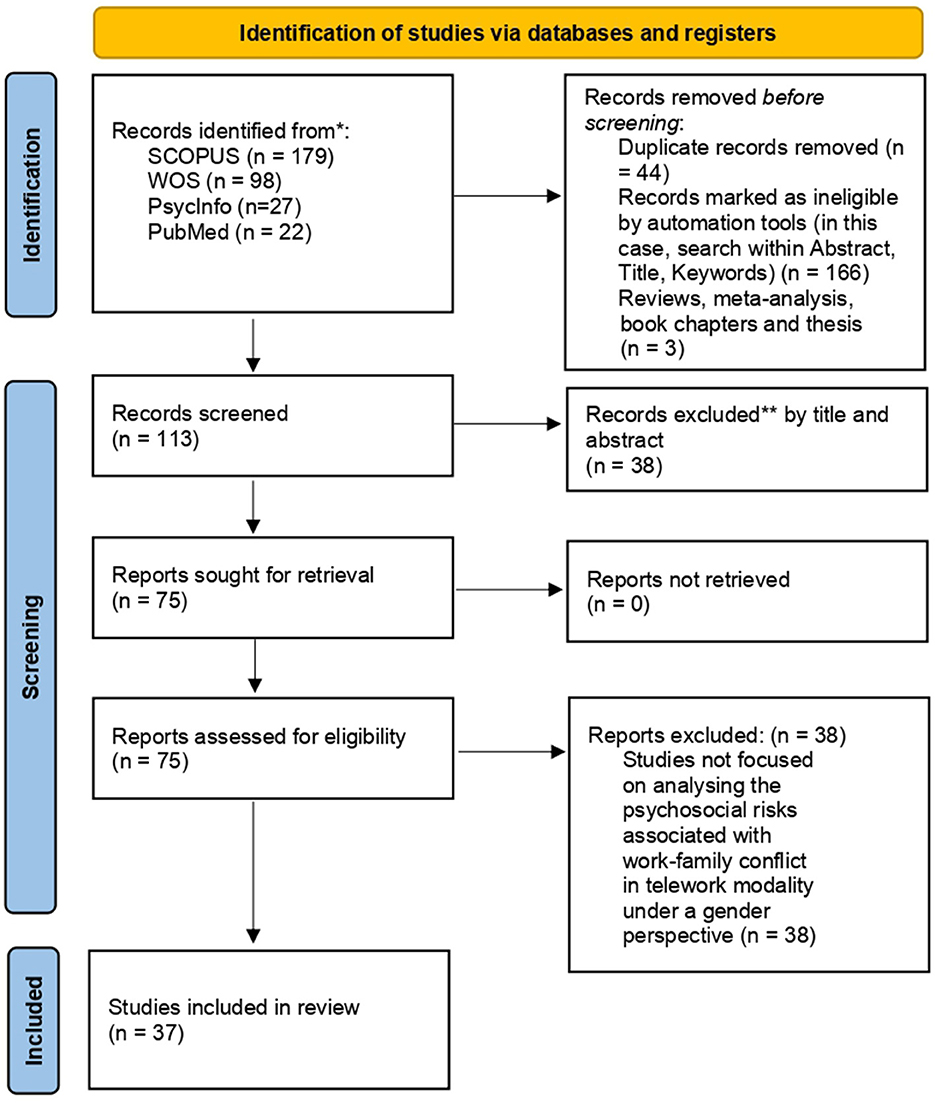
Figure 1. PRISMA flow diagram.
2.2 Inclusion and exclusion criteria
We selected studies that met the following criteria: (i) published in scientific journals, (ii) in English and Spanish, (iii) hypotheses focusing on a gender perspective and results analyzing the situation of women in telework and/or the differences between women and men, (iv) effects of telework on work-family/family-work conflict, women's health or wellbeing, or women's job, family or life satisfaction, (v) published between 2010 and 2022. We excluded studies that met the following exclusion criteria: (i) languages other than English or Spanish, (ii) reviews, meta-analyses, dissertations and book chapters (Table 1). The inclusion and exclusion criteria were very strict, in the sense that: (i) only the concept of teleworking (including remote work, home-based work, and e-work) was considered and no other forms of “flexible work arrangements,” such as, for example: “flex-time,” “part-time works,” “compressed workweeks,” which are not related to telework or work from home; (ii) the articles included women, or men and women, in the sample; and (iii) the effects were related to work- family conflict/family-work conflict. Reviews and meta-analyses were excluded because it cannot be guaranteed that the articles included in a meta-analysis or in a review meet all the inclusion criteria of the present systematic review, as, for instance, primary studies can be heterogeneous - in terms of design, study population, interventions or outcomes measured, or the information available on primary studies is insufficient or incomplete, and therefore it may be difficult or inappropriate to include them.
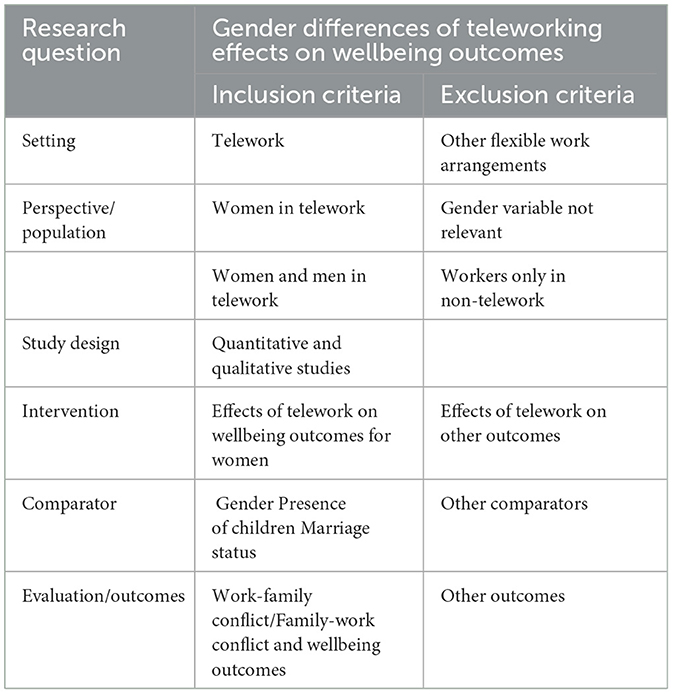
Table 1. Inclusion and exclusion criteria by SPICE and PICOS model.
Finally, the main objective of the review is to summarize and synthesize the available evidence instead of combining the results quantitatively.
3 Results
The PRISMA flow diagram in Figure 1 shows the study selection process. Table 1 outlines the inclusion and exclusion criteria according to SPICE and PICOS models. The initial search of the databases identified 326 records. After mark as ineligible by automation tools and removing duplicates, 113 records were screened on the basis of title and abstract. The remaining 75 records were then screened on the basis of the readiness of the full text. Of these, 37 studies met our selection criteria.
3.1 Descriptive analysis
Seven of the articles included in the review were published by the International Journal of Environmental Research and Public Health, which has an impact factor of 4.614 and 4.5 in CiteScore. The rest of the journals have published only two or one articles (only four journals published two articles each) (Table 2).
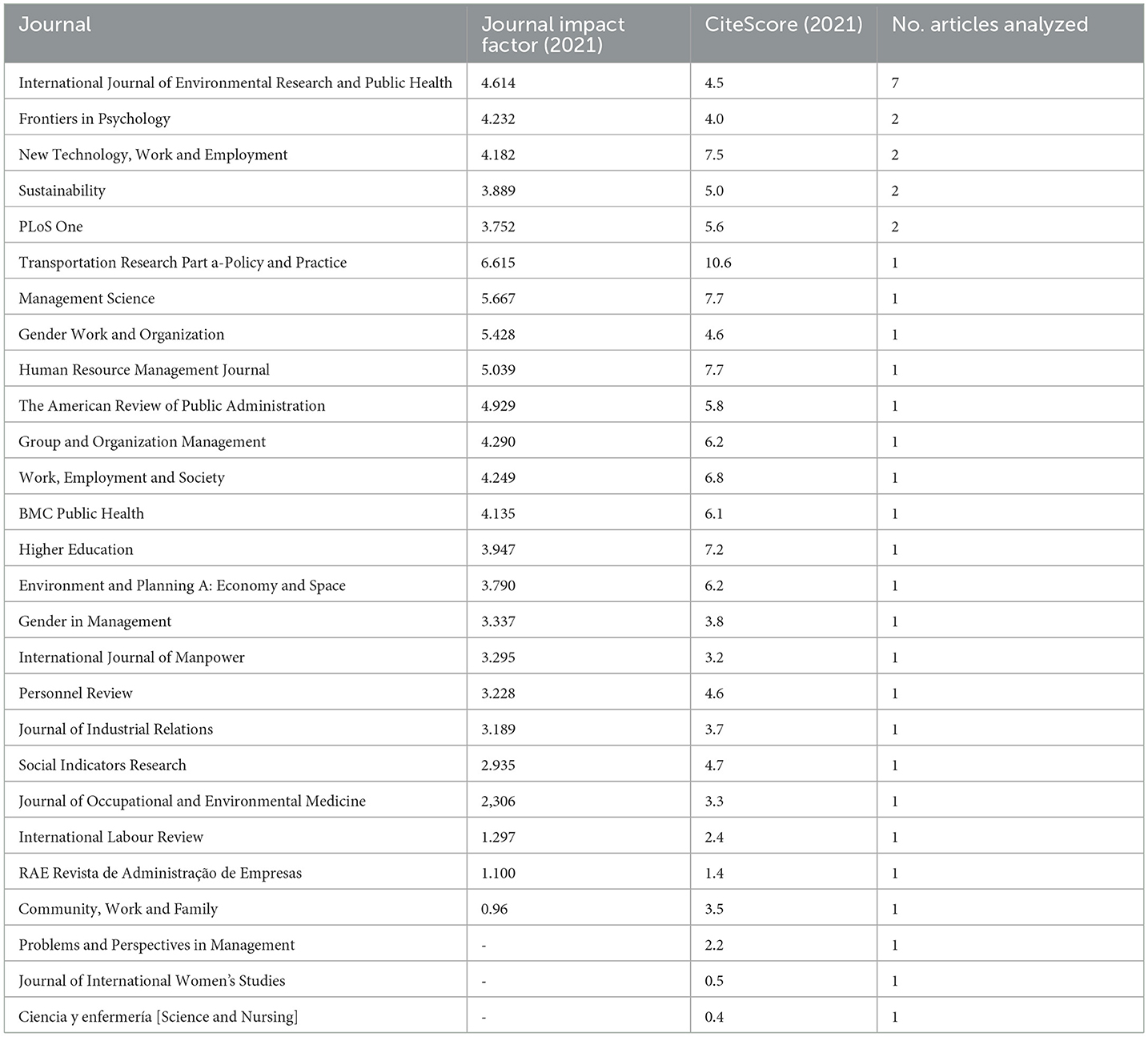
Table 2. Journal Impact Factor (WOS), CiteScore (SCOPUS) and number of articles analyzed.
3.2 Psychosocial wellbeing related outcomes
In terms of the research objectives, 35 of the 37 articles focus on the relationship between telework (considered as total or partial form of work activity on a regular or occasional basis) and some aspect of wellbeing, whether work-family conflict, satisfaction and/or health. While the two remaining articles by Cortis and Powell (2018) and by Currie and Eveline (2011) do not consider telework as such, they do consider home-based technologically assisted complementary work and its impact on work-life balance.
20 articles analyzed teleworker experiences during the COVID-19 crisis, with 16 concluding that teleworking negatively affected wellbeing during the pandemic and lockdown. Some relevant results indicate that family responsibility fell mainly on women, regardless of whether they had dependents or not, generating more stressful situations for them, especially during the COVID-19 pandemic lockdown period (Soubelet-Fagoaga et al., 2021). During this same period, the relationship between productive and care work was related to stress in both men and women, and workers with and without dependents (Soubelet-Fagoaga et al., 2022). Specifically, Lonska et al. (2021) found that women aged 18-44 and respondents with young children had difficulty maintaining work-life balance while teleworking during the COVID-19 pandemic.
We have found 35 articles where a gender perspective is shown in their theoretical approaches, objectives, hypotheses and/or discussion. Gender comparisons consider factors such as differing socialization, discrimination against women, and the way in which household responsibilities and family care are assigned to women.
Two papers (Céspedes et al., 2021; Ipsen et al., 2021) do not consider the gender perspective. While these studies do reference sex differences in their segregated results, they do not take a gender perspective into account.
The most common comparison in the papers is between men and women (31 articles). This is followed by articles differentiating outcomes for teleworkers with and without children (26 articles), and articles comparing teleworking (or working from home) with working on the organization's premises (five papers). Six studies analyze all-women samples. Two studies (Dockery and Bawa, 2018; Derndorfer et al., 2021) focus on teleworking cohabiting couples.
Four studies make specific comparisons: employed and self-employed workers (Desai et al., 2011; Reuschke, 2019); formal and informal teleworking arrangements (Troup and Rose, 2012); teleworking and teletraining (Romeo et al., 2021).
Broken down by economic sector, we found four studies on civil servants: those of Troup and Rose (2012), Bae and Kim (2016), Cortis and Powell (2018), and Thulin et al. (2019); one study on knowledge workers by Sherman (2019); one study on academic staff, that of Currie and Eveline (2011); and one study on the financial sector (Hilbrecht et al., 2013). However, 81% of our review articles considered the working population as a whole.
Five studies compared participants from two or more countries and 32 studies focused on just one individual country.
The findings of our study focus on the way in which telework affects wellbeing, with results classified on the basis positive or negative effects on work-family balance/conflict, satisfaction, health, and the extent to which these effects differ between women and men (Tables 3–7). In this sense, 22 articles find that telework has a negative impact on wellbeing. Some of them conclude that women find it more difficult to reconcile family and work than men (Currie and Eveline, 2011; Kurowska, 2020; Zhang et al., 2020; Carvalho et al., 2021; Derndorfer et al., 2021; Soubelet-Fagoaga et al., 2021; Giedrè Raišiene et al., 2022; Kuśnierz et al., 2022) devote more time to unpaid work than men (Nakrošiene et al., 2019), are more likely to do complementary work outside regular hours (Cortis and Powell, 2018), do more double shifting (Wheatley, 2012), have heavier workloads (Lonska et al., 2021). Findings also show that women teleworkers suffer from poorer mental health (Kuśnierz et al., 2022); lower levels of job satisfaction (Bae and Kim, 2016); higher levels of stress, tension and/or anxiety (Hilbrecht et al., 2013; Céspedes et al., 2021; Parent-Lamarche and Boulet, 2021; Romeo et al., 2021; Subha et al., 2021); higher score on depressive symptoms, and lower resilience compared to fathers (Brym et al., 2022); and are less likely to pay attention to healthy habits (Giedrè Raišiene et al., 2022). Teleworking can also make women feel disengaged from professional work, make their employment situation more precarious, and consolidate their roles as traditional housewives (Çoban, 2021). In addition, three articles report a negative impact of telework on both sexes. One study describes the way in which women find it difficult to manage domestic work-life balance despite handling core household and care responsibilities (González Ramos and García-de-Diego, 2022). Strong work-family integration (i.e., lack of borders) has a particularly harmful effect on work-family conflict for male teleworkers, while a strong inability to disengage from work has an especially harmful effect on work-family conflict for female teleworkers (Eddleston and Mulki, 2017). Finally, teleworking during the COVD-19 pandemic increased perceived stress and adversely affected work-life balance and job satisfaction in both sexes (Sandoval-Reyes et al., 2021).
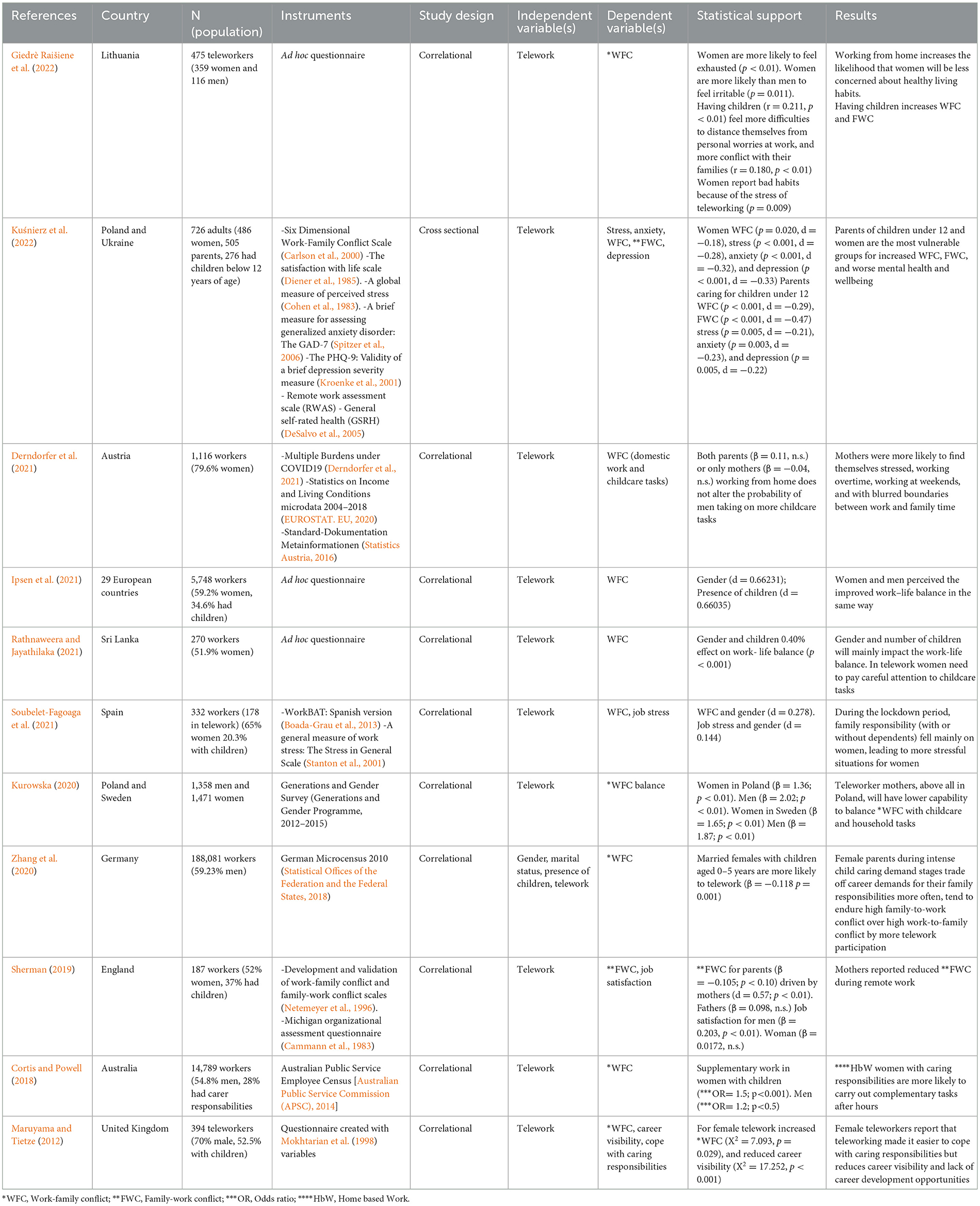
Table 3. Quantitative studies on the effects of teleworking on work-family conflict or family-work conflict.
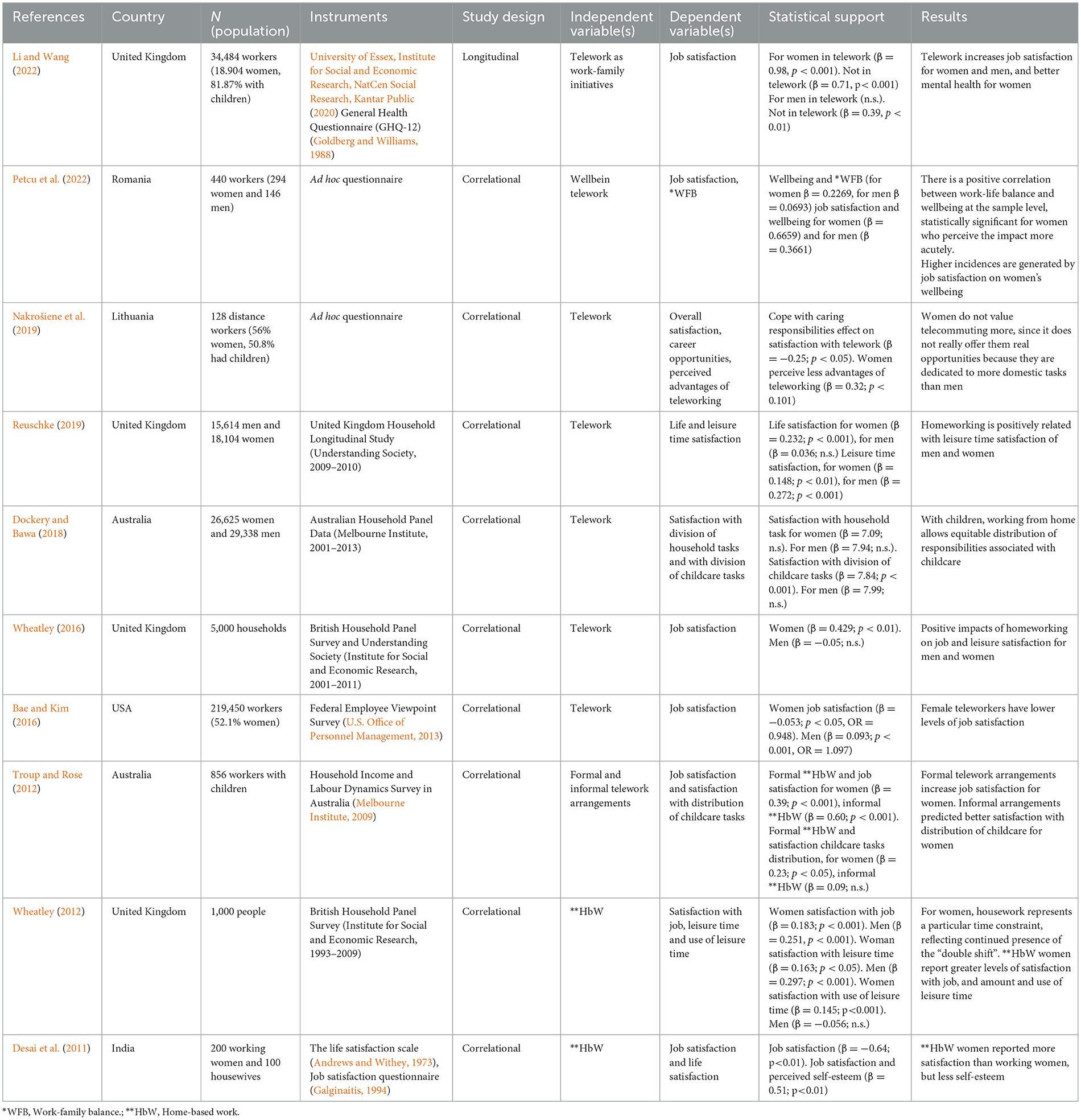
Table 4. Quantitative studies on effects of teleworking on satisfaction.
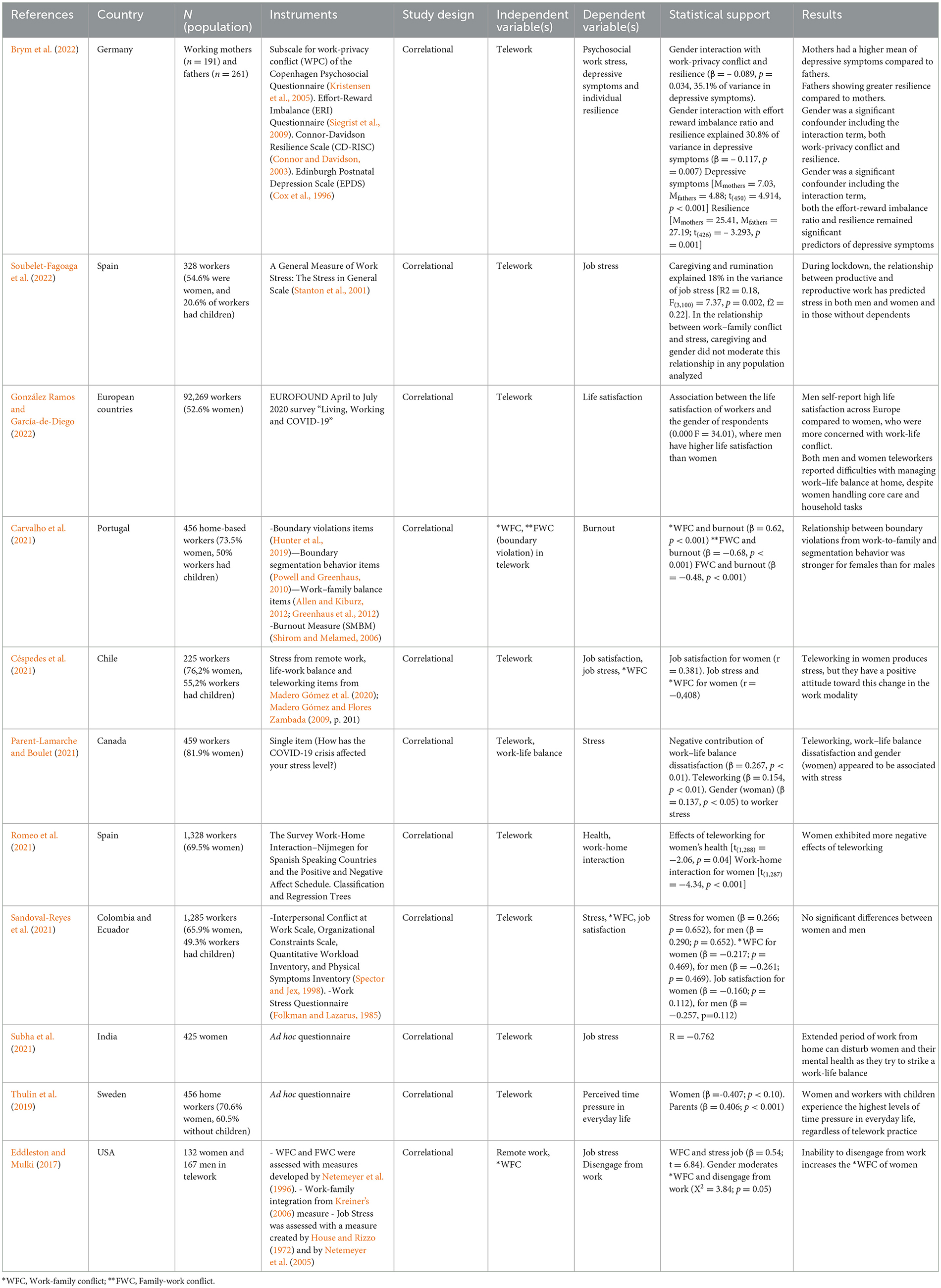
Table 5. Quantitative studies on effects of teleworking on health.
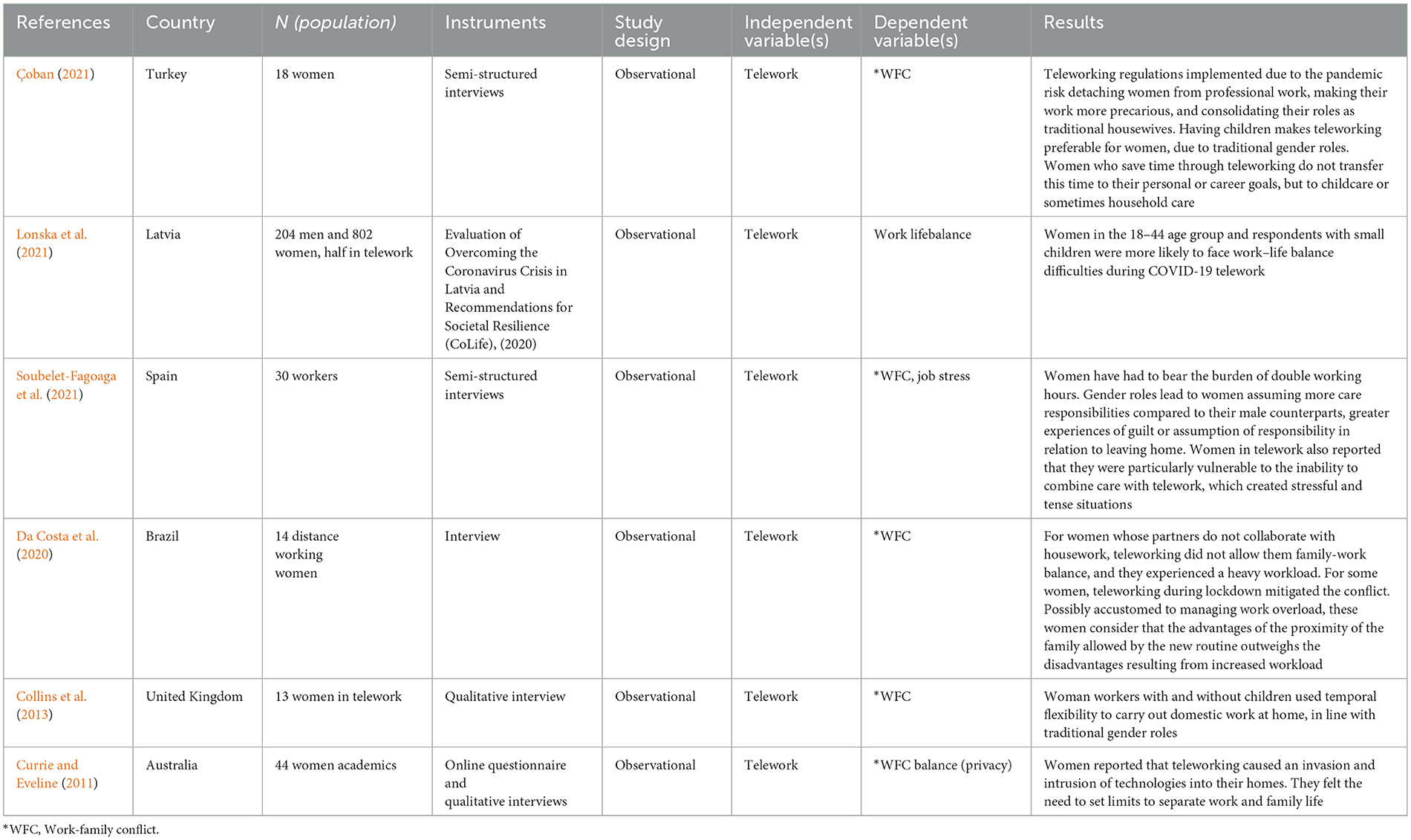
Table 6. Qualitative studies on effects of teleworking on work-family conflict or family-work conflict.

Table 7. Qualitative studies on effects of teleworking on satisfaction.
However, 10 articles report that telework has positive impact on work-family balance: seven on both men and women, and three articles only on women. This can be explained because teleworking more easily allows women to switch between personal and career roles while working at home (Wheatley, 2012; Rathnaweera and Jayathilaka, 2021); and especially when they have children because of caring tasks (Sherman, 2019).
Although in the other seven studies men and women both report a positive impact, for women teleworking has more drawbacks. Women perceived the limitations of the home office more than the male respondents (Ipsen et al., 2021). As Dockery and Bawa (2018) stated, telework facilitates better work-family balance but, when male employees work from home there is a tendency for their female partners to feel less satisfied with the division of household tasks. This suggests that when men work from home, they do not increase their contribution to household chores by as much as their partners think they should.
Other studies show that telework increases satisfaction (Troup and Rose, 2012; Wheatley, 2012, 2016; Reuschke, 2019; Sherman, 2019; Li and Wang, 2022; Petcu et al., 2022). It should be noted that in the case of the study of Sherman (2019), results show that telework increases women's satisfaction since it does not penalize them at work, as other labor flexibility measures do (for example, reduction of working hours). However, Reuschke (2019) found that women do not show higher job satisfaction than men when working from home. In the case of men, the advantage of homeworking with respect to job satisfaction is associated with autonomy and control of work, while for women is related to the flexibility that allows them to combine work and private/family life. Results from Troup and Rose (2012) show that informal arrangements predicted better satisfaction with the division (between women and men) of childcare for women than formal arrangements. This finding may be related to expectations that formal telework arrangements also formalize women's greater responsibility for childcare. In contrast, such gendered expectations that formal telework arrangements entail greater responsibility for childcare might not be as strong for men who use formal telework arrangements.
Five papers found that telework has both positive and negative effect on wellbeing. Desai et al. (2011) link teleworking with lower stress and increased satisfaction, but also lower self-esteem. Although home based working ensured flexibility, it affected women's ability to work full-time, to consolidate their economic independence, and not fall behind their husbands in terms of work. Da Costa et al. (2020) report that for some women, teleworking during lockdown mitigated the conflict, but for women whose partners do not collaborate with housework, teleworking did not allow them to reach a family-work balance, so they experienced a heavy workload. Collins et al. (2013) concluded that the flexible nature of telework allows more time for leisure or training activities; but women use teleworking more to carrying out domestic work along traditional gender lines and reported that teleworking caused an invasion and intrusion of technologies into their homes, thus they felt the need to set limits to separate work and family life. Also, in deciding to work at home, the majority of women homeworkers either accepted a demotion or gave up a promotion to be able to work at home. Maruyama and Tietze (2012) found that teleworking allows women (especially those with dependent children or those who spend more than 50 per cent of their working hours at home) to cope with caring responsibilities but reduces career visibility and lack of career development opportunities. The results found in the Thulin et al. (2019) article did not correlate telework with high levels of time pressure and time use control, but the latter variable does correlated with having young children in a way that relates to less time use control. It should be noted that most studies highlight parenthood as a key factor when determining the impact of telework on wellbeing.
4 Conclusion and discussion
This review has analyzed empirical evidence of the effects of telework on wellbeing from a gender perspective. While this is generally lacking in other studies, some research does highlight the importance of the role of variables that especially affect working women, such as social isolation and difficulties in advancing professional development (Charalampous et al., 2019), lack of autonomy (Oakman et al., 2020), and family situation (Lunde et al., 2022).
We have found 22 studies showing that telework has negative effects on work-family interaction and work conditions, which particularly affect women. However, we have found 10 studies with observed positive results of telework on satisfaction for both men and women, but only three articles show positive results specifically for women, that is, do not affect men or the results for men are not significant. Finally, five articles reported both positive and negative effects for women.
As expected, our study confirms that literature research indicates that telework has a greater negative effect on women. Also, these negative results for women have been found to be accompanied by maintenance of gender roles in the sharing of household responsibilities and family care, reduced visibility and promotion at work, and even lower self-esteem.
The results found can be explained in terms of wellbeing: work-family balance/conflict, job satisfaction (Beckel and Fisher, 2022), and health (Oakman et al., 2020; Lunde et al., 2022). Some research also suggests women working at home may be more likely to use the teleworking due to the flexibility it offers where children and significant household responsibilities are present (Sullivan and Lewis, 2001; Sullivan and Smithson, 2007). This implies the adoption and/or maintenance of stereotypical gender roles associated with household responsibilities and family care (as postulated by the gender social role theory, by Eagly and Wood, 2012), and consequent increased exposure of women to the negative effects of telework on wellbeing. Regarding work-family interaction, difficulties reconciling work and family life partly during lockdown explains lower female teleworker productivity, because they became the main responsible for household chores and caring for dependent people (King and Frederickson, 2021; Krukowski et al., 2021; Farré et al., 2022). This lack of co-responsibility was even observed in Iceland, which has had the best results in the Gender Gap Index for several years. Even in this country, it would seem that unprecedented situations like COVID-19 reveal and accentuate strong gender norms and expectations with regard to the role of mothers (Hjálmsdóttir and Bjarnadóttir, 2021).
As explained above, results indicate that teleworking serves to perpetuate the maintenance of gender stereotypes associated with domestic activities and childcare (Eagly and Wood, 2012). As women telework more than men, they assume a more significant burden of unpaid work at home. This also implies interrupted professional careers, loss of benefits and promotion, lower career visibility, and ultimately a disconnection with the employment relationship that increases gender inequality in the workplace. Following Çoban (2021), telework strengthens gender stereotypes.
Regarding wellbeing, studies showing that teleworking negatively affects women's job, life and leisure time satisfaction run contrary to the idea that teleworking leads to improved leisure time or an opportunity to spend more quality time with the family. This is clearly related to the above-mentioned difficulties that teleworking creates in connection with work-life balance and the double working day. Some recent studies have also systematically reviewed evidence on the relationship between teleworking and employee physical and mental health (Lunde et al., 2022). Focusing on mental/psychosocial health, these authors found little or very little evidence when considering gender. However, the authors did not consider the way in which teleworking may alter the work-home interface and the role that gender played in all these relationships.
In conclusion, teleworking is a double-edged sword that is particularly problematic for women's wellbeing. Considering the findings in relation to the theory of work demands and resources (Bakker and Demerouti, 2017), teleworking is presented as a type of work resource that offers greater flexibility, autonomy and work-life balance. However, by assuming traditional gender roles that are still present in our society with regard to domestic and care responsibilities (Eagly and Koenig, 2021), women perceive teleworking as a work-related and personal demand, which puts their wellbeing at risk in a more specific way. Finally, telework does not directly resolve work-family conflicts since traditional gender roles, structures and spaces related to childcare and domestic work, continue to be reproduced (Beigi and Shirmohammadi, 2017).
As a contribution, this review considers a gender perspective when analyzing the results of the studies included. It not only values the results that analyze possible differences between women and men but also applies a gender perspective to hypotheses, results and/or conclusions. As a result, we believe that differing socialization processes, stereotypes and gender roles (e.g., Castaño et al., 2019) that maintain the unequal distribution of household responsibilities and family care (Cerrato and Cifre, 2018) should be considered as one of the factors leading to differences in the effects of teleworking between women and men.
This review has shown that teleworking has led to important changes affecting the mutually related family and work environments. Future research should conduct an in-depth analysis of the sociodemographic, family and work variables that can affect the consequences of teleworking.
4.1 Limitations and future research
One of the main limitations is the disparity of the articles included in the review, especially with regard to their methodology and assessment instruments. Many of the studies used ad hoc questionnaires, which makes it difficult to carry out subsequent meta-analysis and ascertain their reliability and validity.
Differences have also been found in the way in which the studies define and/or classify telework. Some refer to telework within a package of measures defined as flexible work arrangements, together with other work arrangements, such as flextime and part-time work, which makes it difficult to know if the findings are more related to telework or to the other forms of flexible work included in the studies. Some studies also differentiate between formal and informal telework, making it difficult to unify these concepts. We therefore conclude that it would be valuable to carry out empirical studies to measure the effect of telework on these variables for the same type of work and the same employment status.
Given that having children has been shown to be an important variable, there is a need for in-depth research into its influence and why this has a more negative impact on women. Having children is important because it is more difficult for mothers to escape from family responsibilities and increases the number of working hours from home or outside the home. Studies should consider the number of children and their age. Looking after young children is not the same as adolescents. Older children have greater autonomy (for example, they do not need to be taken to and from school or can stay at home without the presence of an adult) and no longer require adjustments to working hours to take their needs into account.
In addition to childcare, women are also more likely to assume responsibility for caring for other adults in the family. Finally, attention should be given to the type of family: both members of the couple telework; one member of the couple teleworks; and above all, single-parent families.
Research should also consider the type of work, conditions of work, and especially work status. Differences may be found with respect to level of status, degree of supervision, the degree to which work is interesting, and levels of responsibility and autonomy.
In conclusion, this study provides information to make us aware that teleworking continues to be a double sword for women mainly due to their social role of main responsible for the household and defendant relatives. It is still needed a change in the mindset of our society, that may allow and encourage men to share these responsibilities. Only with a real co-responsibility at home can teleworking become a great arrangement for all teleworkers, regardless of gender. So, the need for policies and practices that address gender differences, working conditions, and appropriate regulations to support all workers in this changing environment becomes a must.
Data availability statement
The original contributions presented in the study are included in the article/supplementary material, further inquiries can be directed to the corresponding author.
Author contributions
NC-T: Writing – original draft, Writing – review & editing, Data curation, Formal analysis, Validation. MZ-V: Formal analysis, Supervision, Validation, Visualization, Writing – original draft, Writing – review & editing. AO: Funding acquisition, Supervision, Writing – original draft, Writing – review & editing. EC: Funding acquisition, Supervision, Writing – original draft, Writing – review & editing. AG-I: Conceptualization, Funding acquisition, Supervision, Writing – original draft, Writing – review & editing.
Funding
The author(s) declare financial support was received for the research, authorship, and/or publication of this article. This work was supported by Universitat Jaume I (UJI B2021-33), UNED, Cátedra Asturias Prevención (CATI-004-2018, Fundación Universidad de Oviedo).
Conflict of interest
The authors declare that the research was conducted in the absence of any commercial or financial relationships that could be construed as a potential conflict of interest.
Publisher's note
All claims expressed in this article are solely those of the authors and do not necessarily represent those of their affiliated organizations, or those of the publisher, the editors and the reviewers. Any product that may be evaluated in this article, or claim that may be made by its manufacturer, is not guaranteed or endorsed by the publisher.
References
Aguado, E., Aguado, A., and Benlloch, C. (2020). Análisis sociológico desde la perspectiva de género de los efectos de la pandemia sobre la (re)conciliación durante el tiempo de confinamiento. Universitat de Valéncia.
Allen, T. D., Johnson, R. C., Kiburz, K. M., and Shockley, K. M. (2013). Work–family conflict and flexible work arrangements: deconstructing flexibility. Pers. Psychol. 66, 345–376. doi: 10.1111/peps.12012
Allen, T. D., and Kiburz, K. M. (2012). Trait mindfulness and work-family balance among working parents: the mediating effects of vitality and sleep quality. J. Vocat. Behav. 80, 372–379. doi: 10.1016/j.jvb.2011.09.002
Anderson, D., and Kelliher, C. (2020). Enforced remote working and the work-life interface during lockdown. Gender Manage. 35, 677–683. doi: 10.1108/GM-07-2020-0224
Andrews, F. M., and Withey, S. B. (1973). Developing measures of perceived life quality: results from several national surveys. Soc. Indic. Res. 1, 1–26. doi: 10.1007/BF00286419
Ashforth, B. E., Kreiner, G. E., and Fugate, M. (2000). All in a day's work: Boundaries and micro role transitions. Acad. Manage. Rev. 25, 472–491. doi: 10.2307/259305
Australian Public Service Commission (APSC) (2014). Australian Public Service Employee Census 2014, Unit Record Files. Australian Public Service Commission and ORC International.
Bae, K. B., and Kim, D. (2016). The impact of decoupling of telework on job satisfaction in U.S. Federal Agencies: does gender matter? Am. Rev. Public Admin. 46, 356–371. doi: 10.1177/0275074016637183
Bakker, A. B., and Demerouti, E. (2017). Job demands–resources theory: taking stock and looking forward. J. Occup. Health Psychol. 22, 273–285. doi: 10.1037/ocp0000056
Becerra-Astudillo, L., Vargas-Díaz, B., Molina, C., Serrano-Malebrán, J., and Garzón-Lasso, F. (2022). Teleworking in times of a pandemic: an applied study of industrial companies. Front. Psychol. 13:1061529. doi: 10.3389/fpsyg.2022.1061529
Beckel, J. L. O., and Fisher, G. G. (2022). Telework and worker health and well-being: a review and recommendations for research and practice. Int. J. Environ. Res. Public Health 19:3879. doi: 10.3390/ijerph19073879
Beigi, M., and Shirmohammadi, M. (2017). Qualitative research on work-family in the management field: a review. Appl. Psychol. 66, 382–433. doi: 10.1111/apps.12093
Boada-Grau, J., Prizmic-Kuzmica, A.-J., Serrano-Fernández, M.-J., and Vigil-Colet, A. (2013). Estructura factorial, fiabilidad y validez de la escala de adicción al trabajo (WorkBAT): Versión española. Ann. Psychol. 29, 923–933. doi: 10.6018/analesps.29.3.147071
Booth, A. (2004). “Formulating answerable questions,” in Evidence Based Practice for Information Professionals, eds. A. Booth and A. Brice (Facet Publishing), 61–70.
Brym, S., Mack, J. T., Weise, V., Kopp, M., Steudte-Schmiedgen, S., and Garthus-Niegel, S. (2022). Mental health of working parents during the COVID-19 pandemic: can resilience buffer the impact of psychosocial work stress on depressive symptoms? BMC Public Health 22, 2426. doi: 10.1186/s12889-022-14582-y
Buomprisco, G., Ricci, S., Perri, R., and De Sio, S. (2021). Health and telework: new challenges after COVID-19 pandemic. Eur. J. Environ. Public Health 5:9705. doi: 10.21601/ejeph/9705
Cammann, C., Fichman, M., Jenkins, G. D., and Klesh, J. R. (1983). “The Michigan organizational assessment survey: conceptualization and instrumentation,” in Assessing Organizational Change: A Guide to Methods, Measures and Practices, eds. S. E. Seashore, E. E. Lawler, P. H. Mirvis, and C. Cammann.
Carlson, D. S., Kacmar, K. M., and Williams, L. J. (2000). Construction and initial validation of a multidimensional measure of work-family conflict. J. Vocat. Behav. 56, 249–276. doi: 10.1006/jvbe.1999.1713
Carvalho, V. S., Santos, A., Ribeiro, M. T., and Chambel, M. J. (2021). Please, do not interrupt me: work–family balance and segmentation behavior as mediators of boundary violations and teleworkers' burnout and flourishing. Sustainability 13:7339. doi: 10.3390/su13137339
Castaño, A. M., Fontanil, Y., and García-Izquierdo, A. L. (2019). “Why can't I become a manager?”—A systematic review of gender stereotypes and organizational discrimination. Int. J. Environ. Res. Public Health 16:1813. doi: 10.3390/ijerph16101813
Catana, S. A., Toma, S. G., Imbrisca, C., and Burcea, M. (2022). Teleworking impact on wellbeing and productivity: a cluster analysis of the romanian graduate employees. Front. Psychol. 13:856196. doi: 10.3389/fpsyg.2022.856196
Cerrato, J., and Cifre, E. (2018). Gender inequality in household chores and work-family conflict. Front. Psychol. 9:1330. doi: 10.3389/fpsyg.2018.01330
Céspedes, F., Fuentes, C., Molina, V., Rebolledo, C., Luengo, C., and Madero Gómez, S. (2021). Percepciones que tienen trabajadores chilenos sobre el impacto del teletrabajo en el entorno de COVID-19. Ciencia y enfermería 27:19. doi: 10.29393/CE27-19PTFS60019
Charalampous, M., Grant, C. A., Tramontano, C., and Michailidis, E. (2019). Systematically reviewing remote e-workers' well-being at work: a multidimensional approach. Eur. J. Work Organizat. Psychol. 28, 51–73. doi: 10.1080/1359432X.2018.1541886
Zhang, C. (2022). The depleting and buffering effects of telecommuting on wellbeing: evidence from china during COVID-19. Front. Psychol. 13:898405. doi: 10.3389/fpsyg.2022.898405
Chirico, F., Zaffina, S., Di Prinzio, R. R., Giorgi, G., Ferrari, G., Capitanelli, I., et al. (2021). Working from home in the context of COVID-19: a systematic review of physical and mental health effects of teleworkers. J. Health Soc. Sci. 6, 319–332. doi: 10.19204/2021/wrkn8
Çoban, S. (2021). Gender and telework: work and family experiences of teleworking professional, middle-class, married women with children during the Covid-19 pandemic in Turkey. Gender, Work Organizat. 29, 241–255. doi: 10.1111/gwao.12684
Cohen, S., Kamarck, T., and Mermelstein, R. (1983). A global measure of perceived stress. J. Health Soc. Behav. 24, 385–396. doi: 10.2307/2136404
Collins, A. M., Cartwright, S., and Hislop, D. (2013). Homeworking: negotiating the psychological contract. Hum. Resour. Manag. J. 23, 211–225. doi: 10.1111/j.1748-8583.2012.00200.x
Connor, K. M., and Davidson, J. R. (2003). Development of a new resilience scale: the Connor-Davidson resilience scale (CD-RISC). Depress. Anxiety 18, 76–82. doi: 10.1002/da.10113
Cortis, N., and Powell, A. (2018). Playing catch up? An exploration of supplementary work at home among Australian public servants. J. Indust. Relat. 60, 538–559. doi: 10.1177/0022185618769340
Cox, J. L., Chapman, G., Murray, D., and Jones, P. (1996). Validation of the Edinburgh Postnatal Depression Scale (EPDS) in non-postnatal women. J. Affect. Disord. 39, 185–189. doi: 10.1016/0165-0327(96)00008-0
Crawford, J. (2022). Working from home, telework, and psychological wellbeing? A systematic review. Sustainability 14:11874. doi: 10.3390/su141911874
Currie, J., and Eveline, J. (2011). E-technology and work/life balance for academics with young children. Higher Educat. 62, 533–550. doi: 10.1007/s10734-010-9404-9
Da Costa, A. H., De Oliveira, A., and Pinheiro, P. (2020). Women in home office during the COVID-A9 pandemic and the work-family conflict configurations. RAE Revista de Administraçao de Empresas 60, 388–399. doi: 10.1590/s0034-759020200603
Delanoeije, J., and Verbruggen, M. (2019). The use of work-home practices and work-home conflict: examining the role of volition and perceived pressure in a multi-method study. Front. Psychol. 10:2362. doi: 10.3389/fpsyg.2019.02362
Derndorfer, J., Disslbacher, F., Lechinger, V., Mader, K., and Six, E. (2021). Home, sweet home? The impact of working from home on the division of unpaid work during the COVID-19 lockdown. PLoS ONE 16:e259580. doi: 10.1371/journal.pone.0259580
Desai, M., Majumdar, B., Chakraborty, T., and Ghosh, K. (2011). The second shift: working women in India. Gender Manage. 26, 432–450. doi: 10.1108/17542411111164920
DeSalvo, K. B., Fan, V. S., McDonell, M. B., and Fihn, S. D. (2005). Predicting mortality and healthcare utilization with a single question. Health Serv. Res. 40, 1234–1246. doi: 10.1007/s11136-005-0887-2
Diener, E. D., Emmons, R. A., Larsen, R. J., and Griffin, S. (1985). The satisfaction with life scale. J. Pers. Assess. 49, 71–75. doi: 10.1207/s15327752jpa4901_13
Dockery, A. M., and Bawa, S. (2018). When two worlds collude: working from home and family functioning in Australia. Int. Labour Rev. 157, 609–630. doi: 10.1111/ilr.12119
Eagly, A. H., and Koenig, A. M. (2021). The vicious cycle linking stereotypes and social roles. Curr. Dir. Psychol. Sci. 30, 343–350. doi: 10.1177/09637214211013775
Eagly, A. H., and Wood, W. (2012). “Social role theory,” in Handbook of Theories of Social Psychology, eds. P. A. M. Van Lange, A. W. Kruglanski, and E. T. Higgins (Sage Publications Ltd.), 458–576.
Eddleston, K. A., and Mulki, J. (2017). Toward understanding remote workers' management of work–family boundaries: the complexity of workplace embeddedness. Group Organiz. Manage. 42, 346–387. doi: 10.1177/1059601115619548
Eurofound (2020). Living, Working and COVID-19. COVID-19 Series. Luxembourg: Publications Office of the European Union.
European Parliament (2022). Teleworking, Unpaid Care and Mental Health During COVID-19. Available online at: https://www.europarl.europa.eu/topics/en/article/20220303STO24641/teleworking-unpaid-care-and-mental-health-during-covid-19
EUROSTAT. EU (2020). Statistics on Income and Living Conditions Microdata 2004-2018, Release 2020, version 1. 2020. Available online at: https://ec.europa.eu/eurostat/documents/203647/203704/EU+SILC+DOI+2020v1.pdf
Farré, L., Fawaz, Y., González, L., and Graves, J. (2022). Gender Inequality in Paid and Unpaid Work During Covid-19 Times. Review of Income and Wealth 68:323–347. doi: 10.1111/roiw.12563
Felstead, A., and Henseke, G. (2017). Assessing the growth of remote working and its consequences for effort, well-being and work-life balance. New Techn. Work Employm. 32, 195–212. doi: 10.1111/ntwe.12097
Ferreira, A. I., Mach, M., Martinez, L. F., and Miraglia, M. (2022). Sickness presenteeism in the aftermath of COVID-19: is presenteeism remote-work behavior the new (Ab)normal? Front. Psychol. 12:748053. doi: 10.3389/fpsyg.2021.748053
Folkman, S., and Lazarus, R. S. (1985). If it changes it must be a process: study of emotion and coping during three stages of a college examination. J. Pers. Soc. Psychol. 48, 150–170. doi: 10.1037/0022-3514.48.1.150
Fontaneda, I., Prádanos, Y., González Alcántara, O. J., Camino López, M. Á., García Izquierdo, A. L., and Osca Segovia, A. (2023). Teleworking in manufacturing: dealing with the post-pandemic COVID-19 challenge. Admin. Sci. 13:222. doi: 10.3390/admsci13100222
Forgeard, M. J. C., Jayawickreme, E., Kern, M. L., and Seligman, M. E. (2011). Doing the right thing: measuring wellbeing for public policy. Int. J. Wellbeing 1, 79–106. doi: 10.5502/ijw.v1i1.15
Frone, M. R. (2003). “Work-family balance,” in Handbook of Occupational Health Psychology, eds. J. C. Quick and L. E. Tetrick (American Psychological Association), 143–162.
Gajendran, R. S., and Harrison, D. A. (2007). The good, the bad, and the unknown about telecommuting: meta-analysis of psychological mediators and individual consequences. J. Appl. Psychol. 92, 1524–1541. doi: 10.1037/0021-9010.92.6.1524
García-Izquierdo, A. L., and Castaño, A. M. (2022). Work characteristics and occupational health: validation and proposal of a shortened version of the Work Design Questionnaire. Anales de Psicología 38, 149–162. doi: 10.6018/analesps.480481
Giedrè Raišiene, A., Rapuano, V., Masilionyte, G., and Juozapas Raišys, S. (2022). “White collars” on self-reported well-being, health and work performance when teleworking from home. Probl. Perspect. Manag. 20, 497–510. doi: 10.21511/ppm.20(2).2022.41
Goldberg, D. P., and Williams, P. (1988). User's Guide to the General Health Questionnaire. Windsor, ON: NFER-Nelson.
González Ramos, A. M., and García-de-Diego, J. M. (2022). Work–life balance and teleworking: lessons learned during the pandemic on gender role transformation and self-reported well-being. Int. J. Environ. Res. Public Health 19:8468. doi: 10.3390/ijerph19148468
Green, D. D., and Roberts, G. E. (2010). Personnel implications of public sector virtual organizations. Public Personnel Manage. 39, 47–57. doi: 10.1177/009102601003900103
Green, F. (2020). Health Effects of Job Insecurity. Bonn: IZA World of Labor. Institute of Labor Economics.
Greenhaus, J. H., and y Beutell, N. J. (1985). Sources of conflict between work and family roles. Acad. Manage. Rev. 10, 76–88. doi: 10.2307/258214
Greenhaus, J. H., Ziegert, J. C., and Allen, T. D. (2012). When family-supportive supervision matters: Relations between multiple sources of support and work-family balance. J. Vocat. Behav. 80, 266–275. doi: 10.1016/j.jvb.2011.10.008
Groen, B., Triest, S. V., Coers, M., and Wtenweerde, N. (2018). Managing flexible work arrangements: teleworking and output controls. Eur. Manag. J. 36, 727–735. doi: 10.1016/j.emj.2018.01.007
Gutek, B. A., Searle, S., and Klepa, L. (1991). Rational versus gender role explanations for work-family conflict. J. Appl. Psychol. 76, 560–568. doi: 10.1037/0021-9010.76.4.560
Hammer, L. B., Neal, M. B., Newsom, J. T., Brockwood, K. J., and Colton, C. L. (2005). A longitudinal study of the effects of dual-earner couples' utilization of family-friendly workplace supports on work and family outcomes. J. Appl. Psychol. 90:799. doi: 10.1037/0021-9010.90.4.799
Hilbrecht, M., Shaw, S. M., Johnson, L. C., and Andrey, J. (2013). Remixing work, family and leisure. New Technol Work Employm. 28, 130–144. doi: 10.1111/ntwe.12010
Hjálmsdóttir, A., and Bjarnadóttir, V. S. (2021). “I have turned into a foreman here at home”: families and work–life balance in times of COVID-19 in a gender equality paradise. Gender, Work Organiz. 28, 268–283. doi: 10.1111/gwao.12552
House, R. J., and Rizzo, J. R. (1972). Toward the measurement of organizational practices: scale development and validation. J. Appl. Psychol. 56, 388–396. doi: 10.1037/h0033444
Hu, X., Park, Y., Day, A., and Barber, L. K. (2021). Time to disentangle the information and communication technology (ICT) constructs: developing a taxonomy around ICT use for occupational health research. Occupat. Health Sci. 5, 217–245. doi: 10.1007/s41542-021-00085-6
Hunter, E. M., Clark, M. A., and Carlson, D. S. (2019). Violating work-family boundaries: reactions to interruptions at work and home. J. Manage. 45, 1284–1308. doi: 10.1177/0149206317702221
Ipsen, C., van Veldhoven, M., Kirchner, K., and Hansen, J. P. (2021). Six key advantages and disadvantages of working from home in Europe during COVID-19. Int. J. Environ. Res. Public Health 18(4). doi: 10.3390/ijerph18041826
Jostell, D., and Hemlin, S. (2018). After hours teleworking and boundary management: effects on work-family conflict. Work (Reading, Mass.) 60, 475–483. doi: 10.3233/WOR-182748
Kaugars, A. S., Holly, L. E., Tait, M., and Oswald, D. (2021). Exploring American parents' lived experiences during the covid-19 pandemic: ramifications for well-being. J. Pediatr. Psychol. 47, 135–147. doi: 10.1093/jpepsy/jsab120
King, M. M., and Frederickson, M. E. (2021). The pandemic penalty: the gendered effects of COVID-19 on scientific productivity. Socius: Sociol. Res. Dynam. World 7, 1–24. doi: 10.1177/23780231211006977
Kniffin, K. M., Narayanan, J., Anseel, F., Antonakis, J., Ashford, S. P., Bakker, A. B., et al. (2021). COVID-19 and the workplace: implications, issues, and insights for future research and action. Am. Psychol. 76, 63–77. doi: 10.1037/amp0000716
Kreiner, G. E. (2006). Consequences of work-home segmentation or integration: a person-environment fit perspective. J. Organ. Behav. 27, 485–507. doi: 10.1002/job.386
Kristensen, T. S., Hannerz, H., Høgh, A., and Borg, V. (2005). The Copenhagen Psychosocial Questionnaire-a tool for the assessment and improvement of the psychosocial work environment. Scand. J. Work Environ. Health 31, 438–449. doi: 10.5271/sjweh.948
Kroenke, K., Spitzer, R. L., and Williams, J. B. (2001). The PHQ-9: validity of a brief depression severity measure. J. Gen. Intern. Med. 16, 606–613. doi: 10.1046/j.1525-1497.2001.016009606.x
Krukowski, R. A., Jagsi, R., and Cardel, M. I. (2021). Academic productivity differences by gender and child age in science, technology, engineering, mathematics, and medicine faculty during the COVID-19 pandemic. J. Women's Healh 30, 341–347. doi: 10.1089/jwh.2020.8710
Kurowska, A. (2020). Gendered effects of home-based work on parents' capability to balance work with non-work: two countries with different models of division of labour compared. Soc. Indic. Res. 151, 405–425. doi: 10.1007/s11205-018-2034-9
Kuśnierz, C., Rogowska, A. M., Chilicka, K., Pavlova, I., and Ochnik, D. (2022). Associations of work-family conflict with family-specific, work-specific, and well-being-related variables in a sample of polish and ukrainian adults during the second wave of the COVID-19 pandemic: a cross-sectional study. Int. J. Environ. Res. Public Health 19:954. doi: 10.3390/ijerph191710954
Li, L. Z., and Wang, S. (2022). Do work-family initiatives improve employee mental health? longitudinal evidence from a nationally representative cohort. J. Affect. Disord. 297, 407–414. doi: 10.1016/j.jad.2021.10.112
Lonska, J., Mietule, I., Litavniece, L., Arbidane, I., Vanadzins, I., Matisane, L., et al. (2021). Work-life balance of the employed population during the emergency situation of COVID-19 in Latvia. Front. Psychol. 12:682459. doi: 10.3389/fpsyg.2021.682459
Lunde, L.-K., Fløvik, L., Christensen, J. O., Johannessen, H. A., Finne, L. B., Jørgensen, I. L., et al. (2022). The relationship between telework from home and employee health: a systematic review. BMC Public Health 22:47. doi: 10.1186/s12889-021-12481-2
Madero Gómez, S., Ortiz Mendoza, O. E., Ramírez, J., and Olivas-Luján, M. R. (2020). Stress and myths related to the COVID-19 pandemic's effects on remote work. Manage. Res. 14, 401–420. doi: 10.1108/MRJIAM-06-2020-1065
Madero Gómez, S. M., and Flores Zambada, R. (2009). Predictores de la disposición de trabajadores mexicanos a aceptar el teletrabajo. Invest. Cienc. 17, 46–52. Available online at: https://www.redalyc.org/articulo.oa?id=67411387009
Martin, D. D., and Wilson, J. L. (2005). “Role theory,” in Encyclopedia of Social Theory, Vol. II, ed. G. Ritzer (Sage), 651–655.
Maruyama, T., and Tietze, S. (2012). From anxiety to assurance: concerns and outcomes of telework. Person. Rev. 41, 450–469. doi: 10.1108/00483481211229375
Marx, C. K., Mareike, R., and Martin, D. (2021). Do work-life measures really matter? The impact of flexible working hours and home-based teleworking in preventing voluntary employee exits. Soc. Sci. 10:9. doi: 10.3390/socsci10010009
Melbourne Institute (2009). HILDA. Household Income and Labour Dynamics Survey. The University of Melbourne; Melbourne Institute of Applied Economic and Social Research.
Mokhtarian, P. L., Bagley, M. N., and Salomon, I. (1998). The impact of gender, occupation, and presence of children on telecommuting motivations and constraints. J. Am. Soc. Inform. Sci. 49, 1115–1134. doi: 10.1002/(SICI)1097-4571(1998)49%3C1115::AID-ASI7%3E3.0.CO;2-Y
Nakrošiene, A., Buciuniene, I., and Gostautaite, B. (2019). Working from home: characteristics and outcomes of telework. Int. J. Manpow. 40, 87–101. doi: 10.1108/IJM-07-2017-0172
Netemeyer, R. G., Boles, J. S., and McMurrian, R. (1996). Development and validation of work-family conflict and family-work conflict scales. J. Appl. Psychol. 81, 400–410. doi: 10.1037/0021-9010.81.4.400
Netemeyer, R. G., Maxham, J. G. III., and Pullig, C. (2005). Conflicts in the work-family interface: links to job stress, customer service employee performance, and customer purchase intent. J. Market. 69, 130–143. doi: 10.1509/jmkg.69.2.130.6075
Nilles, J. M. (1997). Telework: enabling distributed organizations. Implications for IT managers. Inform. Syst. Manage. 14, 7–14, doi: 10.1080/10580539708907069
Oakman, J., Kinsman, N., Stuckey, R., Graham, M., and Weale, V. (2020). A rapid review of mental and physical health effects of working at home: how do we optimise health? BMC Public Health 20:1825. doi: 10.1186/s12889-020-09875-z
OECD (2023). Teleworking Through the Gender Looking Glass: Facts and Gaps. OECD Social, Employment and Migration Working Papers No. 284.
Page, M. J., Moher, D., Bossuyt, P. M., Boutron, I., Hoffmann, T. C., Mulrow, C. D., et al. (2021). PRISMA 2020 explanation and elaboration: updated guidance and exemplars for reporting systematic reviews. BMJ 372:n160. doi: 10.1136/bmj.n160
Parent-Lamarche, A., and Boulet, M. (2021). Workers' stress during the first lockdown: consequences on job performance analysed with a mediation model. J. Occupat. Environm. Med. 63, 469–475. doi: 10.1097/JOM.0000000000002172
Park, J., Han, B., and Kim, Y. (2018). Association of job satisfaction and security with subjective health and well-being in Korean employees. J. Occupat. Environm. Med. 60, e525–e532. doi: 10.1097/JOM.0000000000001418
Parker, S. K., Morgeson, F., and Johns, G. (2017). 100 years of work design research: looking back and looking forward. J. Appl. Psychol. 102, 403–420. doi: 10.1037/apl0000106
Petcu, M. A., Sobolevschi-David, M. I., Anica-Popa, A., and Popescu, A. M. (2022). Exploring the impact of telework on the romanian employee well-being-a dynamic perspective. Econ. Comput. Econ. Cybern. Stud. Res. 56:19. doi: 10.24818/18423264/56.3.22.19
Powell, G. N., and Greenhaus, J. H. (2010). Sex, gender, and the work-to-family interface: exploring negative and positive interdependencies. Acad. Manage. J. 53, 513–534. doi: 10.5465/amj.2010.51468647
Rathnaweera, D., and Jayathilaka, R. (2021). In employees' favour or not? - The impact of virtual office platform on the work-life balances. PLoS ONE 16:e260220. doi: 10.1371/journal.pone.0260220
Reuschke, D. (2019). The subjective well-being of homeworkers across life domains. Environm. Plann. A: Econ. Space 51, 1326–1349. doi: 10.1177/0308518X19842583
Rodríguez-Modroño, P., and López-Igual, P. (2021). Job quality and work-life balance of teleworkers. Int. J. Environ. Res. Public Health 18:6. doi: 10.3390/ijerph18063239
Romeo, M., Yepes-Baldó, M., Soria, M. Á., and Jayme, M. (2021). Impact of the COVID-19 pandemic on higher education: characterising the psychosocial context of the positive and negative affective states using classification and regression trees. Front. Psychol. 12:714397. doi: 10.3389/fpsyg.2021.714397
Sandoval-Reyes, J., Idrovo-Carlier, S., and Duque-Oliva, E. J. (2021). Remote work, work stress, and work-life during pandemic times: a latin america situation. Int. J. Environ. Res. Public Health 18:7069. doi: 10.3390/ijerph18137069
Sarbu, M. (2018). The role of telecommuting for work-family conflict among German employees. Res. Transp. Econ. 70, 37–51. doi: 10.1016/j.retrec.2018.07.009
Sherman, E. L. (2019). Discretionary remote working helps mothers without harming non-mothers: evidence from a field experiment. Manage. Sci. 66, 1351–1374. doi: 10.1287/mnsc.2018.3237
Shirom, A., and Melamed, S. (2006). A comparison of the construct validity of two burnout measures in two groups of professionals. Int. J. Stress Manage. 13, 176–200. doi: 10.1037/1072-5245.13.2.176
Shockley, K. M., Shen, W., DeNunzio, M. M., Arvan, M. L., and Knudsen, E. A. (2017). Disentangling the relationship between gender and work-family conflict: an integration of theoretical perspectives using meta-analytic methods. J. Appl. Psychol. 102, 1601–1635. doi: 10.1037/apl0000246
Siegrist, J., Wege, N., Pühlhofer, F., and Wahrendorf, M. (2009). A short generic measure of work stress in the era of globalization: effort-reward imbalance. Int. Arch. Occup. Environ. Health 82, 1005–1013. doi: 10.1007/s00420-008-0384-3
Song, Y., and Gao, J. (2020). Does telework stress employees out? a study on working at home and subjective well-being for wage/salary workers. J. Happiness Stud. 21, 2649–2668. doi: 10.1007/s10902-019-00196-6
Soubelet-Fagoaga, I., Arnoso-Martinez, M., Elgorriaga-Astondoa, E., and Martínez-Moreno, E. (2022). Telework and face-to-face work during COVID-19 confinement: the predictive factors of work-related stress from a holistic point of view. Int. J. Environ. Res. Public Health 19:3837. doi: 10.3390/ijerph19073837
Soubelet-Fagoaga, I., Arnoso-Martínez, M., Guerendiain-Gabás, I., Martínez-Moreno, E., and Ortiz, G. (2021). (Tele)Work and care during lockdown: labour and socio-familial restructuring in times of COVID-19. Int. J. Environ. Res. Public Health 18:12087. doi: 10.3390/ijerph182212087
Sousa-Uva, M., Sousa-Uva, A., Sampayo, M. M., and Serranheira, F. (2021). Telework during the COVID-19 epidemic in Portugal and determinants of job satisfaction: a cross-sectional study. BMC Public Health 21:2. doi: 10.1186/s12889-021-12295-2
Spector, P. E., and Jex, S. M. (1998). Development of four self-report measures of job stressors and strain: interpersonal conflict at work scale, organizational constraints scale, quantitative workload inventory, and physical symptoms inventory. J. Occup. Health Psychol. 3, 356–367. doi: 10.1037/1076-8998.3.4.356
Spitzer, R. L., Kroenke, K., Williams, J. B., and Löwe, B. (2006). A brief measure for assessing generalized anxiety disorder: the GAD-7. Arch. Intern. Med. 166, 1092–1097. doi: 10.1001/archinte.166.10.1092
Stanton, J. M., Balzer, W. K., Smith, P. C., Parra, L. F., and Ironson, G. (2001). A general measure of work stress: the stress in general scale. Educ. Psychol. Meas. 61, 866–888. doi: 10.1177/00131640121971455
Statistical Offices of the Federation and the Federal States (2018). Datenhandbuch zum Mikrozensus Scientific Use File 2010. Available online at: https://www.forschungsdatenzentrum.de/sites/default/files/mz_2018_suf_dhb.pdf
Statistics Austria (2016). Standard-Dokumentation Metainformationen (Definitionen, Erläuterungen, Methoden und Qualität) zur Zeitverwendungserhebung. Available online at: https://www.statistik.at/wcm/idc/idcplg?IdcService=GET_PDF_FILE&RevisionSelectionMethod=LatestReleased&dDocName=060010
Subha, B., Madhusudhanan, R., and Ajai Abraham, T. (2021). An investigation of the impact of occupational stress on mental health of remote working women IT professionals in urban Bangalore, India. J. Int. Women's Stud. 22, 139–149. Available online at: https://vc.bridgew.edu/jiws/vol22/iss6/14
Sullivan, C., and Lewis, S. (2001). Home-based telework, gender, and the synchronisation of work and family: perspectives of teleworkers and their co-residents. Gender, Work Organiz. 8, 123–145. doi: 10.1111/1468-0432.00125
Sullivan, C., and Smithson, J. (2007). Perspectives of homeworkers and their partners on working flexibility and gender equity. Int. J. Human Res. Manage. 18, 448–461. doi: 10.1080/09585190601167797
Thulin, E., Vilhelmson, B., and Johansson, M. (2019). New telework, time pressure, and time use control in everyday life. Sustainability 11:3067. doi: 10.3390/su11113067
Troup, C., and Rose, J. (2012). Working from home: do formal or informal telework arrangements provide better work–family outcomes? Community Work Fam. 15, 471–486. doi: 10.1080/13668803.2012.724220
U.S. Office of Personnel Management (2013). Federal Employee Viewpoint Survey 2013: Results from the 2013 Federal Human Capital Survey. Available online at: https://www.opm.gov/news/releases/2013/11/opm-releases-2013-federal-employee-viewpoint-survey-governmentwide-results/
University of Essex Institute for Social and Economic Research, NatCen Social Research, Kantar Public. (2020). Understanding Society: Waves 1-10, 2009-2019 and Harmonised BHPS: Waves 1-18, 1991-2009. [data collection], 13th Edn. UK Data Service. SN: 6614, 10.5255/UKDA-SN-6614-14.
Van Essen, J., Stevens, J., Dowsey, M. M., Choong, P. F., and Babazadeh, S. (2023). Kinematic alignment results in clinically similar outcomes to mechanical alignment: systematic review and meta-analysis. Knee 40, 24–41. doi: 10.1016/j.knee.2022.11.001
Wang, C., Tee, M., Roy, A. E., Fardin, M. A., Srichokchatchawan, W., Habib, H. A., et al. (2021). The impact of COVID-19 pandemic on physical and mental health of Asians: a study of seven middle-income countries in Asia. PLoS ONE 16:246824. doi: 10.1371/journal.pone.0246824
Wheatley, D. (2012). Home-based teleworkers. New Technol. Work Employm. 27, 224–241. doi: 10.1111/j.1468-005X.2012.00289.x
Wheatley, D. (2016). Employee satisfaction and use of flexible working arrangements. Work, Employm. Soc. 31, 567–585. doi: 10.1177/0950017016631447
Wright, T. A., and Doherty, E. M. (1998). Organizational behavior ≪rediscovers ≫ the role of emotional well-being. J. Organiz. Behav. 19, 481–485.
Yeves, J., Bargsted, M., and Torres-Ochoa, C. (2022). Work schedule f lexibility and teleworking were not good together during COVID-19 when testing their effects on work overload and mental health. Front. Psychol. 13:998977. doi: 10.3389/fpsyg.2022.998977
Keywords: systematic review, teleworking, gender, psychosocial risks, work-life balance, job satisfaction, wellbeing
Citation: Castro-Trancón N, Zuazua-Vega M, Osca A, Cifre E and García-Izquierdo AL (2024) Effects of teleworking on wellbeing from a gender perspective: a systematic review. Front. Organ. Psychol. 2:1360373. doi: 10.3389/forgp.2024.1360373
Received: 22 December 2023; Accepted: 19 April 2024;
Published: 13 May 2024.
Edited by:
Rolf Van Dick, Goethe University Frankfurt, GermanyReviewed by:
Debjani Ghosh, The University of Texas Rio Grande Valley, United StatesPatrik Pluchino, University of Padua, Italy
Copyright © 2024 Castro-Trancón, Zuazua-Vega, Osca, Cifre and García-Izquierdo. This is an open-access article distributed under the terms of the Creative Commons Attribution License (CC BY). The use, distribution or reproduction in other forums is permitted, provided the original author(s) and the copyright owner(s) are credited and that the original publication in this journal is cited, in accordance with accepted academic practice. No use, distribution or reproduction is permitted which does not comply with these terms.
*Correspondence: Antonio L. García-Izquierdo, YW5nYXJjaWFAdW5pb3ZpLmVz