DD
damian d. mcleod
University of Oldenburg
Oldenburg, Germany
4,705
Total downloads
36k
Total views and downloads
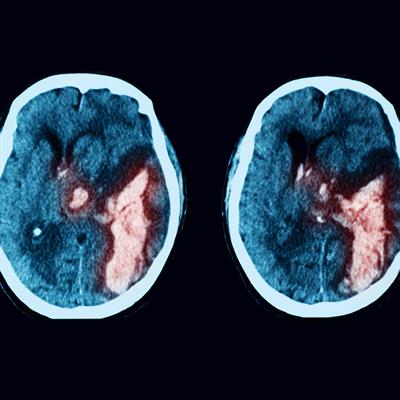
Intracranial pressure (ICP) elevation occurs following both acute ischemic stroke and hemorrhagic stroke (intracranial hemorrhage), however, the mechanisms and role of transient ICP elevations have not been fully elucidated within the various stroke pathologies. Until recently, it was thought that ICP elevation was the result of large hemispheric infarction with large volumes of cerebral edema, however, in animal models of both large (middle cerebral artery occlusion, MCAo) and small stroke (photothrombotic stroke), dramatic ICP elevation occurs independently of cerebral edema volume. Rather, ICP elevation after MCAo is accompanied by a significant increase in cerebrospinal fluid outflow resistance. ICP elevation after MCAo also compromises the perfusion of the ischemic penumbra by reducing cerebral perfusion pressure and the driving pressure across the leptomeningeal collateral vessels. Even an ICP elevation of 5 mmHg above pre-stroke levels can dramatically reduce the blood flow through the collateral-supplied ‘watershed’ penetrating arterioles feeding the ischemic penumbra. These findings, coupled with human imaging studies indicating ‘collateral failure’ as a likely mechanism of infarct expansion, suggest that ICP elevation is probably a dominant cause of ‘collateral failure’ and early neurological deterioration (END) in ischemic stroke patients. To date, pre-clinical and clinical studies have focused on the mechanisms and therapeutic management of elevated ICP after the onset of ischemic and hemorrhagic stroke. There is a lack of studies investigating the role of transient elevations in ICP prior to stroke onset.
This Research Topic aims to present recent advancements in preclinical and clinical knowledge of intracranial pressure (ICP) regulation in ischemic and hemorrhagic stroke pathophysiology, including a spotlight on cutting-edge research addressing the role of advanced age and comorbidities in ICP dysregulation during stroke. Indeed, there is a lack of preclinical stroke research using animal models with advanced age and comorbidities. Most stroke patients have at least one comorbidity, such as hypertension, obesity, diabetes, and atherosclerosis, however, very few studies have used these models to investigate ICP regulation during stroke. Our main goal is to highlight studies using comorbidity models to investigate whether ICP dysregulation (e.g., transient elevation) precedes acute ischemic and hemorrhagic stroke events. Such studies may identify ICP-related triggering mechanisms of the various stroke entities and provide novel early warning signs to advance treatment options.
A variety of manuscript types are welcome for submission, including original research, brief research report, case reports, review, and mini-review linked to the following themes:
- Development of novel experimental stroke models (in vivo) with relevant disease comorbidities, which include ICP and arterial pressure monitoring
- Development of stroke models in awake and unrestrained animals, including ICP and arterial pressure monitoring
- Imaging leptomeningeal collateral blood flow in awake animals
- Advances in non-invasive measurements of ICP and cerebral perfusion pressure: pre-clinical and clinical application
- ICP and the intracranial baroreflex regulation of sympathetic drive
- Transient changes in ICP, atherosclerotic plaque rupture, and thrombosis
- ICP, thermoregulation, and stroke
Keywords: acute ischemic stroke, intracranial pressure elevation, collateral failure, stroke progression, novel early warning signs, hemorrhagic stroke, intracranial hemorrhage, early neurological deterioration (END)
Important note: All contributions to this Research Topic must be within the scope of the section and journal to which they are submitted, as defined in their mission statements. Frontiers reserves the right to guide an out-of-scope manuscript to a more suitable section or journal at any stage of peer review.
