PH
peter h. dutton
Southwest Fisheries Science Center, National Oceanic and Atmospheric Administration
La Jolla, United States
19k
Total downloads
95k
Total views and downloads
Submit your idea
You will be redirected to our submission process.
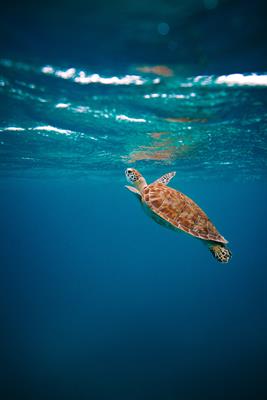
Understanding population structure and migration patterns is important for the effective conservation of migratory marine species such as sea turtles. The complex life history of sea turtles, which spans both terrestrial and marine environments and involves widespread oceanic dispersal during early development and adult breeding migrations, presents ongoing research challenges. Since turtles from different nesting regions often share foraging areas across large sections of the ocean, delineation of these breeding populations, and the ability to accurately assess stock composition at foraging areas, are needed to advance multilateral coordination of conservation efforts across international marine jurisdictions. Although genetic studies have advanced the understanding of population structure, connectivity and regional phylogeography of sea turtles, critical information gaps prevent breeding stock boundaries from being delineated. This is particularly the case for green turtles (Chelonia mydas) in the Pacific, where data for several key nesting populations are either unavailable, too old, or limited by small sample sizes. Recently, a Marine Turtle Genetics Working Group established a growing network of researchers across SE Asia, South and central Pacific to promote collaboration, capacity building, standardization of methods, and data dissemination to address these information gaps.
Other similar collaborations and emerging studies on marine turtles collectively provide a timely opportunity to advance knowledge for these threatened species globally across the broader Pacific, Atlantic, and Indian Oceans.
For this Research Topic, we invite contributions advancing our understanding of sea turtle population genetics. We will consider studies from all species of sea turtles that promote relevant analytical approaches, as well as policy or opinion articles applicable to conservation genetics of sea turtles.
We encourage the publication of different article types, including datasets that otherwise remain inaccessible or buried in “gray” literature, as well as synthesis articles that provide broader regional or global analysis of population structure.
This Research Topic accepts the following article types, unless otherwise specified in the Research Topic description:
Articles that are accepted for publication by our external editors following rigorous peer review incur a publishing fee charged to Authors, institutions, or funders.
Keywords: Population genetics, phylogeography, conservation, mtDNA, stock composition
Important note: All contributions to this Research Topic must be within the scope of the section and journal to which they are submitted, as defined in their mission statements. Frontiers reserves the right to guide an out-of-scope manuscript to a more suitable section or journal at any stage of peer review.
Manuscripts can be submitted to this Research Topic via the main journal or any other participating journal.
Submit your idea
You will be redirected to our submission process.
