OL
oksana lastochkina
Institute of Biochemistry and Genetics of Ufa Scientific Centre (RAS)
Ufa, Russia
1,083
Total downloads
8,107
Total views and downloads
Submit your idea
Select the journal/section where you want your idea to be submitted:
Manuscript Extension Submission Deadline 28 February 2026
This Research Topic is still accepting articles.
During the last decades, there is a strong trend toward growing crops in controlled environments, which has numerous advantages over traditional cultivations such as higher yield, healthier goods, and effective resource usage. The difficulties and optimization of artificial light application have become a popular area of horticultural research.
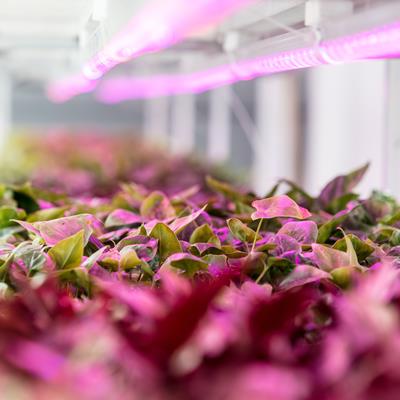
The use of light in controlled environment horticulture (CEH) has drawn interest from both the research and business sectors. Because of the lack of natural sunlight in indoor horticulture (also known as vertical farming or plant factories), artificial light is the only source that influences plant growth and productivity. Utilizing additional light in greenhouses increases crop productivity and quality due to light shortages throughout the autumn and winter months in many countries in the northern hemisphere. Assimilation light is typically used in certain situations to regulate both photoperiod and light intensity and more recently the quality of light attracted lots of attention. Commercially available artificial light sources include the recently developed light-emitting diodes (LEDs) bring us many opportunities for growing plants indoors. Given their many advantages, LEDs have seen a surge in relevance and market share in recent years and the utilization of LEDs in controlled environments is developing day by day.
There is currently a knowledge gap about the cost-effective implementation of the best lighting recipe for plant growth and productivity, which restricts the widespread use of artificial lighting. Additionally, in order to maintain a greater yield and high-quality product, managing or altering the intensity and quality of light received by the crop canopy is a crucial issue in controlled environment crop production. Advancing our knowledge for the application of light in controlled environments is of crucial importance nowadays. This research topic aimed to cover the advantages, challenges, and opportunities for the application of light in controlled environments.
In this Research Topic, Original Research, Perspectives, Systematic Reviews, Reviews, Mini-Reviews, Methods, Opinions, Hypotheses and Theory, Brief Research Report, papers that targeted the application of light (natural or artificial lighting) on horticultural crop production and quality would be targeted.
We welcome articles that focus on (but are not limited to) the following topics:
• Light quality effects on crop production and quality in controlled environments
• Light recipes for growing plants in controlled environments
• Photoperiod, intensity, and daily light integral application in controlled environments
• Plant physiology under different lighting environments
• Quality of horticultural products as influenced by lighting environment in preharvest or postharvest
• Simulation and modeling of lighting environment for crop production
This Research Topic accepts the following article types, unless otherwise specified in the Research Topic description:
Articles that are accepted for publication by our external editors following rigorous peer review incur a publishing fee charged to Authors, institutions, or funders.
Keywords: Light, Light-Intensity, Light Quality, LED, Controlled Environments, Indoor Horticulture
Important note: All contributions to this Research Topic must be within the scope of the section and journal to which they are submitted, as defined in their mission statements. Frontiers reserves the right to guide an out-of-scope manuscript to a more suitable section or journal at any stage of peer review.
Manuscripts can be submitted to this Research Topic via the main journal or any other participating journal.
Submit your idea
Select the journal/section where you want your idea to be submitted:
