RH
ruijuan hao
Southern Marine Science and Engineering Guangdong Laboratory (Zhanjiang)
zhanjiang city, China
1,637
Total downloads
9,336
Total views and downloads
Body colour or pigmentation is an essential trait of aquatic animals. It plays an important role in multiple biological processes like camouflage, species identification, thermoregulation, photoprotection, microbial resistance, mimicry, selective mating, or predator avoidance. It also influences growth performance, ornamental value, nutritional quality, and stress resistance of aquatic animals. Therefore, exploring the underlying mechanism of body colour formation or pigmentation will provide a theoretical basis for cultivating new varieties of high-quality and yield or stress-resistant aquatic animals.
Biotechnology approaches including genomics, metagenomics, transcriptomics, proteomics, metabolomics, methylome, and single-cell sequencing to research pigmentation is an emerging fields and open new doors for understanding the underlying mechanisms of it in aquatic animals.
Thus, this Research Topic is on studies using multi-omics methods to explore the underlying molecular mechanism of body colour formation and pigmentation of aquatic animals. The scientific questions/topics may include but are not limited to the following:
• The underlying molecular mechanism includes different levels (DNA, RNA, protein, metabolism and single-cell levels) of body colour formation and pigmentation in aquatic animals
• How environmental, genetic, dietary and physiological factors influence the body colour formation and pigmentation in aquatic animals.
• Validation of molecules’ function in the body colour formation and pigmentation.
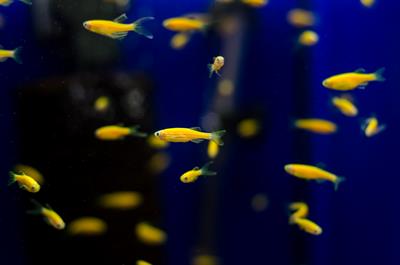
Keywords: body colour formation, pigmentation, aquatic animal, molecular mechanism
Important note: All contributions to this Research Topic must be within the scope of the section and journal to which they are submitted, as defined in their mission statements. Frontiers reserves the right to guide an out-of-scope manuscript to a more suitable section or journal at any stage of peer review.
Southern Marine Science and Engineering Guangdong Laboratory (Zhanjiang)
zhanjiang city, China
University of Mogi das Cruzes
Mogi das Cruzes, Brazil
Guangdong Ocean University
Zhanjiang, China
Freshwater Fisheries Research Center, Chinese Academy of Fishery Sciences (CAFS)
Wuxi, China
Guangdong Ocean University
Zhanjiang, China
